15th Century and Earlier Figurative Paintings

to
2
9
1
2
2
2
Overall Width
to
Overall Height
to
975
2,540
14,099
31,014
318
321
571
809
595
778
902
1,232
1,108
1,136
487
6
1
12
4
14
11
8
4
4
3
2
1
1
1
1
1
1
1
1
1
1
15
8
6
6
5
7
8
7
Period: 15th Century and Earlier
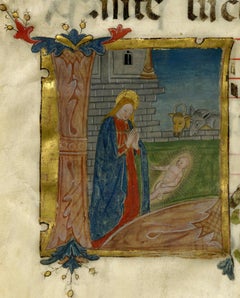
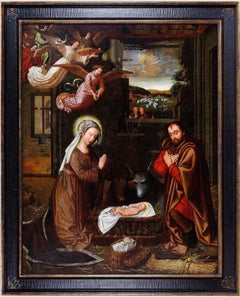
The Nativity of Christ
Located in Fairlawn, OH
Anonymous 15th Century Italian, Probably Milan area The Nativity of Christ Pigments, ink and gold leaf on vellum Unsigned as is always the case with illuminated manuscripts The Virgi...
Category

Old Masters 15th Century and Earlier Figurative Paintings

Materials

Pigment

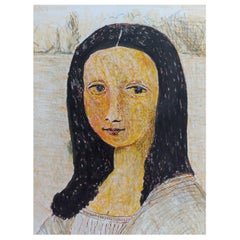
20th Century French Modernist Cubist Painting, Mona Lisa Study
Located in Cirencester, Gloucestershire
Sepia ink and mixed media portrait, the artist's take on the Mona Lisa by Bernard Labbe (French Mid-20th Century) original sepia ink, pencil, gouache, watercolor on paper image size:...
Category

15th Century and Earlier Figurative Paintings

Materials

Acrylic

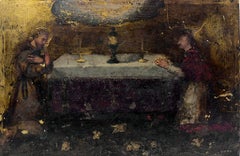
Circa 1500 Italian Renaissance Oil Painting on Copper St. Francis of Assisi
Located in Cirencester, Gloucestershire
St. Francis of Assisi Italian School, circa 1500 oil paint on copper, unframed copper: 6.75 x 10 inches provenance: private collection, Loire Valley, France condition: for a work tha...
Category

Renaissance 15th Century and Earlier Figurative Paintings

Materials

Copper

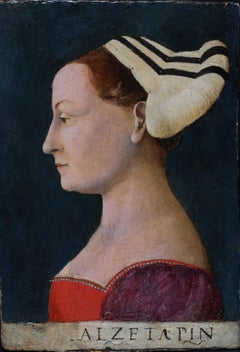
Portrait of an Italian Noblewoman
Located in London, GB
15th century, Italian Circle of Antonio del Pollaiuolo (1429-1498) Portrait of an Italian Noblewoman Oil and tempura on poplar panel With partial inscription: ALZETAPIN Provenance:...
Category

Renaissance 15th Century and Earlier Figurative Paintings

Materials

Oil, Tempera, Wood Panel

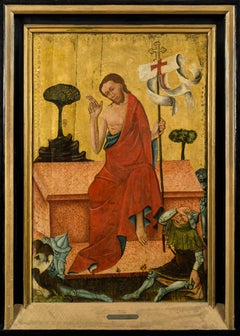
The Resurrection of Christ
Located in New York, NY
Provenance: with “Mr. Scheer,” Vienna, by July 1918; where acquired by: Jindřich Waldes, Prague, 1918–1941; thence by descent to: Private Collection, New York Literature: Rudolf Kuchynka, “České obrazy tabulové ve Waldesově obrazárně,” Památky archeologické, vol. 31 (1919), pp. 62-64, fig. 5. Jaroslav Pešina, “K datování deskových obrazů ve Waldesově obrazárně,” Ročenka Kruhu pro Pěstování Dějin Umění: za rok (1934), pp. 131-137. Jaroslav Pešina, Pozdně gotické deskové malířství v Čechách, Prague, 1940, pp. 150-151, 220. Patrik Šimon, Jindřich Waldes: sběratel umění, Prague, 2001, pp. 166, 168, footnote 190. Ivo Hlobil, “Tři gotické obrazy ze sbírky Jindřicha Waldese,” Umění, vol. 52, no. 4 (2004), p. 369. Executed sometime in the 1380s or 1390s by a close associate of the Master of the Třeboň Altarpiece, this impressive panel is a rare work created at the royal court in Prague and a significant re-discovery for the corpus of early Bohemian painting. It has emerged from an American collection, descendants of the celebrated Czech industrialist and collector Jindřich Waldes, who died in Havana fleeing Nazi-occupied Europe. The distinctive visual tradition of the Bohemian school first began to take shape in the middle of the fourteenth century after Charles IV—King of Bohemia and later Holy Roman Emperor—established Prague as a major artistic center. The influx of foreign artists and the importation of significant works of art from across Europe had a profound influence on the development of a local pictorial style. Early Italian paintings, especially those by Sienese painters and Tommaso da Modena (who worked at Charles IV’s court), had a considerable impact on the first generation of Bohemian painters. Although this influence is still felt in the brilliant gold ground and the delicate tooling of the present work, the author of this painting appears to be responding more to the paintings of his predecessors in Prague than to foreign influences. This Resurrection of Christ employs a compositional format that was popular throughout the late medieval period but was particularly pervasive in Bohemian painting. Christ is shown sitting atop a pink marble sarcophagus, stepping down onto the ground with one bare foot. He blesses the viewer with his right hand, while in his left he holds a triumphal cross with a fluttering banner, symbolizing his victory over death. Several Roman soldiers doze at the base of the tomb, except for one grotesque figure, who, beginning to wake, shields his eyes from the light and looks on with a face of bewilderment as Christ emerges from his tomb. Christ is wrapped in a striking red robe with a blue interior lining, the colors of which vary subtly in the changing light. He stands out prominently against the gold backdrop, which is interrupted only by the abstractly rendered landscape and trees on either side of him. The soldiers’ armor is rendered in exacting detail, the cool gray of the metal contrasting with the earth tones of the outer garments. The sleeping soldier set within a jumble of armor with neither face nor hands exposed, is covered with what appears to be a shield emblazoned with two flies on a white field, somewhat resembling a cartouche (Fig. 1). This may be a heraldic device of the altarpiece’s patron or it may signify evil, referencing either the Roman soldiers or death, over both of which Christ triumphs. This painting formed part of the collection assembled by the Czech industrialist and founder of the Waldes Koh-i-noor Company, Jindřich Waldes, in the early twentieth century. As a collector he is best remembered for establishing the Waldes Museum in Prague to house his collection of buttons (totaling nearly 70,000 items), as well as for being the primary patron of the modernist painter František Kupka. Waldes was also an avid collector of older art, and he approached his collecting activity with the goal of creating an encyclopedic collection of Czech art from the medieval period through to the then-present day. At the conclusion of two decades of collecting, his inventory counted 2331 paintings and drawings, 4764 prints, and 162 sculptures. This collection, which constituted the Waldesova Obrazárna (Waldes Picture Gallery), was first displayed in Waldes’ home in Prague at 44 Americká Street and later at his newly built Villa Marie at 12 Koperníkova Street. This Resurrection of Christ retains its frame from the Waldes Picture Gallery, including its original plaque “173 / Česky malíř z konce 14 stol.” (“Czech painter from the end of the 14th century”) and Waldes’ collection label on the reverse. The Resurrection of Christ was one of the most significant late medieval panel...
Category

Old Masters 15th Century and Earlier Figurative Paintings

Materials

Tempera, Panel

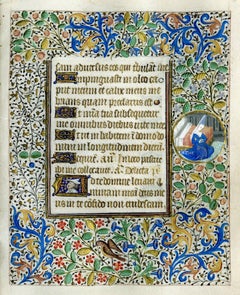
Roundel depicting St. Catherine
Located in Fairlawn, OH
Unknown French Art and Workshop, Middle 15th century Roundel depicting St. Catherine (?) Gouache, ink gold wash and gold burnishing on vellum Book of Hours folio attributed to the C...
Category

Old Masters 15th Century and Earlier Figurative Paintings

Materials

Gouache, Pigment

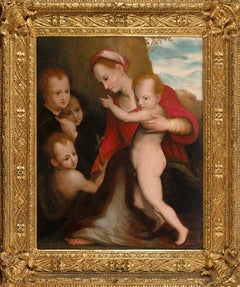
The Virgin and Child with the Infant Baptist
By Andrea Del Sarto
Located in Henley-on-Thames, England
Florentine, mid-16th century Circle of Tomaso D’Antonio Manzuoli, known as Maso da San Friano (1536-1571) The Virgin and Child with the Infant Baptist After Andrea del Sarto (1486-1...
Category

Renaissance 15th Century and Earlier Figurative Paintings

Materials

Oil

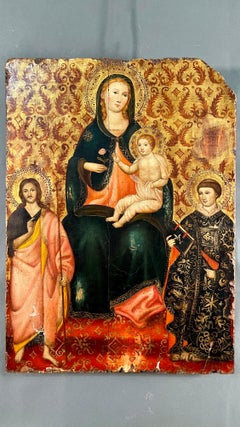
Expertised Italian 14th Century Gold Ground on Panel Painting
Located in Roma, IT
Museum-quality gold ground painting from the Renaissance period by Smeraldo di Giovanni. It depicts the “Virgin of the Roses” seated on a throne h...
Category

Renaissance 15th Century and Earlier Figurative Paintings

Materials

Tempera, Wood Panel

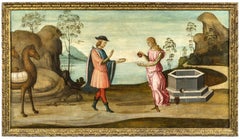
Rebecca at the Well
Located in New York, NY
Provenance: Dr. James Henry Lancashire, Manchester-by-the-Sea, Massachusetts, by 1925; probably by descent to: Private Collection, Cumberland Foreside, Maine, until 2018 This unpublished panel is a characteristic work of the Master of the Apollo and Daphne Legend, an anonymous Florentine painter in the circle of Bartolommeo di Giovanni, Domenico Ghirlandaio, and Sandro Botticelli. The artistic personality of the Master of the Apollo and Daphne Legend was independently recognized by Everett Fahy and Federico Zeri at roughly the same moment in time. Fahy originally dubbed this artist the Master of the Ryerson Panels but later adopted Zeri’s name for the artist, which derives from his eponymous works from the Samuel H. Kress collection (Figs. 1-2). Fahy posited that the artist was most likely a pupil of Ghirlandaio active from roughly 1480 to 1510, and that he may be identifiable with one of Ghirlandaio’s documented pupils to whom no works have been securely attributed, such as Niccolò Cieco, Jacopo dell’Indaco, or Baldino Baldinetti. The present painting was first attributed to this master by Everett Fahy in 1989, who became aware of its existence only after publishing his definitive studies on the artist. The surviving body of work by the Master of the Apollo and Daphne Legend is largely composed of series of panels treating the same theme. In addition to the works illustrating the legend of Apollo and Daphne, there are also series on the themes of Susanna and the Elders and the story of Saint Joseph, among others. The subject of the present panel is drawn from Genesis 24, the story of Isaac. It is possible that our painting relates to another work by the artist depicting the Sacrifice of Isaac formerly in the collection of E. A. McGuire in Dublin, Ireland (Fig. 3), and that these two panels were originally part of a decorative scheme based on the story of Isaac. Although the Master’s paintings of this type have traditionally been considered painted fronts of wedding chests, known as cassoni, the scale of these paintings and the fact that they are often part of a series indicates that they are more likely spalliera panels—paintings set into furniture or the wainscoting of a room. The biblical episode depicted in this painting centers on the theme of marriage, which suggests that this work was likely commissioned for the domestic interior of a newly married couple. The Master has transcribed into paint even the minute details of this Old Testament story, in which Abraham sends a servant to travel by camel to the land of his father and seek out a wife for his son Isaac. The servant is here shown at the well...
Category

Old Masters 15th Century and Earlier Figurative Paintings

Materials

Oil, Tempera, Wood Panel

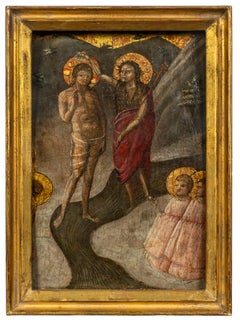
Baptism of Christ
Located in New York, NY
Provenance: Achillito Chiesa, Milan Luigi Albrighi, Florence, by 1 July 1955 with Marcello and Carlo Sestieri, Rome, 1969 Private Collection, Connecticut Exhibited: Mount Holyoke College Art Museum, South Hadley, Massachusetts (on loan, 2012) Literature: Carlo Volpe, “Alcune restituzioni al Maestro dei Santi Quirico e Giulitta,” in Quaderni di Emblema 2: Miscellanea di Bonsanti, Fahy, Francisci, Gardner, Mortari, Sestieri, Volpe, Zeri, Bergamo, 1973, pp. 19-20, fig. 18, as by the Master of Saints Quiricus and Julitta (now identified as Borghese di Piero). This fine predella panel depicting the Baptism...
Category

Old Masters 15th Century and Earlier Figurative Paintings

Materials

Tempera, Wood Panel

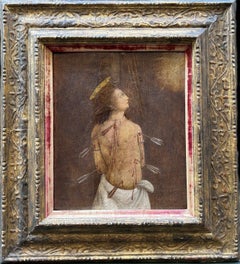
Saint Sebastian, 15th Century Religious Oil Painting on Panel
Located in London, GB
Oil on panel Image size: 16 x 13 1/4 inches (41 x 34 cm) Early gilt frame Saint Sebastian was a Roman centurion who converted to Christianity and, in punishment, the Roman Emperor D...
Category

Italian School 15th Century and Earlier Figurative Paintings

Materials

Oil, Panel

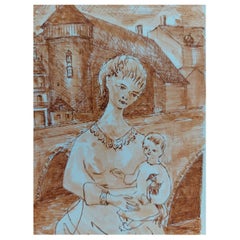
20th Century French Modernist Cubist Painting, Mother and Child
Located in Cirencester, Gloucestershire
Sepia ink and watercolor study of a mother holding a child against a backdrop of a town bridge by Bernard Labbe (French mid 20th century) original sepia ink and watercolor on paper i...
Category

15th Century and Earlier Figurative Paintings

Materials

Acrylic

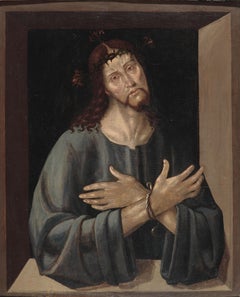
15th Century By Maestro della Pala Sforzesca Ecce Homo Tempera on Panel
Located in Milano, Lombardia
15th Century Maestro della Pala Sforzesca Title: Ecce Homo Medium: Tempera on Panel Dimensions: without frame 64.9 x 53.2 – with frame 82 x 70 x 5 cm Beautiful "cassetta" frame in e...
Category

Old Masters 15th Century and Earlier Figurative Paintings

Materials

Tempera, Panel

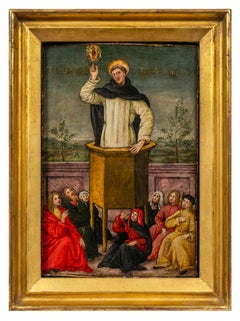
St. Vincent Ferrer Preaching to the People of Salamanca
Located in New York, NY
Provenance: Private Collection, New Jersey The present painting depicts Saint Vincent Ferrer preaching from a raised pulpit to a group of seven peopl...
Category

Renaissance 15th Century and Earlier Figurative Paintings

Materials

Oil, Wood Panel

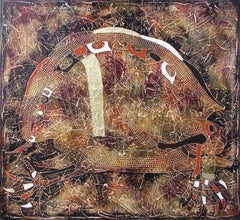
Objekt №3. PSEUDEMYS (3) by Vasili Zianko, author s volume-contour technique
Located in Zofingen, AG
This art - work is part of the project REFLEXUS. The paint is made in the author's technique of painting by Vasili Zianko based acrylic painting on canvas using a variety of texture...
Category

Art Nouveau 15th Century and Earlier Figurative Paintings

Materials

Canvas, Acrylic

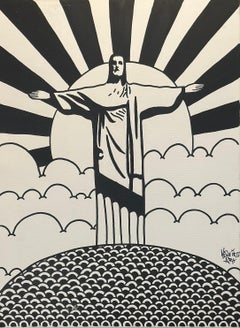
Cristo por do sol
Located in Miami, FL
In “Cristo Pôr do Sol,” the Mineiro artist captures the sacred silhouette of Christ bathed in the golden hues of the Brazilian sunset. The piece evokes a sense of peace and transcend...
Category

Abstract Geometric 15th Century and Earlier Figurative Paintings

Materials

Acrylic

Related Items
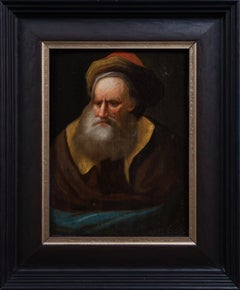
Portrait of an Old Bearded Man
Located in Stockholm, SE
We are pleased to offer a captivating portrait, most likely painted in the late 18th century, attributed to an artist within the circle of Christian Wilhelm Ernst Dietrich. This oil ...
Category

Old Masters 15th Century and Earlier Figurative Paintings

Materials

Oil, Wood Panel

Italian 18th Century Oval Religious Oil on Canvas Painting with Saint Dominic
Located in Firenze, IT
This beautiful Italian 18th Century old masters oil painting on oval canvas with giltwood frame is attributed to Solimena and features a religious scene. In this splendid oval-shaped painting are depicted Saint Dominic...
Category

Old Masters 15th Century and Earlier Figurative Paintings

Materials

Canvas, Oil

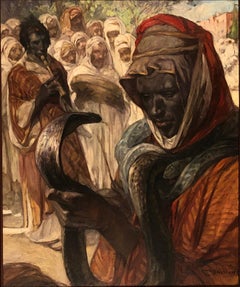
VAN BIESBROECK Jules. Snake charmer. Oil on panel. Signed.
Located in Paris, FR
Algerian women in an interior. Oil on panel. Signed. This work will be recorded in the catalogue raisonné of the work of the artist currently in preparation. Jules Van Biesbroeck...
Category

15th Century and Earlier Figurative Paintings

Materials

Oil

17th Century Dutch Old Master Ink Drawing Christ on the Cross Many Figures 1674
Located in Cirencester, Gloucestershire
Christ on the Cross attributed to Jan Luyken (Dutch, 1649–1712) inscribed 1674 upper corner pencil drawing, watercolor and ink wash on paper over oard, framed framed: 12 x 11 inches ...
Category

Old Masters 15th Century and Earlier Figurative Paintings

Materials

Color Pencil, Ink, Watercolor

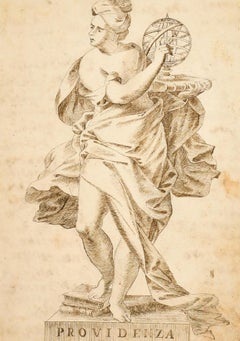
Fine 1700 s Italian Old Master Ink Wash Drawing Roman Allegorical Providenza
Located in Cirencester, Gloucestershire
'Providenza' Italian School, 18th century ink and wash drawing on paper, framed within a light oak wood frame (behind glass) image size: 10.5 x 7 inches overall framed: 17 x 13 inche...
Category

Old Masters 15th Century and Earlier Figurative Paintings

Materials

Ink, Watercolor, Archival Paper

1600’s Flemish Old Master Ink Wash Drawing Biblical Figures Group on paper
Located in Cirencester, Gloucestershire
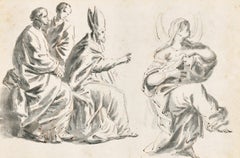
Figure Studies Attriubted to Cornelis Schut (1597 - 1655) Flemish ink drawing on paper, inscribed on mount size: 4.75 x 7 inches private collection, France The painting is in overa...
Category

Old Masters 15th Century and Earlier Figurative Paintings

Materials

Ink, Watercolor

Feast in the Garden of Love, 17th century Antwerp, Louis de Caullery
Located in PARIS, FR
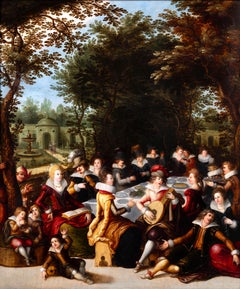
Louis de Caullery (1582-1621) Antwerp School early 17th century Oil on oak panel Dimensions: h. 51 cm (20.08 in), w. 43 cm (16.93 in) Ebonized wooden frame Framed: h. 67 cm (26.38 in...
Category

Old Masters 15th Century and Earlier Figurative Paintings

Materials

Oil, Wood Panel

18th Century French Oil Painting on Copper Portrait of Noble Lady
Located in Cirencester, Gloucestershire
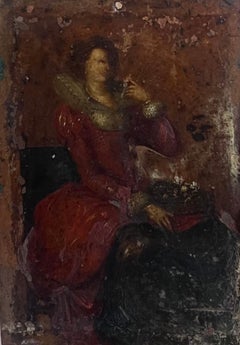
Portrait of a Noble Lady French School, early 1700's period oil painting on copper, unframed copper: 5 x 3 inches condition: very good, minor paint fading and deteriation. provenanc...
Category

Renaissance 15th Century and Earlier Figurative Paintings

Materials

Copper

The Card Players by a Flemish 1600s Artist
Located in Stockholm, SE
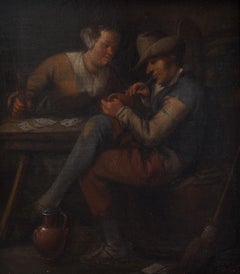
Flemish 1600s School The Card Players oil on oak panel panel dimensions 22.5 x 20 cm frame included Provenance: From a Swedish private collection. Condition: Flat and stabl...
Category

Old Masters 15th Century and Earlier Figurative Paintings

Materials

Oak, Oil, Panel

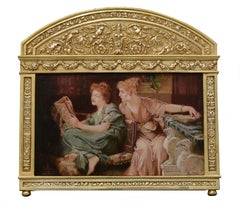
PRIVATE READINGS - Angelo Granati Italian Figurative Oil on Canvas Painting
Located in Napoli, IT
Private readings - Angelo Granati Italia 2013 This is his reinterpretation of a greatest old master painting "Comparisions"by Sir Lawrence Alma-Tadema. ...
Category

Old Masters 15th Century and Earlier Figurative Paintings

Materials

Bronze

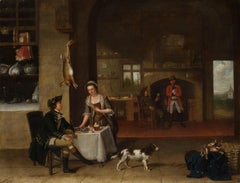
A Tavern Interior, 18th Century Old Master, Figurative Oil Painting by Schaak
Located in Greven, DE
A Tavern Interior - 18th Century Old Master, Figurative Oil Painting by Schaak Little is known about the artist J.S.C. Schaak. He was active in England as a portraitist between 1760-1770. His name indicates his German or Dutch origin. Especially portraits of generals...
Category

Old Masters 15th Century and Earlier Figurative Paintings

Materials

Copper

Fine 1700 s Italian Old Master Ink Wash Drawing Roman Allegorical India
Located in Cirencester, Gloucestershire
'India' Italian School, 18th century ink and wash drawing on paper, framed within a light oak wood frame (behind glass) image size: 10.5 x 7 inches overall framed: 17 x 13 inches con...
Category

Old Masters 15th Century and Earlier Figurative Paintings

Materials

Ink, Watercolor, Archival Paper

Previously Available Items
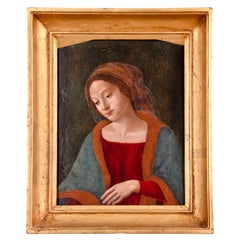
Renaissance Sandro Botticelli Style Italian Religious Painting
By Sandro Botticelli
Located in Roma, IT
Wonderful old Italian master painting Madonna Oil on panel Alessandro Filipepi, also known as Sandro Botticelli, is the first artist that comes to mind at the sight of this charming...
Category

Renaissance 15th Century and Earlier Figurative Paintings

Materials

Wood, Oil

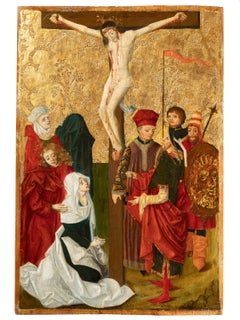
Crucifixion, 15th century South Germany school, oil on gilt background
Located in PARIS, FR
Crucifixion, South Germany, 15th century, circa 1470-1480 Pine panel, oil and gold background Dimensions: h. 63 cm, w. 42 cm (24.8 in x 16.54 in) Our rare panel imbued with all the Gothic symbolism, presents one of the subjects that has become universal in Western art. The crucifixion of Jesus, recounted in all the gospels, is one of the episodes of the Passion of Christ. The contemplation of his death by the faithful is and has always been an intense devotional exercise. The suffering of Christ had to be made as realistic as possible by the artist, in order to move the spectators and create piety. Christ with his emaciated and collapsed body hangs on his cross. In an attitude of resignation and abandonment, his head crowned with thorns is leaned on his right shoulder, but the eyes still remain open under the eyebrows contracted by suffering. His wounds shed large drops of blood and clearly show how painful the torment he is enduring is. At the foot of the cross to her right, the Virgin swoons in the arms of Saint John out of compassion for the suffering of her Son. Behind them Saint Marie-Salomé with clenched hands and face twisted in pain looks at the Cross, near her another holy woman seen from behind. To his left, Joseph of Arimathea stands near the cross, his hand placed on the cross, like a gesture of protection to leave dignity to the dying. His face turned from the cross, a resigned look, suggests his complete helplessness in the face of Jesus' torture. Longinus the centurion carrying a spear and shield looks impassively before him, while another standard-bearer soldier contemplates the cross. The man who stands prominently in profile next to the cross of Christ and is highlighted by his rich clothes adorned with precious stones and his pointed hat with gold trim, is probably Levi, tax collector. This intimate scene with very tight framing, tightens the figures around the raised cross, the absence of landscape replaced here by a gold background which comes from the Italian pictorial tradition helps to reinforce the feeling of timelessness of the scene and of its sacred context, gold being assimilated to the divine world. Our work dates back to the last quarter of the 15th century; comparison with similar works (including dimensions) could suggest that it is an altarpiece element, typical of German art. The use of softwood allows us to establish the origin of our panel from southern Germany, Swabia or Bavaria. Related works: 1. Crucifixion, German School around 1470, oil on lime (57.5 cm x 31 cm), Dresden Old Masters Painting Gallery, inventory number: 1964 and 343 2. Crucifixion, around 1475 oil on lime 69 x 45.5 cm Stuttgart, National Museum of Württemberg, 3. Crucifixion, attributed to Wolfgang Katzheimer around 1480-1485, Forchheim, Catholic parish church of St. Martin 4. Crucifixion, around 1450, Schwabach, town church of St. John -et-Saint-Martin 5. Fainting of the Virgin and Christ on cross...
Category

Gothic 15th Century and Earlier Figurative Paintings

Materials

Gold Leaf

Aphrodite s Kingdom
Located in Zofingen, AG
Aphrodite is an ancient Greek goddess associated with love, passion, lust, beauty, pleasure. My interpretation of the young Aphrodite in her sunny Kingdom. Professional oil paints on...
Category

Realist 15th Century and Earlier Figurative Paintings

Materials

Oil

Aphrodite
s Kingdom
Aphrodite
s Kingdom
H 33.5 in W 21.7 in D 0.8 in
The Adoration of the Child
Located in Wien, Wien
AMBROSIUS BENSON Lombardy 1495 – 1550 Flanders & Workshop “The Adoration of the Child” Around 1525/35 Oil on oak panel 101 x 77,5 cm Ambrosius Benson was active in Bruges between 1518 and 1550, painting in the style of the Flemish masters of Old Netherlandish painting. He usually did not sign his works, as in this case, however, it can be safely assigned to his oeuvre by typical characteristics. The religious work was either commissioned by the church or, in this case due to its size, painted as a private devotional painting. Its composition and individual elements are very similar to those of the Christmas painting exhibited in the State Hermitage in St. Petersburg. The Holy Family, consisting of Mary, Joseph and the Child Jesus, occupies two-thirds of the picture’s surface and is constructed pyramidally: Mary and Joseph kneel in a devotional posture, flanking the child. It lies on a cloth in a manger filled with straw, which is also shown as a bundle in the foreground. Ox and donkey behind the child complete the group and locate the representation in a stable. The walls, made of stone blocks, as well as the wooden ceiling, look rather fragile and ruinous; vegetation has also made its way through the stone bricks. In the background, a large window gives a view of a hilly landscape populated by sheep. Atmospheric plays of light in the opening in the sky between the clouds direct the viewer’s gaze into the distance, while the earthly city walls suggest that the figures are staged in nature outside an urban environment. A younger and an older shepherd stand behind the window and look at the action, mirroring the viewer. Behind it, in white outlines, there could even be an angel who is announcing the good news that the Messiah has been born. Particularly exciting is also the group of six angels flying down from the upper left corner – from heavenly spheres – expressing their homage in various gestures through folded or raised hands. The gazes of all the figures shown are directed at the little child in the manger, with the relationship of gaze between mother and child being particularly emphasized, not least by the suggested halo of Mary and Jesus. A particularly impressive example of comparison is the painting of the same subject in the Hermitage: not only the arrangement of the Holy Family is identical, but also the position and gestures of the descending host of angels and the child. The view of a hilly landscape in the right half of the picture is also similar; however, here four shepherds step closer to the action; the central family now occupies only half of the scene, which this time is set in a more populated city and ancient ruined landscape. This most likely depends on different patrons: due to the wealth of the commercial metropolises, such as the Flemish city of Bruges, where the artist worked, the rich patricians now also acted as important patrons and patrons. The stage-like scene of a ruinous temple landscape in the Hermitage goes back to the concept of the rudimentary primitive hut (man’s first dwelling), which was readily replaced by ruins from the late 15th century. However, in the case of the presented painting, the painter wanted to create an atmosphere in which poverty and simplicity are better displayed, which also emphasizes the intimate togetherness and piety, especially in conjunction with the high degree of naturalism. The transition from the late Gothic to the Renaissance is particularly well staged here: symbolic colors of the medieval manner, such as the bright red of Joseph’s robe, could allude to the future Passion of Christ. The rich drapery and elongated proportions of the figures also refer to the late Gothic tradition. Here, special reference should be made to the comparison with Benson’s painting “Resting on the Flight to Egypt” in the Groenigemuseum, since here both the bright red coloring of the coat and the physiognomy of the child are identical. Furthermore, in the painting described, Mary is seen wearing an embroidered dress and a cloak richly decorated with brocade borders, which indicate her future position as Queen of Heaven. The same brocade-lined coat in ornate drapery can be seen on the birth scene in the Yale University Art Gallery. Here both the arrangement the Holy Family, the position of the child and the white cloth draped underneath are the same. What is particularly impressive in the presented picture, however, is the new, precise observation of nature, for example, the plants sprouting from the walls or the individual stalks that have detached themselves from the bale of straw. A detailed fabric surface characterization and plasticity is especially shown in the woven basket, which is present here (and also in the mentioned comparative examples) and filled with wrapping cloths. This is probably a particularly characteristic feature of the scenes of Jesus’ birth...
Category

15th Century and Earlier Figurative Paintings

Materials

Oil

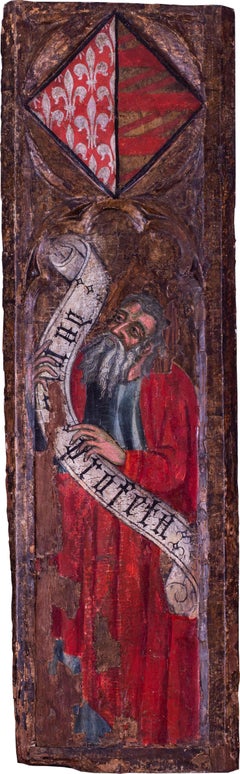
Circa 1400, Spanish school of The Prophet Daniel , tempera on panel with gildin
Located in Petworth, West Sussex
Spanish school, circa 1400 The prophet Daniel Tempera on panel with gilding 35.1/4 x 10.5/8 in. (89.5 x 28 cm.) Condition: The painting has been recently stabilised and cleaned up. ...
Category

Old Masters 15th Century and Earlier Figurative Paintings

Materials

Tempera, Wood Panel

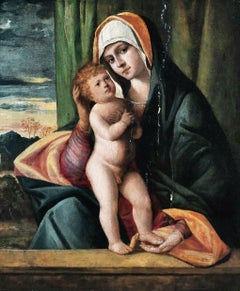
Madonna Child, 15th Century School of Giovanni BELLINI (1430-1516)
By Giovanni Bellini
Located in Blackwater, GB
Madonna & Child, 15th Century Studio of Giovanni BELLINI (1430-1516) Fine large 15th Century Italian Old Master depiction of the Madonna and Child, ...
Category

Medieval 15th Century and Earlier Figurative Paintings

Materials

Oil

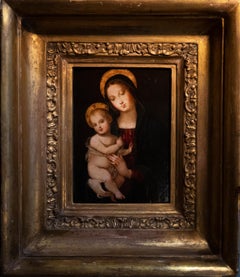
Madonna and Child
By Lo Spagna
Located in London, GB
LO SPAGNA (1450 – 1528) Madonna and Child Oil and gold on panel 7 3/8 x 5 1/8 in. (8.7 x 12.8 cm.) 12.85 x 11 inches, inc. frame Giovanni di Pietro, lo Spagna acquired his nickname because he was born in Spain. He was first documented in the Florentine workshop of Perugino in 1492, at which point he seems to have been a very young assistant. A panel of Christ carrying the cross from the Monastero della Beata Colomba, Perugia (below) seems to have been painted before 1497, but its attribution to lo Spagna is uncertain. He is documented in Spello in 1502, and could have worked as an assistant to Pintoricchio there. Lo Spagna received the important commission for the altarpiece of the Coronation of the Virgin for the Observant Franciscans of Santa Maria di Montesanto, Todi (below) in 1507, but does not seem to have started work on it until 1511. Before that date, he had almost certainly completed three panels of the Adoration of the Magi that are very similar to each other: ✴the altarpiece that Abbot Eusebio Ancaiani of Spoleto commissioned for San Pietro in Valle (below) in 1508; ✴the so-called Madonna della Spineta for the church of this name outside Todi; and ✴the main panel of an altarpiece for Sant’ Antonio Abate...
Category

Renaissance 15th Century and Earlier Figurative Paintings

Materials

Oil

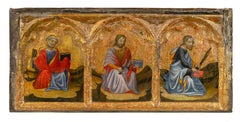
Saints Peter, Bartholomew, and Paul
Located in New York, NY
Miguel Alcañiz (Valencian, active 1395 – 1447) Saints Peter, Bartholomew, and Paul Tempera on panel 12 ¼ x 26 inches (31.1 x 66 cm) Provenance: Reber ...
Category

Old Masters 15th Century and Earlier Figurative Paintings

Materials

Tempera, Panel

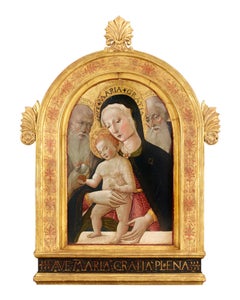
Virgin and Child with Saints Jerome and Bernard by Giovanni
Located in New Orleans, LA
This breathtaking 15th-century Italian Renaissance painting honoring the Madonna and Christ Child with Saints Jerome and Bernard is attributed to the preeminent Sienese artist Benven...
Category

Renaissance 15th Century and Earlier Figurative Paintings

Materials

Tempera, Panel

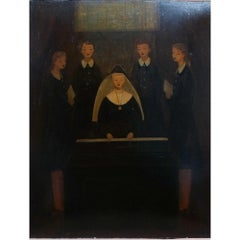
The Chorus - Original Oil on Masonite by Rosa Ferreri - 1955/56
Located in Roma, IT
Oil on masonite. Exhibited at The VII Quadriennale d'Arte in Rome Italy. Very good conditions. This artwork is shipped from Italy. Under existing legislation, any artwork in Italy ...
Category

15th Century and Earlier Figurative Paintings

Materials

Masonite, Oil

Still Thinking About These?

All Recently Viewed