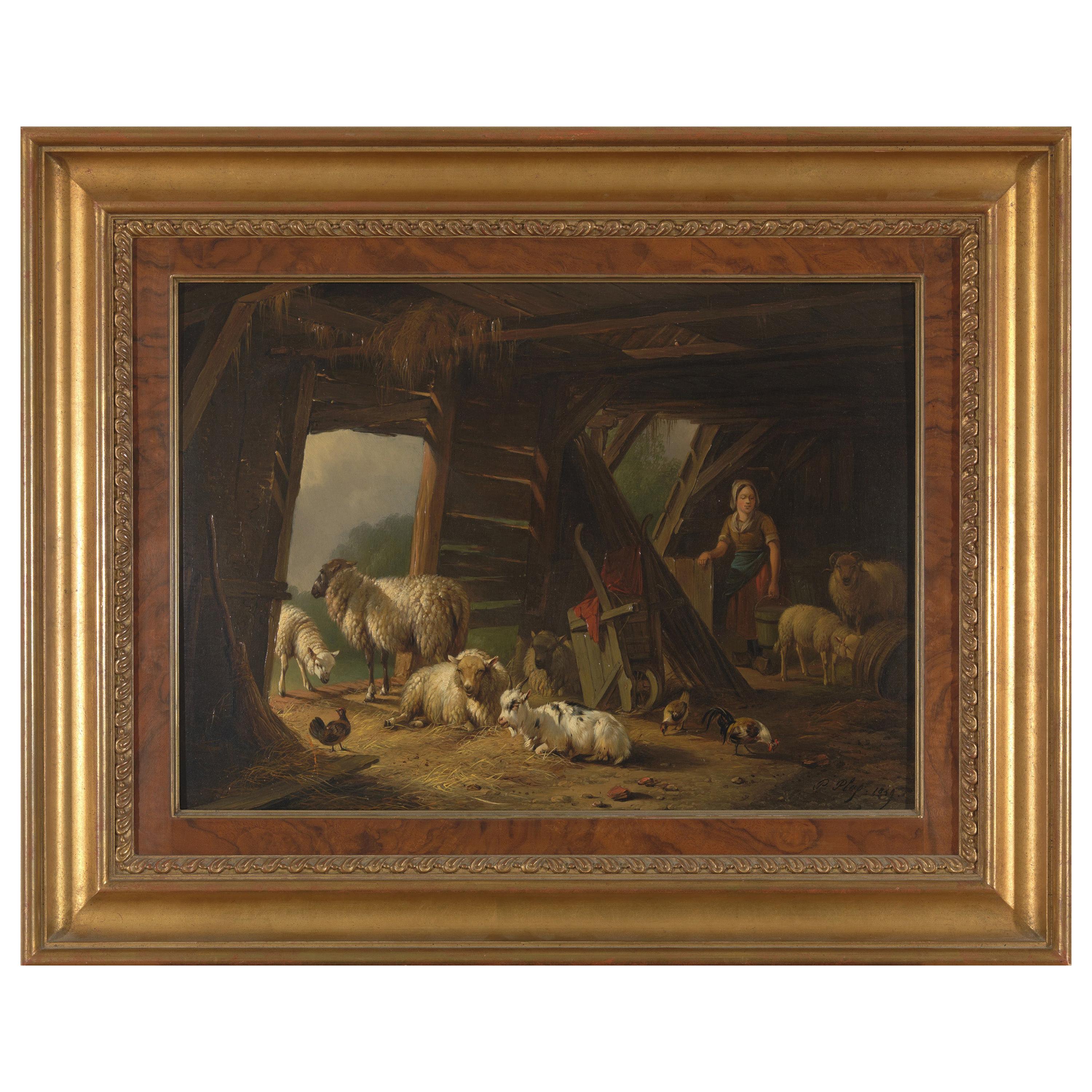
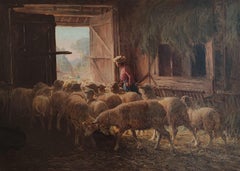
Items Similar to Sheepstable, 19th C Genre Painting, Oil on panel, Signed and dated P.Plas 1849.
Want more images or videos?
Request additional images or videos from the seller
1 of 12
Sheepstable, 19th C Genre Painting, Oil on panel, Signed and dated P.Plas 1849.1849
1849
$4,723.38
£3,523.34
€3,980
CA$6,574.24
A$7,052.98
CHF 3,783.07
MX$84,916.95
NOK 47,690.09
SEK 43,486.76
DKK 30,330.63
About the Item
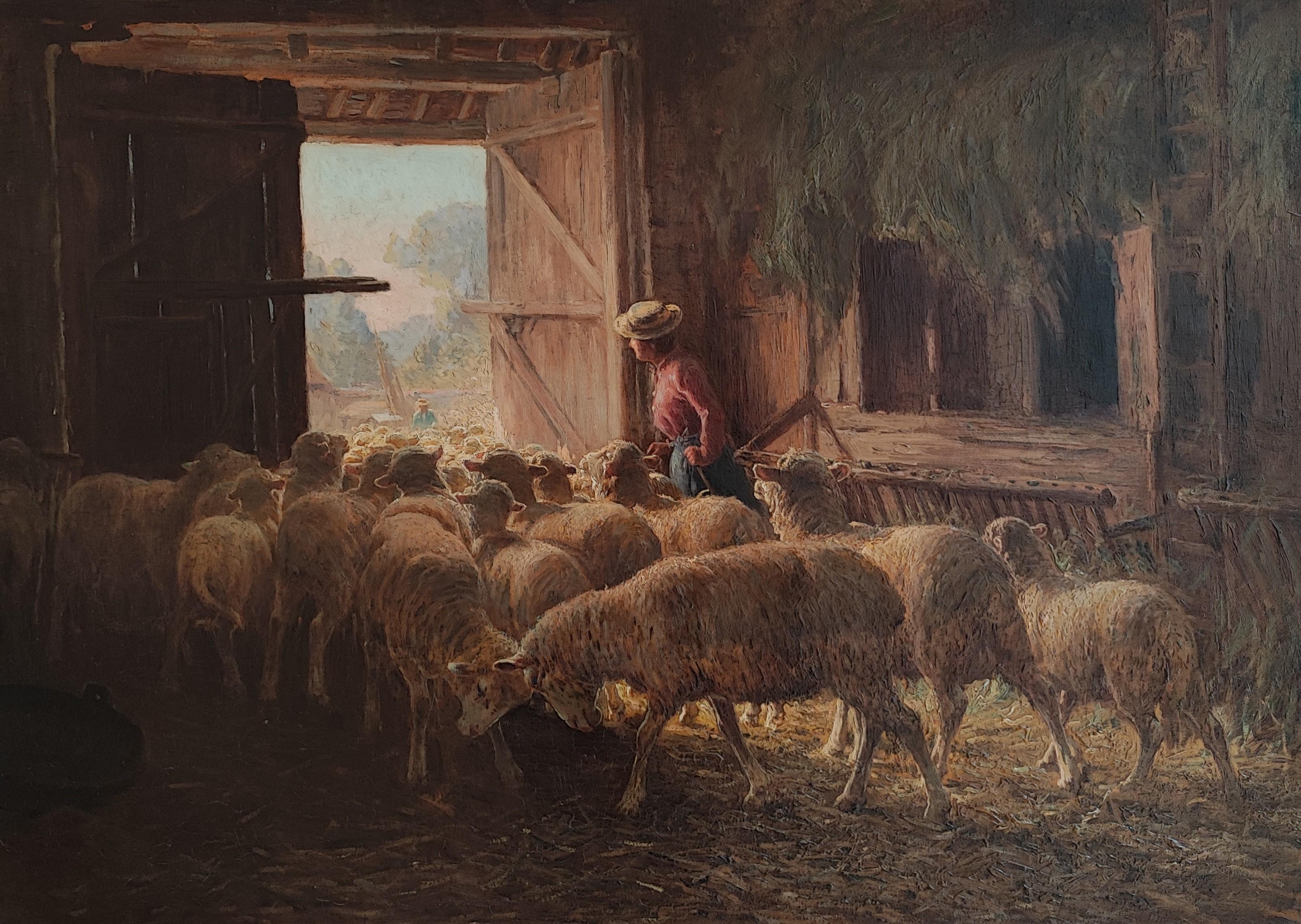
Pieter Plas placed himself with this pastoral scene in the tradition of the 17th-century painters and draughtsmen such as Nicolaes Pietersz Berchem, Karel du Jardin, Marcus de Bye and Paulus Potter. Nevertheless, the work carries the typical ideals of Romanticism. The Romantics wanted to return to nature they idealized. They believed in a connection between the individual and nature. The harmony between the shepherdess and her flock of sheep is part of this story. This line of thought must be placed against the background of the advancing industrialization that began to put pressure on the traditional rural society. Plas lets the light subtly enter the barn through a doorway. The rays of the sun that illuminate the sheep -in a slightly diagonal line – add depth and vibrancy to the scene. The farmer's wife carries a bucket of milk. In the region of Alkmaar and Texel, milk of sheep was used to make cheese. Naturally, these animals also provided raw wool material. Hay is stored on the wooden beams of the stable. It was supplementary food for the sheep. Pieter Plas(1810-1853 came from a well-known Alkmaar artist family. His father and the first teacher was the carriage- and landscape painter Louwerencius Plas (1776-1847).
The painter himself was also a carriage painter until the age of 24. After two years in Hilversum with Willem Bodeman and with the animal painter Jan van Ravenswaay, he specialized in painting landscapes with cattle. The flat North Dutch landscape was often his source of inspiration. Pieter Plas had several pupils and was director of the Drawing Company 'Kunst zij ons doel' in Alkmaar. Museum Willet-Holthuysen in Amsterdam and the Teylers Museum in Haarlem expose some of his works. Plas signs with a long 's' at the end of his name.
- Attributed to:Pieter Plas (1810 - 1853, Dutch)
- Creation Year:1849
- Dimensions:Height: 28.75 in (73 cm)Width: 23.23 in (59 cm)
- Medium:
- Movement Style:
- Period:
- Condition:
- Gallery Location:brussel, BE
- Reference Number:Seller: 2861stDibs: LU150927942092
About the Seller
5.0
Vetted Professional Seller
Every seller passes strict standards for authenticity and reliability
1stDibs seller since 2021
15 sales on 1stDibs
- ShippingRetrieving quote...Shipping from: brussel, Belgium
- Return Policy
More From This Seller
View AllCountry landscape with cows, Mechelse school, 1838
Located in brussel, BE
We know very little about the Mechelen landscape painter Karel De San. He appears to have been mainly active during the period 1829-1848. The painterly landscape with the dramatic sk...
Category
19th Century Romantic Landscape Paintings
Materials
Oil, Canvas
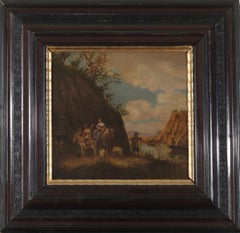
17th C., Baroque, Genre Painting, Stop of the Travelers
Located in brussel, BE
As the Dutch painter Philips Wouwerman often did, this artist painted travellers stopping at an inn or a farm. One of the men got off his horse to urinate against the facade of the building. The motif of a peeing man was far from an exception in Dutch genre paintings...
Category
17th Century Baroque Figurative Paintings
Materials
Oil, Canvas
17th C Landscape with Noblewoman and Squire, Dutch Shool, Oil on Copper, Framed
Located in brussel, BE
This charming bucolic landscape bathes in a soft yellow light. A lady on horseback, accompanied by a boy on a donkey, stops near a shepherd. The herd looks at two fishers and quietly...
Category
17th Century Land Figurative Paintings
Materials
Copper
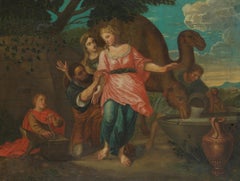
18th C, In the Style of the Classicizing Baroque, Biblical, Rebekka and Eliëzer
Located in brussel, BE
Willem Muys was a Dutch, 18th-century painter of history pieces, portraits and cabinet pieces. Above all, he appears to have been active as a painter of ‘wallpaper’. Until the mid-18th century, ‘wallpaper’ was not painted on paper but on coarsely woven linen. Wealthy citizens had their mansions or country estates adorned with ‘wallpaper’ with landscapes, exotic birds or chinoiseries.
Willem Muys mainly painted ‘wallpaper’, which means that few of his works have been preserved. They are hardly represented in public collections. The works of his sons, Nicolaas en Robbert, both painters, are a little less rare. The painting with Rebecca and Eliezer...
Category
18th Century Baroque Figurative Paintings
Materials
Canvas, Oil
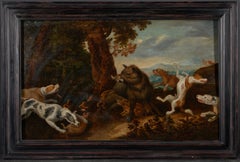
17th C, Baroque, Hunting Scene, Wild Boar Hunt in the style of Frans Snijders
Located in brussel, BE
Hunting played an essential role in the lives of princes and nobles for centuries. It was no different in the 17th century. Paintings depicting hunting scenes were hung, for example, in the hunting lodges of elites. It should be noted that the upper bourgeoisie also began to show interest in painted hunting scenes during the 17th century. In the Southern Netherlands there were a number of skilled animal painters who produced hunting scenes, including Frans Snijders, Paul De Vos, Jan Roos, Pieter Boel and Jan Fyt. Snijders knew how to render the anatomy of the animals masterfully. Also, he managed to make his animals look intelligent. He let them express a variety of feelings. His colleague, Paul De Vos, seems to have been less familiar with animal anatomy. His animals lack a kind of individuality and psychological expression. The panel shows a boar hunt with dogs. It was a prevalent theme, portrayed by Rubens, Snijders, De Vos and others.
Buyers were especially interested in the showdown between animal species. The mental and physical strength appealed to their imagination. The painter of this little work has no solid knowledge of dog breeds. Due to a lack of insight into dogs' bone and muscle structure, he makes them look rather stiff. Mainly the heads have something naïve about them. It cannot be ruled out that the artist of this painting is Jan van Kessel...
Category
17th Century Baroque Landscape Paintings
Materials
Canvas, Oak, Oil
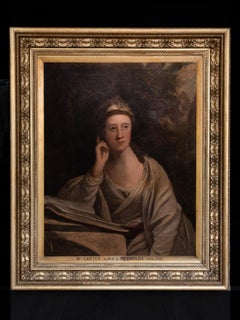
18th C, Portrait of a Lady, Elisabeth Carter, Oil on Canvas, 92 x 71 cm, Framed.
By Joshua Reynolds
Located in brussel, BE
Sir Joshua Reynolds (16 July 1723 - 23 February 1792) was a leading 18th-century English portrait painter and President of the Royal Academy from 1769 to 1792. He was born on 16 July...
Category
18th Century English School Figurative Paintings
Materials
Canvas, Oil
You May Also Like
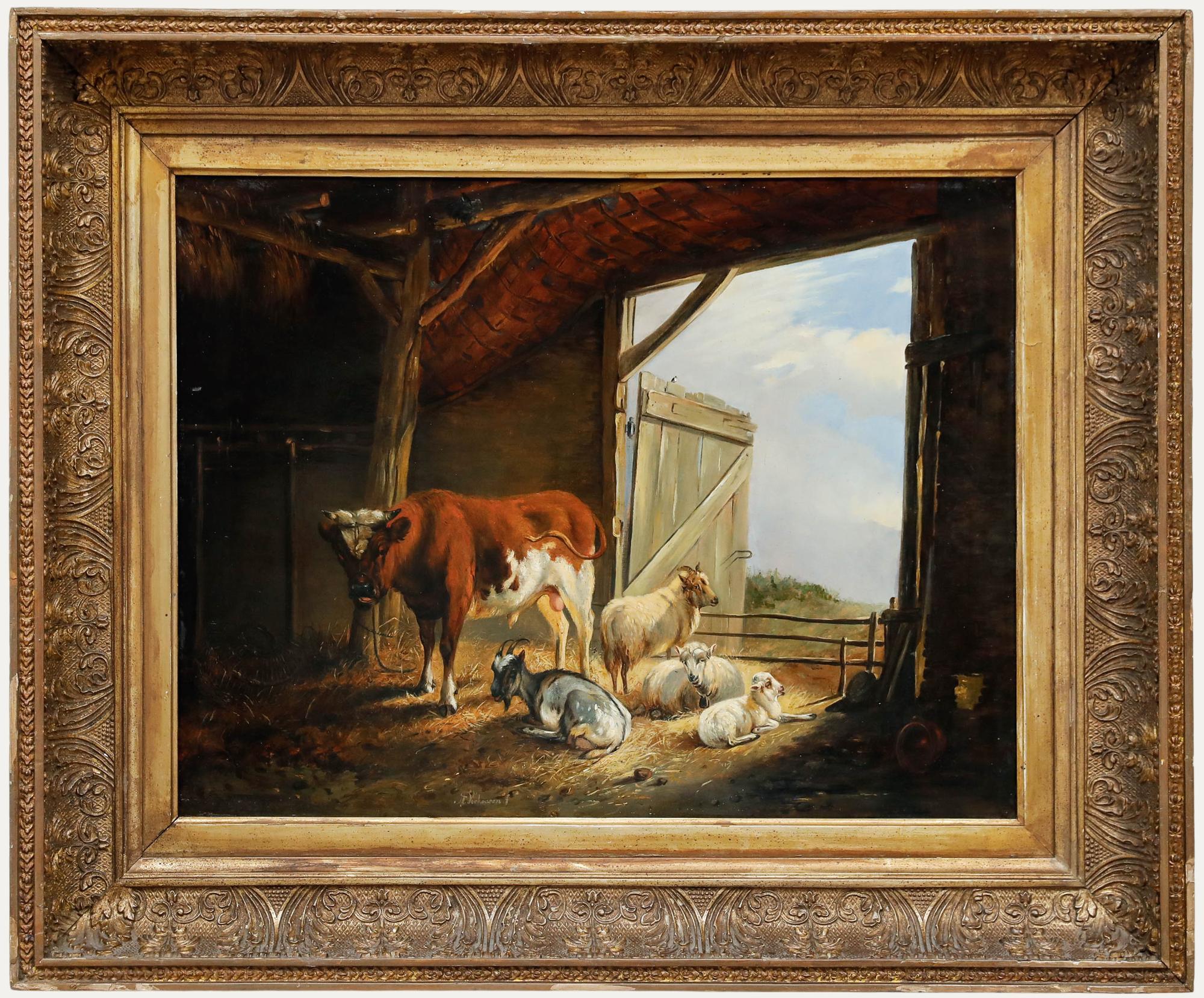
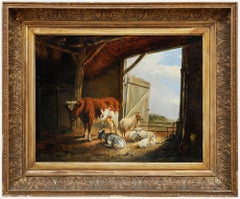
Mid 19th Century Oil - In the Stable
Located in Corsham, GB
A charming pastoral scene by the Dutch artist Albertus Verhoesen (1806-1881), capturing the serene interior of a rustic barn. Bathed in warm, golden light filtering through an open d...
Category
Mid-19th Century Animal Paintings
Materials
Oil
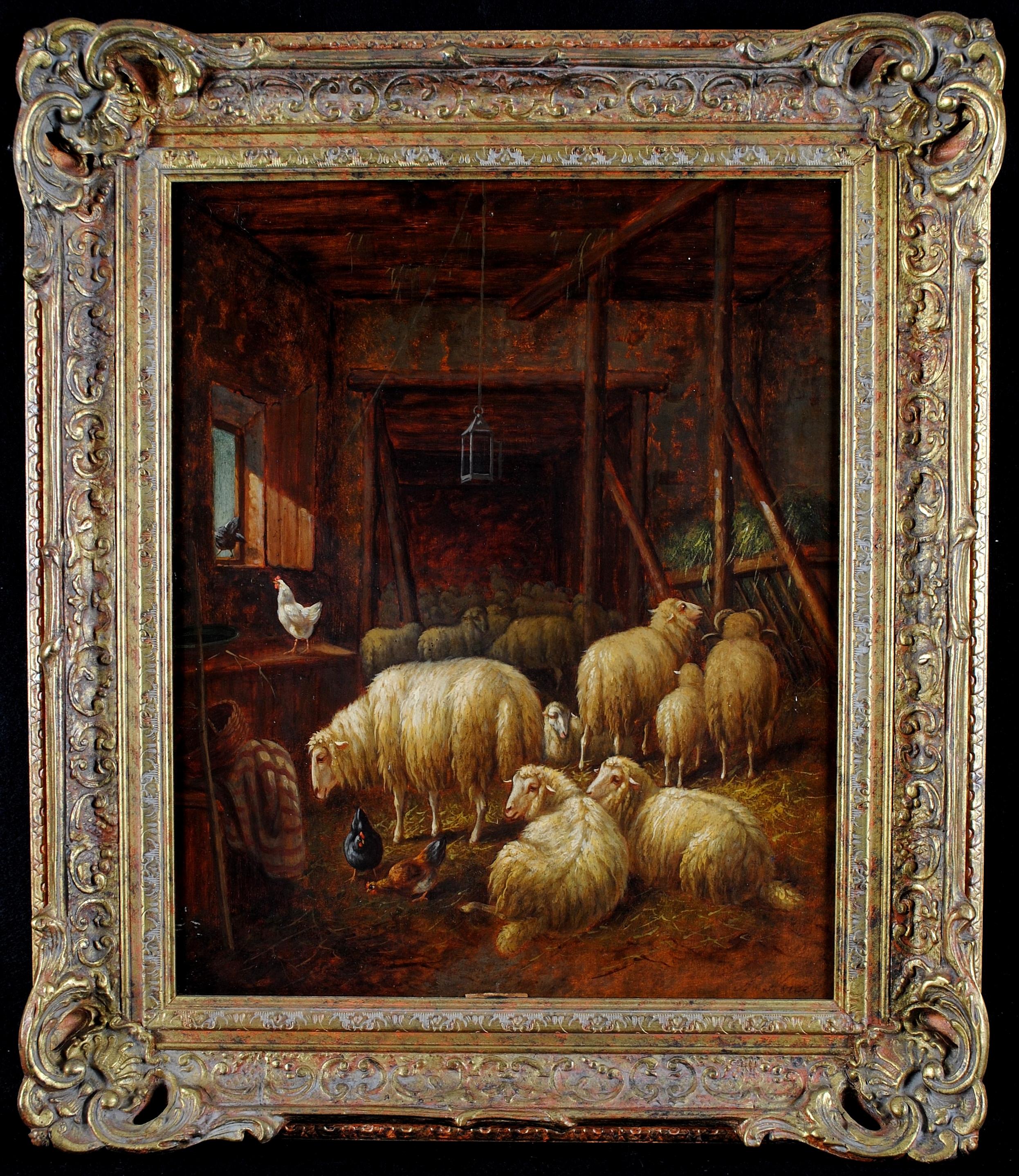
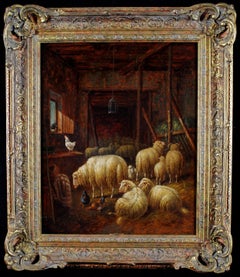
Sheep in a Barn - 19th Century Antique English Chickens Animal Oil Painting
Located in Sevenoaks, GB
A beautiful late 19th century English oil on panel depicting sheep and chickens in a n old barn.
Excellent quality work in superb original condition, presented in a good quality swe...
Category
Late 19th Century Animal Paintings
Materials
Oil, Panel
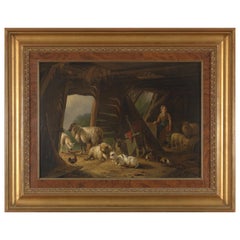
Pieter Plas, Sheepstable, Oil on Canvas, Framed and Signed
Located in Leuven , BE
Pieter Plas(Alkmaar 1810-1853) came from a well-known family of artists from Alkmaar. His father and first teacher was the carriage and landscape painter Louwerencius Plas (1776-1847...
Category
Antique 19th Century Dutch Decorative Art
Materials
Paint
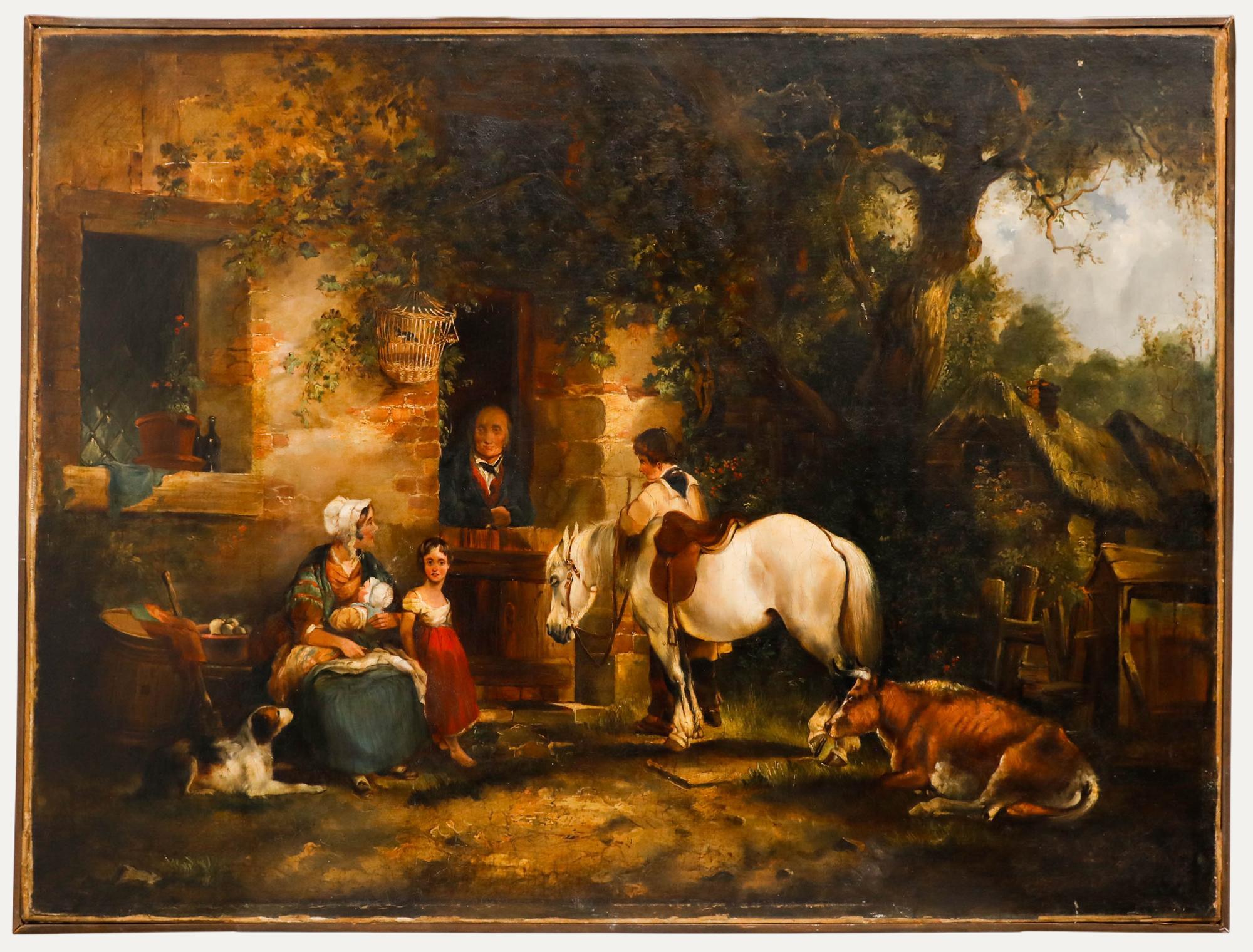
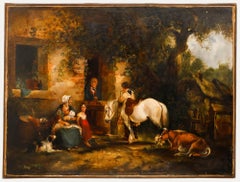
After Charles Waller Shayer (1826-1914) - 19th Century Oil, The Cottage
Located in Corsham, GB
This 19th-century pastoral scene depicts a rustic cottage, with figures gathered by the door, accompanied by a white horse and resting cattle beneath overhanging foliage. The composi...
Category
19th Century Figurative Paintings
Materials
Oil
Shepherdess and sheep at the sheepfold
Located in Genève, GE
Work on canvas
Category
Mid-19th Century Landscape Paintings
Materials
Oil
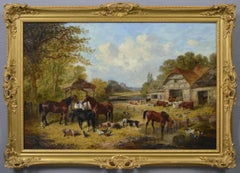
19th Century oil painting of a farm with horses, pigs, goats, poultry
cattle
By John Frederick Herring Jr
Located in Nr Broadway, Worcestershire
John Frederick Herring Jnr
British, (c1820-1907)
Farmyard Friends
Oil on canvas, signed
Image size: 23.25 inches x 35.25 inches
Size including frame: 29.75 inches x 41.75 inches
Provenance: Frost & Reed; Stacy Marks, Eastbourne
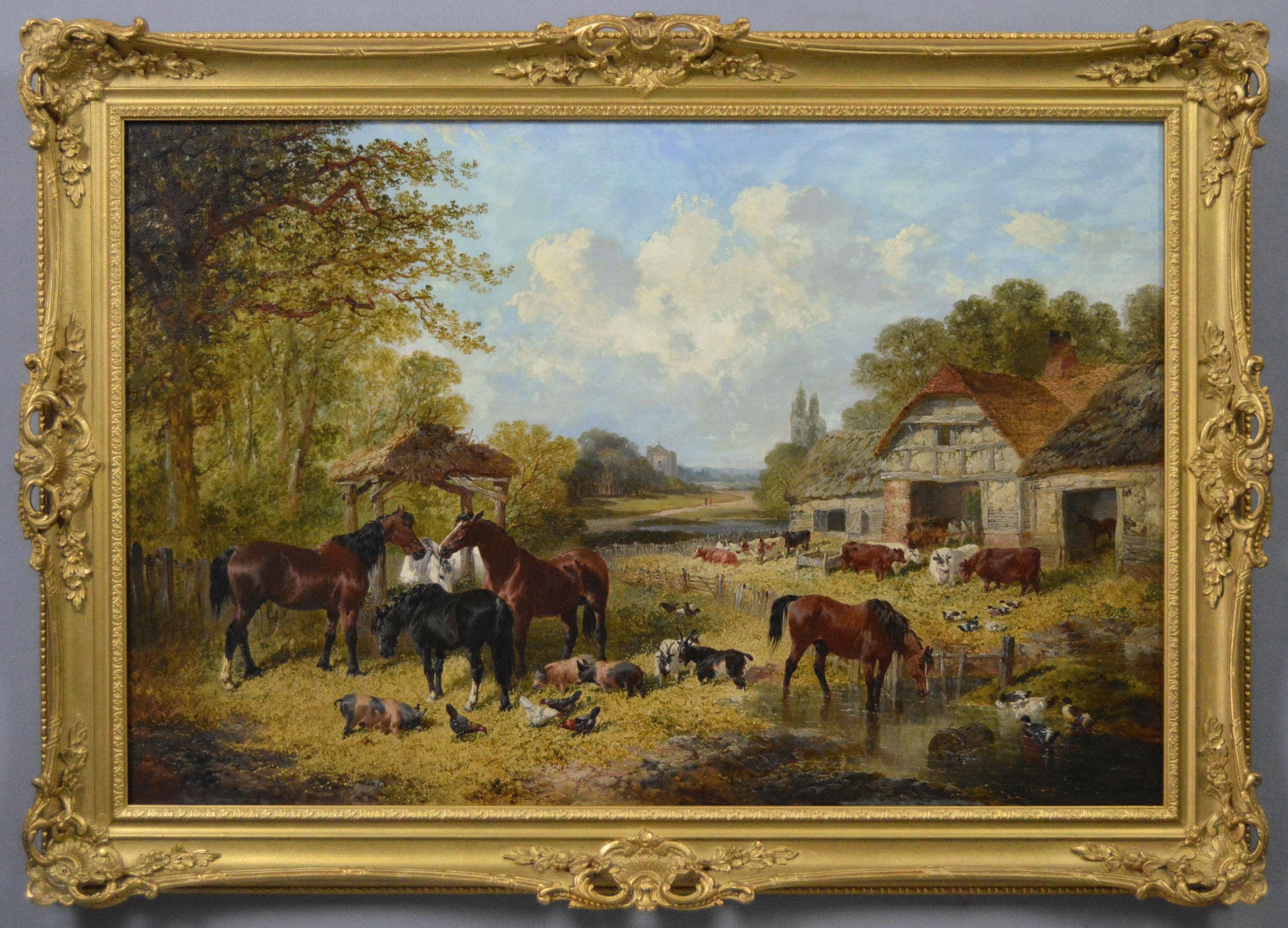
A fantastic rural farmyard scene featuring horses, pigs, goats, chickens, ducks and cattle by John Frederick Herring Jnr. In the foreground, pigs, goats and chickens are shown foraging for food whilst horses watch on. To the right, a bay horse drinks from a pond next to some ducks as cattle graze outside a barn. In the distance two figures can be seen walking along a country path towards a church.
John Frederick Herring was born in Doncaster c1820 to the artist John Frederick Herring (1795-1865) and his wife Anna Catharina (nee Harris) and was baptised on 2 May, 1821. There is some confusion about the date of his birth due to an earlier birth record existing for 21 June, 1815. To complicate matters further, all of the census records indicate he was born in 1816. Some sources suggest this was an earlier child who died and that Herring was the child born in 1820.
Herring’s brothers Charles Herring (1828-1856) and Benjamin Herring (1830-1871) also became artists. He and his brothers were exposed to art at an early age and were all tutored by their father whose subject matter influenced their work. The family moved to Newmarket during the early 1830’s and Herring would visit the racecourse to study the horses. The brothers would often collaborate with their father on paintings, however, Herring Jnr soon developed his own style and began painting farmyard and rustic scenes featuring horses and other farm animals. His emerging success caused some discord with his father, who from around 1836 began adding ‘SR’ or ‘Senr’ to his signature to avoid confusion between the two artists. Herring did not join his father when he later moved to London but at some point moved to Cambridgeshire where he met and married Emma Jane Dawson on 29 August, 1836. Together, they lived at Great Wilbraham with their 5 children.
By 1861, he had moved to nearby Fulbourn and continuing his successful career made his debut at the Royal Academy in 1863. He began exhibiting at the British Institution from 1864 and also exhibited at the Royal Society of British Artists at Suffolk Street.
After the death of his first wife, Herring married the artist Catherine Augusta Rolfe on 5 December 1865 at St Pauls Church, Hammersmith in London. Catherine (or Kate) was the sister of the artists Alexander Frederick Rolfe (1814-1875) and Henry Leonides Rolfe (1823-1881) and the daughter of William E Rolfe, a friend of his father. They lived at Wilbraham Road in Fulbourn, later moving to The Poplars in Fulbourn where Herring spent the rest of his life. He died at Fulbourn on 6 March 1907.
Examples of his work are held by a number of museums and public collections including the Bradford Museum, Hawarth Art Gallery, Government Art Collection, Grundy Art Gallery, the Tate, National Gallery of Art, Washington DC and the Watford Museum & Witt Library.
Presentation: The painting is housed in a new, English made gilt frame which is in excellent condition.
Condition: As with all of our original antique oil paintings, this work is offered in ready to hang gallery condition, having been professionally cleaned, restored and revarnished.
© Benton Fine Art
Category
19th Century Animal Paintings
Materials
Canvas, Oil
More Ways To Browse
Wolfgang Pogzeba
Andrew Kiss Paintings
Audrey Tiffany Blue 2
Esteban Villa
Firmin Massot
Hermione Palmer
I Costello
James Riddel
Max Savy
Michael Keane
Michele Poirier Mozzone
Olga Shvederskaya
Ortiz Cruz
Painting Of Terracotta Pot
Paul Anthony Waplington On Sale
Paul Matthews Painting
Peter Max Andy With Mustache
Robert Atkinson Fox