Items Similar to Huge 1800
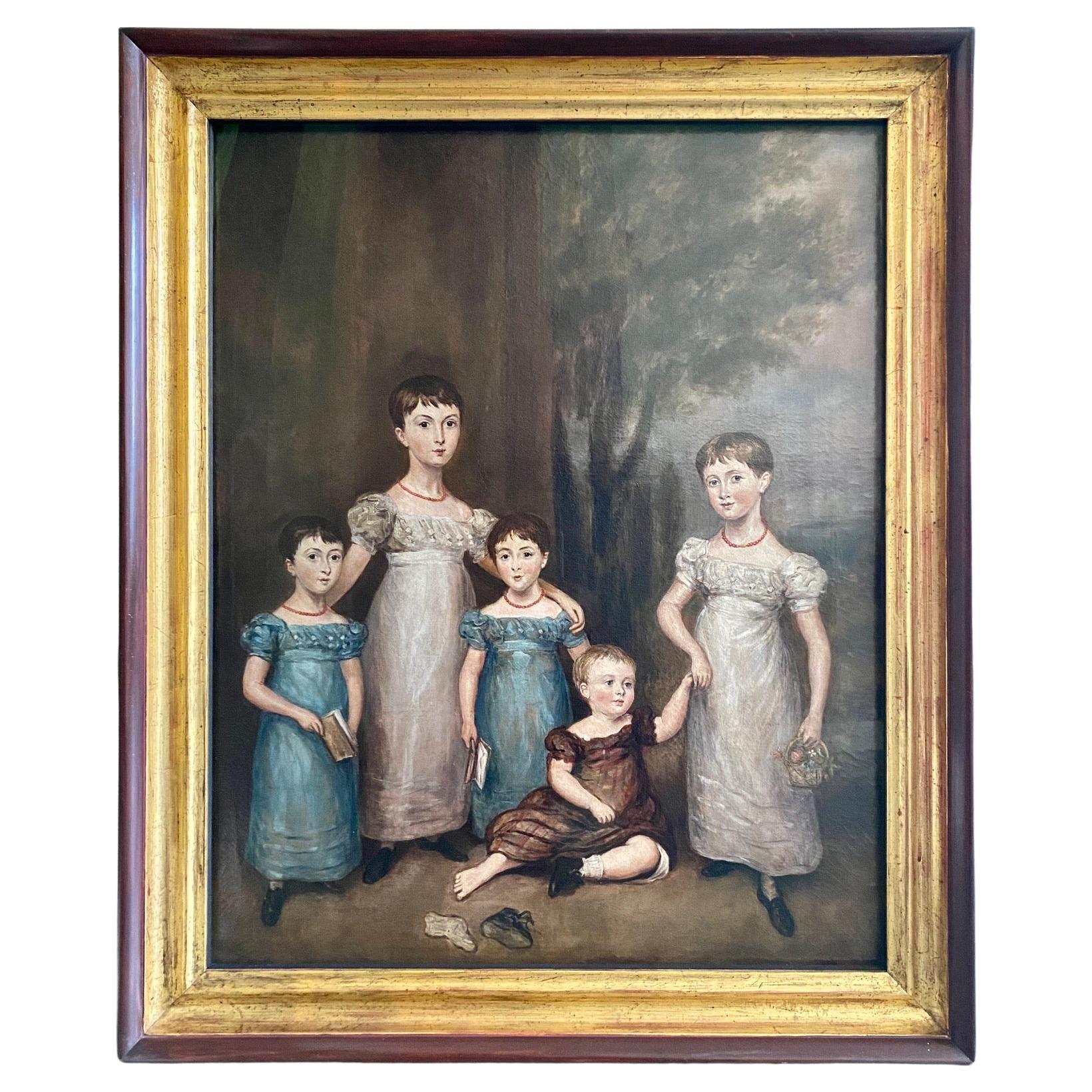
s British Oil Painting Family Portrait Dorset Country House Children
Want more images or videos?
Request additional images or videos from the seller
1 of 21
Huge 1800
s British Oil Painting Family Portrait Dorset Country House Children
$10,657.05
£7,800
€9,161.12
CA$14,805.86
A$15,925.82
CHF 8,511.22
MX$187,720.07
NOK 107,306.57
SEK 98,098.57
DKK 68,449.04
About the Item
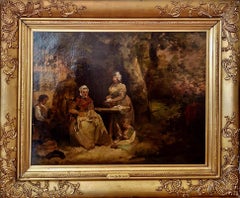
The children of Robert Williams with their go-cart in the grounds of Bridehead, Dorset *see historical notes below.
ATTRIBUTED TO RAMSAY RICHARD REINAGLE (1775-1862, unsigned).
oil painting on canvas, framed
framed: 37.5 x 48 inches
canvas : 32 x 44 inches
Provenance: the painting came from the actual house that this painting originates from: Bridehead in Dorset and been in the sitters family since by descent.
Bridehead is an exceptional manor house in West Dorset situated amongst picturesque chalk downland. It has been the home of seven generations of the Williams family for over 220 years - the children of one generation are depicted here in this painting.
The lands of Littlebredy were first documented as Brydian in the Domesday Survey, having been gifted to Cerne Abbey by the Duke of Cornwall in 987. After the Dissolution of the Monasteries in the reign of Henry VIII, the estate passed through various owners until the Mellor family built the first manor house beside the source of the River Bride in about 1600. The Mellors became absentee owners as time went on, and the house was neglected by farm tenants until the estate was purchased by Robert Williams in 1797. It is his children in this painting.
Robert was descended from a younger son of the Williams family at Herringston, just outside Dorchester, and had made good as a cabinet maker, ship’s upholder, East India Company trader and banker in London before moving back to be closer to his family’s Dorset roots. He and subsequent generations transformed the old farmhouse into a Regency manor house and landscaped the surrounding grassland into a park, damming the river source to form a two-and-a-half-acre lake beside the house, as well as converting Littlebredy into a model village, providing its mediaeval church with one of Dorset’s few spires, and extending the house westwards in a distinctive Gothic Revival style.
Condition: very good condition
For more any more information please do contact us with any questions you may have. Thank you.
- Attributed to:RAMSAY RICHARD REINAGLE (1775-1862) (1775 - 1862, British)
- Dimensions:Height: 37.5 in (95.25 cm)Width: 48 in (121.92 cm)
- Medium:
- Movement Style:
- Period:
- Condition:
- Gallery Location:Cirencester, GB
- Reference Number:1stDibs: LU509316785982
About the Seller
4.9
Platinum Seller
Premium sellers with a 4.7+ rating and 24-hour response times
Established in 1989
1stDibs seller since 2016
5,099 sales on 1stDibs
Typical response time: 1 hour
- ShippingRetrieving quote...Shipping from: Cirencester, United Kingdom
- Return Policy
More From This Seller
View All19th Century Rural Family Scene Victorian Cottage Children Playing English Oil
Located in Cirencester, Gloucestershire
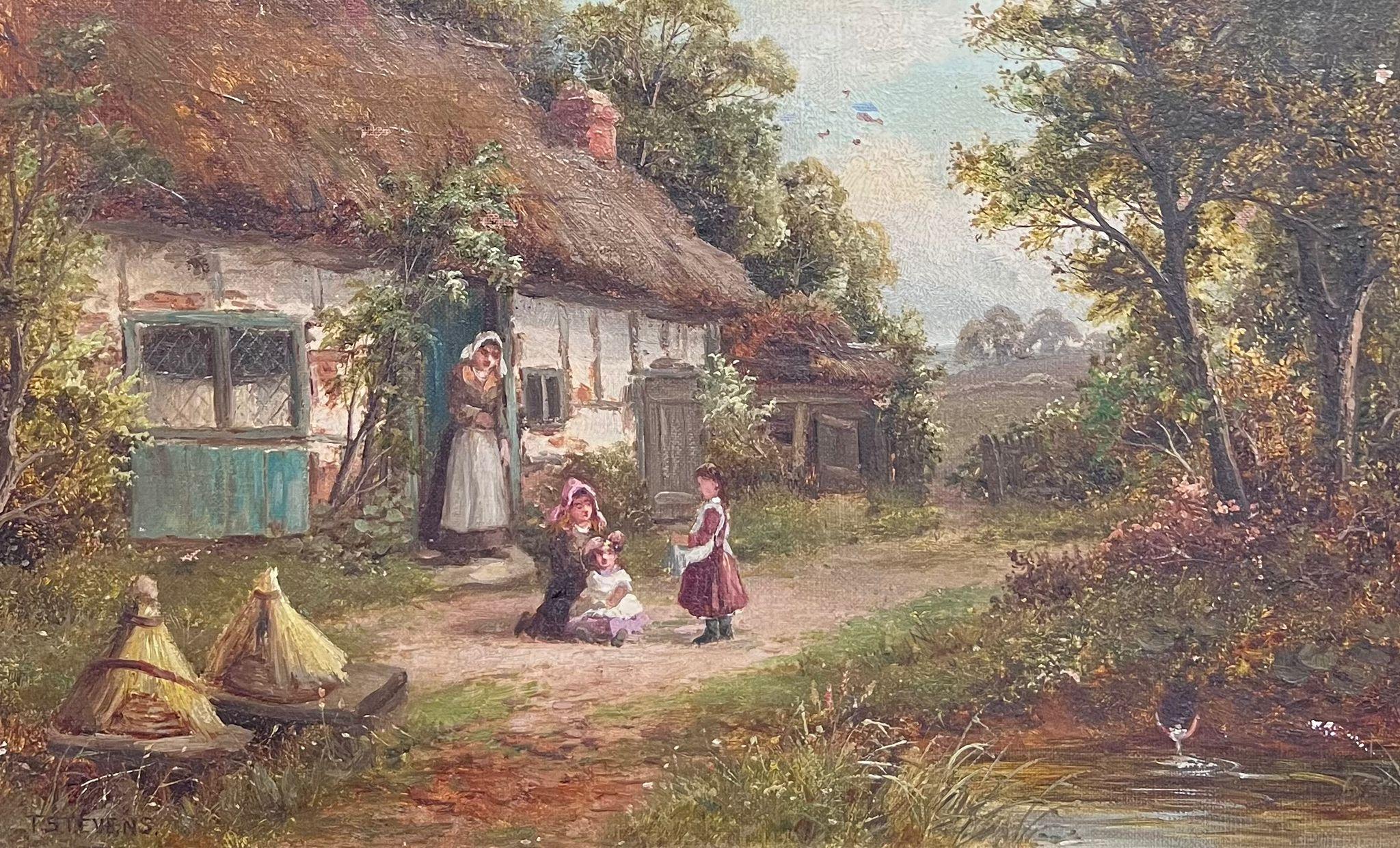
Family Scene, Children by the Victorian Cottage
By T. Stevens, British late 19th century
Signed oil painting on canvas, framed
Framed: 12.75 x 19 inches
canvas: 10 x 16 inches
Condi...
Category
Late 19th Century Victorian Landscape Paintings
Materials
Oil
$1,142 Sale Price
20% Off
Huge Victorian English Oil Painting for Restoration Family Playing Games Outside
Located in Cirencester, Gloucestershire
English School 18th/ 19th century
signed oil on canvas, framed
framed: 35 x 40 inches
canvas: 28 x 36 inches
provenance: private collection, England
condition: the painting requires ...
Category
19th Century Victorian Landscape Paintings
Materials
Oil, Canvas
Antique 19th Century English Oil Painting Figures outside Country Cottage
By circle of John Constable
Located in Cirencester, Gloucestershire
The Country Cottage
English School, first half 19th century
circle of John Constable
oil on board, framed
framed: 10.5 x 12 inches
board: 6 x 8 inches
provenance: private collection
...
Category
Early 19th Century Victorian Landscape Paintings
Materials
Oil
$1,415 Sale Price
20% Off
Family Portrait of Children Large Oil Painting on Canvas
Located in Cirencester, Gloucestershire
The Family Portrait
British School, 20th century
(painted in an earlier style)
oil on canvas, unframed
canvas: 30 x 24 inches
provenance: private collection, England
condition: overa...
Category
20th Century English School Portrait Paintings
Materials
Oil, Canvas
$1,093 Sale Price
20% Off
19th Century Country Children Playing by a Stream Victorian English Painting
Located in Cirencester, Gloucestershire
Children at the Stream
By T. Stevens, British 19th century
Signed, oil painting on canvas, framed
Framed: 12.75 x 19 inches
canvas: 10 x 16 inches
Condition: The painting is in very ...
Category
Late 19th Century Victorian Landscape Paintings
Materials
Oil
$1,142 Sale Price
20% Off
Antique 19th Century English Rural Oil Figures Country River Landscape framed
Located in Cirencester, Gloucestershire
Playing in the Stream
English School, late 19th century
oil on panel, framed
framed: 20 x 25 inches
panel: 15 x 19.5 inches
Provenance: private collection, England
Condition: very go...
Category
19th Century Victorian Landscape Paintings
Materials
Oil
You May Also Like
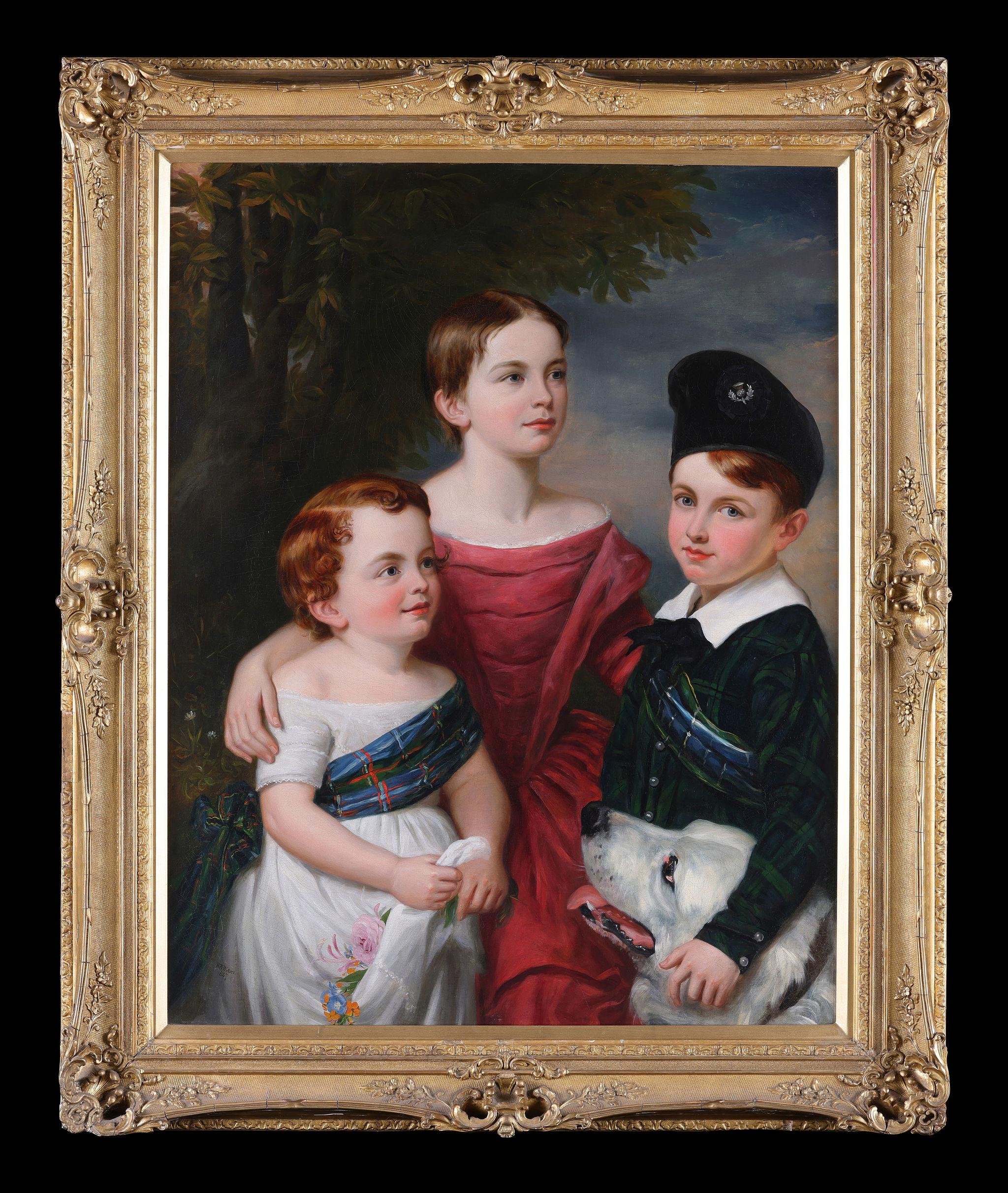
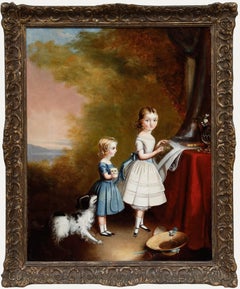
A Family Group with a Pet Dog
. Antique painting on canvas
Located in St. Albans, GB
William Richard Waters
Picture Size: 36 x 28" (92 x 72cm)
Outside Frame Size: 44 x 36" (112 x 92 cm)
Oil on Canvas signed bottom right and dated 1847
This painting is nearly 200 year...
Category
1840s Figurative Paintings
Materials
Oil
$6,776 Sale Price
20% Off
Free Shipping
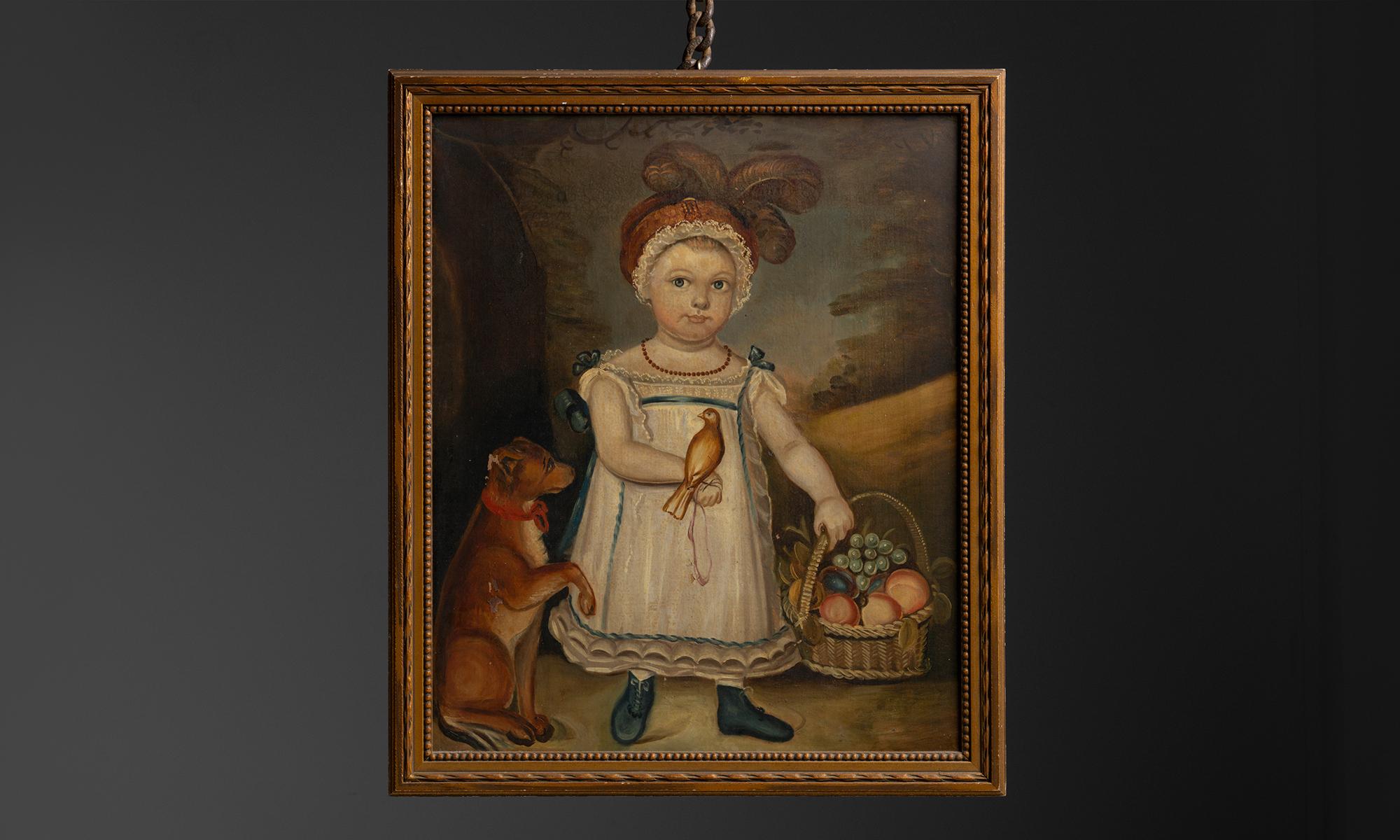
Oil Painting of Child, England circa 1830
Located in Culver City, CA
England, 1830
Oil painting on canvas in gilt frame.
28.25”w x 1.5”d x 33.5”h
Ref. A1616
$ 8,000
Category
Antique 1830s English Paintings
Materials
Paint
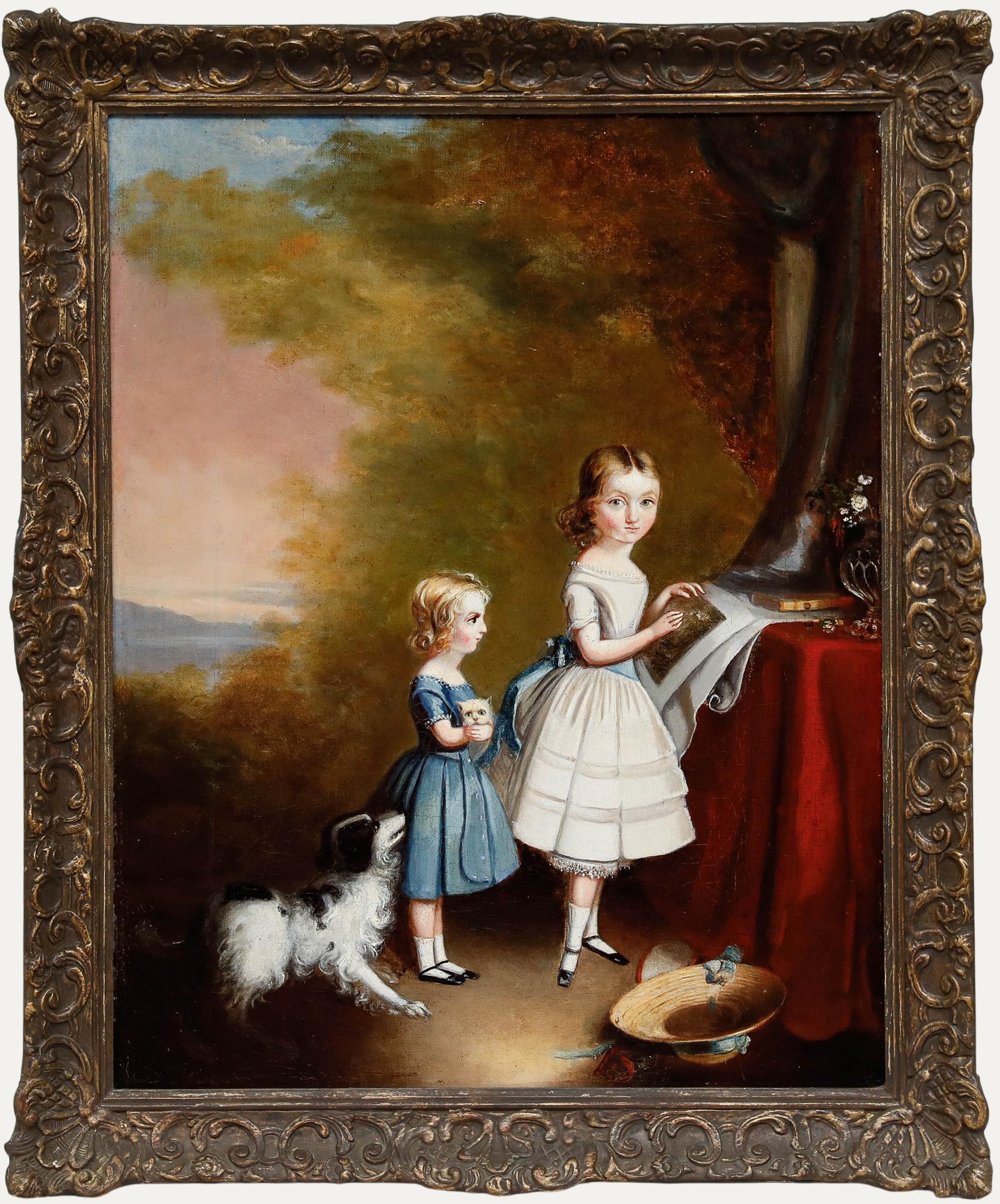
British Provincial School 19th Century Oil - Portrait of Two Sisters
Located in Corsham, GB
A charming provincial 19th-century portrait depicting two young girls alongside their pets. The composition is grand in style, characteristic of the period, and rich with symbolic de...
Category
19th Century Portrait Paintings
Materials
Oil
Early 19th Century Portrait of the Marsh Family Twins, by Arrowsmith, circa 1830
Located in Nantucket, MA
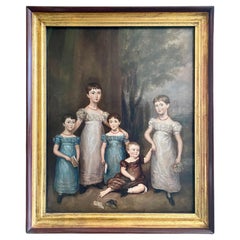
Early 19th Century Portrait of the Marsh Family Twins, by Thomas Arrowsmith (English: 1772 - 1834), circa 1830, an oil on canvas group portrait of the celebrated five children of the Marsh family of Boston. The two pair of twin girls and their younger brother became well known on both sides of the Atlantic in their day, because sets of twins were pretty rare, and these children were so ridiculously cute. Apparently the greatest artists of their day were all clamoring to paint their portraits. The Magazine Antiques ran an article on the children and their popularity about 20 years ago.
The short hair cuts sported by the girls are quite striking, and are actually not as odd and rare as many people assume. While longer hair enhanced with ringlets and other curls were very much the popular fashion, a good number of parents did boldly break away with these daring short bobs. Perhaps they were the "bohemians" of their day. The style grew in popularity, even among adults, following the French Revolution: dubbed "Guillotine Haircuts" they declared sympathy for the deposed royals.
In this particular instance, I believe the short hair was chosen because it focused more attention on the beautiful faces, and lessened the variations in height and hair color to make them all look even more alike.
A delightful painting, slightly Romantic School, a touch Folk Art, in excellent condition and signed on the reverse. Thomas Arrowsmith was a highly regarded artist who worked almost entirely in miniature. Such artists who created such amazingly detailed tiny portraits on ivory...
Category
Antique Early 19th Century English Empire Paintings
Materials
Canvas
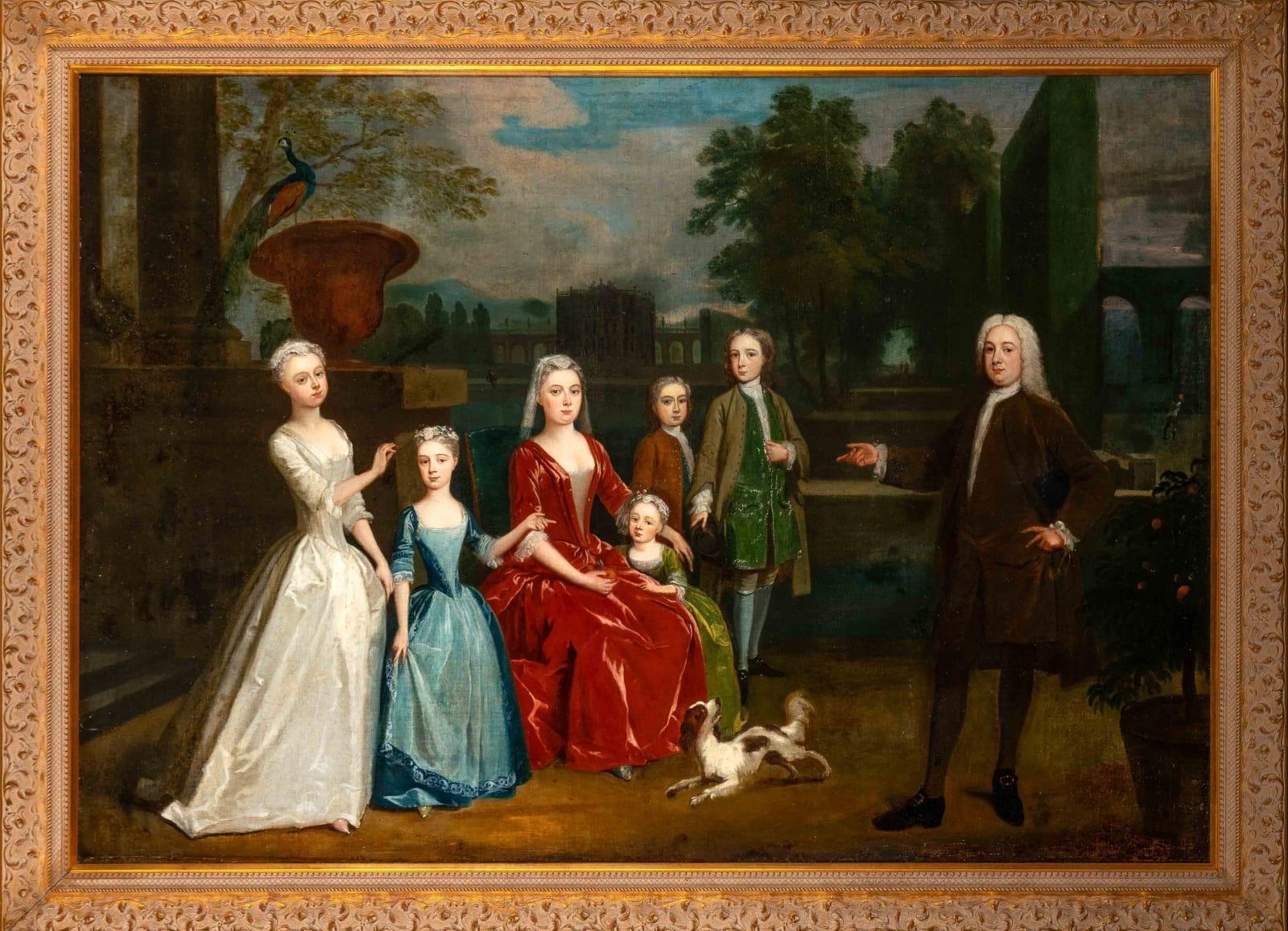
18th century painting of the Dalbiac family in the gardens of a country house
By Charles Philips
Located in Bath, Somerset
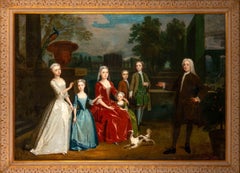
The painting depicts James (Jacques) Dalbiac, his wife Louise (ne de la Porte) and their five children, James, Charles, Louise, Marianne and Martha in the ornamental gardens of a grand country estate.
The extensive gardens extend into the distance with gardeners working in the background and figures strolling through the avenues of trees. A peacock and peahen can be seen on the wall to the left and a potted orange tree to the right. Louise Dalbiac holds an orange taken from the orange tree, aluding to the family's faith and their loyalty to the protestant King William of Orange and their adopted country.
The Dalbiacs were wealthy London silk and velvet merchants of French Huguenot origin who had fled France at the end of the 17th century to escape persecution for their protestant faith. England offered safe refuge and their skills and industriousness allowed them to establish one of the most successful businesses in London's Spitalfields which became a new centre of the silk trade, effectively leading to the collapse of the once dominant French silk industry. Both sons, James and Charles followed their father and Uncle into the family business, successfully growing the family's fortune and each going on to own their own country estates.
A conversation piece is a genre of painting used to describe group portraits of families and friends, often depicted with their servants and family pets and set within an elegantly furnished interior or the garden of a grand country house. They were a celebration of the intimacy of family relations as well as a sign of status, property and the power of succession. The informality of conversation pieces grew popular in 18th century England, allowing the sitters to present themselves in a more relaxed pose, perhaps engaged in intellectual conversation or showing their talents or interests. In this present portrait, the Dalbiacs are shown richly dressed and and at leisure in a grand country house setting, conveying their success and cultural and social aspirations.
Charles Philips (c.1703–1747) was an English artist known for painting a number of portraits and conversation pieces for noble and Royal patrons in the mid-eighteenth century. He was the son of portrait painter Richard Philips...
Category
Early 18th Century Old Masters Portrait Paintings
Materials
Canvas, Oil
A Late 18th-Century Rural Family Scene
By George Morland
Located in San Francisco, CA
No sentimentality on the loose here. Not with the expressions on the mother and her three children all engaged in various forms of 18th-century drudgery on this late summer’s eve. An...
Category
Late 18th Century English School Figurative Paintings
Materials
Canvas, Oil