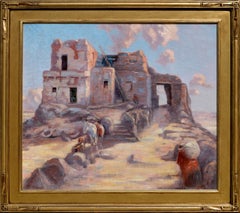
Items Similar to "PUEBLO" NATIVE AMERICAN MARCH IN FRONT OF PUEBLO ARIZONA ARTIST
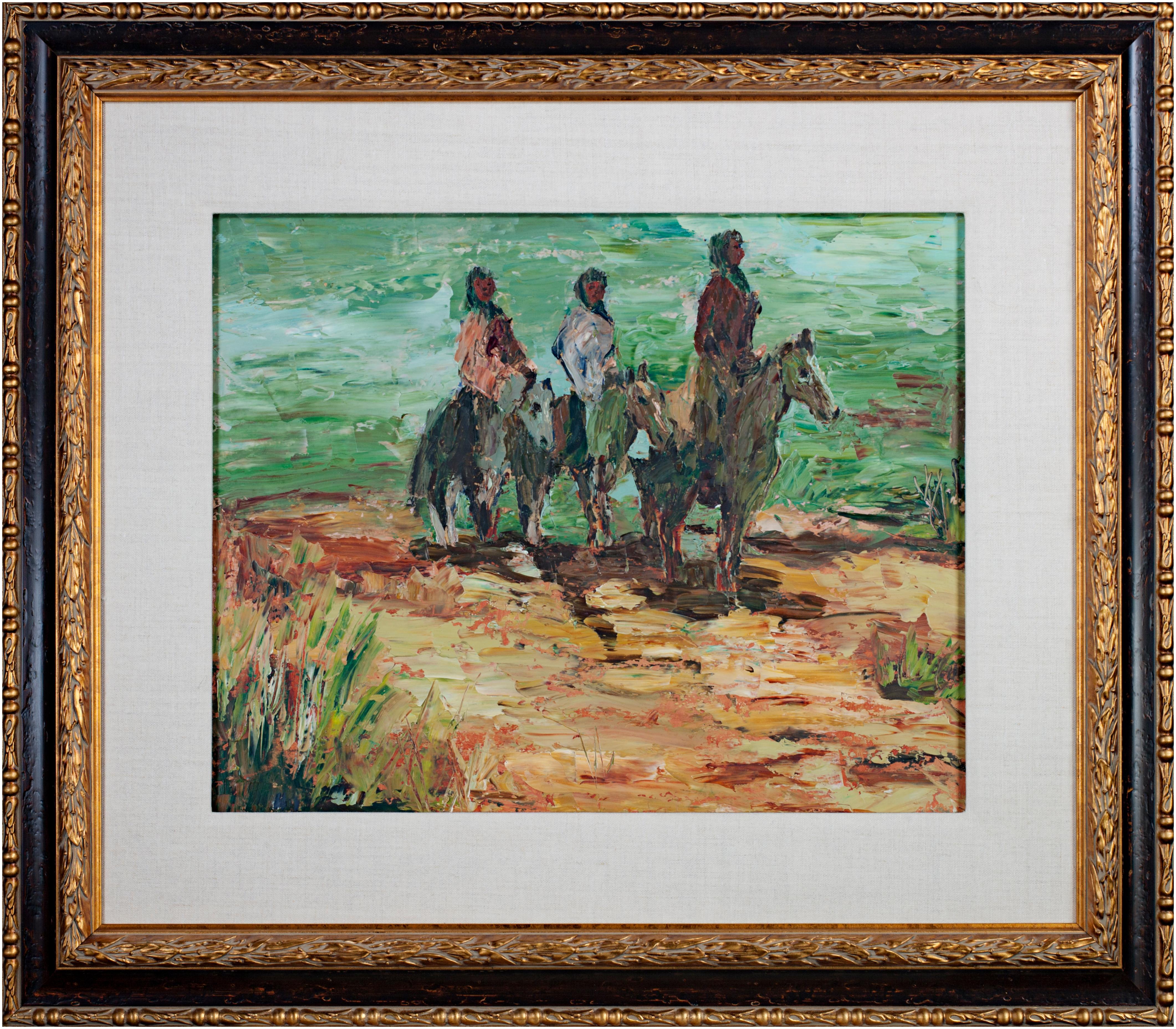
Want more images or videos?
Request additional images or videos from the seller
1 of 4
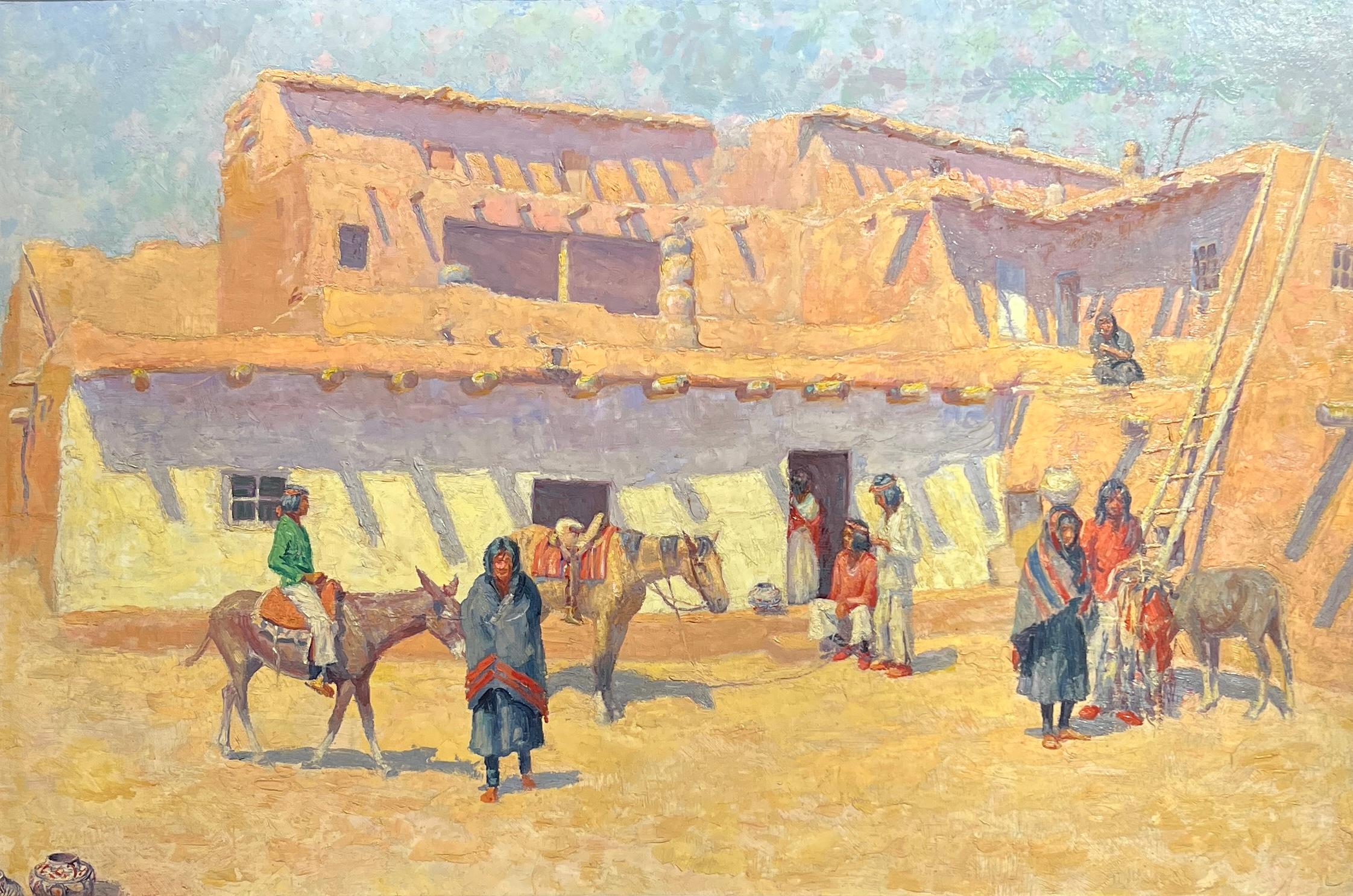
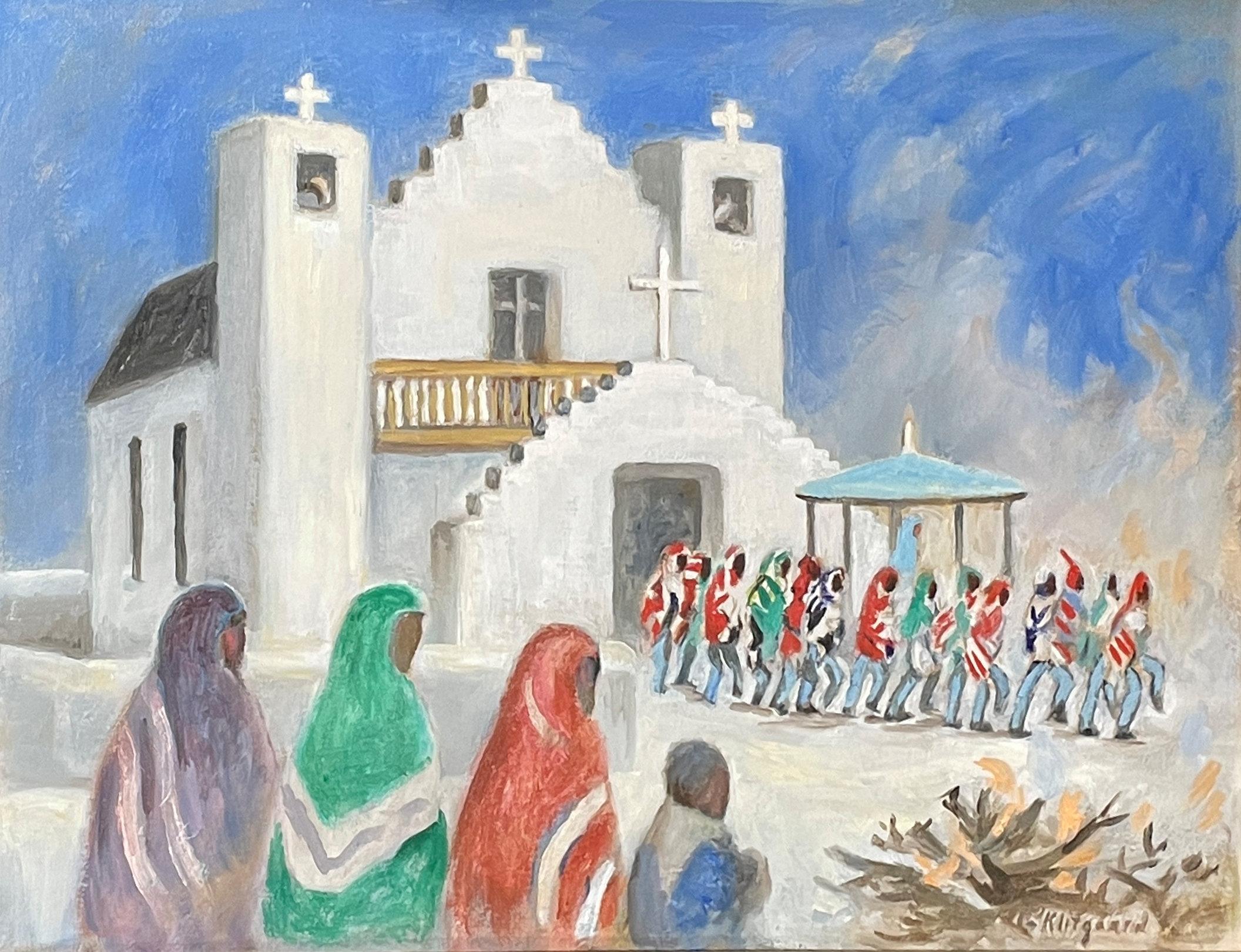
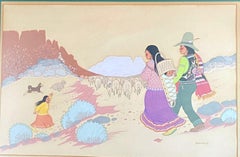
Ross Stefan"PUEBLO" NATIVE AMERICAN MARCH IN FRONT OF PUEBLO ARIZONA ARTIST20th century
20th century
$2,300
£1,742.04
€2,000.67
CA$3,223.05
A$3,504.11
CHF 1,857.88
MX$42,005.36
NOK 23,612.72
SEK 21,632.47
DKK 14,952.47
About the Item
Ross Stefan
(1934-1999)
Arizona / Wisconsin Artist
Image Size: 7.5 x 6.5
Frame Size: 18 x 16
Medium: Oil
"Pueblo"
Biography
Ross Stefan (1934-1999)
Born in Milwaukee, Wisconsin, Ross Stefan became a painter of western scenes in traditional style. His subjects are Southwestern desert and mountain landscapes and stereotypical figures of that part of the country.
He had his first one-man show at age 13 and then living in Wisconsin, was much influenced by a studio visit to Dan Muller, an illustrator.
In 1953, when he was a teenager, he moved to Tucson, Arizona with his family, and his father worked in advertising, which furthered Stefan's interest in illustration art. He studied art and philosophy at the University of Arizona and did part-time sketching for the Tucson newspaper.
Norman Rockwell was one of his early heroes. Encouraged by Ivan Rosequist, pioneer Arizona art dealer in Tucson, Stefan quit his unproductive activities in the University of Arizona art department and set out on his own as a fine artist.
Source:
Peggy and Harold Samuels, "The Illustrated Biographical Encyclopedia of Artists of the American West"
Ross Stefan was born in 1934 in Milwaukee, Wisconsin. His father, who worked in advertising, introduced him to art at a young age, and young Ross Stefan had his first one-man show at the age of 13. His first (and perhaps only) major influence was the noted Wisconsin illustrator Dan Muller, a visit to whose studio marked a major developmental turning point in his career.
Due to ill health, Ross Stefan moved to southern Arizona in 1953, where he became an art student at the University of Arizona. In his spare time, Stefan worked as an illustrator for the Tucson Daily Citizen, using a melding of his own self-taught style with that of his early muse, Norman Rockwell. This foray into paid work convinced Ross Stefan to quit his studies at the University and begin painting full-time in 1955 in a studio and gallery he established in Tubac. It was also in 1955 that Ross Stefan first traveled out into the desert to spend time with
Fame came to Ross Stefan in 1971, when his one-man show in New York City virtually sold out on opening night. From that point onward, Stefan's work was amongst the most coveted and best collected in the state of Arizona, with major retrospectives of his work at the Phippen Museum, the Harmsen Collection, the Denver Art Museum, the Pierce Western Collection, the Phoenix Art Museum and the Sangre de Cristo Arts Center.
Ross Stefan's work is often described as "Southwestern Impressionist", a reduction that takes into account his broad strokes and heightened color palette without considering the proportional accuracy and spatial realism of his landscapes, figures and architectural depictions. Ross Stefan's scenes of pueblo life and the southern Arizona landscape are still archetypes of the genre, and his legacy is secure as one of the leading Arizona artists of the twentieth century.
Born on June 13, 1934 in Milwaukee, Wisconsin, Ross Stefan developed a love for the arts at an early age. His father, who worked in advertising, provided Stefan with just the right amount of art to wet his lips. By the age of 13 Stefan debuted his first one-man show. Soon after, because of a health, he moved to southern Arizona.
Engulfed in the love for the western atmosphere, Stefan began sketching landscapes. He has been called a self-taught artist, but got encouragement from the Wisconsin Illustrator, Dan Muller on several visits.
Stefan became an art student at the University of Arizona. During his education he did part time sketching for the Tuscan Newspaper. He thrived on the works of his early muse, Norman Rockwell, as an inspiration in technique. It is rumored that Ivan Rosequist of the Rosequist Gallery in Tucson was the encouragement that Stefan needed to blossom as an artist to his fullest potential.
Whether or not Rosequist was that influence, by 1955 Ross Stefan took the leap, and began painting full time with a studio and gallery in Tubac, Arizona. That same year, Stefan stayed with the Navajos, using the land and the people as his ongoing trademark.
His paintings became a sensation. In 1971, his New York One-Man Show consisting of 16 oils of Southwestern landscapes and figures, proved to be quite successful with a virtual sell-out the first night. By his brush strokes, which are airy and wide, he has gained the reputation as an impressionist artist. His painting demonstrates the development of color, which has been called the highlight of impressionist art.
- Creator:Ross Stefan
- Creation Year:20th century
- Dimensions:Height: 7.5 in (19.05 cm)Width: 6.5 in (16.51 cm)Depth: 2 in (5.08 cm)
- More Editions Sizes:Image Size: 7.5 X 6.5 Frame Size: 18 x 16Price: $2,300
- Medium:
- Movement Style:
- Period:
- Framing:Frame IncludedFraming Options Available
- Condition:Please visit my storefront for more vintage and mid-century artwork.
- Gallery Location:San Antonio, TX
- Reference Number:1stDibs: LU769317090502
About the Seller
5.0
Vetted Professional Seller
Every seller passes strict standards for authenticity and reliability
Established in 1974
1stDibs seller since 2017
104 sales on 1stDibs
Typical response time: 1 hour
- ShippingRetrieving quote...Shipping from: Fredericksburg, TX
- Return Policy
More From This Seller
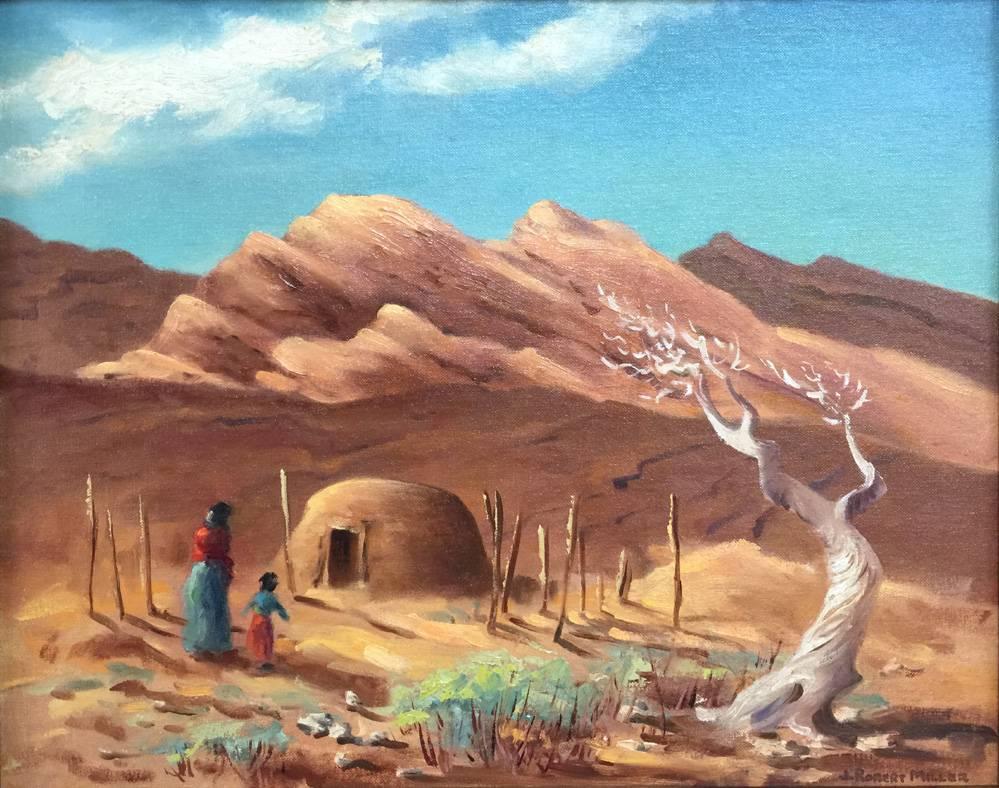
View All"Going Home" Native American, Texas, New Mexico
By J. Robert Miller
Located in San Antonio, TX
J. Robert Miller (1928 -2005) Abilene Artist Image Size: 16 x 20 Frame Size: 21 x 25 Medium: Oil "Going Home"
Biography
J. ROBERT MILLER (1928-2005)
J. Robert Miller was an ...
Category
1960s Impressionist Landscape Paintings
Materials
Oil
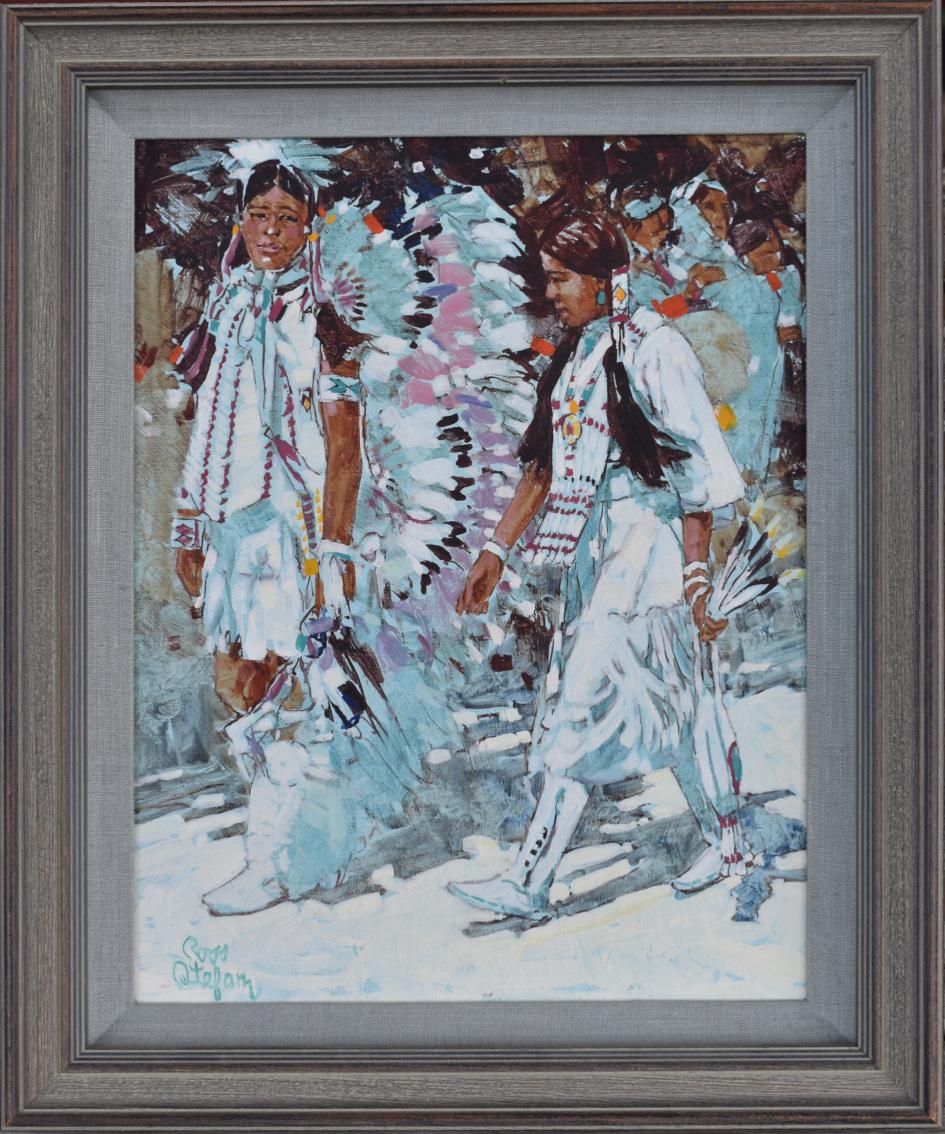
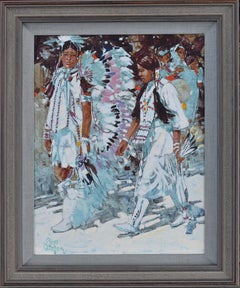
"INDIAN MAIDENS" NATIVE AMERICAN ARIZONA ARTIST
Located in San Antonio, TX
Ross Stefan
(1934-1999)
Arizona / Wisconsin Artist
Image Size: 16 x 12
Frame Size: 19 3/4 x 15 3/4
Medium: Oil on Canvas
"Indian Maidens"
Biography
Ross St...
Category
20th Century Impressionist Figurative Paintings
Materials
Oil
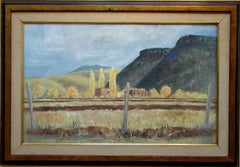
New Mexico Adobes
By Leslie R. Center
Located in San Antonio, TX
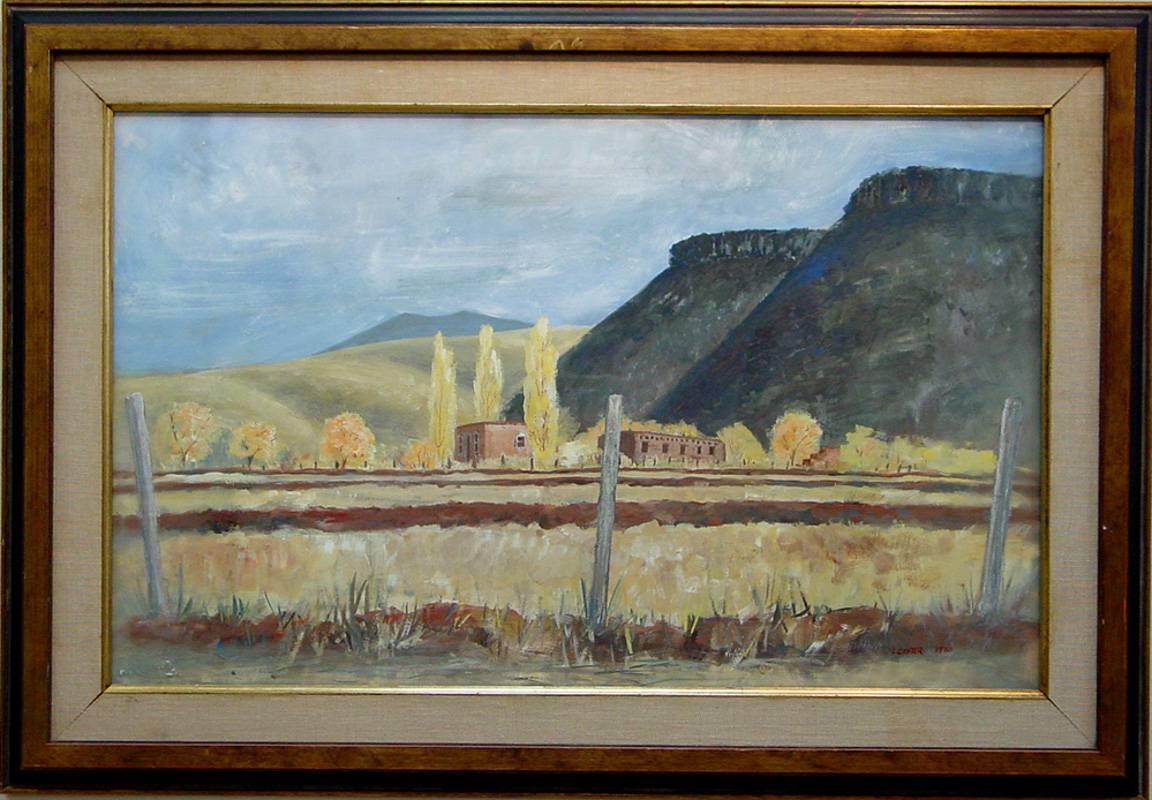
Leslie R. Center (1933-2009) Houston Artist Image Size: 18 x 29 Frame Size: 29 x 36 Medium: Mixed Media 1960
Biography
Leslie R. Center (1933-2009)
LESLIE R. CENTER, JR., 7...
Category
1960s Impressionist Landscape Paintings
Materials
Mixed Media
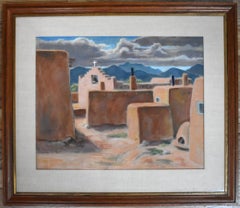
"ADOBE CHURCH" NEW MEXICO DATED 1943 FRAMED 28.75 X 33.25
By Edmund Daniel Kinzinger
Located in San Antonio, TX
Edmund Daniel Kinzinger
(1888-1963)
Waco Artist
Image Size: 18.5 x 24
Frame Size: 28.75 x 33.25
Medium: Pastel
Dated 1943
"Adobe Church" New Mexico
Biography
Edmund Daniel Kinzinger ...
Category
1940s Impressionist Landscape Paintings
Materials
Pastel
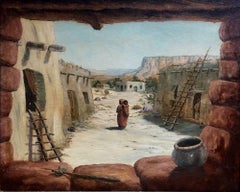
"Adobes" Beautiful Colors unusal scene inside looking out Native American
By Jack Grisham
Located in San Antonio, TX
Jack Grisham (1913-1994) California, Texas Artist Image Size: 24 x 30 Frame Size: 31 x 37 Medium: Oil 1953 Adobe Huts.
Professionally Cleaned. Some craquelure that adds to the character of the piece. Unusual scene looking out from inside. Original Period Frame has some scuffing.
Bio:
Jack Grisham was born in Denton Country, Texas in December of 1913. He died in Denton County, Texas in May of 1994. He lived most of his life in southern California where he owned Jac's Art Shoppe...
Category
1950s Impressionist Landscape Paintings
Materials
Oil
"Down By The Rio Grande" Texas Cowboy Western Dallas Artist Fred Darge 1900-1978
Located in San Antonio, TX
Fred Darge (1900-1978) Dallas Image Size: 24 x 30 Frame Size: 32 x 38 Medium: Oil, "Down By The Rio Grande"
Biography
Fred Darge (1900-1978)
Friedrich Ernst Darge Born: March 1 1900 Rendsburg, Germany Died: April 10 1978 Dallas, Texas Entered the U.S. ; Jan. 14 1923 at Port Arthur, Texas. By 1924 he was in Chicago painting under the W.P.A. Artists policy and attending the Art Institute of Chicago from where he graduated. While in Chicago he painted and made model sail boats...
Category
1940s Impressionist Landscape Paintings
Materials
Oil
You May Also Like
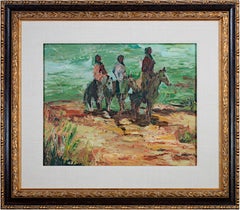
Southwest Indians at Shore and New Mexican Village, two-sided painting
Located in Milwaukee, WI
The present artwork is an unusual example of the paintings of Fritzi Brod. It is painted on both sides: on one side, an image of three Native Americans on ...
Category
1930s American Impressionist Figurative Paintings
Materials
Oil, Board
Mid-day, Zuni Village
By Frank Reed Whiteside
Located in Missouri, MO
Mid-day, Zuni Village, 1897
By. Frank Reed Whiteside (American, 1866-1929)
Unframed: 20" x 30"
Framed: 28" x 38"
Frank Reed Whiteside, born in Philadelphia on 20 August 1867, became a student of Thomas Anshutz at the Pennsylvania Academy of the Fine Arts (1888-92). He already began exhibiting there during his student years (1887-98). In 1893, he enrolled in the Académie Julian in Paris where he received instruction from Jean-Paul Laurens and Benjamin Constant. After his French academic training, Whiteside taught art in Philadelphia high schools. He took frequent trips to the Southwest between 1890 and 1928 to live with and paint the Zuni Indians. Whiteside depicted ceremonial dances, Zuni buildings, and other genre scenes, usually in blinding afternoon sunlight. He carefully observed the effects of light on vibrant color, using a finely crafted impressionist technique. He was fond of broad areas of color, subtle combinations of hues, and simplified shapes and silhouettes. Whiteside continued to exhibit at the PAFA (1905-15), at the Art Institute of Chicago (1896-1916), at the Carnegie International (1905 and 1907) and at the Corcoran Gallery (1907). He was a member of Philadelphia art societies and beginning in 1909 had a summer studio in Ogunquit, Maine, where he took part in Hamilton Easter Field's discussion groups. Frank's wife, Clara Walker Whiteside, who published Touring New England in 1926, was active in the Ogunquit Art Association.
Like Stanford White, Frank Reed Whiteside was the victim of murder, on 19 September 1929, but Whiteside's case remains unsolved. One night, the sixty-three year-old painter answered the doorbell. Two witnesses...
Category
Late 19th Century Other Art Style Figurative Paintings
Materials
Canvas, Oil
Price Upon Request
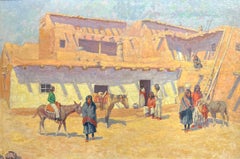
"Pueblo Indians, Taos, New Mexico" Georgina Klitgaard, Modernist Figures
By Georgina Klitgaard
Located in New York, NY
Georgina Klitgaard
Pueblo Indians, Taos, New Mexico
Signed lower right
Oil on canvas
18 x 24 inches
Georgina Klitgaard’s art has sometimes gotten lost in the critical propensity to...
Category
Mid-20th Century American Modern Landscape Paintings
Materials
Canvas, Oil

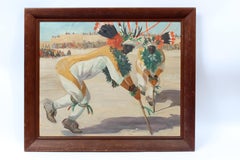
American Painting Native American Dance Exhibition New Mexico Antelope Dancers
Located in Buffalo, NY
An original oil painting by American artist Rudolph Wedow. This fantastic painting depicts Antelope Dancers in San Felipe Pueblo in New Mexico.
Created...
Category
1940s American Impressionist Figurative Paintings
Materials
Oil, Board
Apache Family Herding Sheep, by Allan Houser, 1945, painting, Apache, landscape
By Allan Houser
Located in Santa Fe, NM
Apache Family Herding Sheep, by Allan Houser, 1945, painting, Navajo, Apache, landscape
unique 1/1
signed front lower right
Category
1940s Contemporary Landscape Paintings
Materials
Watercolor
1903 Walpi Hopi Village, Arizona First Mesa Landscape circle of Elmer Wachtel
By Marion Kavanaugh Wachtel
Located in Soquel, CA
Walpi Hopi Village, Arizona First Mesa Landscape by Marion Kavanaugh Wachtel. Significant southwestern painting of Hopi at Walpi Mesa in Arizona...
Category
Early 1900s Hudson River School Landscape Paintings
Materials
Gold Leaf