Items Similar to "Woman Recumbent" Sally Michel Avery, Vibrant Blue, Modernist Nude, Interior
Want more images or videos?
Request additional images or videos from the seller
1 of 6
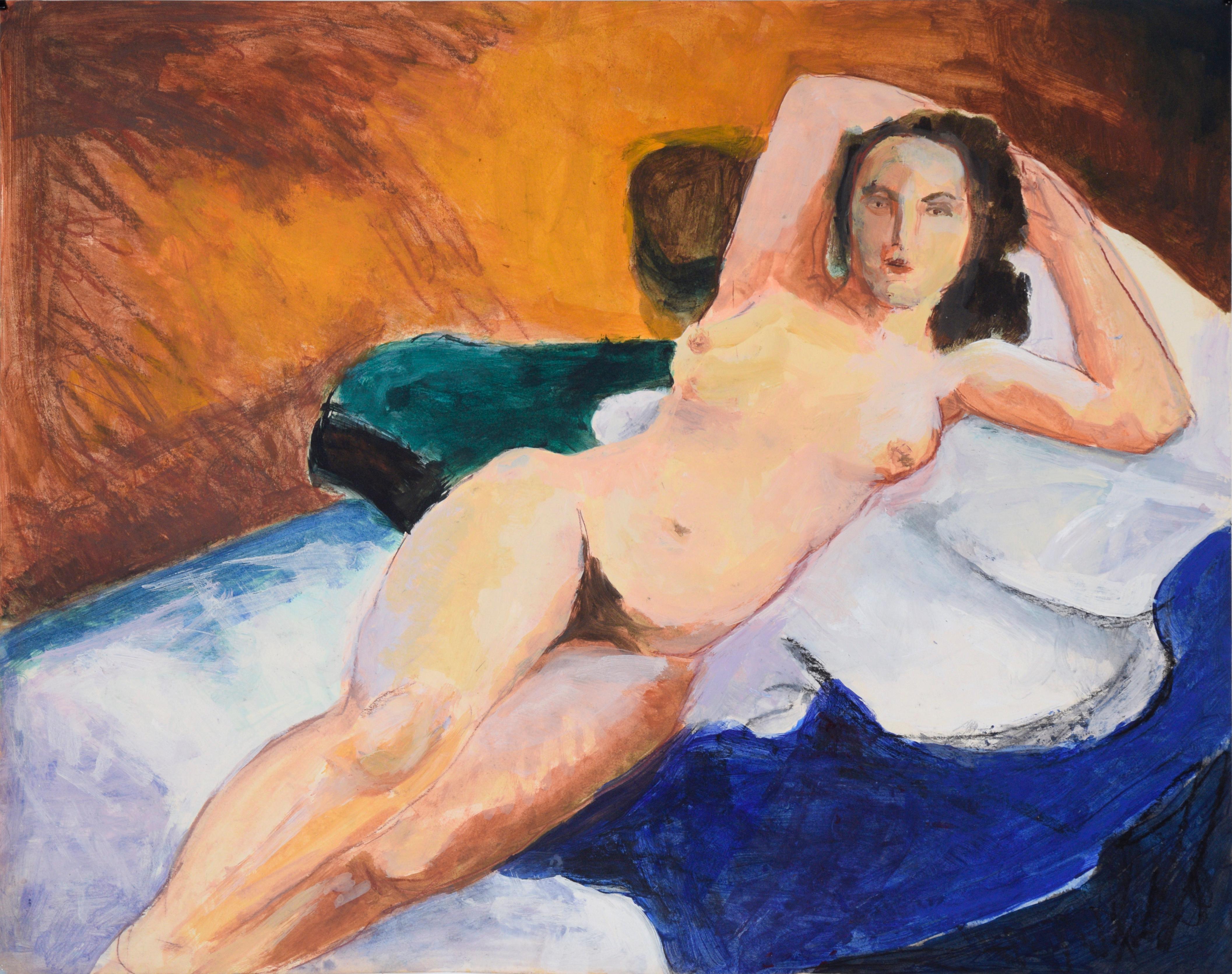
Sally Michel Avery"Woman Recumbent" Sally Michel Avery, Vibrant Blue, Modernist Nude, Interior1980
1980
$27,500
£20,960.98
€24,176.30
CA$39,058.22
A$41,972.17
CHF 22,520.50
MX$494,406.50
NOK 283,170.36
SEK 258,674.30
DKK 180,684.08
About the Item
Sally Michel Avery
Woman Recumbent, 1980
Signed, dated and titled on the reverse
Oil on board
16 x 20 inches
Private Collection, East Hampton
Private Collection, New York (acquired from the above)
Born in 1902, Sally Avery knew by the age of five that she wanted to be an artist. After high school, she continued her studies at the Art Students League in New York City. In 1924, she spent the summer painting in East Gloucester, where she met and fell in love with the artist in the next studio, Milton Avery, (1893 - 1965). At this time in his career, Milton Avery was painting Impressionist works and was living with his mother in Connecticut. He soon followed Sally to New York. Two years later, they were married.
For the next forty years, the two artists were inseparable. They were each other's model, collaborator, critic and champion. Together they created a style of "high modernist" painting that is most often solely attributed to Milton's hand.
Although they painted side by side, their purposes were quite different. Sally made no effort to exhibit or sell her art, but instead managed Milton's career and the Avery household. For many years, it was her work as an illustrator for "The New York Times", children's books, and other publications, which supported the family.
During the summer, the Avery family would often spend their vacations travelling throughout New England, Canada, Mexico, and Europe from their home in New York. Their excursions were often in the company of their close friends and fellow artists, Mark Rothko, Adolph Gotlieb and Barnett Newman.
By the mid-1950's, their daughter, March, had grown up and Milton's works had finally begun to sell. Both enabled Sally to devote more time to her own painting (still largely for her own pleasure). She exhibited at a handful of shows during the decade.
Roberta Smith wrote "Without Sally Michel there would have been no Milton Avery, or at least not as much. They met in 1924 and married in 1926. For much of their marriage, Michel (1902-2003) worked as a freelance illustrator, enabling Avery (1885-1965) to focus on his painting. A painter as well, Michel made this sacrifice because she was convinced of Avery’s greatness. She also adapted the simplified forms from his style, which put her further in his shadow."
- Creator:Sally Michel Avery (1902 - 2003, American)
- Creation Year:1980
- Dimensions:Height: 21 in (53.34 cm)Width: 24.5 in (62.23 cm)
- Medium:
- Movement Style:
- Period:
- Condition:
- Gallery Location:New York, NY
- Reference Number:1stDibs: LU1841217386422
About the Seller
5.0
Platinum Seller
Premium sellers with a 4.7+ rating and 24-hour response times
Established in 2022
1stDibs seller since 2022
137 sales on 1stDibs
Typical response time: <1 hour
- ShippingRetrieving quote...Shipping from: New York, NY
- Return Policy
More From This Seller
View All"Reclining Nude" Mercedes Matter, Abstracted Nude, Early American Modernism
By Mercedes Matter
Located in New York, NY
Mercedes Matter
Reclining Nude, circa 1920
Signed "Mercedes Matter" on the overlap
Oil on canvas
32 x 51 inches
Born in New York in 1913 to famed Philadelphia Modernist, Arthur B. ...
Category
1920s American Modern Figurative Paintings
Materials
Canvas, Oil
"Cronus Asleep in the Cave" David Hare, Mythological Surrealist Composition
By David Hare
Located in New York, NY
David Hare
Cronus Asleep in the Cave, 1971
Acrylic on board
27 1/2 x 38 1/4 inches
“Freedom is what we want,” David Hare boldly stated in 1965, but then he added the caveat, “and what we are most afraid of.” No one could accuse David Hare of possessing such fear. Blithely unconcerned with the critics’ judgments, Hare flitted through most of the major art developments of the mid-twentieth century in the United States. He changed mediums several times; just when his fame as a sculptor had reached its apogee about 1960, he switched over to painting. Yet he remained attached to surrealism long after it had fallen out of official favor. “I can’t change what I do in order to fit what would make me popular,” he said. “Not because of moral reasons, but just because I can’t do it; I’m not interested in it.”
Hare was born in New York City in 1917; his family was both wealthy and familiar with the world of modern art. Meredith (1870-1932), his father, was a prominent corporate attorney. His mother, Elizabeth Sage Goodwin (1878-1948) was an art collector, a financial backer of the 1913 Armory Show, and a friend of artists such as Constantin Brancusi, Walt Kuhn, and Marcel Duchamp.
In the 1920s, the entire family moved to Santa Fe, New Mexico and later to Colorado Springs, in the hope that the change in altitude and climate would help to heal Meredith’s tuberculosis. In Colorado Springs, Elizabeth founded the Fountain Valley School where David attended high school after his father died in 1932. In the western United States, Hare developed a fascination for kachina dolls and other aspects of Native American culture that would become a recurring source of inspiration in his career.
After high school, Hare briefly attended Bard College (1936-37) in Annandale-on-Hudson. At a loss as to what to do next, he parlayed his mother’s contacts into opening a commercial photography studio and began dabbling in color photography, still a rarity at the time [Kodachrome was introduced in 1935]. At age 22, Hare had his first solo exhibition at Walker Gallery in New York City; his 30 color photographs included one of President Franklin Roosevelt.
As a photographer, Hare experimented with an automatist technique called “heatage” (or “melted negatives”) in which he heated the negative in order to distort the image. Hare described them as “antagonisms of matter.” The final products were usually abstractions tending towards surrealism and similar to processes used by Man Ray, Raoul Ubac, and Wolfgang Paalen.
In 1940, Hare moved to Roxbury, CT, where he fraternized with neighboring artists such as Alexander Calder and Arshile Gorky, as well as Yves Tanguy who was married to Hare’s cousin Kay Sage, and the art dealer Julian Levy. The same year, Hare received a commission from the American Museum of Natural History to document the Pueblo Indians. He traveled to Santa Fe and, for several months, he took portrait photographs of members of the Hopi, Navajo, and Zuni tribes that were published in book form in 1941.
World War II turned Hare’s life upside down. He became a conduit in the exchange of artistic and intellectual ideas between U.S. artists and the surrealist émigrés fleeing Europe. In 1942, Hare befriended Andre Breton, the principal theorist of surrealism. When Breton wanted to publish a magazine to promote the movement in the United States, he could not serve as an editor because he was a foreign national. Instead, Breton selected Hare to edit the journal, entitled VVV [shorth for “Victory, Victory, Victory”], which ran for four issues (the second and third issues were printed as a single volume) from June 1942 to February 1944. Each edition of VVV focused on “poetry, plastic arts, anthropology, sociology, (and) psychology,” and was extensively illustrated by surrealist artists including Giorgio de Chirico, Roberto Matta, and Yves Tanguy; Max Ernst and Marcel Duchamp served as editorial advisors.
At the suggestion of Jacqueline Lamba...
Category
1970s Abstract Abstract Paintings
Materials
Acrylic
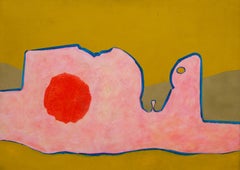
“Woman with Rose” Lily Harmon, Female American Modernism Mid-century
By Lily Harmon
Located in New York, NY
Lily Harmon (1912 - 1998)
Woman with Rose
Ink and gouache on board
23 x 19 inches
Lily Harmon, was an artist who worked in portraiture, assemblage and book illustration, and whose ...
Category
Mid-20th Century American Modern Abstract Paintings
Materials
Ink, Gouache, Board
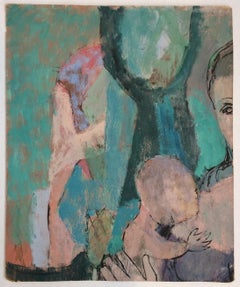
"Cronus Asleep in the Cave" David Hare, Large Abstract Surrealist Composition
By David Hare
Located in New York, NY
David Hare
Cronus Asleep in the Cave, 1971
Acrylic on linen
55 x 67 inches
“Freedom is what we want,” David Hare boldly stated in 1965, but then he added the caveat, “and what we are most afraid of.” No one could accuse David Hare of possessing such fear. Blithely unconcerned with the critics’ judgments, Hare flitted through most of the major art developments of the mid-twentieth century in the United States. He changed mediums several times; just when his fame as a sculptor had reached its apogee about 1960, he switched over to painting. Yet he remained attached to surrealism long after it had fallen out of official favor. “I can’t change what I do in order to fit what would make me popular,” he said. “Not because of moral reasons, but just because I can’t do it; I’m not interested in it.”
Hare was born in New York City in 1917; his family was both wealthy and familiar with the world of modern art. Meredith (1870-1932), his father, was a prominent corporate attorney. His mother, Elizabeth Sage Goodwin (1878-1948) was an art collector, a financial backer of the 1913 Armory Show, and a friend of artists such as Constantin Brancusi, Walt Kuhn, and Marcel Duchamp.
In the 1920s, the entire family moved to Santa Fe, New Mexico and later to Colorado Springs, in the hope that the change in altitude and climate would help to heal Meredith’s tuberculosis. In Colorado Springs, Elizabeth founded the Fountain Valley School where David attended high school after his father died in 1932. In the western United States, Hare developed a fascination for kachina dolls and other aspects of Native American culture that would become a recurring source of inspiration in his career.
After high school, Hare briefly attended Bard College (1936-37) in Annandale-on-Hudson. At a loss as to what to do next, he parlayed his mother’s contacts into opening a commercial photography studio and began dabbling in color photography, still a rarity at the time [Kodachrome was introduced in 1935]. At age 22, Hare had his first solo exhibition at Walker Gallery in New York City; his 30 color photographs included one of President Franklin Roosevelt.
As a photographer, Hare experimented with an automatist technique called “heatage” (or “melted negatives”) in which he heated the negative in order to distort the image. Hare described them as “antagonisms of matter.” The final products were usually abstractions tending towards surrealism and similar to processes used by Man Ray, Raoul Ubac, and Wolfgang Paalen.
In 1940, Hare moved to Roxbury, CT, where he fraternized with neighboring artists such as Alexander Calder and Arshile Gorky, as well as Yves Tanguy who was married to Hare’s cousin Kay Sage, and the art dealer Julian Levy. The same year, Hare received a commission from the American Museum of Natural History to document the Pueblo Indians. He traveled to Santa Fe and, for several months, he took portrait photographs of members of the Hopi, Navajo, and Zuni tribes that were published in book form in 1941.
World War II turned Hare’s life upside down. He became a conduit in the exchange of artistic and intellectual ideas between U.S. artists and the surrealist émigrés fleeing Europe. In 1942, Hare befriended Andre Breton, the principal theorist of surrealism. When Breton wanted to publish a magazine to promote the movement in the United States, he could not serve as an editor because he was a foreign national. Instead, Breton selected Hare to edit the journal, entitled VVV [shorth for “Victory, Victory, Victory”], which ran for four issues (the second and third issues were printed as a single volume) from June 1942 to February 1944. Each edition of VVV focused on “poetry, plastic arts, anthropology, sociology, (and) psychology,” and was extensively illustrated by surrealist artists including Giorgio de Chirico, Roberto Matta, and Yves Tanguy; Max Ernst and Marcel Duchamp served as editorial advisors.
At the suggestion of Jacqueline Lamba...
Category
1970s Abstract Paintings
Materials
Linen, Acrylic
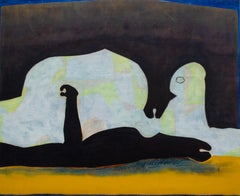
"Female Nude" Louise Nevelson, Modernist, Elegant Flowing Forms, Sweeping Line
By Louise Nevelson
Located in New York, NY
Louise Nevelson
Female Nude, circa 1935
Pencil on paper
9 15/16 x 13 7/16 inches
Provenance
The artist
Estate of the artist
Bobbie Greenfield Gallery, Santa Monica, California
Priva...
Category
1930s American Modern Figurative Drawings and Watercolors
Materials
Paper, Pencil
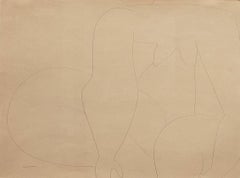
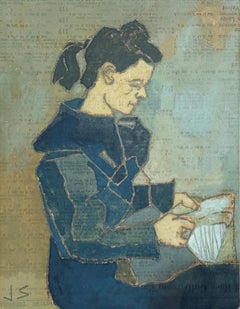
"Figure Study" Joseph Solman, Blue and Sepia, Pastel Colors Seated Study
By Joseph Solman
Located in New York, NY
Joseph Solman
Figure Study, circa 1959-60
Signed with initials lower left
Gouache on Racing Form newspaper
Sight 9 x 7 inches
Provenance
Private Collection, Montecito, California
Pr...
Category
1950s Modern Figurative Paintings
Materials
Paper, Gouache, Newsprint
You May Also Like
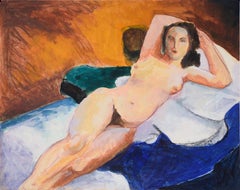
Nude Model on a White and Blue Bed in Acrylic on Paper
Located in Soquel, CA
Nude Model on a White and Blue Bed in Acrylic on Paper
Colorful painting of a woman in bed by acclaimed bluegrass musician and San Francisco artist Katherine "Kathy" Kallick (Americ...
Category
1970s French School Figurative Paintings
Materials
Acrylic, Laid Paper
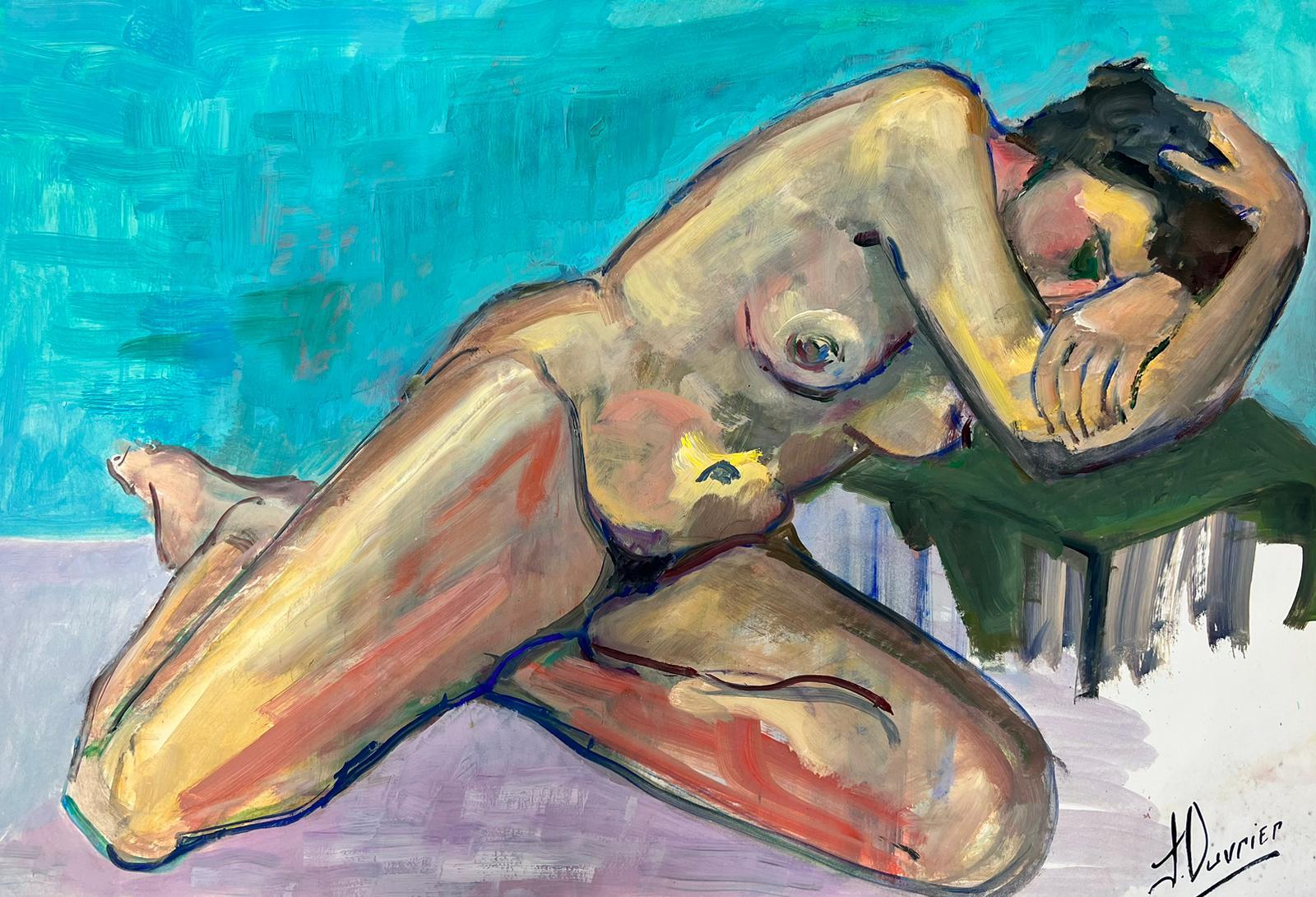
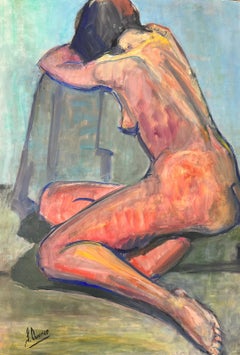
Reclining Nude Lady Model 1970
s French Modernist Painting Provence Collection
Located in Cirencester, Gloucestershire
The Artists Model
Portrait of a Nude Lady reclining
French School, circa 1970's
indistinctly signed
oil painting on card, unframed
size: 25 x 18 inches
condition: overall very good,...
Category
1970s Impressionist Nude Paintings
Materials
Oil
Modern French Figurative Oil Painting Reclining Nude on a Sofa with Blue Blanket
By Bernadette Kelly
Located in Cirencester, Gloucestershire
Title: Modern French Figurative Oil Painting Reclining Nude on a Sofa with Blue Blanket
by Bernadette Kelly (French b. 1933)
Unsigned
Mediu...
Category
Late 20th Century Modern Figurative Paintings
Materials
Oil
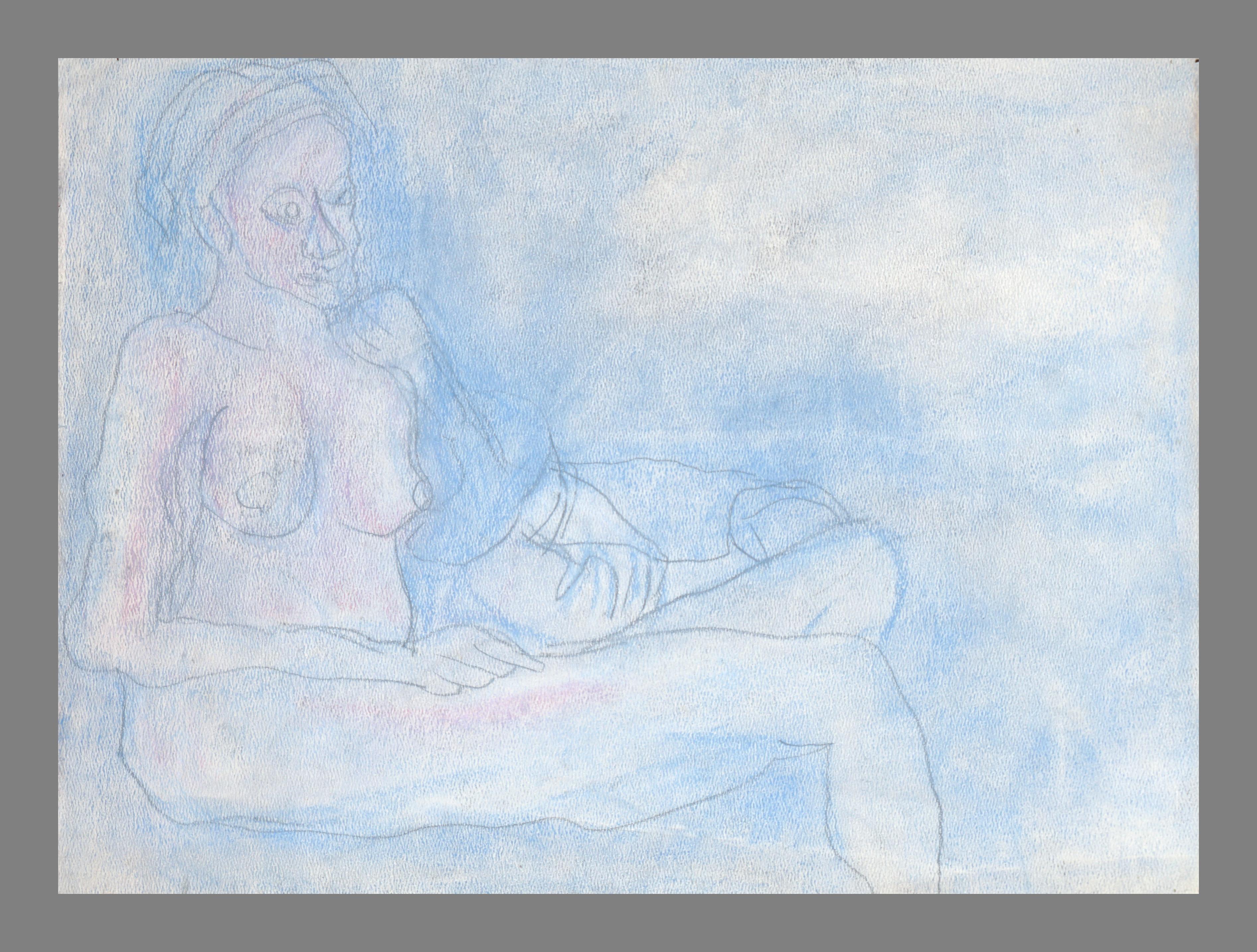
Reclining Nude - Blue Abstract Figurative
By Louis Nadalini
Located in Soquel, CA
Abstract figurative reclining nude by Louis Nadalini (American, 1927-1995). This piece is unsigned, but was acquired with a collection of Nadalini work. Unframed (First image shows w...
Category
1980s Abstract Expressionist Figurative Drawings and Watercolors
Materials
Paper, Pastel, Pencil
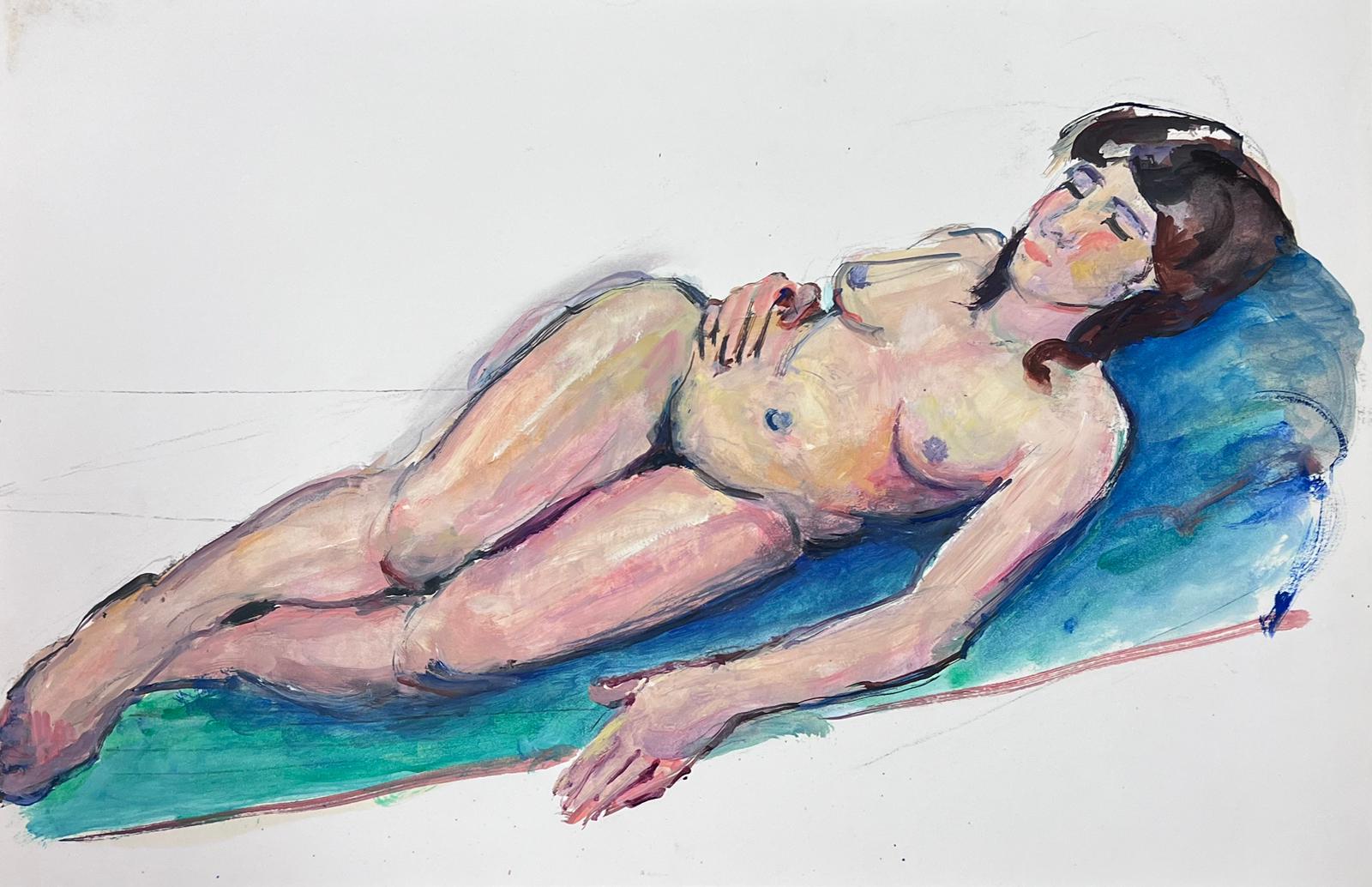
Reclining Nude Lady Model 1970
s French Modernist Painting Provence Collection
Located in Cirencester, Gloucestershire
The Artists Model
Portrait of a Nude Lady reclining
French School, circa 1970's
indistinctly signed
oil painting on card, unframed
size: 17 x 25.5 inches
condition: overall very goo...
Category
1970s Impressionist Nude Paintings
Materials
Oil
Reclining Nude Lady Model 1970
s French Modernist Painting Provence Collection
Located in Cirencester, Gloucestershire
The Artists Model
Nude Lady Model
French School, circa 1970's
oil painting on card, unframed
size: 16.5 x 25.5 inches
condition: overall very good, a very few light markings to the...
Category
1970s Impressionist Nude Paintings
Materials
Oil