Items Similar to Expertised Italian 14th Century Gold Ground on Panel Painting
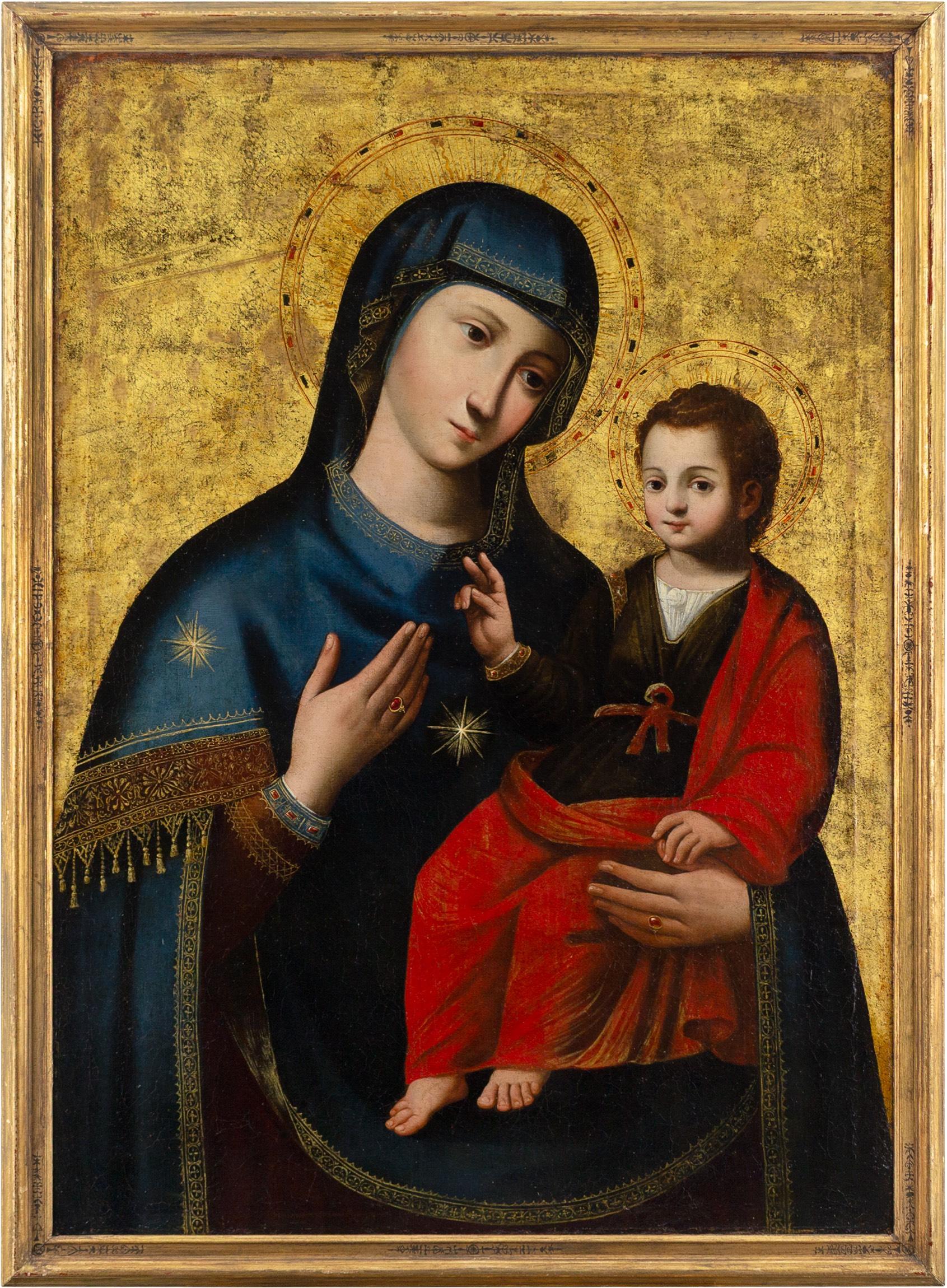
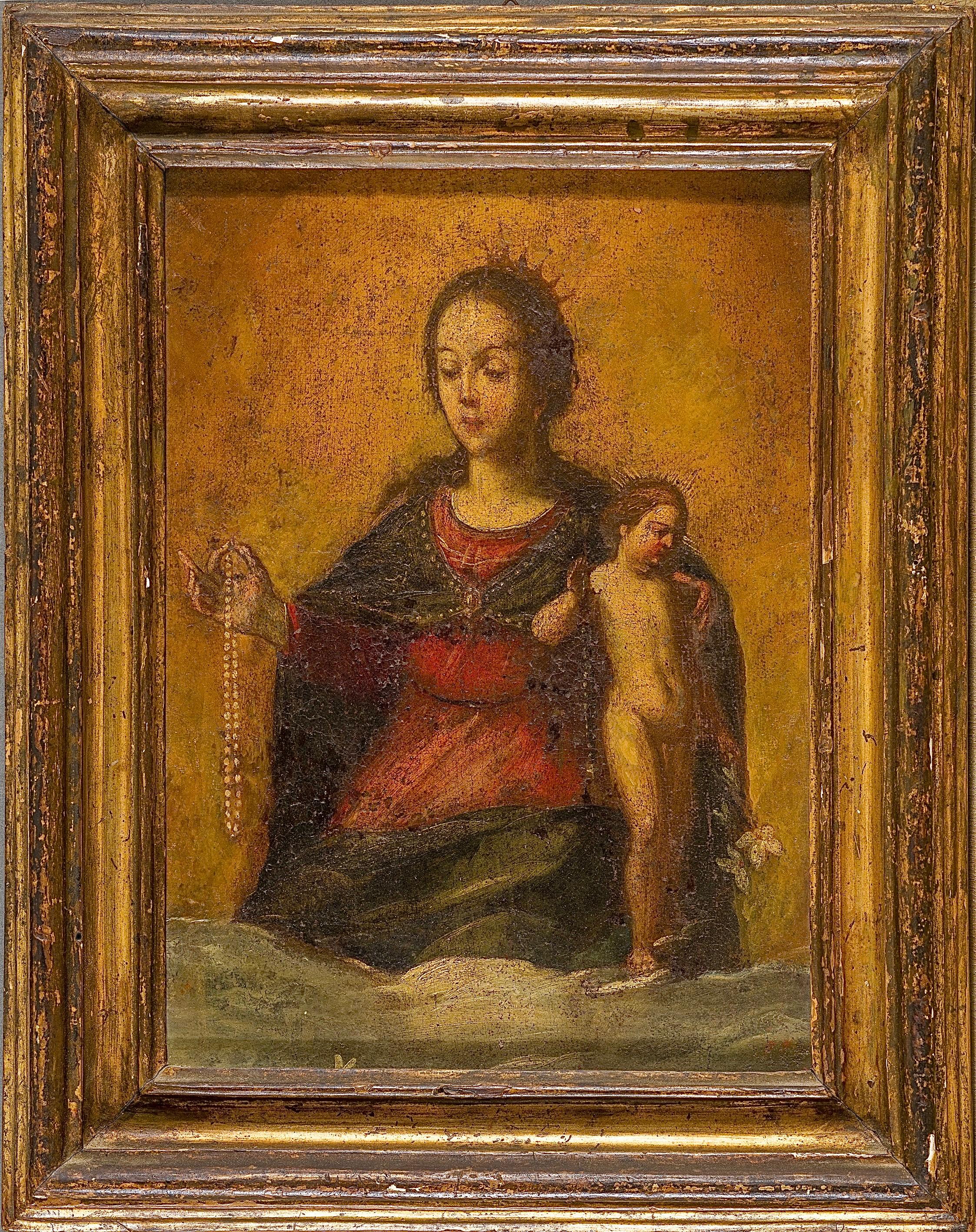
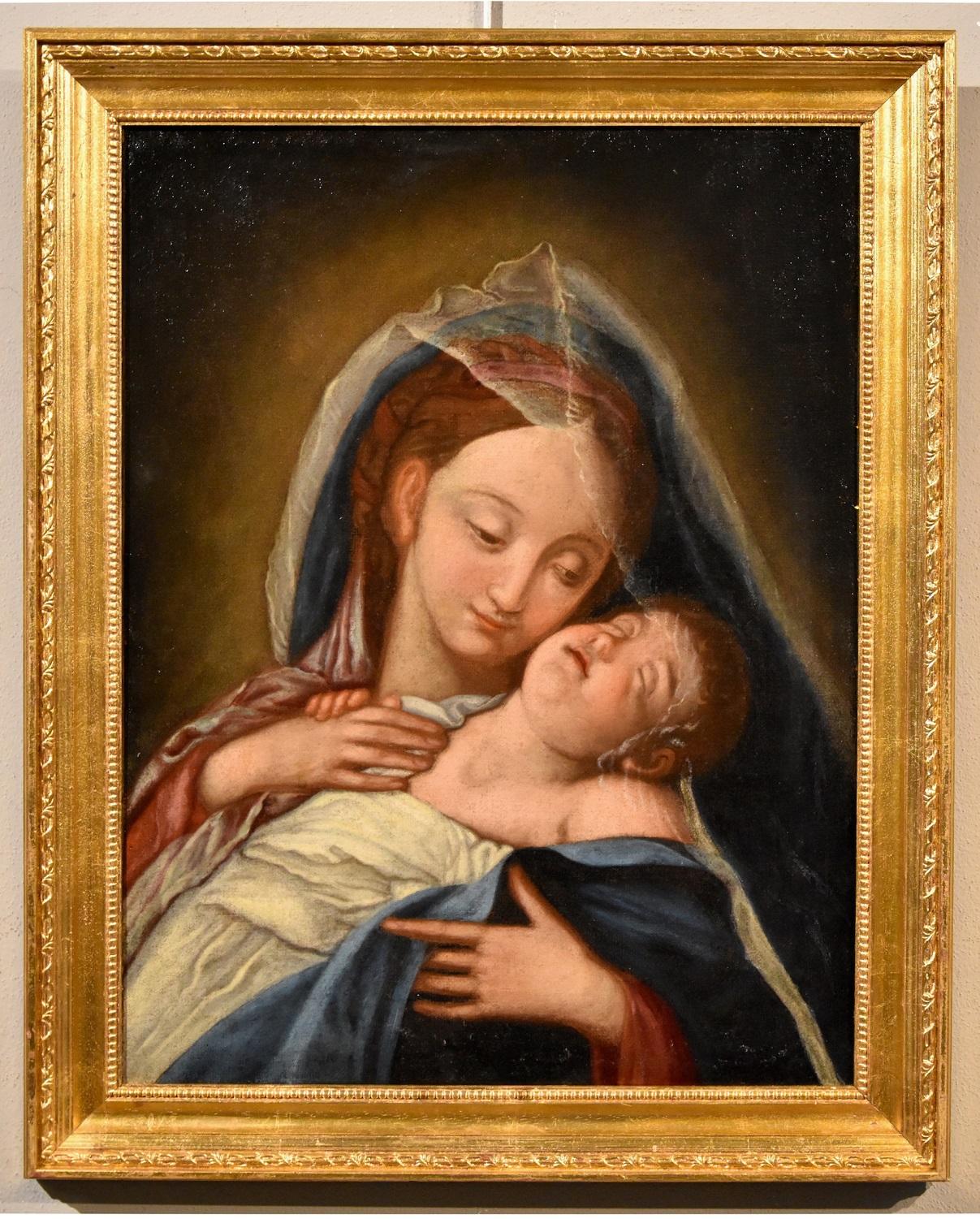
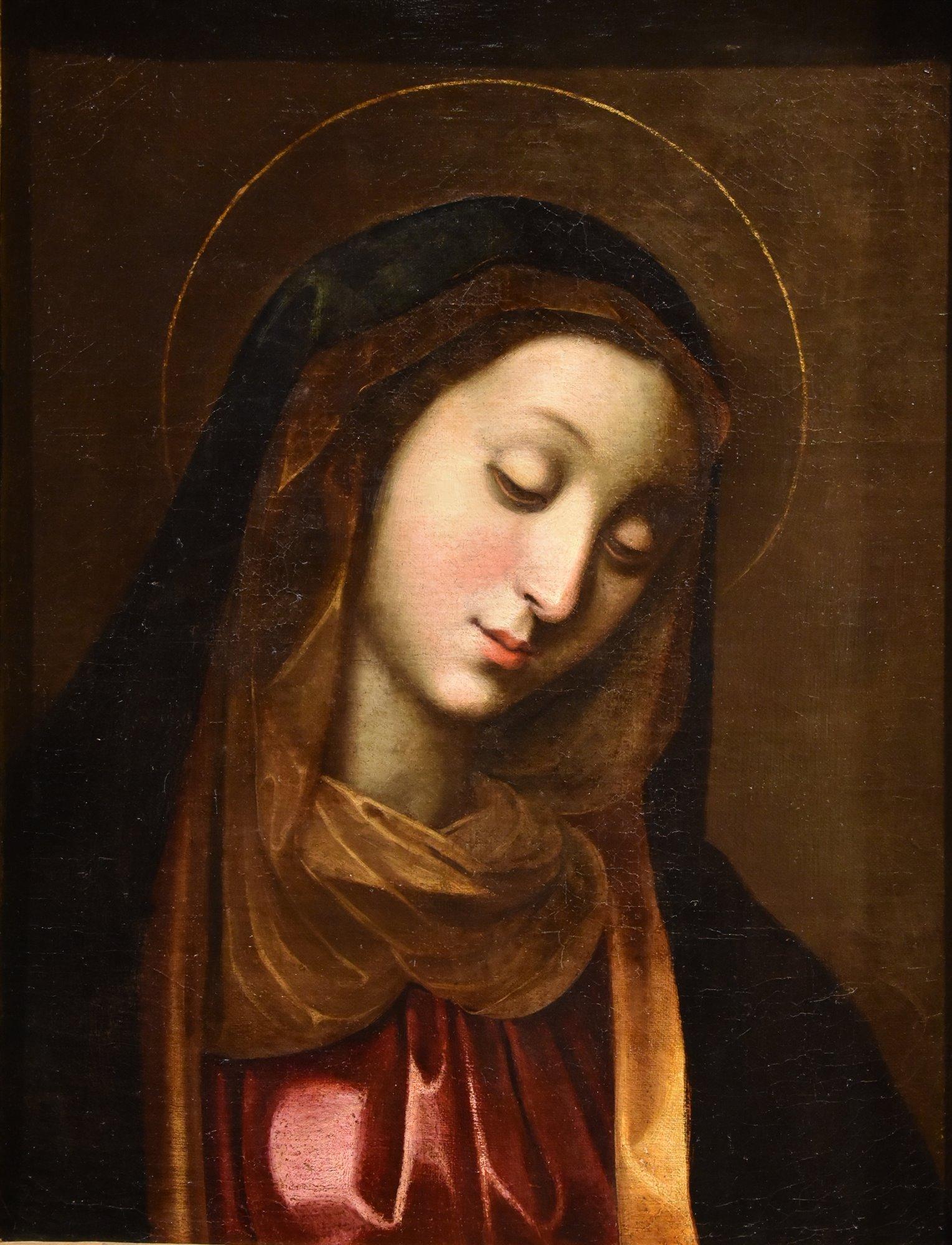
Want more images or videos?
Request additional images or videos from the seller
1 of 24
Smeraldo Di GiovanniExpertised Italian 14th Century Gold Ground on Panel Painting1420 ca.
1420 ca.
$45,097.61
£33,639.89
€38,000
CA$62,769.11
A$67,340.03
CHF 36,119.81
MX$810,764.88
NOK 455,332.56
SEK 415,200.19
DKK 289,588.91
About the Item
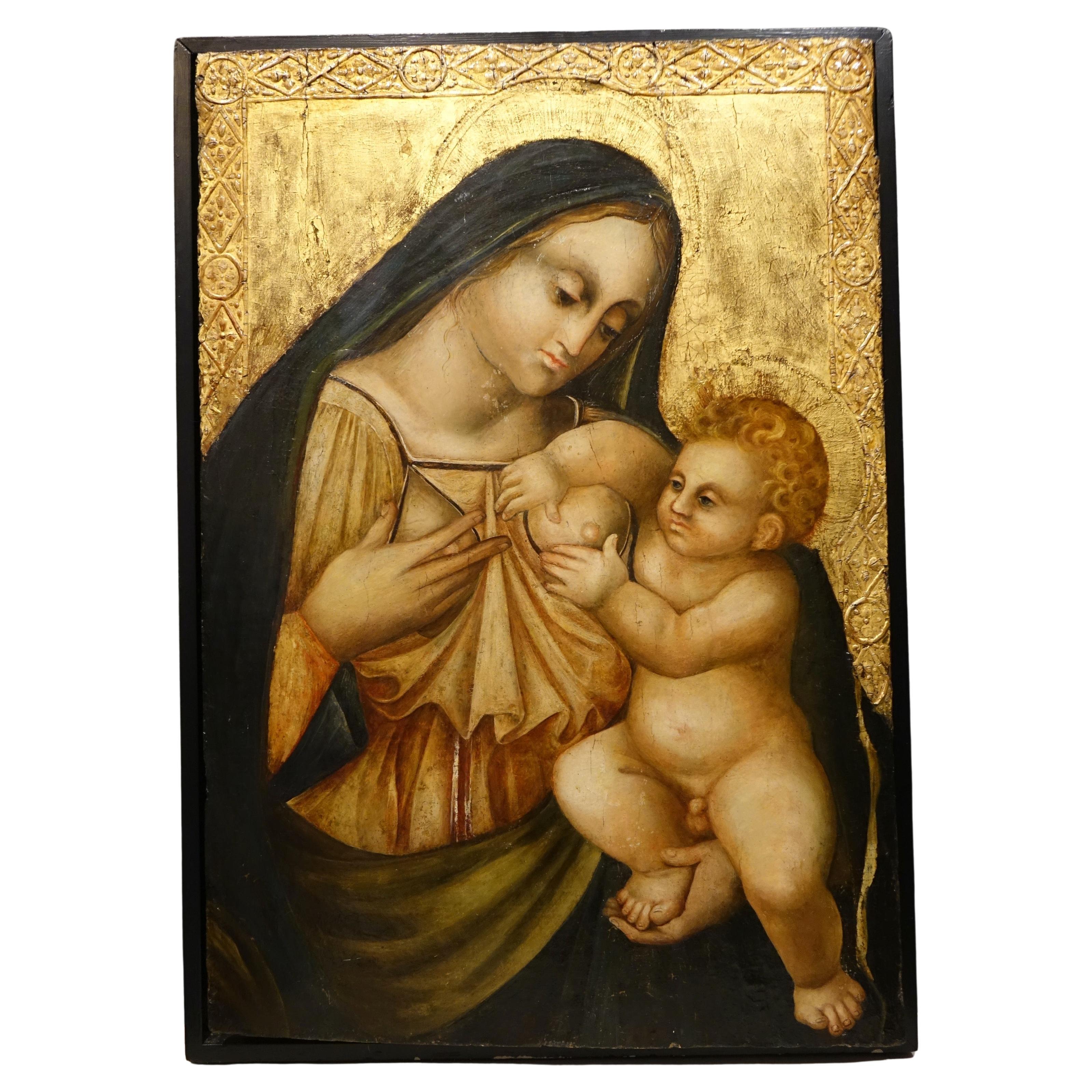
Museum-quality gold ground painting from the Renaissance period by Smeraldo di Giovanni.
It depicts the “Virgin of the Roses” seated on a throne holding the Child Jesus.
Of Florentine manufacture, it shows at the sides the two patron saints of Florence, San Lorenzo and San Giovanni Battista.
Smeraldo di Giovanni (1365–1444) was an Italian painter of the late-Gothic through early-Renaissance period, active in Florence.
He worked with Ambrogio Baldese in Orsanmichele in 1402.
He is known to have been active in 1420, when he presumably worked in the same studio as Giovanni Dal Ponte (1385- c. 1438; thought to be the same person as Giovanni di Marco).
The Scali chapel of Santa Trinita in Florence has a fresco cycle by Giovanni dal Ponte and Smeraldo di Giovanni.
This artwork, not signed as usually in Gothic paintings and never before on the market, comes from an important Italian private collection.
Every item of our Gallery, upon request, is accompanied by a certificate of authenticity issued by Sabrina Egidi official Expert in Italian furniture for the Chamber of Commerce of Rome and for the Rome Civil Courts.
The following is the technical-historical record compiled by one of Italy's leading contemporary art historians: Claudio Strinati
" The Madonna of the Rose with Child Enthroned between Saints John the Baptist and Lawrence (tempera and oil on panel, 65 x 48 cm.) is a work of considerable value and formal preciousness, characterised by certain elements that lead one to date the work between the end of the 14th and the beginning of the 15th century.
The beautiful brocaded fabric that forms the background to the work and the refined carpet at the feet of the Virgin and the Saints give the sacred painting that secular and, one might say, bourgeois air of a home interior, according to a style that spread a little in all Italian painting traditions at the time, from Piedmont to Lombardy, from Tuscany to the Marches and so on.
Here, in our painting, the characters also have another characteristic typical of that time: the youthful and almost boyish appearance as if they were innocent and gentle children who have taken on the solemn identity of sacred figures.
Another characteristic typical of the time is the depiction of the child on the Virgin's lap completely naked from the navel up.
An atmosphere, in short, familiar and smiling.
Stylistically, our painting would seem to be part of the Tuscan tradition (also in relation to the saints represented and the image of the lily that stands out on the book of St. Lawrence) but with some interesting and problematic references also to the Veneto-Lombard tradition that includes giant personalities of strong influence such as Gentile da Fabriano or the Zavattari family or, in a broader sense, the painters and miniaturists gravitating around the immense construction site of Milan Cathedral and Monza Cathedral with echoes of Giovannino de' Grassi, Benedetto and Bonifacio Bembo, even the numerous and imaginative tarot painters.
It remains, however, that the panel under examination here would seem to fall more coherently within the Tuscan culture with references both to the milieu of the great illuminators such as Don Silvestro de' Gherarducci, and the monumental painters such as Orcagna and the learned Rossello di Jacopo Franchi, Niccolò di Pietro Gerini, Ambrogio di Baldese, and Ventura di Moro.
However, none of these painters, who have strong affinities with our panel, seems to me to be the author of the painting under examination here and, more generally, it seems very difficult to trace the same hand in works of certain attribution or signed in the Tuscan environment datable between 1390 and 1415/20, which I believe to be the period in which our painting was executed.
The only comparison known to me that is a little more stringent seems to be the one that can be established with the worn frescoes in the Scali Chapel in the Church of Santa Trinita in Florence, which fairly reliable sources refer to two remarkable painters of the time and of the same circle just mentioned, Giovanni dal Ponte and Smeraldo di Giovanni.
The latter, today little known (he was born around 1365 and died at the beginning of the fifth decade of the 15th century) could be our painter himself, with his enchanted and familiar tone at the same time, tending towards a description of happy and smiling characters, defined by a rounded and delicately full-bodied manner, perfectly consistent with a dating of the work to the second decade of the 15th century.
The state of preservation is very good, the evident damage being only marginal.
Very interesting is the refined drafting, where it is my impression that the traditional technique of egg tempera and oil tempera are co-present, giving the context precisely that preciousness and delicacy that arises almost naturally from such a technical combination, according to the recent (for the time) teachings of Cennino Cennini.
Moreover, his celebrated Libro dell' Arte was written (it seems in Padua) at the very end of the 14th century and circulated with particular prominence in exactly the same years in which I believe our painting was executed.
A painting, therefore, of remarkable quality and of even greater historical/critical interest."
Claudio Strinati
Under existing legislation, any artwork created over 70 years ago by an artist who has died can requires a license for export regardless of the work’s market price. The shipping may require additional handling days to require the license according to the destination of the artwork.
- Creator:Smeraldo Di Giovanni (1365 - 1444, Italian)
- Creation Year:1420 ca.
- Dimensions:Height: 25.6 in (65 cm)Width: 18.9 in (48 cm)Depth: 2.76 in (7 cm)
- Medium:
- Movement Style:
- Period:
- Condition:The painting is in its magnificent original patina. In excellent overall condition. There are some defects in non-critical areas of the panel, which we have chosen not to touch in order to preserve the originality of this museum-quality painting as m.
- Gallery Location:Roma, IT
- Reference Number:1stDibs: LU2883216513342
About the Seller
No Reviews Yet
Vetted Professional Seller
Every seller passes strict standards for authenticity and reliability
Established in 1990
1stDibs seller since 2025
8 sales on 1stDibs
Typical response time: 1 hour
- ShippingRetrieving quote...Shipping from: Roma, Italy
- Return Policy
More From This Seller
View All17th Century Italian Religious Painting Credited to Luciano Borzone
Located in Roma, IT
This important oil painting on canvas, although it is not signed as is almost always the case with this artist's paintings, is attributed to the great Genoese painter Luciano Borzone...
Category
Mid-17th Century Baroque Figurative Paintings
Materials
Canvas, Oil
Period Italian Giovanni Francesco Romanelli Follower Painting
Located in Roma, IT
This not signed very interesting oil painting on canvas dates back to the mid-17th century.
It depicts the Virgin Mary kneeling and reading the Book of Hours.
It is the work of an ...
Category
Mid-17th Century Baroque Figurative Paintings
Materials
Canvas, Oil
17th Century Italian Religious Painting Credited to Giovanni Battista Salvi
By Giovanni Battista Salvi da Sassoferrato
Located in Roma, IT
17th Century Italian Religious Painting Credited to Giovanni Battista Salvi
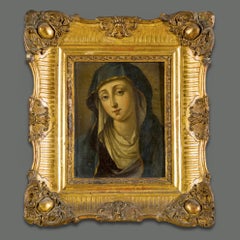
Virgin Mary
Period: second half of the 17th century
Technique: oil on copper
A beautiful, important pain...
Category
Late 17th Century Baroque Figurative Paintings
Materials
Copper
17th Century Italian Religious Painting on Glass
By Leandro da Ponte known as Leandro Bassano (Bassano, 1557 - Venice, 1622), attributed to
Located in Roma, IT
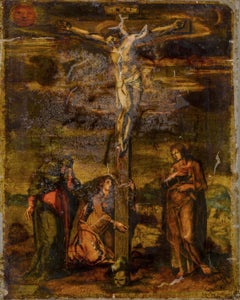
17th Century Italian Religious Painting on Glass
Beautiful and important oil painting on glass based on an engraving, not signed, dated 1655 at the bottom centre, follower of Leandr...
Category
Mid-17th Century Baroque Figurative Paintings
Materials
Glass, Oil
17th Century Onorio Marinari Italian Religious Painting
By Onorio Marinari
Located in Roma, IT
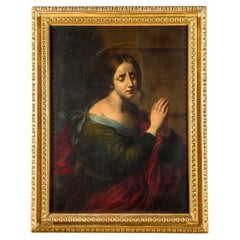
A very important painting by the great artist of the Florentine school, Onorio Marinari.
Dr. Silvia Benassai has confirmed Marinari’s authorship of the Saint Margaret of Antioch; ava...
Category
Mid-17th Century Baroque Portrait Paintings
Materials
Canvas, Oil
17th Century Antoon van Dyck Follower Religious Painting
By Anthony van Dyck
Located in Roma, IT
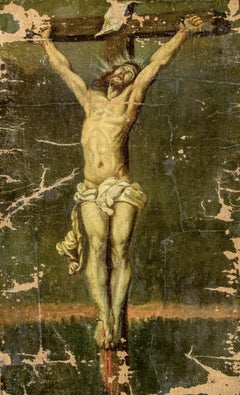
17th Century Antoon van Dyck Follower Religious Painting
A very important not signed painting from the Flemish school, attributed to an artist from the circle of the great painter A...
Category
1650s Baroque Figurative Paintings
Materials
Canvas, Oil
You May Also Like
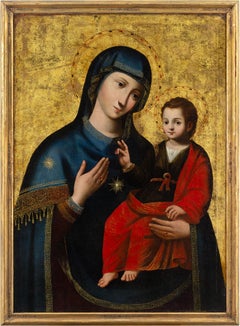
17th-Century Central Italian School, The Madonna
Child, Old Master Painting
Located in Cheltenham, GB
This resplendent early 17th-century depiction of the Virgin and Child bridges two worlds: the stillness of Byzantine iconography and the tender naturalism of Italy.
The Virgin’s dar...
Category
Early 17th Century Baroque Figurative Paintings
Materials
Gold
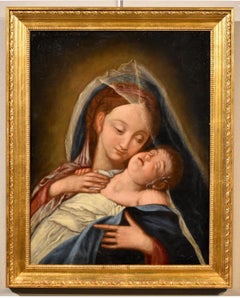
Madonna Maria Sassoferrato Paint Oil on canvas Old master 18th Century Italian
Located in Riva del Garda, IT
Madonna with Sleeping Child
Follower of Giovan Battista Salvi known as 'il Sassoferrato' (1609 - 1685)
Roman painter 18th century
Oil on canvas
Measurements: canvas 64 x 50 cm, in frame 76 x 62 cm.
This delicate depiction of the Madonna in adoration of the Child exhibits all the human dimension and sweetness of the maternal atmosphere: Mary clasps the sleeping child to her in a tender embrace, which touches her cheek, enveloped and protected by the mantle and even a flap of the mother's veil.
The pictorial style and composition recall the ambit of Giovan Battista Salvi, the Sassoferrato, who distinguished himself expressly for this subject, with the Virgin immortalised in a humble and strongly earthly pose, depicted with simple white, red and blue colours and delicate plays of nuances on the faces and hands.
This iconographic prototype was so successful that it became the painting for countless works destined for devotion during the 17th and 18th centuries, particularly appreciated for private commissions due to its marked gentleness and formal perfection, particularly of the faces.
Born in Marchigiano, Salvi developed his activity in Rome, following the dictates of the classicist sacred painting of the Bolognese school of Reni, Carracci and Domenichino, but succeeding in having an autonomous and therefore clearly distinguishable style.
In very good overall condition, there are some small scattered restorations and some unravelling of the painted surface. Framed in a beautiful gilded frame.
ADDITIONAL INFORMATION:
The work is sold with a certificate of authenticity and descriptive iconographic card.
We take care of and organise the transport of the purchased works, both for Italy and abroad, through professional and insured carriers.
It is also possible to see the painting in the gallery in Riva del Garda...
Category
18th Century Old Masters Paintings
Materials
Oil
$4,073 Sale Price
20% Off
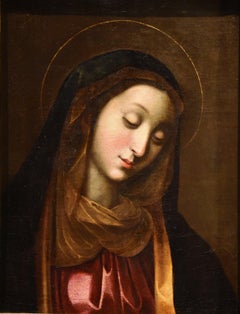
Madonna Pulzone Paint 16/17th Century Oil on canvas Old master Religious Italy
Located in Riva del Garda, IT
Scipione Pulzone (Gaeta, 1544 – Rome, 1598) workshop of
Madonna
Oil on canvas
55 x 43 cm Framed 63 x 51 cm
This delicate yet intense portrait depicts the Virgin Mary, her h...
Category
16th Century Old Masters Figurative Paintings
Materials
Oil
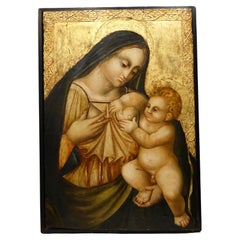
Madonna Lactans , Gold Background , Quattrocento Attributed to Sano di Pietro
Located in PARIS, FR
-Madonna Lactans, Gold Background Quattrocento
Our painting is on poplar wood, characteristic of Italian Quattrocento works.
The gold background is stuccoed and engraved.
Our Madonna Lactans is a variation on the theme of the Madonna and Child.
In Christian iconography, this subject is depicted at a moment of great intimacy, as the Virgin Mary delicately takes Christ's foot.
When cleaning the work, small jets of milk can be seen ...
Sano di Pietro...
Category
Antique 15th Century and Earlier Italian Renaissance Paintings
Materials
Wood
Very Rare Renaissance Old Master Oil Painting c. 1600 Oil on Panel The Madonna
Located in Cirencester, Gloucestershire
The Virgin Madonna
Spanish Renaissance artist, circle of El Greco (1541-1614)
circa 1600
oil on wood panel, unframed
panel: 20 x 14.5 inches
Provenance: private collection, northern ...
Category
Early 17th Century Renaissance Figurative Paintings
Materials
Oil
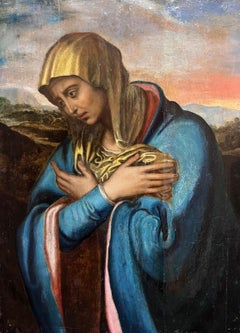
$15,079 Sale Price
20% Off
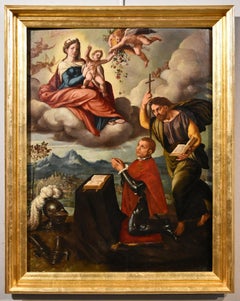
Madonna Scarsella Paint Oil on canvas Old master 16/17th Century Raffaello Art
Located in Riva del Garda, IT
Ippolito Scarsella, known as Lo Scarsellino (Ferrara, around 1550 - 1620) workshop
Altarpiece depicting the Madonna and Child, St. James the Greater and the donor in armour
Technique: oil on panel
Measurements: 93 x 72 cm./with frame 109 x 86 cm.
Provenance: Prato, Farsetti, auction of 28.10.2016, lot 261 (link)
A majestic Madonna in Glory occupies the upper register of the canvas, seated on a blanket of iridescent clouds surrounded by angels, flanked by a cherub who scatters flowers contained in a cornucopia towards the infant Christ as a sign of abundance, naked and supported with both hands from the mother.
In the lower part of the composition stands the figure of San Giacomo Maggiore, one of the twelve apostles, standing on the right side of the altarpiece, represented dressed in a humble tunic; one arm holds the open Gospel book, while the other holds a cross pilgrimage staff.
A particular aspect of the table is the presence in the central part, to indicate its importance, of the figure of the donor, kneeling on a cushion, with his hands joined in prayer and his face observing the Virgin in an attitude of devotion, while on the opposite lectern is placed a prayer book; depicted with the features of a young leader in armor, with a sword and a rich iridescent red cloak, elements which, combined with his authoritarian composure, enhance his ennoblement.
Unlike the medieval altarpieces, the knight is here included in the space of the painting and has proportionate dimensions to those of the other characters, returning to all intents and purposes in the sacred scene, with a pose that cannot but evoke the detail of the 'Montefeltro altarpiece' made by Piero della Francesca for Federico da Montefeltro, kneeling in front of the sacred group in the guise of a leader.
On the right, the view recedes into depth highlighting the background of an urban landscape set on a hill behind which a mountain range stands out, with the peculiarity of the arched aqueduct that runs along the entire landscape. Presumably among these expanses were the donor's own possessions and his hometown.
It is a quality table, imbued with the late Mannerist style still resistant in the second half of the 16th century, characterized by a 'sweet and affable religiosity, rendered through a manner of studied simplicity and grace', which highlights the unmistakable stylistic and chromatic connotations of the produced...
Category
16th Century Old Masters Paintings
Materials
Oil
$10,491 Sale Price
20% Off
More Ways To Browse
15th Century Italian
Wood Panel Italian
Italian Renaissance Art
Italian Renaissance Painting
Renaissance Panel
Early Renaissance Art
Tempera On Wood
Renaissance Wood Panels
Italian Renaissance 15th Century
Antique Brocade Fabric
15th Century Panels
Painting 14th Century
Antique Moro
15th Century Italian Painting
Gold Ground Painting
Girl Horse Painting
Grosso Giacomo
Guirand De Scevola