Want more images or videos?
Request additional images or videos from the seller
1 of 2

Thota Vaikuntam
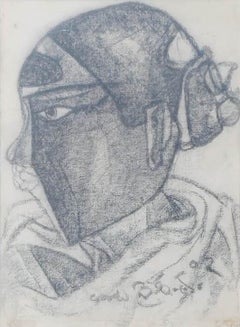
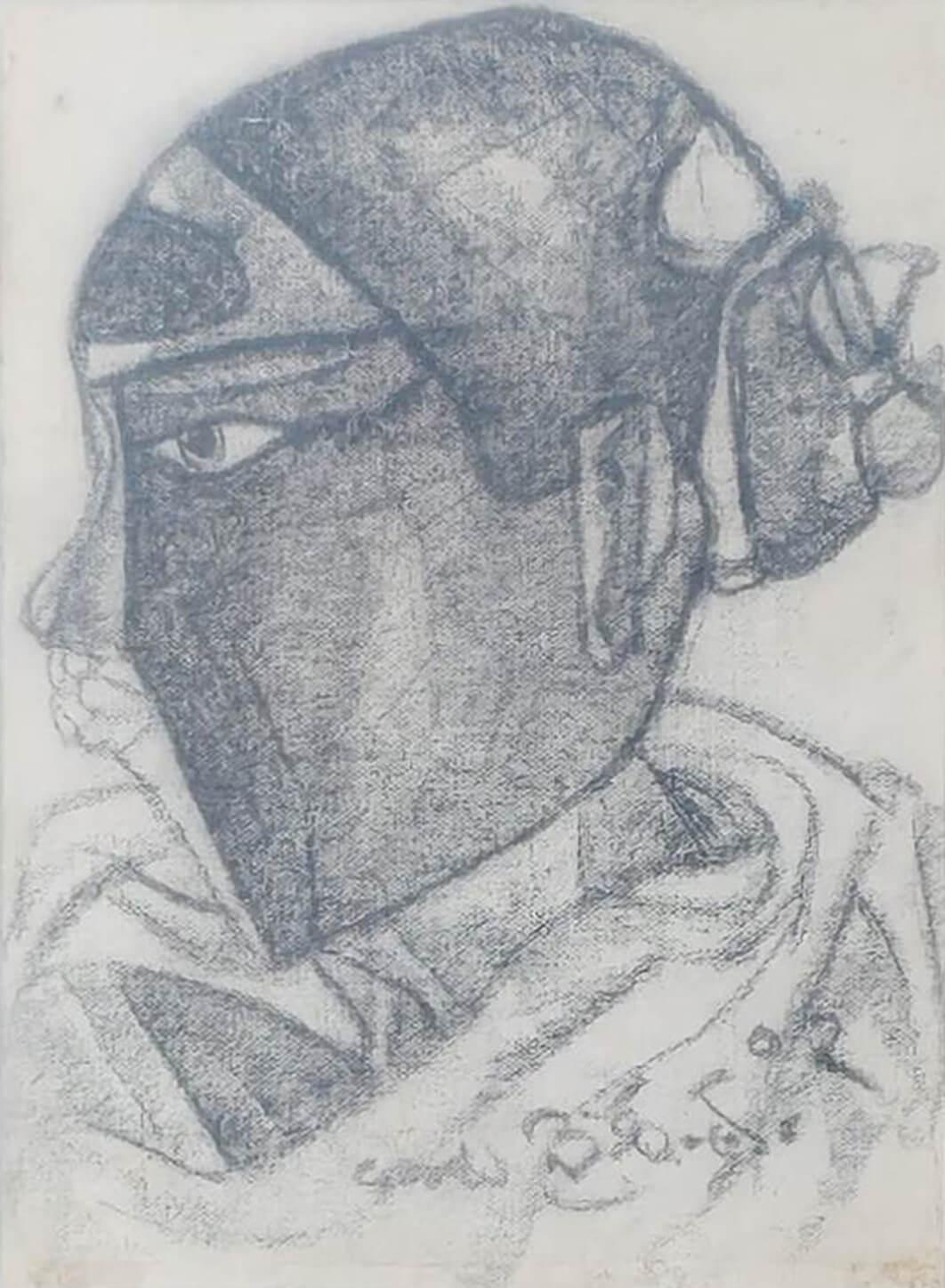
Telengana Woman, Charcoal on Canvas by Modern Artist “In Stock”

2016

$4,995
£3,783.25
€4,344.42
CA$7,000.14
A$7,613.42
CHF 4,034.83
MX$91,224.69
NOK 51,280.68
SEK 46,980.07
DKK 32,472.85

About the Item

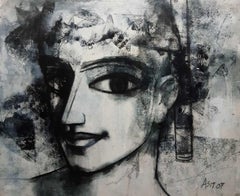
Thota Vaikuntam Telengana Woman Acrylic on Canvas 9 x 12 inches, 2016 ( Framed Delivered ) This charcoal on canvas work by Thota Vaikuntam portrays a Telangana woman with his signature style of strong lines, bold contours, and earthy simplicity. The face is drawn with sharp, angular features and deep shading, giving the portrait a sculptural quality, while the large eyes, slightly tilted, convey both strength and quiet introspection. The woman’s hair, tied back traditionally, and the prominent bindi on her forehead emphasize cultural identity, anchoring her firmly in the rural ethos of Telangana. The textured strokes of charcoal bring rawness and depth, stripping the figure of decorative distractions and focusing instead on expression and presence. Vaikuntam, known for celebrating the lives of rural men and women, here captures the timeless resilience and dignity of village women, who are central to both family and community life. The simplicity of monochrome enhances the honesty of the subject, presenting her not merely as an individual but as a symbol of tradition, endurance, and understated grace. Thota Vaikuntam is one of the Greatest Artist from the Indian Sub-contitent. He is preoccupied with portraying the men and woman from his region. Thota Vaikuntam (born 1942) is an Indian Modern painter.His paintings capture simple lifestyle of villagers like the paddy fields, toddy pots on shoulders of men, the household chores, temple rituals etc. His drawings range from stark charcoal on paper, transparent washes and pencil drawings. Vaikuntam paints colorful and elaborately dressed Telangana region men and seductive women. His muse is the sensuous and voluptuous women of Telangana with their omnipresent vermilion bindis, draped in colourful sarees that highlight their dusky skin. The stylisation of a painting are a perfect foil to Indian classical dance as the figures seem to dance, as if following their creator in a statuesque movement, reminiscent of temple friezes. He uses the brightest of reds and yellows. The simple women become larger than life as they fill the small format of his paintings draped in bright Sircilla saris. "I like using rich primary colours, which give a sense of character and depth to my paintings. Like reds and saffron and even orange, because these are essentially Indian colours. I don't like using colours that are mix of two, because they are not natural, they don't exist in surroundings around us, in our everyday life. - T. Vaikuntam” Style : Men and women of his village are often the central characters of his work. The obsession can be traced back to his childhood, when he used to be fascinated by the male artists who used to impersonate female characters in the travelling theatre groups that performed in his village. He admits finding the women of his village very sensuous and that he only attempts to capture their vibrancy. Vaikuntam’s art has a sense of strength to it, a power that emanates from the paint or charcoal that he applies to the surface, from his controlled lines, and from the fine strokes that he executes. He generally uses only primary colours, as he believes that composite colours do not exist in nature and are therefore, unnatural. About the Artist : Born : 1942 in Boorugupali, Andhra Pradesh. Education : 1970 - T. Vaikuntam completed a Diploma in Painting at the College of Fine Arts and Architecture, Hyderabad. 1972 - Painting and Printmaking from the Faculty of Fine Arts at Maharaja Sayajirao University, Baroda. Solo Exhibition : 1973 - He held his first solo exhibition at the Kala Bhavan in Hyderabad and since then has had regular shows at various galleries in Hyderabad, Bangalore, New Delhi, Kolkata and Mumbai. 2007 - His most recent shows have been ‘Yes, I am He’ organized by India Fine Art at Jehangir Art Gallery, Mumbai. 2007 - ‘Telangana: Inheritance of a Dream Lost’ at Art Alive, New Delhi. 2006 - ‘Mukham’ at Sanskriti Art Gallery, Kolkata. Group Shows : 2009 - ‘Indian Harvest’ presented by Crimson – the Art Resouce, Bangalore, at SG Private Bank, Singapore. 2009 - ‘The Root of Everything’ at Gallery Mementos, Bangalore. 2008 - ‘Post Independence Masters’ at Aicon Gallery, New York. 2006 - ‘6 Artists Show’ at 1×1 Gallery, Dubai. 2002 - ‘Tradition and Change’ at Arts India, New York. 2000 - ‘Ignition’ at Crimson Art Gallery, Mumbai. Award : 1993 - National Award for Painting. 1988-89 - Biennale Award from Bharat Bhavan, Bhopal.
  • Creator:
    Thota Vaikuntam (1942, Indian)
  • Creation Year:
    2016
  • Dimensions:
    Height: 12 in (30.48 cm)Width: 9 in (22.86 cm)Depth: 1 in (2.54 cm)
  • Medium:
  • Movement Style:
  • Period:
  • Condition:
  • Gallery Location:
    Kolkata, IN
  • Reference Number:
    Seller: 16-GK-TV-CC031-12091stDibs: LU604316989882
More From This Seller

View All
Telengana Woman, Charcoal on Canvas by Modern Artist “In Stock”
By Thota Vaikuntam
Located in Kolkata, West Bengal
Thota Vaikuntam Telengana Woman Acrylic on Canvas 9 x 12 inches, 2016 ( Framed & Delivered ) This artwork is a charcoal on canvas drawing by Thota Vaikuntam, known for his deeply ev...
Category

2010s Modern Figurative Paintings

Materials

Canvas, Charcoal

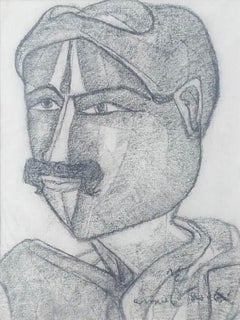
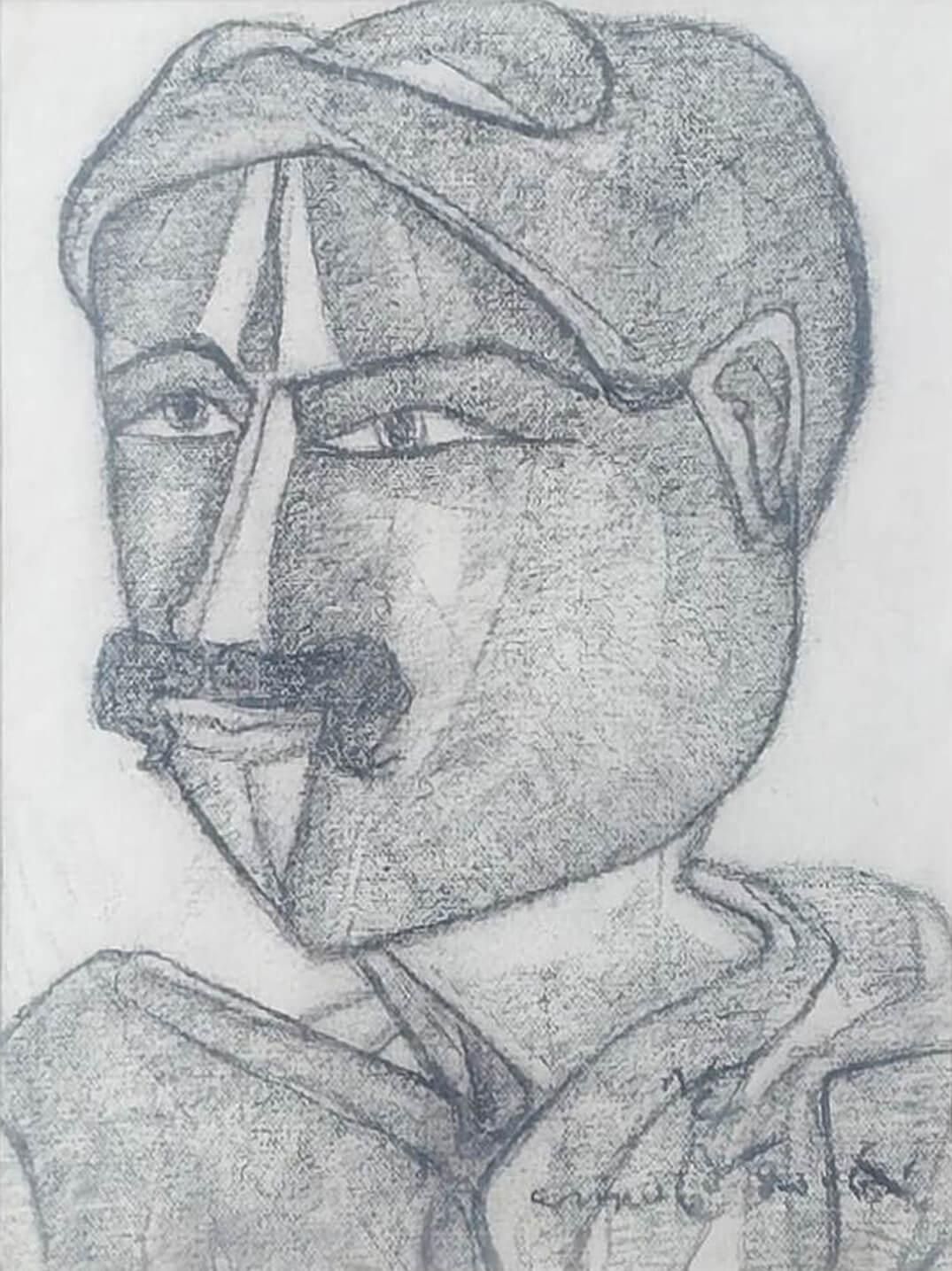
Telengana Man, Charcoal on Canvas by Modern Artist “In Stock”
By Thota Vaikuntam
Located in Kolkata, West Bengal
Thota Vaikuntam Telengana Man Acrylic on Canvas 9 x 12 inches, 2016 ( Framed & Delivered ) This charcoal on canvas drawing by Thota Vaikuntam portrays a Telangana man, capturing the...
Category

2010s Modern Figurative Paintings

Materials

Canvas, Charcoal

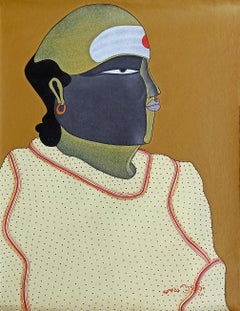
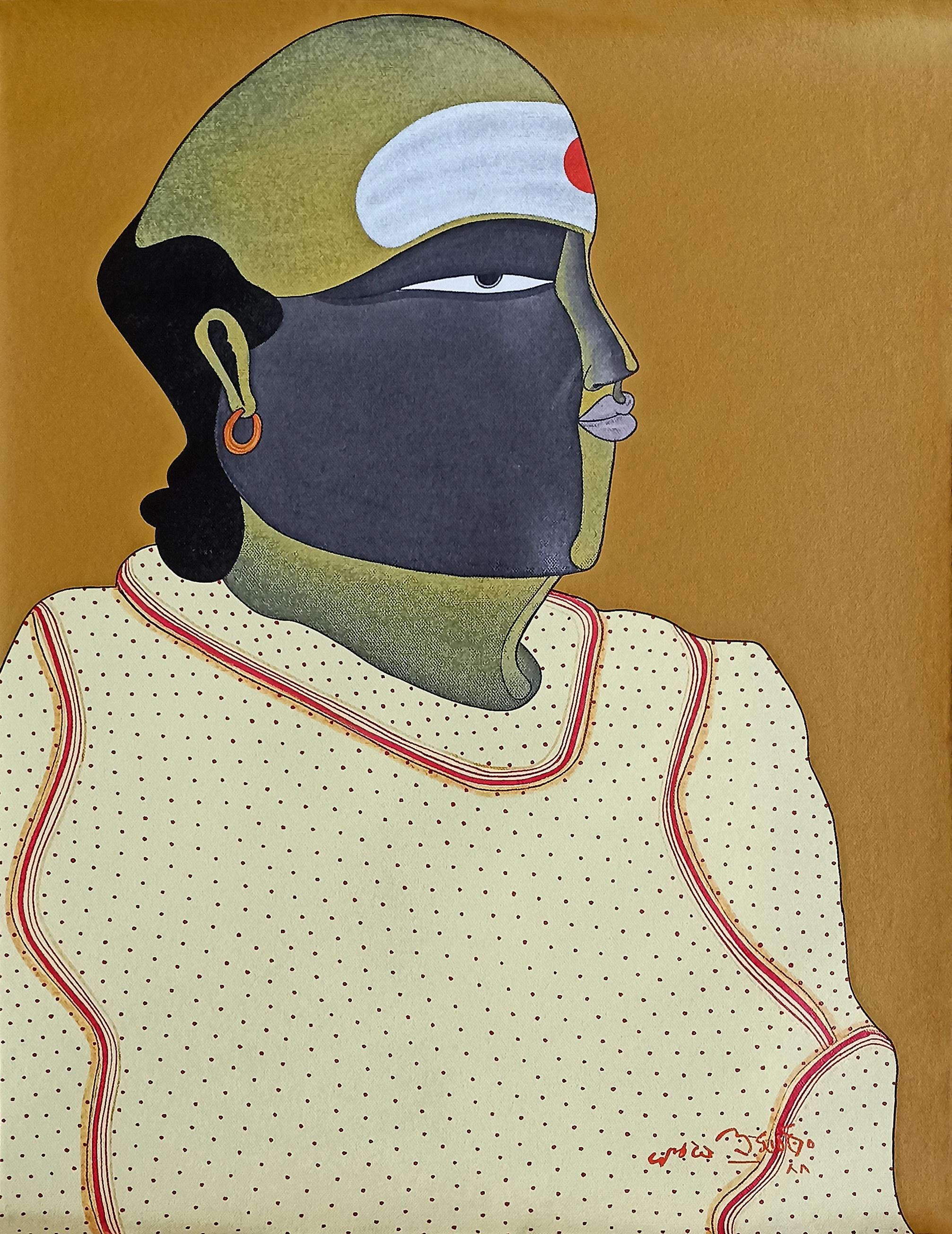
Telengana Pandit, Acrylic on Canvas by Modern Artist Thota Vaikuntam "In Stock"
By Thota Vaikuntam
Located in Kolkata, West Bengal
Thota Vaikuntam - Telengana Pandit Acrylic on Canvas, 23 x 17.75 inches Thota Vaikuntam is one of the Greatest Artist from the Indian Sub-contitent. He is preoccupied with portraying the men and woman from his region. Thota Vaikuntam (born 1942) is an Indian Modern painter.His paintings capture simple lifestyle of villagers like the paddy fields, toddy pots on shoulders of men, the household chores, temple rituals etc. His drawings range from stark charcoal on paper, transparent washes and pencil drawings. Vaikuntam paints colorful and elaborately dressed Telangana region men and seductive women. His muse is the sensuous and voluptuous women of Telangana with their omnipresent vermilion bindis, draped in colourful sarees that highlight their dusky skin. The stylisation of a painting are a perfect foil to Indian classical dance as the figures seem to dance, as if following their creator in a statuesque movement, reminiscent of temple friezes. He uses the brightest of reds and yellows. The simple women become larger than life as they fill the small format of his paintings draped in bright Sircilla saris. "I like using rich primary colours, which give a sense of character and depth to my paintings. Like reds and saffron and even orange, because these are essentially Indian colours. I don't like using colours that are mix of two, because they are not natural, they don't exist in surroundings around us, in our everyday life. - T. Vaikuntam” Style : Men and women of his village are often the central characters of his work. The obsession can be traced back to his childhood, when he used to be fascinated by the male artists who used to impersonate female characters in the travelling theatre groups that performed in his village. He admits finding the women of his village very sensuous and that he only attempts to capture their vibrancy. Vaikuntam’s art has a sense of strength to it, a power that emanates from the paint or charcoal that he applies to the surface, from his controlled lines, and from the fine strokes that he executes. He generally uses only primary colours, as he believes that composite colours do not exist in nature and are therefore, unnatural. About the Artist : Born : 1942 in Boorugupali, Andhra Pradesh. Education : 1970 - T. Vaikuntam completed a Diploma in Painting at the College of Fine Arts and Architecture, Hyderabad. 1972 - Painting and Printmaking from the Faculty of Fine Arts at Maharaja Sayajirao University, Baroda. Solo Exhibition : 1973 - He held his first solo exhibition at the Kala Bhavan in Hyderabad and since then has had regular shows...
Category

2010s Modern Figurative Paintings

Materials

Canvas, Acrylic

Untitled, Figurative, Dry Pastel on Paper by Jogen Chowdhury "In Stock"
By Jogen Chowdhury
Located in Kolkata, West Bengal
Jogen Chowdhury Untitled Dry Pastel on Paper 11.6 x 8.3 inches, 2023 ( Framed & Delivered ) Modern Indian artist Jogen Chowdhury executed Still life drawing in Ink, pastel. Always...
Category

2010s Modern Figurative Paintings

Materials

Paper, Pastel, Mixed Media

Woman, Face, Charcoal on Canvas, Black White by Indian Artist "In Stock"
By Ashit Sarkar
Located in Kolkata, West Bengal
Ashit Sarkar - Untitled - 30 x 36 inches (unframed) 38 x 44 inches (framed) Charcoal on Canvas Inclusive of shipment in roll form. Style : Wom...
Category

2010s Contemporary Figurative Paintings

Materials

Canvas, Charcoal

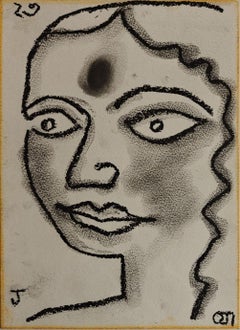
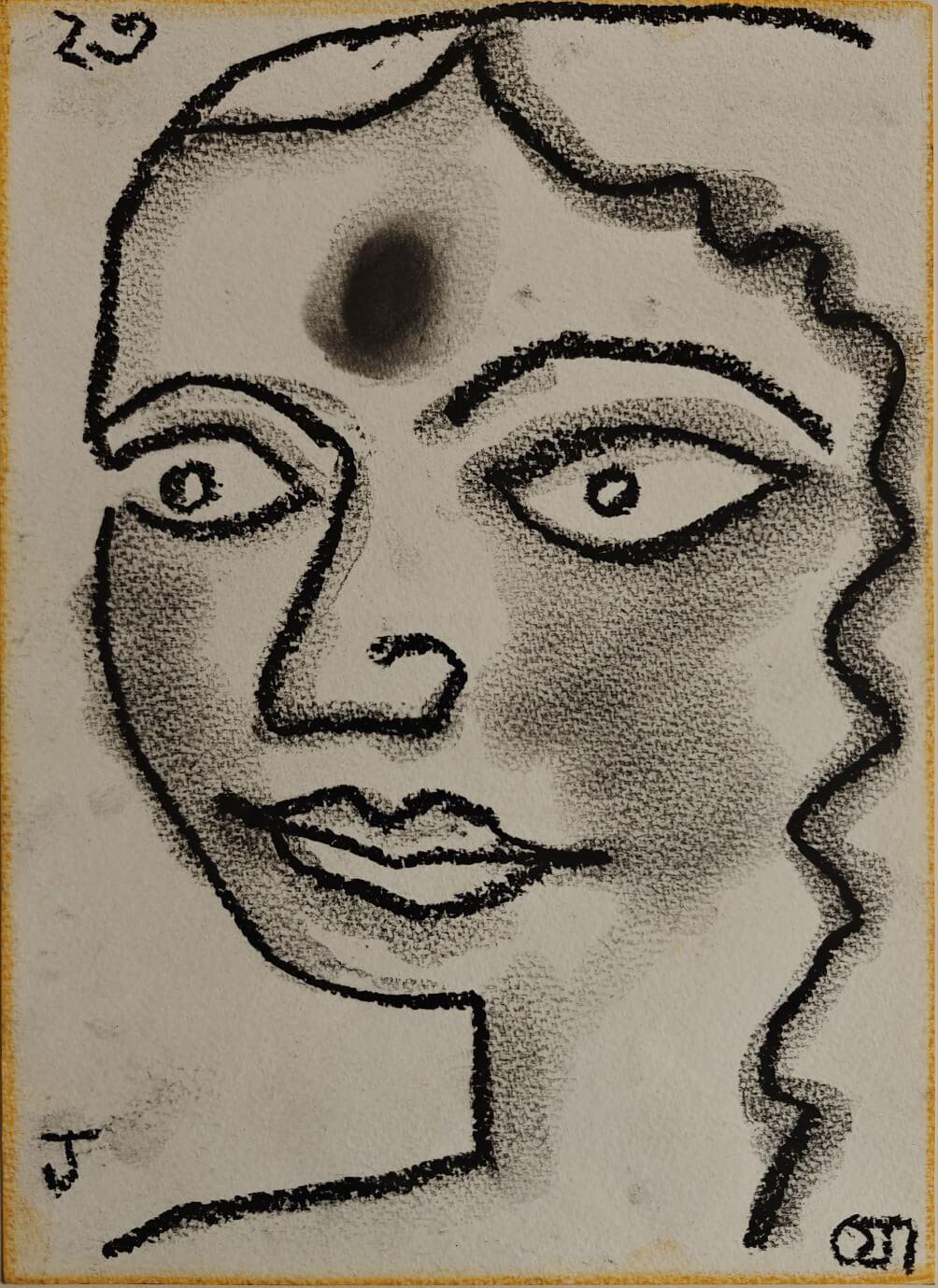
Woman Face with Braid Dry Pastel on Paper by Artist Jogen Chowdhury "In Stock
By Jogen Chowdhury
Located in Kolkata, West Bengal
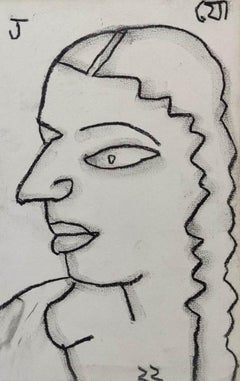
Jogen Chowdhury Woman Face with Braid, Dry Pastel on Paper 10 x 6.3 inches , 2022 ( this is the unframed size ) The work will be shipped inclusive of framing. Signed in Bengali Style : He has immense contribution in inspiring young artists of India. Jogen Chowdhury had developed his individual style after his return from Paris. His most famous paintings are in ink, watercolor and pastel. He has painted in oil medium as well. In Chowdhury’s more recent works the sensory experiences of cloth, bolsters, sofas and the human body are cross-projected to produce an uncanny world of tran-substantiated tumescence and flaccidness. Jogen Chowdhury has been widely acknowledged to be, the master of the unbroken line. Like Léger, Chowdhury has been stirred by the linear Kalighat pat tradition, but his lines are emotive and used to express and suggest the character of a person. This is done by, distorting the form without breaking the line and in the world of young, contemporary art; distortion has been Jogen Chowdhury’s most significant impact. Perhaps, because of this, a common observation of his work is that his “people” are caricatures. The person feels familiar to the viewer but it is far more individualised – the face is imaginary but the psyche or characteristics are real. The power and beauty of his technique and line is this play between the known and unknown. In Jogen Chowdhury’s work, the figure is always in the foreground, it is primary, it conveys everything. He uses colour to give volume to his figures and the fluidity of his lines bring a sensual aspect to his forms. About the Artist and his work : Born : Born 1939 in Daharpara Village, Faridpur, Bangladesh. Jogen Chowdhury is an eminent Indian painter and considered an important painter of 21st century India. Family Background : His father Pramatnath Chowdhury was a Brahmin zamindar. Both his parents took interest in art, Jogen Chowdhury’s father Pramatnath Chowdhury painted several mythological scenes from the village theatres and also sculpted various Hindu icons. Whereas his mother was an expert in Alpana drawings. 1939-47 Jogen Chowdhury lived in a village atmosphere. And after partition in 1948, the whole family shifted. Till 1951 the whole family stayed at the police department quarter of his uncle, where on the walls Jogen Chowdhury painted his first painting, 1962 Jogen Chowdhury was employed as Designer in the Handloom Board. Education : 1955-60: Studied at the Government College of Art and Crafts, Kolkata. 1965 : He went to paris to study in Ecole des Beaux Arts, in William Hayter’s Atelier 17. Professional Experience : 1968-72 : He worked as an Art-Designer, Madras Handloom Board, Madras. 1970 : A collection of his poems were published, titled ‘Hridoy Train Beje Othey’. 1987 : Joined Kala Bhavan , Santiniketan as a professor of painting. Selected Exhibitions : 1972, 1975 & 1978 respectively : I, III, IV Triennales at New Delhi. 1979: The Sao Paolo Biennale. 1980: The exhibitions at the Fukuoka Museum, Japan. 1982: The Royal Academy, London. 1982: The Hirschhorn Museum, Washington D.C. 1986: The II Havana Biennale. 1989: ‘Festival of India’, in Geneva. 2002: Saffron...
Category

2010s Modern Mixed Media

Materials

Pastel, Mixed Media, Paper

You May Also Like

Bohemian Woman - Rare and Signed Graphite Portrait Drawing on Textured Paper
Located in Soquel, CA
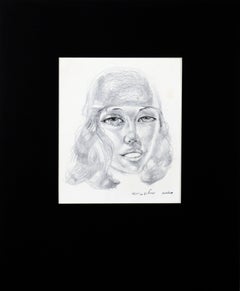
Bohemian Woman - Signed Graphite Portrait Drawing on Textured Paper Portrait of a woman in a Boehme Bandana with exaggerated eyes and a parted smile. A Carbon Pencil and eraser original drawing by Eugene Hawkins (American, b. 1933). Signed and dated upside-down along the bottom edge: "Eugene May 13th 1976" Presented in a new black mat. Mat size: 20"H x 16"W Paper size: 15"H x 11"W Eugene Hawkins (American, b. 1933) is a BIPOC artist known for his detailed portraiture and printmaking. He is listed in Who Was Who in American Art, 1564-1975, and his work was exhibited in the Whitney Museum of American Art. He spent the majority of his life working and exhibiting in Southern California. His work frequently touches upon socio-political subjects, making strong statements about the world. The California African American Museum features Eugene Hawkins's work in the Permanent Collection.Exhibition: 2017 Paperworks: Selections from the Permanent Collection focuses on works on paper produced from 1800?2000 and includes figurative, impressionistic, and abstract styles. The exhibition showcases the radically diverse range of works on paper created by African American and other artists over the last two centuries, and includes drawings, prints, paintings, and collages by Edward Mitchell Bannister...
Category

1970s American Modern Figurative Drawings and Watercolors

Materials

Paper, Carbon Pencil

Portrait 1957, paper, charcoal, 36x31 cm
Located in Riga, LV
Portrait 1957, paper, charcoal, 36x31 cm The focus of the portrait is a woman. Charcoal, with its rich and versatile qualities, has been utilized by the artist to capture the vario...
Category

1950s Modern Portrait Drawings and Watercolors

Materials

Paper, Charcoal

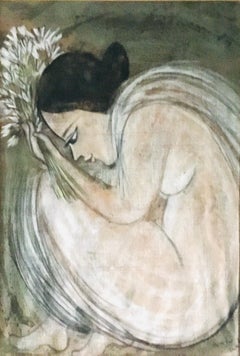
Sri Lankan Modern Female Artist Nalini Jayasupriya Girl with Flowers 1970 s
Located in Norfolk, GB
Nalini Jayasuriya (1927-2014) Untitled - Girl with Flowers c 1970 Watercolour and mixed media on Paper Image Size: 35.5 x 24.5 cm Frame Size: 51.5 x 41 cm A compelling and gentle w...
Category

1970s Other Art Style Figurative Paintings

Materials

Paper, Watercolor

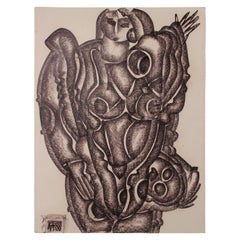
Abstract Cubist Charcoal Drawing of a Standing Woman
By Valery Kleveroy (Klever)
Located in Houston, TX
Black and white portrait of a woman done in a style that combines abstraction and cubism, much like the work of Fernand Leger. Signed and dated in lower left corner. Artist Biography: Valery Kleverov was born in Engels, Russian Federation, Soviet Union June 28, 1939 the son of a fighter test pilot in the Soviet Air Force. He exhibited an independent, rebellious, and highly artistic temperament from a young age. Conscription into the Red Army at the standard age of (18) was first and last straw in the young artist’s battle with the State, he lasted only a few months before making an unauthorized parachute jump over a forest to go permanently AWOL. After 3 weeks hiding in the woods, he eventually made his way to Leningrad, dropped his first name and the “ov” from the end of his name and began his life as the underground artist known as “KLEVER”. He fell in with a close-knit group of young anti-authoritarian rebels who eventually became known to the world as the “Non-Conformists”, a small gang of free thinkers mainly from Leningrad and Moscow who rebelled against State control of artistic expression and of free thought. In the Soviet Union, not only religion was outlawed - art, literature, music and dance were all subject to heavy censorship and state oversight. Among paintings historical, religious, abstract, anti-Soviet and erotic subjects were all against the law. From 1966 to 1977 Klever made a reputation for himself as one of the non-conformists most overtly critical of the Soviet state. Many of his paintings from this period can be described as nothing less than heroic- they are truly remarkable visual essays on the evils of the national security/surveillance state, propaganda and manipulation of cultural symbols, suppression of artistic and religious freedom, revisionist history, and unfilled promises for the future. All of them were painted stored and exhibited not only at great risk to the artist and his associates, but also to anybody who sought to view them. In spite of the secrecy, the KGB discovered the existence of these pieces and began to follow Klever’s every move. There were surprise visits to his studio, harassment wherever he went, friends and family being questioned all a direct result of his determination to express himself artistically against Soviet control. From this time forward Klever had an exhibit which was open for viewing at all times inside the apartment of Bob Kashilohov as part of a network which paralleled the Samizdat network for sharing of forbidden literature. Klever was arrested for his participation in the most important non- conformist exhibitions which took place during his time there. These were the Bulldozer Exhibition in Moscow, 1974, (so named because the KGB bulldozed the exhibition and destroyed much of the work) and the Nevski Dom exhibition in Leningrad, 1975. These exhibitions represented some of the early cracks in the foundations of the Soviet state’s control over the population’s basic aspirations for economic, personal and creative freedom that ended with collapse in 1991. Repercussions of the Bulldozer exhibition were that some of the painters were arrested or even killed. Approximately 70 artists were arrested, including Klever. Media outcry in the west allowed most of the artists to be released within a week. Two weeks later another exhibition was allowed to proceed and became known as “Half Day of Freedom” in the Soviet Union. The Nevsky exhibition caused a huge sensation and was a watershed moment in the cultural history of the Soviet Union. People lined up for 30 blocks long over the course of the two week exhibition to see the forbidden works. Klever showed a large collection of explicit anti-Soviet paintings...
Category

20th Century Abstract Abstract Drawings and Watercolors

Materials

Carbon Pencil, Charcoal

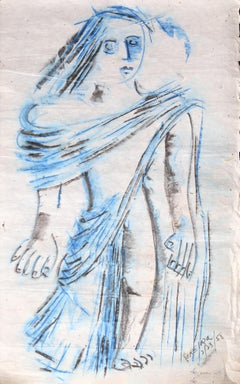
Blue Woman, 1958 Pastel by Irene Rice Pereira
By Irene Rice Pereira
Located in Long Island City, NY
Blue Woman Irene Rice Pereira, American (1902-1971) 1958 Pastel on rice paper, signed and dated in pastel Size: 36.5 x 25 in. (92.71 x 63.5 cm)
Category

1950s Modern Portrait Drawings and Watercolors

Materials

Pastel

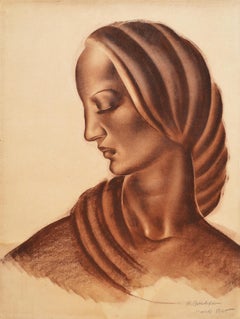
Portrait of a Lady, Charcoal Drawing, 20th Century Russian
Located in London, GB
Charcoal , signed lower right and dated 'Paris 1935' Image size: 25 x 19 inches (63.5 x 48 cm) Original oak frame An accomplished example of Russian art from the mid 20th century. ...
Category

1930s Art Deco Portrait Drawings and Watercolors

Materials

Charcoal, Paper