Items Similar to Cuzco (Cusco) School - Ángel Arcabucero (Angel with Arquebus)
Want more images or videos?
Request additional images or videos from the seller
1 of 12
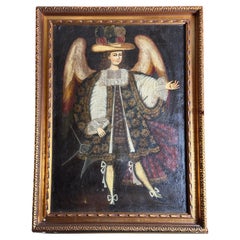
UnknownCuzco (Cusco) School - Ángel Arcabucero (Angel with Arquebus)19th Century
19th Century
$5,932.79
£4,429.11
€5,000
CA$8,242.43
A$8,865.91
CHF 4,738.20
MX$104,503.85
NOK 59,737.62
SEK 54,611.52
DKK 38,105.61
About the Item
Cuzco (Cusco) School, 19th century, Peru
Ángel Arcabucero (Angel with Arquebus)
oil on canvas
unframed 58 × 41 cm (22.8 × 16.1 in)
framed 66 × 49 cm (26.0 × 19.3 in)
No signature
Provenance:
Acquired in Peru in 1986 by the previous owner.
Essay:
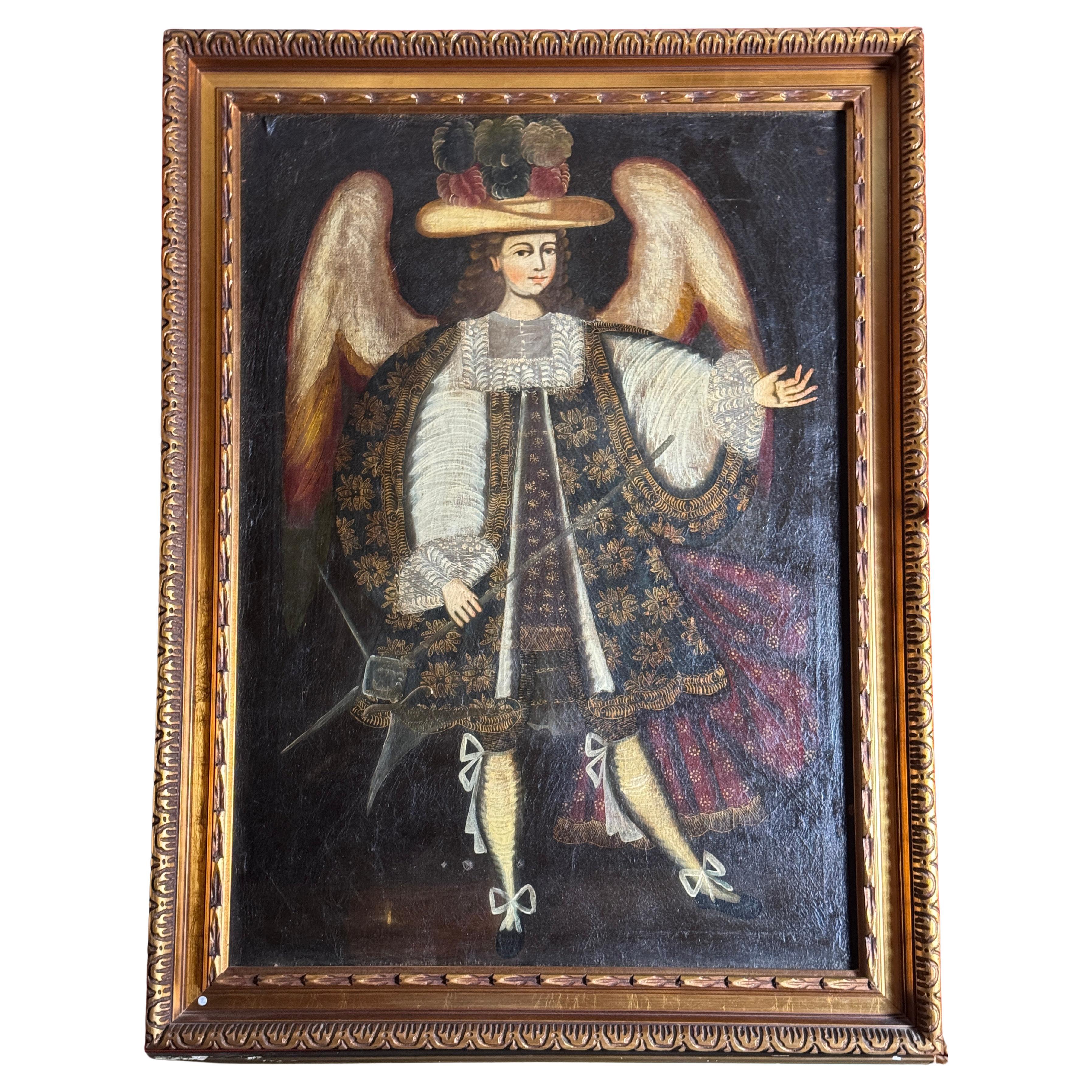
This painting portrays a celestial figure identified as an ángel arcabucero – literally an “arquebus-bearing angel,” shown as an archangel wielding an early firearm (arquebus) instead of the traditional sword. The angel is richly attired in the fashion of an Andean noble or Spanish aristocrat, with an ornate embroidered coat, lace collar, and billowing sleeves, in keeping with the distinctive iconography of these militaristic angels. Such ángeles arcabuceros emerged in the late 17th century in colonial Peru and were especially popular in Cuzco School painting, replacing the sword of Catholic warrior-angels with a gun to signify the heavenly army’s power in a modern guise. The graceful figure, dressed as a nobleman yet serving a divine role, underscores the fusion of earthly authority and celestial protection – a sartorial and symbolic innovation unique to the Andean region’s religious art. This iconography, found only in Spanish colonial territories, resonated with local believers and visually confirmed the angel’s identity as a heavenly soldier guarding the faithful, his delicate hands cradling a long-barreled arquebus as if it were a sacred instrument.
The Ángel Arcabucero exemplifies the visual hallmarks of the Cuzco School, a major Peruvian painting tradition. The composition favors elegant flatness and frontal presentation over Renaissance depth and linear perspective are largely abandoned in favor of flattened forms and stylized poses. A vibrant, saturated color palette dominates the scene, with rich reds, yellows, blues, and earth tones that enliven the angel’s attire and background. The angel’s clothing is embellished with lavish gold ornamentation in the form of fine patterning and gilded highlights (a technique known as brocateado), a signature of Cusqueño paintings that imparts a jeweled splendor to the figure’s costume. Indeed, the artist has painstakingly rendered an intricate gold filigree pattern across the angel’s overcoat and wings, reflecting the Cuzco School’s renowned use of gold leaf to simulate rich embroidery and add divine radiance. The figure’s face is pale with softly rounded features and delicate crimson cheeks which is typical of Cusco School saints and angels, conveying an idealized serenity. Every element of the painting’s style, from the bright hues and ornamental detailing to the dignified yet slightly naive rendering of anatomy, is characteristic of the Cuzco School’s blend of local craftsmanship and Baroque exuberance. As is common for Cuzco School works, the subject is entirely religious; secular context is minimal, keeping the viewer’s focus on the angelic figure as a devotional image. The overall effect is one of opulent decorativeness combined with spiritual symbolism, a visual language that was immediately recognizable to colonial-era viewers in the Andes.
The Cuzco School (Escuela Cusqueña) was one of the most significant painting schools in colonial Latin America, and this Ángel Arcabucero reflects its cultural and artistic legacy. Founded in the late 17th century after Indigenous Andean painters in Cuzco won autonomy from Spanish guild restrictions, the school developed an independent artistic tradition that departed from strictly European models. Cuzco School artists blended European Baroque techniques and Catholic iconography with Indigenous aesthetics and symbols, creating a distinctly mestizo (mixed) art style. In this painting, for example, European elements – the angelic subject and Baroque attire – coexist with local influences, such as the use of flat spatial design and lavish patterning reminiscent of Andean textile arts. Such fusion of European and Indigenous artistic elements was central to the Cuzco School’s identity, allowing “a part of the indigenous mentality [to] fit in the Western scheme” of religious art. The result was a unique visual language in which Catholic saints, Madonnas, and angels were depicted in a manner that resonated deeply with Andean viewers’ own cultural context.
As a movement, the Cuzco School is celebrated for its innovation and reach in colonial art history. It focused almost exclusively on sacred subjects, supplying countless paintings of angels, Virgins, and saints to churches and devout patrons throughout the Andes. By the 18th century, Cuzco School works (including many ángeles arcabuceros) were in high demand across the Viceroyalty of Peru and beyond – shipped to cities in present-day Bolivia, Chile, Argentina, and even sought by collectors overseas. The school’s success was fueled by large workshops of mostly Indigenous and mestizo painters, whose collaborative output made Cusco a thriving artistic center. The Angel with Arquebus became one of the distinctive motifs of this school, encapsulating its aesthetic of splendid attire, divine militancy, and cultural hybridity. Even into the 19th century as seen in this painting, artists continued to reproduce and reinvent these beloved themes, underscoring the longevity of the Cuzco School style in Peru’s visual culture.
- Creation Year:19th Century
- Dimensions:Height: 25.99 in (66 cm)Width: 19.3 in (49 cm)
- Medium:
- Period:
- Condition:Age related patina, ready to hang.
- Gallery Location:Stockholm, SE
- Reference Number:1stDibs: LU1445217216252
About the Seller
5.0
Platinum Seller
Premium sellers with a 4.7+ rating and 24-hour response times
Established in 2020
1stDibs seller since 2020
227 sales on 1stDibs
Typical response time: 1 hour
Associations
International Confederation of Art and Antique Dealers
Associations
- ShippingRetrieving quote...Shipping from: Stockholm, Sweden
- Return Policy
More From This Seller
View AllCuzco School - A Portrait of Archangel Raphael With Fish, 1800s, Oil on Canvas
Located in Stockholm, SE
Anonymous, Cuzco School
A Portrait of Archangel Raphael With Fish
oil on canvas
1800s
canvas dimensions 22.24 x 15.74 inches (56.5 x 40 cm)
frame ...
Category
19th Century Figurative Paintings
Materials
Canvas, Oil
$4,651 Sale Price
20% Off
Free Shipping
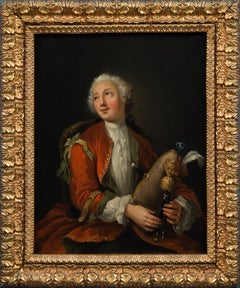
Portrait of a Young Man with Bagpipes, Follower of J.H. Tischbein the Elder
By Johann Heinrich Tischbein the Elder
Located in Stockholm, SE
Follower of Johann Heinrich Tischbein the Elder (1722–1789)
Man with Bagpipes
oil on oak panel
no signature
25 × 19 cm (9.8 × 7.5 in)
31 x 26 cm (12.2 x 10.2 in)
This refined 18th...
Category
18th Century Rococo Portrait Paintings
Materials
Oak, Oil, Wood Panel
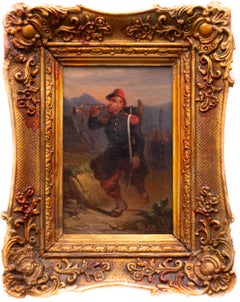
A Soldier Blowing the Trumpet by French Artist Charles Bouchez, Oil on Canvas
Located in Stockholm, SE
Charles Bouchez (1811-1882) French
A Soldier Blowing the Trumpet
oil on canvas
signed and dated ch. Bouchez 1842
canvas dimensions 6.29 x 4.13 inches (16 x 10.5 cm)
frame 10.23 x 7...
Category
1840s French School Figurative Paintings
Materials
Canvas, Oil
$2,088 Sale Price
20% Off
Free Shipping
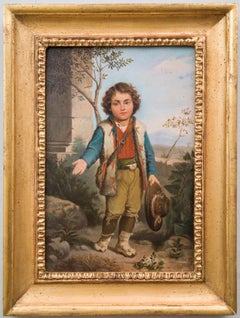
Portrait of a Young Boy With Hat, Possibly Painted by Gustaf Brandelius
Located in Stockholm, SE
Unknown Artist, Possibly Gustaf Brandelius (1833-1884)
Portrait of a Young Boy With Hat
oil on tree panel
painted c.1850-70
panel 9.05 x 5.90 inches ...
Category
1860s Portrait Paintings
Materials
Oil, Wood Panel
Old Master Painting Called Christ at the Column
Located in Stockholm, SE
Follower of Gerard Seghers (1591-1651)
Christ at the Column
oil on wood panel
c. 1700s
unframed 19.5 × 14 cm
Provenance:
Originally in the collection of Dr. Axel Munthe (1857–1949), the renowned Swedish physician and author celebrated for his philanthropic work and for founding Villa San Michele...
Category
18th Century Old Masters Figurative Paintings
Materials
Oil, Wood Panel

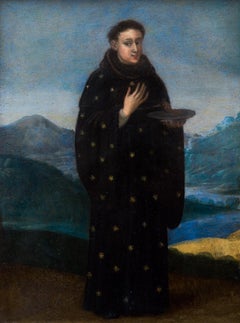
Old Master Painting, Flemish School from 1600s, Saint Nicholas of Tolentino
Located in Stockholm, SE
This small Flemish painting, measuring only 24.5 x 18.5 cm and executed on a copper plate, depicts Saint Nicholas of Tolentino. Created in the 17th century, the artist remains unknow...
Category
17th Century Old Masters Landscape Paintings
Materials
Copper
You May Also Like
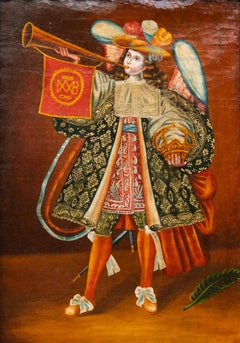
"Angel with Bugle" Antique Cuzco School Painting
Located in Austin, TX
23" x 16" – Oil on Canvas
Framed Size: 32.5" x 26"
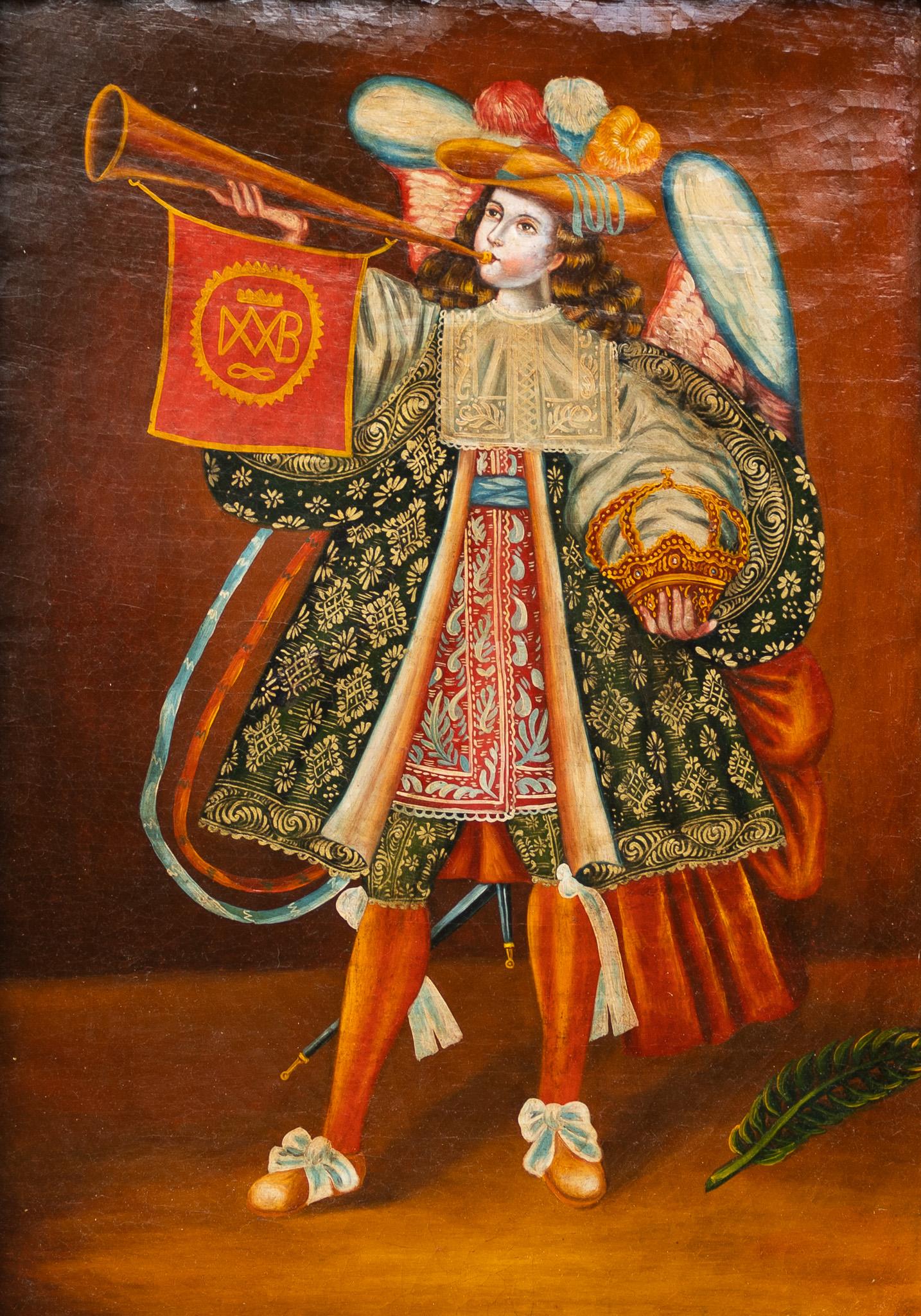
This Peruvian antique Cuzco School painting depicts an angel in elegant clothing playing a bulge ...
Category
19th Century Figurative Paintings
Materials
Canvas, Oil
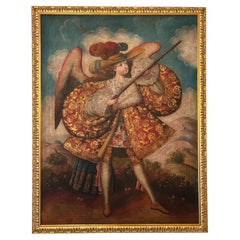
Cuzco School Painting, Angel With Arquebus, 18th Century
Located in Toronto, CA
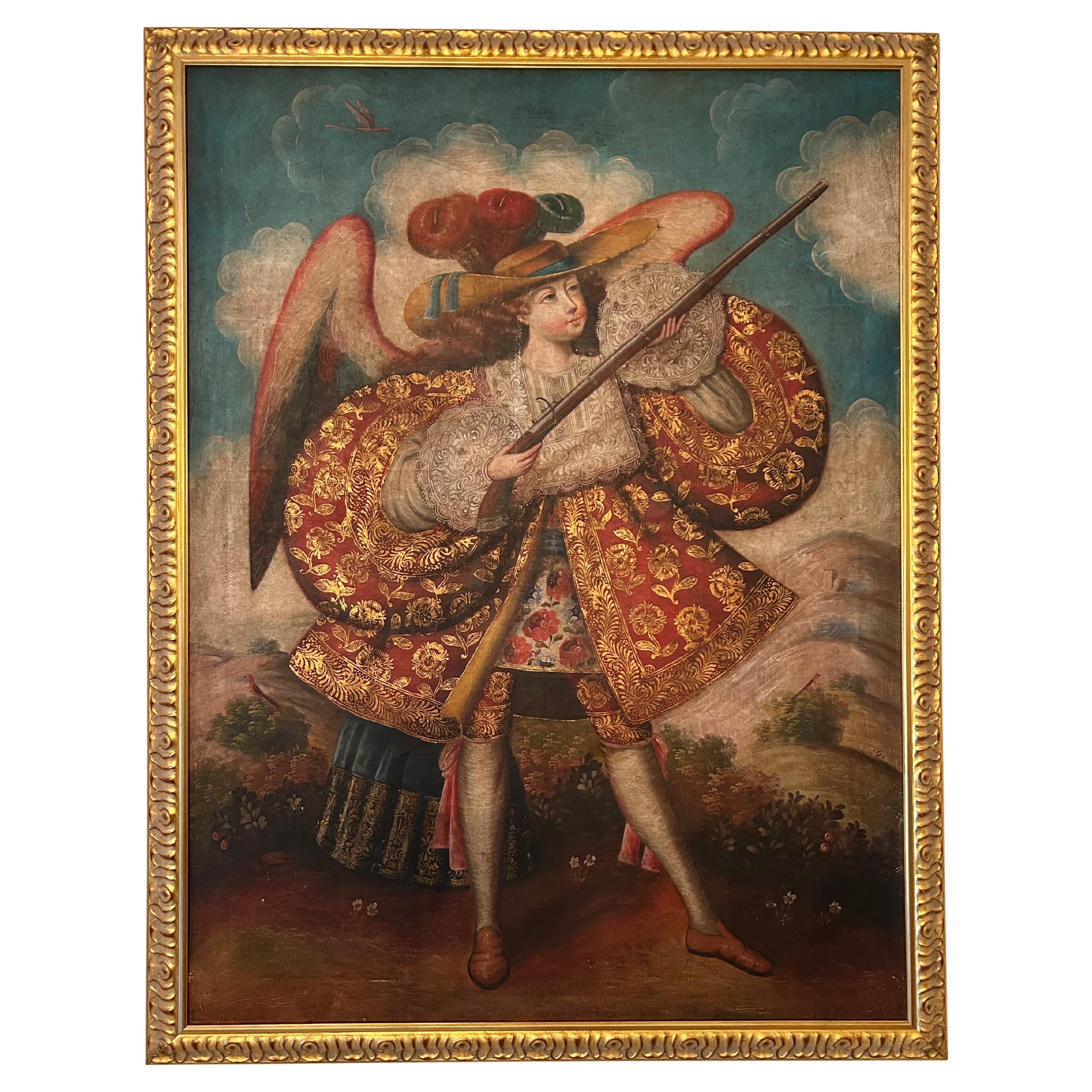
This is an exquisite Cuzco School painting of an "Arcángel Arcabucero", or Angel with Arquebus, from Peru, most likely 18th Century but possibly later. Oil on linen. Newly mounted on...
Category
Antique 18th Century Peruvian Paintings
Materials
Linen, Paint
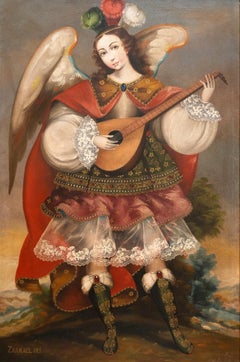
"Zaamael Dei" Peruvian Cusco Style Depiction of an Angel by Martha Ochoa
By Martha Ochoa
Located in Austin, TX
By Martha Ochoa
Oil on Canvas
Canvas Size: 59" x 39"
Framed Size: 70.5" x 50.5"
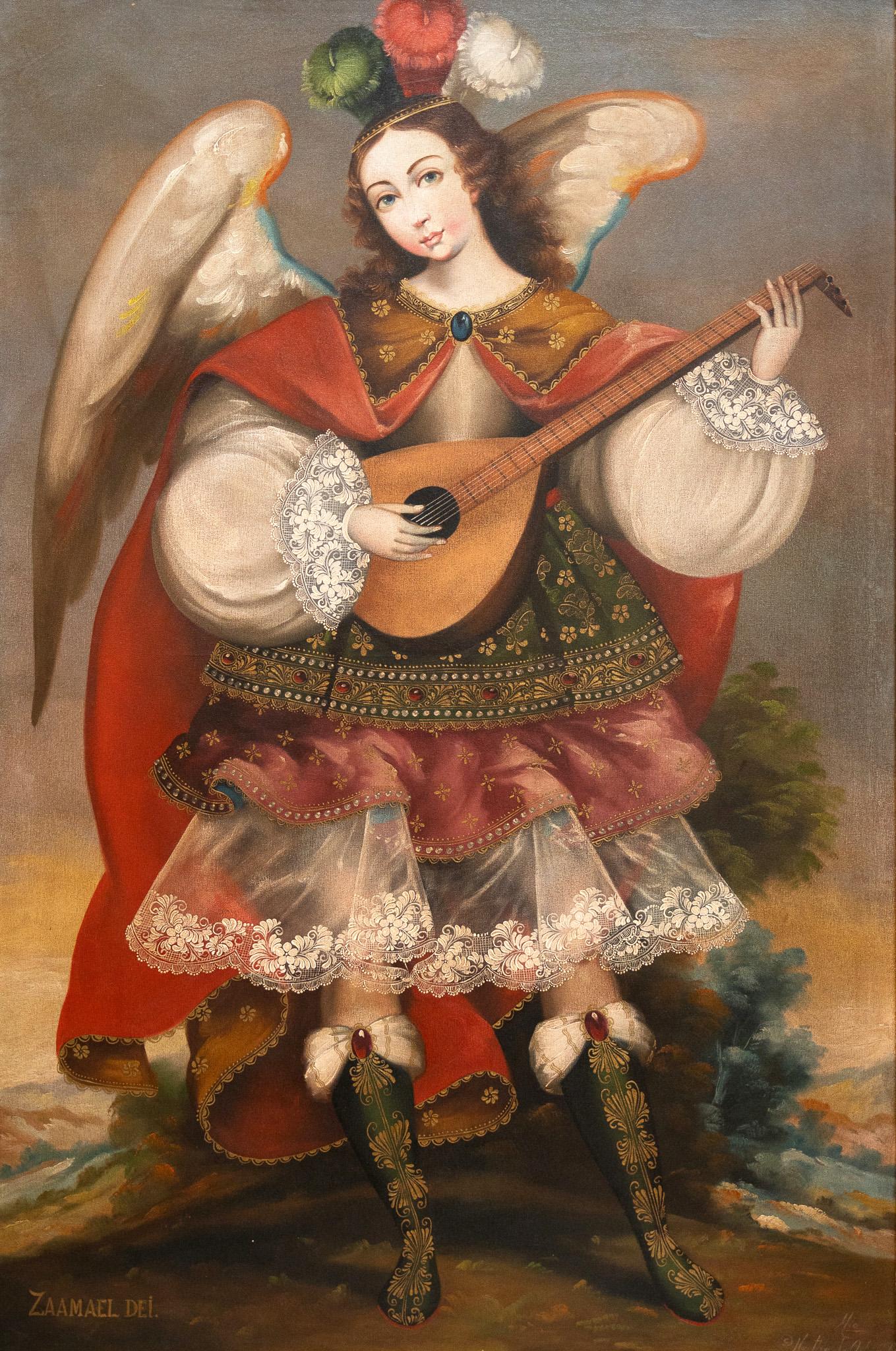
This lovely painting by Martha Ochoa is from the Cusco tradition. The Cusco School was an artistic tradition that first emerged in the 16th and 17th centuries in Cusco, Peru, blending indigenous and European baroque artistic styles. It is renowned for its catholic iconography, which often feature vibrant colors, elaborate ornamentation, and blended elements combining Catholic and native symbolism.
This painting portrays the angel Zaamael playing a lute in ornate red, green, yellow, and pink clothing.
About the Artist:
Martha Ochoa, born in Cusco, Peru, studied at Santa Ana School, the Cusco School of Fine Arts, and San Antonio Abad University, focusing on design, architecture, and restoration. She is the granddaughter of renowned Peruvian artists Francisco Olazo, a founder of the Cusco School of Fine Arts, and Ernesto Olazo, a famous sculptor. Influenced by the Cusco School, she transformed religious themes into decorative renditions of Archangels and Madonnas with Peruvian colonial...
Category
21st Century and Contemporary Baroque Paintings
Materials
Canvas, Oil
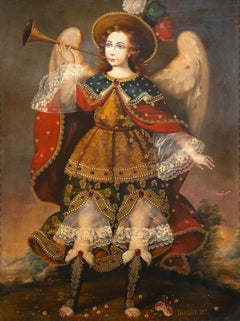
"Salgiel Dei" Cusco School Style Depiction of Angel by Martha Ochoa
By Martha Ochoa
Located in Austin, TX
By Martha Ochoa
Oil on Canvas
Canvas Size: 48" x 36"
Framed Size: 58.75" x 47"
This lovely painting by Martha Ochoa is from the Cusco tradition. The Cusco School was an artistic tradition that first emerged in the 16th and 17th centuries in Cusco, Peru, blending indigenous and European baroque artistic styles. It is renowned for its catholic iconography, which often feature vibrant colors, elaborate ornamentation, and blended elements combining Catholic and native symbolism.
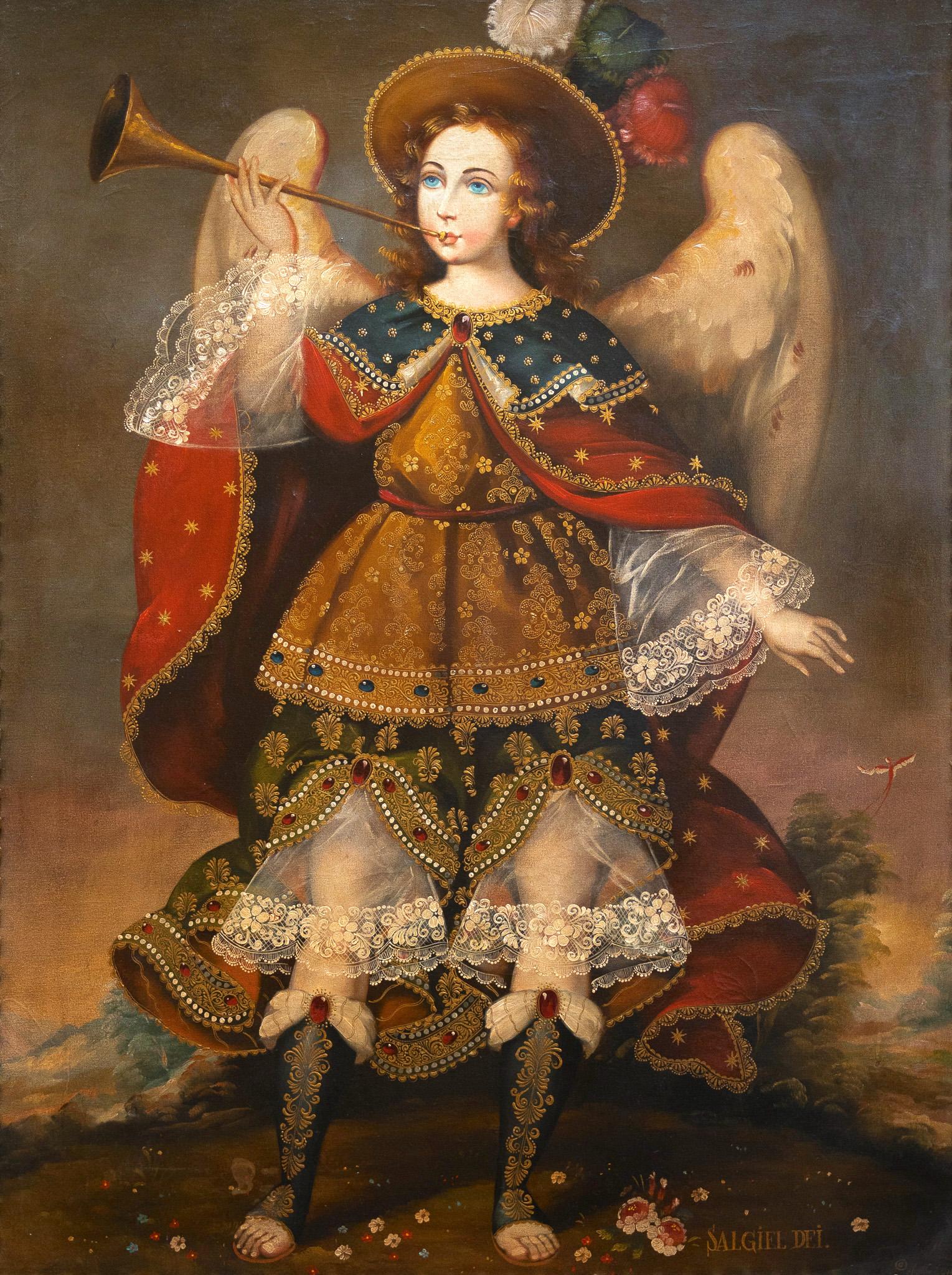
This painting portrays the angel Salgiel playing a horn dressed in immaculate red, green, blue, and yellow clothing.
About the Artist:
Martha Ochoa, born in Cusco, Peru, studied at Santa Ana School, the Cusco School of Fine Arts, and San Antonio Abad University, focusing on design, architecture, and restoration. She is the granddaughter of renowned Peruvian artists Francisco Olazo, a founder of the Cusco School of Fine Arts, and Ernesto Olazo, a famous sculptor. Influenced by the Cusco School, she transformed religious themes into decorative renditions of Archangels and Madonnas with Peruvian colonial...
Category
21st Century and Contemporary Baroque Paintings
Materials
Canvas, Oil
Archangel with an arquebusier, Andean Viceregal School, 18th Century
Located in Madrid, ES
Archangel with an arquebusier, Andean Viceregal School, 18th Century
Oil on canvas depicting an archangel with an arquebusier, a characteristic figure of viceregal painting in the A...
Category
Antique 18th Century Spanish Spanish Colonial Paintings
Materials
Paint
"Ofaniel Dei" Cusco School Style Catholic Angel Iconography by Martha Ochoa
By Martha Ochoa
Located in Austin, TX
By Martha Ochoa
Oil on Canvas
Canvas Size: 57.5" x 34.5"
Framed Size: 65.5" x 42.75"
This lovely painting by Martha Ochoa is from the Cusco tradition. The Cusco School was an artistic tradition that first emerged in the 16th and 17th centuries in Cusco, Peru, blending indigenous and European artistic styles. It is renowned for its catholic iconography, which often feature vibrant colors, elaborate ornamentation, and blended elements combining Catholic and native symbolism.
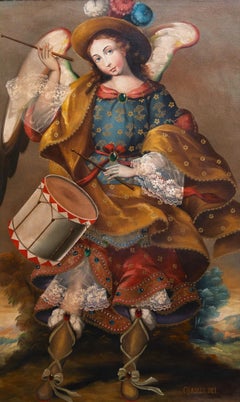
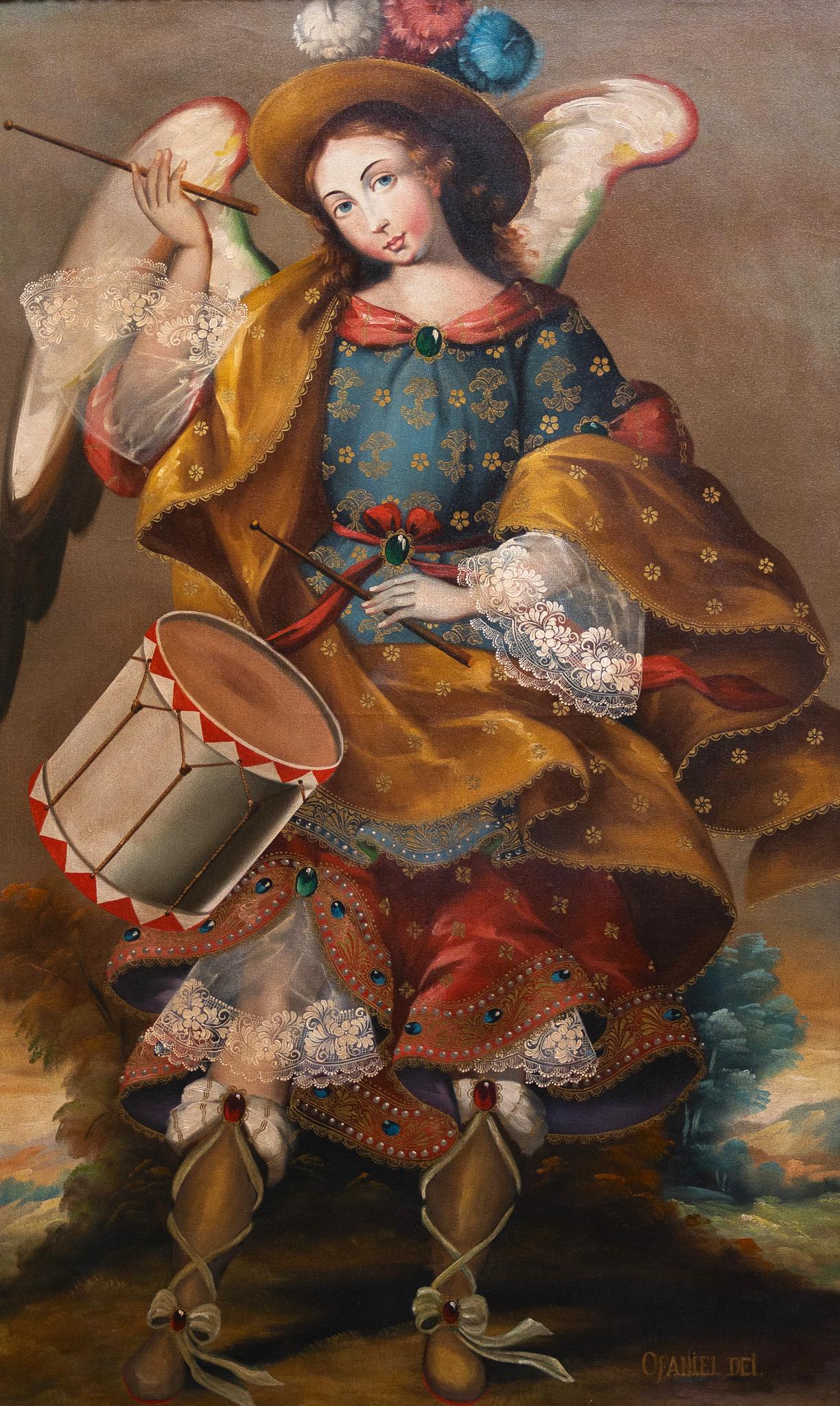
This painting portrays the angel Ofaniel Dei playing a drum in ornate blue, red, and yellow clothing...
Category
21st Century and Contemporary Baroque Paintings
Materials
Canvas, Oil