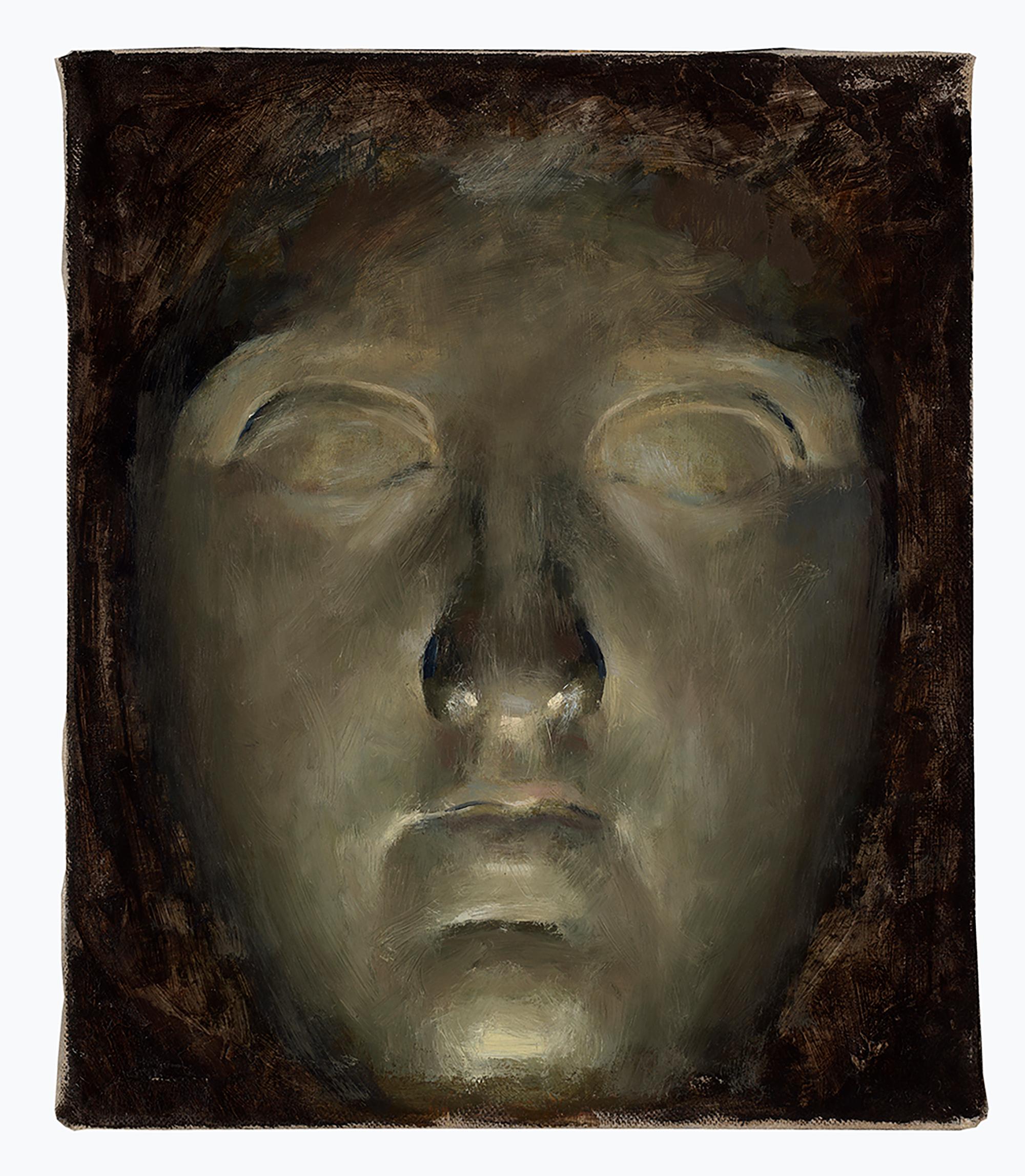
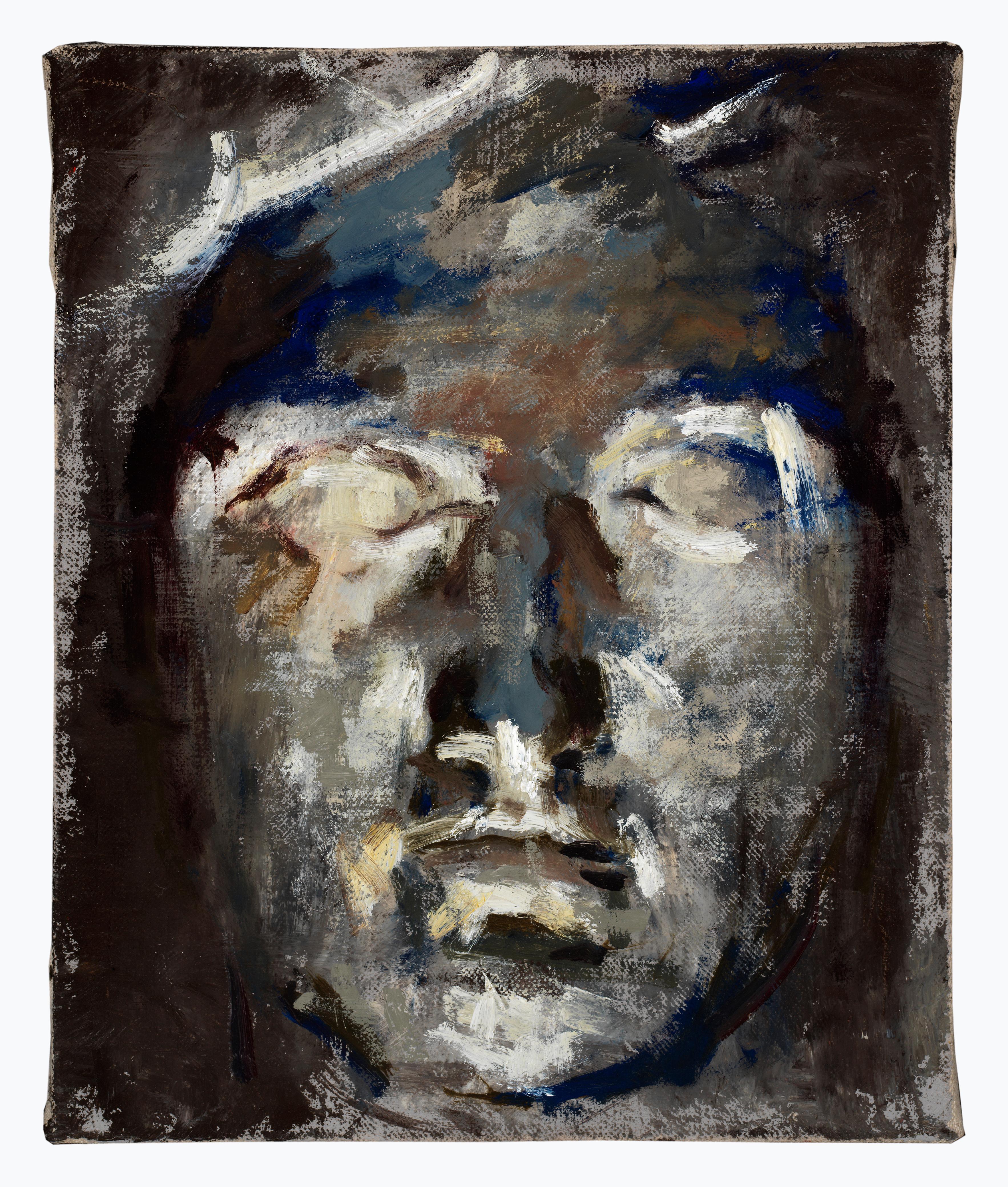
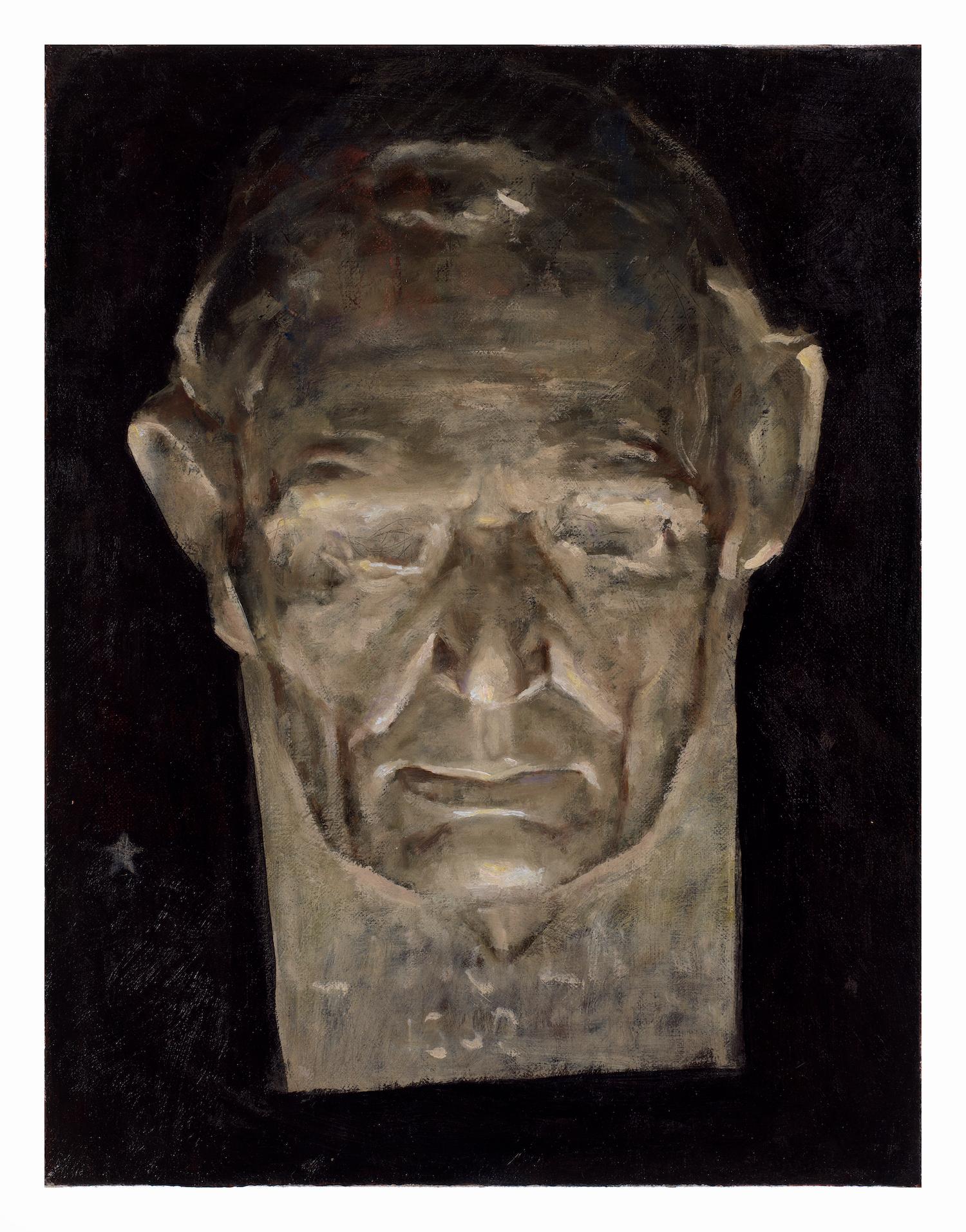
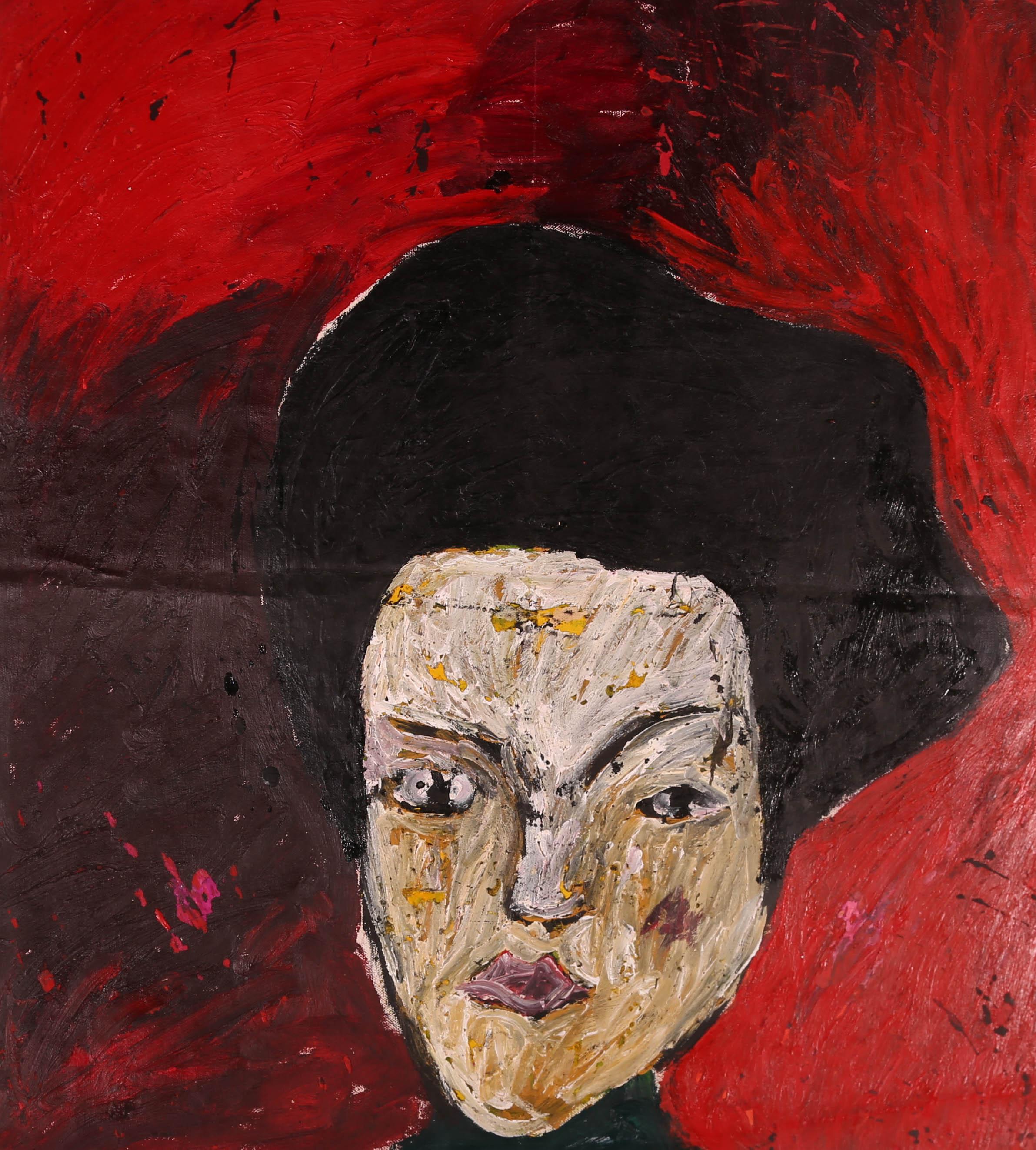
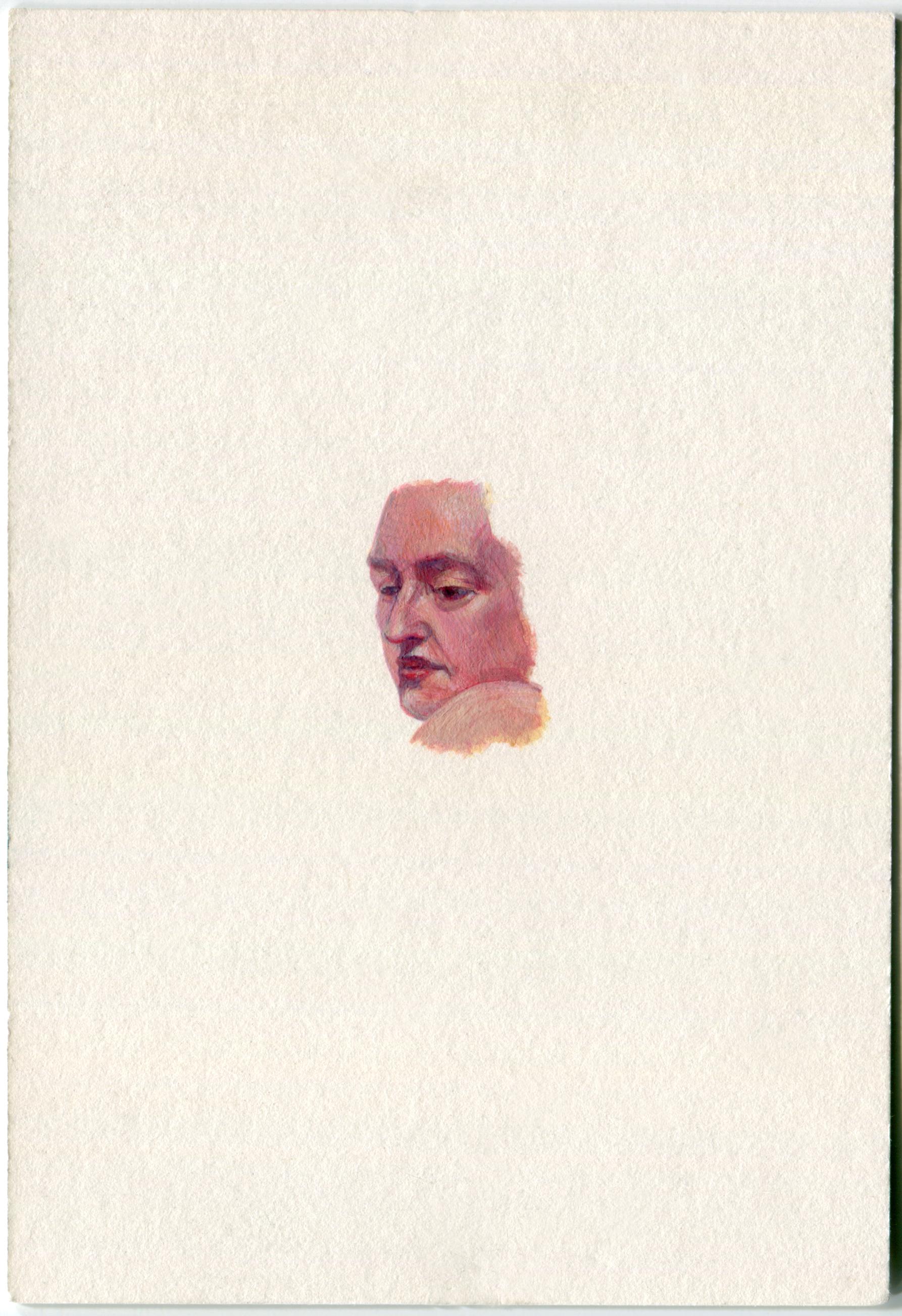
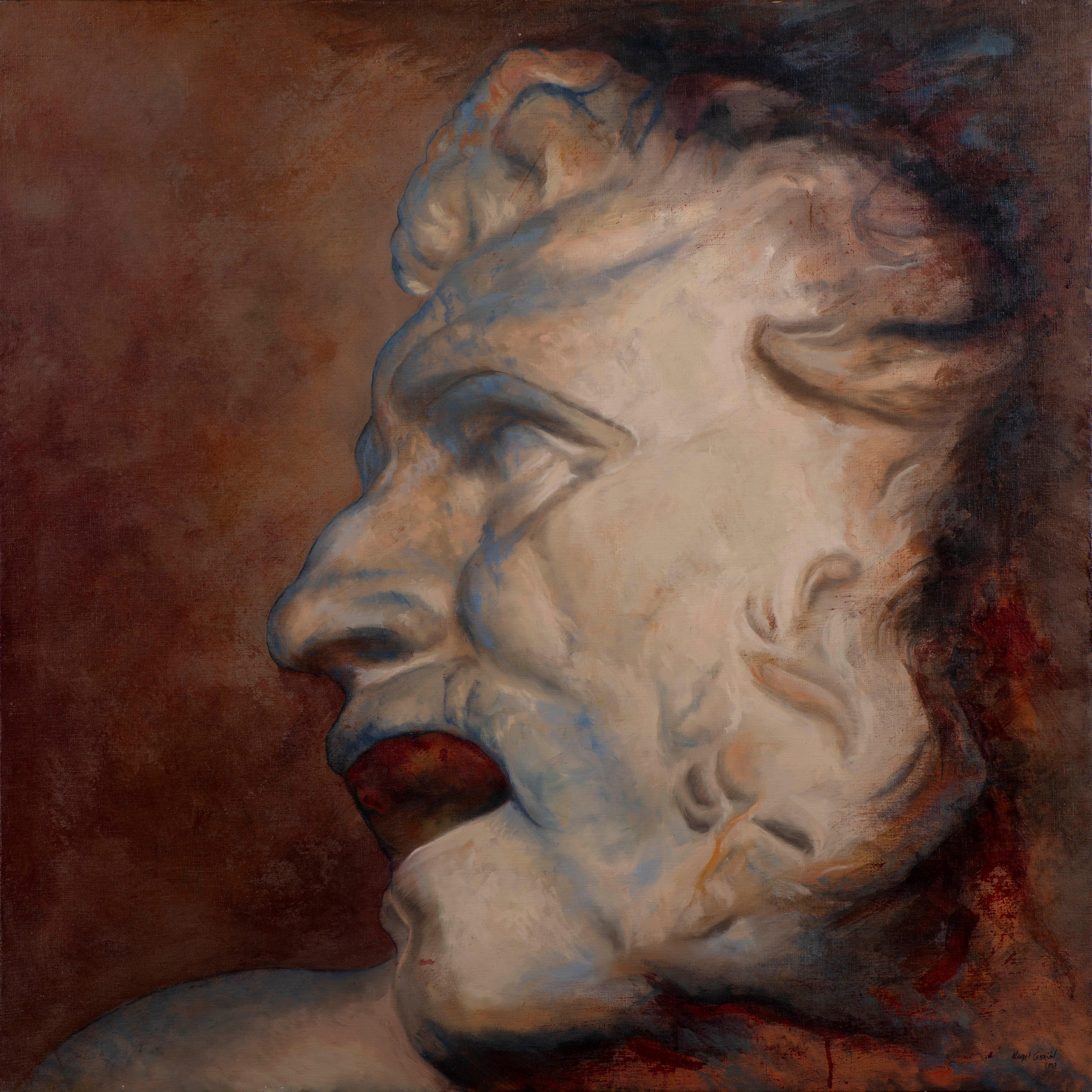
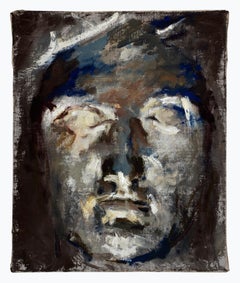
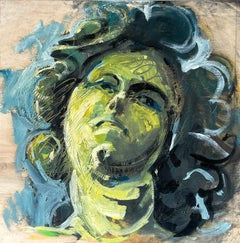
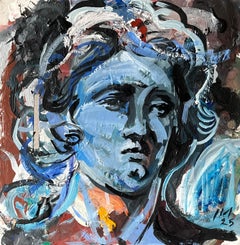
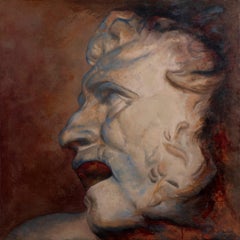
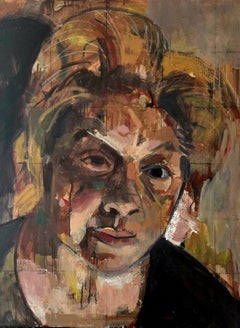
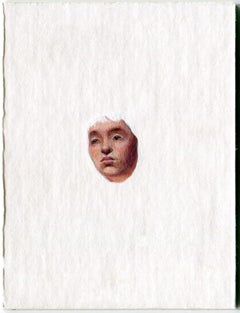
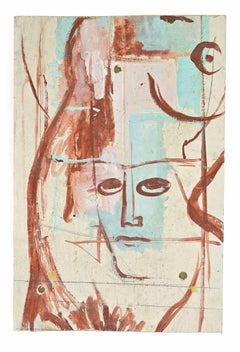
This painting occupies a quiet but critical position within Brother’s Bones Beside, William Blake's 2025 exhibition at Gallery VICTOR, Chicago, functioning as a meditation on idealization and its erosion over time. Referencing classical sculpture—particularly the Apollo Belvedere, long used to codify aesthetic and racial ideals—the head appears dulled, heavy, and materially unstable. Its closed eyes refuse spectacle or identification, presenting the figure instead as an object shaped by repetition, touch, and historical use. Rendered as an imperfect copy, the image resists the clarity and authority associated with neoclassical form, interrupting the lineage through which such ideals once justified power and exclusion. Within the exhibition, the work operates as a pressure point, asking what remains when symbolic forms persist after their meanings have fractured, and when the promise of “brotherhood” they once upheld has proven incomplete.
William Blake (b. 1991)
Brother’s Bones Beside Exhibition Summary(2025)
William Blake is a contemporary American painter whose work operates at the intersection of historical painting, reenactment, and critical memory. His practice engages the American Civil War not as a closed historical chapter, but as a living ideological structure—one that continues to shape questions of belonging, power, race, masculinity, and national myth.
Blake is himself a Civil War reenactor, a position that allows his work to function as a form of revisionist reenactment. Rather than pursuing nostalgia or authenticity for its own sake, his paintings intervene in the visual language of 19th-century American art to expose how images have historically been used to naturalize violence, hierarchy, and exclusion. His approach treats painting as both a vessel of preservation and a site of disruption.
Reconciliation and the Question of “Brotherhood”
Brother’s Bones Beside takes its title from the Civil War–era song We Are Coming, Father Abraam, foregrounding the unresolved question that animates the exhibition: who is called “brother,” and who is excluded from that designation.
Blake’s work examines how postwar reconciliation in the United States was historically constructed to reunite white men across former battle lines, often at the expense of Black Americans, women, and other marginalized groups.
Rather than depicting battle scenes or heroic sacrifice, Blake focuses on aftermath, repetition, and symbolic residue—the moments and objects through which national ideals are rehearsed, transmitted, and contested long after formal conflict has ended.
Historical Symbols as Contested Objects:
Across the exhibition, Blake interrogates iconic figures and artifacts—George Washington, Abraham Lincoln, John Brown, classical sculpture, Confederate monuments—not as stable symbols but as sites of ideological struggle.
In To See a New Nation, Jean-Antoine Houdon’s statue of George Washington is paired with the severed head of the Apollo Belvedere, collapsing Enlightenment ideals, neoclassical aesthetics, and 19th-century racial science into a fractured image.
The painting exposes how Washington’s image has been repeatedly mobilized to legitimize competing political and moral claims, including slavery and white supremacy.
Similarly, After Appomattox revisits a Lost Cause painting by Confederate veteran John Adams Elder, layering the copied image with fresh flowers. Rather than erasing or reclaiming the original, Blake stages a tense coexistence between mourning and refusal, asking what it means to inhabit difficult histories without resolving them.
Memory, Doubling, and the Body:
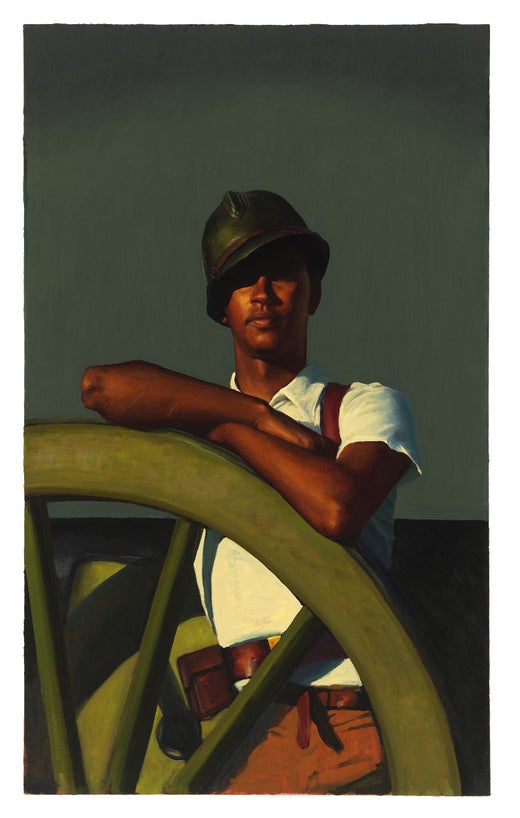
Blake’s work frequently employs doubling, copying, and repetition as strategies for visualizing memory as non-linear and recursive. In To Illinois, two identical figures—modeled on a fellow reenactor—appear aboard the steamboat Sultana shortly before its catastrophic explosion. By refusing to depict the disaster itself, the painting holds a suspended moment of return, turning painting into a container for anticipation and loss.
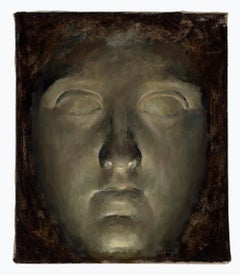
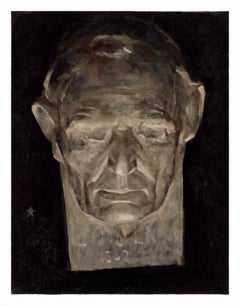
This interest in bodily trace extends to works like Father Abraam, a painted study of Abraham Lincoln’s life mask. Rather than idealizing Lincoln, Blake treats the cast as both object and sitter, emphasizing weight, asymmetry, and the physical residue of history over heroic abstraction.
Masculinity, Inheritance, and Performance:
In Stag Dance, Blake reenacts an all-male Civil War dance aboard the USS Monitor, performed by a father and son reenactor. The work reframes military camaraderie through intimacy, play, and longing, suggesting that what is passed down across generations is not only history, but fantasy, nostalgia, and desire.
In Summary:
William Blake’s work uses painting to hold contradictions rather than resolve them. His engagement with American history resists both monumental reverence and simple critique, instead asking what it means to continue living with images, myths, and ideologies that refuse to stay in the past. Brother’s Bones Beside positions painting as an active participant in historical memory—capable of preservation, interruption, and ethical pressure at once.
William Blake lives and works outside Chicago, IL. As a participant in Civil War reenactments across the country, he portrays the artist Winslow Homer. A graduate of the University of Illinois at Urbana-Champaign, he also holds a Master of Fine Arts from the Tyler School of Art at Temple University. He currently teaches Figure Drawing at Harper College. His work has been published in Fine Art Connoisseur, New American Paintings, The Chicago Tribune, and American Art Collector. He has been a resident artist at the Berkshire Painting Residency, the Vermont Studio Center, the Cuttyhunk Island Residency, and the Lincoln Legacy Residency.
William Blake
b. 1991, Oshkosh, WI
Education
2018 MFA Painting, Tyler School of Art, Temple University
2014 BFA Painting, University of Illinois at Urbana- Champaign
2013 Glasgow School of Art
Selected Exhibitions
2022 A Great Battlefield, Gallery Victor Armendariz, Chicago, IL
2020 Mine Eyes Have Seen the Glory, Gallery Victor Armendariz, Chicago, IL
2019 All of Us Curated by Eric Preisendanz, Jefferson University Hospital, Philadelphia, PA
2018 A Grand Review, Tyler School of Art Gallery, Philadelphia, PA
2017 Ocotillo Curated by Jonathan DeDecker, Stella Elkins Gallery, Philadelphia, PA
2016 New American Paintings: Midwest Edition, Elmhurst Art Museum, Elmhurst, IL
Continental Divide, Sidetracked Studio, Evanston, IL
2015 William Blake: Patinas from the American Civil War, Hinsdale Public Library, Hinsdale, IL
I Can't Breathe, ARC Gallery, Chicago, IL
Wall to Wall, Art Space, Chicago, IL
2014 Between the States, Figure One, Champaign, IL
Flagg Extension Show, Flagg Gallery, Champaign, IL
Figuration, Indi Go Gallery, Champaign, IL
RAW, Indi Go Gallery, Champaign, IL
2D Exhibition, Link Gallery, Champaign, IL
2013 Upside Down, Left to Right, Figure One, Champaign, IL
Second Year Painting Exhibition, Glasgow, Scotland
Awards
2018 Tyler School of Art Dean’s Grant
2017 7th Annual PleinAir Salon June/July
2015 Figurative Finalist, International Art Renewal Center Salon
2014 Florence M. House Scholarship, University of Illinois
2009 Young Emerging Artist Award, Washington University in St. Louis
Residencies
2015 Vermont Studio Center Fellowship
2014 Berkshire Painting Residency