Items Similar to Yoel Benharrouche - The Wise Man of Time - Oil on Canvas
Want more images or videos?
Request additional images or videos from the seller
1 of 7
Yoel BenharroucheYoel Benharrouche - The Wise Man of Time - Oil on Canvas2000s
2000s
$8,926.61
£6,541.56
€7,400
CA$12,251.32
A$12,944.62
CHF 6,962.69
MX$154,990.90
NOK 87,234.38
SEK 79,894.03
DKK 56,362.60
About the Item
Yoel Benharrouche
Oil on Canvas
Title: The Wise Man of Time
Dimensions: 33 x 24 cm
Framed dimensions: 73 x 63 cm
Signed
"Spirit must meet with matter. They must interlace like the meshes of a net, like a canvas, a very tight weft, a medium the artist can use to paint his work. While revealing this message of life, I grow in myself a vital and essential love, nurtured on confidence, tenderness and respect. Thus I can build and weave around myself bonds of life and love. Through learning how to love and achieve completeness, through feeling that one belongs to the common bondage, one reaches the divine and blooms into man"
Yoel Benharrouche
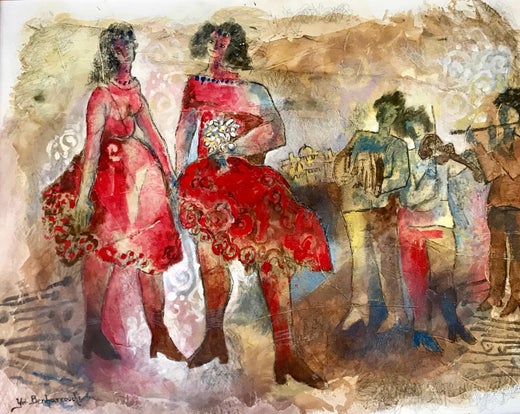
Yoel Benharrouche paints with a deep passion. His vibrant palette and mystical contemplation explore both the historic and spiritual world of Israel. The renowned painter captures the magic of his own Judean Desert. He paints his surroundings with a lyrical quality that has landed him among the elite artists of the world.
Formally educated as an artist in France, Benharrouche went on to become a distinguished professor of drawing and painting at Nice´s Academie Paganini. The allure of Israel brought him back to his homeland where he lives and works today. Inspired by the study of scriptures and the history of his surroundings, he continues to explore a duality between his material and spiritual world.
Today, you can find Benharrouche paintings in museums, top galleries, and distinguished, private collections throughout the world.
- Creator:Yoel Benharrouche (1961, Israeli)
- Creation Year:2000s
- Dimensions:Height: 13 in (33 cm)Width: 9.45 in (24 cm)Depth: 0.4 in (1 cm)
- Medium:
- Movement Style:
- Period:
- Condition:
- Gallery Location:Collonge Bellerive, Geneve, CH
- Reference Number:1stDibs: LU16125247982
Yoel Benharrouche
Yoel Benharrouche’s vibrant palette and mystical contemplations explore both the spiritual and the man-made world. His lyrical style and dreamlike subject matter work in tandem to establish a sincere connection with his audience. Trained and educated as an artist in the south of France, Benharrouche went on to become a distinguished professor of drawing and painting at Nice’s Academie Paganini. His influences include masters such as Chagall, Picasso and Miro. However, Benharrouche’s personal abstract style comes through in each of his compositions, balancing strength and ethereal elegance. Through paintings and sculpture, Yoel Benharrouche celebrates the history of mankind. His aesthetic originates from spiritual inspirations, as well as his lifelong study of religious texts. His work seeks to encompass the diversity of life and imagination and establish a bond between heaven and earth. Yoel Benharrouche’s diverse collections include acrylic on canvas, lacquer on metal, mixed media on paper, sculpture, and acrylic on wood (including hand painted musical instruments). His ever-involving body of work consistently evokes a passion for color, life, and the spiritual nature of existence. EXHIBITIONS :
2007
Amstel veen, Museum of art, Amsterdam
2007
Galerie de Kei, Nuene (Holland)
2007
Eden Gallery, Jerusalem
2007
SOFA, Chicago
2007
Galerie Nuances et Lumiere, Lyon
2006
Eden Gallery, New York
2006
SOFA, Chicago
2006
Newbury, Boston
2006
Eden Gallery, Tel Aviv
2005
Galerie Raugraff, Nancy
2005
Art Expo, New York
2005
Eden Gallery, New York
2005
One Man Show November, Newbury Fine Arts, Boston
2004
Galerie Liane et Danny Taran, Montreal
2004
Art Expo, New York
2004
Art Symbol Gallery, Paris
2004
Eden Gallery, Jerusalem
2003
Eden Gallery, Tel Aviv
2003
Galerie Chabanian, Zurich
2003
Galerie de Kei, Nuene (Holland)
2003
Galerie Nuances et Lumiere, Lyon
2002
Art Seiller Galerie, Saint-Paul de Vence
2002
Art Symbol Gallery, Paris
About the Seller
4.9
Platinum Seller
Premium sellers with a 4.7+ rating and 24-hour response times
Established in 2015
1stDibs seller since 2015
973 sales on 1stDibs
Typical response time: 1 hour
- ShippingRetrieving quote...Shipping from: Collonge Bellerive, Geneve, Switzerland
- Return Policy
More From This Seller
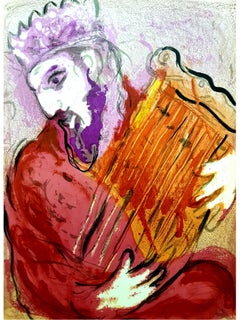
View AllMarc Chagall - Colorful Bible King - Original Lithograph
By Marc Chagall
Located in Collonge Bellerive, Geneve, CH
Marc Chagall, Original Lithograph depicting an instant of the Bible.
Technique: Original lithograph in colours
Year: 1956
Sizes: 35,5 x 26 cm / 14" x 10.2" (sheet)
Published by: Édit...
Category
1950s Modern Figurative Prints
Materials
Lithograph
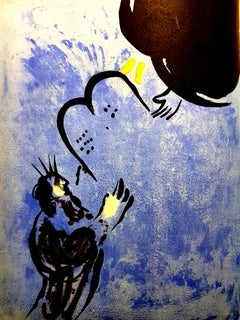
Marc Chagall - Moses - Original Lithograph
By Marc Chagall
Located in Collonge Bellerive, Geneve, CH
Marc Chagall, Original Lithograph depicting an instant of the Bible.
Technique: Original lithograph in colours
Year: 1956
Sizes: 35,5 x 26 cm / 14" x 10.2" (sheet)
Published by: Éditions de la Revue Verve, Tériade, Paris
Printed by: Atelier Mourlot, Paris
Documentation / References: Mourlot, F., Chagall Lithograph [II] 1957-1962, A. Sauret, Monte Carlo 1963, nos. 234 and 257
Marc Chagall (born in 1887)
Marc Chagall was born in Belarus in 1887 and developed an early interest in art. After studying painting, in 1907 he left Russia for Paris, where he lived in an artist colony on the city’s outskirts. Fusing his own personal, dreamlike imagery with hints of the fauvism and cubism popular in France at the time, Chagall created his most lasting work—including I and the Village (1911)—some of which would be featured in the Salon des Indépendants exhibitions. After returning to Vitebsk for a visit in 1914, the outbreak of WWI trapped Chagall in Russia. He returned to France in 1923 but was forced to flee the country and Nazi persecution during WWII. Finding asylum in the U.S., Chagall became involved in set and costume design before returning to France in 1948. In his later years, he experimented with new art forms and was commissioned to produce numerous large-scale works. Chagall died in St.-Paul-de-Vence in 1985.
The Village
Marc Chagall was born in a small Hassidic community on the outskirts of Vitebsk, Belarus, on July 7, 1887. His father was a fishmonger, and his mother ran a small sundries shop in the village. As a child, Chagall attended the Jewish elementary school, where he studied Hebrew and the Bible, before later attending the Russian public school. He began to learn the fundamentals of drawing during this time, but perhaps more importantly, he absorbed the world around him, storing away the imagery and themes that would feature largely in most of his later work.
At age 19 Chagall enrolled at a private, all-Jewish art school and began his formal education in painting, studying briefly with portrait artist Yehuda Pen. However, he left the school after several months, moving to St. Petersburg in 1907 to study at the Imperial Society for the Protection of Fine Arts. The following year, he enrolled at the Svanseva School, studying with set designer Léon Bakst, whose work had been featured in Sergei Diaghilev's Ballets Russes. This early experience would prove important to Chagall’s later career as well.
Despite this formal instruction, and the widespread popularity of realism in Russia at the time, Chagall was already establishing his own personal style, which featured a more dreamlike unreality and the people, places and imagery that were close to his heart. Some examples from this period are his Window Vitebsk (1908) and My Fianceé with Black Gloves (1909), which pictured Bella Rosenfeld, to whom he had recently become engaged.
The Beehive
Despite his romance with Bella, in 1911 an allowance from Russian parliament member and art patron Maxim Binaver enabled Chagall to move to Paris, France. After settling briefly in the Montparnasse neighborhood, Chagall moved further afield to an artist colony known as La Ruche (“The Beehive”), where he began to work side by side with abstract painters such as Amedeo Modigliani and Fernand Léger as well as the avant-garde poet Guillaume Apollinaire. At their urging, and under the influence of the wildly popular fauvism and cubism, Chagall lightened his palette and pushed his style ever further from reality. I and the Village (1911) and Homage to Apollinaire (1912) are among his early Parisian works, widely considered to be his most successful and representative period.
Though his work stood stylistically apart from his cubist contemporaries, from 1912 to 1914 Chagall exhibited several paintings at the annual Salon des Indépendants exhibition, where works by the likes of Juan Gris, Marcel Duchamp and Robert Delaunay were causing a stir in the Paris art world. Chagall’s popularity began to spread beyond La Ruche, and in May 1914 he traveled to Berlin to help organize his first solo exhibition, at Der Sturm Gallery. Chagall remained in the city until the highly acclaimed show opened that June. He then returned to Vitebsk, unaware of the fateful events to come.
War, Peace and Revolution
In August 1914 the outbreak of World War I precluded Chagall’s plans to return to Paris. The conflict did little to stem the flow of his creative output, however, instead merely giving him direct access to the childhood scenes so essential to his work, as seen in paintings such as Jew in Green (1914) and Over Vitebsk (1914). His paintings from this period also occasionally featured images of the war’s impact on the region, as with Wounded Soldier (1914) and Marching (1915). But despite the hardships of life during wartime, this would also prove to be a joyful period for Chagall. In July 1915 he married Bella, and she gave birth to a daughter, Ida, the following year. Their appearance in works such as Birthday (1915), Bella and Ida by the Window (1917) and several of his “Lovers” paintings give a glimpse of the island of domestic bliss that was Chagall’s amidst the chaos.
To avoid military service and stay with his new family, Chagall took a position as a clerk in the Ministry of War Economy in St. Petersburg. While there he began work on his autobiography and also immersed himself in the local art scene, befriending novelist Boris Pasternak, among others. He also exhibited his work in the city and soon gained considerable recognition. That notoriety would prove important in the aftermath of the 1917 Russian Revolution when he was appointed as the Commissar of Fine Arts in Vitebsk. In his new post, Chagall undertook various projects in the region, including the 1919 founding of the Academy of the Arts. Despite these endeavors, differences among his colleagues eventually disillusioned Chagall. In 1920 he relinquished his position and moved his family to Moscow, the post-revolution capital of Russia.
In Moscow, Chagall was soon commissioned to create sets and costumes for various productions at the Moscow State Yiddish...
Category
1950s Modern Figurative Prints
Materials
Lithograph
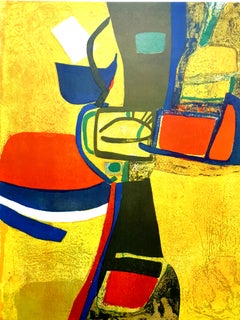
Maurice Estève - Composition - Original Lithograph
By Maurice Estève
Located in Collonge Bellerive, Geneve, CH
Maurice Estève - Composition - Original Lithograph
Colorful Abstraction
1965
From the art review XXe Siecle
Dimensions: 32 x 24 inches
Edition: G. di Sa...
Category
1960s Modern Figurative Prints
Materials
Lithograph
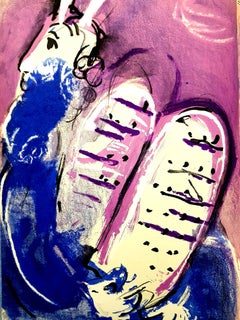
Marc Chagall - Moses with Tablets of Stone - Original Lithograph
By Marc Chagall
Located in Collonge Bellerive, Geneve, CH
Marc Chagall, Original Lithograph depicting an instant of the Bible.
Technique: Original lithograph in colours
Year: 1956
Sizes: 35,5 x 26 cm / 14" x 10.2" (sheet)
Published by: Éditions de la Revue Verve, Tériade, Paris
Printed by: Atelier Mourlot, Paris
Documentation / References: Mourlot, F., Chagall Lithograph [II] 1957-1962, A. Sauret, Monte Carlo 1963, nos. 234 and 257
Marc Chagall (born in 1887)
Marc Chagall was born in Belarus in 1887 and developed an early interest in art. After studying painting, in 1907 he left Russia for Paris, where he lived in an artist colony on the city’s outskirts. Fusing his own personal, dreamlike imagery with hints of the fauvism and cubism popular in France at the time, Chagall created his most lasting work—including I and the Village (1911)—some of which would be featured in the Salon des Indépendants exhibitions. After returning to Vitebsk for a visit in 1914, the outbreak of WWI trapped Chagall in Russia. He returned to France in 1923 but was forced to flee the country and Nazi persecution during WWII. Finding asylum in the U.S., Chagall became involved in set and costume design before returning to France in 1948. In his later years, he experimented with new art forms and was commissioned to produce numerous large-scale works. Chagall died in St.-Paul-de-Vence in 1985.
The Village
Marc Chagall was born in a small Hassidic community on the outskirts of Vitebsk, Belarus, on July 7, 1887. His father was a fishmonger, and his mother ran a small sundries shop in the village. As a child, Chagall attended the Jewish elementary school, where he studied Hebrew and the Bible, before later attending the Russian public school. He began to learn the fundamentals of drawing during this time, but perhaps more importantly, he absorbed the world around him, storing away the imagery and themes that would feature largely in most of his later work.
At age 19 Chagall enrolled at a private, all-Jewish art school and began his formal education in painting, studying briefly with portrait artist Yehuda Pen. However, he left the school after several months, moving to St. Petersburg in 1907 to study at the Imperial Society for the Protection of Fine Arts. The following year, he enrolled at the Svanseva School, studying with set designer Léon Bakst, whose work had been featured in Sergei Diaghilev's Ballets Russes. This early experience would prove important to Chagall’s later career as well.
Despite this formal instruction, and the widespread popularity of realism in Russia at the time, Chagall was already establishing his own personal style, which featured a more dreamlike unreality and the people, places and imagery that were close to his heart. Some examples from this period are his Window Vitebsk (1908) and My Fianceé with Black Gloves (1909), which pictured Bella Rosenfeld, to whom he had recently become engaged.
The Beehive
Despite his romance with Bella, in 1911 an allowance from Russian parliament member and art patron Maxim Binaver enabled Chagall to move to Paris, France. After settling briefly in the Montparnasse neighborhood, Chagall moved further afield to an artist colony known as La Ruche (“The Beehive”), where he began to work side by side with abstract painters such as Amedeo Modigliani and Fernand Léger as well as the avant-garde poet Guillaume Apollinaire. At their urging, and under the influence of the wildly popular fauvism and cubism, Chagall lightened his palette and pushed his style ever further from reality. I and the Village (1911) and Homage to Apollinaire (1912) are among his early Parisian works, widely considered to be his most successful and representative period.
Though his work stood stylistically apart from his cubist contemporaries, from 1912 to 1914 Chagall exhibited several paintings at the annual Salon des Indépendants exhibition, where works by the likes of Juan Gris, Marcel Duchamp and Robert Delaunay were causing a stir in the Paris art world. Chagall’s popularity began to spread beyond La Ruche, and in May 1914 he traveled to Berlin to help organize his first solo exhibition, at Der Sturm Gallery. Chagall remained in the city until the highly acclaimed show opened that June. He then returned to Vitebsk, unaware of the fateful events to come.
War, Peace and Revolution
In August 1914 the outbreak of World War I precluded Chagall’s plans to return to Paris. The conflict did little to stem the flow of his creative output, however, instead merely giving him direct access to the childhood scenes so essential to his work, as seen in paintings such as Jew in Green (1914) and Over Vitebsk (1914). His paintings from this period also occasionally featured images of the war’s impact on the region, as with Wounded Soldier (1914) and Marching (1915). But despite the hardships of life during wartime, this would also prove to be a joyful period for Chagall. In July 1915 he married Bella, and she gave birth to a daughter, Ida, the following year. Their appearance in works such as Birthday (1915), Bella and Ida by the Window (1917) and several of his “Lovers” paintings give a glimpse of the island of domestic bliss that was Chagall’s amidst the chaos.
To avoid military service and stay with his new family, Chagall took a position as a clerk in the Ministry of War Economy in St. Petersburg. While there he began work on his autobiography and also immersed himself in the local art scene, befriending novelist Boris Pasternak, among others. He also exhibited his work in the city and soon gained considerable recognition. That notoriety would prove important in the aftermath of the 1917 Russian Revolution when he was appointed as the Commissar of Fine Arts in Vitebsk. In his new post, Chagall undertook various projects in the region, including the 1919 founding of the Academy of the Arts. Despite these endeavors, differences among his colleagues eventually disillusioned Chagall. In 1920 he relinquished his position and moved his family to Moscow, the post-revolution capital of Russia.
In Moscow, Chagall was soon commissioned to create sets and costumes for various productions at the Moscow State Yiddish...
Category
1950s Modern Figurative Prints
Materials
Lithograph
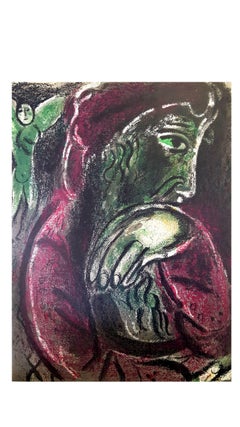
Marc Chagall - The Bible - Job - Original Lithograph
By Marc Chagall
Located in Collonge Bellerive, Geneve, CH
Marc Chagall, Original Lithograh depicting an instant of the Bible.
Technique: Original lithograph in colours (Mourlot no. 234)
On the reverse: another black and white original litho...
Category
1960s Modern Figurative Prints
Materials
Lithograph
Léon Zack - Lyrical Abstract Composition - Signed Oil on Canvas
By Léon Zack
Located in Collonge Bellerive, Geneve, CH
Léon Zack
Lyrical Abstract Composition
Signed Oil on Canvas
50 x 61 cm
Léon Zack (1892-1980)
Léon Zack was a Russian émigré who became a leading exp...
Category
1970s Abstract Expressionist Abstract Paintings
Materials
Oil
You May Also Like
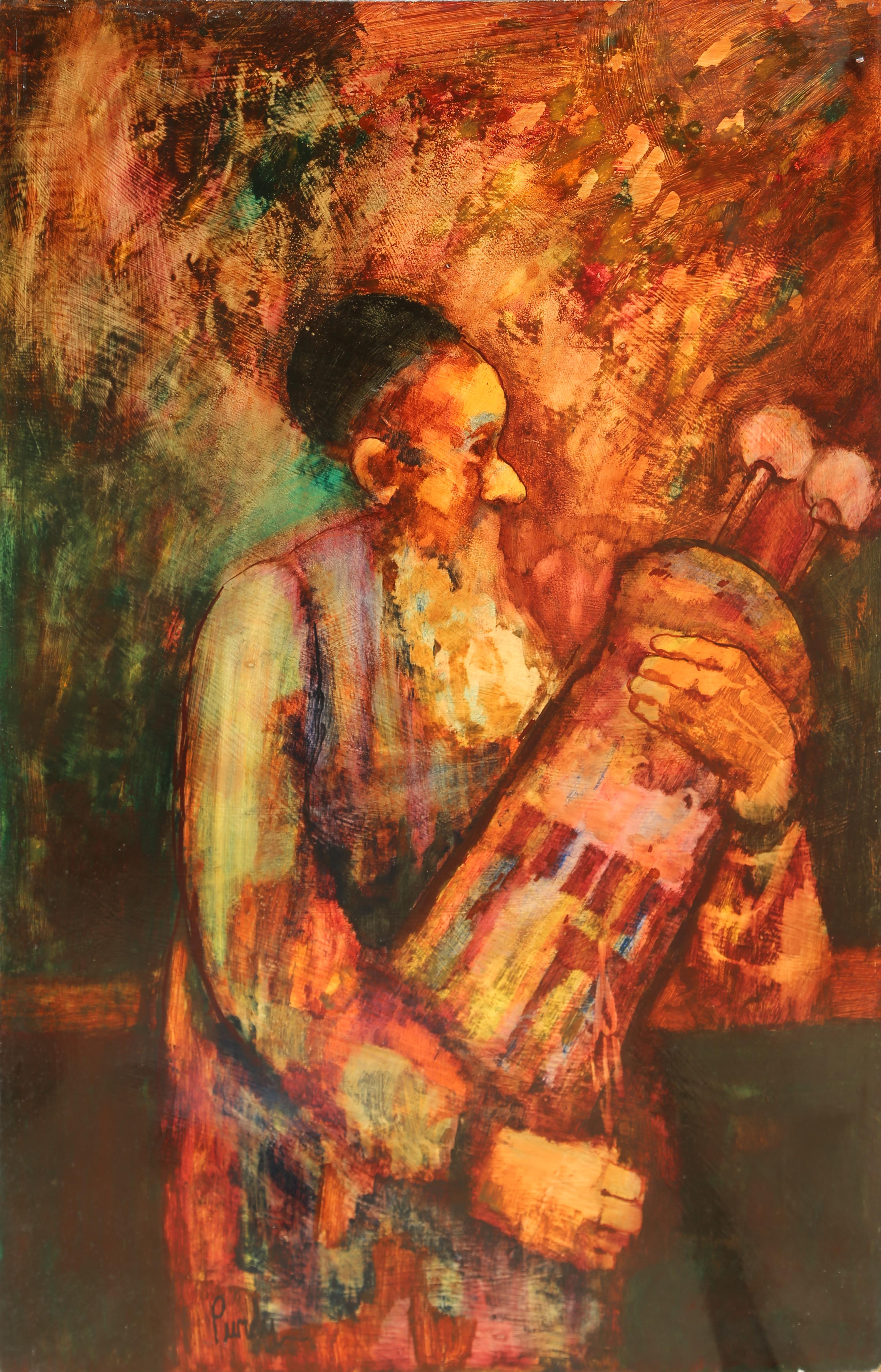
Rabbi, Oil Painting by Donald Roy Purdy
By Donald Roy Purdy
Located in Long Island City, NY
Artist: Donald Roy Purdy, American (1924 - )
Title: Rabbi 2
Medium: Oil on Masonite, signed l.r.
Size: 36 x 24 in. (91.44 x 60.96 cm)
Category
Late 20th Century Post-War Figurative Paintings
Materials
Masonite, Oil
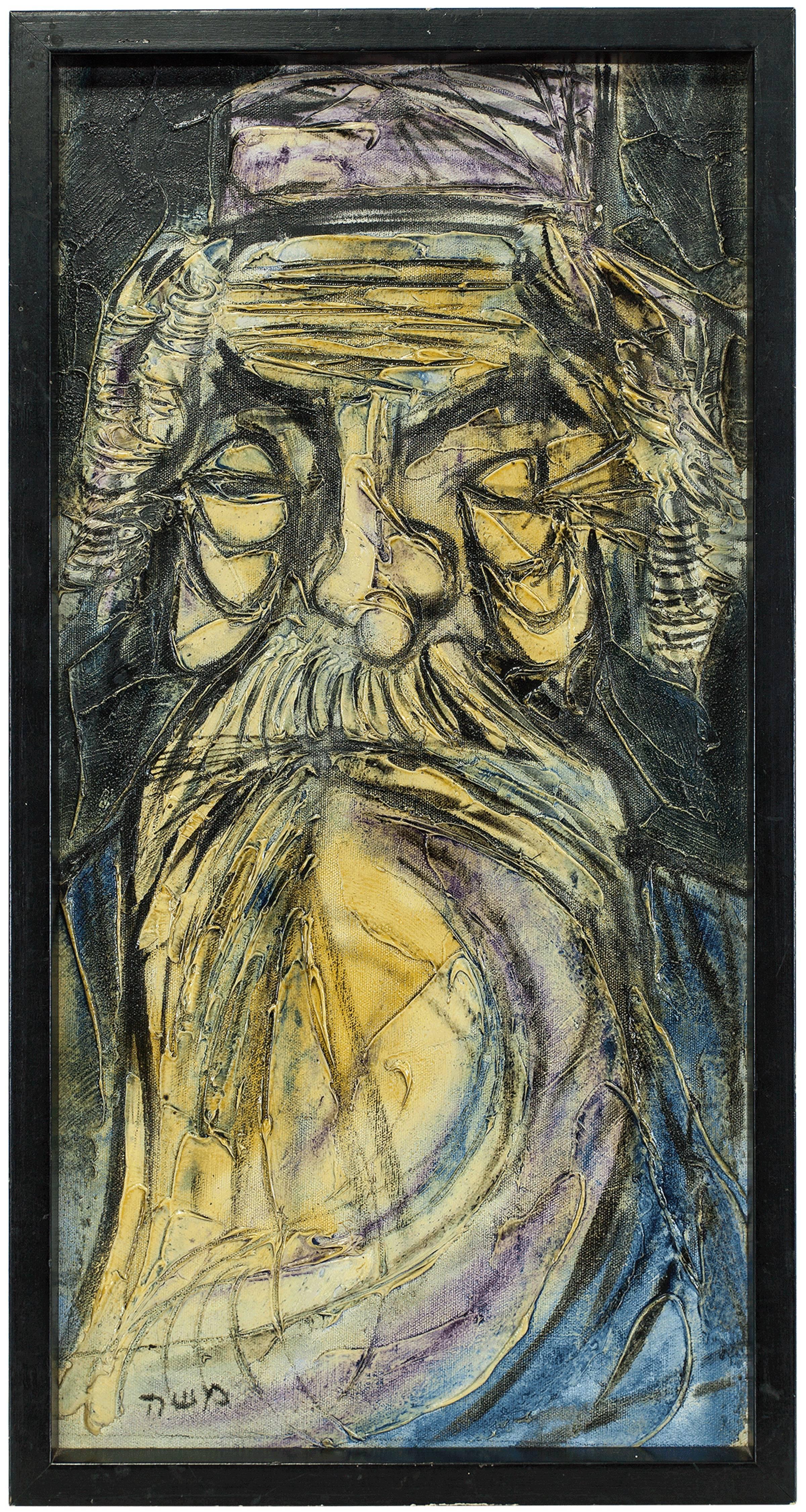
Rabbi Portrait, Acryclic on Canvas
By Moshe Katz
Located in Surfside, FL
Highly textured portrait of an elderly rabbinic sage.
Moshe Katz was born March 2, 1937 in Bucharest, Romania. With his parents, he fled the Nazis and with much difficulty successf...
Category
20th Century Expressionist Portrait Paintings
Materials
Acrylic
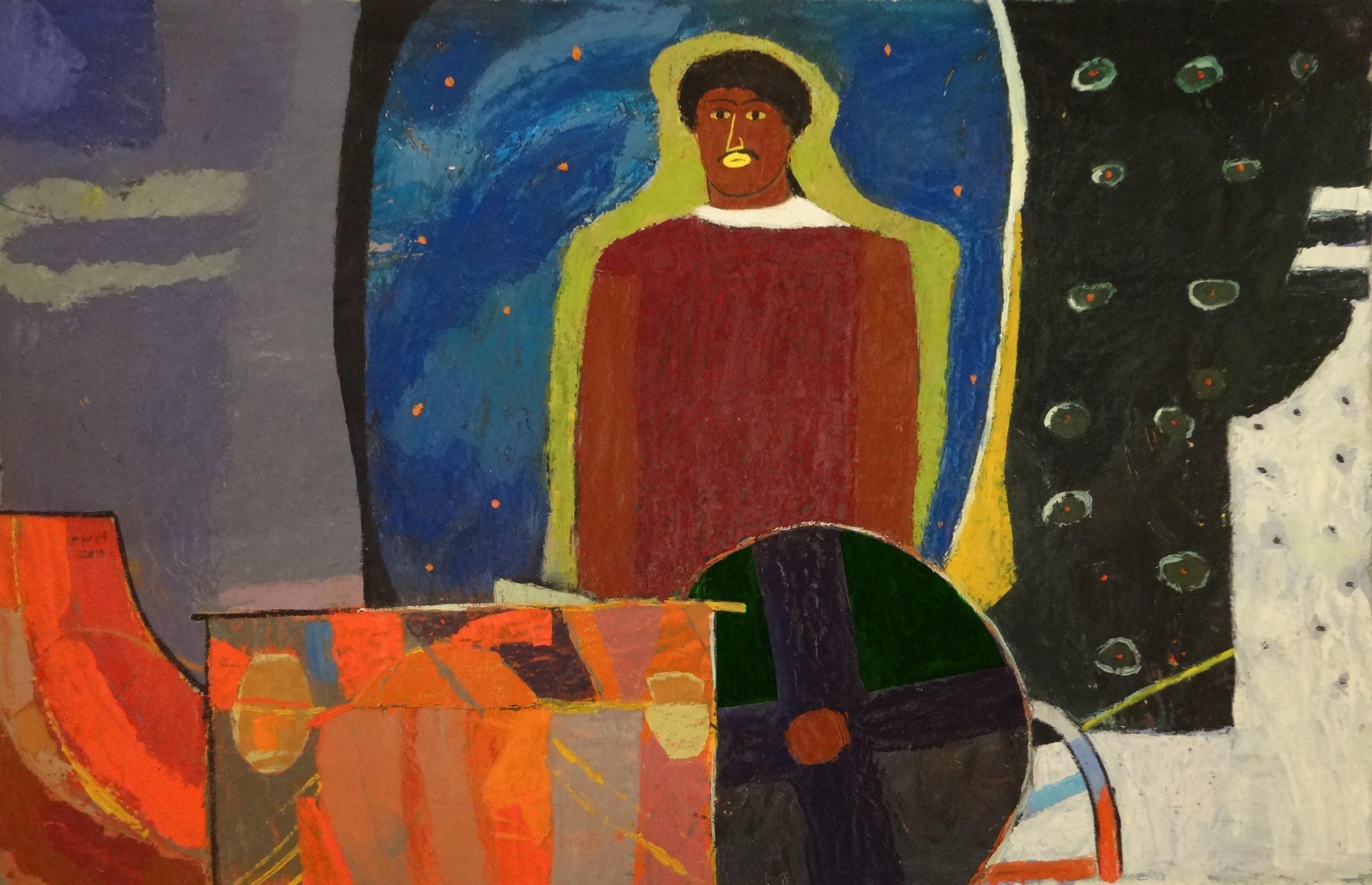
"Moses" Figurative Oil Painting 51" x 83" inch by Ashraf Zamzami
By Ashraf Zamzami
Located in Culver City, CA
"Moses" Figurative Oil Painting 51" x 83" inch by Ashraf Zamzami
ARTIST BIO:
Zamzami was a graduate of the Academy of Fine Arts in Minya, having garnered acclaim in his native Egy...
Category
21st Century and Contemporary Contemporary Figurative Paintings
Materials
Canvas, Oil
Rabbi in Old Jerusalem Painting
By Isaac Frenel
Located in Surfside, FL
Yitzchak Frenel Frenkel, Israeli Master
In 1920, he established the artists' cooperative in Jaffa and an artists' studio in Herzliya. Later that year, he traveled to Paris where h...
Category
20th Century Expressionist Figurative Paintings
Materials
Canvas, Oil
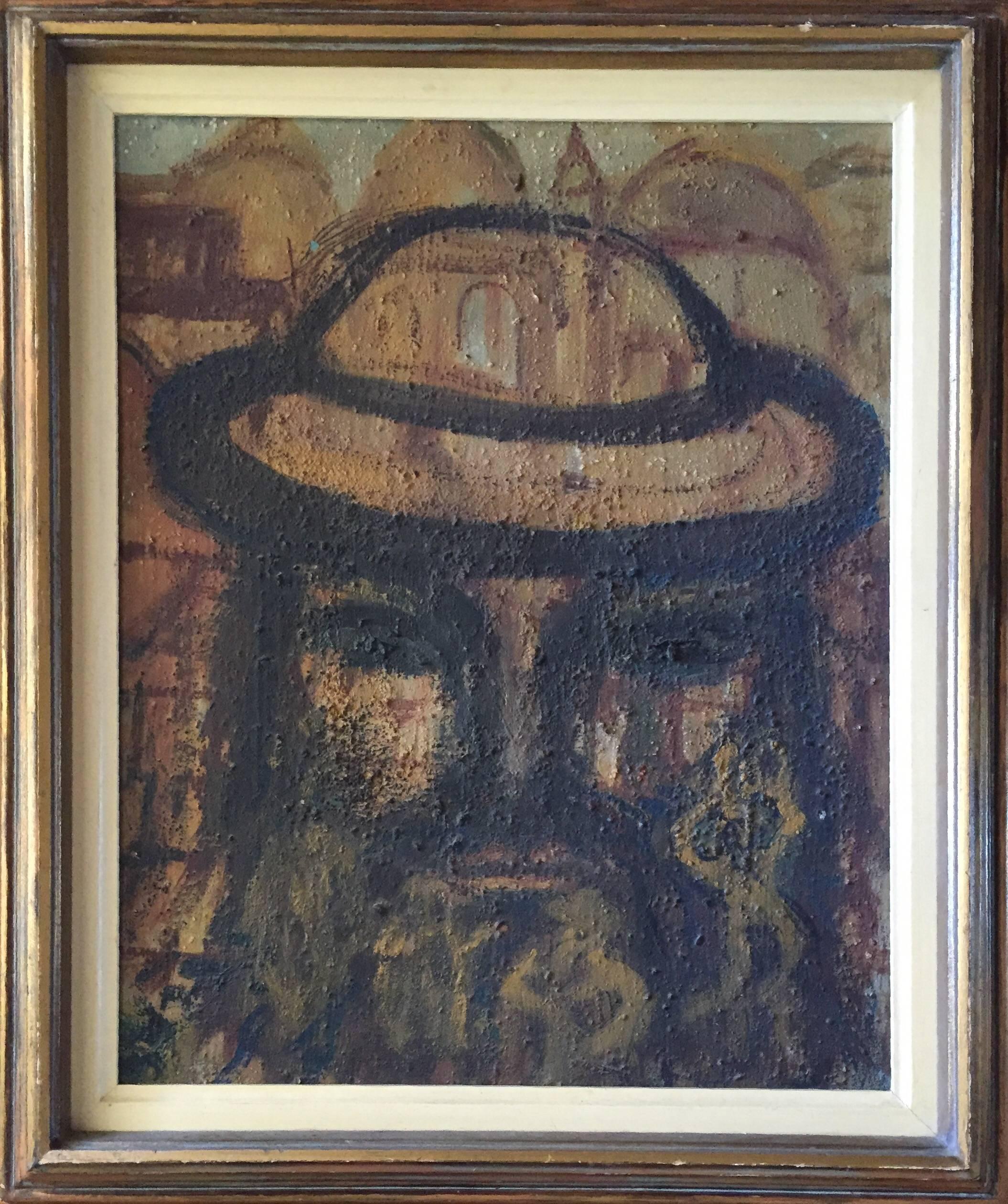
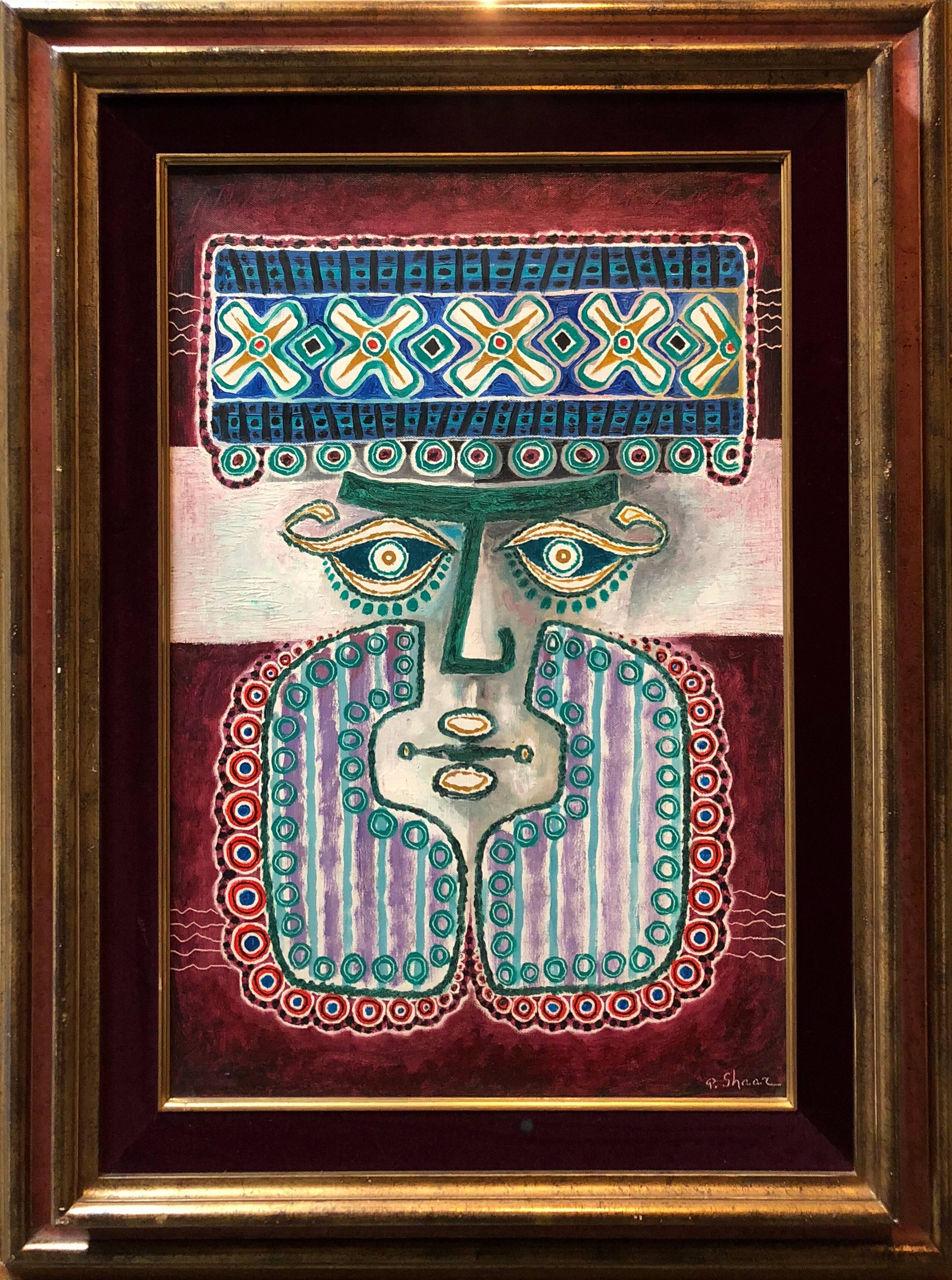
Bearded man, Jewish King or Rabbi Polish Israeli Folk Art Modernist Oil Painting
By Pinchas Shaar
Located in Surfside, FL
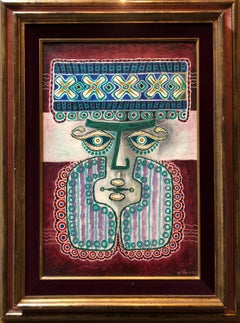
This painting is iconic of Pichas Shaar's aesthetic, and stylistic influences. A ceramic mosaicist and sculptor as well as a painter, Shaars strong decorative sense was evident in his colorful canvas, with their frequent rectilinear geometry, depicting stylized figures, often mythological or biblical subjects. 23.75 X15.75 inches without frame.
Pinchas Shaar (born Szwarc, later Shaar) was born in Lodz, Poland in 1923. already at a young age he drew small graffiti and characters of fairy tales. at sixteeen he met the Polish painter Wladyslaw Strzeminski, a disciple of the Russian painter Kazimir Malevich, who encouraged Pinchas’ artistic education. Strzeminski encouraged Pinchas' artistic education and introduced him to the works of such painters as Picasso, Leger, Matisse, and Mondrian. Pinchas had his first exhibition in 1938 and also completed photomontages for a poetry book by Moshe Broderson that was published in 1939. Then, in September 1939, Nazi Germany invaded Poland. On February 1940 the Jews of Lodz had to move to a ghetto and perform forced labor. The artist experienced the horrors of war and the Nazi holocaust concentration camps. Pinchas worked in a prefabricated furniture factory. However, after his artistic abilities were discovered, he became a draftsman. He also designed decorations for the ghetto's theater. In 1944 the Germans liquidated the Lodz ghetto...
Category
1960s Folk Art Figurative Paintings
Materials
Canvas, Oil
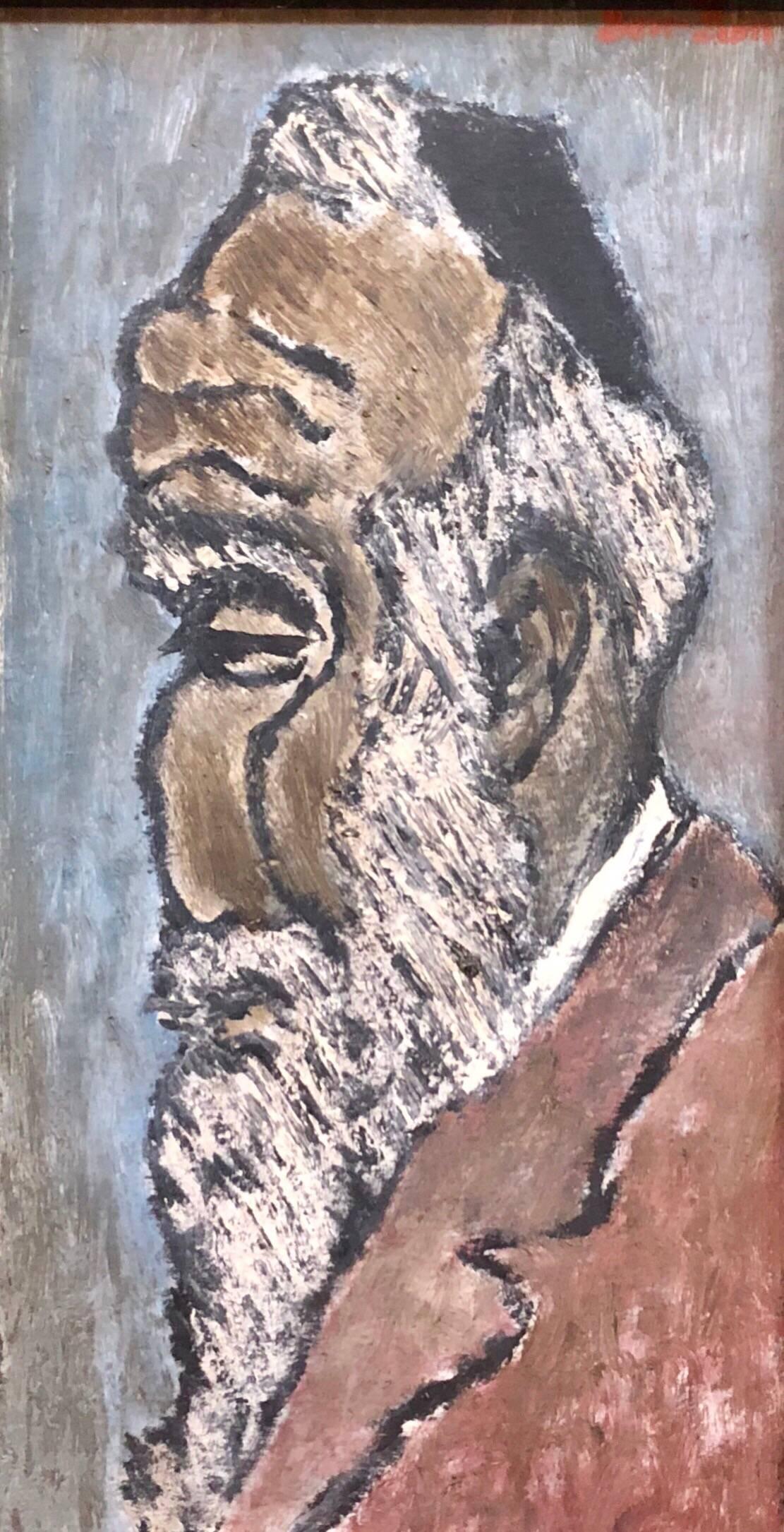
Modernist Judaica Oil Painting "Old Jew" Jewish Rabbi at Prayer
By Ben-Zion Weinman
Located in Surfside, FL
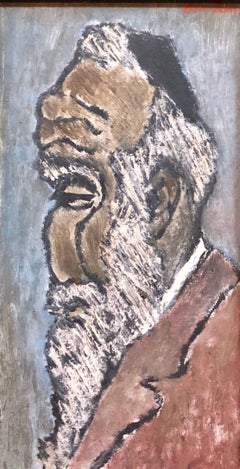
An oil on board Judaic painting by modern artist Ben-Zion Weinman. It depicts a portrait in profile of an old Jew. The work is signed "Ben-Zion".
Born in 1897, Ben-Zion Weinman celebrated his European Jewish heritage in his visual works as a sculptor, painter, and printmaker. Influenced by Spinoza, Knut Hamsun, and Wladyslaw Reymont, as well as Hebrew literature, Ben-Zion wrote poetry and essays that, like his visual work, attempt to reveal the deep “connection between man and the divine, and between man and earth.”
An emigrant from the Ukraine, he came to the US in 1920. He wrote fairy tales and poems in Hebrew under the name Benzion Weinman, but when he began painting he dropped his last name and hyphenated his first, saying an artist needed only one name.
Ben-Zion was a founding member of “The Ten: An Independent Group” The Ten” a 1930’s avant...
Category
1940s American Modern Figurative Paintings
Materials
Oil, Board
More Ways To Browse
Jack Hooper
Jon Demartin
Josep Serrasanta
Juan Soler
Kostabi On Canvas
Kristine Luize Avotina
Laurence Stephen Lowry
Linda Tracey Brandon
Lucca Painting
M Blake
Man And Horse Painting
Man Ray Picasso
Mimi Gross Grooms
Musician Painting Large
Oil Painting Afternoon Tea
Oil Painting Of Nuns
Old Man A S
Old Master Mother Child