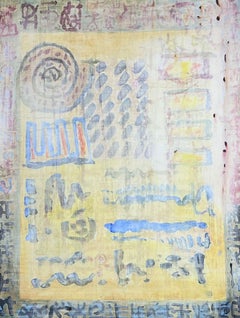
Items Similar to Post Soviet Avant Garde RABBI, EXPRESSIONIST BLUE BACKGROUND, Yellow Star
Want more images or videos?
Request additional images or videos from the seller
1 of 5
Yuri BrusovanyPost Soviet Avant Garde RABBI, EXPRESSIONIST BLUE BACKGROUND, Yellow Star1992
1992
$3,000
£2,242.58
€2,586.86
CA$4,200
A$4,438
CHF 2,386.78
MX$53,131.09
NOK 29,903.54
SEK 27,387.31
DKK 19,320.84
About the Item
Genre: Judaica
Subject: Abstract
Medium: Oil
Surface: Canvas
Country: United States
Dimensions: 24" x 16"
Yuri Yefimovitch Brusovany was born on November,15th 1949 in Leningrad (St. Petersburg). His father was a Jew from Gomel. His mother descended from the prominent family of Samoiloff Actors. This family was well-known all over Russia for a long time. Since 1820 names of the actors from the Samoiloffs' Dynasty never left the theatre posters. It was the largest family tree in the history of Russian scenic art. The central figure in the dynasty was V.V. Samoiloff (1834 - 1877) lived at the same time with Feodor Dostoevsky, Karl Brullov and Leo Tolstoy. V.V. Samoiloff, P.V. Samoiloff and V.A. Michurina-Samoilova were buried at the Alexander Nevsky Monastery in St. Petersburg at the place where the greatest people of Russian Culture lay.
Yuri started painting in his early childhood. In 1962 - 1968 he studied at the Art School for gifted children at the Repin's Academy of Fine Art. In 1970 he became a student of Mukhina's (now, again, - Shtiglits) Academy of Decorative and Apply Art, specializing in monumental art. In 1975 he graduated from the Academy.
Yuri Brusovany had not been granted with official recognition until Perestroika. He was refused the membership in the Artists Union (altogether with the professional rights and privileges). In 1976 he joined the informal society of free artists in Leningrad (TEII). He chose the path of the decedents. Being a fierce antagonist to social realism, which was an official art theme in Soviet Union, he was pursued by the authorities, officially condemned and experienced a pressure from KGB's internal affairs. He was also in conflict with the soviet officials for his Bible, Hebrew and Jewish culture studies.
He took part in the exhibitions of the decedent artists in 1982, 1984, 1986, 1988. Fortunately, the political pressure gradually dissolved with Perestroika and Yuri can now enjoy a better environment.
1985 - His first personal exhibition took place at the Palace of Youth in Leningrad (St. Petersburg), Russia
1988 - He participated at the Exhibition of Free Russian Modern Arts Fund in Germany
1989 - Exhibition in Hettingen, Germany
1989 - Exhibition in Stockholm, Sweden
1990 - His Album ''Voices and Shadows'' was published by the Soviet Arts Fund
1991, 1999 - Personal exhibitions took place at the Smolny Cathedral in St. Petersburg, Russia
1999, 2000 - Personal exhibitions at Russian State Museum of Ethnography, St. Petersburg, Russia
2000 - Personal exhibition at the Russian House, Berlin, Germany
2000 - Personal exhibition at the Gallery ''Elite'', Dresden, Germany
Yuri's artworks are in private collections in France, Japan, Germany, Israel, Sweden, England, Russia, USA.
- Creator:Yuri Brusovany (1949, Russian)
- Creation Year:1992
- Dimensions:Height: 24 in (60.96 cm)Width: 16 in (40.64 cm)
- Medium:
- Movement Style:
- Period:
- Condition:
- Gallery Location:Surfside, FL
- Reference Number:1stDibs: LU38211841952
About the Seller
4.9
Platinum Seller
Premium sellers with a 4.7+ rating and 24-hour response times
Established in 1995
1stDibs seller since 2014
1,865 sales on 1stDibs
Typical response time: <1 hour
- ShippingRetrieving quote...Shipping from: Surfside, FL
- Return Policy
More From This Seller
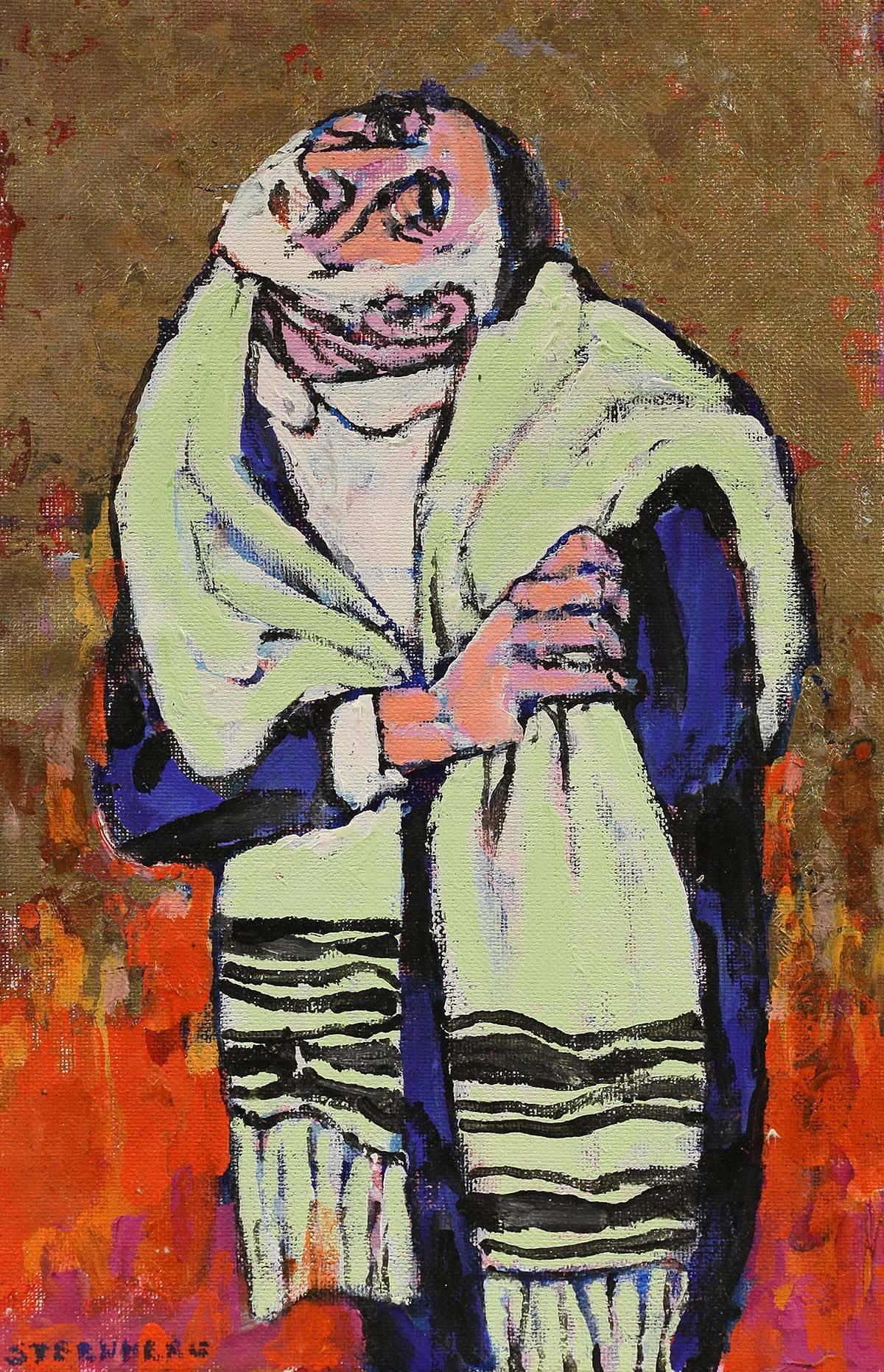
View AllModernist Rabbi Judaica Painting on Gold Background
By Harry Sternberg
Located in Surfside, FL
A contorted Rabbi looking upward is depicted in a naive, and almost child-like manner. Vibrant colors, and gestural brushstrokes fill the composition, enhancing the flatness of the f...
Category
20th Century Modern Figurative Paintings
Materials
Acrylic, Illustration Board
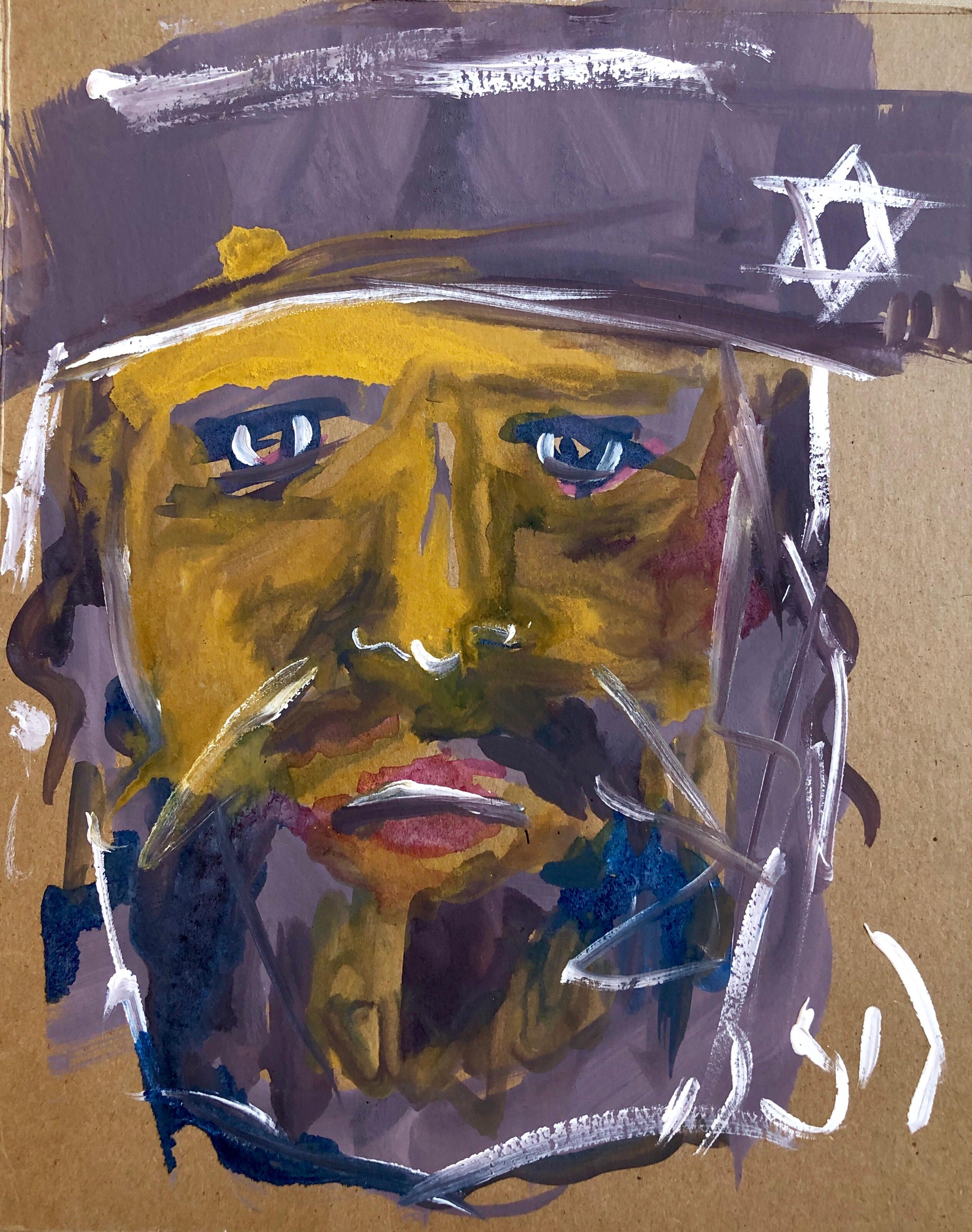
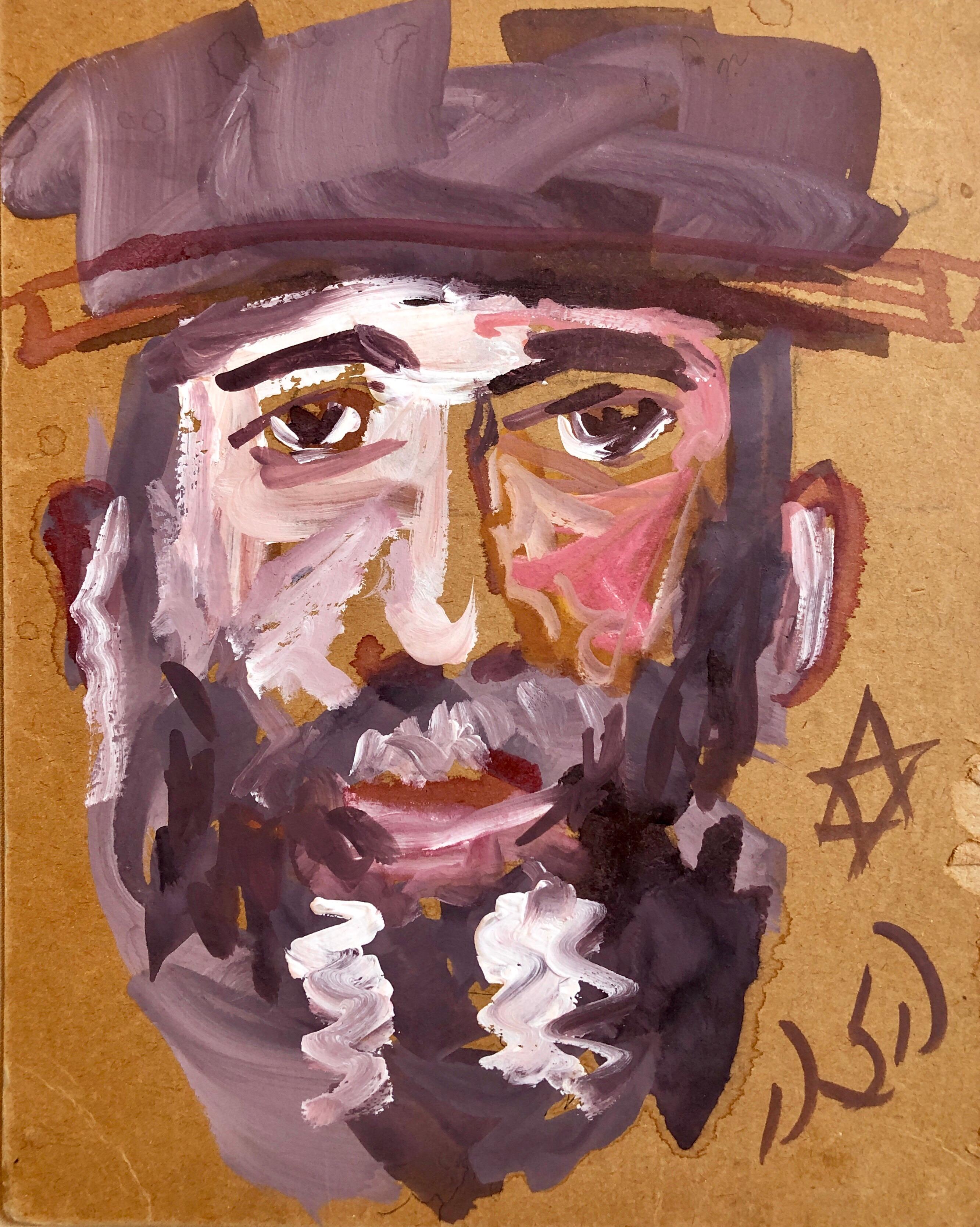
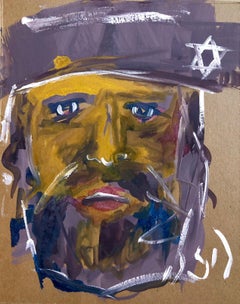
Outsider Folk Art Expressionist Rabbi Israeli Painting Signed Hebrew Jewish Star
Located in Surfside, FL
This is a signed portrait painting done in an outsider, folk art, expressionist style. it is signed in Hebrew, also marked with a Jewish star. this is from a collection of works by the same hand. they are all signed. Some have markings to the back of the paper. they have some age to them. They bear similarities to artists as dissimilar as Moshe Tamir, Mane Katz and an Israeli version of Purvis Young. In this piece the artist choice of colors is muted yet powerful.
Israel has had a Vibrant Folk Art, Naive art scene for a long time now, artists like Yisrael Paldi, Nahum Guttman, Reuven Rubin and even Yefim Ladyzhensky had naive periods. The most well know of the strict naive artists are Shalom of Safed, Irene Awret, Gabriel Cohen, Natan Heber, Michael Falk and Kopel Gurwin.
Naïve art is any form of visual art that is created by a person who lacks the formal education and training that a professional artist undergoes (in anatomy, art history, technique, perspective, ways of seeing). Unlike folk art, naïve art does not necessarily evince a distinct cultural context or tradition. Naïve art is recognized, and often imitated, for its childlike simplicity and frankness. Paintings of this kind typically have a flat rendering style with a rudimentary expression of perspective.
One particularly influential painter of "naïve art" was Henri Rousseau (1844–1910), a French Post-Impressionist who was discovered by Pablo Picasso.
Naïve art is often seen as outsider art that is by someone without formal (or little) training or degree. While this was true before the twentieth century, there are now academies for naïve art. Naïve art is now a fully recognized art genre, represented in art galleries worldwide.
Museums devoted to naïve art now exist in Kecskemét, Hungary; Riga, Latvia; Jaen, Spain; Rio de Janeiro, Brasil; Vicq France and Paris. "Primitive art" is another term often applied to art by those without formal training, but is historically more often applied to work from certain cultures that have been judged socially or technologically "primitive" by Western academia, such as Native American, sub saharan African or Pacific Island art (see Tribal art). This is distinguished from the self-conscious, "primitive" inspired movement primitivism. Another term related to (but not completely synonymous with) naïve art is folk art.
There also exist the terms "naïvism" and "primitivism" which are usually applied to professional painters working in the style of naïve art (like Paul Gauguin, Mikhail Larionov, Paul Klee).
At all events, naive art can be regarded as having occupied an "official" position in the annals of twentieth-century art since - at the very latest - the publication of the Der Blaue Reiter, an almanac in 1912. Wassily Kandinsky and Franz Marc, who brought out the almanac, presented 6 reproductions of paintings by le Douanier' Rousseau (Henri Rousseau), comparing them with other pictorial examples. However, most experts agree that the year that naive art was "discovered" was 1885, when the painter Paul Signac became aware of the talents of Henri Rousseau and set about organizing exhibitions of his work in a number of prestigious galleries.
The Earth Group (Grupa Zemlja) were Croatian artists, architects and intellectuals active in Zagreb from 1929 to 1935. The group included the painters Krsto Hegedušić, Edo Kovačević, Omer Mujadžić, Kamilo Ružička, Ivan Tabaković, and Oton Postružnik, the sculptors Antun Augustinčić, Frano Kršinić, and the architect Drago Ibler. Art brut, primitive art, primitive, art naïf, naïve art. Outsider art. A term applied to Yugoslav (Croatian) naive painters working in or around the village of Hlebine, near the Hungarian border, from about 1930. Some of the best known naive artists are Dragan Gaži, Ivan Generalić, Josip Generalić, Krsto Hegedušić, Mijo Kovačić, Ivan Lacković-Croata, Franjo Mraz, Ivan Večenaj and Mirko Virius.
Camille Bombois (1883–1970) Ferdinand Cheval, known as 'le facteur Cheval' (1836–1924)
Henry Darger (1892–1973) L. S. Lowry (1887–1976) Grandma Moses, Anna Mary Robertson (1860–1961) Nikifor (1895–1968) Poland, Horace Pippin (1888–1946) Jon Serl (1894-1993) United States
Alfred Wallis (1855–1942) Scottie Wilson (1890–1972) Gesner Abelard (b. 1922) Jan Balet (1913–2009) Michel Delacroix (b. 1933) France Howard Finster (1916–2001) Ivan Rabuzin (1921–2008)
Spontaneous Art Museum in Brussels
Art en Marge Museum in Brussels
MADmusée in Liege
International Museum of Naive Art of Brazil in Cosme Velho, Rio de Janeiro
Gallery Jacques Ardies in São Paulo
Musée international d'art naïf de Magog in Magog
Croatian Museum of Naïve Art in Zagreb
Gallery of Croatian Naïve Art...
Category
20th Century Outsider Art Portrait Paintings
Materials
Gouache
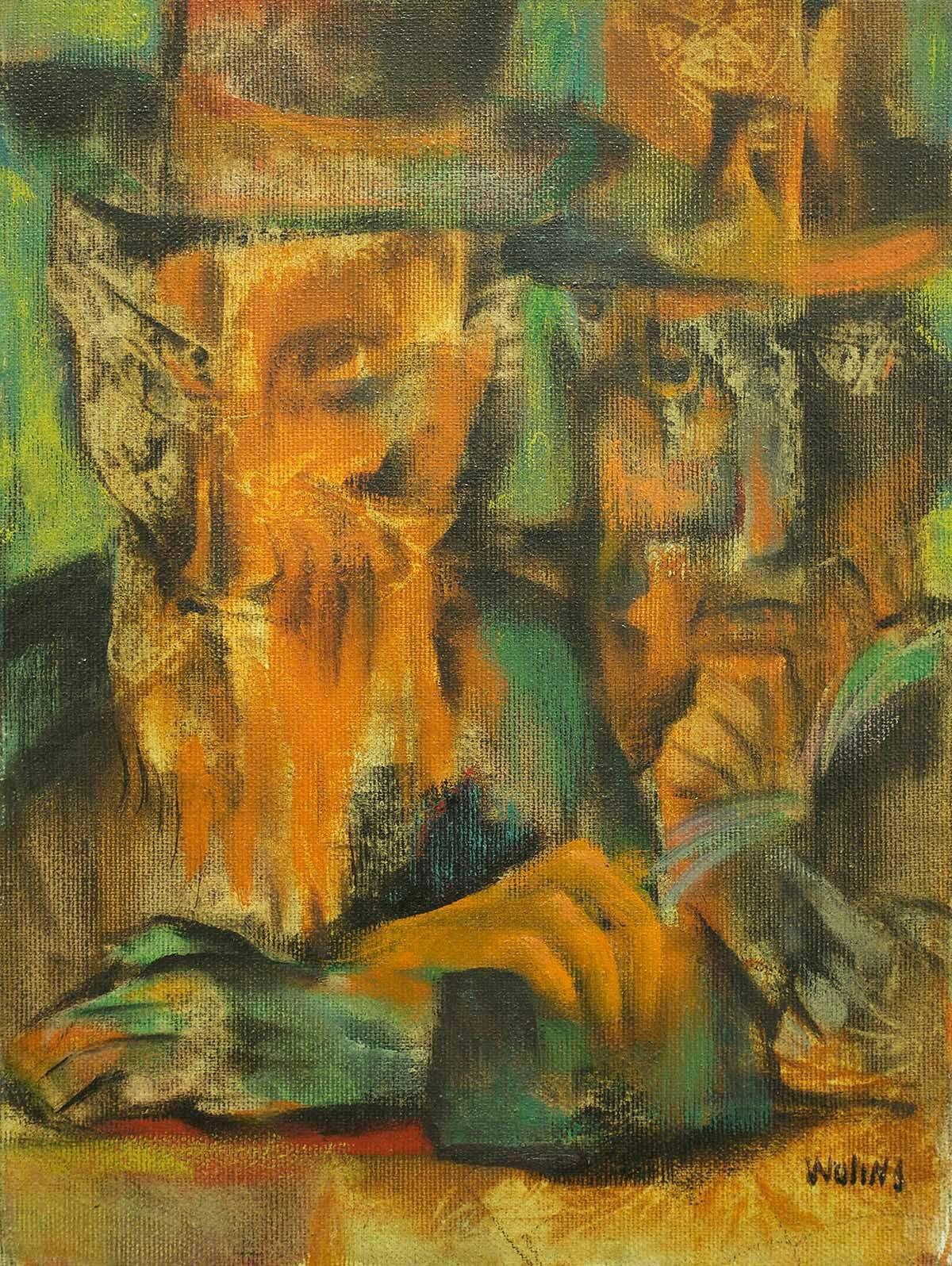
The Kabbalists, Hassidic Rabbis Judaica Colorful Modernist Painting
By Joseph Wolins
Located in Surfside, FL
Joseph Wolins
1915-1999
Wolins was born in Atlantic City, New Jersey. He studied at the National Academy of Design from 1935 to 1941 under Leon Kroll. He also studied in Europe in ...
Category
20th Century American Modern Figurative Paintings
Materials
Canvas, Oil

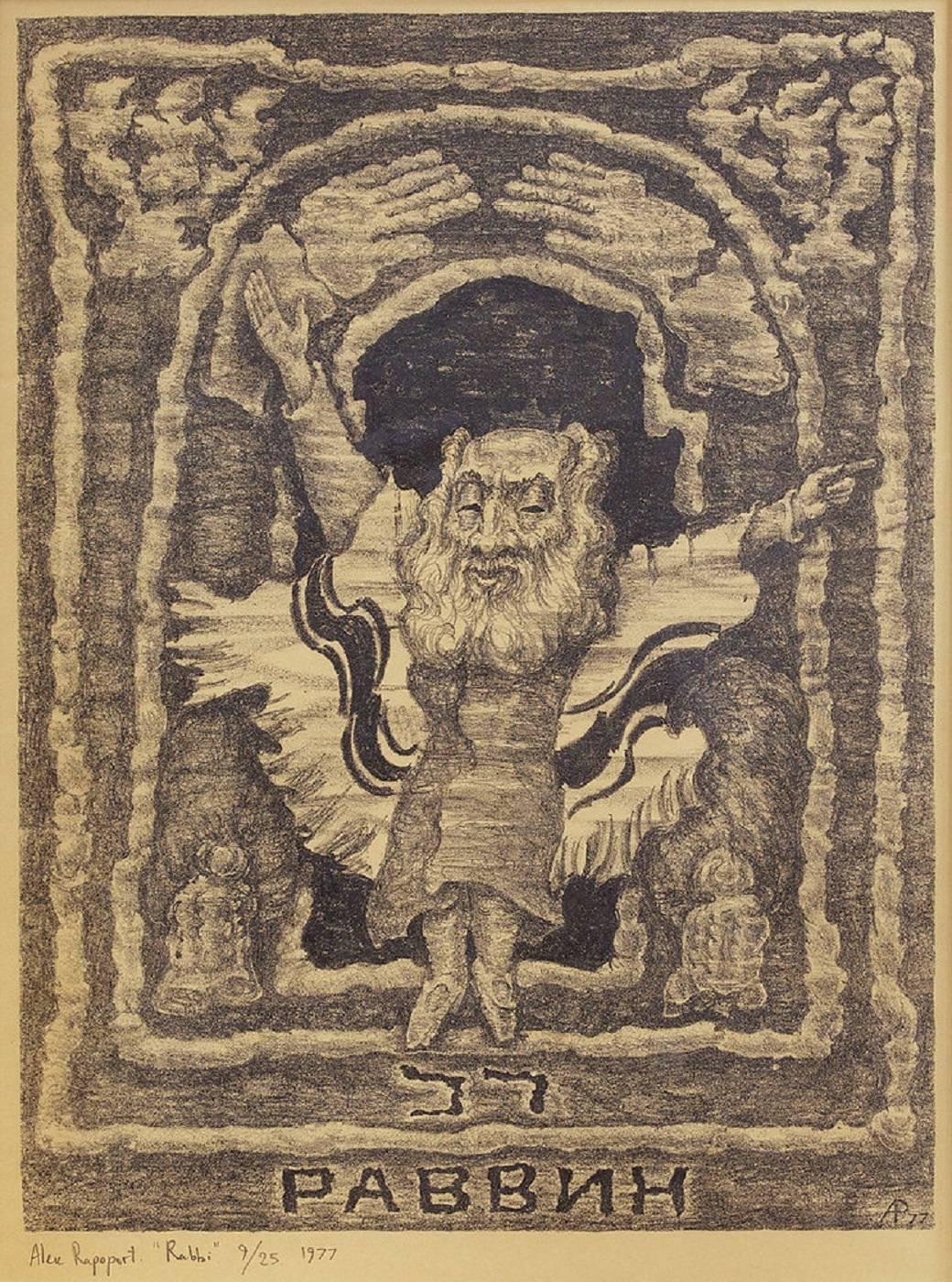
The Rabbi 1977 Soviet Non Conformist Avant Garde Print
By Alek Rapoport
Located in Surfside, FL
Dimensions w/Frame: 25 3/4" x 20 3/4"
Alek Rapoport (November 24, 1933, Kharkiv, Ukraine SSR – February 4, 1997, San Francisco) was a Russian Nonconformist artist, art theorist and ...
Category
1970s Post-Modern Figurative Prints
Materials
Lithograph

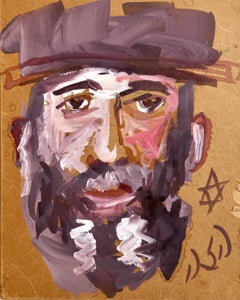
Outsider Folk Art Expressionist Rabbi Israeli Painting Signed Hebrew Jewish Star
Located in Surfside, FL
This is a signed portrait painting done in an outsider, folk art, expressionist style. it is signed in Hebrew, also marked with a Jewish star. this is from a collection of works by the same hand. they are all signed. Some have markings to the back of the paper. they have some age to them. They bear similarities to artists as dissimilar as Moshe Tamir, Mane Katz and an Israeli version of Purvis Young. In this piece the artist choice of colors is muted yet powerful.
Israel has had a Vibrant Folk Art, Naive art scene for a long time now, artists like Yisrael Paldi, Nahum Guttman, Reuven Rubin and even Yefim Ladyzhensky had naive periods. The most well know of the strict naive artists are Shalom of Safed, Irene Awret, Gabriel Cohen, Natan Heber, Michael Falk and Kopel Gurwin.
Naïve art is any form of visual art that is created by a person who lacks the formal education and training that a professional artist undergoes (in anatomy, art history, technique, perspective, ways of seeing). Unlike folk art, naïve art does not necessarily evince a distinct cultural context or tradition. Naïve art is recognized, and often imitated, for its childlike simplicity and frankness. Paintings of this kind typically have a flat rendering style with a rudimentary expression of perspective.
One particularly influential painter of "naïve art" was Henri Rousseau (1844–1910), a French Post-Impressionist who was discovered by Pablo Picasso.
Naïve art is often seen as outsider art that is by someone without formal (or little) training or degree. While this was true before the twentieth century, there are now academies for naïve art. Naïve art is now a fully recognized art genre, represented in art galleries worldwide.
Museums devoted to naïve art now exist in Kecskemét, Hungary; Riga, Latvia; Jaen, Spain; Rio de Janeiro, Brasil; Vicq France and Paris. "Primitive art" is another term often applied to art by those without formal training, but is historically more often applied to work from certain cultures that have been judged socially or technologically "primitive" by Western academia, such as Native American, sub saharan African or Pacific Island art (see Tribal art). This is distinguished from the self-conscious, "primitive" inspired movement primitivism. Another term related to (but not completely synonymous with) naïve art is folk art.
There also exist the terms "naïvism" and "primitivism" which are usually applied to professional painters working in the style of naïve art (like Paul Gauguin, Mikhail Larionov, Paul Klee).
At all events, naive art can be regarded as having occupied an "official" position in the annals of twentieth-century art since - at the very latest - the publication of the Der Blaue Reiter, an almanac in 1912. Wassily Kandinsky and Franz Marc, who brought out the almanac, presented 6 reproductions of paintings by le Douanier' Rousseau (Henri Rousseau), comparing them with other pictorial examples. However, most experts agree that the year that naive art was "discovered" was 1885, when the painter Paul Signac became aware of the talents of Henri Rousseau and set about organizing exhibitions of his work in a number of prestigious galleries.
The Earth Group (Grupa Zemlja) were Croatian artists, architects and intellectuals active in Zagreb from 1929 to 1935. The group included the painters Krsto Hegedušić, Edo Kovačević, Omer Mujadžić, Kamilo Ružička, Ivan Tabaković, and Oton Postružnik, the sculptors Antun Augustinčić, Frano Kršinić, and the architect Drago Ibler. Art brut, primitive art, primitive, art naïf, naïve art. Outsider art. A term applied to Yugoslav (Croatian) naive painters working in or around the village of Hlebine, near the Hungarian border, from about 1930. Some of the best known naive artists are Dragan Gaži, Ivan Generalić, Josip Generalić, Krsto Hegedušić, Mijo Kovačić, Ivan Lacković-Croata, Franjo Mraz, Ivan Večenaj and Mirko Virius.
Camille Bombois (1883–1970) Ferdinand Cheval, known as 'le facteur Cheval' (1836–1924)
Henry Darger (1892–1973) L. S. Lowry (1887–1976) Grandma Moses, Anna Mary Robertson (1860–1961) Nikifor (1895–1968) Poland, Horace Pippin (1888–1946) Jon Serl (1894-1993) United States
Alfred Wallis (1855–1942) Scottie Wilson (1890–1972) Gesner Abelard (b. 1922) Jan Balet (1913–2009) Michel Delacroix (b. 1933) France Howard Finster (1916–2001) Ivan Rabuzin (1921–2008)
Spontaneous Art Museum in Brussels
Art en Marge Museum in Brussels
MADmusée in Liege
International Museum of Naive Art of Brazil in Cosme Velho, Rio de Janeiro
Gallery Jacques Ardies in São Paulo
Musée international d'art naïf de Magog in Magog
Croatian Museum of Naïve Art in Zagreb
Gallery of Croatian Naïve Art...
Category
20th Century Outsider Art Portrait Paintings
Materials
Gouache
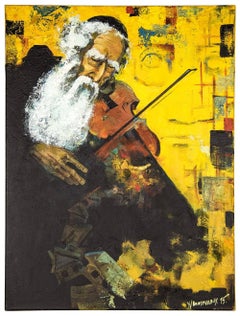
Post Soviet Avant Garde Judaica Rabbi Playing Violin (the Klezmer Fiddler)
By Yuri Brusovany
Located in Surfside, FL
Genre: Contemporary
Subject: People
Medium: Oil
Surface: Canvas
Dimensions: 24" x 18"
Yuri Yefimovitch Brusovany was born on November, 15th 1949 in Leningrad (St. Petersburg) Russia. His father was a Jew from Gomel. His mother descended from the prominent family of Samoiloff Actors. This family was well-known all over Russia for a long time. Since 1820 names of the actors from the Samoiloffs' Dynasty never left the theatre posters. It was the largest family tree in the history of Russian scenic art. The central figure in the dynasty was V.V. Samoiloff (1834 - 1877) lived at the same time with Feodor Dostoevsky, Karl Brullov and Leo Tolstoy. V.V. Samoiloff, P.V. Samoiloff and V.A. Michurina-Samoilova were buried at the Alexander Nevsky...
Category
1990s Expressionist Figurative Paintings
Materials
Canvas, Oil
You May Also Like
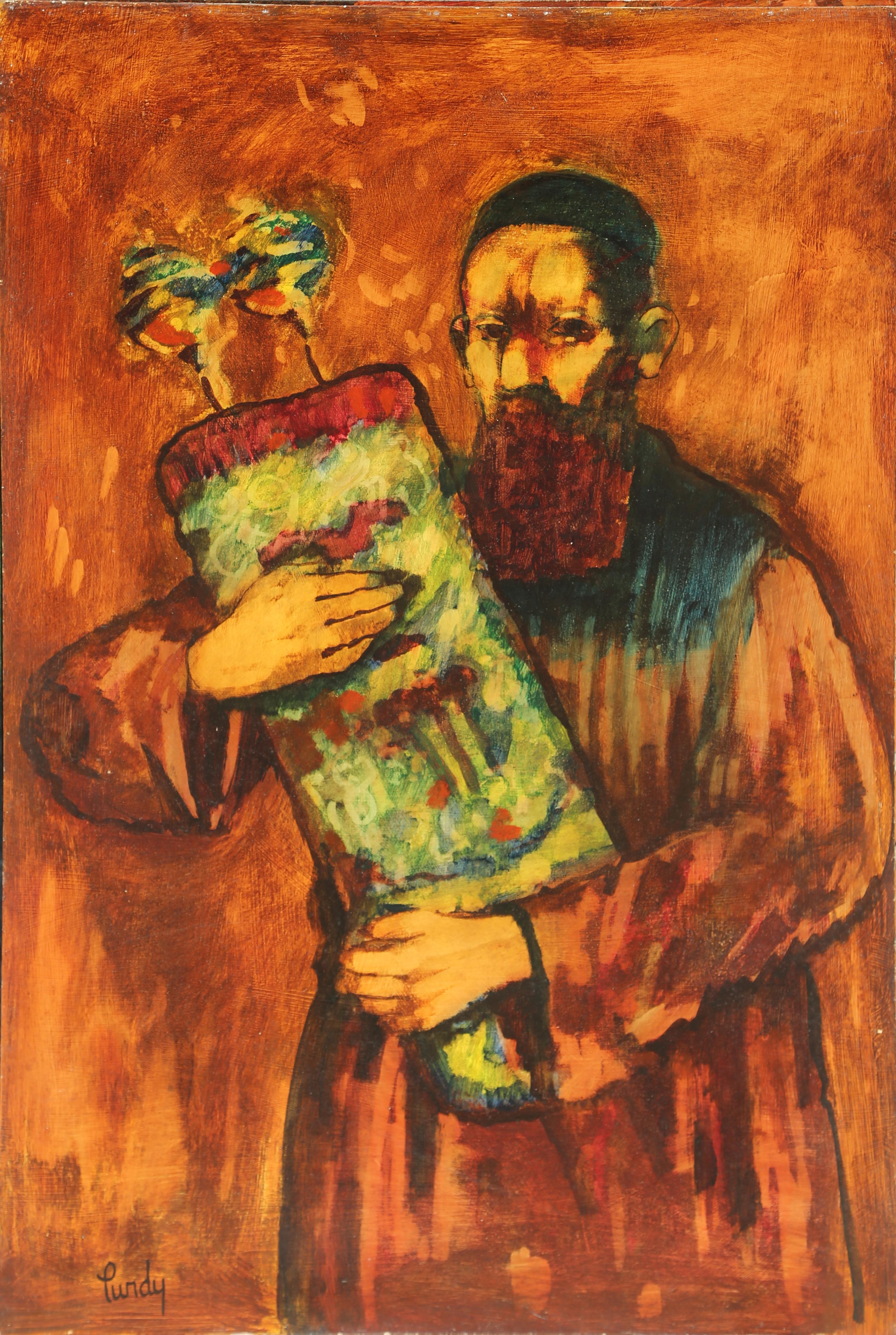
Rabbi, Oil Painting by Donald Roy Purdy
By Donald Roy Purdy
Located in Long Island City, NY
Artist: Donald Roy Purdy, American (1924 - )
Title: Rabbi
Year: circa 1960
Medium: Oil on Masonite, signed l.r.
Size: 36 x 24 in. (91.44 x 60.96 cm)
Category
1960s Post-War Figurative Paintings
Materials
Masonite, Oil
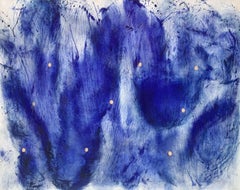
Silent stars. Gestural Abstraction, Blue, Gold, Polish artist
By Piotr Butkiewicz
Located in Warsaw, PL
Contemporary blue abstract oil on canvas painting by Polish artist Piotr Butkiewicz. Composition consists of dynamic rounded shapes. Title of this painting is 'Silent stars'. Artwork...
Category
2010s Abstract Expressionist Abstract Paintings
Materials
Canvas, Oil
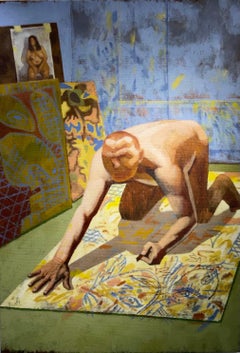
Le chef d
oeuvre inconnu 2 - 21st Century, Male, Yellow, Blue, Contemporary Art
By Alexandru Rădvan
Located in Baden-Baden, DE
Le Chef d'oeuvre inconnu 2, 2022
acrylic on canvas
77 11/64 H x 53 5/32 W in.
196 H x 135 W cm
The work "The Unknown Masterpiece 2" (a paraphrase of Balzac's novella – Le Chef d’oeu...
Category
2010s Contemporary Nude Paintings
Materials
Canvas, Acrylic
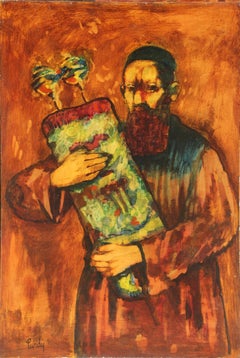
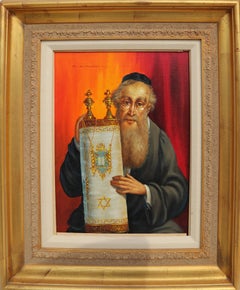
Rabbi with Torah, Framed Oil Painting Portrait by Abraham Straski
By Abraham Straski
Located in Long Island City, NY
Artist: Abraham Straski, Polish (1903 - 1987)
Title: Rabbi with Torah (15-F)
Year: circa 1957
Medium: Oil on Canvas, signed l.r.
Image Size: 16 x 12 inches
Frame Size: 26 x 20 inches
Category
1950s Post-War Portrait Paintings
Materials
Canvas, Oil
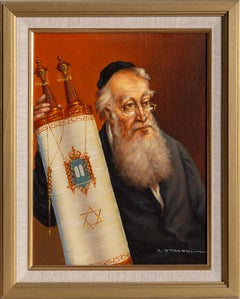
Rabbi with Torah, Oil Painting by Abraham Straski 1950
By Abraham Straski
Located in Long Island City, NY
Rabbi with Torah
Abraham Straski, Polish (1903–1987)
Date: 1950
Oil on Canvas on Wood, signed and dated
Size: 16 x 12 in. (40.64 x 30.48 cm)
Frame Size: 19.5 x 15.5 inches
Category
1950s Post-War Portrait Paintings
Materials
Canvas, Oil, Wood
French Expressionist Abstract Original Yellow Blue Colours
Located in Cirencester, Gloucestershire
Abstract Expressionist Composition
by Jacques COULAIS (1955-2011) watercolour painting on thick card
unframed: 25.5 x 19.5 inches
condition: excellent
provenance: all the paintings ...
Category
20th Century Abstract Expressionist Abstract Paintings
Materials
Watercolor