Items Similar to Oil Painting Interior Scene Chair w Chinese Rug Joseph Solman American Art WPA
Want more images or videos?
Request additional images or videos from the seller
1 of 12
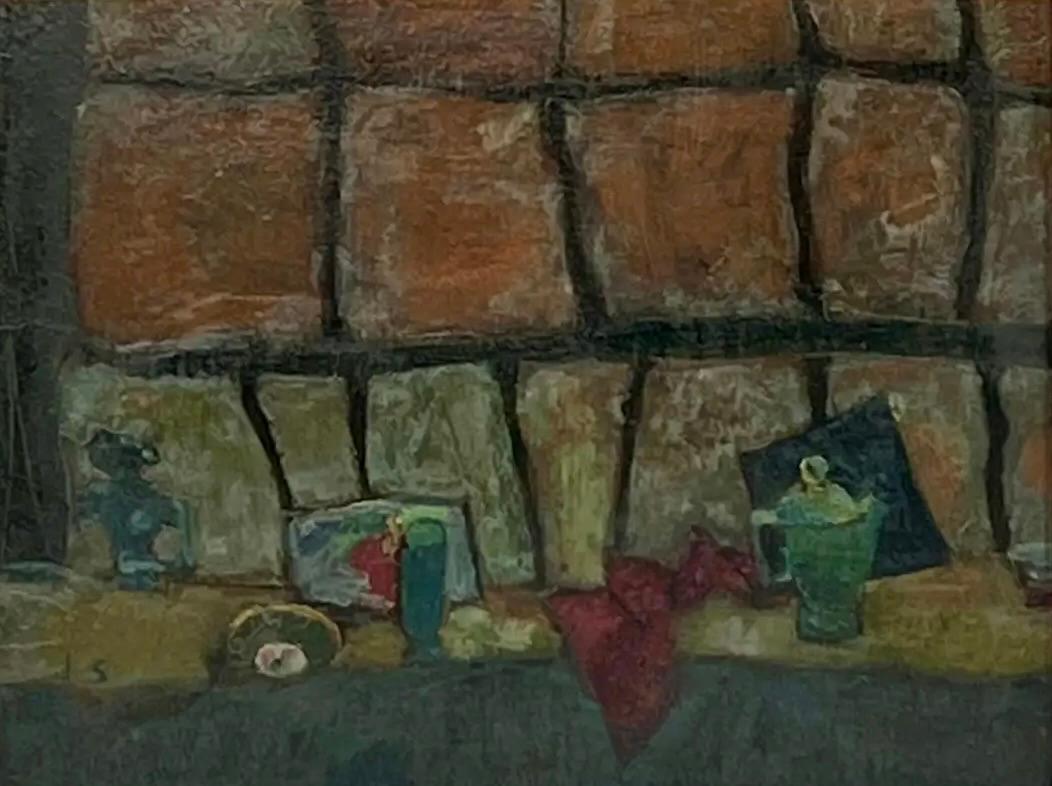
Joseph SolmanOil Painting Interior Scene Chair w Chinese Rug Joseph Solman American Art WPA
$9,500
£7,217.65
€8,294.60
CA$13,343.91
A$14,524.52
CHF 7,696.02
MX$174,679.28
NOK 97,852.94
SEK 89,671.40
DKK 61,960.17
About the Item
Joseph Solman (1909-2008),
Chair with Chinese Rug,
oil paint on masonite, initialed JS on recto, titled and signed "J.S." verso,
Dimensions 14" x 10" Framed to 21 X 17
Provenance: William H. Trayes, Jr. art collection
Joseph Solman (January 25, 1909 – April 16, 2008) was a Jewish American painter, a founder of The Ten, a group of New York City Expressionist painters in the 1930s. His best known works include his "Subway Gouaches" depicting travellers on the New York City Subway.
Born in Vitebsk, Belarus, Russian Empire, he was brought to America from the Russian Empire as a child in 1912, Solman was a prodigious draftsman and knew, in his earliest teens, that he would be an artist. He went straight from high school to the National Academy of Design, though he says he learned more by sketching in the subway on the way back from school late at night: people "pose perfectly when they're asleep." In 1929, Solman saw the inaugural show at the Museum of Modern Art featuring Seurat, Gauguin, Van Gogh, and Cézanne.
In 1934, Solman had his first one-man show, much influenced by the French modern artist Georges Rouault. One critic was impressed by "the mystery that lurks in deserted streets in the late twilight." Another noted that Solman's color had "an astonishingly rich quality that burns outward beneath the surface."
Joseph Solman was, with Mark Rothko, the unofficial co-leader of The Ten, a group of expressionist painters including Louis Schanker, Adolph Gottlieb, Ben Zion and Ilya Bolotowsky, who exhibited as the "Whitney Dissenters" at the Mercury Galleries in New York City in 1938. The members, all immigrant Jewish New Yorkers with an interest in European Expressionism, presented an urban, abstract, formal style. A champion of modernism, Solman was elected an editor of Art Front Magazine when its other editors, art historian Meyer Schapiro and critic Harold Rosenberg, were still partial to Social Realism. But Solman never believed in abstraction for abstraction's sake. "I have long discovered for myself," Solman has said, "that what we call the subject yields more pattern, more poetry, more drama, greater abstract design and tension than any shapes we may invent." As his colleagues in the Ten advanced toward a more non-objective art, Solman warmed toward representation. An artist in the Works Project Administration (WPA) during the depression, Solman met and worked with and befriended many great artists, like Milton Avery. “Avery had a big influence on me when I was young and working in the WPA,” said Solman. “That was a great program, I couldn’t have worked without it. It’s where I saw Paul Klee’s work, which I liked very much.” By the early 1950s, when the Abstract Expressionism he had helped to develop was the mainstream in avant garde art, he was done with it. With Edward Hopper and Jack Levine, he began a magazine called "Reality." It featured the work of figurative painters, then terribly out of fashion, but its central editorial stance was that artists should be able to paint however and whatever they liked. In writing about a purchase of a typical 1930s Solman street scene for the Wichita Museum, director Howard Wooden put it this way: "Solman has produced the equivalent of an abstract expressionist painting a full decade before the abstract expressionist movement came to dominate the American art scene, but without abandoning identifiable forms." He was part of a group of New York mostly jewish artists that included Byron Browne, Milton Avery, Stuart Davis, Alice Neel, Max Weber, Ben Shahn and many others.
In 1964, The Times, discussing his well-known subway gouaches (done while commuting to his some-time job as a racetrack pari-mutuel clerk), called him a "Pari-Mutuel Picasso." In 1985, on the occasion of a 50-year retrospective, The Washington Post wrote: "It appears to have dawned, at last, on many collectors that this is art that has already stood the acid test of time.
- Creator:Joseph Solman (1909-2008, American)
- Dimensions:Height: 21 in (53.34 cm)Width: 17 in (43.18 cm)
- Medium:
- Movement Style:
- Period:
- Condition:good. measurements include frame, mat and frame have wear and can use replacing.
- Gallery Location:Surfside, FL
- Reference Number:1stDibs: LU38214033612
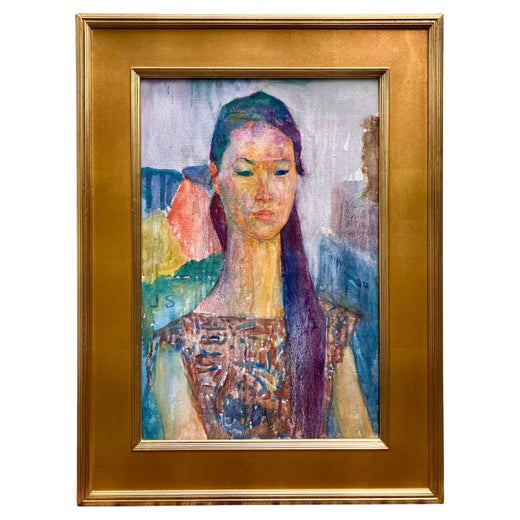
Joseph Solman
Brought to America from Russia as a child in 1912, Joseph Solman was a prodigious draftsman and knew, in his earliest teens, that he would be an artist. He went straight from high school to the National Academy of Design, though he says he learned more by sketching in the subway on the way back from school late at night: people “pose perfectly when they’re asleep.” In 1929, Solman saw the inaugural show at the Museum of Modern Art featuring Seurat, Gauguin, Van Gogh, and Cezanne. It changed his life – and his art. Joseph Solman was, with Mark Rothko, the unofficial co-leader of The Ten, a group of expressionist painters who exhibited as the “Whitney Dissenters” at the Mercury Galleries in New York in 1938. A champion of modernism, Solman was elected an editor of Art Front Magazine when its other editors, art historian Meyer Shapiro and critic Harold Rosenberg, were still partial to Social Realism In 1964, The Times, discussing his well-known subway gouaches (done while commuting to his some-time job as a racetrack pari-mutuel clerk), called him a “Pari-Mutuel Picasso.” In 1985, on the occasion of a 50-year retrospective, The Washington Post wrote: “It appears to have dawned, at last, on many collectors that this is art that has already stood the acid test of time.” We had the pleasure of the meeting the artist a few times at his home which was over the original Second Avenue Deli in the East Village.
About the Seller
4.9
Platinum Seller
Premium sellers with a 4.7+ rating and 24-hour response times
Established in 1995
1stDibs seller since 2014
1,855 sales on 1stDibs
Typical response time: <1 hour
- ShippingRetrieving quote...Shipping from: Surfside, FL
- Return Policy
More From This Seller
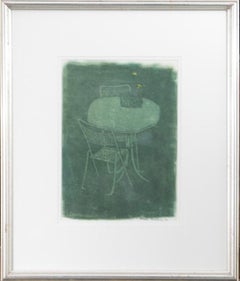
View AllMonotype Print Painting Garden Scene Table Chair Joseph Solman American Art WPA
By Joseph Solman
Located in Surfside, FL
Monotype Painting Title: Table and Chairs, 1980
Medium: monotype or monoprint painting
Size: image 13 x 9.5,overall with frame 23 x 20
Hand signed and dated lower right
Provenance...
Category
20th Century Modern More Art
Materials
Monotype
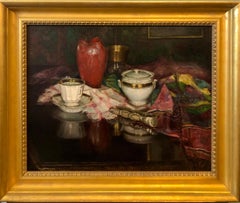
1925 Viennese Oil Painting Interior Still Life with Porcelain Vase, Tapestry Rug
Located in Surfside, FL
Framed 21.2 X 25.5
Unframed 17 X 21
Signed and dated 1920.
Nina Karasek (Joële)
born 1883 Kuttenberg, Czech Lands, Austro-Hungarian Empire, died in 1952 (I have also seen the date recorded as 1933) Vienna, Austria. Nina Karasek was an Austrian Impressionist & Modern artist who was born in 1883. Her work was featured in exhibitions at the Es Baluard, Museum of Modern & Contemporary Art and the Bildraum Bodensee.
Little is known of Nina Karasek's life. She was born in 1883 in Kuttenberg (Kutná Hora) in Bohemia, studied art at the Kunstschule für Frauen und Mädchen (Art School for Women and Girls) in Vienna, Austria, under Adalbert Seligmann and Tina Blau. She studied at the Frauenakademie in Vienna and Munich. In the 1920's she worked first as a landscape painter and an illustrator, later turning toward symbolism, painting mystical subjects after her interest in spiritualism. Her conventional works were shown at various exhibitions. At the age of 44, while she was copying a work by Rembrandt in an Italian museum, she fell into an altered state of consciousness. Rembrandt appeared to her, took possession of her arm, and immediately her hand started to draw something quite different from what she had intended. From then on, for the rest of her life Nina Karasek was in “supernatural” contact with a series of great masters like Rembrandt, Albrecht Dürer, Goya, Raphael, Leonardo da Vinci, Gustav Klimt and others. Under their guidance and inspiration, she drew and painted works "in the style" of the masters. But very soon her works became stylistically more and more unrestricted and Symbolist, showing an enormous range of creative expression, ranging from symbolic and allegorical motifs to bewildering images with a fantastic arsenal of figures and private characters, signs, and symbols, and to frantic, gestural sketches and abstract compositions. From then on, she often signed her works with her esoteric “primordial name” Joële. (Nina Karasik-Joel)
Almost everything we know about her life was from what she noted on the reverse of her drawings: sometimes diary-like notes of her horrible living conditions during World War II, but often strangely impenetrable explanations of the depicted motifs – often as fascinating and mysterious as the drawings themselves. In her works and notes, an exciting private cosmology and mythology unfolds, a drama of hidden powers and principles that flow through macrocosm as well as microcosm. Shortly after their discovery, Nina Karasek's Spiritualist, mediumistic works have found their way into galleries and major international collections.
SELECT EXHIBITIONS
2019 The Medium’s Medium: Spiritualist Art Practices From the Turn of the Century and Beyond. The Gallery of Everything, London, (she showed with Madge Gill, Augustin Lesage, Fleury-Joseph Crépin...
Category
1920s Symbolist Interior Paintings
Materials
Canvas, Oil
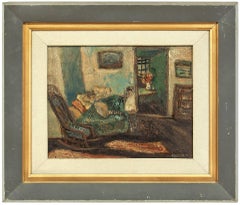
Abstract Interior Scene
By Abram Tromka
Located in Surfside, FL
Measures 16.5 X 20 without frame. heavy craquelure. it seems like some sort of experimental technique the artist used. paint is stable. please see photos Abram Tromka was born May 1, 1896 in Poland. At the age of seven he immigrated with his family to the United States, settling in New York City. It was on the boat coming to New York where Tromka first became interested in art. Fascinated by a woman who was painting, he decided that he wanted to become an artist. Upon arrival at immigration headquarters, Tromka’s family adopted the surname “Phillips,” which he kept until 1930. Hence the artist’s early works bear the signature — ‘A. Phillips.’
Having a rough childhood, Tromka left home at 15 and spent the remainder of his teenage years living at the Henry Street...
Category
20th Century Modern Abstract Paintings
Materials
Oil, Board
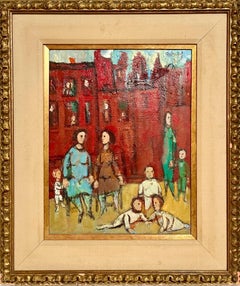
Mid Century Mothers, Children Oil Painting Frank Kleinholz WPA Era NYC Tenements
By Frank Kleinholz
Located in Surfside, FL
Frank Kleinholz (Brooklyn, 1901 - 1987)
Mothers with children oil on canvas painting
Frame: 27 X 23
Image: 17.75 X 13.75
Born in Brooklyn, New York, Frank Kleinholz was a painter b...
Category
20th Century Abstract Figurative Paintings
Materials
Canvas, Oil
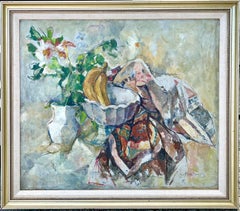
Post Impressionist Oil Painting Still Life with Fruit William Meyerowitz WPA Art
By William Meyerowitz
Located in Surfside, FL
William Meyerowitz (1887 - 1981)
Oil painting on canvas
Depicting a still life scene with fruit bowl, bananas, flowers and quilt. Post Impressionist oil painting.
Hand signed low...
Category
1930s American Modern Figurative Paintings
Materials
Oil, Canvas
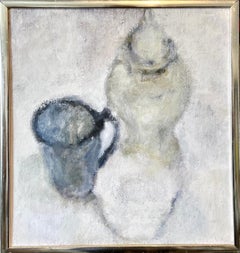
Still Life Oil Painting Betsy Podlach American Post Feminist Modernist Art
By Betsy Podlach
Located in Surfside, FL
Betsy Podlach (American, born 1964.)
Still life with Tin Cup, 1996
17.5 X 16.5 inches. Framed it measures 18.25 X 17.25
Betsy Podlach graduated from Harvard, cum laude, (she studied at Harvard with Alfred Decreido and William Reimann as well as Carlos Fuentes continuing her studies at the New York Studio School of Drawing, Painting, and Sculpture, Ms. Podlach was awarded an art fellowship and residency at The International School of Art in Umbria, Italy.
Betsy Podlach is an American painter who considers the Italian Venetians and the american abstract expressionist painters her mentors. The two painters she is most inspired by are Titian and Jackson Pollock, Both use the picture plane and abstraction and space, light, movement and form to communicate a physicality built entirely on the principals of painting, in the “classical” sense of a flat plane and lines, color, shape, space and light applied to that flat surface to create magic – light, space, form, emotion, force, movement, the physical and the spiritual. She describes her work as a figurative version of abstract expressionism. She was influenced by many of the abstract expressionists from the NY school...
Category
1990s American Modern Figurative Paintings
Materials
Canvas, Oil
You May Also Like
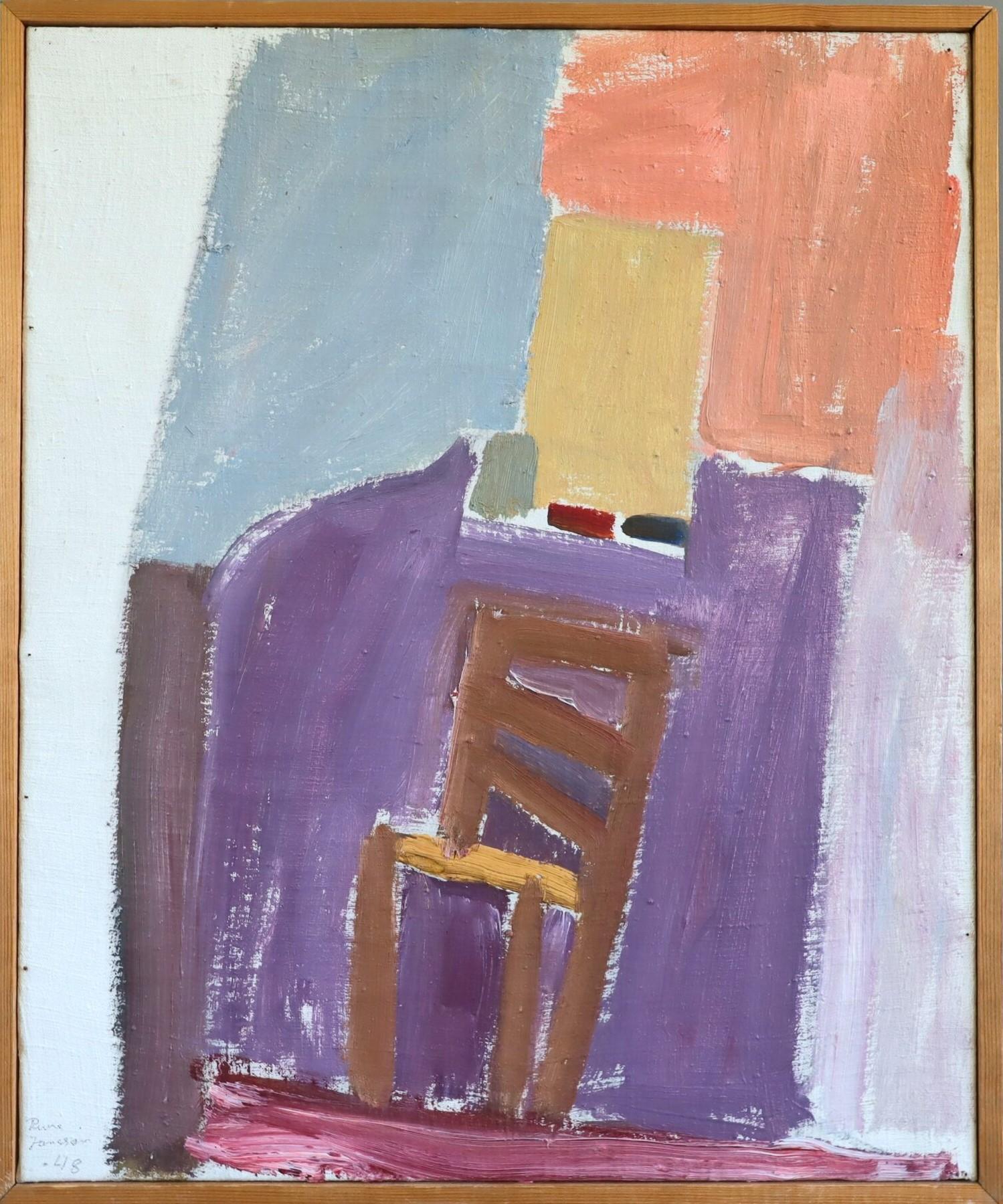
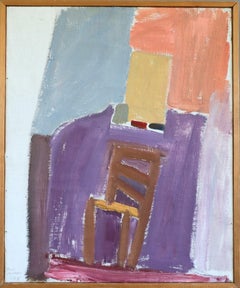
1948 Mid Century Modern Swedish Interior Scene Oil Painting - Chair by the Wall
Located in Bristol, GB
CHAIR BY THE WALL
Size: 42 x 35 cm (including frame)
Oil on canvas
A striking mid-century modernist style composition of an interior scene, executed in oil onto canvas and dated 194...
Category
Mid-20th Century Modern Interior Paintings
Materials
Canvas, Oil
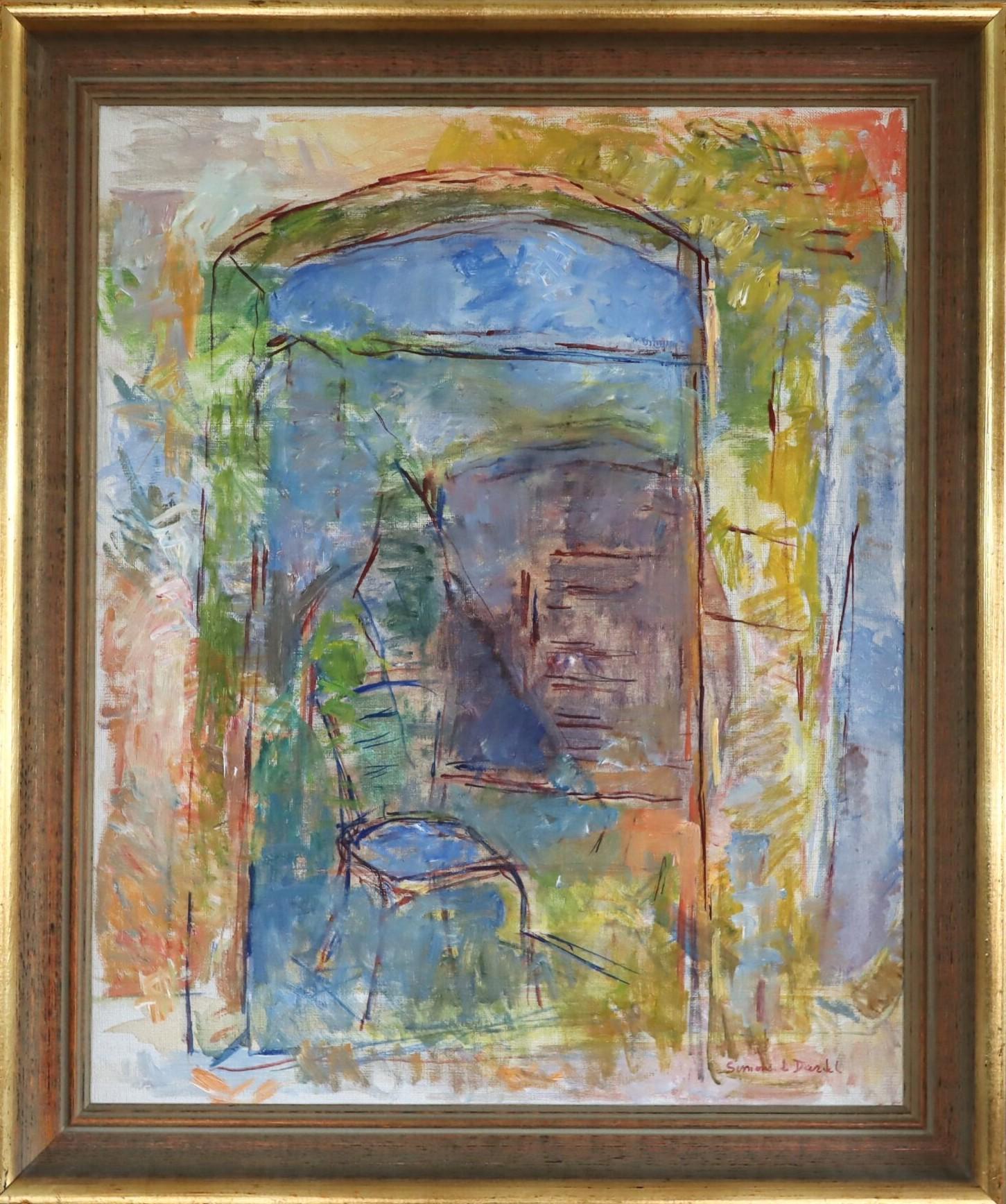
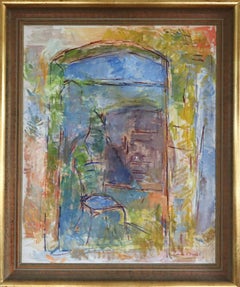
Mid Century Modern Swedish Abstract Interior Oil Painting - Chair by the Archway
Located in Bristol, GB
CHAIR BY THE ARCHWAY
Size: 70 x 59 cm (including frame)
Oil on canvas
A large mid-century painting that presents a loosely abstracted scene of an arched doorway with a simple chair ...
Category
Mid-20th Century Modern Interior Paintings
Materials
Oil, Canvas
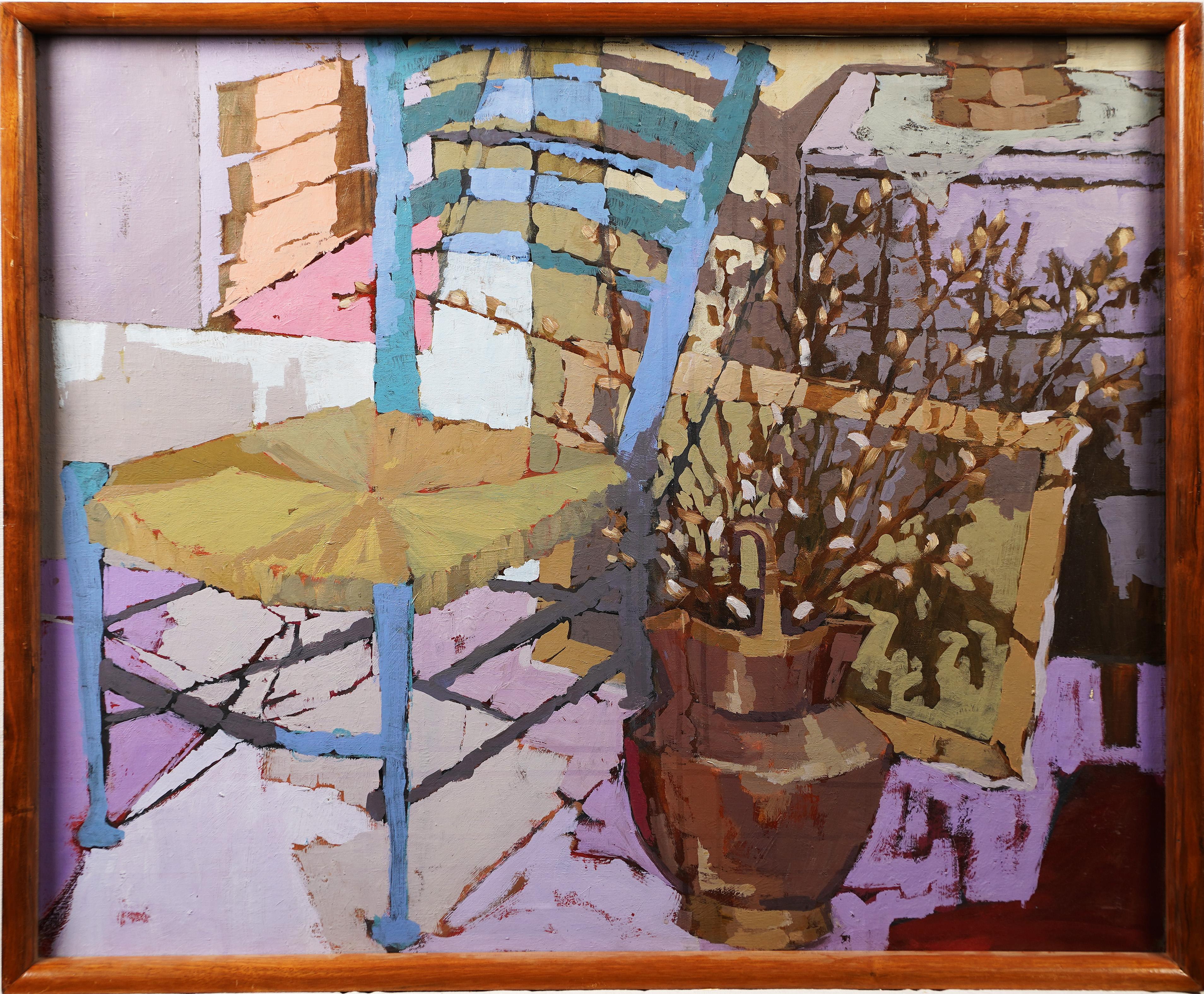
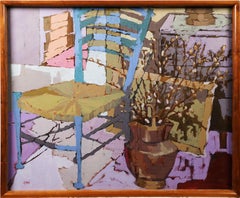
Vintage American Modernist Abstract Interior Scene Framed Oil Painting
Located in Buffalo, NY
Antique American modernist interior scene oil painting. Oil on canvas. Framed.
Category
1940s Modern Abstract Paintings
Materials
Canvas, Oil
$1,196 Sale Price
20% Off
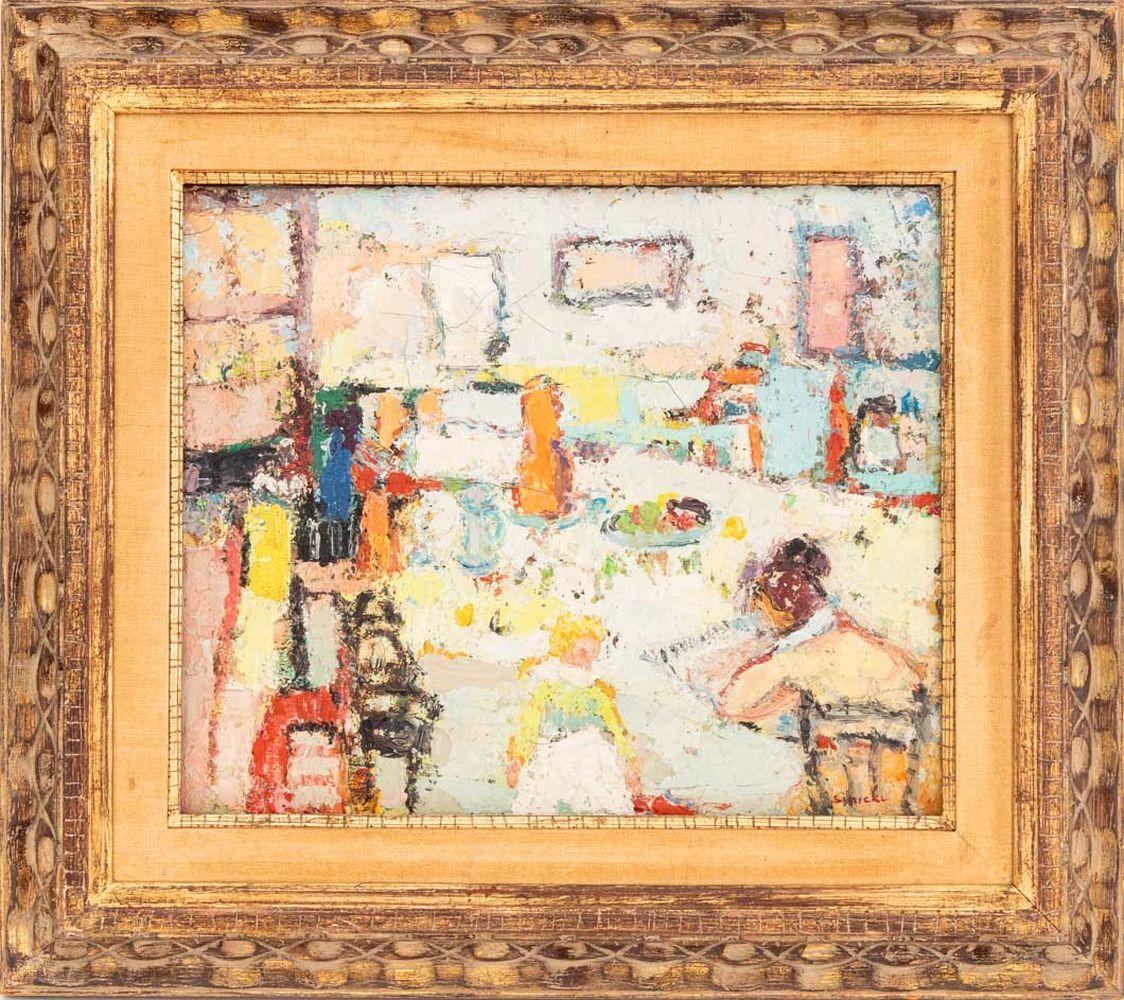
Interior Scene With Seated Figures
Located in Astoria, NY
George Rene Sinicki (Russian/French, b. 1910), Interior Scene with Seated Figures, Oil on Canvas, signed lower right, giltwood frame. Image: 14.75...
Category
20th Century Post-Impressionist Interior Paintings
Materials
Canvas, Oil
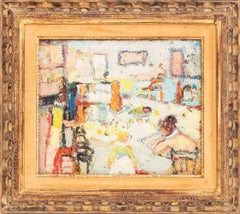
Studio Interior Mid 20th Century American Scene Modern WPA Still Life Realism
By Joseph Solman
Located in New York, NY
Studio Interior Scene Mid 20th Century American Modern WPA Still Life Realism
The painting measures 10 x 12 inches. Framed, the work is 13 1/4 x 15 1/...
Category
1930s American Realist Interior Paintings
Materials
Oil, Board
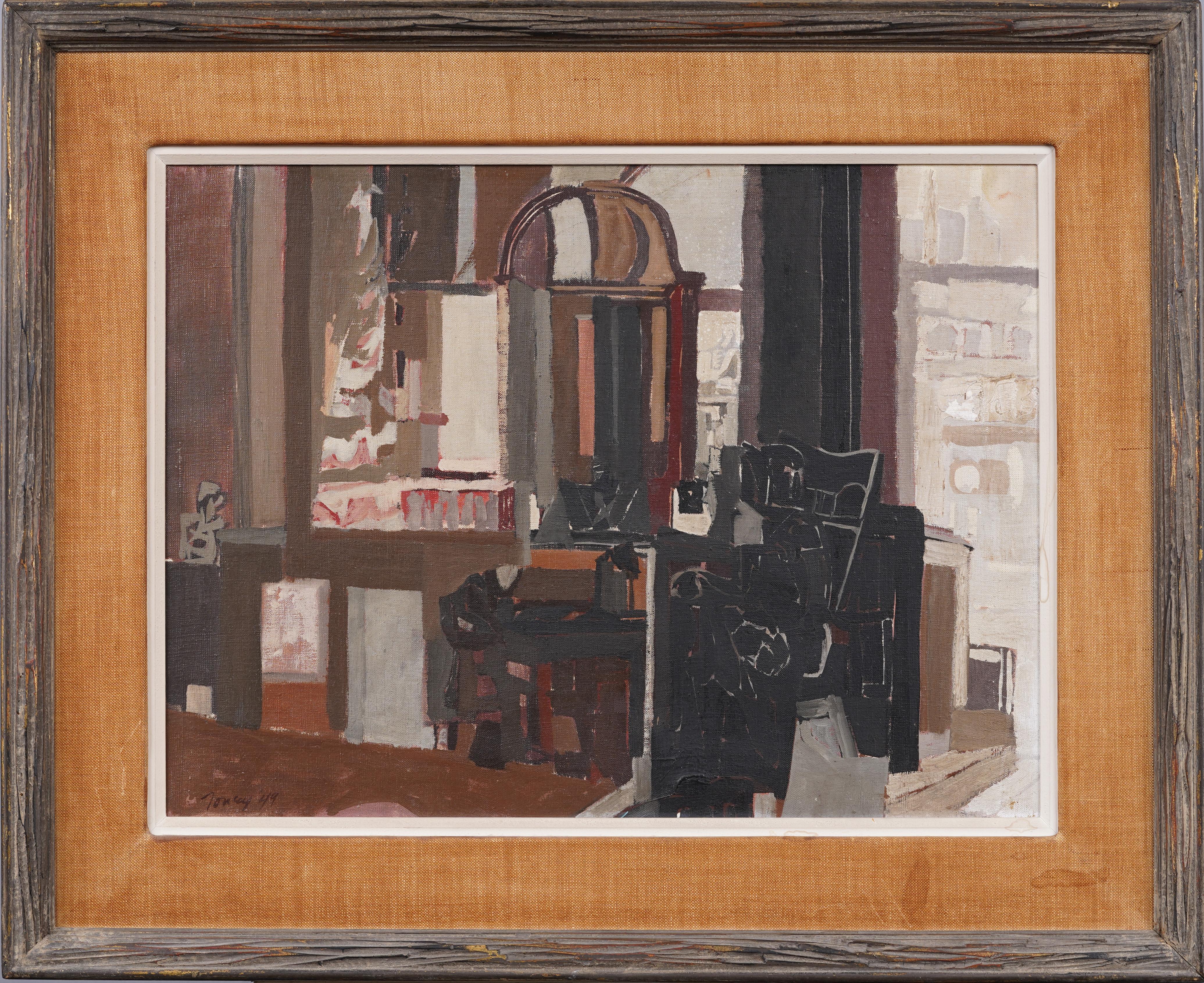
Antique American Modernist Interior Scene Framed Abstract Signed Oil Painting
Located in Buffalo, NY
Incredible early American modernist interior scene by Anthony Toney (1913 - 2004) . Oil on canvas. Framed. Signed. Measuring 26 by 32 overall and 18 by 24 painting alone.
Category
1940s Abstract Abstract Paintings
Materials
Canvas, Oil
$1,400 Sale Price
20% Off
More Ways To Browse
20th Century Oil Paintings China
Oil Paintings Signed By Stuart
1950s Abstract Expressionism
Vintage Chinese Oil Painting
Chinese American Painting
Milton Davis
Initial Js
William J Schultz
Charles Gill
Claude Lazar
Eichler Doors
Fernando Liger Hidalgo
Herbert Jones
Marlboro Cigarette
Robert Brachman
Shower Curtain
Volney Allan Richardson
Alain Gazier