Want more images or videos?
Request additional images or videos from the seller
1 of 11
Kathleen PetyarreMountain Devil Lizard
$2,100List Price
About the Item
- Creator:Kathleen Petyarre (1939 - 2018, Aboriginal Australian)
- Dimensions:Height: 16.93 in (43 cm)Width: 16.93 in (43 cm)
- Medium:
- Movement Style:
- Period:
- Condition:
- Gallery Location:Miami, FL
- Reference Number:1stDibs: LU13612948962
About the Seller
5.0
Vetted Professional Seller
Every seller passes strict standards for authenticity and reliability
Established in 2011
1stDibs seller since 2012
75 sales on 1stDibs
Authenticity Guarantee
In the unlikely event there’s an issue with an item’s authenticity, contact us within 1 year for a full refund. DetailsMoney-Back Guarantee
If your item is not as described, is damaged in transit, or does not arrive, contact us within 7 days for a full refund. Details24-Hour Cancellation
You have a 24-hour grace period in which to reconsider your purchase, with no questions asked.Vetted Professional Sellers
Our world-class sellers must adhere to strict standards for service and quality, maintaining the integrity of our listings.Price-Match Guarantee
If you find that a seller listed the same item for a lower price elsewhere, we’ll match it.Trusted Global Delivery
Our best-in-class carrier network provides specialized shipping options worldwide, including custom delivery.You May Also Like
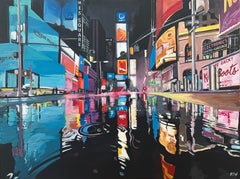
Times Square New York City Reflections after the Rain by British Urban Artist
By Angela Wakefield
Located in Preston, GB
Times Square New York City Reflections after the Rain by British Urban Landscape Artist, Angela Wakefield. Entitled “November Rain”, this unique origi...
Category
2010s Contemporary Landscape Paintings
Materials
Gesso, Canvas, Linen, Paint, Cotton Canvas, Mixed Media, Oil, Acrylic
$27,193 Sale Price
20% Off
Free Shipping
H 30 in W 40 in D 1.75 in
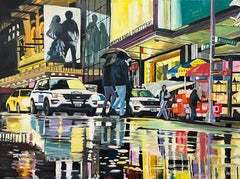
Neon Reflections in the New York City Rain by Contemporary British Urban Artist
By Angela Wakefield
Located in Preston, GB
Neon Reflections in the New York City Rain, by Contemporary British Urban Artist, Angela Wakefield. This is a major work to continue her epic New York Series...
Category
2010s Contemporary Landscape Paintings
Materials
Gesso, Canvas, Linen, Paint, Cotton Canvas, Mixed Media, Oil, Acrylic
$21,771 Sale Price
20% Off
H 30 in W 40 in D 1.75 in
Large Painting of Classic New York City in Rain with Figures by British Artist
By Angela Wakefield
Located in Preston, GB
Large Original Painting of a Classic 1990's Busy New York City Scene in the Rain, with Yellow Taxis, Cars and Figures, by British Urban Landscape Artist, Angela Wakefield. This is a ...
Category
2010s Contemporary Landscape Paintings
Materials
Gesso, Canvas, Linen, Paint, Cotton Canvas, Mixed Media, Oil, Acrylic
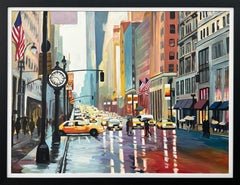
Angela WakefieldLarge Painting of Classic New York City in Rain with Figures by British Artist, 2023
$35,351 Sale Price
25% Off
H 41 in W 53 in D 1.75 in
Painting of New York City Street after Rain with Figures, Cars by British Artist
By Angela Wakefield
Located in Preston, GB
Original Painting of a Contemporary New York City Scene after the Rain, with Cars and Figures, by British Urban Landscape Artist, Angela Wakefield. This is a major work to continue h...
Category
2010s Contemporary Landscape Paintings
Materials
Gesso, Canvas, Linen, Paint, Cotton Canvas, Mixed Media, Oil, Acrylic

$27,214 Sale Price
20% Off
H 41 in W 41 in D 1.75 in
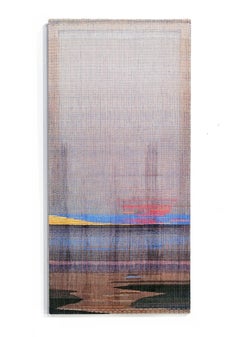
Horizon, Cabo Sardão - Abstract Landscape, Contemporary Painted + Woven Artwork
By Marta Pokojowczyk
Located in Salzburg, AT
‘Horizon. Cabo Sardão’ 2020
Handwoven painting, linen, woollen, silk, cotton yarn, acrylic textile paint, 135 x 65 cm
Handwoven painting from the series ‘Horizons’, based on a portuguese landscape...
Category
2010s Contemporary Landscape Paintings
Materials
Textile, Linen, Yarn, Acrylic
$2,316
H 53.15 in W 25.6 in D 0.79 in
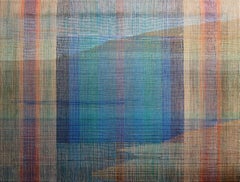
Timeless - Handwoven Landscape Painting, Modern Painted and Woven Artwork
By Marta Pokojowczyk
Located in Salzburg, AT
"Timeless", from the series Horizons, handwoven painting, linen yarn, acrylic textile paint, 60 x 80 cm, 2022.
Canvas is entirely constructed on a weaving loom...
Category
2010s Contemporary Landscape Paintings
Materials
Textile, Linen, Yarn, Acrylic
$1,960
H 23.63 in W 31.5 in D 0.79 in
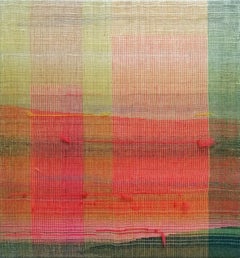
Between the Landscape and Geometry I - Modern Woven and Painted Abstract Artwork
By Marta Pokojowczyk
Located in Salzburg, AT
Between the Landscape and Geometry, hand weaving, linen yarn, wool, acrylic
textile paint, 70 x 65 cm, 2024.
There is a second painting from this series - my other article here, mat...
Category
2010s Contemporary Landscape Paintings
Materials
Textile, Wool, Cotton, Linen, Yarn, Acrylic
$3,447
H 27.56 in W 25.6 in D 0.79 in
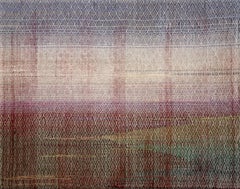
Flowering - Handwoven Abstract Landscape, Contemporary Woven and Painted Artwork
By Marta Pokojowczyk
Located in Salzburg, AT
From the series Horizons – Sunset 2023
Handwoven painting, linen, cotton yarn, acrylic textile paint, 40 x 50 cm.
‘Horizons’ are a symbiosis of two disciplines of art, Painting and...
Category
2010s Contemporary Landscape Paintings
Materials
Textile, Cotton, Linen, Yarn, Acrylic
$1,722
H 15.75 in W 19.69 in D 0.79 in
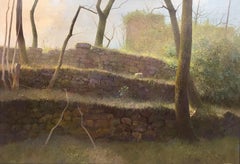
Terras at le Coulet-21st Century Contemporary Landscape Painting in the Ardeche
By Peter Durieux
Located in Nuenen, Noord Brabant
In this work Peter Durieux shows his love for the landscapes of France, and also his capability in composition, tonality and style.
Beautiful and powerful at the same time.
Drawi...
Category
2010s Contemporary Landscape Paintings
Materials
Linen, Acrylic
$13,661
Free Shipping
H 37.8 in W 57.09 in
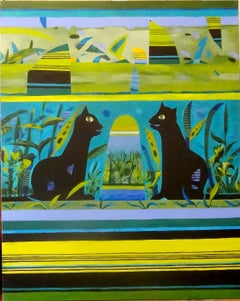
Two Black Cats,
by Ewa Miazek-Mioduszewska, Acrylic on Linen Painting
By Ewa Miazek-Mioduszewska
Located in Oklahoma City, OK
This 39.4" x 31.5" acrylic painting by Ewa Miazek-Mioduszewska, features two black cats facing one another in a bright yellow, blue and green landscape. The landscape is punctuated ...
Category
2010s Contemporary Landscape Paintings
Materials
Acrylic, Linen
$1,544 Sale Price
35% Off
H 39.4 in W 31.5 in D 1.5 in
More From This Seller
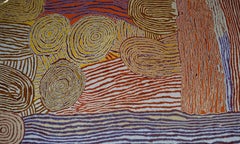
View AllTjintjintjin
By Walangkura Napanangka
Located in Miami, FL
As one of the last generation to remember a childhood lived in the desert hunting and gathering with her family, Walangkura Napanangka's paintings recall the stories of country and the location of specific sites in her traditional homeland west of the salt lake of Karrkurutinjinya (Lake Macdonald).
Born around 1946, at Tjitururrnga west of Kintore, in the remote and arid country between the Northern Territory and Western Australia, she lived with her father Rantji Tjapangati and mother Inyuwa Nampitjinpa and later, while still a teenager, travelled by foot with her family over the hundreds of kilometres from their remote desert home eventually joining Uta Uta Tjangala's group as they walked in to the settlements of Haasts Bluff and then Papunya.
The lure of settlement life with its promise of plentiful food and water belied the harsh conversion they would make to an alien lifestyle with its many problems and unfamiliar demands. The upheaval however, was ameliorated to some degree by the proximity of her immediate family including her mother Inyuwa, adoptive father Tutuma Tjapangati, and sister Pirrmangka Napanangka (now deceased) all of whom became artists.
Relocated to the community of Kintore in 1981 when the outstation movement began, Walangkura participated in the historic women's collaborative painting project (1994) that was initiated by the older women as a means of re-affirming their own spiritual and ancestral roots. It was a time of specifically female singing, ceremony and painting, away from the gaze of outsiders and men folk. The huge and colourful canvases that emerged from the women's camp were 'alive with the ritual excitement and narrative intensity of the occasion' (Johnson 2000: 197).
Within a year, Papunya Tula Artists, now established at Kintore, had taken on many of these women as full-time artists, revitalising the company after the deaths of many of the original 'painting men'. While individual women forged their own stylistic trajectory, these paintings were immediately distinguishable from the men's more cerebral and symmetrical style. They radiated an exuberant and vibrant energy, the felt heart-beat of women's affinity to country and spirit.
Walangkura's early works, created from 1996 onward, are characterized by masses of small markings and motifs covering large areas of canvas. Her favorite colour, a deep sandy orange predominates, accentuated against more somber blacks and reds and dusky greens or yellows. More recent works show a gestural quality though still tightly packed with an intensity of geometric line work representing sandhills. In a sense this provides a strong visual and contextual link to the men's linear style as exemplified by the works of George Tjungurrayi...
Category
2010s Contemporary Abstract Paintings
Materials
Linen, Cotton Canvas, Acrylic
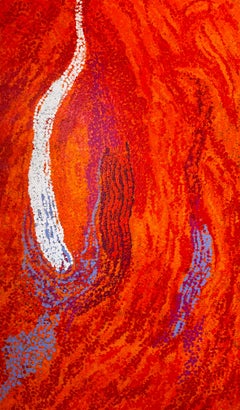
Ngayuku Kgura (My Country)
By Yannima Tommy Watson
Located in Miami, FL
Yannima Tommy Watson is a Pitjantjatjara artist born around the 1930s, in the bush some 44km west of the small isolated community of Irrunytju. Not yet very well known to the French public, despite his participation in the architectural project of the Musée du Quai Branly, Tommy Watson is nevertheless often considered the greatest living Aboriginal artist.
Like many aborigines of his generation, he lived a traditional, nomadic or semi-nomadic life before his contact with Western civilization; then he will occupy the only jobs that the Aborigines find: herdsmen (until Yuendumu), laborers for the construction of infrastructures in the desert. Throughout this period he became familiar with his "country", a harsh region, and deepened his knowledge, both profane and sacred, relating to Dreams and Dreamtimes, to the connections between sacred sites and the Ancestors. He will even work in Papunya, where the artistic movement started. But the Pijantjarra are intransigent with tradition…no question at this time of revealing the motives and the secret stories.
The North of South Australia, the region where he is from, was touched by the pictorial movement only at the very beginning of the 2000s. In 2001, Tommy began his career as an artist in Irrunytju (Wingellina). He is a young artist… He learns by observing other painters and draws on the experiences of a long life and on the exceptional knowledge he has stored up. But quickly he will find his way, a radically new style where color plays a major role. Very quickly, the iconography now well known by the artists of Yuendumu, or the Western Desert, Balgo or Lajamanu disappeared. The symbols are no longer there. As Rover Thomas, Emily Kame or Paddy Bedford had done before him, this is a real artistic revolution. For Tommy, it is not a question of describing his Dream (Caterpillar), the routes taken by the Ancestors. He concentrates on a site, a story, sometimes very profane, the memory of a meeting, of a hunting party, tries to condense his memories, the information of which he is the depositary, to add a poetic touch to it, sometimes melancholy, and this gives a painting with a very abstract aspect. It is a painting where the emotion is very present, undoubtedly less cerebral than the art of the neighbors of the north the Pintupi, like Ronnie Tjampitjinpa, George...
Category
2010s Contemporary Abstract Paintings
Materials
Linen, Cotton Canvas, Acrylic
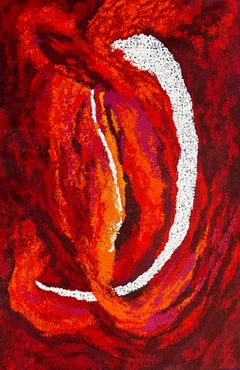
Pikarli - My Country
By Yannima Tommy Watson
Located in Miami, FL
Yannima Tommy Watson is a Pitjantjatjara artist born around the 1930s, in the bush some 44km west of the small isolated community of Irrunytju. Not yet very well known to the French public, despite his participation in the architectural project of the Musée du Quai Branly, Tommy Watson is nevertheless often considered the greatest living Aboriginal artist.
Like many aborigines of his generation, he lived a traditional, nomadic or semi-nomadic life before his contact with Western civilization; then he will occupy the only jobs that the Aborigines find: herdsmen (until Yuendumu), laborers for the construction of infrastructures in the desert. Throughout this period he became familiar with his "country", a harsh region, and deepened his knowledge, both profane and sacred, relating to Dreams and Dreamtimes, to the connections between sacred sites and the Ancestors. He will even work in Papunya, where the artistic movement started. But the Pijantjarra are intransigent with tradition…no question at this time of revealing the motives and the secret stories.
The North of South Australia, the region where he is from, was touched by the pictorial movement only at the very beginning of the 2000s. In 2001, Tommy began his career as an artist in Irrunytju (Wingellina). He is a young artist… He learns by observing other painters and draws on the experiences of a long life and on the exceptional knowledge he has stored up. But quickly he will find his way, a radically new style where color plays a major role. Very quickly, the iconography now well known by the artists of Yuendumu, or the Western Desert, Balgo or Lajamanu disappeared. The symbols are no longer there. As Rover Thomas, Emily Kame or Paddy Bedford had done before him, this is a real artistic revolution. For Tommy, it is not a question of describing his Dream (Caterpillar), the routes taken by the Ancestors. He concentrates on a site, a story, sometimes very profane, the memory of a meeting, of a hunting party, tries to condense his memories, the information of which he is the depositary, to add a poetic touch to it, sometimes melancholy, and this gives a painting with a very abstract aspect. It is a painting where the emotion is very present, undoubtedly less cerebral than the art of the neighbors of the north the Pintupi, like Ronnie Tjampitjinpa, George...
Category
2010s Contemporary Abstract Paintings
Materials
Cotton Canvas, Acrylic, Linen
Woman
s Dreaming
By Walangkura Napanangka
Located in Miami, FL
As one of the last generation to remember a childhood lived in the desert hunting and gathering with her family, Walangkura Napanangka's paintings recall the stories of country and the location of specific sites in her traditional homeland west of the salt lake of Karrkurutinjinya (Lake Macdonald).
Born around 1946, at Tjitururrnga west of Kintore, in the remote and arid country between the Northern Territory and Western Australia, she lived with her father Rantji Tjapangati and mother Inyuwa Nampitjinpa and later, while still a teenager, travelled by foot with her family over the hundreds of kilometres from their remote desert home eventually joining Uta Uta Tjangala's group as they walked in to the settlements of Haasts Bluff and then Papunya.
The lure of settlement life with its promise of plentiful food and water belied the harsh conversion they would make to an alien lifestyle with its many problems and unfamiliar demands. The upheaval however, was ameliorated to some degree by the proximity of her immediate family including her mother Inyuwa, adoptive father Tutuma Tjapangati, and sister Pirrmangka Napanangka (now deceased) all of whom became artists.
Relocated to the community of Kintore in 1981 when the outstation movement began, Walangkura participated in the historic women's collaborative painting project (1994) that was initiated by the older women as a means of re-affirming their own spiritual and ancestral roots. It was a time of specifically female singing, ceremony and painting, away from the gaze of outsiders and men folk. The huge and colourful canvases that emerged from the women's camp were 'alive with the ritual excitement and narrative intensity of the occasion' (Johnson 2000: 197).
Within a year, Papunya Tula Artists, now established at Kintore, had taken on many of these women as full-time artists, revitalising the company after the deaths of many of the original 'painting men'. While individual women forged their own stylistic trajectory, these paintings were immediately distinguishable from the men's more cerebral and symmetrical style. They radiated an exuberant and vibrant energy, the felt heart-beat of women's affinity to country and spirit.
Walangkura's early works, created from 1996 onward, are characterized by masses of small markings and motifs covering large areas of canvas. Her favorite colour, a deep sandy orange predominates, accentuated against more somber blacks and reds and dusky greens or yellows. More recent works show a gestural quality though still tightly packed with an intensity of geometric line work representing sandhills. In a sense this provides a strong visual and contextual link to the men's linear style as exemplified by the works of George Tjungurrayi...
Category
2010s Contemporary Abstract Paintings
Materials
Linen, Cotton Canvas, Acrylic
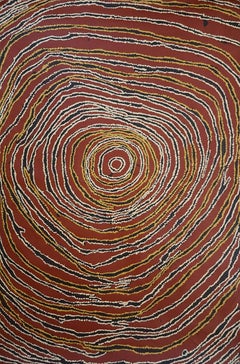
Women
s Hairstring
Located in Miami, FL
Makinti Napanangka walked in to Haasts Bluff ration depot during the 1940’s with her young son when in her early 20’s and by the time she had moved to the new settlement of Papunya h...
Category
Early 2000s Contemporary Abstract Paintings
Materials
Linen, Polymer
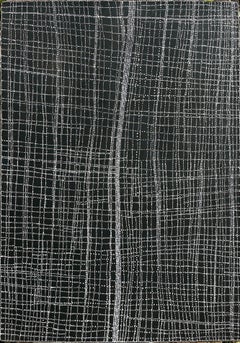
Salt on Mina Mina
By Dorothy Napangardi
Located in Miami, FL
Dorothy Napangardi spent her early childhood living a nomadic life at Mina Mina near Lake Mackay in the Tanami Desert during the late 1950s and early 1960s. This idyllic life came to...
Category
Early 2000s Contemporary Abstract Paintings
Materials
Linen, Polymer
Recently Viewed
View AllMore Ways To Browse
20th Century British Painting
Antique Framed Victorian Painting
Israeli Artists
12 X 16 Oil Painting
Boat Oil Paintings
Ocean Paintings
The Four Seasons
Contemporary Seascapes
Sky Oil Paintings
Gold Frame Oil Painting Portrait
Barcelona Art
Geometric Oil Paintings
Pink And Green Landscape Paintings
Art Dallas
Painting Of Women And Children
Desert Art
Large Abstract Oil Painting
Midcentury Acrylic Painting