Items Similar to 1940s Italian Ardengo Soffici Signed Landscape Painting
Want more images or videos?
Request additional images or videos from the seller
1 of 12
Ardengo Soffici1940s Italian Ardengo Soffici Signed Landscape Painting1945 ca.
1945 ca.
$8,202.83
£6,011.16
€6,800
CA$11,257.97
A$11,895.05
CHF 6,398.15
MX$142,424.07
NOK 80,161.32
SEK 73,416.13
DKK 51,792.66
About the Item
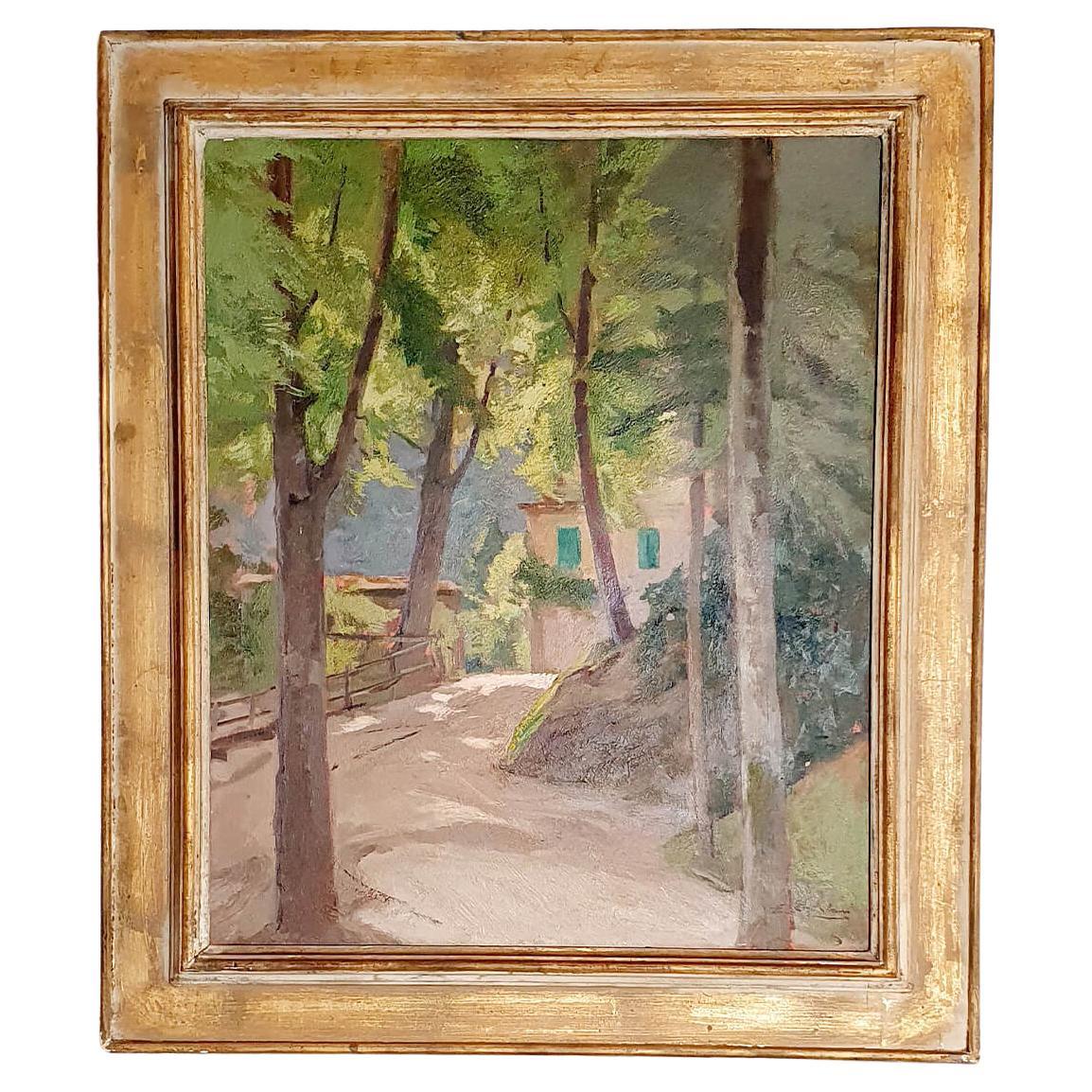
A beautiful and evocative oil painting on walnut panel by the great Italian artist Ardengo Soffici.
With his usual inspired touch, he depicts a glimpse of a village with a large tree with green leaves in the foreground.
It is most likely a view of Poggio a Caiano, in Tuscany, a place he loved to depict with his poetic and soft brushstrokes, just like his surname.
Signed lower left ‘A Soffici’ and on the reverse ‘A Soffici’
This artwork, never before on the market, comes from an important European private collection
Every item of our Gallery, upon request, is accompanied by a certificate of authenticity issued by Sabrina Egidi official Expert in Italian furniture for the Chamber of Commerce of Rome and for the Rome Civil Courts.
Our company has been present on this platform for many years, with numerous sales made and just as many excellent reviews received that you can under our Furniture account.
Ardengo Soffici (7 April 1879 – 19 August 1964) was an Italian writer, painter, poet, sculptor and intellectual.
Soffici was born in Rignano sull'Arno, near Florence. In 1893 his family moved to the latter city, where he studied at the Accademia from 1897 and later at the Scuola Libera del Nudo of the academy.
In 1900 he moved from Florence to Paris, where he lived for seven years and worked for Symbolist journals.
While in Paris, during his time at the Bateau-Lavoir, he became acquainted with Braque, Derain, Picasso, Juan Gris and Apollinaire.
On returning to Italy in 1907, Soffici settled in Poggio a Caiano in the countryside near Florence (where he lived for the rest of his life) and wrote articles on modern artists for the first issue of the political and cultural magazine La Voce.
In 1910 he organised an exhibition of Impressionist painting in Florence in association with La Voce, devoting an entire room to the sculptor Medardo Rosso.
In August 1911 he wrote an article in La Voce on Picasso and Braque, which probably influenced the Futurists in the direction of Cubism.
At this time Soffici considered Cubism to be an extension of the partial revolution of the Impressionists. In 1912-1913 Soffici painted in a Cubist style.
After visiting the Futurists' Exhibition of Free Art in Milan, he wrote a hostile review in La Voce.
The leading Futurists Marinetti, Boccioni and Carrà, were so incensed by this that they immediately boarded a train for Florence and assaulted Soffici and his La Voce colleagues at the Caffè Giubbe Rosse.
Reviewing the Futurists' Paris exhibition of 1912 in his article Ancora del Futurismo (Futurism Again) he dismissed their rhetoric, publicity-seeking and their art, but granted that, despite its faults, Futurism was "a movement of renewal, and that is excellent".
Gino Severini was despatched from Milan to Florence to make peace with Soffici on behalf of the Futurists – the Peace of Florence, as Boccioni called it. After these diplomatic overtures, Soffici, together with Giovanni Papini, Aldo Palazzeschi and Italo Tavolato withdrew from La Voce in 1913 to form a new periodical, Lacerba, which would concentrate entirely on art and culture.
Soffici published "Theory of the movement of plastic Futurism" in Lacerba, accepting that Futurism had reconciled what had previously seemed irreconcilable, Impressionism and Cubism.
By its fifth issue Lacerba wholly supported the Futurists. Soffici's paintings in 1913 – e.g. Linee di una strada and Sintesi di una pesaggio autumnale – showed the influence of the Futurists in method and title and he exhibited with them.
In 1914, personal quarrels and artistic differences between the Milan Futurists and the Florence group around Soffici, Papini and Carlo Carrà, created a rift in Italian Futurism.
The Florence group resented the dominance of Marinetti and Boccioni, whom they accused of trying to establish "an immobile church with an infallible creed", and each group dismissed the other as passéiste.
After serving in the First World War, Soffici married Maria Sdrigotti, whom he met in a publishing house in Udine, while editing Kobilek.
They moved to Poggio a Caiano and had three children, Valeria, Sergio and Laura. Soffici created a distance from Futurism and, discovering a new reverence for Tuscan tradition, became associated with the "return to order" which manifested itself in the naturalistic landscapes which thereafter dominated his work.
Remaining in Poggio a Caiano, he painted nature and traditional Tuscan scenes.
There, he continued to write and paint and was visited by many artists, some of whom he helped in finding their place in the art world. In 1926, he discovered the young artist Quinto Martini when the latter visited Soffici's workshop with his work.
In Martini's first experiments Soffici recognised the kind of genuine and intimate traits he was seeking and became his mentor.
In 1932 Soffici published articles on his experience in Paris in the early years of the 20th century in the magazine Il Selvaggio.
At the end of the Second World War, Soffici was taken as a British POW and was imprisoned for several months in unhealthy conditions at an allied prison camp where he contracted pneumonia.
During his stay at the prison camp, he met several other artists and writers.
Together, they wrote, painted and set up plays to pass the time in the squalid conditions they found themselves in.
Some of the paintings were exchanged for food and art materials from the guards.
Later, once released due to lack of evidence, he returned home and lived in Poggio a Caiano and spent his summers in Forte dei Marmi.
Soffici continued to paint and write until his death in Forte dei Marmi on 12 August 1964.
Under existing legislation, any artwork created over 70 years ago by an artist who has died can requires a license for export regardless of the work’s market price. The shipping may require additional handling days to require the license according to the destination of the artwork.
- Creator:Ardengo Soffici (1879 - 1964)
- Creation Year:1945 ca.
- Dimensions:Height: 14.18 in (36 cm)Width: 10.24 in (26 cm)Depth: 0.12 in (3 mm)
- Medium:
- Movement Style:
- Period:
- Framing:Framing Options Available
- Condition:Defects as shown in the photo.
- Gallery Location:Roma, IT
- Reference Number:1stDibs: LU2883217521862
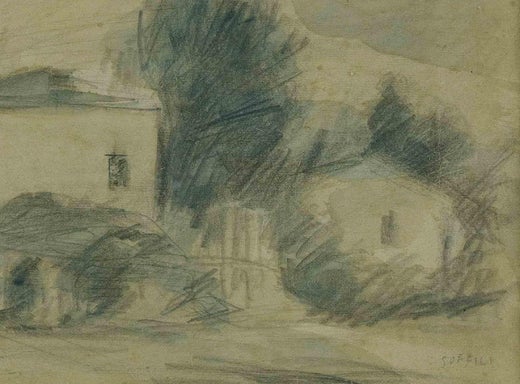
Ardengo Soffici
Ardengo Soffici was an Italian painter, intellectual, poet and writer. He was an exponent of Futurism even if his relationship with the movement had some moments of hostility. In 1913, Soffici founded with Papini the Futurist magazine Lacerba where he published "Theory of the movement of plastic Futurism."
About the Seller
No Reviews Yet
Vetted Professional Seller
Every seller passes strict standards for authenticity and reliability
Established in 1990
1stDibs seller since 2025
8 sales on 1stDibs
Typical response time: <1 hour
- ShippingRetrieving quote...Shipping from: Roma, Italy
- Return Policy
More From This Seller
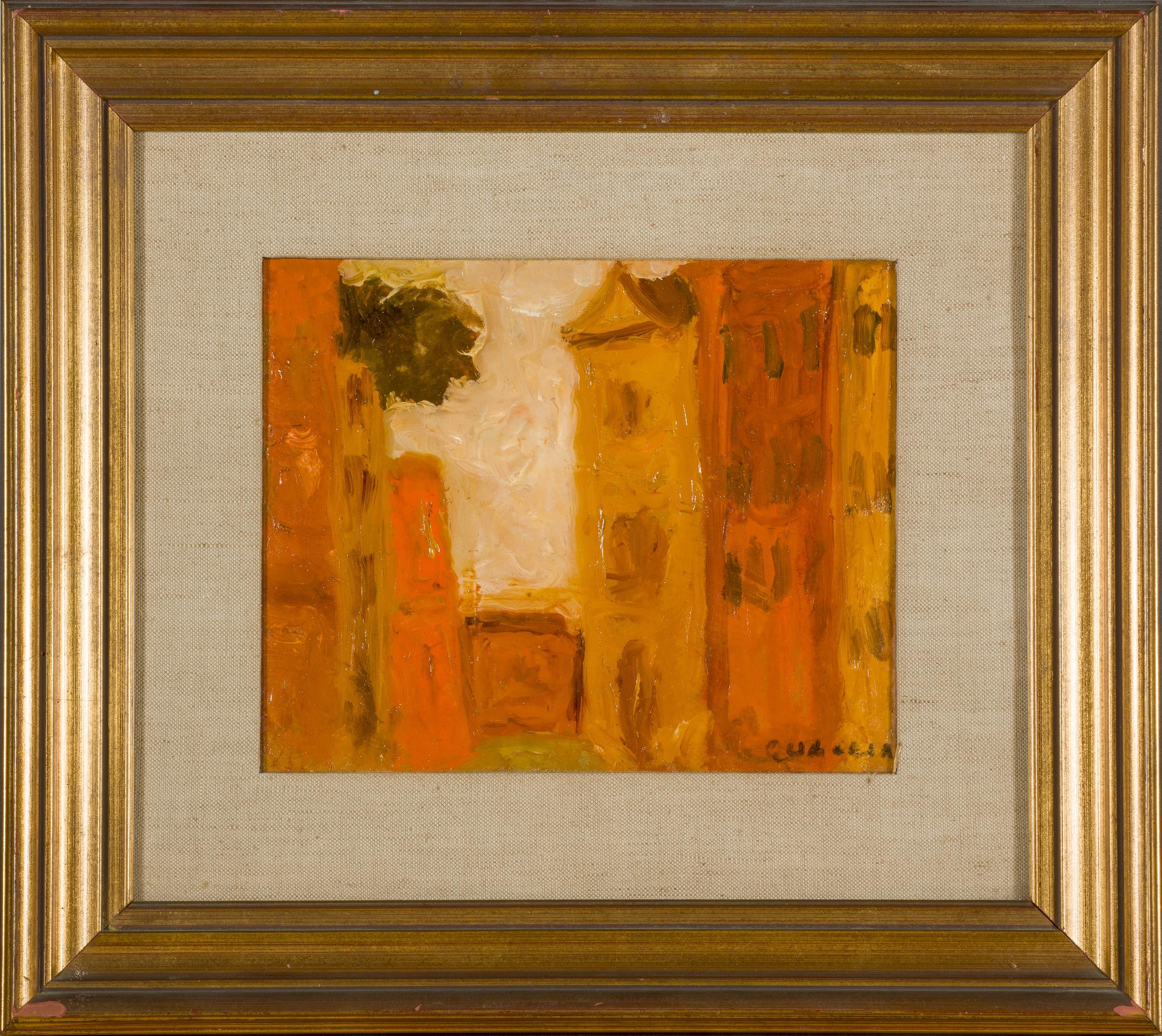
View All1950s Italian Signed Landscape Painting
By Carlo Quaglia
Located in Roma, IT
A beautiful and evocative painting by the great Italian painter Carlo Quaglia.
It depicts a glimpse of Rome rendered with rare evocative power, creating a rarefied atmosphere of grea...
Category
Mid-20th Century Modern Figurative Paintings
Materials
Oil, Masonite
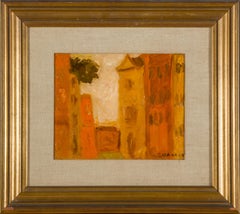
Late XIX Century Italian Signed Landscape Painting
Located in Roma, IT
Late XIX Century Italian Signed Landscape Painting
A beautiful mountain painting by the great Italian artist Celestino Ghione, who speciali...
Category
Late 19th Century Romantic Figurative Paintings
Materials
Oil
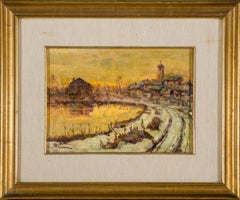
Early 20th Century Italian Landscape Painting
Located in Roma, IT
Wonderful Italian oil on canvas
The image reproduced in this beautiful painting not signed, is characterised by evocative lighting that suggests a style that is both realistic and po...
Category
1910s Italian School Figurative Paintings
Materials
Canvas, Oil
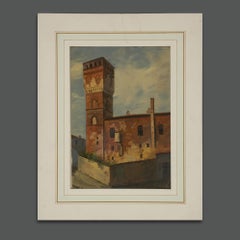
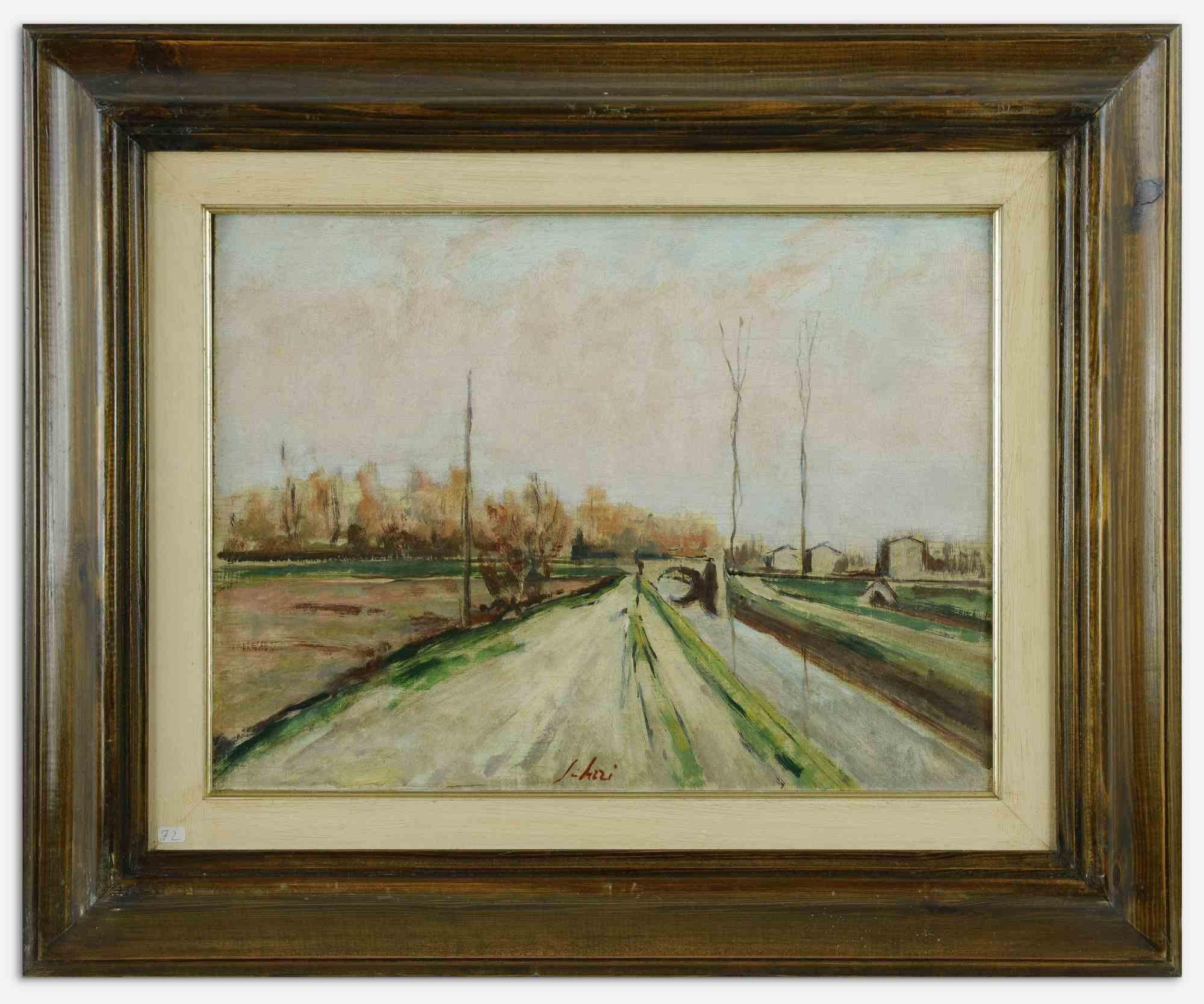
1920s Italian Signed Landscape Oil on Canvas Painting
Located in Roma, IT
Emilio Borsa Monza countryside
Countryside landscape of Monza park, with a bare willow tree in the foreground.
In the background, a glimpse of the stone bridge over the Lambro River,...
Category
Early 20th Century Romantic Figurative Paintings
Materials
Canvas, Oil

20th Century Italian Signed Landscape Painting
By Filiberto Petiti
Located in Roma, IT
20th Century Italian Signed Landscape
Beautiful and important painting by the great artist born in Turin, but of the Roman school, Filiberto Petiti (Turin, 14 November 1845 - Rome,...
Category
Early 20th Century Italian School Landscape Paintings
Materials
Wood, Oil
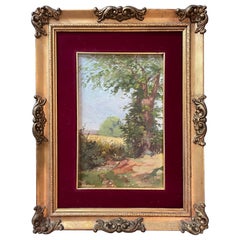
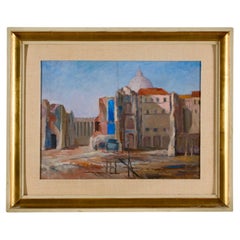
1930s Italian Signed and Archived Roman Landscape
By Giovanni Omiccioli
Located in Roma, IT
An important and rare painting by the great Italian avant-garde artist Giovanni Omiccioli.
It depicts the so-called Spina di Borgo, the district in front of St. Peter's Basilica dest...
Category
Early 20th Century Italian School Landscape Paintings
Materials
Wood, Oil
You May Also Like
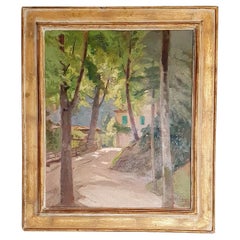
SIGNED Umbrian Villa Oil Painting by Enrico Ortalani 1883-1972
Located in Florence, Tuscany
Enrico Ortalani (1883-1972) was an Italian painter who trained at The Academy of Fine Arts in Rome. Many of his paintings were of the Umbrian and Roman countryside. This painting por...
Category
Early 20th Century Italian Paintings
Materials
Canvas
Landscape - Drawing by Ardengo Soffici - 1930s
By Ardengo Soffici
Located in Roma, IT
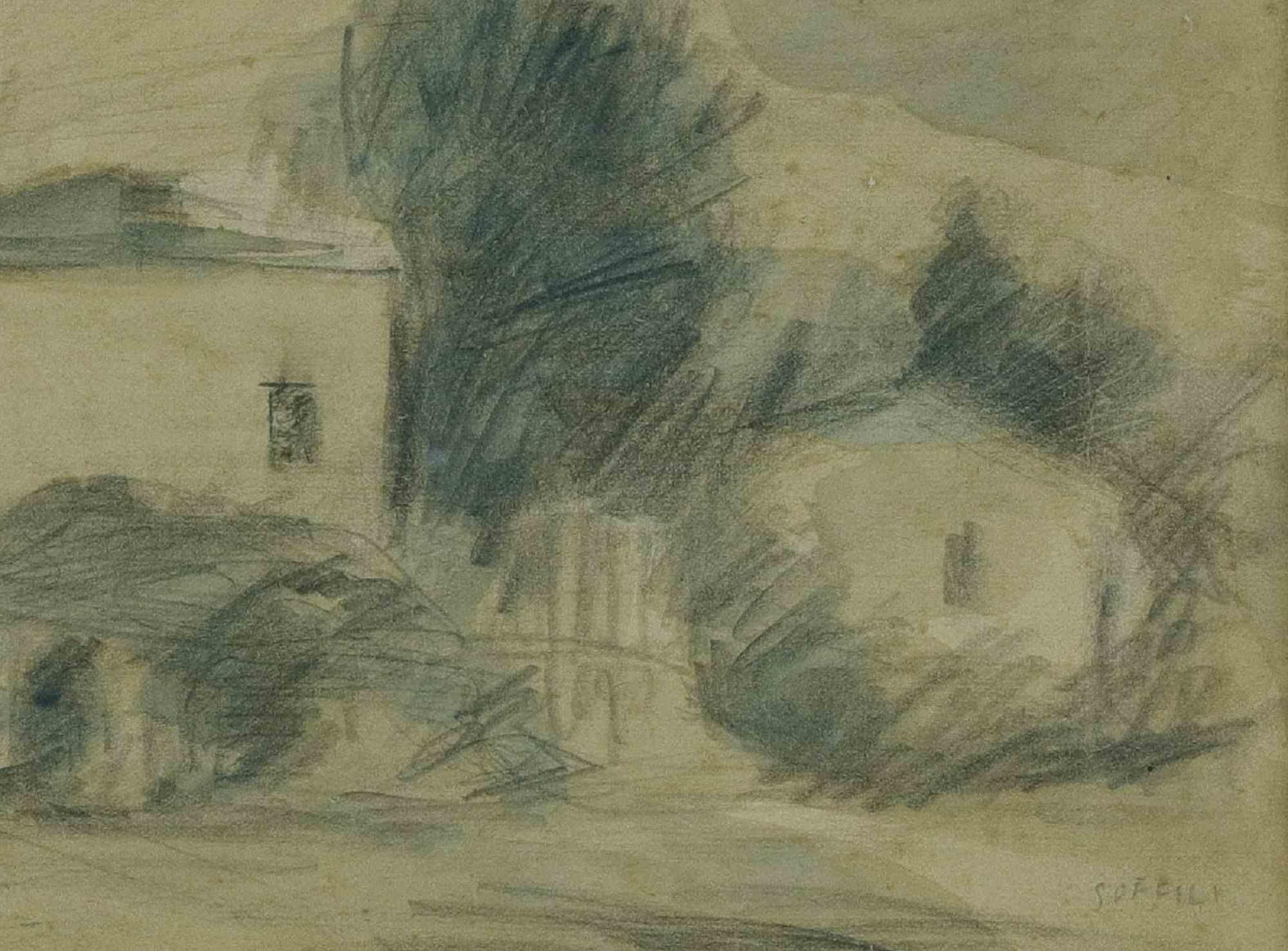
Landscape is an original modern artwork realized by Ardengo Soffici in 1930s.
Pencil on paper.
Hand signed lower right.
Includes frame.
Category
1930s Modern Figurative Drawings and Watercolors
Materials
Pencil, Pastel
Landscape - Painting by Francesco Settimj - 1930s
Located in Roma, IT
Oil on wooden panel realized by Fausta Settimj in the 1930s.
Good condition.
Category
1930s Modern Figurative Paintings
Materials
Oil
Landscape - Oil Painting by Fioravante Seibezzi - Mid-20th Century
By Fioravante Seibezzi
Located in Roma, IT
Landscape is an original modern artwork realized by Fioravante Seibezzi (1906-1975) in the mid-20th century.
Oil painting on board.
Hand signed by the artist on the lower margin.
...
Category
Mid-20th Century Modern Landscape Paintings
Materials
Oil
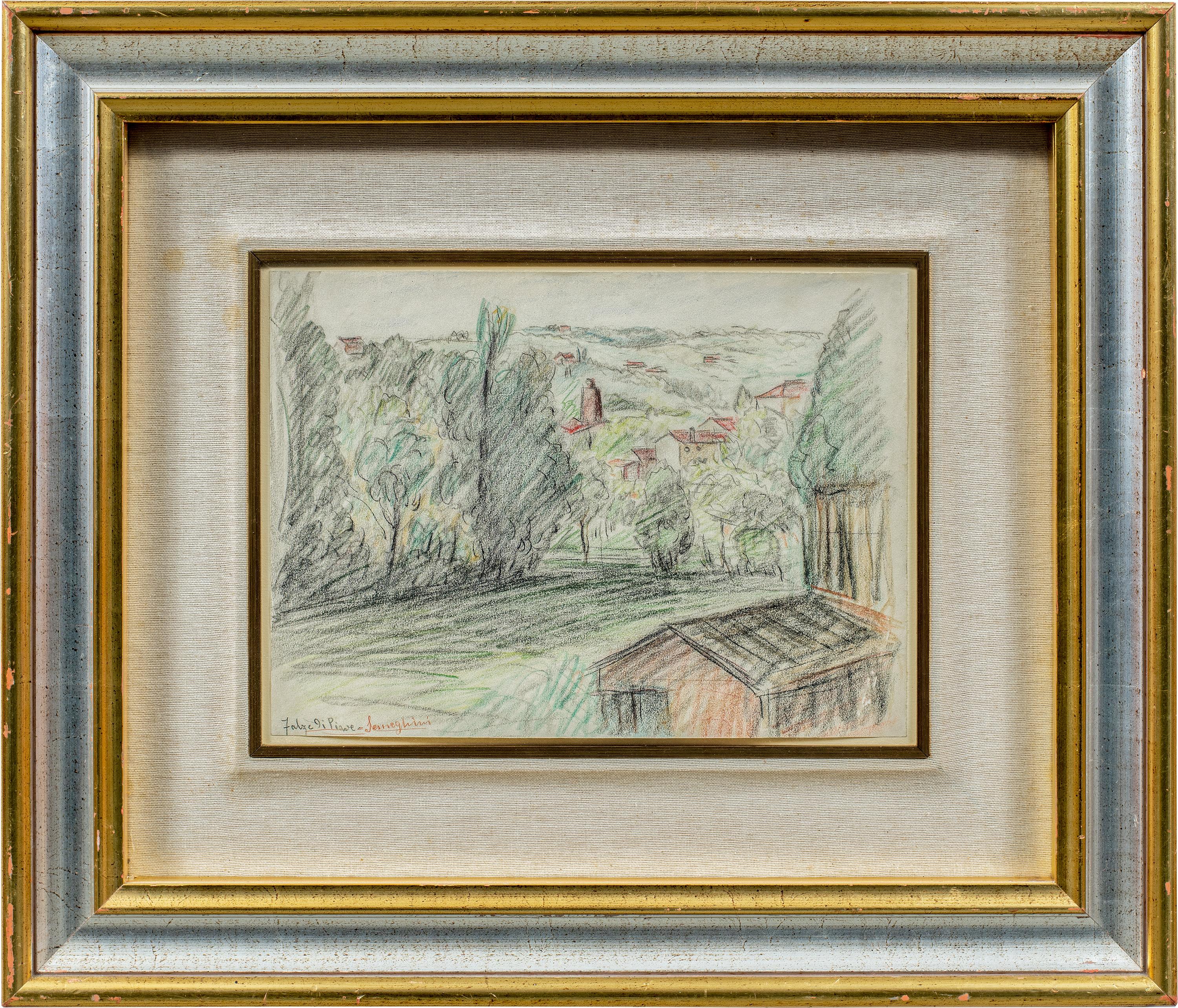
Pio Semeghini (Italian Impressionistic) - Early 20th century landscape painting
Located in Varmo, IT
Pio Semeghini (Quistello 1878 - Verona 1964) - Falzè di Piave.
25.5 x 34.5 cm without frame, 52 x 61 cm with frame.
Charcoal and pastel drawing on paper, within passe-partout in wo...
Category
Early 20th Century Impressionist Landscape Drawings and Watercolors
Materials
Paper, Charcoal, Pastel
Adrian Hill (1895-1977) - Mid 20th Century Oil, Provençal Landscape
Located in Corsham, GB
This landscape painting captures a sweeping vista of rolling French countryside, with a rocky foreground giving way to verdant fields and distant hills. The artist's skillful use of ...
Category
20th Century Landscape Paintings
Materials
Oil