Items Similar to World War II Invades Central Park
Want more images or videos?
Request additional images or videos from the seller
1 of 5
Cecil Crosley BellWorld War II Invades Central Park1943
1943
$18,000
£13,633.33
€15,657.41
CA$25,223.89
A$27,423.45
CHF 14,539.94
MX$328,737.64
NOK 184,795.24
SEK 169,297.56
DKK 117,019.30
About the Item
World War II Invades Central Park, 1943, oil on canvas, signed lower right, 30 x 36 inches, literature: Barton, Phyllis, Cecil C. Bell, McGrew Color Graphics (Kansas City, MO, 1976), pp. 78-79 (illustrated)
Bell's World War II Invades Central Park is among the artist's most significant works from the war years. Painted nine years after The Fleet's In, Bell takes on the same subject matter as Paul Cadmus' notorious painting from the inter-war period. In his evening scene, Bell portrays groups of US sailors carousing at Central Park's pond with a high rise building and the Gapstow Bridge in the background. Author Phyllis Barton further explains the context of this work:
"Exhorted by the Soldier's Handbook that 'while on pass you will be observed by civilians who will judge you by your appearance and conduct as an individual . . .,' every serviceman lived for the day when, bootcamp or tour-of-duty behind him, he would go on leave or liberty. Clutching his pass, which he had signed acknowledging the stern warning on the back, the eager GI or swab-jockey set off to dredge up some action. With the same espirit that holds armies and navies together, the fighting man geared up for his big night . . . . Most wartime Don Juans were merely boastful, but some, like the sailors pictured in Bell's World War II Invades Central Park, returned to their barracks with legitimate memories!"
This painting is a prime example of what New York Times art critic Howard Devree described in 1945 as Bell's ability to capture "with sympathy and insight divergent strains in the symphony or cacophony of New York." "Never clamorous in manner, Bell is persuasive in both color and design," Devree continued, "This is work which should attract both artists and the general public."
Cecil Crosley “Spike” Bell was an American painter, printmaker, and illustrator celebrated for his vivid depictions of urban life and everyday scenes in mid-20th century America. Born on July 15, 1906, in Seattle, Washington, Bell began his artistic career in 1925 at Tacoma Engraving. In 1928, he pursued formal studies in printmaking at the Art Institute of Chicago. In 1930, Bell moved to New York City with his wife, Agatha Lewis, immersing himself in the city’s dynamic art scene. He studied at the Art Students League under notable artists such as John Sloan, Charles Locke, Will Barnet, and Harry Wickey. During this period, he also worked as a commercial artist for Fox Films and continued freelance illustration work.
Bell’s artwork is characterized by its focus on American cityscapes and genre scenes, often portraying ordinary people in everyday situations with rich hues and a humanistic approach. His subjects ranged from bustling urban environments to rural Vermont landscapes and New Jersey beach scenes. In 1936, his growing reputation was solidified when the Whitney Museum of American Art acquired one of his paintings. Throughout his career, Bell exhibited at prestigious institutions, including the Art Institute of Chicago, the Corcoran Gallery in Washington, D.C., the Museum of Modern Art in New York, and the Tacoma Art Museum in Washington. Bell was represented by New York's Kraushaar Galleries which featured Bell in three solo exhibitions in 1945, 1952 and 1959. His works are part of several prominent collections, such as the Whitney Museum of American Art, the National Gallery of Art in Washington, D.C., the Delaware Art Museum, and the Barry Art Museum in Norfolk, Virginia.
Despite facing serious health issues in the mid-1950s, Bell continued to create art, including a six-week period in Mexico in 1961, which marked his only work executed outside the United States. He retired in 1968 and passed away on July 26, 1970, in Rutland, Vermont. After Bell's death, he was honored with a solo retrospective at the Museum of the City of New York entitled The Vanished City: Paintings of New York - 1930 - 1970. This exhibition played an important role in Bell's rediscovery by the art world, after more than a decade of benign neglect. Bell is listed in Who Was Who in American Art and all other standard references.
- Creator:Cecil Crosley Bell (1906 - 1970, American)
- Creation Year:1943
- Dimensions:Height: 30 in (76.2 cm)Width: 36 in (91.44 cm)Depth: 1 in (2.54 cm)
- More Editions Sizes:30 x 36Price: $18,000
- Medium:
- Movement Style:
- Period:
- Condition:
- Gallery Location:Los Angeles, CA
- Reference Number:1stDibs: LU1859216792812
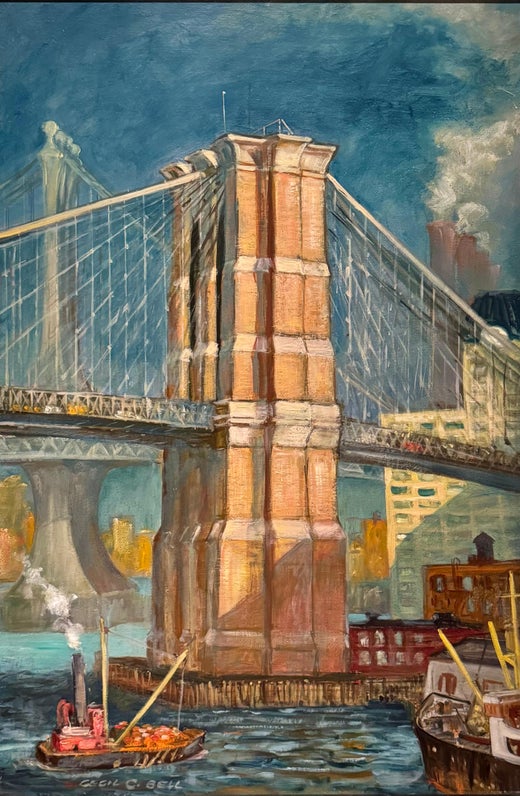
Cecil Crosley Bell
Cecil Crosley Bell was born on July 15, 1906, in Seattle. Bell studied printmaking at the Art Institute of Chicago before moving to New York to study at the Art Students League with John Sloan. Bell remained in New York, eventually settling in Staten Island with his wife. Most of his paintings depict famous locations around New York City. Bell died in New York in 1970. Largely unknown during his lifetime, in 1973 a retrospective of his work was held at The Museum of Modern Art, New York.
About the Seller
5.0
Vetted Professional Seller
Every seller passes strict standards for authenticity and reliability
1stDibs seller since 2022
18 sales on 1stDibs
Typical response time: 2 hours
- ShippingRetrieving quote...Shipping from: Los Angeles, CA
- Return Policy
More From This Seller
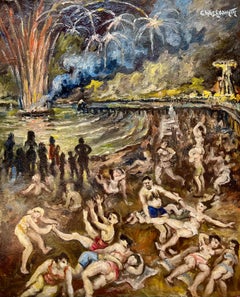
View AllConey Island, Fourth of July
Located in Los Angeles, CA
Coney Island, Fourth of July, c. 1940s, oil on canvas applied to Masonite, signed upper right, 26 x 21 1/2 inches, presented in its original frame
During the 1930s and 40s, Coney I...
Category
1940s American Modern Figurative Paintings
Materials
Canvas, Oil, Board
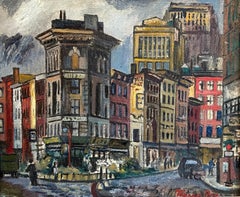
Downtown New York
Located in Los Angeles, CA
Downtown New York, c. 1930s, oil on canvas, signed lower right, 10 x 12 inches; label verso reads: "Harry Dix / Title Downtown New York / Medium Oil"
Harry Dix was a 20th-century p...
Category
1930s American Modern Landscape Paintings
Materials
Canvas, Oil
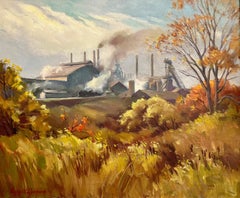
Civilization
Located in Los Angeles, CA
Civilization, c. 1948, oil on canvas, signed lower left, 20 x 24 inches, label verso reads “Eugene M. Dyczkowski / Grand Inland, N. Y. / Civilization,” inscribed verso in the artist’...
Category
1940s American Realist Landscape Paintings
Materials
Canvas, Oil
Six O
Clock
Located in Los Angeles, CA
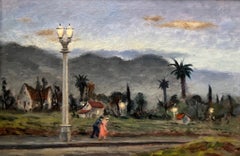
Six O-Clock, c. 1942, oil on canvas, 30 x 20 inches, signed and titled several times verso of frame and stretcher (perhaps by another hand), marked “Rehn” several times on frame (for the Frank K. M. Rehn Galleries in New York City, who represented Craig at the time); Exhibited: 1) 18th Biennial Exhibition of Contemporary American Oil Paintings from March 21 to May 2, 1943 at The Corcoran Gallery of Art in Washington, D.C. #87, original price $450 (per catalog) (exhibition label verso), 2) Craig’s one-man show at the Frank K. M. Rehn Galleries, New York City, from October 26 to November 14, 1942, #10 (original price listed as $350); and 3) Exhibition of thirty paintings sponsored by the Harrisburg Art Association at the State Museum of Pennsylvania in Harrisburg in March, 1944 (concerning this exhibit, Penelope Redd of The Evening News (Harrisburg, Pennsylvania) wrote: “Other paintings that have overtones of superrealism inherent in the subjects include Tom Craig’s California nocturne, ‘Six O’Clock,’ two figures moving through the twilight . . . .” March 6, 1944, p. 13); another label verso from The Museum of Art of Toledo (Ohio): original frame: Provenance includes George Stern Gallery, Los Angeles, CA
About the Painting
Long before Chris Burden’s iconic installation outside of the Los Angeles County Museum of Art, Urban Light, another artist, Tom Craig, made Southern California streetlights the subject of one of his early 1940s paintings. Consisting of dozens of recycled streetlights from the 1920s and 1930s forming a classical colonnade at the museum’s entrance, Burden’s Urban Light has become a symbol of Los Angeles. For Burden, the streetlights represent what constitutes an advanced society, something “safe after dark and beautiful to behold.” It seems that Craig is playing on the same theme in Six O-Clock. Although we see two hunched figures trudging along the sidewalk at the end of a long day, the real stars of this painting are the streetlights which brighten the twilight and silhouette another iconic symbol of Los Angeles, the palm trees in the distance. Mountains in the background and the distant view of a suburban neighborhood join the streetlights and palm trees as classic subject matter for a California Scene painting, but Craig gives us a twist by depicting the scene not as a sun-drenched natural expanse. Rather, Craig uses thin layers of oil paint, mimicking the watercolor technique for which he is most famous, to show us the twinkling beauty of manmade light and the safety it affords. Although Southern California is a land of natural wonders, the interventions of humanity are already everywhere in Los Angeles and as one critic noted, the resulting painting has an air of “superrealism.”
About the Artist
Thomas Theodore Craig was a well-known fixture in the Southern California art scene. He was born in Upland California. Craig graduated with a degree in botany from Pomona College and studied painting at Pamona and the Chouinard Art School with Stanton MacDonald-Wright and Barse Miller among others. He became close friends with fellow artist Milford Zornes...
Category
1940s American Modern Landscape Paintings
Materials
Canvas, Oil
$12,500
Lake Street
Located in Los Angeles, CA
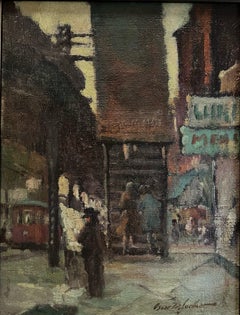
Lake Street, c. 1920 -30s, oil on board, 12 x 9 inches, signed lower right and verso, titled verso
About the Painting
At the center of Oscar Daniel Soellner’s Lake Street, we see the stairway leading to an elevated railway station on what is now Chicago’s Green Line route. When its first section opened in 1893 as the second permanent elevated rapid transit line in Chicago, this route was known as the Lake Street Elevated Railroad. Chicago’s “L,” like the New York subway and rapid transit system, played an instrumental role in the development of the urban economy and the overall look and feel of the city. The formal aspects of urban railroads and the role they played in efficiently moving large number of everyday citizens across America’s growing metropolises were catnip for many American Scene painters during the first half of the 20th Century. Here, Soellner uses the techniques of the impressionists and the palette of the Ash Can School, to convincingly depict a classic Chicago scene...
Category
1920s American Impressionist Landscape Paintings
Materials
Oil
Moonlight Shanties
Located in Los Angeles, CA
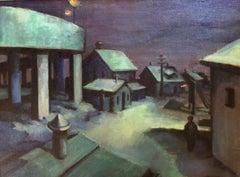
Moonlight Shanties, c. 1940s, oil on canvas, 24 x 18 inches, signed lower right, signed and titled verso
About the Painting
In Moonlight Shanties, Joachim depicts a lower-class neighborhood sitting along-side an elevated road or railway which crowds out the small nearby houses and structures. Joachim’s use of an expressionist palette and gestural brushstrokes together with the isolated figures obscured in the shadows, create a feeling of unease, isolation and even loneliness. From the 1920s through 1940s, American artists commonly employed expressionist conventions in their social realist works which portrayed the gritty side of urban America, especially the communities of the city-dwelling poor. Expressionist styles were considered appropriate for bridging the gap between the modernist idea of art-for-art’s-sake and the narrative qualities demanded by the dual crises of the Great Depression and World War II. Moonlight Shanties successfully uses these expressionist methods to portray a neighborhood and its people who appear to be literally and figuratively “on the edge.”
About the Artist
Paul Lamar Joachim...
Category
1940s American Modern Landscape Paintings
Materials
Oil
You May Also Like
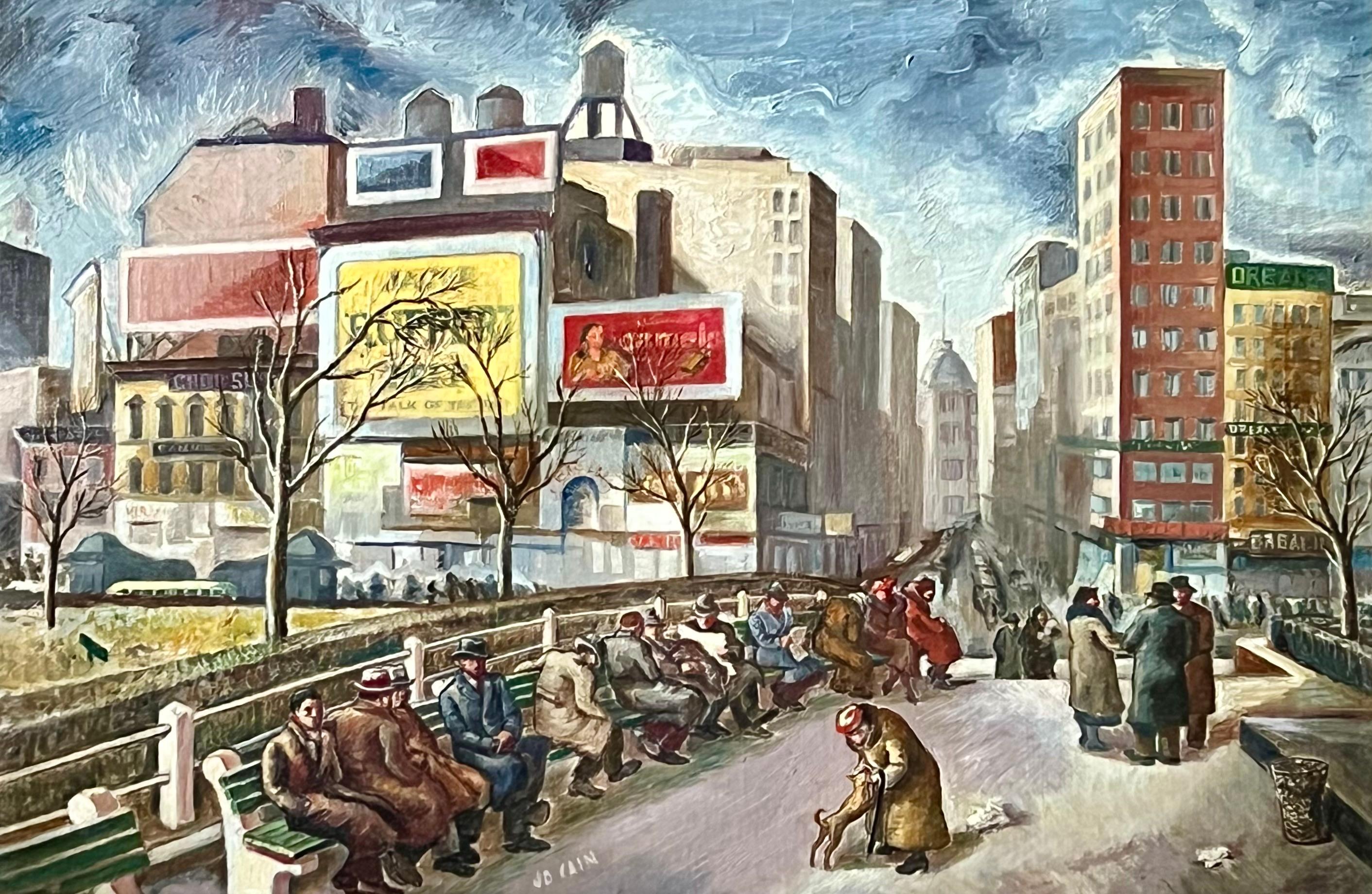
UNION SQUARE Depression Era Oil Painting WPA Realism American Scene Realism NYC
By Jo Cain
Located in New York, NY
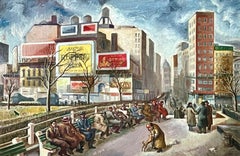
UNION SQUARE Depression Era Oil Painting WPA Realism American Scene Realism NYC
Jo Cain (1904 – 2003)
"Union Square"
24 x 36 inches
Oil on canvas, c.1940s
S...
Category
1940s American Realist Figurative Paintings
Materials
Canvas, Oil
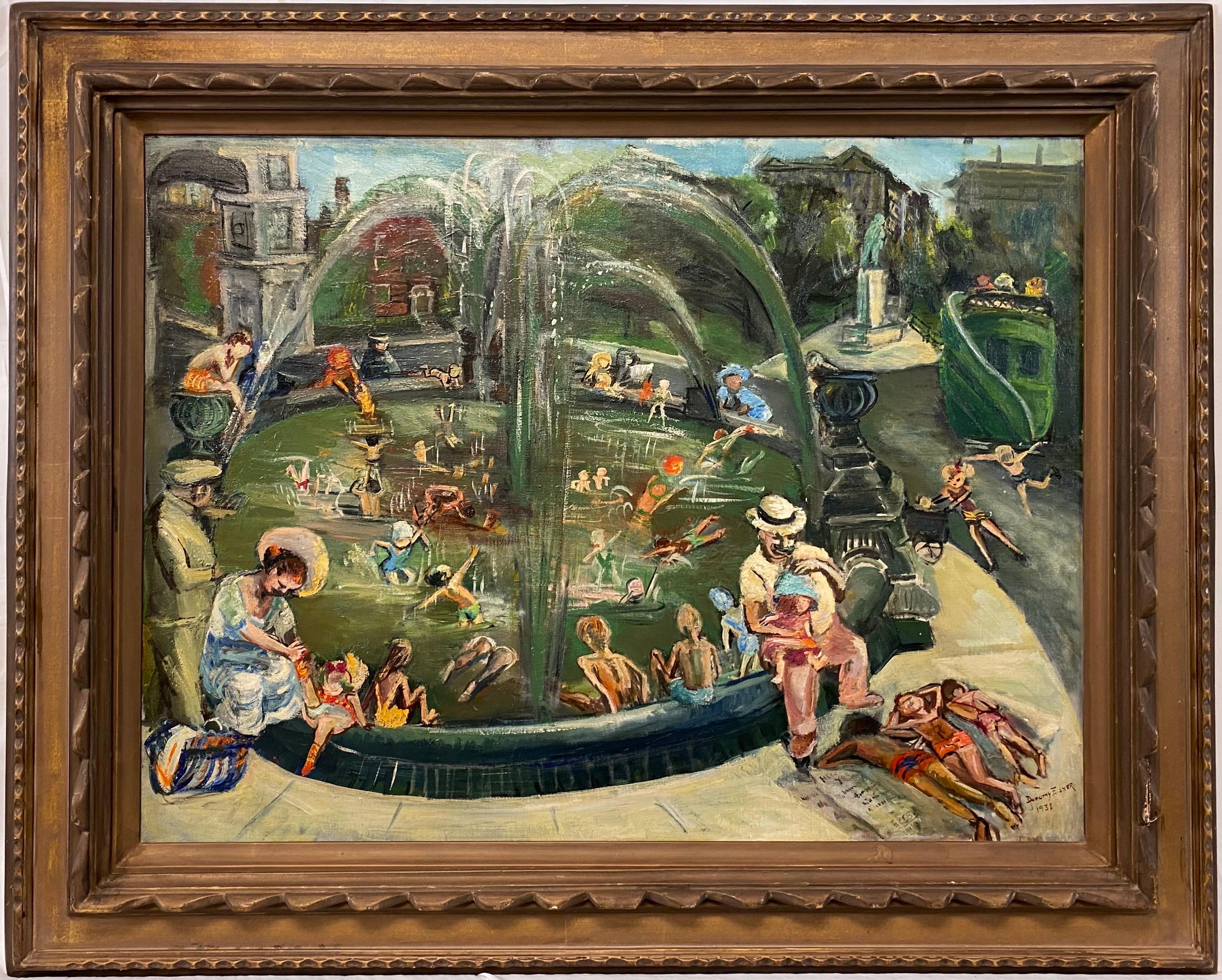
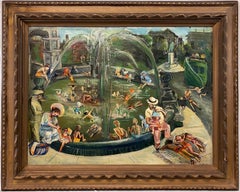
“Washington Square Park, 1938” NYC Social Realism Female American Artist Oil
By Dorothy Eisner
Located in Yardley, PA
An exceptional, large, early work by American artist Dorothy Eisner (1906-1984).
This painting was recently exhibited at Gracie Mansion in 2019 as part of “She Persists” - a show de...
Category
1930s American Modern Figurative Paintings
Materials
Canvas, Oil
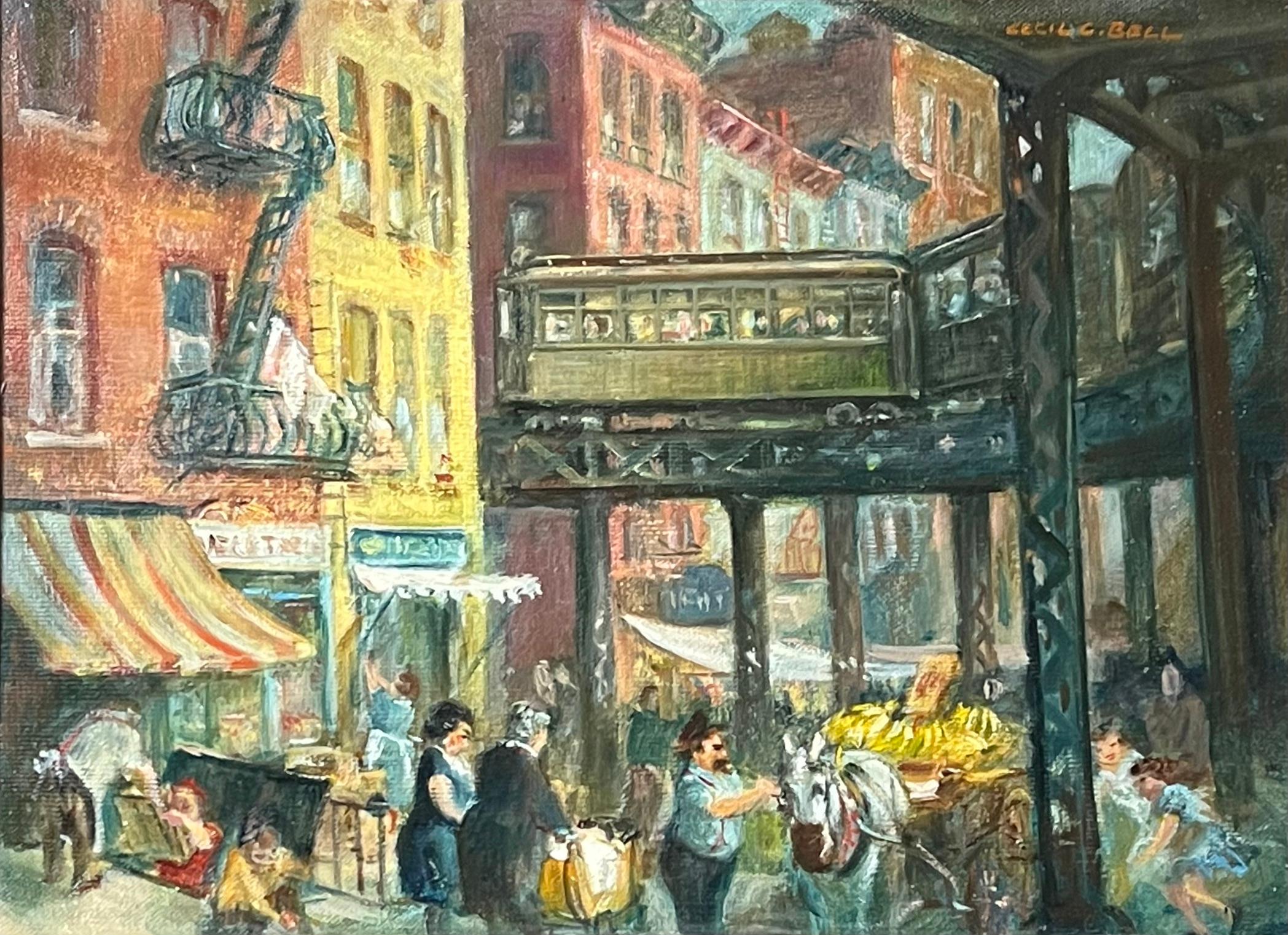
NYC EL American Scene Social Realism Mid 20th Century Modern WPA Era Figurative
By Cecil Crosley Bell
Located in New York, NY
NYC EL American Scene Social Realism Mid 20th Century Modern WPA Era Figurative
Cecil Bell (1906 – 1970)
Street Life Under the EL
22 x 30 inches
Oil on canvas, c. 1930s
Signed upper...
Category
1930s American Realist Landscape Paintings
Materials
Canvas, Oil
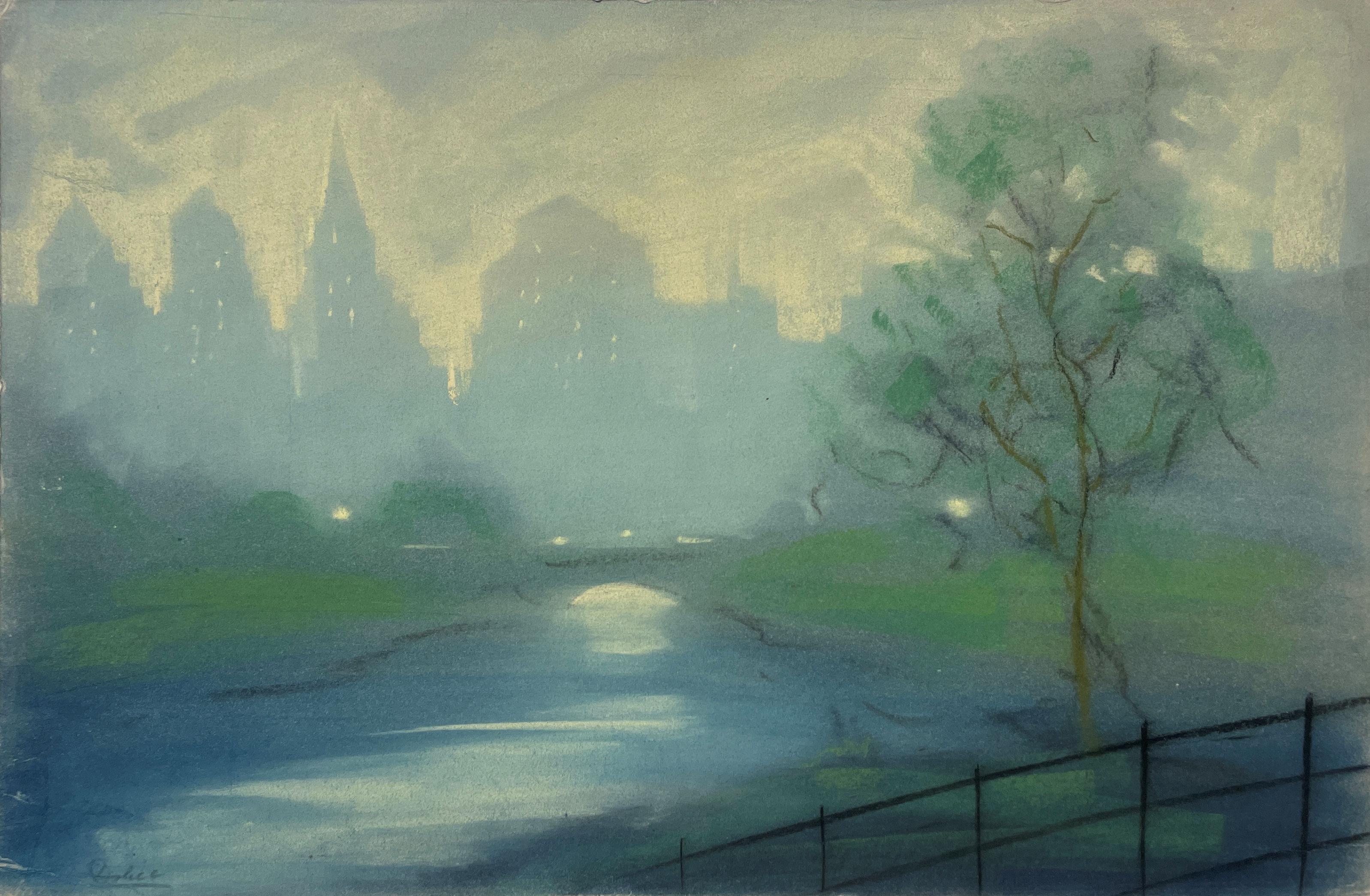
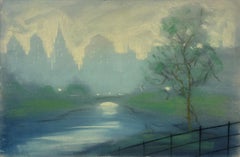
"Central Park" Leon Dolice, New York Central Park Scene, Mid-Century
By Leon Dolice
Located in New York, NY
Leon Dolice
Central Park
Signed lower left
Watercolor on paper
12 x 19 inches
The romantic backdrop of Vienna at the turn of the century had a life-long influence upon the young ma...
Category
1930s American Modern Figurative Drawings and Watercolors
Materials
Paper, Pastel
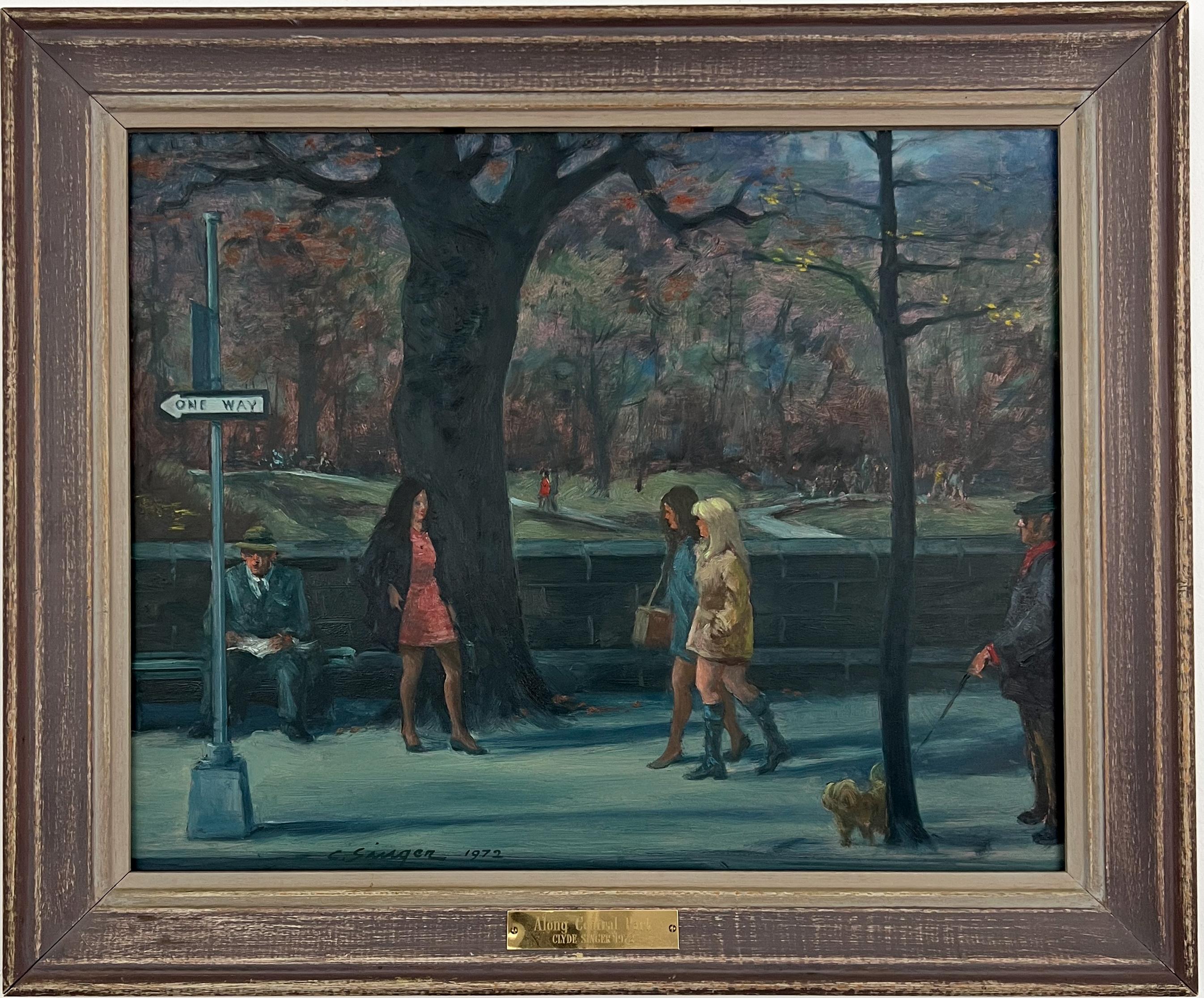
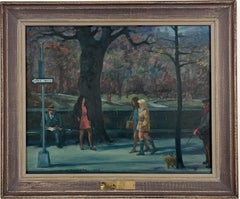
Along Central Park. New York City Street Scene Original Oil Painting.
Located in Marco Island, FL
New York City scene of two women walking down a sidewalk with a park in the background, in the foreground a man is walking a small dog. American life is captured in this Clyde Sing...
Category
1970s American Realist Landscape Paintings
Materials
Masonite, Oil
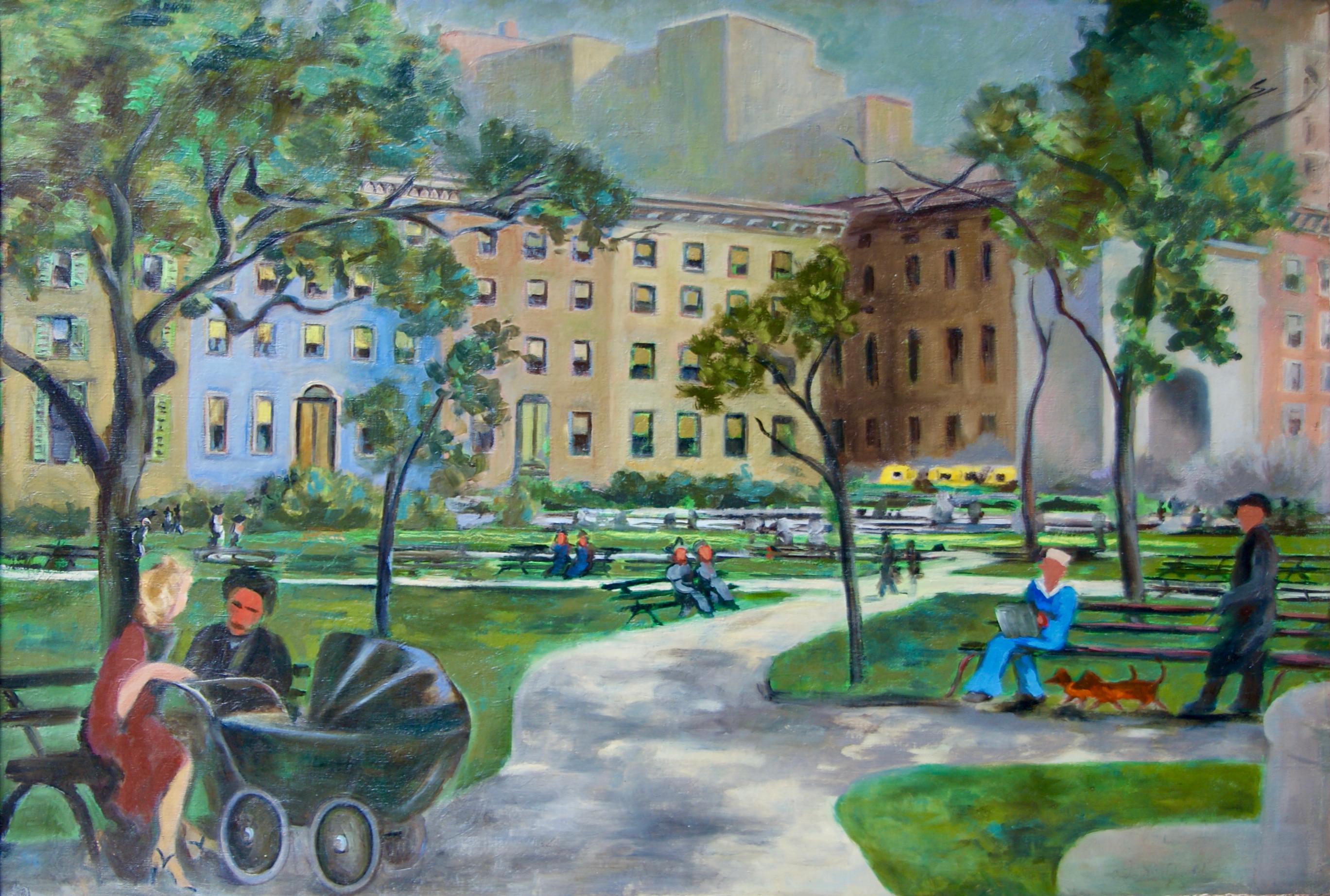
"War Brides, Wash Sq NYC" American Scene WWII Modernism WPA Mid-Century Oil
By Georgina Klitgaard
Located in New York, NY
"War Brides, Wash Sq NYC" American Scene WWII Modernism WPA Mid-Century Oil. 30 x 40 inches. Oil on canvas, c. 1942. Signed lower right. Titled on the stretcher. Housed in a sensational Heydenryk frame.
Our gallery, Helicline Fine Art...
Category
1940s American Modern Landscape Paintings
Materials
Canvas, Oil