Items Similar to North Atlantic Coast
Want more images or videos?
Request additional images or videos from the seller
1 of 8
Charles Bridgeman VickeryNorth Atlantic Coast
$7,200
£5,485
€6,325.05
CA$10,198.97
A$10,951.15
CHF 5,892.61
MX$129,596.10
NOK 74,236.09
SEK 67,707.46
DKK 47,259.34
About the Item
Charles Bridgeman Vickery
American, 1913-1998
North Atlantic Coast
Oil on canvas
24 ¼ by 30 in, w/ frame 33 by 39 in
Signed lower left
Inventory Number: 01650
Charles Vickery, known for his ability to paint water, lived in the Midwest town of Western Springs, a town without water. Vickery was born in the Southwestern town of Hinsdale, Illinois in 1913, and as a child, moved to White Bear Lake, Minnesota. His skills and potential as an artist were noticed early on. Vickery continued to develop his young talent, at an early age. Vickery returned to the small southwestern town to attend high school. A graduate from Lyons Township High school in LaGrange Illinois, many of his accomplished works now hang in their meeting rooms, considered too valuable to be on display to the general public. Vickery went on to study art at the Art Institute of Chicago, and the American Academy of Fine Art. He often said that his greatest instructor was Lake Michigan. Vickery sketched and painted at the Chicago lakefront, Indiana Dunes, Oak Brook [Graw Mill], and along the Eastern seaboard among others.
Although he maintained a private life, with few close friends, he was never without being the consummate art teacher. Always inspiring the art curious student, he remained an eager instructor. And, Vickery delighted us with a rare sense of humor throughout his life, even sketching on parking tickets.
There was an intensely serious side to him as well. Vickery was intent on capturing the very elements that fundamentally provide the contextual purpose of the piece. Vickery focused strongly on the elements of nature. The sun, wind, light and water: each contributing to overall thematic justification of the piece; he mastered each in turn. This passion to unlock the relationship in the elements found him sleeping in lakefront tents, traveling aboard a freighter to Turkey, and weekly visits to Lake Michigan. Living so far inland, in Western Springs Illinois; a landlocked small suburban town in the heartland of the United States, Vickery made each visit to water a rededication of his deep connection.
Vickery’s understanding of elemental relationships went far beyond those of his inspirations. Vickery referred to his inspirations as the “Old pros” Winslow Homer, Montague Dawson, and Fredrick Waugh. They were the first artists to transition out of the “Brown gravy school” of painting. That’s what Vickery referred to 19th century marine painting; the works that painted water of one color and lacking in depth. Vickery’s inspirations “broke the tyranny” conveying color and depth in their work. Although Vickery set out to learn their technique; studying their use of color, he later ultimately surpassed them.
To this regard, the painting of a ship on the sea is not a painting of a ship on the sea. What we are experiencing is the contextual relationship of the ship against, in response to, the elements. Should there be a port, we notice the people or the lack of them; only by capturing the elements surrounding the image can we discern the time of day and emotionally find justification in the context of the composition. In other words, it is what is unseen that Vickery captures that makes us feel the way we do about what is seen. This brings to mind a quote by Andre Gide, “Art is a collaboration between God and the artist, and the less the artist does the better.” Surely this rings true with what Vickery ‘captures’ for us, the viewer does not see the wind, Vickery captures its effect. “The wind can create sudden drama” stated Vickery. We noticed the sky, but Vickery understood, teaching us “The rougher the water gets the more independent the sky becomes”. Vickery knew that ocean water behaves differently than lake water; we don’t see “wrong” water in his paintings, or paintings of water with a boat or ship ‘pinned’ on them.
Painting:
Vickery felt that painting nature needed to be done by working directly with it, he said, “Going to the source” was required. Photographs give a false interpretation as to how the eye sees light. A photo often makes the dark areas of water appear flat; without depth. And, bright areas become equally uninteresting, visually. The artist develops an intimate relationship between self-understanding and the subject matter as they go to the source.
Vickery often commented, saying about the relationship between light and water, that the light would hit the moving water and refract accordingly. And that much of the color of the sky would influence the color of the water. He realized the limitations of paint when considering the range of light, and became excited about the creative possibilities; pushing paint further, and grateful for developing even greater theoretical knowledge.
The business side of the artist:
Vickery opened his first shop in Western Springs in 1937. Born in 1913, he was 24 years old. Not too bad even by today’s standards. The Great Depression triggered in 1929 by the stock market crash made it understandable that he subsidized his shop income with money from working factory jobs and even as a surveyors assistant. Times were tough; sometimes Vickery traded art for food, or sold works cheaply. Somewhere along the way he worked for a mirror company. There he painted works and signed them under the assumed name “Reynolds”. In the 1940s and early 1950s Vickery did a number of church murals, and religious paintings before returning to marine painting. The hard times would eventually change for his belief and conviction in the pursuit of art as a successful business ultimately won out. In 1951 noted art critic Eleanor Jewitt, of the Chicago Tribune, recognized his ability, remarking that he was “one of the great painters of this age” even going as far as to call him a bright Homer. Vickery maintained membership with the Oil Painters of America and the American Society of Marine Artists.
- Creator:Charles Bridgeman Vickery (1913 - 1998)
- Dimensions:Height: 33 in (83.82 cm)Width: 39 in (99.06 cm)
- Medium:
- Movement Style:
- Period:
- Condition:
- Gallery Location:Sheffield, MA
- Reference Number:Seller: 016501stDibs: LU700317499162
About the Seller
4.3
Vetted Professional Seller
Every seller passes strict standards for authenticity and reliability
1stDibs seller since 2017
57 sales on 1stDibs
Typical response time: 23 hours
- ShippingRetrieving quote...Shipping from: Burlingame, CA
- Return Policy
More From This Seller
View AllWilliamstown Landscape
Located in Sheffield, MA
Charles Foster
American, 1850-1931
Cloudy Sky Over Pasture
Oil on canvas
14 by 22 in, w/ frame 23 ½ by 31 ½ in
Signed lower right, dated 1890
Inventory Number: 01900
Charles Foste...
Category
Late 19th Century American Realist Landscape Paintings
Materials
Canvas, Oil
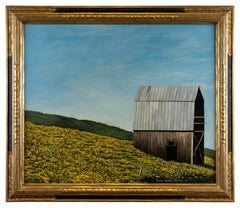
Barn, New Hampshire
Located in Sheffield, MA
Bruce Barton Penney
American, born 1929
Barn on a Hill
Oil on board
25 by 30 in, w/ frame 30 ¼ by 35 in
Signed lower right, dated 64
Born Laconia, New Hampshire. Addresses: Kennebu...
Category
Mid-20th Century American Realist Landscape Paintings
Materials
Oil, Board
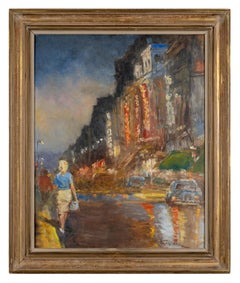
Night In the City
By Pal Fried
Located in Sheffield, MA
Pal Fried
Hungarian-American, 1893-1976
Night In the City
Oil on canvas
30 X 24 in. w/ frame 36 ¼ X 30 ¼ in.
Signed "Fried Pal" lower right
Pal was born in Budapest and studied at ...
Category
Mid-20th Century American Modern Landscape Paintings
Materials
Canvas, Oil
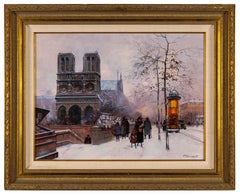
Notre Dame, Paris
By Paul Renard
Located in Sheffield, MA
Paul Renard
French, 1941-1997
Winter in Paris
Oil on canvas
18 by 24 in, w/ frame 25 ⅛ by 31 ¼ in
Signed "P. Renard" lower right
The art of Paul Renard, who was born in 1941, can b...
Category
20th Century Impressionist Landscape Paintings
Materials
Canvas, Oil
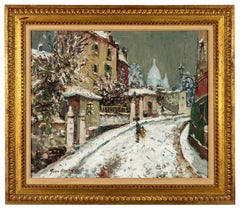
Paris in the Snow
By Merio Ameglio, 1897-1970
Located in Sheffield, MA
Merio Ameglio
Italian, 1897-1970
Paris in the Snow
Oil on canvas
18 ¼ by 21 ⅝ in, w/ frame 23 ¼ by 26 ¾ in
Signed "Merio Ameglio" lower left
Merio noted impressionist painter prima...
Category
Early 19th Century Impressionist Landscape Paintings
Materials
Canvas, Oil
River in Autumn
By Louis Aston Knight
Located in Sheffield, MA
Louis Aston Knight
New York/California/France, 1873-1948
River in Autumn
Oil on canvas
10 ½ by 13 ¾ in, w/ frame 19 ⅜ by 22 ½ in
Signed "Aston Knight" lower right
In 1873, Louis As...
Category
Early 20th Century Impressionist Landscape Paintings
Materials
Canvas, Oil
You May Also Like
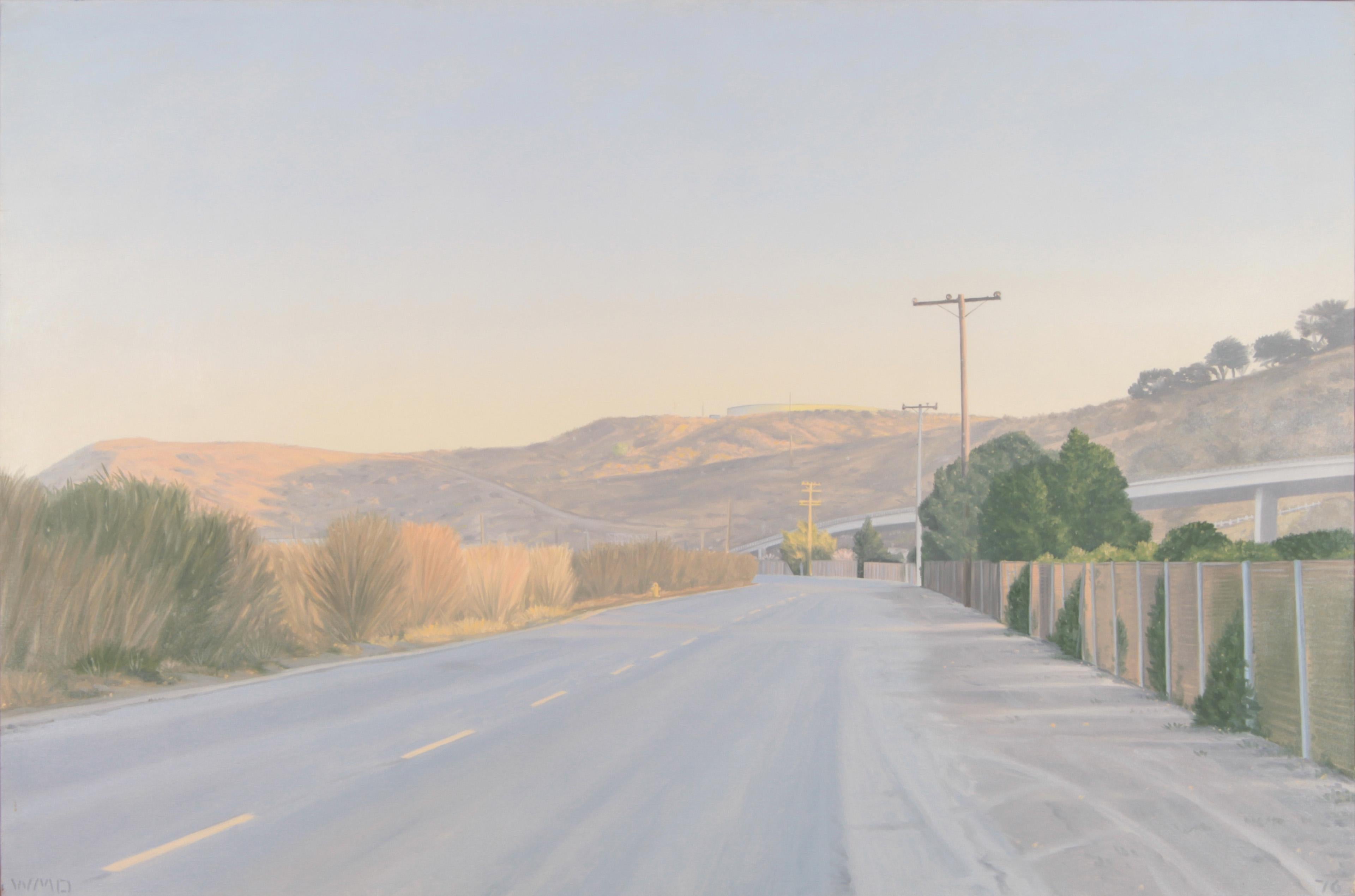
Willard Dixon
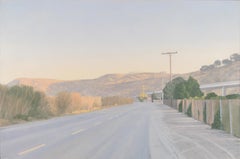
Near San Quentin
Contemporary Realism Landscape Painting
By Willard Dixon
Located in San Rafael, CA
Willard Dixon (American, born 1942)
Near San Quentin, 1976
Oil on Canvas
Signed lower left
Dated lower right
41in H x 62in W
In a natural float frame: 42....
Category
Late 20th Century American Realist Landscape Paintings
Materials
Canvas, Oil
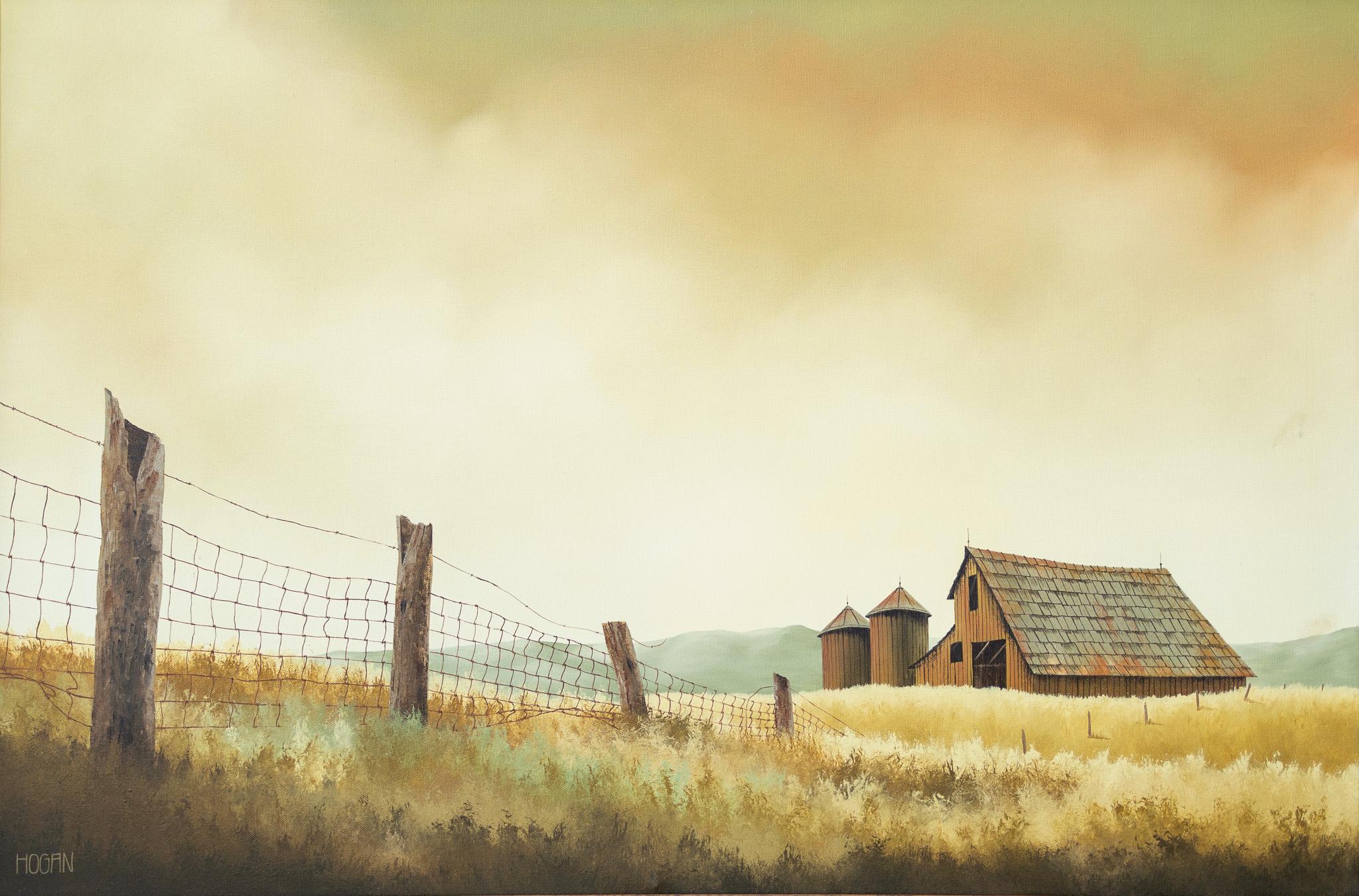
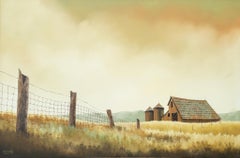
American Realist Western Prairie Farm Landscape Painting with Barn and Silos
Located in Austin, TX
Signature "Hogan"
24" x 36"
Oil on Canvas
Framed Size: 31.5" x 43.25"
This landscape painting depicts a nostalgic Great Depression era farm scene of a barn and silos on a prairie.
Category
20th Century American Realist Landscape Paintings
Materials
Canvas, Oil
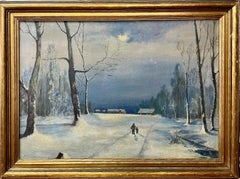
“Walking Among the Trees” A Winter Scene in Blue, Gray
White
Located in San Francisco, CA
Out for a breath of fresh air late on a wintery day, this adult and child are walking in a world of wonder in this painting. Crunching on the ice covering the shoveled pathway, the p...
Category
Mid-20th Century American Realist Landscape Paintings
Materials
Canvas, Oil
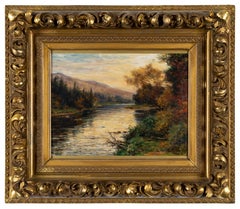
Antique American Autumn Mountain Lake with Village Oil Painting
Located in Buffalo, NY
Antique American autumn mountain lake with village oil painting. Framed. Oil on canvas.
Category
Late 19th Century American Realist Landscape Paintings
Materials
Canvas, Oil
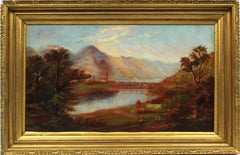
$1,191 Sale Price
20% Off
American School River Landscape
Located in Astoria, NY
American School, River Landscape Scene, Oil on Canvas, signed "Th. Haywood" lower right, giltwood frame. Image: 8.75" H x 15.5" W; frame: 12.5" H x 19.5" W.
Category
Late 19th Century American Realist Landscape Paintings
Materials
Canvas, Oil
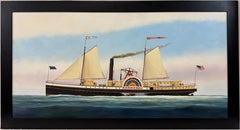
“Kennebec” Ship Portrait Sidewheeler Steamboat Paddle Steamer Oil on Canvas
Located in Yardley, PA
A striking and historically attentive portrait of the sidewheel steamer Kennebec, built in 1842. Rendered in crisp profile against a soft, painterly sky and calm Atlantic swells, Cameron’s portrait captures the stately elegance of early American steam navigation.
The Kennebec, identified in bold red lettering on her paddle box, is shown under partial sail with twin smokestacks active - suggesting both the hybrid nature of early steam propulsion and the vessel’s readiness for sea. Flying period flags, including a U.S. ensign and company pennants, she presents as a proud representative of the Sanford Steamship Line, for whom she plied the route between Boston, Bangor, and the summer resorts of Maine. Her design, with a wood hull, 230-foot length, and distinctive “hogging truss,” speaks to mid-19th century innovation tailored to coastwise packets.
Cameron’s style is reminiscent of 19th-century ship portraiture yet refined with contemporary technical precision. This is an excellent example of his work.
This work is oil on canvas and is signed in the lower right. It is housed in its original black frame and retains the artist’s description of the ship on the reverse.
Size:
22 inches tall by 44 inches wide (painting)
26 inches tall by 48 inches wide by 1 inch deep (frame)
Provenance:
Private collection;
Acquired from the above
About the artist:
A Delaware artist, Scott Cameron paints the simple elegance of the America’s Cup races, serene coastal marsh scenes, timeless landscape vistas and historic steamboats in a style reminiscent of the era in which they reigned.
An admirer of Andrew Wyeth and the Brandywine School of painters, Scott has combined the detail and quiet stillness of that School in his landscapes with the Luminist School’s sense of light glowing from within. A soft gentle atmosphere seems to fall over each scene adding to the peacefulness of the setting, and a sense of a time gone by. His America’s Cup scenes capture the action at a moment in time, allowing the beauty of the wind-filled sails to become the central design element of each painting.
Scott Cameron has exhibited his oil paintings in numerous national and regional shows from the Mystic Seaport Museum to solo and group shows in some of the foremost galleries throughout the Northeast and Mid-Atlantic states.
Favorite painting locations are the waterways and coastal inlets of Martha’s Vineyard and Maryland’s Eastern Shore and the gentle rolling landscapes of rural Pennsylvania, Delaware and Maryland. Meticulous research is behind every historic steamboat and America’s Cup painting...
Category
Late 20th Century American Realist Figurative Paintings
Materials
Canvas, Oil