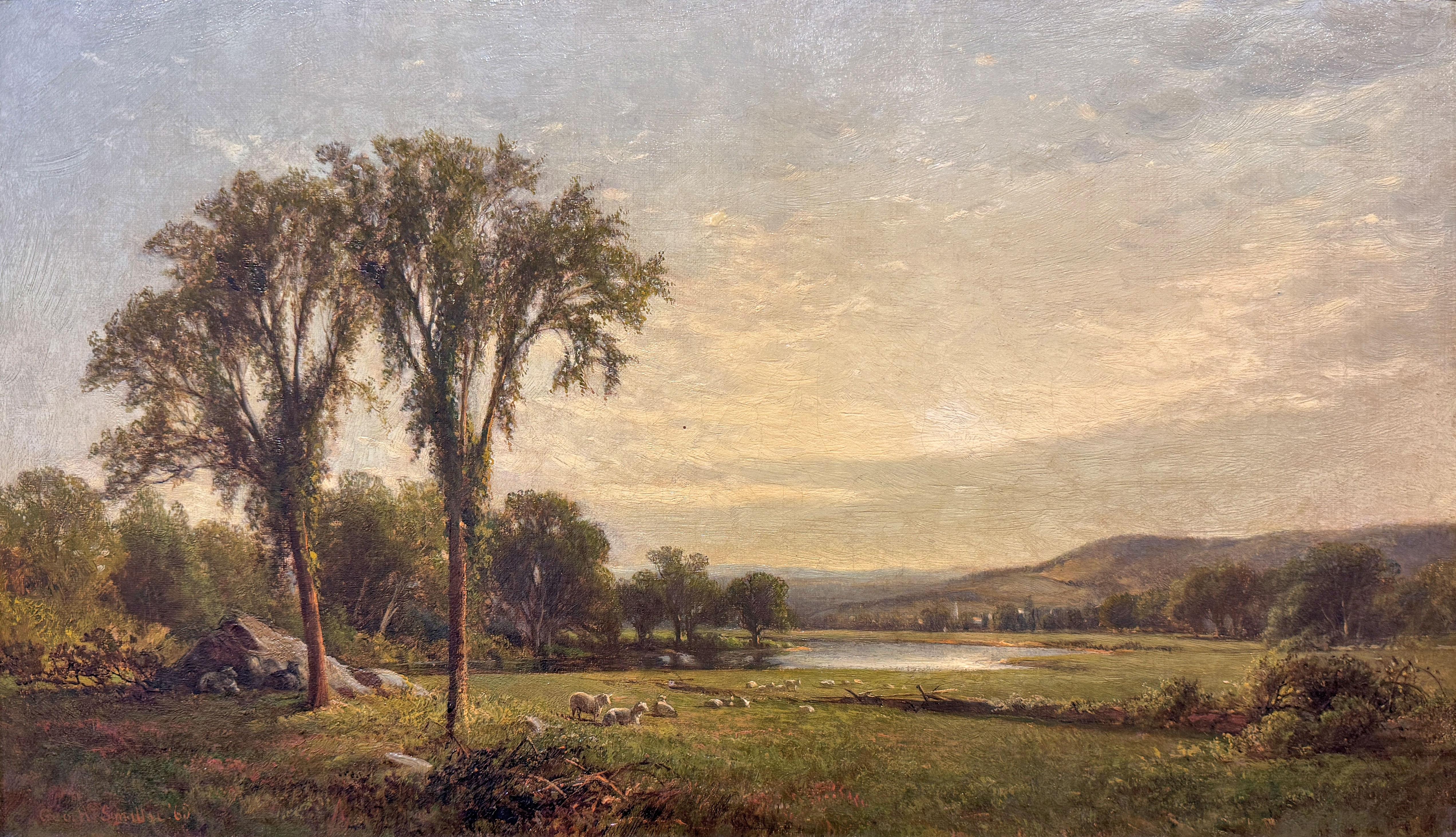
Items Similar to "Twilight, Mianus, Connecticut, " Charles Courtney Curran, Greenwich Landscape
Want more images or videos?
Request additional images or videos from the seller
1 of 8
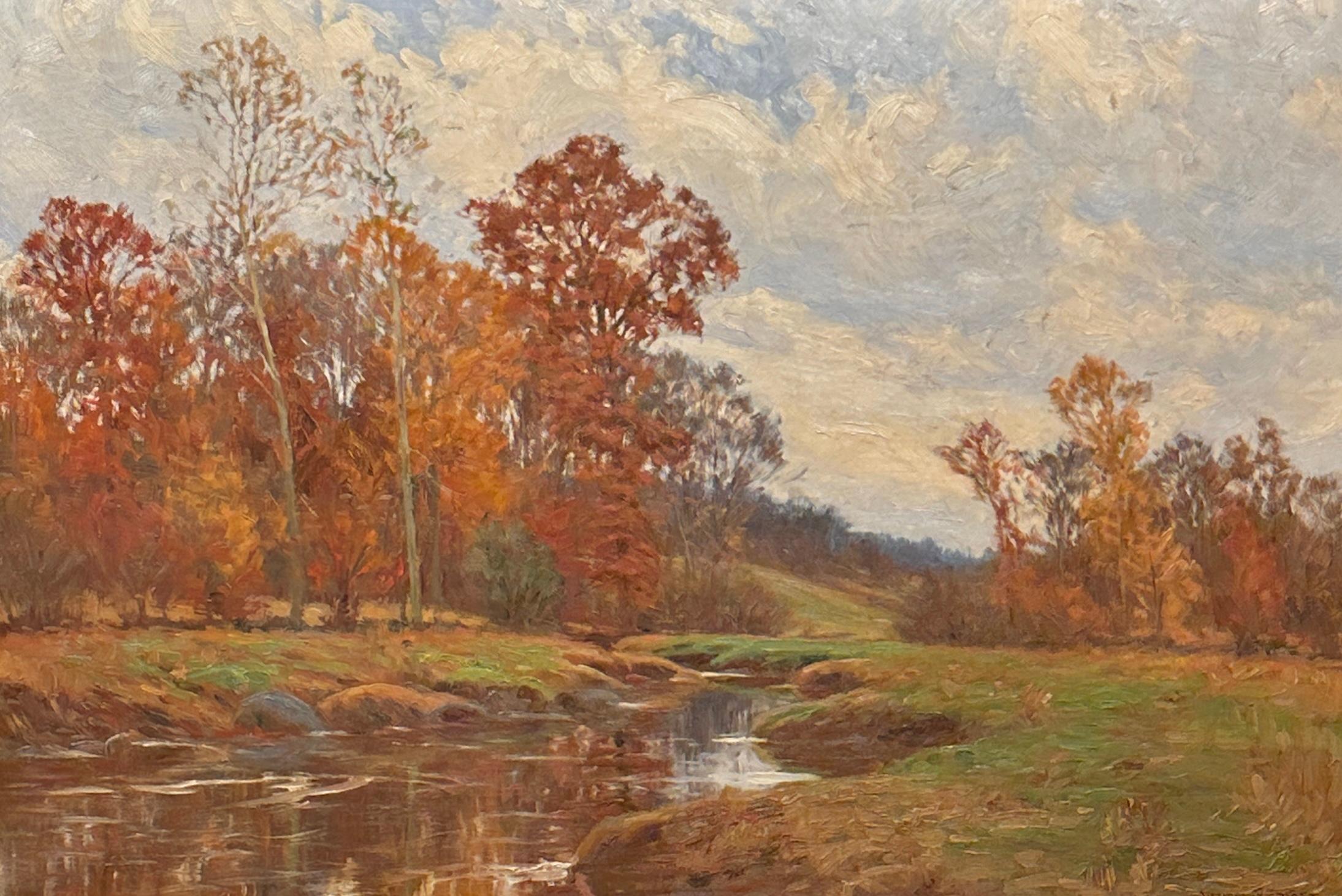
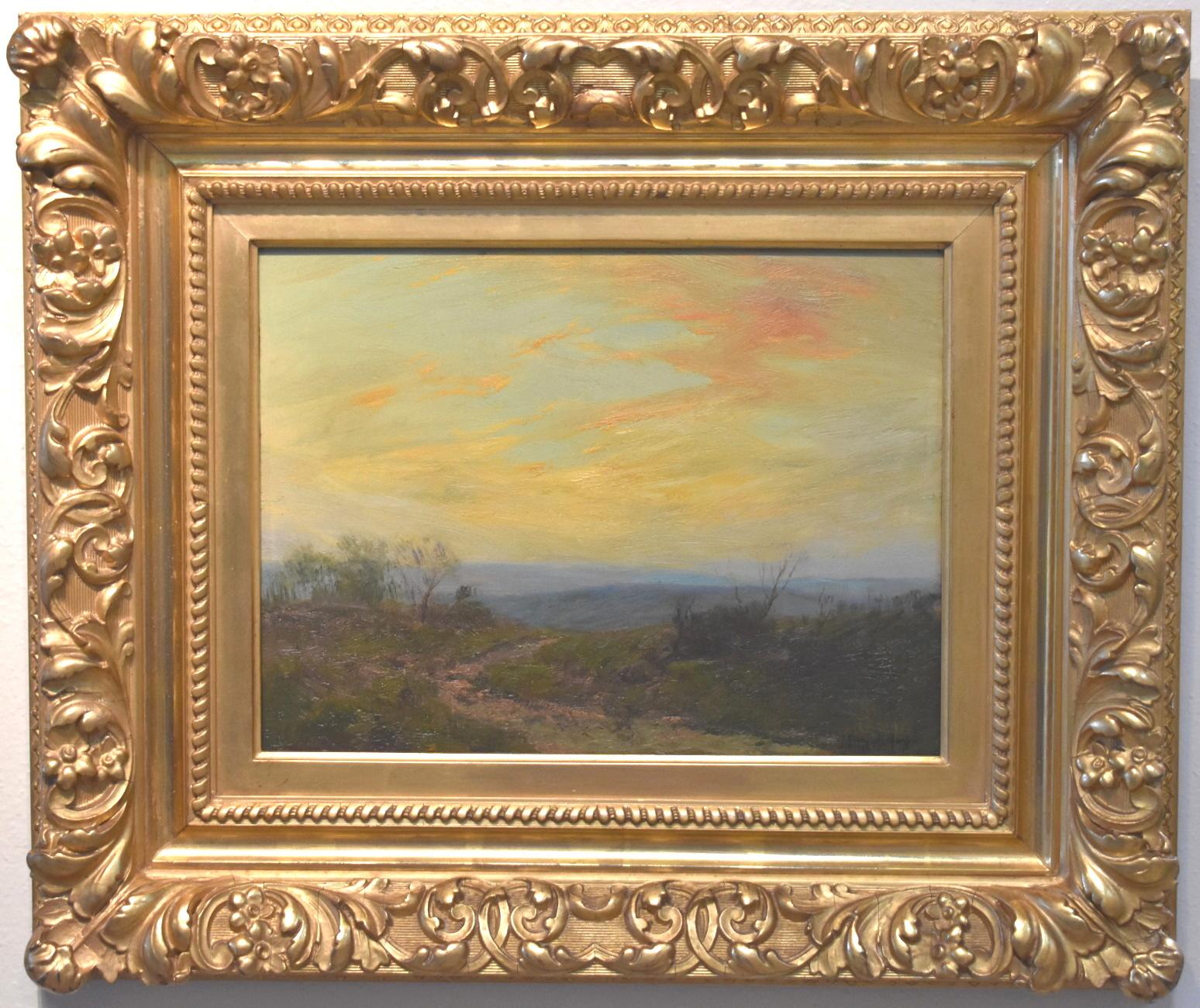
Charles Courtney Curran"Twilight, Mianus, Connecticut, " Charles Courtney Curran, Greenwich Landscape1892
1892
$24,000
$30,00020% Off
£18,293.22
£22,866.5220% Off
€21,099.31
€26,374.1420% Off
CA$34,087.18
CA$42,608.9720% Off
A$36,630.26
A$45,787.8220% Off
CHF 19,654.26
CHF 24,567.8220% Off
MX$431,482.03
MX$539,352.5420% Off
NOK 247,130.50
NOK 308,913.1220% Off
SEK 225,752.11
SEK 282,190.1420% Off
DKK 157,687.92
DKK 197,109.9020% Off
About the Item
Charles Courtney Curran (1861 - 1942)
Twilight, Mianus, Connecticut, 1892
Oil on canvas
18 x 32 inches
Signed titled, and dated lower left
An Impressionist figure, genre, and landscape painter, Charles Curran is known as a prolific artist who created light-filled paintings, often of young women.
Curran was born in 1861, in Hartford, Kentucky, but in 1881 moved to Sandusky, Ohio. After studying one year at the Cincinnati School of Design, he began a distinguished career when he moved to New York City in 1882 and enrolled in the National Academy of Design. There he studied under Walter Satterlee. At age 23, he had his first public exhibition at the Academy and won numerous prizes from that time onward. Five years later he received the Academy's Third Hallgarten Prize for A Breezy Day, which was considered the most "meritorious painting in oil".
Following his training at the National Academy, he became a student at the Art Students' League. He then studied at the Academie Julian in Paris from 1889 to 1891. The French artist Jules Bastien-Lepage was a source of inspiration for Curran with his paintings of peasants as a common subject matter. From 1887 to 1935, he exhibited regularly at the Pennsylvania Academy.
In 1903, artist Frederick Dellenbaugh invited Curran to Cragsmoor, an art center in the Hudson River Valley near Ellenville, New York. In 1910, Curran moved into a house there and established a studio. At this time, he turned to the themes and Impressionist style that would occupy most of the remaining 30 years of his life: young women in bright sunlight. His female subjects are often elegantly dressed, posed, and feminine, with uncomplicated and dreamy gazes. Curran later included flowered backgrounds in his paintings, a theme to last the remainder of his career. He occasionally painted portraits and landscapes, as well as a series of views of the Imperial Temples of Peking.
Curran was a leader of the Cragsmoor Art Colony, and often taught art and painting. He was a member of the American Watercolor Society, the National Arts Club, the Salmagundi Club, and the Society of American Artists. His works can be seen in collections at the Columbus Museum of Art in Ohio, the Metropolitan Museum of Art in New York City, the National Gallery of Art in Washington, D.C., and the Toledo Museum of Art in Ohio.
- Creator:Charles Courtney Curran (1861-1942, American)
- Creation Year:1892
- Dimensions:Height: 23.5 in (59.69 cm)Width: 37.5 in (95.25 cm)
- Medium:
- Movement Style:
- Period:
- Condition:
- Gallery Location:New York, NY
- Reference Number:1stDibs: LU1841210250672
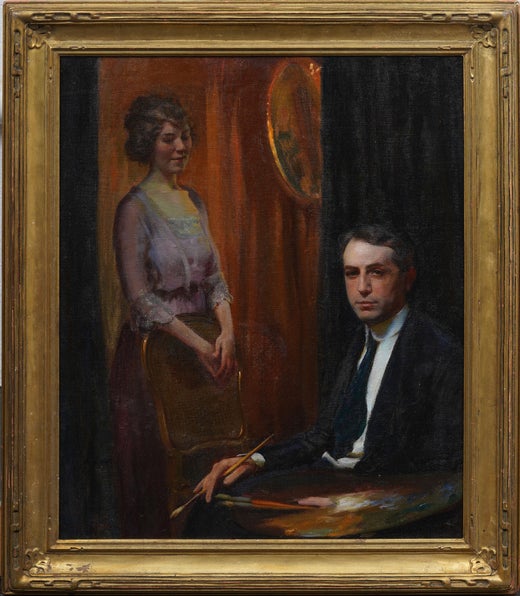
Charles Courtney Curran
An Impressionist figure, genre, and landscape painter, Charles Curran is known as a prolific artist who created light-filled paintings, often of young women. Curran was born in 1861, in Hartford, Kentucky, but in 1881 moved to Sandusky, Ohio. After studying one year at the Cincinnati School of Design, he began a distinguished career when he moved to New York City in 1882 and enrolled in the National Academy of Design. There he studied under Walter Satterlee. At age 23, he had his first public exhibition at the Academy and won numerous prizes from that time onward. Five years later he received the Academy's Third Hallgarten Prize for A Breezy Day, which was considered the most "meritorious painting in oil". Following his training at the National Academy, he became a student at the Art Students' League. He then studied at the Academie Julian in Paris from 1889 to 1891. The French artist Jules Bastien-Lepage was a source of inspiration for Curran with his paintings of peasants as a common subject matter. From 1887 to 1935, he exhibited regularly at the Pennsylvania Academy. In 1903, artist Frederick Dellenbaugh invited Curran to Cragsmoor, an art center in the Hudson River Valley near Ellenville, New York. In 1910, Curran moved into a house there and established a studio. At this time, he turned to the themes and Impressionist style that would occupy most of the remaining 30 years of his life: young women in bright sunlight. His female subjects are often elegantly dressed, posed, and feminine, with uncomplicated and dreamy gazes. Curran later included flowered backgrounds in his paintings, a theme to last the remainder of his career. He occasionally painted portraits and landscapes, as well as a series of views of the Imperial Temples of Peking. Curran was a leader of the Cragsmoor Art Colony, and often taught art and painting. He was a member of the American Watercolor Society, the National Arts Club, the Salmagundi Club, and the Society of American Artists. His works can be seen in collections at the Columbus Museum of Art in Ohio, the Metropolitan Museum of Art in New York City, the National Gallery of Art in Washington, D.C., and the Toledo Museum of Art in Ohio.
About the Seller
5.0
Platinum Seller
Premium sellers with a 4.7+ rating and 24-hour response times
Established in 2022
1stDibs seller since 2022
137 sales on 1stDibs
Typical response time: <1 hour
- ShippingRetrieving quote...Shipping from: New York, NY
- Return Policy
More From This Seller
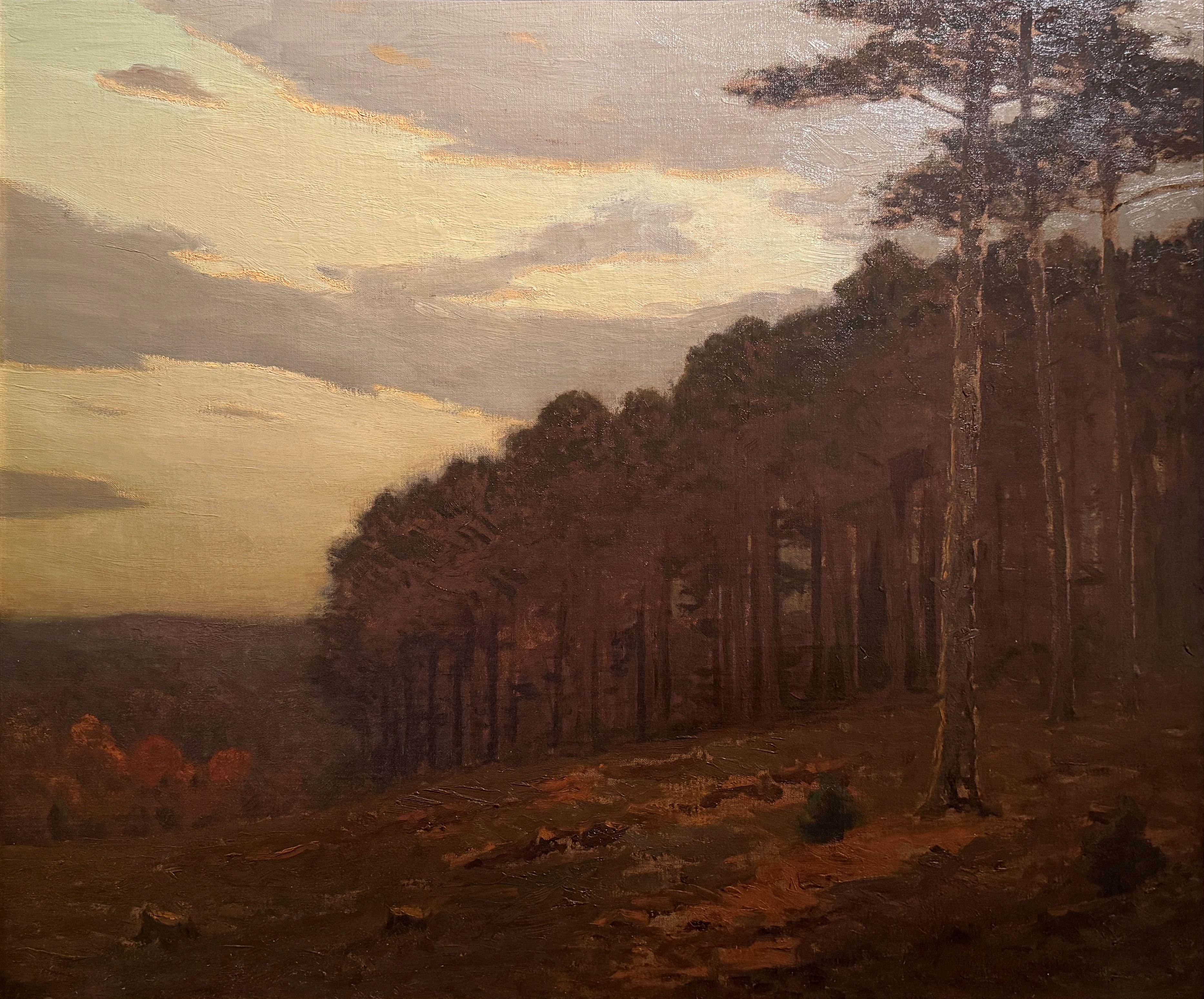
View All"Autumn, New England" Charles Warren Eaton, Tonalist Gloaming Sunset in Woods
By Charles Warren Eaton
Located in New York, NY
Charles Warren Eaton
Autumn, New England
Signed lower right
Oil on canvas
30 x 36 inches
Provenance
Private Collection, Connecticut
A contemporary critic wrote that the paintings o...
Category
Early 1900s Tonalist Figurative Paintings
Materials
Canvas, Oil
"Farmland Meadows" George Henry Smillie, Hudson River School, Sunset Landscape
By George Henry Smillie
Located in New York, NY
George Henry Smillie
Farmland Meadows, 1865
Signed and dated lower left
Oil on canvas
10 1/2 x 18 inches
Provenance
Private Collection, Langley, Washington
The career of George Sm...
Category
1860s Tonalist Figurative Paintings
Materials
Canvas, Oil
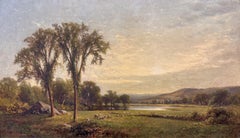
"Late Afternoon, " J. Francis Murphy Tonalist Summer / Autumn Landscape
By John Francis Murphy
Located in New York, NY
John Francis Murphy (American, 1853 - 1921)
Late Afternoon, 1895
Oil on canvas
14 x 19 inches
Signed and dated lower right
Housed in a reproduction fluted cove frame.
Provenance:
Kenneth Lux Gallery, Inc., New York
BNY Mellon, New York
Christie's New York, Living with Art, October 14, 2016, Lot 352
In his lifetime, John Francis Murphy (1853-1921) was known as “the American Corot.” He was renowned for his small, intimate views of nature, especially barren fields and farms, bare trees, and lonely marshland. More than a century later, the power of Murphy’s landscapes has not waned. One contemporary critic wrote, “It was Murphy’s unique accomplishment to achieve an absolute realism without a loss of that mystic, indefinable quality which transfigures realism.”
John Francis Murphy was born at Oswego, NY in 1853 but his family moved to Chicago in 1868 where he worked painting theater sets. Murphy was basically a self-taught artist; his only formal training was a few weeks of instruction at the Chicago Academy of Design.
In 1875, Murphy moved from Chicago to New York, eventually rooming with the painters Dennis Bunker...
Category
1890s Tonalist Landscape Paintings
Materials
Canvas, Oil
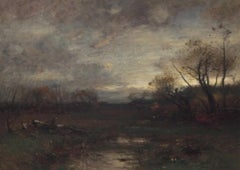
"A Cloudy Day, " View of Montclair, New Jersey, Tonalist, Barbizon Scene
By George Inness
Located in New York, NY
George Inness (1825 - 1894)
A Cloudy Day, 1886
Oil on canvas
25 x 30 inches
Signed and dated lower center
Provenance:
The artist
Estate of the above
Fifth Avenue Galleries, New York, Executor's Sale of Paintings by the Late George Inness, N.A., February 12 - 14, 1895, Lot 132
Joseph H. Spafford, acquired from the above
Mrs. Spafford, by bequest from the above
Leroy Ireland, New York, 1951
Ernest Closuit, Fort Worth, Texas
Meredith Long & Company, Houston, Texas, circa 1960
Private Collection
Shannon's Fine Art, American and European Fine Art Auction, October 27, 2016, Lot 42
Exhibited:
New York, American Fine Arts Society, Exhibition of the Paintings Left by the Late George Inness, December 27, 1894, no. 90.
Literature:
LeRoy Ireland, The Works of George Inness: An Illustrated Catalogue Raisonne, Austin, Texas, 1965, p. 336, no. 1324, illustrated.
Michael Quick, "George Inness: A Catalogue Raisonne," Vol. II, New Brunswick, New Jersey, 2007, pp. 282-83, 311, no. 966, illustrated.
George Inness, one of America's foremost landscape painters of the late nineteenth century, was born in 1825 near Newburgh, New York. He spent most of his childhood in Newark, New Jersey. He was apprenticed to an engraving firm until 1843, when he studied art in New York with Regis Gignoux, a landscape painter from whom he learned the classical styles and techniques of the Old Masters. In 1851, sponsored by a patron, Inness made a fifteen-month trip to Italy. In 1853 he traveled to France, where he discovered Barbizon landscape painting, leading him to adopt a style that used looser, sketchier brushwork and more open compositions, emphasizing the expressive qualities of nature.
After working in New York from 1854 to 1859, he moved to Medfield, Massachusetts, and four years later to New Jersey, where through a fellow painter he began to experiment with using glazes that would allow him to fill his compositions with subtle effects of light. Duncan Phillips remarked on Inness’s mellow light as a unifying force, saying, “…he was equipped to modernize the grand manner of Claude and to apply the methods of Barbizon to American subjects."
At this time also, Inness developed an interest in the religious theories of Emanuel Swedenborg...
Category
1880s Hudson River School Landscape Paintings
Materials
Canvas, Paint, Oil
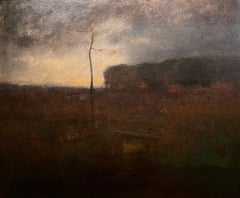
"November" Bruce Crane, Tonalism Landscape Autumn Scene, American Impressionism
By Bruce Crane
Located in New York, NY
Bruce Crane (1857 - 1937)
November
Oil on canvas
25 x 30 inches
Signed lower right
Robert Bruce Crane was an American painter. He joined the Lyme Art Colony in the early 1900s. His ...
Category
Early 20th Century Tonalist Landscape Paintings
Materials
Canvas, Oil
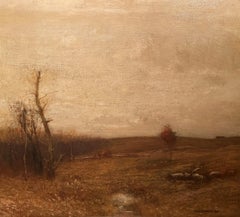
"Autumn Landscape, " Bruce Crane, Tonalist American Impressionist Fall Scene
By Bruce Crane
Located in New York, NY
Bruce Crane (1857 - 1937)
Autumn Landscape
Oil on canvas
25 x 30 inches
Signed lower right
Robert Bruce Crane was an American painter. He joined the Lyme Art Colony in the early 190...
Category
Early 20th Century Tonalist Landscape Paintings
Materials
Canvas, Oil
You May Also Like
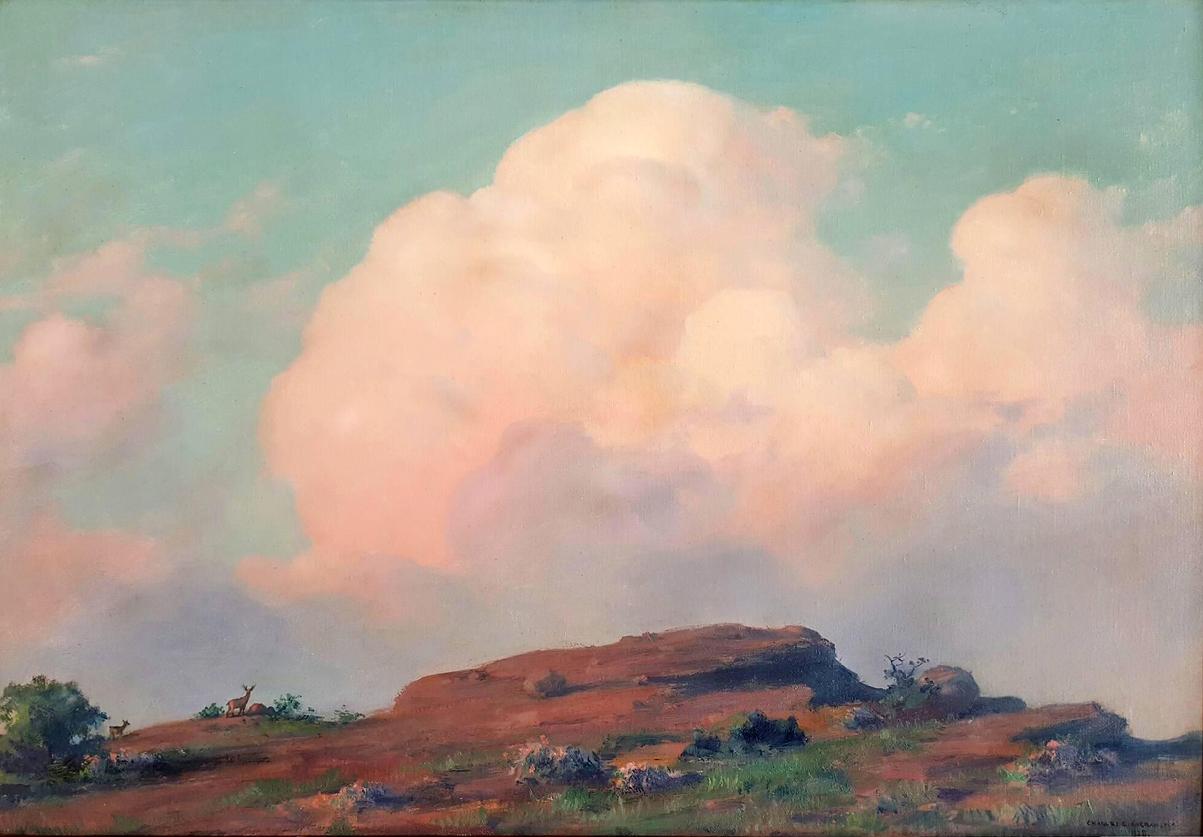
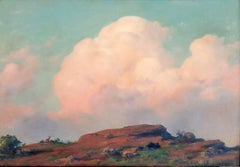
Evening on the Summit - Deer on a mountain top
By Charles Courtney Curran
Located in Miami, FL
This work embodies a beautiful color scheme that is evident in the treatment of the sky and the huge cloud structure. that Signed and Dated lower right Original period hand-carved ...
Category
1930s Post-Impressionist Animal Paintings
Materials
Oil
$22,400 Sale Price
20% Off
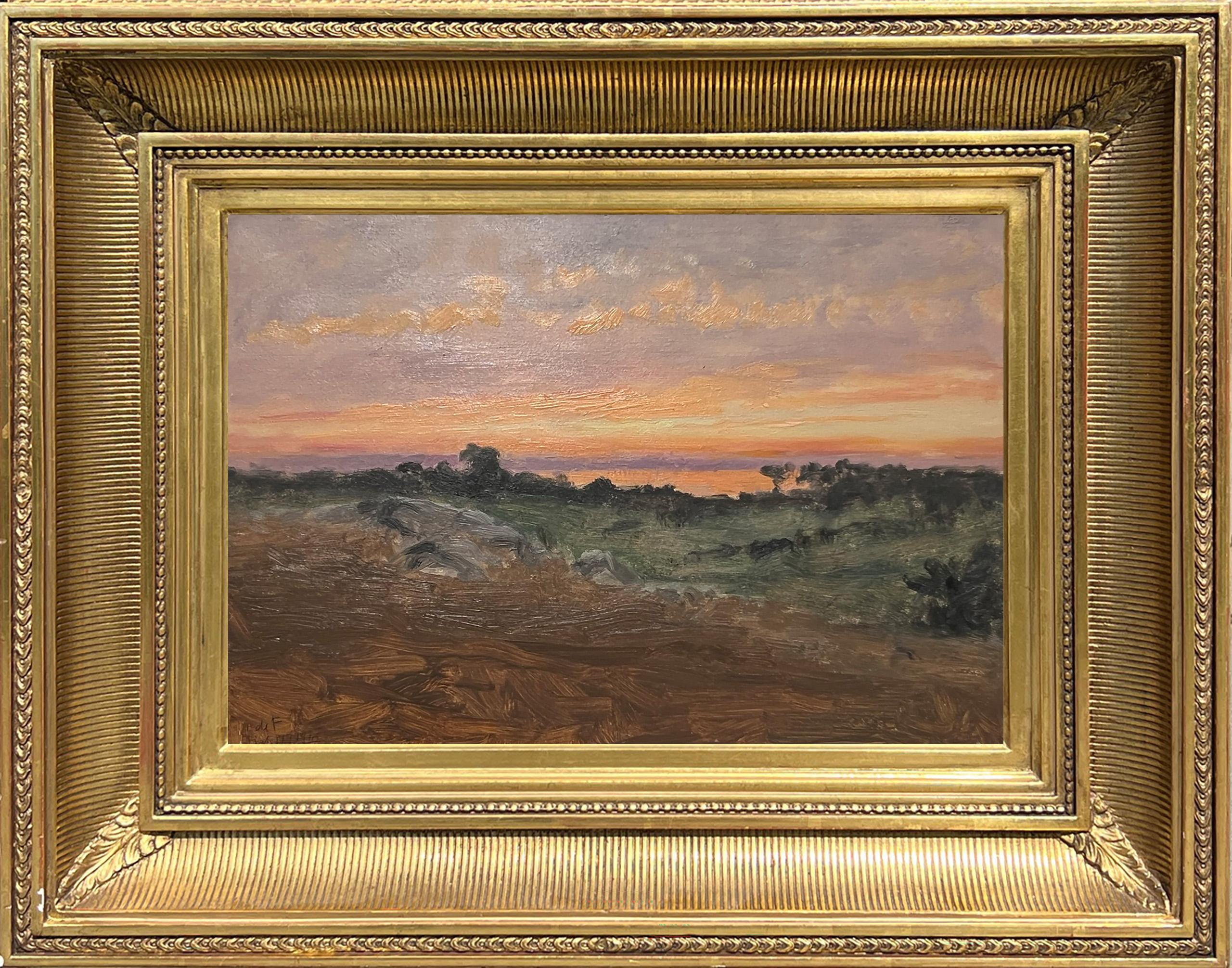
New England Sunrise, 1910 by Lockwood DeForest (American, 1850-1932)
Located in New York, NY
"New England Sunrise," 1910 by Hudson River School painter Lockwood DeForest (American, 1850-1932) is oil on artists card-stock and measures 9.75 x 14 inches. The work is signed by DeForest and dated Sept. 17, 1910 at lower left. The work is framed in an elegant, period appropriate frame, and ready to hang.
Lockwood de Forest was born in New York in 1850 to a prominent family. He grew up in Greenwich Village and on Long Island at the family summer estate in Cold Spring Harbor. As was customary for a cultivated family in the Gilded Age, the de Forests made frequent trips abroad. Excursions to the great museums, which were prominent on the de Forests agenda, deepened the young Lockwood's familiarity with European painting and sculpture. Though he had begun drawing and painting somewhat earlier, it was during a visit to Rome in 1868 that nineteen-year-old de Forest first began to study art seriously, taking painting lessons from the Italian landscapist Hermann David Salomon Corrodi (1844–1905). More importantly, on the same trip, Lockwood met one of America’s most celebrated painters, (and his maternal great-
uncle by marriage) Frederic Edwin Church (1826–1900), who quickly became his mentor. DeForest accompanied Church on sketching trips around Italy and continued this practice when they both returned to America in 1869. Early on in his career, de Forest made a habit of recording the date and often the place of his oil sketches, as to create a visual diary of his travels. Lockwood’s profession as a landscape painter can be primarily attributed to Frederic E. Church and his belief in the young artist’s talent.
De Forest often visited Church in the Hudson River community of Catskill where, in addition to sketching trips and afternoons of painting, he assisted with the architectural drawings and planning of Olana. In 1872, de Forest took a studio at the Tenth Street Studio Building in New York. During these formative years de Forest counted among his friend’s artists such as Sanford Robinson Gifford (1823–80), George Henry Yewell (1830–1923), John Frederick Kensett (1816–72), Jervis McEntee (1828–91), and Walter Launt Palmer (1854–1932).
Over the next decade de Forest experienced success as a painter. He exhibited for the first time at the National Academy of Design in 1872, and made two more painting trips abroad, in 1875–76 and 1877–78, traveling to the major continental capitals but also the Middle East and North Africa. His trip to the Middle East and the library at Church’s home, Olana, established his interest in design during his mid-twenties. From about 1878 to 1902, landscape painting was overshadowed by his activities and preoccupation with East Indian architecture and décor, a style that became quite fashionable in late nineteenth century America. From 1879-1883, de Forest founded Associated Artists along with Louis Comfort Tiffany, Candace Wheeler...
Category
Early 20th Century Hudson River School Landscape Paintings
Materials
Oil, Board
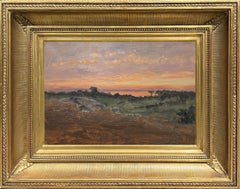
William Merritt Post, Listed American Artist, New England Landscape
By William Merritt Post
Located in Rockport, MA
William Merritt Post (1856–1935) was an American tonalist and landscape painter celebrated for his atmospheric depictions of rural New England. Working in a tonal style, Post used mu...
Category
20th Century American Impressionist Landscape Paintings
Materials
Oil
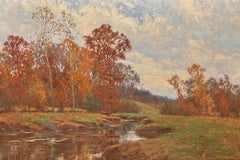
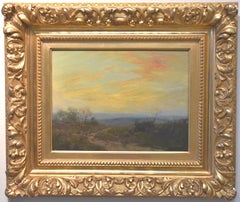
" Summer Evening Southwest Texas " 1909 Texas Hill Country Julian Onderdonk
By Julian Onderdonk
Located in San Antonio, TX
Julian Onderdonk "Summer Evening S. W. Texas" Texas Hill Country
(1882 - 1922)
San Antonio Artist
Image Size: 9 x 12
Frame Size: 15 x 18
Medium: Oil on panel
Dated 1909
"Summer Evening S. W. Texas"
"A Texas Painter Worked Under the Radar in New York," By Eve M. Kahn, March 6, 2014, The New York Times
Onderdonk, a San Antonio native who died of an intestinal ailment in 1922, at 40, is best known for painting swaths of Texas bluebonnets. Those canvases can bring more than $500,000 each, while his New York scenes usually end up in the five-figure range.
Onderdonk’s parents were painters in San Antonio, and in 1901, when he was a teenager, they sent him to New York for training. Through 1909, he lived in various Manhattan apartments and Staten Island houses. He then returned to Texas, but continued to spend months at a time in New York.
In 1902 he had married a Manhattan teenage neighbor, Gertrude Shipman. While she focused on raising their daughter, Adrienne, and worrying about their strained finances, “he created more than 600 works of art, often producing a painting or two a day,”
Eyewitnesses recorded his prolific pace in New York, but Onderdonk works bearing those dates rarely turn up. The puzzling gap in his productivity is explained in family correspondence that the Bakers uncovered: The artist admits that he was signing pieces with pseudonyms. He mostly used Chas. Turner and Chase Turner and occasionally resorted to Elbert H. Turner and Roberto Vasquez.
Julian Onderdonk was the son of the important Texas landscapist, Robert Onderdonk. He was the father's pupil at age 16. Sponsored by a Texas patron, he studied at the Art Students League in New York when he was 19, the pupil of Kenyon Cox, Frank DuMond, and Robert Henri. He also studied with William Merritt Chase on Long Island. In 1902, having lost his Texas patron because he married, he asked $18 for 12 paintings at a Fifth Avenue dealer in New...
Category
Early 1900s Impressionist Landscape Paintings
Materials
Oil
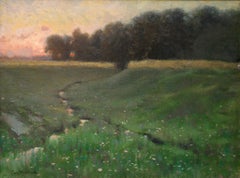
Sunset Over a Meadow, Oil Painting on Canvas, Late 1800s
Located in Stockholm, SE
We are delighted to present an exquisite painting by the Swedish artist Ferdinand Hernlund, depicting a serene sunset over a lush, flower-dotted meadow. This captivating work is a qu...
Category
Late 19th Century Post-Impressionist Landscape Paintings
Materials
Canvas, Oil
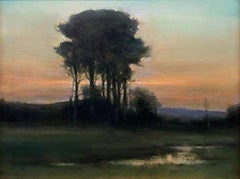
Dennis Sheehan, "Evening Prelude", Moody Sunset Tonalist Landscape Oil Painting
By Dennis Sheehan
Located in Saratoga Springs, NY
This piece, "Evening Prelude", by artist Dennis Sheehan is a 14x18 oil painting on canvas featuring a marshy green landscape at dusk. This moody painting shows tree line at the horiz...
Category
2010s Tonalist Landscape Paintings
Materials
Canvas, Oil
More Ways To Browse
Connecticut Painting
Hudson Valley Antique
Bastien Lepage
Greenwich Paintings
Jules Bastien Lepage
Connecticut Landscape Painting
Connecticut Impressionist Paintings
Clara Inness
1950s Oil Painting France
Farm Scene
Impressionist Farm
British School Painting
Native American On A Horse
Twilight Painting
Taos New Mexico
Bernard Oil Painting
Horse Cart
Hudson River Frame