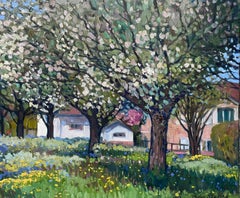
Items Similar to Flowering Tree Backyard Impressionist Landscape
Video Loading
Want more images or videos?
Request additional images or videos from the seller
1 of 19
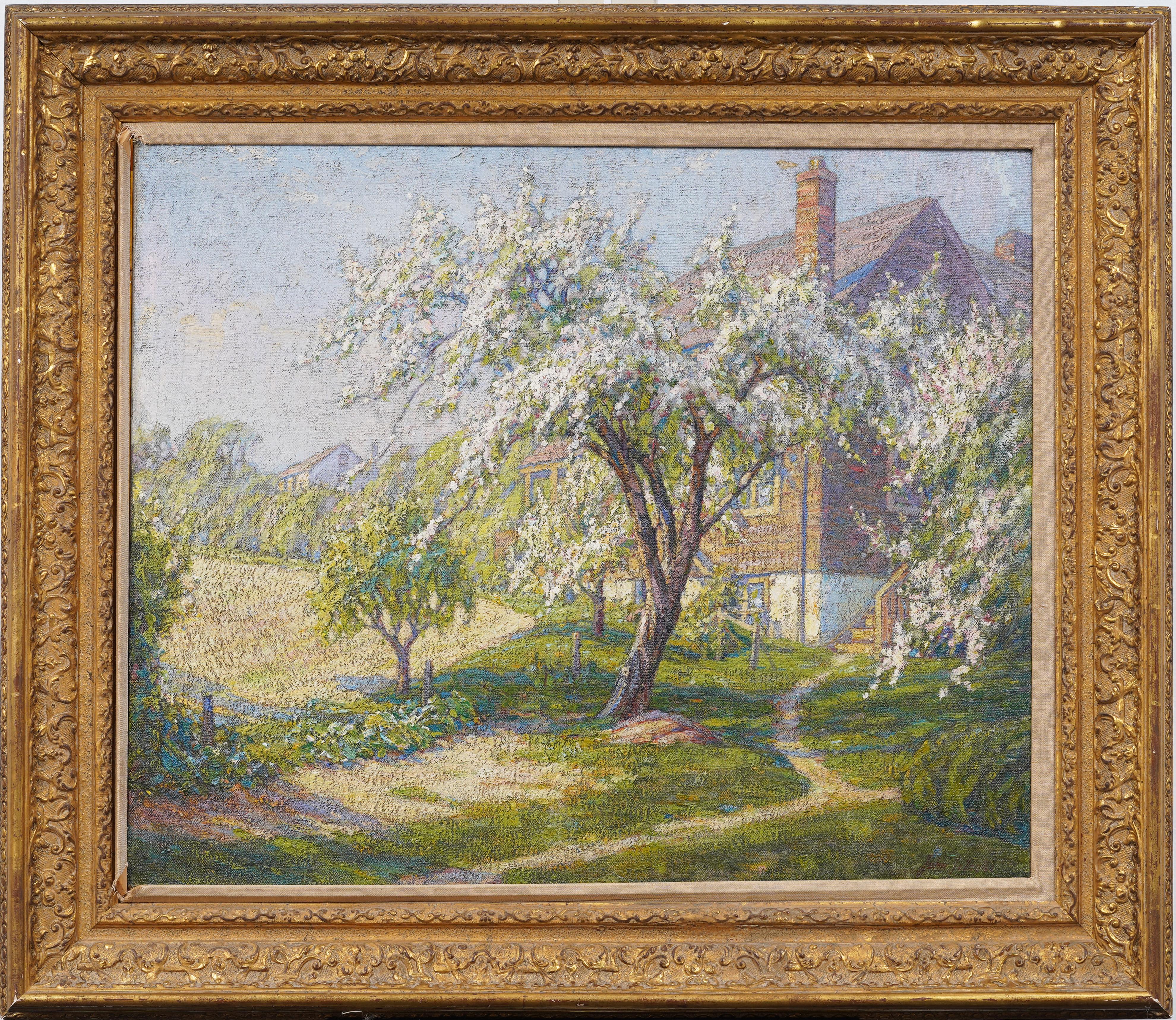
Charles Salis KaelinFlowering Tree Backyard Impressionist Landscape
$5,500
£4,190.09
€4,781.88
CA$7,728.80
A$8,423.03
CHF 4,460.36
MX$101,169.51
NOK 56,469.14
SEK 51,917.82
DKK 35,715.34
About the Item
Charles Salis Kaelin (American, 1858–1929)
Flowering Tree Landscape
Oil on canvas
Signed lower left
25 x 22 inches
28.25 x 25.5 inches, framed
Described as an artist whose "love of nature amounted to a passion," Charles Salis Kaelin was one of the earliest American exponents of Divisionism. A respected member of the art colony at Rockport, Massachusetts, Kaelin's colorful renderings of Cape Ann scenery were championed by many of his fellow artists, including Frank Duveneck, one of the first to recognize the high quality and innovative nature of his work.
Kaelin was born in Cincinnati in 1858, the son of a Swiss lithographer. Following in his father's footsteps, he entered a local lithographic firm at the age of sixteen. In the fall of 1877, he enrolled in evening classes at the McMicken School of Design (later known as the Art Academy of Cincinnati), where he was taught by Thomas Satterwhite Noble. During the summer or fall of 1878 Kaelin supplemented his studies at the McMicken by taking additional instruction from John Henry Twachtman, who had just returned to Cincinnati after sojourns in Munich and Venice. Not surprisingly, Twachtman's emphasis on landscape themes and his sketchy, Munich-inspired style appealed to Kaelin's own penchant for nature and subjective expression, much more so than Noble's preoccupation with academic portraiture and genre themes.
Kaelin traveled to New York City in 1879, enrolling in classes at the Art Students League. He continued to live there throughout the 1880s and early 1890s, working as a lithographer and painting during his spare time. Returning to Cincinnati in 1892, he joined the prestigious Strobridge Lithographic Company, as a designer of theater posters, calendars and other forms of advertising art. In the years ahead, he took many sketching trips throughout southern Ohio and Kentucky. Working exclusively in pastel, a medium in which he excelled, he portrayed the countryside in a delicate, poetic manner, reminiscent of Twachtman. His earliest critical recognition came in 1899, when the Cincinnati Art Museum organized an important solo exhibition devoted exclusively to his pastels.
At the urging of his friend and fellow artist, Frank Duveneck, Kaelin made his first trip to Gloucester, Massachusetts, in the summer of 1900. Inspired by the clear, brilliant light of the region, as well as by the rugged coastlines and pine forests that typified the area, Kaelin continued to make seasonal visits to the North Shore for well over a decade. After coming into contact with several of the American Impressionists who painted in Gloucester, such as Twachtman, Theodore Wendel, and Childe Hassam, he abandoned his earlier, tonal manner and took a greater interest in light and color. At the same time, he also began to employ a divisionist technique, associated with European Post-Impressionism, in which long, emphatic strokes of crayon were tightly woven together to create an overall tapestry of line and color. Contemporary critics spoke frequently of the "daring" and "experimental" nature of his work.
In 1916, Kaelin relinquished his lucrative career as a lithographer and settled permanently in Rockport, the smaller of the two principal towns on Cape Ann. In the years ahead, he spent his time rendering the sun-dappled harbor and the nearby woodland forests, working in both pastel and oil.
Although his desire for solitude often led to his being referred to as the "hermit painter," Kaelin's name was consistently linked with art activity in the Midwest and in the Northeast. In Cincinnati, his work was frequently displayed at the annual exhibitions of the Cincinnati Art Museum, the Society of Western Artists, and the Duveneck Society of Painters and Sculptors. He also had important one-man exhibitions in Cincinnati (1913, 1920), Saint Louis (1909), and Buffalo (1920). In 1915, he was awarded a silver medal at the Panama-Pacific Exposition for his pastels. Following his move to Rockport, Kaelin's work was exhibited at the Gallery-on-the-Moors in Gloucester, the Boston Art Club, and the Pennsylvania Academy of the Fine Arts in Philadelphia. He was also a founding member of the Rockport Art Association (1921). In 1930, a year after his death, Kaelin's numerous friends and admirers organized an important memorial exhibition of his work for Traxel's Galleries in Cincinnati.
Examples of Charles Kaelin's work can be found in many public and private collections, including the Metropolitan Museum of Art, New York; the Butler Institute of American Art, Youngstown, Ohio; the Cincinnati Art Museum; the Cape Ann Art Association, Gloucester; the Rockport Art Association; the Achenbach Foundation for Graphic Arts, Fine Arts Museums of San Francisco; and ITT Corporation, New York.
- Creator:Charles Salis Kaelin (1858-1929, American)
- Dimensions:Height: 28.25 in (71.76 cm)Width: 25 in (63.5 cm)
- Medium:
- Movement Style:
- Period:
- Condition:
- Gallery Location:Beachwood, OH
- Reference Number:1stDibs: LU1768217341532
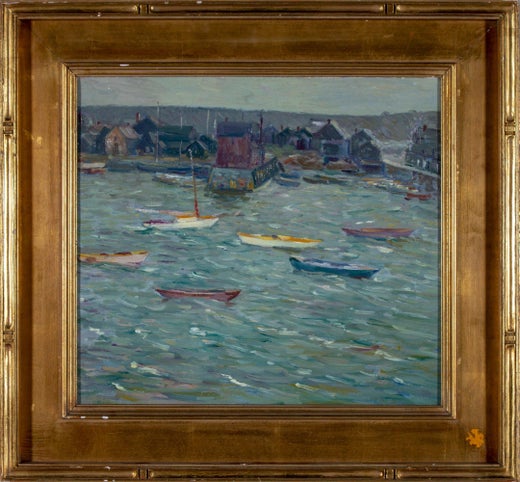
Charles Salis Kaelin
Described as an artist whose "love of nature amounted to a passion," Charles Salis Kaelin was one of the earliest American exponents of Divisionism. Kaelin was born in Cincinnati in 1858, the son of a Swiss lithographer. Following in his father's footsteps, he entered a local lithographic firm at the age of sixteen. In the fall of 1877, he enrolled in evening classes at the McMicken School of Design (later known as the Art Academy of Cincinnati), where he was taught by Thomas Satterwhite Noble. During the summer or fall of 1878 Kaelin supplemented his studies at the McMicken by taking additional instruction from John Henry Twachtman, who had just returned to Cincinnati after sojourns in Munich and Venice. Not surprisingly, Twachtman's emphasis on landscape themes and his sketchy, Munich-inspired style appealed to Kaelin's own penchant for nature and subjective expression, much more so than Noble's preoccupation with academic portraiture and genre themes. Kaelin traveled to New York City in 1879, enrolling in classes at the Art Students League. He continued to live there throughout the 1880s and early 1890s, working as a lithographer and painting during his spare time. Returning to Cincinnati in 1892, he joined the prestigious Strobridge Lithographic Company, as a designer of theater posters, calendars and other forms of advertising art. In the years ahead, he took many sketching trips throughout southern Ohio and Kentucky. Working exclusively in pastel, a medium in which he excelled, he portrayed the countryside in a delicate, poetic manner, reminiscent of Twachtman. His earliest critical recognition came in 1899, when the Cincinnati Art Museum organized an important solo exhibition devoted exclusively to his pastels. At the urging of his friend and fellow artist, Frank Duveneck, Kaelin made his first trip to Gloucester, Massachusetts, in the summer of 1900. Inspired by the clear, brilliant light of the region, as well as by the rugged coastlines and pine forests that typified the area, Kaelin continued to make seasonal visits to the North Shore for well over a decade. After coming into contact with several of the American Impressionists who painted in Gloucester, such as Twachtman, Theodore Wendel, and Childe Hassam, he abandoned his earlier, tonal manner and took a greater interest in light and color. At the same time, he also began to employ a divisionist technique, associated with European Post-Impressionism, in which long, emphatic strokes of crayon were tightly woven together to create an overall tapestry of line and color. Contemporary critics spoke frequently of the "daring" and "experimental" nature of his work. In 1916, Kaelin relinquished his lucrative career as a lithographer and settled permanently in Rockport, the smaller of the two principal towns on Cape Ann. In the years ahead, he spent his time rendering the sun-dappled harbor and the nearby woodland forests, working in both pastel and oil.
About the Seller
5.0
Gold Seller
Premium sellers maintaining a 4.3+ rating and 24-hour response times
Established in 1975
1stDibs seller since 2022
42 sales on 1stDibs
Typical response time: 1 hour
- ShippingRetrieving quote...Shipping from: Beachwood, OH
- Return Policy
More From This Seller
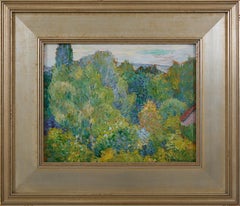
View AllAu Garche, France, Impressionist Tree Landscape, Early 20th Century
By Abel Warshawsky
Located in Beachwood, OH
Abel Warshawsky (American, 1883-1962)
Au Garche, France, 1910
Oil on board
Signed lower right (signed, dated and titled verso)
8.5 x 10.5 inches
13.5 x 15.5 inches, framed
Impressio...
Category
1910s American Impressionist Landscape Paintings
Materials
Oil
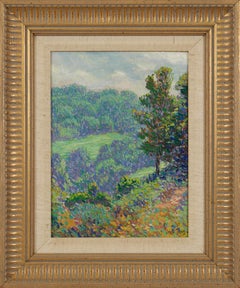
Summer Impressionist Landscape w/ Trees
Located in Beachwood, OH
Glen Tracy (American, 1883-1956)
Summer Landscape, c. 1920
Oil on board
Signed lower right, titled verso
12 x 9 inches
17.25 x 14.5 inches, framed
Since he studied and taught commer...
Category
1920s American Impressionist Landscape Paintings
Materials
Oil
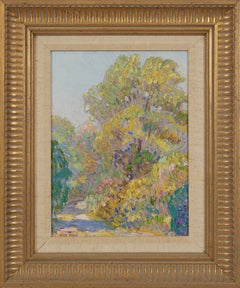
The Tulip Poplar on Salem Pike, Impressionist Tree Landscape
Located in Beachwood, OH
Glen Tracy (American, 1883-1956)
The Tulip Poplar on Salem Pike , 1920
Oil on board
Signed lower left, dated and titled verso
12 x 9 inches
17.25 x 14.5 inches framed
Since he studi...
Category
1920s American Impressionist Landscape Paintings
Materials
Oil
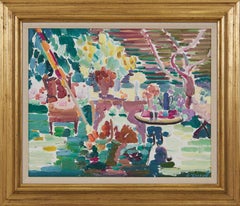
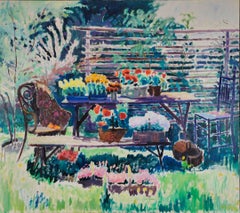
Backyard Garden Still-Life Landscape Scene, Cleveland School Artist
By Joseph O
Sickey
Located in Beachwood, OH
Joseph O'Sickey (American, 1918-2013)
Garden Scene
Oil on canvas
Signed lower right
18 x 22 inches
24 x 28 inches, framed
Joseph O'Sickey, born in Detroit in 1918, has been a painte...
Category
Late 20th Century Post-Impressionist Still-life Paintings
Materials
Oil
Large Colorful Backyard Landscape Still Life
By Joseph O
Sickey
Located in Beachwood, OH
Joseph B. O’Sickey (American, 1918–2013)
Backyard Landscape
Oil on canvas
Signed lower right
5'10" x 6'7"
Joseph O'Sickey, born in Detroit in 1918, was a painter and teacher through...
Category
20th Century Post-Impressionist Figurative Paintings
Materials
Oil
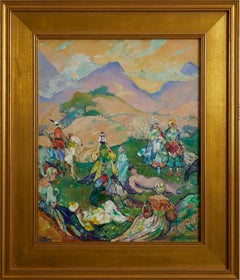
Spring Fantasy, Mid-20th Century American Impressionist Landscape
By Abel Warshawsky
Located in Beachwood, OH
Abel Warshawsky (American 1883-1962)
Spring Fantasy, 1948
Oil on artist's board
Signed lower right and verso
16 x 13 inches
20 x 17 inches, framed
Impressionist painter A.G. Warshaw...
Category
1940s American Impressionist Landscape Paintings
Materials
Oil
You May Also Like
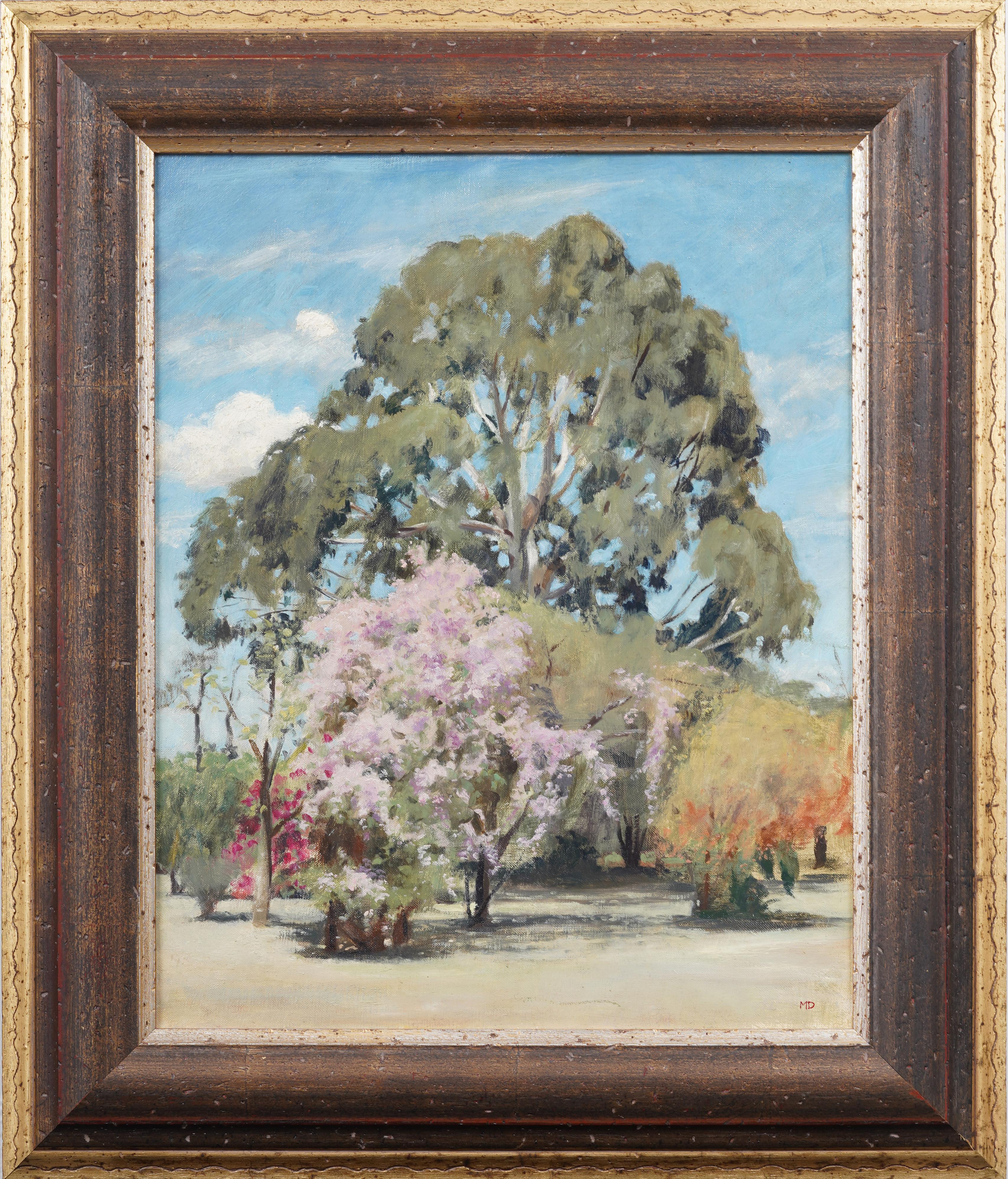
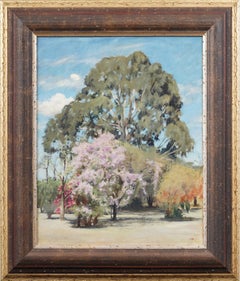
Vintage Spring Blossom Tree Impressionist Landscape Framed Oil Painting
Located in Buffalo, NY
Vintage impressionist landscape oil painting. Oil on canvas. Signed in monogram MD. Framed. Measuring 23 by 27 inches overall and 16 by 20 painting alone. In excellent original condi...
Category
1990s Impressionist Landscape Paintings
Materials
Canvas, Oil
$620 Sale Price
20% Off
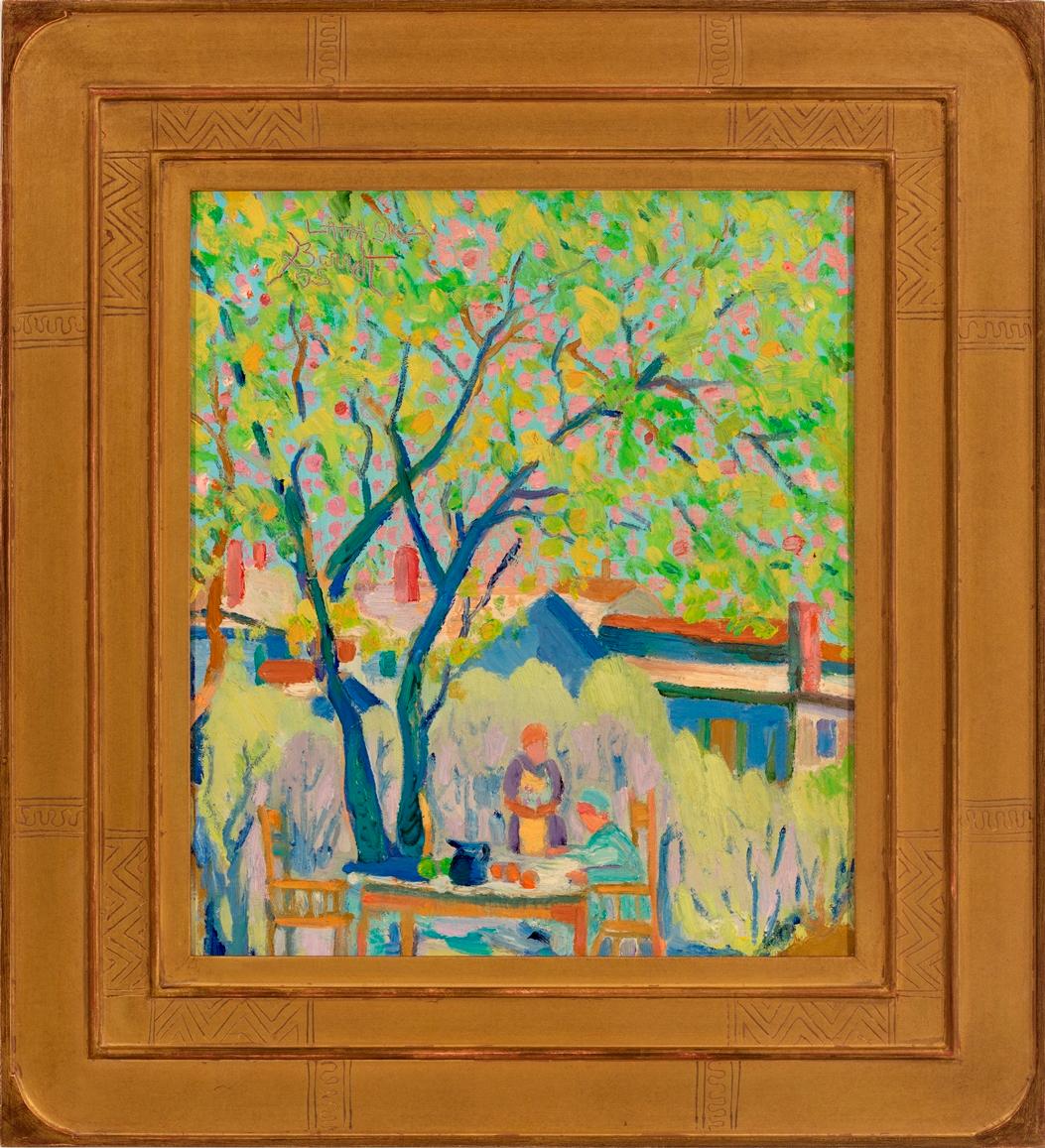
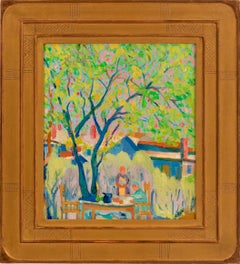
"Under Blossoming Tree, Lahaska"
By Joseph Barrett
Located in Lambertville, NJ
Illustrated in "Joseph Barrett, The Prime Years 1970s - 1990s", pg. 12 #014
Jim’s of Lambertville is proud to offer this artwork by:
Joseph Barrett (1936 – )
Joseph Barrett was born in Midland, North Carolina, in 1936 and studied at the Massachusetts College of Art in Boston and at the Tyler School of Art in Philadelphia. Barrett, now of Lahaska, Pennsylvania, has been painting his entire adult life. His favorite subjects include the landscape surrounding New Hope and many local landmarks often encompassing figures into his compositions. Barrett utilizes a heavy impasto and his palette bears similarities to that of Fern Coppedge and George Sotter. Barrett’s paintings are always found in unique and somewhat charming handmade frames designed by the artist and finished in metal leaf.
A living contemporary of the no longer living “New Hope School” impressionist painters, Joseph Barrett resides outside of New Hope above his old-fashioned antique shop and studio. Entering Barrett’s shop is like taking a step back in time. Inside this cluttered and dusty haven of treasures from the past, is a studio spanning only four by eight feet. This little studio, containing cans of old brushes and hundreds of used paint tubes...
Category
Late 20th Century American Impressionist Landscape Paintings
Materials
Canvas, Oil
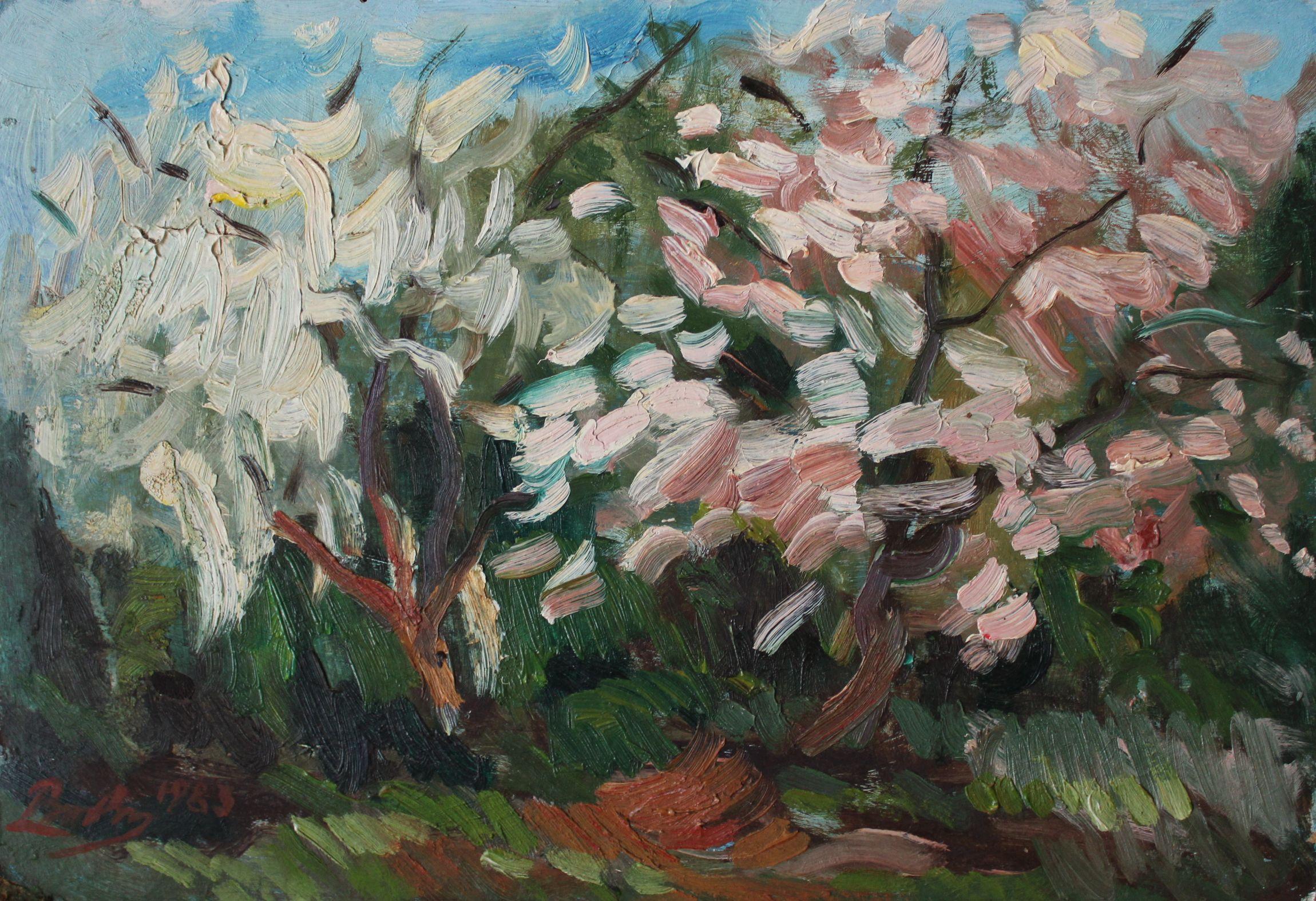
Two flowering trees
Located in Riga, LV
Laimonis Bubieris (1934-2012),
Two flowering trees, cardboard/oil, 25x36.5 cm
Category
1980s Impressionist Landscape Paintings
Materials
Oil, Cardboard
$421 Sale Price
20% Off
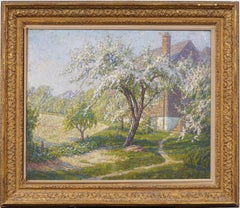
Antique American Impressionist Framed Cherry Blossom Landscape Signed Painting
Located in Buffalo, NY
Wonderful American impressionist landscape oil painting by John J. Inglis (1867 - 1946). Colorful and vibrant cherry blossom view. Framed. Oil on canvas. Signed. Image size, 24H...
Category
1910s Impressionist Landscape Paintings
Materials
Canvas, Oil
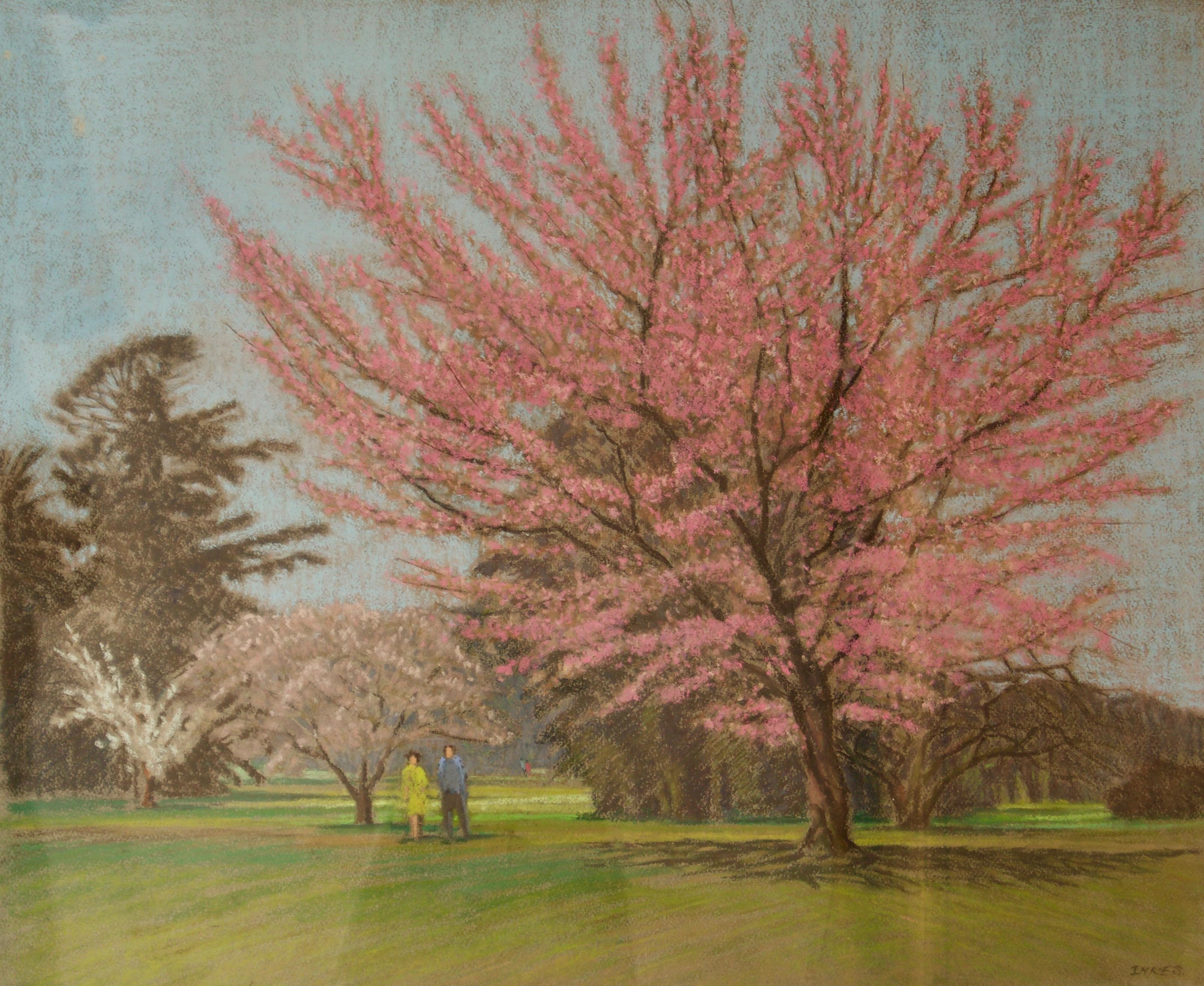
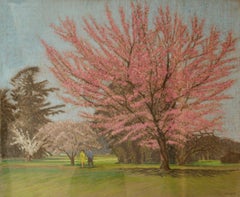
Apple Blossom Tree Park - Mid 20th Century Impressionist Landscape Oil by Innes
By William Henry Innes
Located in Watford, Hertfordshire
William Henry Innes (1905-1999)
Innes first exhibited his work during the Second World War while he was in the Royal Air Force. He showed extensively at the Royal Academy, New Engla...
Category
1950s Post-Impressionist Landscape Paintings
Materials
Oil Pastel
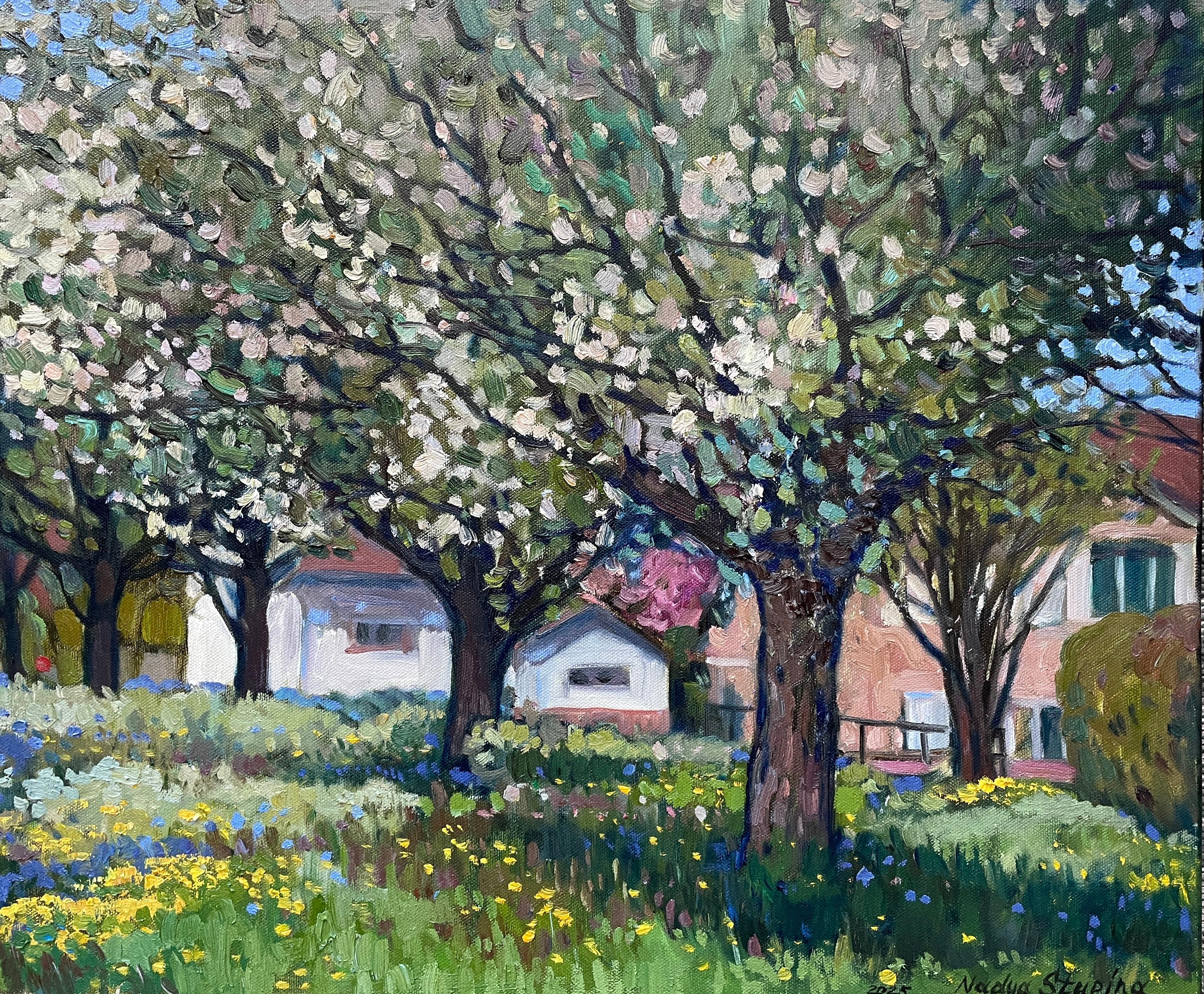
«Blooming apple trees in Gams» Original impressionistic landscape.Oil on canvas
Located in Oslo, NO
This artwork masterfully captures the tranquil beauty of a blossoming orchard in spring. Dominated by trees adorned with delicate white blossoms, the scene exudes a sense of renewal ...
Category
2010s Impressionist Landscape Paintings
Materials
Canvas, Oil