Want more images or videos?
Request additional images or videos from the seller
1 of 9
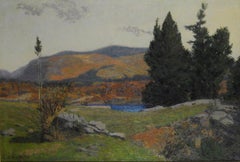
Edward Willis RedfieldHills of Point Pleasant
$295,000
£224,741.01
€256,482.65
CA$414,544.81
A$451,780.89
CHF 239,237.47
MX$5,426,364.40
NOK 3,028,799.22
SEK 2,784,682.96
DKK 1,915,641.03
About the Item
Hills of Point Pleasant
Signed lower right: EW Redfield.
Oil on canvas, 24 x 29 inches (61 x 73.7 cm)
Framed dimensions: 31 3/4 x 36 3/4 inches
Provenance
Grand Central Art Galleries, New York;
Private collection, New York, acquired from the above, 1975;
Private collection, by descent from the above, 2011;
Sotheby’s, New York, 4 December 2013, lot 42, sold by the above;
Private collection, Bryn Mawr, (acquired from the above), until 2025;
Christie's, New York, American Sublime: Property from an Important Private Collection, January 23, 2025, lot 239
Literature
J.M.W. Fletcher, Edward Willis Redfield (1869-1965), An American Impressionist: His Paintings and the Man Behind the Palette, Lahaska, Pennsylvania, 1996, p. 165, no. 296.
In his most successful Impressionist works, Edward Willis Redfield portrays the beauty of the Pennsylvania landscape with bold brushwork and a skillful, subtle treatment of light and color that are the hallmarks of his celebrated style. As demonstrated by Hills of Point Pleasant, Redfield's Impressionist canvases rank among the best produced by a group of Pennsylvania artists popularly called the New Hope School.
After training at the Pennsylvania Academy of the Fine Arts under Thomas Anschutz, Redfield went to Paris to receive further training at the Acadèmie Julian in the late 1880s or early 90s. Accompanied by Robert Henri, an old friend from his days at the Pennsylvania Academy, Redfield traveled from Paris to the French countryside and the forest of Fountainbleu where he began painting en plein air in the cold of winter.
The plein air tradition pioneered by the French Impressionists was adopted by Redfield in his renderings of the rich and varied landscapes of Bucks County, Pennsylvania. "His paintings were done in the field and straight onto the canvas, and with great rapidity and force." (J.M.W. Fletcher, Edward Willis Redfield 1869-1965: An American Impressionist, His Paintings and the Man Behind the Palette, Lahaska, Pennsylvania, 1996, p. 1). As Redfield himself said: "What I wanted to do was go outdoors and capture the look of a scene, whether it was a brook or a bridge, as it looked on a certain day." (as quoted in T. Folk, Edward Redfield, Allentown, Pennsylvania, 1987, p. 35)
Once he started painting spring scenes, Redfield's most desirable were energetic works, brightly sunlit, with abundant budding trees, such as Hills of Point Pleasant.Rendered with short, thick brushwork and vibrant color, the present work captures the freshness and vitality of a gorgeous spring day in the artist's quintessential style.
- Creator:Edward Willis Redfield (1869-1965, American)
- Dimensions:Height: 24 in (60.96 cm)Width: 29 in (73.66 cm)
- Medium:
- Movement Style:
- Period:
- Condition:Excellent condition. The canvas is unlined. There is minor frame abrasion along the extreme edges of the canvas. Under UV light, there is some minor inpainting scattered along the extreme edges of the canvas and a few pinpoint-sized dots in the sky.
- Gallery Location:Bryn Mawr, PA
- Reference Number:1stDibs: LU2773217004282
About the Seller
5.0
Recognized Seller
These prestigious sellers are industry leaders and represent the highest echelon for item quality and design.
Platinum Seller
Premium sellers with a 4.7+ rating and 24-hour response times
Established in 2001
1stDibs seller since 2024
6 sales on 1stDibs
Typical response time: <1 hour
- ShippingRetrieving quote...Shipping from: Bryn Mawr, PA
- Return Policy
More From This Seller
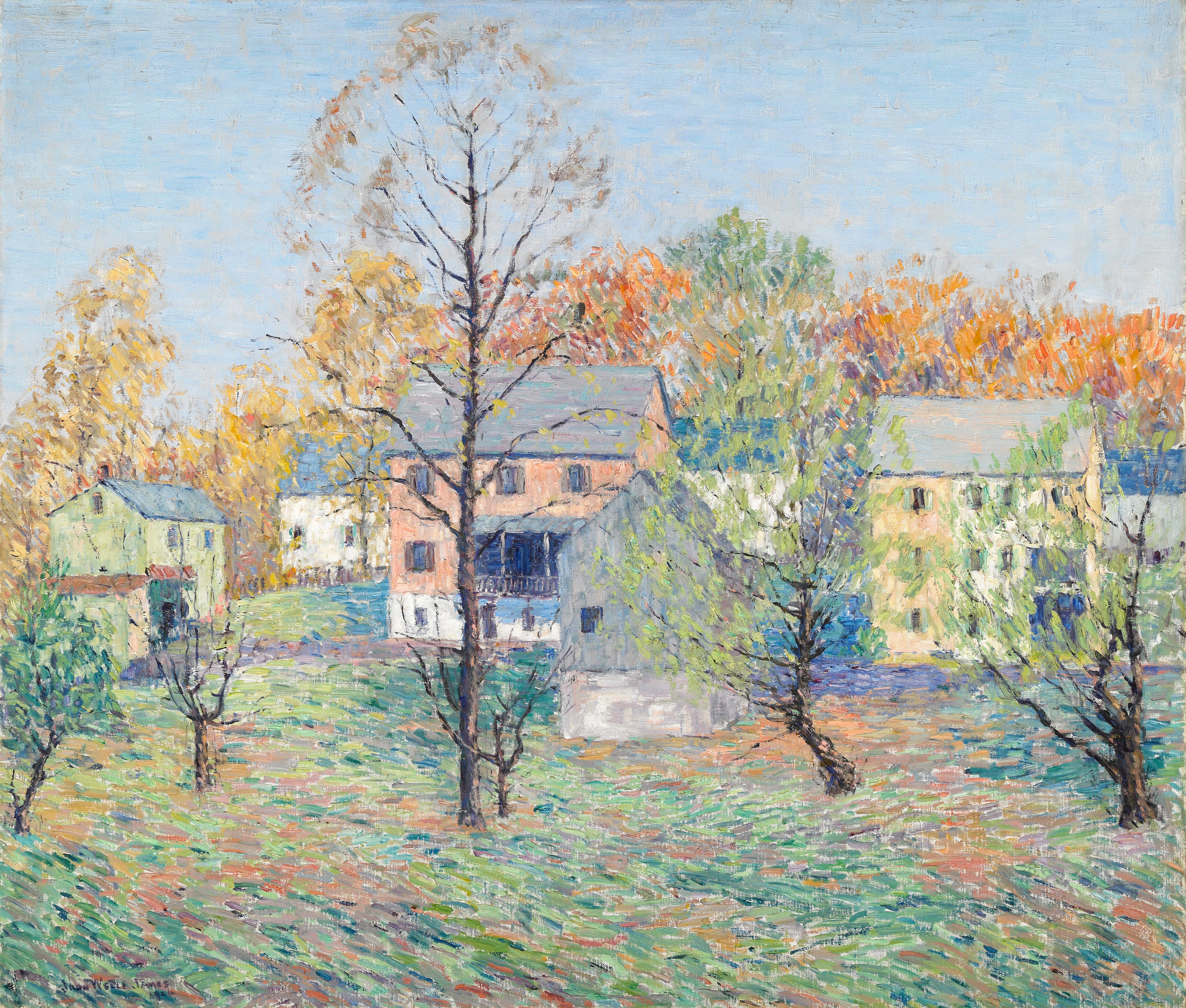
View AllSpring Landscape
By John Wells James
Located in Bryn Mawr, PA
Spring Landscape, 1921
Oil on canvas
36 x 42 1/4 inches
91.4 x 107.3 cm
Signed and dated lower left: John Wells James / 1921
Provenance
Private collection
John Wells James painted ...
Category
1920s American Impressionist Landscape Paintings
Materials
Canvas, Oil
Spring in the Meadow
By Robert William Vonnoh
Located in Bryn Mawr, PA
Robert William Vonnoh (1858-1933)
Spring in the Meadow
Signed lower left: Vonnoh
Oil on canvas
20 x 24 inches
50.8 x 61 cm
Framed dimensions: 26.5 x 30.5 inches
Provenance
Private c...
Category
Late 19th Century American Impressionist Landscape Paintings
Materials
Oil
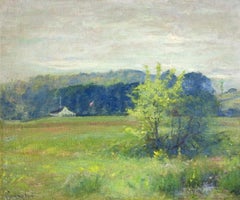
House in Center Bridge
Located in Bryn Mawr, PA
House in Center Bridge
Oil on canvas, 22 x 24 inches (50.8 x 61 cm)
Framed dimensions: 27 3/8 x 29 1/4 inches
Signed lower left: K. Nunamaker
Provenance
The artist;
Private collecti...
Category
Early 20th Century American Impressionist Landscape Paintings
Materials
Canvas, Oil
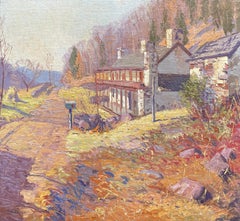
Spring Hillside
Located in Bryn Mawr, PA
Spring Hillside exemplifies Nunamaker's ability to capture seasonal nuances of light and atmosphere. His simple composition of two buildings on a hillside is elevated by the delicate...
Category
20th Century Impressionist Landscape Paintings
Materials
Canvas, Oil, Board
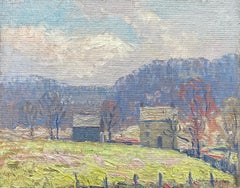
Shad Fisherman
By John Fulton Folinsbee
Located in Bryn Mawr, PA
Shad Fisherman
Oil on canvas
16 x 20 inches (40.6 x 50.8 cm)
Framed dimensions: 22 3/8 x 26 1/4 inches
Signed lower left: John F. Folinsbee. Inscribed on verso on stretcher: Shad Fis...
Category
Early 20th Century American Impressionist Landscape Paintings
Materials
Canvas, Oil
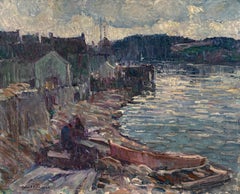
Towards the Hills, 1923
By Allen Tucker
Located in Bryn Mawr, PA
Allen Tucker (1866-1939)
Towards the Hills, 1923
Oil on canvas
28 1/2 x 34 1/2 inches
72.4 x 87.6 cm
Signed lower left: Allen Tucker / 1923
Provenance
Arthur Harrow, New York;
By de...
Category
20th Century Post-Impressionist Landscape Paintings
Materials
Oil
You May Also Like
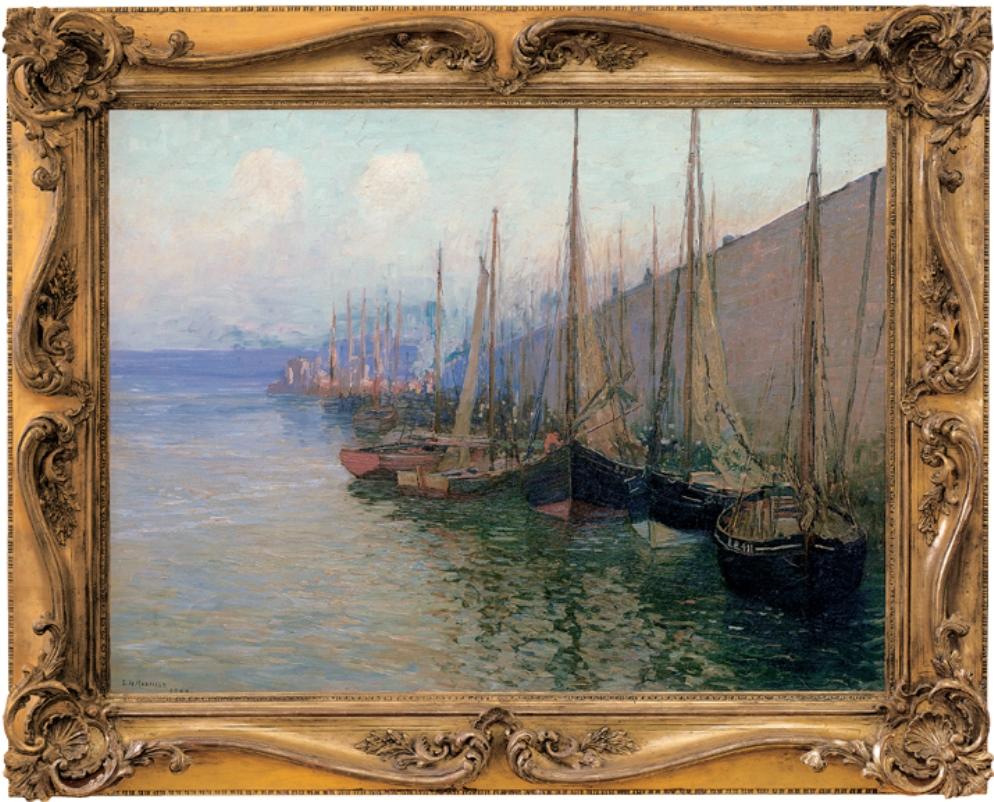
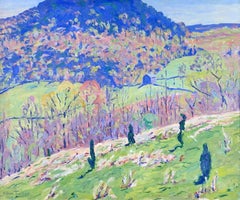
"In Port"
By Edward Willis Redfield
Located in Lambertville, NJ
Jim’s of Lambertville is proud to offer this artwork by:
Edward Willis Redfield (1869 - 1965)
Edward W. Redfield was born in Bridgeville, Delaware, moving to Philadelphia as a young child. Determined to be an artist from an early age, he studied at the Spring Garden Institute and the Franklin Institute before entering the Pennsylvania Academy from 1887 to 1889, where he studied under Thomas Anshutz, James Kelly, and Thomas Hovenden. Along with his friend and fellow artist, Robert Henri, he traveled abroad in 1889 and studied at the Academie Julian in Paris under William Bouguereau and Tony Robert-Fleury. While in France, Redfield met Elise Deligant, the daughter of an innkeeper, and married in London in 1893.
Upon his return to the United States, Redfield and his wife settled in Glenside, Pennsylvania. He remained there until 1898, at which time he moved his family to Center Bridge, a town several miles north of New Hope along the Delaware River. Redfield painted prolifically in the 1890s but it was not until the beginning of the twentieth century that he would develop the bold impressionist style that defined his career. As Redfield’s international reputation spread, many young artists gravitated to New Hope as he was a great inspiration and an iconic role model. Edward Redfield remained in Center Bridge throughout his long life, fathering his six children there.
Around 1905 and 1906, Redfield’s style was coming into its own, employing thick vigorous brush strokes tightly woven and layered with a multitude of colors. These large plein-air canvases define the essence of Pennsylvania Impressionism. By 1907, Redfield had perfected his craft and, from this point forward, was creating some of his finest work.
Redfield would once again return to France where he painted a small but important body of work between 1907 and 1908. While there, he received an Honorable Mention from the Paris Salon for one of these canvases. In 1910 he was awarded a Gold Medal at the prestigious Buenos Aires Exposition and at the Panama-Pacific Exposition of 1915 in San Francisco, an entire gallery was dedicated for twenty-one of his paintings.
Since Redfield painted for Exhibition with the intent to win medals, his best effort often went into his larger paintings. Although he also painted many fine smaller pictures, virtually all of his works were of major award-winning canvas sizes of 38x50 or 50x56 inches. If one were to assign a period of Redfield’s work that was representative of his “best period”, it would have to be from 1907 to 1925. Although he was capable of creating masterpieces though the late 1940s, his style fully matured by 1907 and most work from then through the early twenties was of consistently high quality. In the later 1920s and through the 1930s and 1940s, he was like most other great artists, creating some paintings that were superb examples and others that were of more ordinary quality.
Redfield earned an international reputation at a young age, known for accurately recording nature with his canvases and painting virtually all of his work outdoors; Redfield was one of a rare breed. He was regarded as the pioneer of impressionist winter landscape painting in America, having few if any equals. Redfield spent summers in Maine, first at Boothbay Harbor and beginning in the 1920s, on Monhegan Island. There he painted colorful marine and coastal scenes as well as the island’s landscape and fishing shacks. He remained active painting and making Windsor style furniture...
Category
Early 1900s American Impressionist Landscape Paintings
Materials
Canvas, Oil
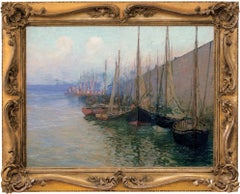
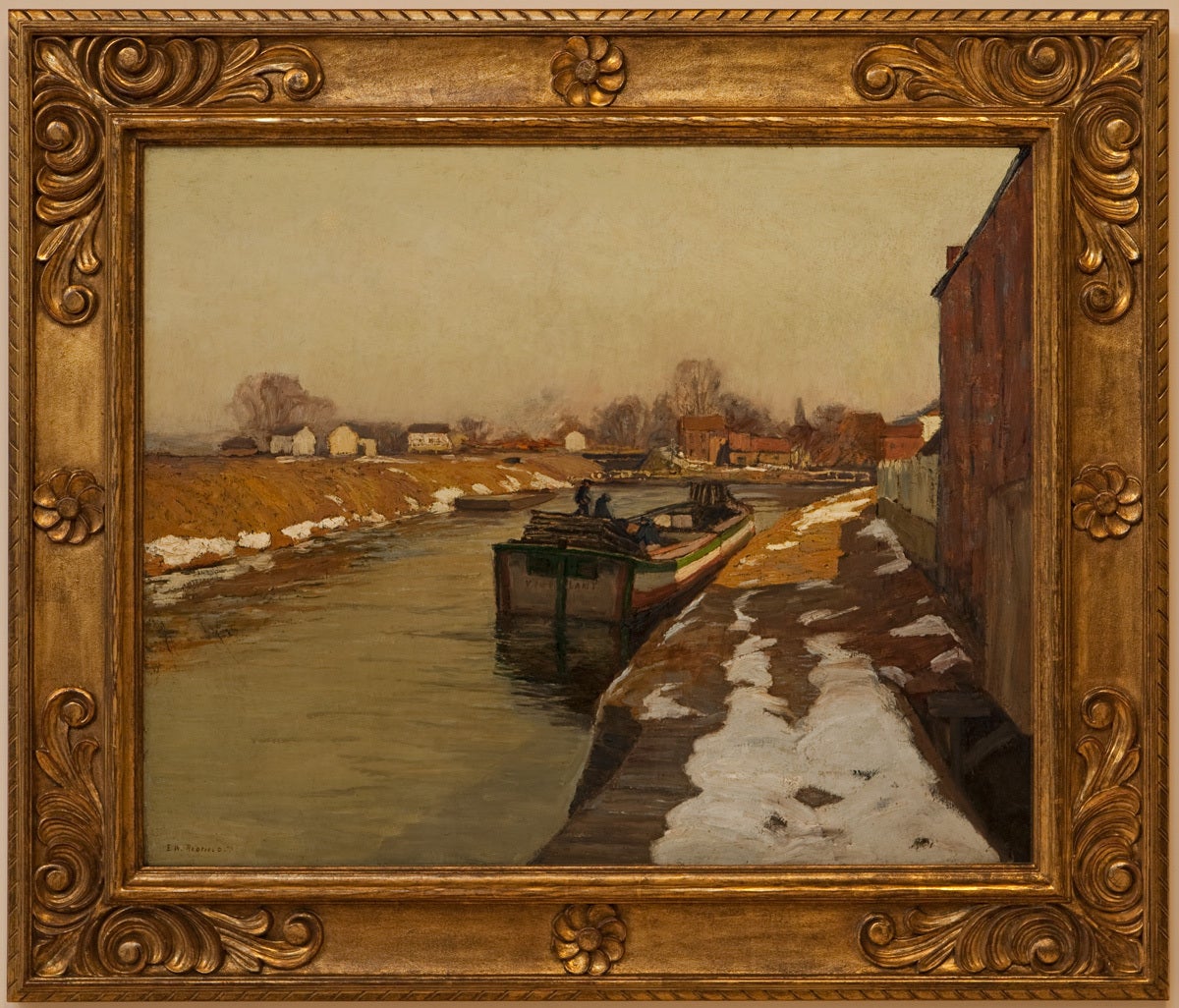
"The Canal"
By Edward Willis Redfield
Located in Lambertville, NJ
Jim’s of Lambertville is proud to offer this artwork.
Signed lower left. Complemented by a hand carved and gilt frame.
Illustrated in "Edward Redfield: Just Values and Fine Seeing" by Constance Kimmerle and the Pennsylvania Academy of the Fine Arts's Exhibition of Paintings by Edward Redfield (April 17 to May 16, 1909) brochure
Edward Willis Redfield (1869 - 1965)
Edward W. Redfield was born in Bridgeville, Delaware, moving to Philadelphia as a young child. Determined to be an artist from an early age, he studied at the Spring Garden Institute and the Franklin Institute before entering the Pennsylvania Academy from 1887 to 1889, where he studied under Thomas Anshutz, James Kelly, and Thomas Hovenden. Along with his friend and fellow artist, Robert Henri, he traveled abroad in 1889 and studied at the Academie Julian in Paris under William Bouguereau and Tony Robert-Fleury. While in France, Redfield met Elise Deligant, the daughter of an innkeeper, and married in London in 1893.
Upon his return to the United States, Redfield and his wife settled in Glenside, Pennsylvania. He remained there until 1898, at which time he moved his family to Center Bridge, a town several miles north of New Hope along the Delaware River. Redfield painted prolifically in the 1890s but it was not until the beginning of the twentieth century that he would develop the bold impressionist style that defined his career. As Redfield’s international reputation spread, many young artists gravitated to New Hope as he was a great inspiration and an iconic role model. Edward Redfield remained in Center Bridge throughout his long life, fathering his six children there.
Around 1905 and 1906, Redfield’s style was coming into its own, employing thick vigorous brush strokes tightly woven and layered with a multitude of colors. These large plein-air canvases define the essence of Pennsylvania Impressionism. By 1907, Redfield had perfected his craft and, from this point forward, was creating some of his finest work.
Redfield would once again return to France where he painted a small but important body of work between 1907 and 1908. While there, he received an Honorable Mention from the Paris Salon for one of these canvases. In 1910 he was awarded a Gold Medal at the prestigious Buenos Aires Exposition and at the Panama-Pacific Exposition of 1915 in San Francisco, an entire gallery was dedicated for twenty-one of his paintings.
Since Redfield painted for Exhibition with the intent to win medals, his best effort often went into his larger paintings. Although he also painted many fine smaller pictures, virtually all of his works were of major award-winning canvas sizes of 38x50 or 50x56 inches. If one were to assign a period of Redfield’s work that was representative of his “best period”, it would have to be from 1907 to 1925. Although he was capable of creating masterpieces though the late 1940s, his style fully matured by 1907 and most work from then through the early twenties was of consistently high quality. In the later 1920s and through the 1930s and 1940s, he was like most other great artists, creating some paintings that were superb examples and others that were of more ordinary quality.
Redfield earned an international reputation at a young age, known for accurately recording nature with his canvases and painting virtually all of his work outdoors; Redfield was one of a rare breed. He was regarded as the pioneer of impressionist winter landscape painting in America, having few if any equals. Redfield spent summers in Maine, first at Boothbay Harbor and beginning in the 1920s, on Monhegan Island. There he painted colorful marine and coastal scenes as well as the island’s landscape and fishing shacks. He remained active painting and making Windsor style furniture...
Category
Early 1900s American Impressionist Landscape Paintings
Materials
Canvas, Oil
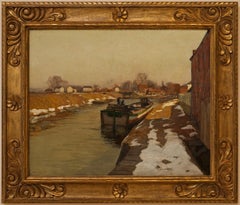
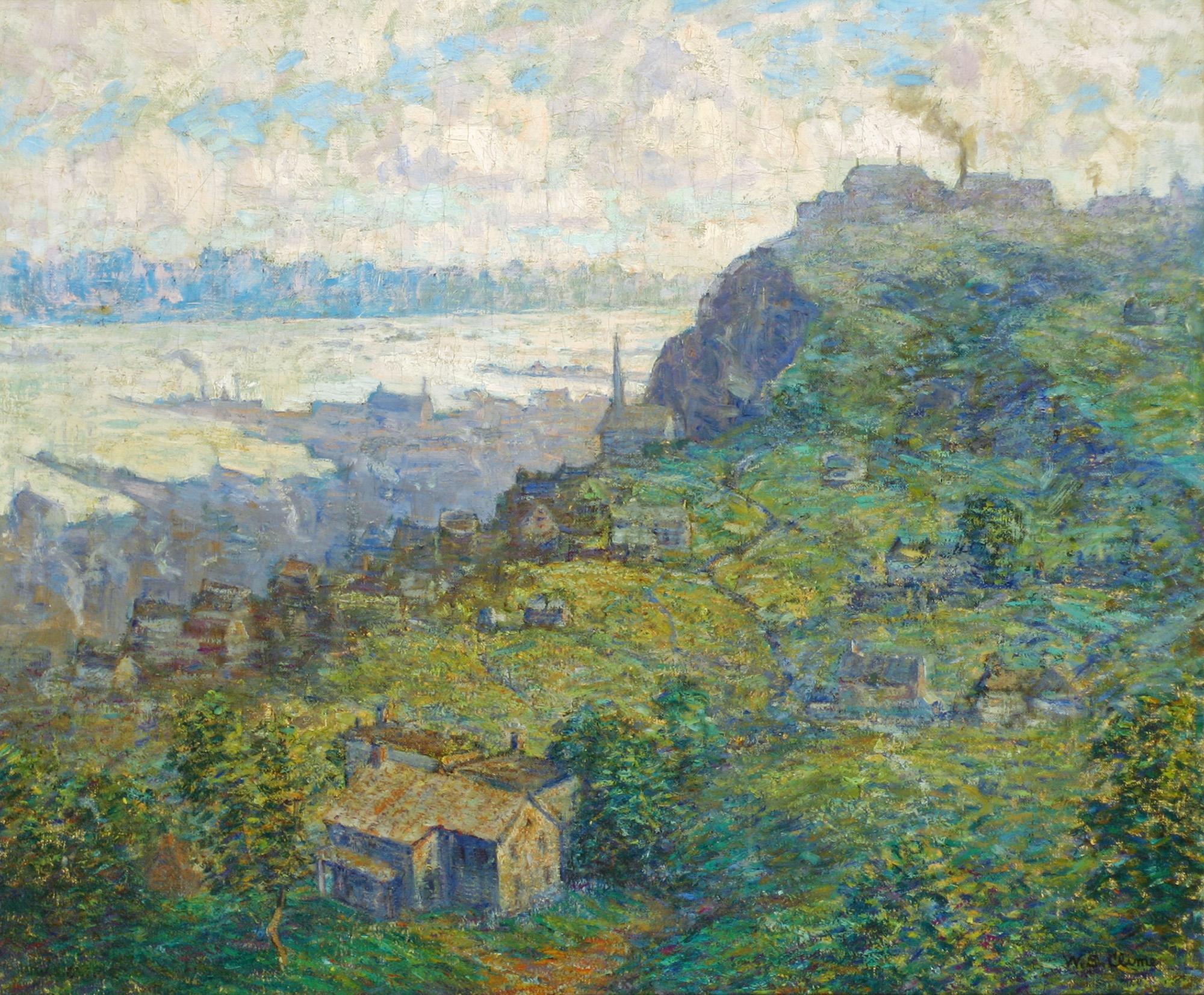
Hudson Palisades
By Winfield Scott Clime
Located in New York, NY
Winfield Scott Clime (1881-1958)
American, Philadelphia, PA - Old Lyme, CT
“Hudson Palisades” Late 19th - Early 20th century
Oil on canvas
30 x 25 in. unframed
Signed lower right: W...
Category
Early 20th Century American Impressionist Landscape Paintings
Materials
Canvas, Oil
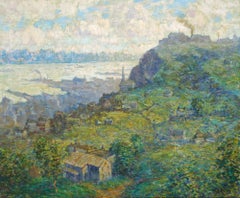
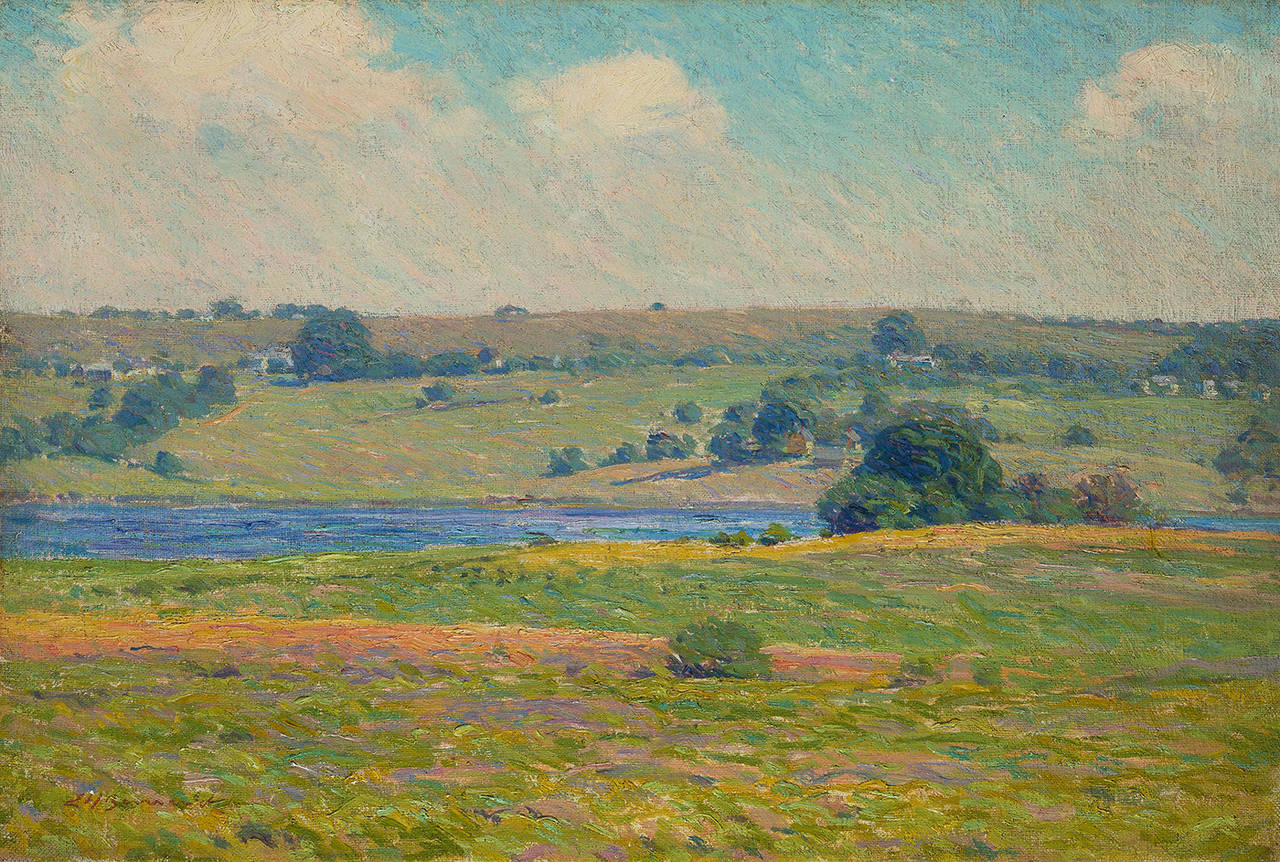
Mystic River Valley
By Edward Herbert Barnard
Located in New York, NY
Signed lower left: EH Barnard
Category
19th Century American Impressionist Landscape Paintings
Materials
Canvas, Oil
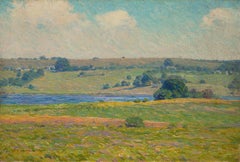
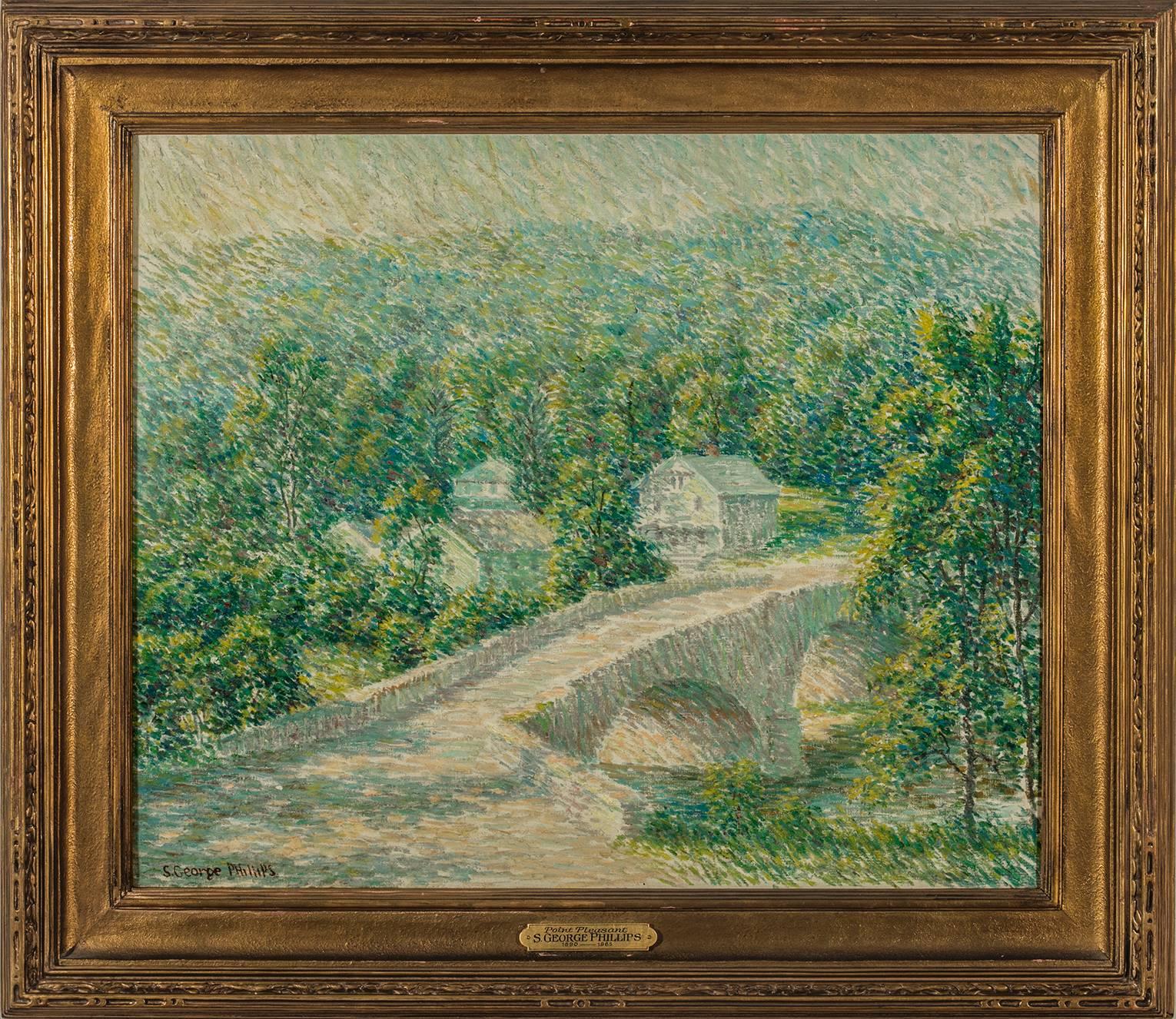
"Point Pleasant"
By S. George Phillips
Located in Lambertville, NJ
Jim’s of Lambertville is proud to offer this artwork.
Signed lower left.
Complemented by a period frame.
Illustrated in "New Hope for American Art" by Jim Alterman and "The Philadelphia Impressionists" by Thomas C. Folk, pg, 102, plate 45
S. George Phillips (1890 - 1965)
Regarded by some as “a poor man’s Garber” (“poor” needing to be redefined these days), S. George Phillips painted rich and colorful landscapes depicting views of the Delaware River and the environs surrounding New Hope. An extremely competent artist, Samuel George Phillips was born in Pennsylvania in 1890. He studied at the Pennsylvania Academy of the Fine Arts under William Merritt Chase, Cecilia Beaux, Hugh Breckenridge, and Daniel Garber. He then traveled to Europe to continue his studies.
Phillips began his career as an illustrator and commercial artist. His work appeared in The Saturday Evening Post, The Ladies’ Home Journal, McCall’s, and The Liberty Magazine. His best known work as an illustrator was the Santa Claus logo he designed for the Whitman Candy Company.
Around 1915, Phillips established a portrait studio in Philadelphia. Soon he was to become one of Philadelphia’s pre-eminent portraitists, painting many prominent socialites, politicians, and academicians. For fifty years, he commuted from his home in Atlantic City to his Philadelphia studio. Like many artists, painting was Phillips’s livelihood and although landscape painting was his passion, the bills were paid by money earned for commissioned portraits and illustration work. Phillips found portrait painting to be stressful and landscape painting to be relaxing, and as a result, he would frequently spend weekends in Bucks County, taking part-time residence at the Point Pleasant...
Category
1920s American Impressionist Landscape Paintings
Materials
Canvas, Oil
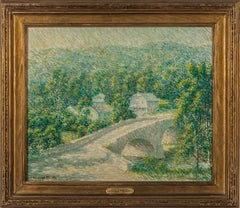
A Bit of New England
By Louis Oscar Griffith
Located in Fairlawn, OH
A Bit of New England
Oil on canvas,, 1908
Signed lower left corner: L. O. Griffith
Condition: Excellent
Canvas size: 26 x 38 inches
Frame size: 33 3/8 x 45 1/4 inches Note: origi...
Category
Early 1900s American Impressionist Landscape Paintings
Materials
Oil