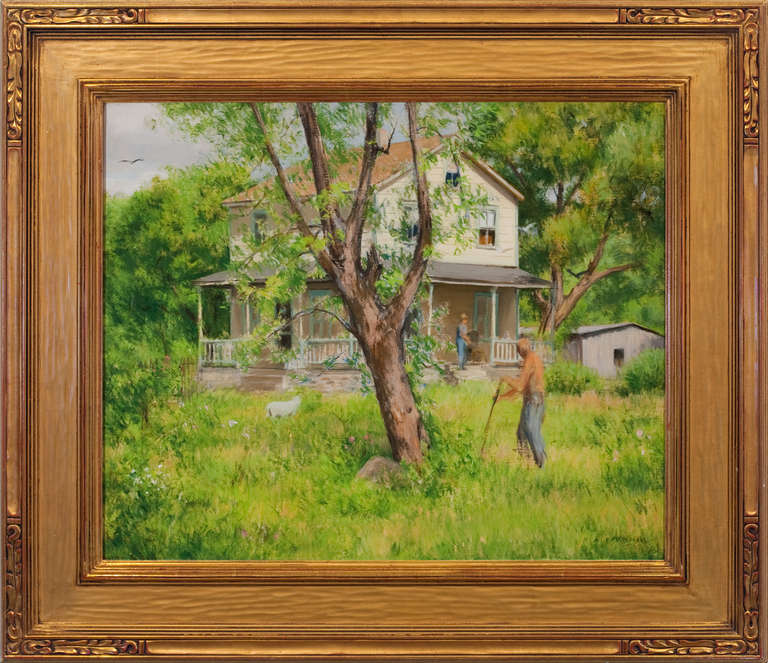
Items Similar to "A Man in His Garden, " Emil Carlsen, Backyard and Barn Impressionist Landscape
Want more images or videos?
Request additional images or videos from the seller
1 of 9
Emil Carlsen"A Man in His Garden, " Emil Carlsen, Backyard and Barn Impressionist Landscape1893
1893
$48,000
$60,00020% Off
£36,586.44
£45,733.0520% Off
€42,198.62
€52,748.2820% Off
CA$68,174.35
CA$85,217.9420% Off
A$73,260.51
A$91,575.6420% Off
CHF 39,308.52
CHF 49,135.6420% Off
MX$862,964.06
MX$1,078,705.0820% Off
NOK 494,260.99
NOK 617,826.2420% Off
SEK 451,504.22
SEK 564,380.2820% Off
DKK 315,375.84
DKK 394,219.8020% Off
About the Item
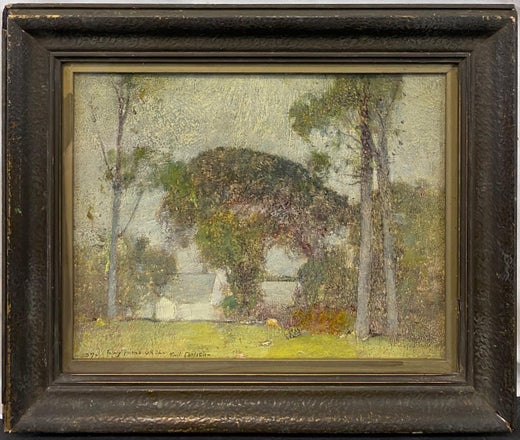
Soren Emil Carlsen (1848 - 1932)
A Man in His Garden, 1893
Oil on canvas
28 3/4 x 35 1/2 inches
Signed and dated lower right
Provenance:
The artist [1848-1932]
Macbeth Gallery, New York
Grand Central Art Galleries, New York
Luella May (Ruby) Carlsen (the artist's wife), New York
Dines Carlsen (the artist's son), Falls Village, Connecticut
Private Collection, Miami, Florida
Exhibited:
New York, Macbeth Gallery, Summer Exhibition: Painting by American Artists, July - August, 1926, no. 31 (as The Man in the Garden).
Houston, Texas, Museum of Fine Arts, Exhibition of Contemporary American Art by Members of the Grand Central Art Galleries, January 13 - 27, 1929 (as The Man in the Garden).
Miami Antique Fair, 2013.
This work is recorded in the artist's archives recorded by Bill Indursky.
Regarded today as one of the more prominent artists of the late 19th Century, Emil Carlsen spent many years as a penniless painter on the fringes of the art world, while he continued developing his still-life painting techniques that would take the rest of the art world several decades to fully appreciate.
Some historians have described Carlsen as having a rather uneventful life, and while there may be an absence of the kind of unpredictability and turbulence that make for interesting biographies, Carlsen's life seems, in retrospect, anything but dull. There was something of a bohemian streak in his personality, living in a remarkable number of places during the first many decades of his career.
Born Soren Emil Carlsen in Copenhagen around 1853, Carlsen first began his studies at the Royal Danish Academy as a teenager. Yet he was not to remain long there, leaving in 1872, at nineteen years old for America where he settled in Chicago, working for an illustration house to support himself.
By 1875, he had saved enough money to travel to both Paris and Copenhagen to paint and study, staying for six months before returning to America, this time to New York. By this time he had already developed a unique love affair with the still life. In New York he befriended fellow painters such as John Francis Murphy; yet the city could not contain him, and after only a year he relocated to Boston, where he developed a life-long friendship with Childe Hassam.
Carlsen remained quite poor throughout his time in Boston where he spent the next eight years. Yet his abilities were developing quite rapidly in still life painting, in a style which scholars refer to as "kitchen still lifes." These were still life scenes that often included fish or birds along with pots and pans which gave implied presence of the cook outside the frame, giving them a more human element than most still life subjects. This style very much echoed the work of the Dutch and Spanish Masters of still life, particularly that of Jean Simeon Chardin and, to a lesser degree, Johannes Vermeer. The similarity is not coincidental, as Carlsen spoke and wrote often of the influence of these artists on his own work, and yet he was already beginning to develop the eye for color, light and composition that today we regard as the undeniable Carlsen style.
In 1884 Carlsen moved again to Paris, staying for two years. Here, as always he kept a low profile, preferring the mediation of working in the studio to the more social and recreational gathering places of artists and expatriates. In 1887, Carlsen moved to San Francisco, working for the directorship of the San Francisco Art Association School, and in 1891 moved back to New York where he lived until 1901. It is during this period, in the last decade of the nineteenth century that could be regarded as the most formative in terms of the development of the techniques that produced the paintings for which he is most celebrated today.
Though still life had been an established genre throughout the century, it was not the easiest genre with an artist could earn a place in salons and was less reliable as a salable work of art. Often encouraged by other artists and would-be patrons to switch over to landscapes and marines to make better money, Carlsen resisted this for many years, remaining stubbornly in his pursuit of the still life. And when one looks at examples of Carlsen's work in this crucial transitory phase, one can tell that he felt himself truly on the verge of something wonderful. Many other artists perhaps felt the still life genre to have exhausted itself; that it offered few possibilities for new ground, and that it was certainly not a genre on which one bases the core of their work.
Yet as Carlsen began to move away from the traditional arrangements and elements of still lifes, he became increasingly fascinated by textures like the copper, bronze, brass and silver of pots and bowls and the shadows that their curves and lines produced against shaded backdrops. While the Dutch still life painters had already developed the moody tones of dark pockets and shadows, Carlsen brought out a great range of the emotions that accompany that moodiness. As he progressed, Carlsen managed to decontextualize the objects in his paintings, until they were no longer just brass and copper pots or the pure effects of the colors they radiated, but something in between; where it was no longer the actual use or purpose of an object that mattered in relation to other objects around them or the arbitrariness of their arrangement together, but the very singular existence of the objects themselves, separated from the people and the ordinary use they would have for it, as well as the ordinary light in which they would usually be seen. The dimness of the light only added to the mystery. And yet Carlsen's fascination with surfaces made him often instill his shadows with great textures that played with and complemented the qualities of the objects that seem to glow from the canvas. The effect is that even the 'somber' darkness of the shadows seem to radiate light and color.
It was not until the 1910's and 20's that Carlsen began to really benefit financially from his painting, even though he'd already had the respect of his fellow artists all along. Despite his long career and his wide travels, he left few written accounts of his travels, and thus there are many in his biography that historians have tried to reconstruct. His habit of dating some pictures and leaving others blank has also made it difficult to reconstruct the exact progression of his technique from picture to picture. He often abandoned certain traits only to pick them up again before finally discarding them as he honed his style and his eye. The result is evidence of an artistic meditation that progressed with consistency and caution.
Carlsen's death in 1932 was at the height of his popularity, and he left behind an admirable body of work in which he had redefined the cerebral and metaphysical effects a still life can have on a viewer. Then he broke the mold. Surviving him was his son Dines who had already become very successful in his own right, developing even further the unique techniques of color, light ands texture in still life from his father.
- Creator:Emil Carlsen (1853-1932, American)
- Creation Year:1893
- Dimensions:Height: 38 in (96.52 cm)Width: 45 in (114.3 cm)
- Medium:
- Movement Style:
- Period:
- Condition:
- Gallery Location:New York, NY
- Reference Number:1stDibs: LU184129917322
Emil Carlsen
Regarded today as one of the more prominent artists of the late 19th Century, Emil Carlsen spent many years as a penniless painter on the fringes of the art world, while he continued developing his still-life painting techniques that would take the rest of the art world several decades to fully appreciate. Born Soren Emil Carlsen in Copenhagen around 1853, Carlsen first began his studies at the Royal Danish Academy as a teenager. Yet he was not to remain long there, leaving in 1872, at nineteen years old for America where he settled in Chicago, working for an illustration house to support himself. By 1875, he had saved enough money to travel to both Paris and Copenhagen to paint and study, staying for six months before returning to America, this time to New York. By this time he had already developed a unique love affair with the still life. In New York he befriended fellow painters such as John Francis Murphy; yet the city could not contain him, and after only a year he relocated to Boston, where he developed a life-long friendship with Childe Hassam. Carlsen remained quite poor throughout his time in Boston where he spent the next eight years. Yet his abilities were developing quite rapidly in still life painting, in a style which scholars refer to as "kitchen still lifes." These were still life scenes that often included fish or birds along with pots and pans which gave implied presence of the cook outside the frame, giving them a more human element than most still life subjects. This style very much echoed the work of the Dutch and Spanish Masters of still life, particularly that of Jean Simeon Chardin and, to a lesser degree, Johannes Vermeer. The similarity is not coincidental, as Carlsen spoke and wrote often of the influence of these artists on his own work, and yet he was already beginning to develop the eye for color, light and composition that today we regard as the undeniable Carlsen style. It was not until the 1910's and 20's that Carlsen began to really benefit financially from his painting, even though he'd already had the respect of his fellow artists all along. Despite his long career and his wide travels, he left few written accounts of his travels, and thus there are many in his biography that historians have tried to reconstruct. He often abandoned certain traits only to pick them up again before finally discarding them as he honed his style and his eye. The result is evidence of an artistic meditation that progressed with consistency and caution. Carlsen's death in 1932 was at the height of his popularity, and he left behind an admirable body of work in which he had redefined the cerebral and metaphysical effects a still life can have on a viewer.
About the Seller
5.0
Platinum Seller
Premium sellers with a 4.7+ rating and 24-hour response times
Established in 2022
1stDibs seller since 2022
136 sales on 1stDibs
Typical response time: <1 hour
- ShippingRetrieving quote...Shipping from: New York, NY
- Return Policy
More From This Seller
View All"Corner of my Garden" Leon Foster Jones, Impressionist, Blooming Spring Flora
Located in New York, NY
Leon Foster Jones
Corner of my Garden, 1902
Signed and dated lower left
Oil on canvas
26 x 25 inches
Provenance
Goldfield Galleries, Los Angeles, California
Private Collection, Virginia Beach, Virginia
Leon Foster Jones was a painter of landscapes, an etcher, a lithographer, and an educator. He was born in Manchester, New Hampshire, his father held the position of overseer in one of the hosiery mills in the Manchester area. In approximately 1901, he married Josephine Currier. During the initial years of their marriage, the couple resided in Concord, New Hampshire. They made Port Jefferson, Long Island, New York their permanent home in 1910, although the artist had begun working there as early as 1907.
Numerous sources indicate that throughout his life, Jones gained recognition primarily for his paintings and etchings featuring historical sites across Long Island. His artistic education included four years at the Cowles Art School in Boston, Massachusetts, where he studied under Joseph Rodefer DeCamp...
Category
Early 1900s American Impressionist Figurative Paintings
Materials
Canvas, Oil
"Meadow Landscape in Summer, " Harold Dunbar, Factory Scene, Impressionism
By Harold Dunbar
Located in New York, NY
Harold C. Dunbar (1882 - 1953)
Meadow Landscape in Summer, 1929
Oil on canvas
17 1/2 x 21 inches
Signed and dated lower left
Harold C. Dunbar — painter, teacher, writer, and illustrator — was born in Brockton, MA on December 8, 1882. He resided in Chatham, MA and died in 1953. His work includes portraits, landscapes, street scenes, still lifes, harbors and coastal scenes.
Dunbar studied with Ernest Lee Major (1864-1950) and Joseph De Camp...
Category
1920s American Impressionist Landscape Paintings
Materials
Canvas, Oil
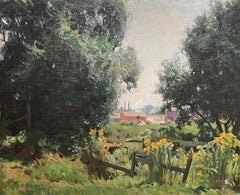
"Village Green" Mary Bradish Titcomb, Bright American Impressionist Landscape
Located in New York, NY
Mary Bradish Titcomb
Village Green
Signed lower left
Oil on canvas
24 x 20 inches
A native of Windham, New Hampshire, upon graduation from high school, Titcomb studied at the Massachusetts Normal Art School, before accepting a position as a drawing teacher in the public schools of Brockton, Massachusetts, where she remained for fourteen years before resigning, in 1889, to study painting at the School of the Museum of Fine Arts, Boston. Her instructors there included Edmund Charles Tarbell, Philip Leslie Hale, and Frank Weston Benson. In the 1890s she went to Paris to study with Jules Joseph Lefebvre and to travel. She then returned to Boston, taking studio space at the Harcourt Studios, where all three of her teachers kept space. In 1895 she became a member of the Copley Society and began exhibiting locally; from 1904 to 1927 she showed work in 29 exhibits at the Pennsylvania Academy of the Fine Arts. She began signing her name as "M. Bradish Titcomb" in 1905 to avoid prejudice against her gender. The same year saw her making a sketching trip to the artists' colony at Old Lyme, Connecticut, a center for the American Impressionists; this trip seems to have cemented her interest in the style.
In 1915, Titcomb's Portrait of Geraldine J. – the mother of actress Jane Russell – was shown at the Corcoran Gallery of Art and purchased by President Woodrow Wilson; another portrait, of Frank P. Sibley, was reproduced in the Boston Globe. During this period her work was shown in a traveling exhibition with that of Cecilia Beaux, Lydia Field Emmet, Jean MacLane...
Category
1910s American Impressionist Figurative Paintings
Materials
Canvas, Oil

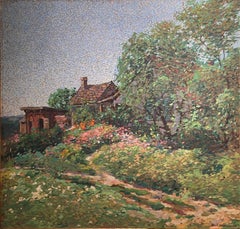
"Late Summer" Carl Wuermer, Pointilism, American Impressionism August Landscape
By Carl Wuermer
Located in New York, NY
Carl Wuermer (1900 - 1981)
Late Summer, 1924
Oil on canvas
26 x 28 inches
Signed and dated lower right
Provenance:
McColl Fine Art, North Carolina
Known for serene, realistic lands...
Category
1920s Pointillist Landscape Paintings
Materials
Canvas, Oil
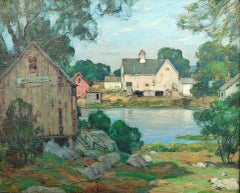
"Hyannis Pond" John F. Carlson, Massachusetts American Impressionist Landscape
By John F. Carlson
Located in New York, NY
John F. Carlson
Hyannis Pond, 1940
Signed lower left
Oil on board
16 x 20 inches
Provenance
Vose Galleries
Private Collection, New Jersey
The native Swede John Fabian Carlson beca...
Category
1940s American Impressionist Figurative Paintings
Materials
Oil, Board
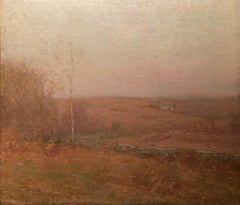
"Autumn Landscape, " Bruce Crane, Tonalist American Impressionist Fall Scene
By Bruce Crane
Located in New York, NY
Bruce Crane (1857 - 1937)
Autumn Landscape
Oil on canvas
25 x 30 inches
Signed lower right
Robert Bruce Crane was an American painter. He joined the Lyme Art Colony in the early 190...
Category
Early 20th Century Tonalist Landscape Paintings
Materials
Canvas, Oil
You May Also Like
“Julian Alden Weir’s House, 1907” American Impressionist Windham, Connecticut
By Emil Carlsen
Located in Yardley, PA
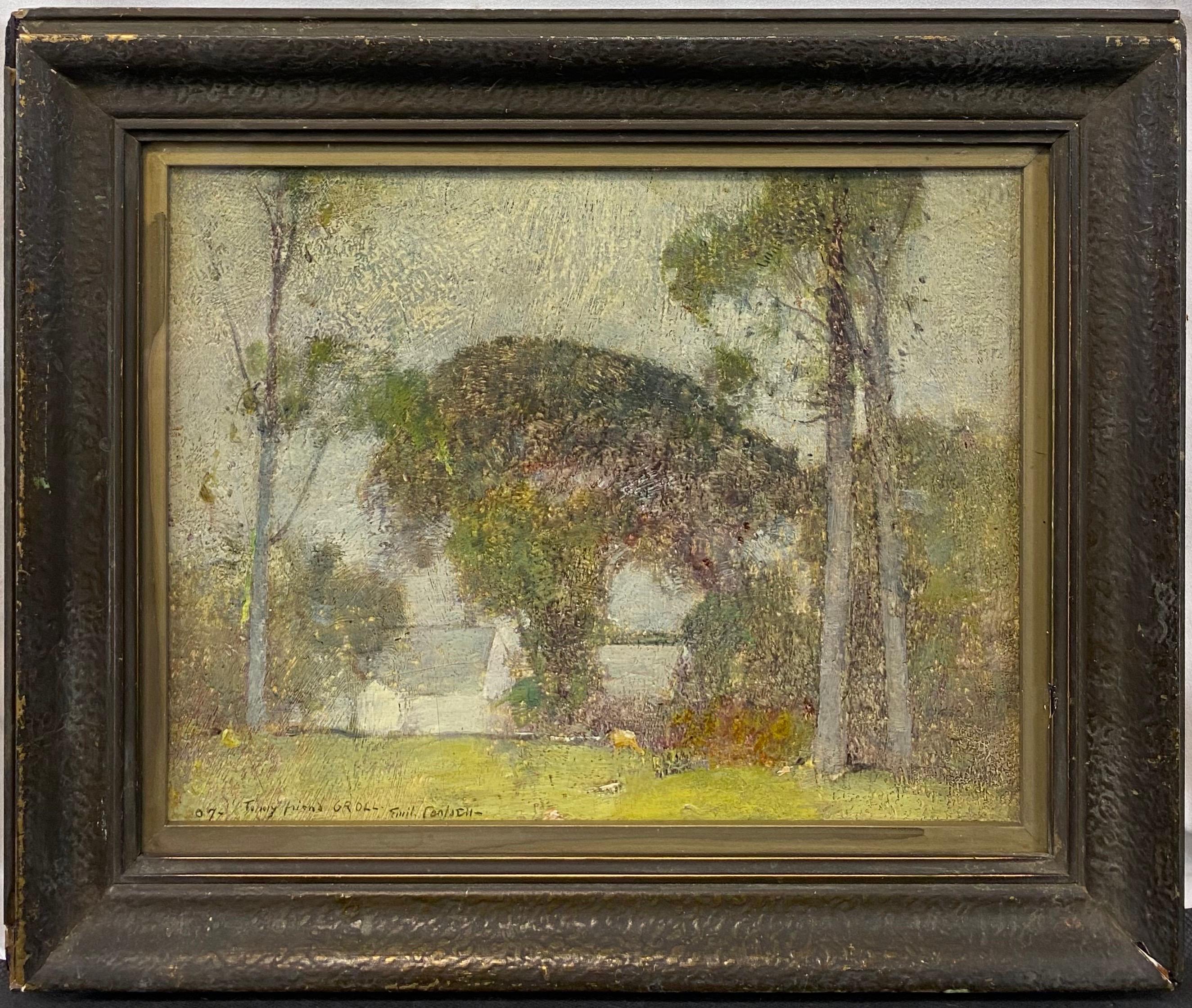
An important landscape work by renowned American impressionist Emil Carlsen (1853-1932).
This work depicts the Windham, Connecticut home of Carlsen’s closest friend and fellow artis...
Category
Early 1900s American Impressionist Landscape Paintings
Materials
Canvas, Oil, Board
"Yard Work, Stockton, NJ"
By Alexander Farnham
Located in Lambertville, NJ
Jim’s of Lambertville is proud to offer this artwork.
Signed lower right. Complemented by a hand carved and gilt frame.
Alexander Farnham (b.1926)
Alexander Farnham studied with Anne Steele Marsh, Van Deering Perrine, and at the Art Students League with George Bridgman...
Category
1950s American Impressionist Landscape Paintings
Materials
Canvas, Oil
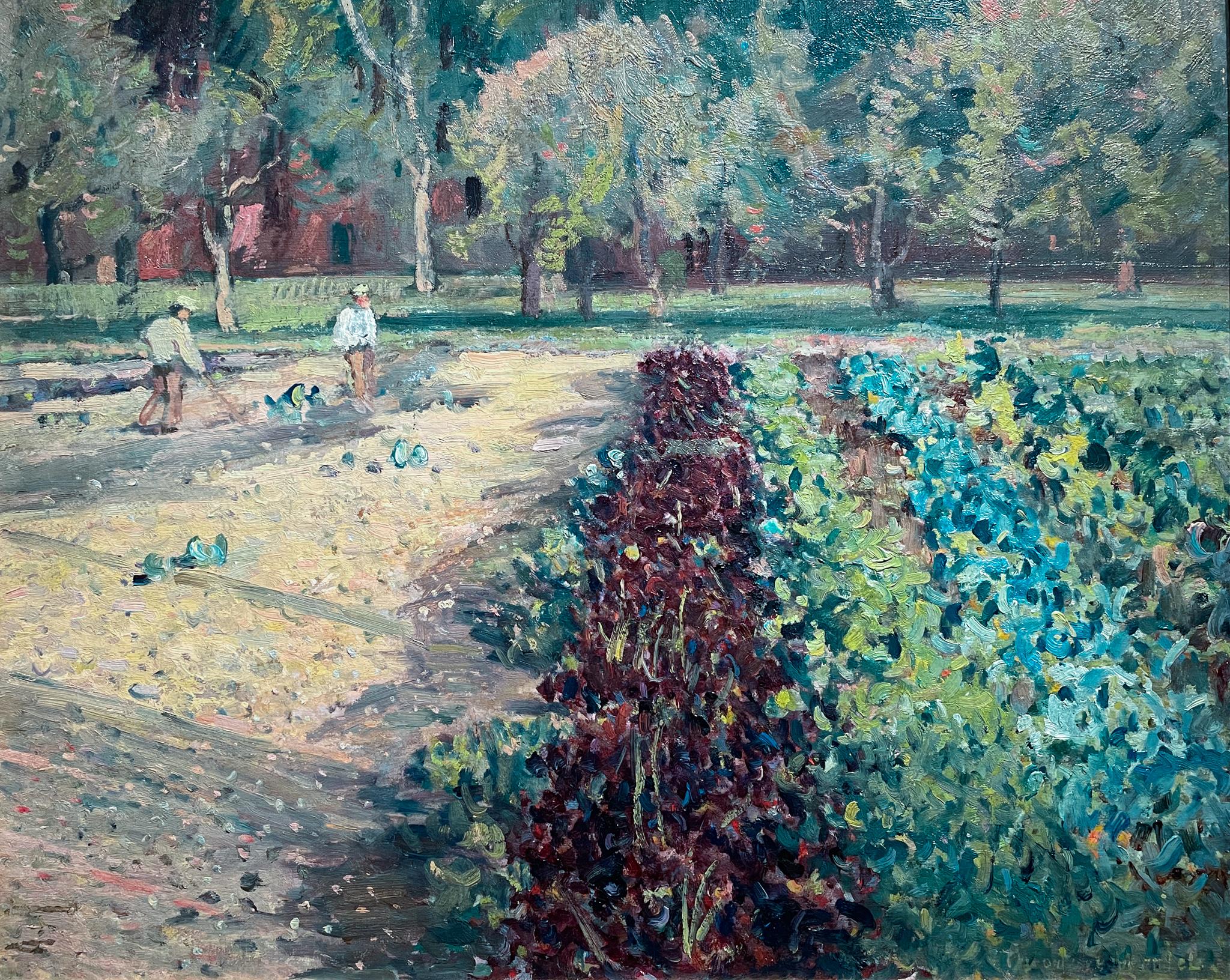
The Gardener’s Garden: 19th Century American Impressionist Oil
By Theodore Wendel
Located in New York, NY
The Gardener’s Garden, ca. 1859-1932, by Theodore Wendel (1859-1932)
Oil on canvas
18 x 22 inches unframed (45.72 x 55.88 cm)
29 ⅜ x 33 ½ inches framed...
Category
19th Century American Impressionist Landscape Paintings
Materials
Oil
Massachusetts Landscape Painter Bernard Corey
By Bernard Corey
Located in Rockport, MA
"Quiet Fields of Winter" by Bernard Corey is a beautiful landscape that showcases his exceptional talent for depicting tranquil, rural scenes throughout New England, particularly in ...
Category
20th Century American Impressionist Landscape Paintings
Materials
Oil
Emil Carlsen American Impressionist landscape oil Painting Salmagundi Club
By Soren Emil Carlsen
Located in Chesterfield, NJ
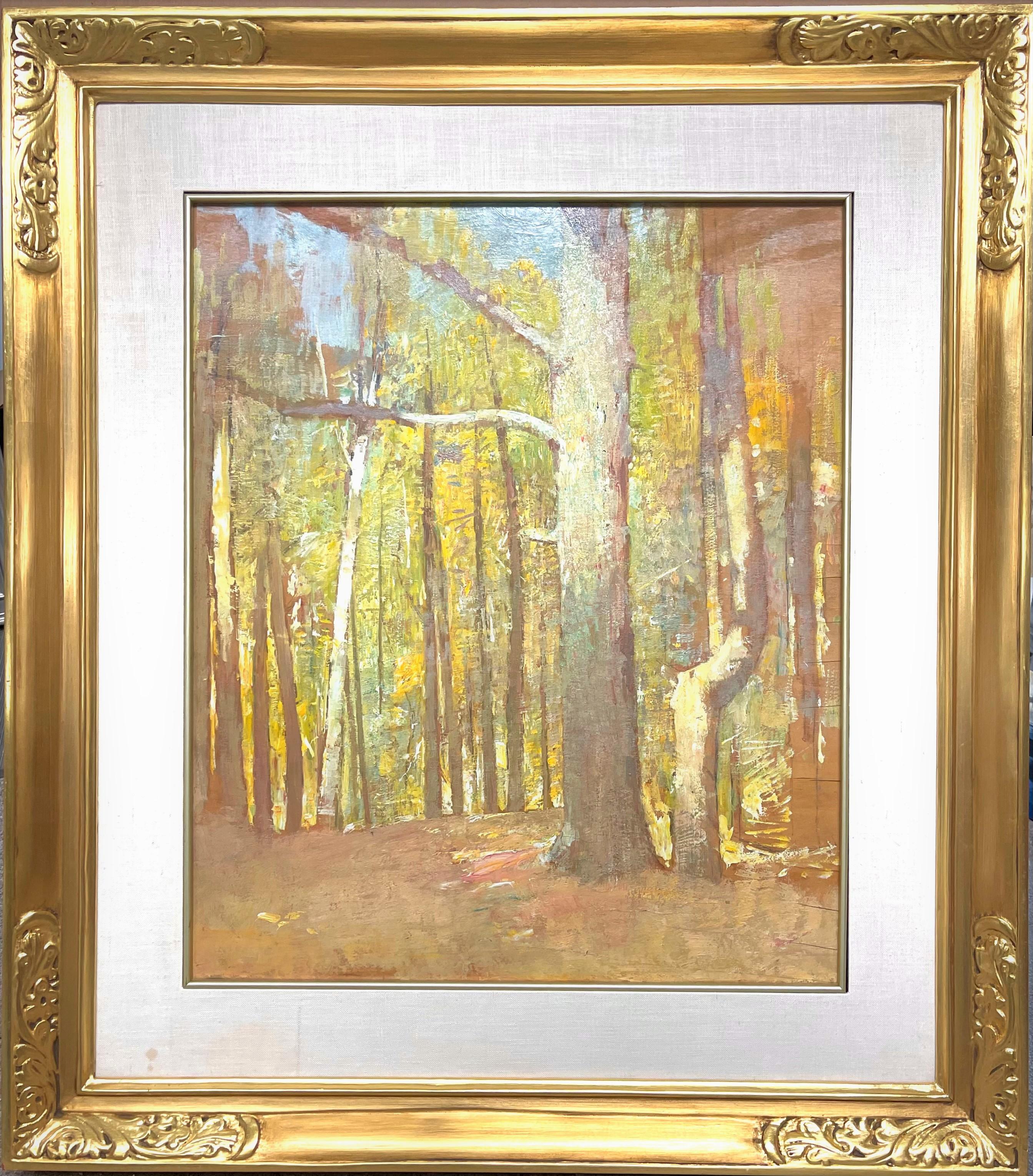
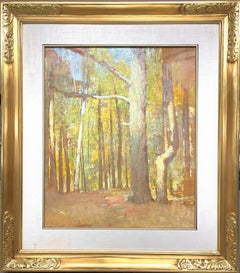
Yellow Landscape/Wood Interior/Birch Forest, Yellow Landscape
oil /panel
image 20 x 24 unframed, Framed 34 1/2 x 30 1/2
3 different titles on 3 labels verso
Not signed and bears ...
Category
Early 20th Century Tonalist Landscape Paintings
Materials
Oil
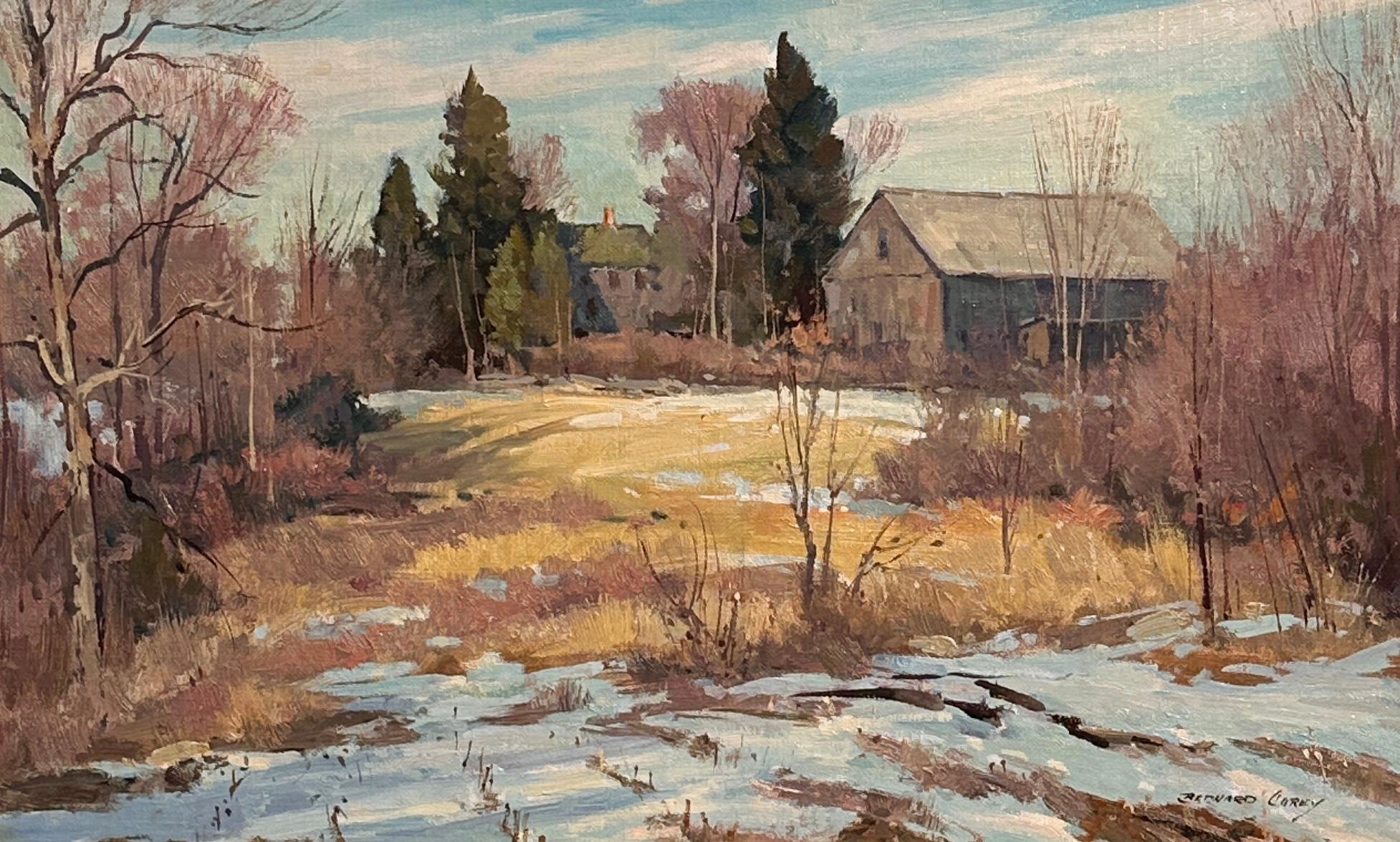
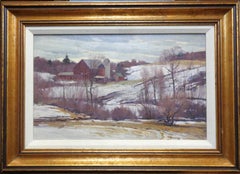
American Impressionist New England Rockport Bernard Corey Oil Painting Farm
By Bernard Corey
Located in Chesterfield, NJ
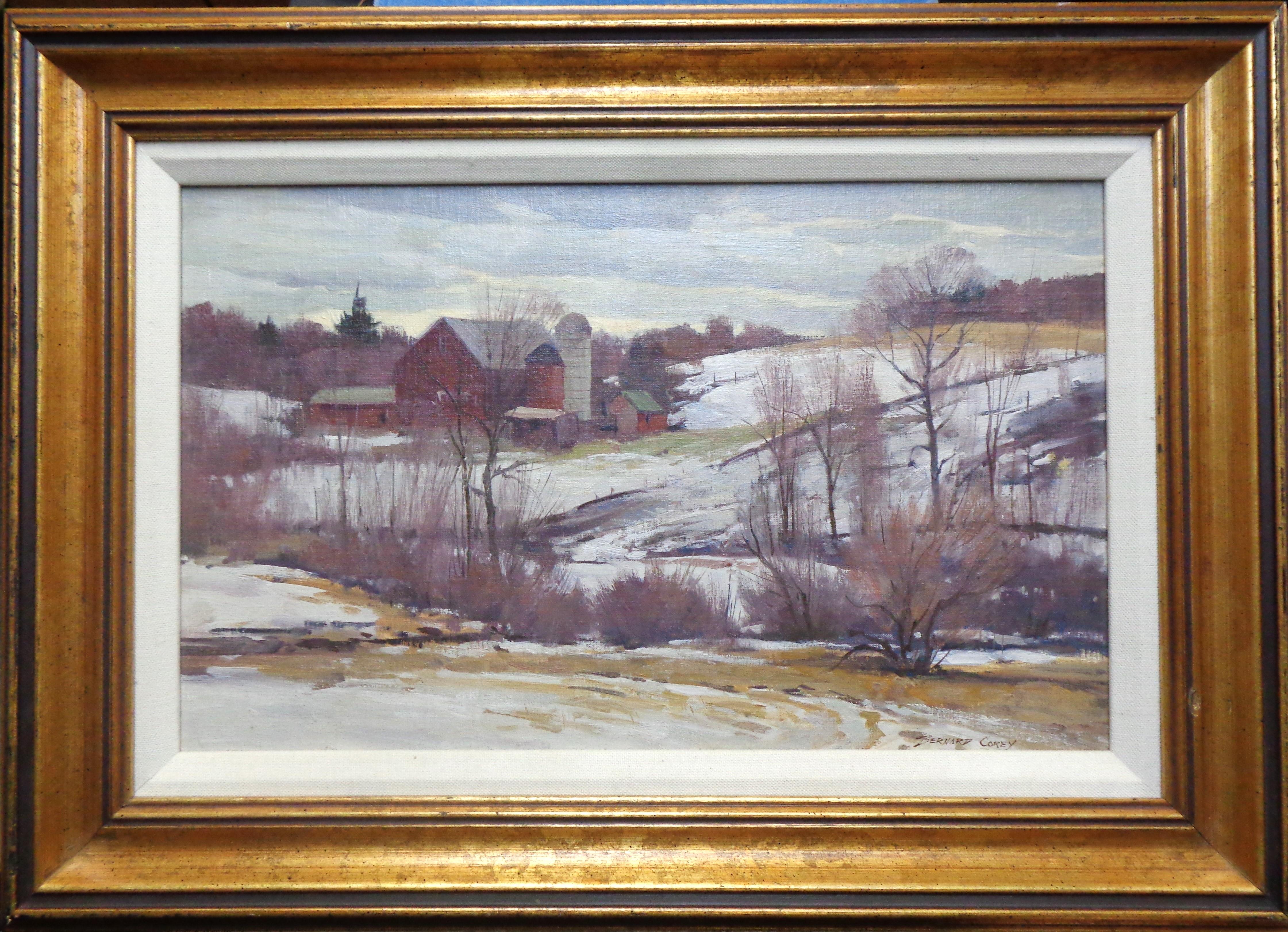
Rural Farm in Spring Snow
10 x 16 unframed, 15. 25 x 21.13 framed
Here is a wonderful Bernard Corey when he perfected his paintings of farm views with the rolling hills defined by se...
Category
21st Century and Contemporary Impressionist Landscape Paintings
Materials
Oil
More Ways To Browse
Antique Barn
Danish Paintings Of The 19th Century
Used Pots And Pans
Antique Pots And Pans
Emil Soren Carlsen
Hillier Parker
Holland Painting Of Boats
Hunting Scene Horse Hound
Idaho Landscape Painting
Impasto Painting Boat
Ireland Sketch
Irwin Whitaker
James Reynolds
Josep Maria Vayreda Canadell On Sale
Joshua Tree Painting
Jules Noel
Kansas Oil Painting
Kit Carson