Want more images or videos?
Request additional images or videos from the seller
1 of 7
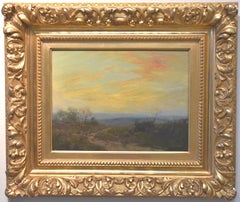
Frank Klepper"OLD FARM PLACE" FRAMED 15.5 X 19.520th Century
20th Century
$1,920List Price
About the Item
- Creator:Frank Klepper (1890 - 1952, American)
- Creation Year:20th Century
- Dimensions:Height: 10 in (25.4 cm)Width: 14 in (35.56 cm)Depth: 2 in (5.08 cm)
- More Editions Sizes:Image Size: 10 x 14 Frame Size: 15.5 x 19.5Price: $1,920
- Medium:
- Movement Style:
- Period:
- Framing:Frame IncludedFraming Options Available
- Condition:Please visit my 1stdibs storefront for a large selection of Vintage, Mid Century, and Contemporary Texas Art, paintings, Sculptures, pottery more. Charles Morin Fine Art.
- Gallery Location:San Antonio, TX
- Reference Number:1stDibs: LU769314235202
About the Seller
5.0
Vetted Professional Seller
Every seller passes strict standards for authenticity and reliability
Established in 1974
1stDibs seller since 2017
104 sales on 1stDibs
Typical response time: 1 hour
Authenticity Guarantee
In the unlikely event there’s an issue with an item’s authenticity, contact us within 1 year for a full refund. DetailsMoney-Back Guarantee
If your item is not as described, is damaged in transit, or does not arrive, contact us within 7 days for a full refund. Details24-Hour Cancellation
You have a 24-hour grace period in which to reconsider your purchase, with no questions asked.Vetted Professional Sellers
Our world-class sellers must adhere to strict standards for service and quality, maintaining the integrity of our listings.Price-Match Guarantee
If you find that a seller listed the same item for a lower price elsewhere, we’ll match it.Trusted Global Delivery
Our best-in-class carrier network provides specialized shipping options worldwide, including custom delivery.You May Also Like
Venice Landscape Italian Oil on Canvas Painting in Gilt Wood Frame, Belle Epoque
Located in Firenze, IT
This delightful turn of the century (early 20th century) oil on canvas painting represents an Italian landscape with one of the most famous squares in the world: Piazza San Marco in ...
Category
Early 20th Century Impressionist Landscape Paintings
Materials
Canvas, Oil

Venice Landscape Italian Oil on Canvas Painting in Gilt Wood Frame, Belle Epoque, Early 20th Century
$8,569 Sale Price
25% Off
H 51.19 in W 33.47 in D 1.19 in
Italian Impressionist Oil on Board Marine Landscape Painting Naples Bay View
By Francesco Coppola Castaldo
Located in Firenze, IT
Everyday fishermen life is captured in this wonderful Italian impressionist late 19th century oil painting on thin board titled fishermen ashore. We love the neutral and natural colo...
Category
Late 19th Century Impressionist Landscape Paintings
Materials
Oil, Board
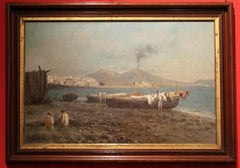
$4,209
H 20.08 in W 28.75 in D 1.19 in
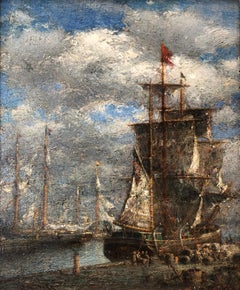
Home Safe
By James Gale Tyler
Located in Greenville, DE
Very well executed seascape. Alternate title "In Point" inscribed on the rear. 17 x 15in in frame, including linen liner. ...
Category
Late 19th Century Impressionist Landscape Paintings
Materials
Oil, Board
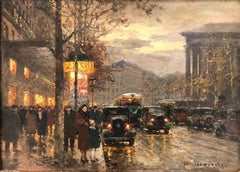
Boulevard de la Madeleine
By Édouard Leon Cortès
Located in Greenville, DE
Excellent example of Cortès Paris scene.
Provenance: Galerie Haussmann, Paris.Herbert Arnot, Inc., New York, New York (May 29, 1964).Country Store Gallery, Austin, Texas (February 2...
Category
Early 20th Century Impressionist Landscape Paintings
Materials
Canvas, Oil
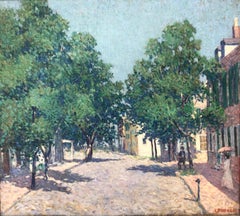
New Castle Street Scene
Located in Greenville, DE
An excellent example of Doragh's best work. The scene is believed to be New Castle, Delaware circa 1920. The painting has been professionally restored. The ...
Category
1920s Impressionist Landscape Paintings
Materials
Canvas, Oil
Moonlight and Mist
By Eliot Clark
Located in Greenville, DE
New York City artist Eliot Candee Clark was well known for his impressionist landscapes. He was the son of painter Walter Clark. Many of his paintin...
Category
Early 20th Century Impressionist Landscape Paintings
Materials
Canvas, Oil

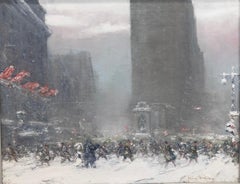
Macy
s In Winter
By Johann Berthelsen, 1883-1972
Located in Greenville, DE
23 1/4" x 27 1/2" in frame. Signed lower right.
Category
Mid-20th Century Impressionist Landscape Paintings
Materials
Canvas, Oil
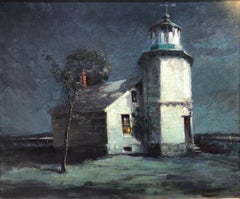
Still is the Night
By George Lambert
Located in Greenville, DE
George Lambert (1863-1946) *
Alternate title for painting is "Stonington Lighthouse". Signed lower right. Beautiful example of Lambert's best work. Painted very much in the style and...
Category
Early 20th Century Impressionist Landscape Paintings
Materials
Oil, Panel
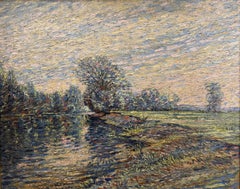
Bronx River Reflections
By Ernest Lawson
Located in Greenville, DE
Excellent example of Lawson's work. Wonderful, thick impasto. Signed lower right. 31 x 37 1/4 in excellent condition frame.
Category
Early 20th Century Impressionist Landscape Paintings
Materials
Canvas, Oil
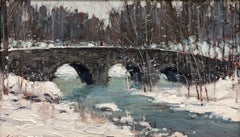
Bucks County Bridge
Located in Greenville, DE
Outstanding work by Bucks County artist David Hahn. The winter scene is of Bucks County Bridge painted with heavy imposto.
Category
Late 20th Century Impressionist Landscape Paintings
Materials
Masonite, Oil
More From This Seller
View All" Summer Evening Southwest Texas " 1909 Texas Hill Country Julian Onderdonk
By Julian Onderdonk
Located in San Antonio, TX
Julian Onderdonk "Summer Evening S. W. Texas" Texas Hill Country
(1882 - 1922)
San Antonio Artist
Image Size: 9 x 12
Frame Size: 15 x 18
Medium: Oil on panel
Dated 1909
"Summer Evening S. W. Texas"
"A Texas Painter Worked Under the Radar in New York," By Eve M. Kahn, March 6, 2014, The New York Times
Onderdonk, a San Antonio native who died of an intestinal ailment in 1922, at 40, is best known for painting swaths of Texas bluebonnets. Those canvases can bring more than $500,000 each, while his New York scenes usually end up in the five-figure range.
Onderdonk’s parents were painters in San Antonio, and in 1901, when he was a teenager, they sent him to New York for training. Through 1909, he lived in various Manhattan apartments and Staten Island houses. He then returned to Texas, but continued to spend months at a time in New York.
In 1902 he had married a Manhattan teenage neighbor, Gertrude Shipman. While she focused on raising their daughter, Adrienne, and worrying about their strained finances, “he created more than 600 works of art, often producing a painting or two a day,”
Eyewitnesses recorded his prolific pace in New York, but Onderdonk works bearing those dates rarely turn up. The puzzling gap in his productivity is explained in family correspondence that the Bakers uncovered: The artist admits that he was signing pieces with pseudonyms. He mostly used Chas. Turner and Chase Turner and occasionally resorted to Elbert H. Turner and Roberto Vasquez.
Julian Onderdonk was the son of the important Texas landscapist, Robert Onderdonk. He was the father's pupil at age 16. Sponsored by a Texas patron, he studied at the Art Students League in New York when he was 19, the pupil of Kenyon Cox, Frank DuMond, and Robert Henri. He also studied with William Merritt Chase on Long Island. In 1902, having lost his Texas patron because he married, he asked $18 for 12 paintings at a Fifth Avenue dealer in New...
Category
Early 1900s Impressionist Landscape Paintings
Materials
Oil
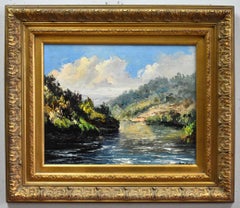
"RIVER BEND" OIL ON CANVAS APPLIED BY PALETTE KNIFE
By Jose Vives-Atsara
Located in San Antonio, TX
Jose Vives-Atsara
(1919-2004)
San Antonio Artist
Image Size: 16 x 20
Frame Size: 25 x 28.75
Medium: Oil on Canvas Applied by Palette Knife
"River Bend"
Biography
Jose Vives-Atsara (1919-2004)
His list of Pallbearers says it all. They were not just buyers of his art they were some of his closest friends.
Pallbearers: E. Glenn Biggs, James M. Cavender, III, Tom C. Frost, Jr., James W. Gorman, Jr., George B. Irish, Joseph R. Krier, Robert L. Mooney and H. Bartell Zachry, Jr.
Jose Vives-Atsara was born April 13, 1919, in Villafranca del Penedes near Barcelona, Spain. A native Spaniard, he developed a love of painting at an early age, and by age 11 had committed himself to becoming an artist. He studied at Colegio de San Ramon and had his first one-person show at age 14.
The Spanish Civil interrupted his idyllic young life as he was forced to serve in the Communist Army, and then was imprisoned, suffering many hardships.
Soon after the war he married Emilia Hill Domenech, and in 1947 set out to move with his wife and child aboard a tramp steamer to the United States. Unfortunately, immigration quotas did not allow them to move directly to the United States, and it was eight years before they achieved that goal. During this interim before obtaining temporary visas, he and his family lived first, in Caracas, Venezuela and then in Mexico City, Mexico.
The family settled in San Antonio, Texas, where he had made friends on a previous visit. He and his wife and children gained citizenship in time for their first Christmas in the United States. He became such an exemplary immigrant citizen that officials of the U.S. District Court for the Western District Court regularly invited him to share his thoughts and advice for living in America with newly naturalized citizens
Vives-Atsara also developed a close relationship with the Incarnate Word College, becoming, over the years, both a professor of art, and Artist in Residence. As a painter, he depicted many local scenes including San Antonio missions and the San Antonio River. For special guests such as Pope John Paul II, heads of state, and royalty from foreign countries, he was commissioned to provide paintings as gifts.
His paintings were also commissioned for Frost Bank and the San Antonio Chamber of Commerce. For his vibrant oil paintings, he used only nine colors, mixed in a variety of ways. They have been described as both realistic and impressionistic.
"Vives-Atsara believed that art is a reflection of the artist's soul, if this is true; his paintings reflect a beautiful, bright spirit." (Richardson) Jose Vives-Atsara died in San Antonio on January 13, 2004 and is buried there in Sunset Memorial Park Mausoleum.
Jose Vives-Atsara was born in Vilafranca del Panades in the Catalonian region of Spain on April 30, 1919. As a small boy he loved to sketch with pencil and paper. He began painting at the age of eleven. His first one-man show came at the ripe old age of fourteen. From that time on, painting has been his love and his way of life.
Jose studied art at Saint Raymond College and School of Fine Arts in Barcelona. He is quick to admit that his most inspirational teacher has been nature itself.
Mr. Vives-Atsara came to San Antonio in 1956 where he has established his art career. His use of a palette knife in painting allows him to blend rich pure pigments to achieve his goal of creating a powerful statement of color directly on the canvas. This style is intended to produce works that are distinctively 'Vives-Atsara'.
Vives-Atsara is represented in public collections including the Museum of Modern Art, Spain; Fort Worth Art Museum, Texas; His Royal Highness Juan Carlos...
Category
20th Century Impressionist Landscape Paintings
Materials
Oil
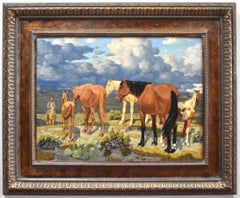
"APPROCHING STORM" WESTERN FRAMED 27.5 X 33.5
Located in San Antonio, TX
Fred Darge
(1900-1978)
Dallas
Image Size: 18 x 24
Frame Size: 27.5 x 33.5
Medium: Oil on Board
"Approaching Storm"
Biography
Fred Darge (1900-1978)
Friedrich Ernst Darge Born: March ...
Category
20th Century Impressionist Landscape Paintings
Materials
Oil
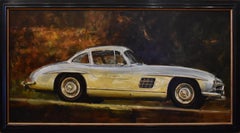
"GULLWING MERCEDES 300 SL COUPE". PAINTING OF RALPH LAUREN
S ALUMINUM GULLWING
By John Austin Hanna
Located in San Antonio, TX
John Austin Hanna
Born 1942
Fredericksburg Artist
Image Size: 24 x 48
Frame Size: 28 x 52
Medium: Oil on Canvas
Mercedes Benz 300SL "Gullwing" Coupe Ralph Lauren's personal vehicle
Biography
John Austin Hanna Born 1942
John Austin Hanna - Fredericksburg, Texas John graduated from Texas Tech University with a degree in Advertising Art & Design. As a 20-year illustrator in New York and Dallas he has been published in several magazines such as Automotive Quarterly, Car and Driver, Saga, Town & Country, Flying, Popular Boating, and Popular Science. He has also done work for several large corporations such as Mercedes, Volkswagen, Bell Helicopter, Lockheed Martin, Borden’s, Pearl Beer...
Category
20th Century Impressionist Landscape Paintings
Materials
Oil
"Bluebonnet Creek" Texas Hill Country 1957 39 x 49 Framed!!!
By Porfirio Salinas
Located in San Antonio, TX
Porfirio Salinas
(1910-1973)
San Antonio Artist
Image Size: 30 x 40
Frame Size: 39 x 49
Medium: Oil on Canvas
Dated 1957
"Bluebonnet Creek" Texas Hill Country
Biography
Porfirio Salinas (1910-1973)
Porfirio Salinas was a self-taught artist who painted landscapes of Central Texas with an emphasis on the vast bluebonnet fields that grow there in the springtime. Born in 1910 in Bastrop, Texas, he attended public schools in San Antonio. He also observed works in progress by the director of the San Antonio Art School, Jose Arpa, as well as landscape painter, Robert Wood. Wood is said to have paid Salinas five dollars a picture to paint bluebonnets because "he hated to paint bluebonnets". Salinas served in the military from 1943 to 1945. Although he was assigned to Fort Sam Houston, he was allowed to live at home. At the fort, Colonel Telesphor Gottchalk assigned him to paint murals for the officer's lounge and various other projects, and Salinas continued to be able to paint during his entire conscripted period. Even before he achieved notoriety among galleries, dealers, and museums, Salinas was widely followed and appreciated by many Texans, including former President Lyndon B. Johnson, who may be considered responsible for launching Salinas popularity beyond the boundaries of Texas. In 1973, Texas capital, Austin, honored Salinas for having "done much to bring the culture of Mexico and Texas closer together with his paintings". Salinas died in April 1973 in San Antonio, Texas.
From
the years of the Great Depression through President Lyndon Johnson's
Great Society of the 1960s, Texan Porfirio Salinas (1910-1973) remained
one of the Lone Star State's most popular artists. Today, his works
remain popular with Texas collectors and those who love landscapes of
the beautiful "Hill Country" that lies in the center of the
state. One of the first Mexican American painters to become
widely recognized for his art, Salinas was a favorite of President
Lyndon Johnson and his wife, Lady Bird Johnson, as well as of Sam
Rayburn, the longest-serving Speaker of the House of Representatives,
and Texas Governor John Connelly. In fact, President Johnson was so
enamored with his Salinas paintings that the artist will forever be
associated with America's first Texas-born President. Works by Porfirio
Salinas are in a number of museum collections, grace the halls of the
Texas State Capitol and the Governor's Mansion in Austin, and are
included in virtually every major private collection of Early Texas Art.
Porfirio
Salinas was born on November 6, 1910, near the small town of Bastrop,
Texas, about thirty miles from Austin. His father, Porfirio G. Salinas
(1881-1967), and his mother, Clara G. Chavez, struggled to make a
hardscrabble living as tenant farmers, but eventually were forced to
give up farming. The family moved to San Antonio, where Salinas' father
was able to get a job working as a laborer for the railroad, but the
scenic area around Bastrop, with its pine trees and the wide expanse of
the Rio Grande River, would forever remain a touchstone for the artist.
For the rest of his life, Salinas and his brothers went back frequently
to visit their grandmother in her little farmhouse. When in Bastrop,
Porfirio painted on the banks of the Rio Grande or in the groves of
pine trees. The Salinas family was close-knit and Porfirio was the
middle child of five children, so he had an older brother and sister as
well as a younger brother and sister. His mother was a native of
Mexico, so throughout his childhood the family made the long drive to
Mexico to visit Clara Salinas' family.
As a child growing up in
the bi-lingual section of San Antonio, Salinas drew and painted
incessantly and by the time he was ten, he was already producing work
that was mature enough to sell to his schoolteachers. Many years later
in an article in the New York Times he was described as a "boy whose
textbooks were seldom opened and whose sketchbook was never closed."
Instead of studying, the young artist spent his spare time watching
artists paint in and around San Antonio. As an aspiring painter,
Salinas was fortunate to grow up in the historic city, which had the
most active art scene in Texas. It was his exposure to older,
professional painters that encouraged the precocious young painter to
leave school early in order to help his family and pursue a career as a
professional artist, despite his father's inability to see art as a
career with any future for his son.
When Salinas was about
fifteen he came to know the artist Robert W. Wood (1889-1979). He met
Wood while he was employed in an art supply store and he soon began to
work as an assistant to the English-born painter, who had moved from
Portland to San Antonio in 1924. Although the diminutive Englishman was
already an established professional artist, he did not have a great
deal of formal art training and so he was then studying with the
academically trained Spanish painter Jose Arpa (1858-1952) in order to
augment his knowledge and give his work a more polished look. Salinas
was an eager young man, and while working in Wood's downtown San
Antonio studio he learned to stretch canvases, frame paintings and to
sketch in larger compositions from small plein-air studies for the
English artist. He began to accompany Wood and Arpa to the hills
outside San Antonio, where they painted small Plein-air studies of
fields of blue lupin - the state flower, the famous "Bluebonnets" of
Texas - in the springtime and scenes of the gnarled Red Oaks as they
changed color in the fall. He was soon assisting Wood in the tedious
work of painting the tiny blue flowers that collectors wanted to see in
the landscapes they purchased of central Texas. According to a
1972 newspaper story, "Legend has it that one day in the 1920s artist
Robert Wood decided he could not bear to paint another bluebonnet in
one of his landscapes. He hired young Porfirio Salinas to paint
them in for him at five dollars a painting." Whether this story is
accurate or apocryphal isn't clear, but the ambitious and independent
young Salinas wasn't destined to be anyone's assistant for very long.
The
formative event of Porfirio Salinas' teenage years was the Texas
Wildflower Competitive Exhibitions, a Roaring-Twenties dream of the
eccentric oilman Edgar B. Davis (1873-1951). These competitive shows of
paintings of wildflowers and Texas life were mounted in San Antonio
from 1927 to 1929. Held at the newly opened Witte Museum each spring,
the exhibition featured large cash prizes donated by the philanthropic
Davis, which were an inducement for artists to travel from all over the
United States to paint in the Hill Country of Texas. The "Davis
Competitions," as they were known, helped to cement San Antonio's
reputation as an art center, a legacy that remains with the "River
City" today. The shows generated a great deal of excitement in the
area, helping to make celebrities of the some of the artists who had
already settled there and encouraging others to make San Antonio their
home. Over the three years that the wildflower competitions were held,
more than 300 paintings were exhibited, and many thousands of viewers
saw the paintings at the Witte Museum and on tours throughout the state
and in New York. Each year Davis would generously purchase the winning
paintings and then donate them to the San Antonio Art League. Young
Porfirio Salinas would have been able to not only watch his two mentors
- Robert W. Wood and Jose Arpa - paint the works that they entered in
the Davis Competitions, he would have been able to see Arpa take
several of the major prizes, receiving the judge's accolades for
"Verbena," "Cactus Flower" and "Picking Cotton," works that are still
on view at the San Antonio Art League Museum today. Unfortunately,
Davis eventually put his donations to work in other charitable
endeavors, bringing to an end the wildflower events, but only after
they inspired Salinas and other young painters and had helped to make
wildflower paintings the most sought-after subject for traditionalist
Texas collectors.
In 1930, when he was only twenty, Salinas
hung out a shingle and began to paint professionally, augmenting the
sales of his easel paintings with what little business he could garner
by painting signs for local concerns. It was a struggle for the young
artist to make a living, as the effects of the Great Depression were
settling in. His early works are very similar to those of Robert
Wood's, both in subject matter and treatment. Salinas did small
paintings of Bluebonnets for the tourists who visited San Antonio to
see the famous Alamo as well as paintings of the Texas missions...
Category
1950s Impressionist Landscape Paintings
Materials
Oil
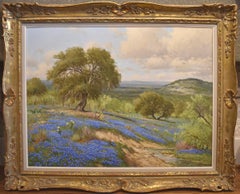
"Lazy Days Blues" TEXAS BLUEBONNETS, NICE LARGER SIZE LANDSCAPE CIRCA 1950
By Porfirio Salinas
Located in San Antonio, TX
Porfirio Salinas
(1910-1973)
San Antonio Artist
Image Size: 25 x 30
Frame Size: 34 x 39
Medium: Oil on Canvas
Circa 1950
"Lazy Day Blues" Texas Bluebonnet
Biography
Porfirio Salinas (1910-1973)
Porfirio Salinas was a self-taught artist who painted landscapes of Central Texas with an emphasis on the vast bluebonnet fields that grow there in the springtime. Born in 1910 in Bastrop, Texas, he attended public schools in San Antonio. He also observed works in progress by the director of the San Antonio Art School, Jose Arpa, as well as landscape painter, Robert Wood. Wood is said to have paid Salinas five dollars a picture to paint bluebonnets because "he hated to paint bluebonnets". Salinas served in the military from 1943 to 1945. Although he was assigned to Fort Sam Houston, he was allowed to live at home. At the fort, Colonel Telesphor Gottchalk assigned him to paint murals for the officer's lounge and various other projects, and Salinas continued to be able to paint during his entire conscripted period. Even before he achieved notoriety among galleries, dealers, and museums, Salinas was widely followed and appreciated by many Texans, including former President Lyndon B. Johnson, who may be considered responsible for launching Salinas popularity beyond the boundaries of Texas. In 1973, Texas capital, Austin, honored Salinas for having "done much to bring the culture of Mexico and Texas closer together with his paintings". Salinas died in April 1973 in San Antonio, Texas.
From
the years of the Great Depression through President Lyndon Johnson's
Great Society of the 1960s, Texan Porfirio Salinas (1910-1973) remained
one of the Lone Star State's most popular artists. Today, his works
remain popular with Texas collectors and those who love landscapes of
the beautiful "Hill Country" that lies in the center of the
state. One of the first Mexican American painters to become
widely recognized for his art, Salinas was a favorite of President
Lyndon Johnson and his wife, Lady Bird Johnson, as well as of Sam
Rayburn, the longest-serving Speaker of the House of Representatives,
and Texas Governor John Connelly. In fact, President Johnson was so
enamored with his Salinas paintings that the artist will forever be
associated with America's first Texas-born President. Works by Porfirio
Salinas is in a number of museum collections, grace the halls of the
Texas State Capitol and the Governor's Mansion in Austin, and are
included in virtually every major private collection of Early Texas Art.
Porfirio
Salinas was born on November 6, 1910, near the small town of Bastrop,
Texas, about thirty miles from Austin. His father, Porfirio G. Salinas
(1881-1967), and his mother, Clara G. Chavez, struggled to make a
hardscrabble living as tenant farmers, but eventually were forced to
give up farming. The family moved to San Antonio, where Salinas' father
was able to get a job working as a laborer for the railroad, but the
scenic area around Bastrop, with its pine trees and the wide expanse of
the Rio Grande River, would forever remain a touchstone for the artist.
For the rest of his life, Salinas and his brothers went back frequently
to visit their grandmother in her little farmhouse. When in Bastrop,
Porfirio painted on the banks of the Rio Grande or in the groves of
pine trees. The Salinas family was close-knit, and Porfirio was the
middle child of five children, so he had an older brother and sister as
well as a younger brother and sister. His mother was a native of
Mexico, so throughout his childhood the family made the long drive to
Mexico to visit Clara Salinas' family.
As a child growing up in
the bi-lingual section of San Antonio, Salinas drew and painted
incessantly and by the time he was ten, he was already producing work
that was mature enough to sell to his schoolteachers. Many years later
in an article in the New York Times he was described as a "boy whose
textbooks were seldom opened and whose sketchbook was never closed."
Instead of studying, the young artist spent his spare time watching
artists paint in and around San Antonio. As an aspiring painter,
Salinas was fortunate to grow up in the historic city, which had the
most active art scene in Texas. It was his exposure to older,
professional painters that encouraged the precocious young painter to
leave school early in order to help his family and pursue a career as a
professional artist, despite his father's inability to see art as a
career with any future for his son.
When Salinas was about
fifteen he came to know the artist Robert W. Wood (1889-1979). He met
Wood while he was employed in an art supply store and he soon began to
work as an assistant to the English-born painter, who had moved from
Portland to San Antonio in 1924. Although the diminutive Englishman was
already an established professional artist, he did not have a great
deal of formal art training and so he was then studying with the
academically trained Spanish painter Jose Arpa (1858-1952) in order to
augment his knowledge and give his work a more polished look. Salinas
was an eager young man, and while working in Wood's downtown San
Antonio studio he learned to stretch canvases, frame paintings and to
sketch in larger compositions from small plein-air studies for the
English artist. He began to accompany Wood and Arpa to the hills
outside San Antonio, where they painted small Plein-air studies of
fields of blue lupin - the state flower, the famous "Bluebonnets" of
Texas - in the springtime and scenes of the gnarled Red Oaks as they
changed color in the fall. He was soon assisting Wood in the tedious
work of painting the tiny blue flowers that collectors wanted to see in
the landscapes they purchased of central Texas. According to a
1972 newspaper story, "Legend has it that one day in the 1920s artist
Robert Wood decided he could not bear to paint another bluebonnet in
one of his landscapes. He hired young Porfirio Salinas to paint
them in for him at five dollars a painting." Whether this story is
accurate or apocryphal isn't clear, but the ambitious and independent
young Salinas wasn't destined to be anyone's assistant for very long.
The
formative event of Porfirio Salinas' teenage years was the Texas
Wildflower Competitive Exhibitions, a Roaring-Twenties dream of the
eccentric oilman Edgar B. Davis (1873-1951). These competitive shows of
paintings of wildflowers and Texas life were mounted in San Antonio
from 1927 to 1929. Held at the newly opened Witte Museum each spring,
the exhibition featured large cash prizes donated by the philanthropic
Davis, which were an inducement for artists to travel from all over the
United States to paint in the Hill Country of Texas. The "Davis
Competitions," as they were known, helped to cement San Antonio's
reputation as an art center, a legacy that remains with the "River
City" today. The shows generated a great deal of excitement in the
area, helping to make celebrities of the some of the artists who had
already settled there and encouraging others to make San Antonio their
home. Over the three years that the wildflower competitions were held,
more than 300 paintings were exhibited, and many thousands of viewers
saw the paintings at the Witte Museum and on tours throughout the state
and in New York. Each year Davis would generously purchase the winning
paintings and then donate them to the San Antonio Art League. Young
Porfirio Salinas would have been able to not only watch his two mentors
- Robert W. Wood and Jose Arpa - paint the works that they entered in
the Davis Competitions, he would have been able to see Arpa take
several of the major prizes, receiving the judge's accolades for
"Verbena," "Cactus Flower" and "Picking Cotton," works that are still
on view at the San Antonio Art League Museum today. Unfortunately,
Davis eventually put his donations to work in other charitable
endeavors, bringing to an end the wildflower events, but only after
they inspired Salinas and other young painters and had helped to make
wildflower paintings the most sought-after subject for traditionalist
Texas collectors.
In 1930, when he was only twenty, Salinas
hung out a shingle and began to paint professionally, augmenting the
sales of his easel paintings with what little business he could garner
by painting signs for local concerns. It was a struggle for the young
artist to make a living, as the effects of the Great Depression were
settling in. His early works are very similar to those of Robert
Wood's, both in subject matter and treatment. Salinas did small
paintings of Bluebonnets for the tourists who visited San Antonio to
see the famous Alamo as well as paintings of the Texas missions...
Category
1950s Impressionist Landscape Paintings
Materials
Oil
Still Thinking About These?
All Recently ViewedMore Ways To Browse
Still Life Oil Painting Valuable
Texas Wildflowers
Red Rocks
Santa Cruz Painting
Snow Mountain Art
Taos New Mexico Art
Victorian Oil Paintings Of Sheep
William Hiller
Boats In Harbor Painting
Clifford Brown
Hawaii Oil
Lake District Art
Lake House Art
Oil Paintings 1971
Olive Tree Painting
Paintings Of Barns
Paintings Of Storm
Railway Painting