Items Similar to "Colossi of Memnon, Egypt" Rare Orientalist Landscape Painting by F.A. Bridgman
Video Loading
Want more images or videos?
Request additional images or videos from the seller
1 of 16
Frederick Arthur Bridgman"Colossi of Memnon, Egypt" Rare Orientalist Landscape Painting by F.A. BridgmanC. 1874
C. 1874
$52,600
£40,096.82
€45,807.49
CA$74,015.62
A$81,070.05
CHF 42,683.39
MX$967,544.07
NOK 543,961.53
SEK 497,262.83
DKK 342,305.13
About the Item
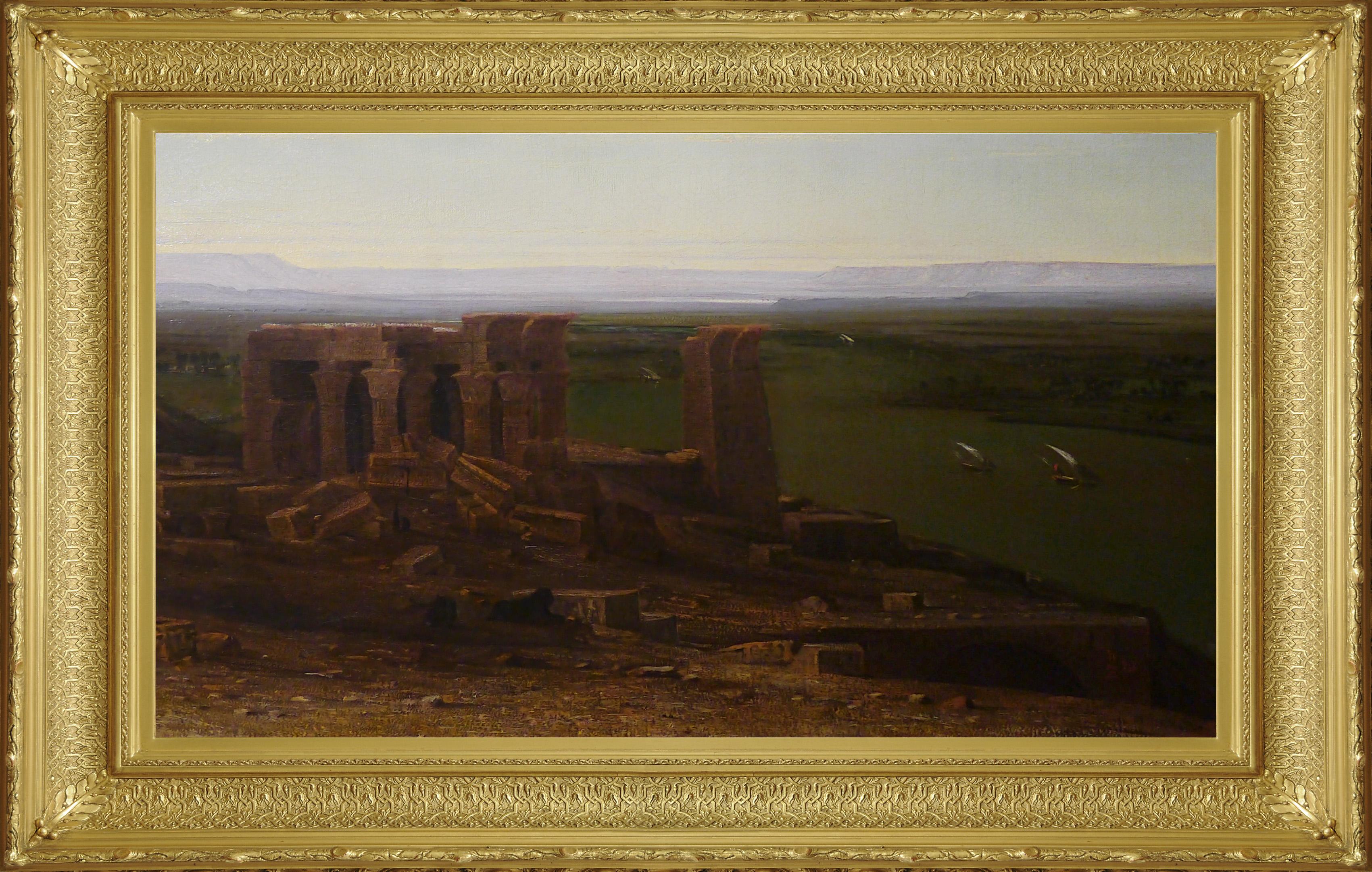
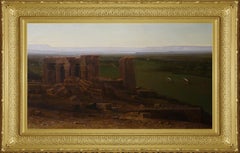
"Colossi of Memnon, Egypt" Rare Orientalist Landscape Painting by Frederick Arthur Bridgman (American, 1847-1928)
A wonderful oil on canvas painting by American orientalist painter Frederick Arthur Bridgman depicting The Colossi of Memnon - two large stone statues of Pharaoh Amenhotep III, who reigned in Egypt during the Eighteenth Dynasty of Egypt. The statues are located in Thebes.
This rare work was painted on Bridgman's first trip to the Middle East which span from 1872 - 1874. In the time Bridgman worked mostly "plein air" - painting on the spot. He also executed views of the ruins at Abu Simbel in the same year. This is the only known work from this time that was executed at Thebes. Signed lower right.
Canvas: 12" high x 17" wide
Frame: 18" high x 23" wide
A similar example was sold: Christies 19TH CENTURY EUROPEAN ART AND ORIENTALIST ART, 23 Oct 2007, Lot 80
($97,000)
In very good condition, ready to hang no damages noted. Relined, c. 1950.
Frederick Bridgman started out in 1863 as an engraver for the American Banknote Company and went on to produce steel engravings. He went to Paris in 1866 and worked in Gérome's studio at the École des Beaux-Arts. He spent time in Brittany at Pont-Aven until 1871, before going to North Africa and Egypt in 1872 and remaining there for five years. He took part regularly in the Paris Salons, notably the Salon des Artistes Français and the Salon of the Société Coloniale des Artistes Français. He also exhibited in London at the Royal Academy and the Suffolk Street Gallery. Bridgman exhibited at the Exposition Universelle of 1878, 1889 and 1900, receiving a silver medal at each of the exhibitions. He was decorated with the Légion d'Honneur in 1878 and was made Officier in 1907. He became a member of the National Academy, New York, in 1881, and of the Société des Artistes Peintres, Paris.
Bridgman's travels in North Africa and Egypt brought about a radical change in his palette, which became much paler. He was also a photographer and often worked from his photographs when painting, depicting a world of richly adorned women in veils and using transparent effects and white on white. As well as his scenes of everyday life, Bridgman also painted historical subjects from Ancient Egypt and Assyria, such as Pharaoh Crossing the Red Sea and Royal Entertainment at Nineveh. A cultivated man, Bridgman studied musical composition with Charles-Marie Widor and wrote several books on art. In New York in 1890, he published Winters in Algiers, which he illustrated with his paintings.
- Creator:Frederick Arthur Bridgman (1847 - 1928, American)
- Creation Year:C. 1874
- Dimensions:Height: 18 in (45.72 cm)Width: 23 in (58.42 cm)Depth: 2 in (5.08 cm)
- Medium:
- Period:
- Condition:
- Gallery Location:Queens, NY
- Reference Number:1stDibs: LU1151211325592
Frederick Arthur Bridgman
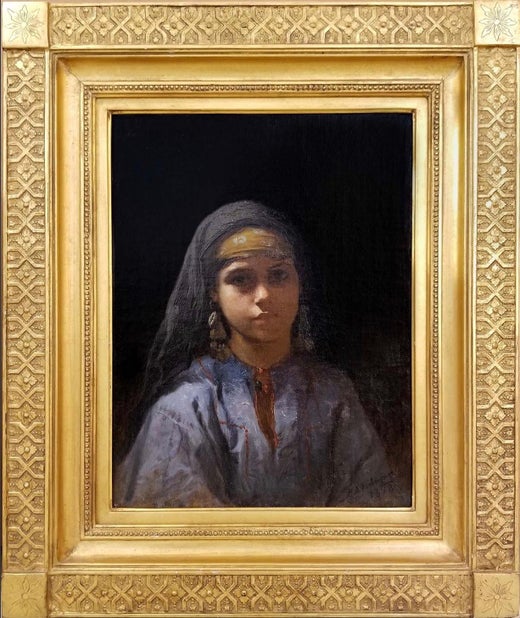
Frederick Arthur Bridgman (November 10, 1847 – January 13, 1928) was an American artist known for his paintings of "Orientalist" subjects. Born in Tuskegee, Alabama, Bridgman was the son of a physician. After his father died in 1850, his mother moved to New York City with her two sons. Bridgman began working as a draughtsman for the American Bank Note Company in 1864–65, and studied art in the same years at the Brooklyn Art Association and at the National Academy of Design. He exhibited his paintings at the Brooklyn Art Association, and encouraged by his success, he gave up his job in 1866 and moved to France with the sponsorship of a group of Brooklyn businessmen. Bridgman's first destination in France was Pont-Aven in the Brittany region, where he stayed with a group of American artists, among them Robert Wylie. In the autumn of 1866, he went to Paris and entered the studio of the noted academic painter Jean-Léon Gérôme (1824–1904), where he was deeply influenced by Gérôme's precise draftsmanship, smooth finishes, and concern for Middle-Eastern themes. While studying in the atelier of Gérôme, he became acquainted with his fellow students Harry Humphrey Moore and Thomas Eakins and also first came in contact with Orientalism. Bridgman's first exhibition in Paris took place at the Salon de Paris in 1870, and his painting A Provincial Circus was received very positively. It was then sent to New York and exhibited at the Brooklyn Art Association. Bridgman was forced to leave Paris in the early 1870s. He then made his first trips to North Africa between 1872 and 1874, dividing his time between Morocco, Tunisia, Algeria and Egypt. Arriving in Cairo in December 1873, they worked in the city producing numerous sketches of the Islamic monuments, but also the street life, which was Bridgman's main inspiration. They travelled along the Nile, reaching Abu Simbel in the south of Egypt. During his trips, Bridgman executed approximately three hundred sketches, which became the source material for several later oil paintings that attracted immediate attention. Bridgman became known as "the American Gérôme", although Bridgman would later adopt a more naturalistic aesthetic, emphasizing bright colors and painterly brushwork. His large and important composition, Funeral of a Mummy on the Nile (1876–77; Speed Art Museum, Louisville), exhibited at the Salon de Paris in 1877 and at the 1878 Paris Exposition, bought by James Gordon Bennett, Jr., established his success as an artist and brought him the Cross of the Legion of Honor. The painting was later purchased by the famous American collector Wendell Cherry who donated it to the Speed Art Museum in Louisville, Kentucky in 1990. In 1881, Bridgman exhibited over 300 of his works in a personal exhibition in New York. His work was highly praised for the variety of subjects and the fine quality of execution. Following this success, Bridgman was elected a member of the National Academy of Design, after already being an associate member since 1874.
About the Seller
5.0
Vetted Professional Seller
Every seller passes strict standards for authenticity and reliability
Established in 1980
1stDibs seller since 2019
15 sales on 1stDibs
- ShippingRetrieving quote...Shipping from: Queens, NY
- Return Policy
More From This Seller
View All"The Kiosk of Trajan", A Rare Orientalist Landscape Painting by F.A. Bridgman
By Frederick Arthur Bridgman
Located in Queens, NY
"The Kiosk of Trajan", A Rare Orientalist Landscape Painting by Frederick Arthur Bridgman (American, 1847 - 1928)
A stunning oil on can...
Category
19th Century Landscape Paintings
Materials
Canvas, Oil
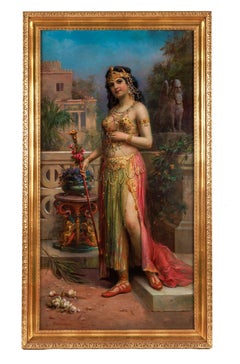
Emanuel Oberhauser (Austrian, 1854 - 1919) Full Length "Orientalist Queen" Oil
By Emanuel Oberhauser
Located in Queens, NY
Emanuel Oberhauser (Austrian, 1854 - 1919) An Exceptional quality full length oil on canvas painting of a Young Orientalist Queen / Odalisque. 19th ...
Category
19th Century Portrait Paintings
Materials
Oil
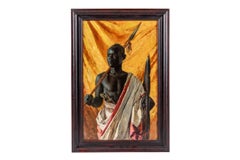
A Rare Orientalist Portrait of a Nubian Guard, by Edmund Walenta, 19th Century
Located in Queens, NY
A Rare Orientalist Portrait of a Nubian Guard, by Edmund Walenta, 19th Century.
Oil on canvas.
Extremely high quality and attractive orientalist painting by American / German artist Edmund Walenta. In the style of Ludwig Deutsch...
Category
19th Century Portrait Paintings
Materials
Canvas, Oil
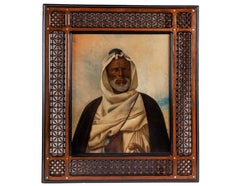
An Exceptional Quality Orientalist Portrait of "A Moorish Chief"
Located in Queens, NY
An Exceptional Quality Orientalist Portrait of "A Moorish Chief from Algeria", circa 1880.
Oil on canvas painting depicting a Moorish chief / gu...
Category
19th Century Portrait Paintings
Materials
Oil
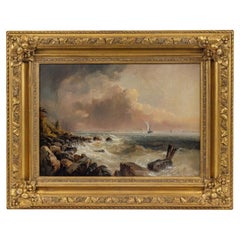
Alfred Copestick, Coastal Scene: New York, Oil on Canvas, 1857
Located in Queens, NY
Alfred Copestick (1837–1859)
Coastal Scene: New York, 1857
Oil on canvas, in the original giltwood frame
14 ¼ x 20 ⅛ in. (canvas)
Signed lower right: A. Copestick NY 1857
Painted at just twenty years of age, Coastal Scene: New York demonstrates Alfred Copestick’s remarkable promise as a marine painter in antebellum America. The scene brims with energy: a single sailboat heels sharply into the wind, its rigging taut against the storm, while foamy waves break against a rugged shoreline. Above, clouds mass and dissolve, illuminated by shafts of storm-lit light. Copestick’s treatment is both romantic and naturalistic, conveying the sublime tension between man, sea, and sky. His confident brushwork captures atmosphere with an immediacy and sensitivity rarely found in so young an artist.
The work survives in its original giltwood frame, richly carved in a mid-nineteenth-century American style, which not only underscores its historical authenticity but also heightens the tonal drama of the painting.
Alfred Copestick came of age during a fertile moment in American painting, when marine art and landscape were central to cultural identity. Though little is known of his formal training, his works suggest familiarity with and admiration for leading marine painters such as James E. Buttersworth, famed for his racing yachts; Francis Augustus Silva, who later developed a luminist style of coastal painting; and earlier masters like Thomas Birch, whose shipwrecks and storm scenes set a precedent for drama at sea.
Copestick also absorbed broader currents in American landscape painting. The Hudson River School, led by Thomas Cole, Asher B...
Category
19th Century Academic Landscape Paintings
Materials
Canvas, Oil
Alfred Copestick, Fort Hamilton from the Narrows, New York, 1857
Located in Queens, NY
Alfred Copestick (1837–1859)
Fort Hamilton from the Narrows, New York, 1857
Oil on canvas, in the original giltwood frame
14 ¼ x 20 ⅛ in. (canvas)
Signed lower left: A. Copestick NY 1857
Painted when Copestick was only twenty years old, Fort Hamilton from the Narrows, New York captures both the military fortifications and maritime vitality of New York Harbor at mid-century. In the foreground, the fortress bastion commands the shoreline, while sail and steam vessels traverse the Narrows — the strategic waterway linking Upper New York Bay to the Atlantic. Copestick conveys not only the architectural solidity of Fort Hamilton but also the shifting atmosphere above, where cloud formations build and dissolve across a wind-driven sky.
The painting is a remarkable marriage of documentary precision and romantic sensibility. The young artist’s brush imbues the fortress with weight and presence, yet the broader scene is alive with the transience of weather and the ceaseless motion of the sea. In its original giltwood frame, richly carved and preserving the period character, the canvas is a rare survival of a gifted hand cut short in its prime.
This canvas reveals Copestick’s deep engagement with the maritime traditions of American art. The careful delineation of sailing vessels recalls the precision of James E. Buttersworth, while the atmospheric breadth echoes the influence of Fitz Henry Lane and John F. Kensett. The choice of subject — the strategic Narrows and its fortress — also reflects the national mood of the 1850s, when American identity was bound up with its coasts, harbors, and defenses.
The romantic skies and dramatic contrasts suggest the impact of the Hudson River School, particularly the legacy of Thomas Cole and Asher B...
Category
19th Century Academic Landscape Paintings
Materials
Canvas, Oil
You May Also Like
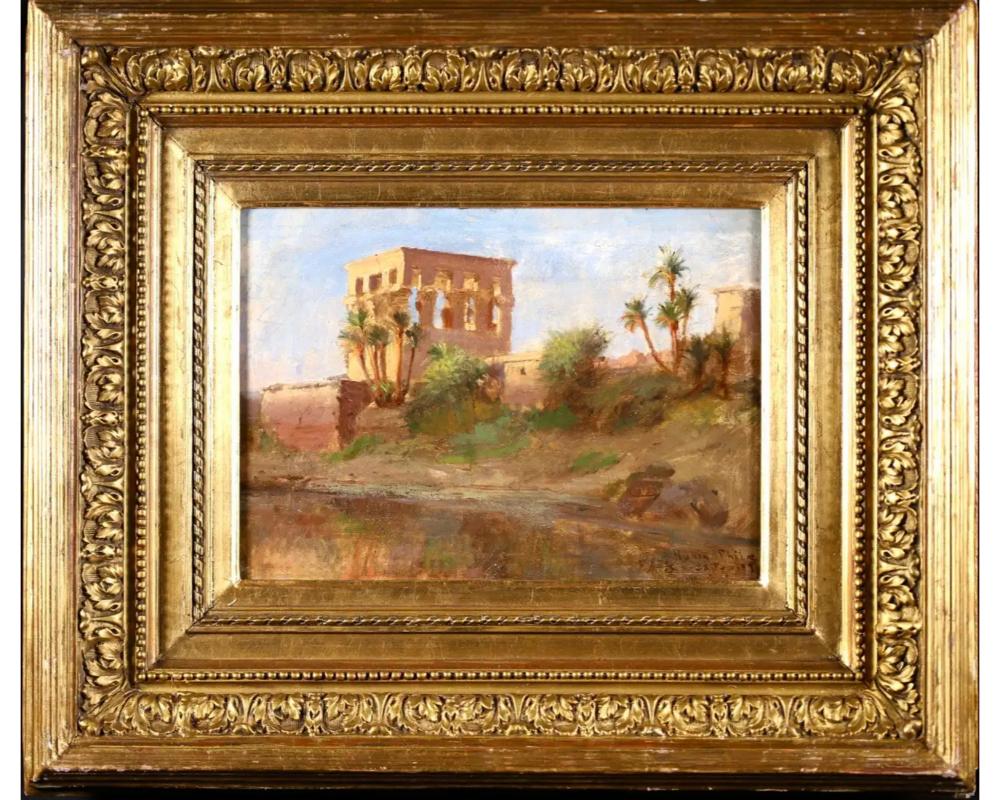
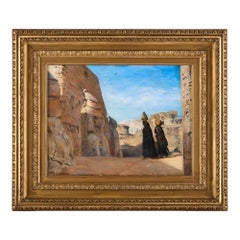
Antique German Orientalist Oil Painting of an Egyptian Temple by Meyerheim
Located in London, GB
Antique German Orientalist oil painting of an Egyptian temple by Meyerheim
German, 1893
Canvas: Height 42.5cm, width 54cm
Frame: Height 67cm, width 79cm, depth 7cm
Presented in an i...
Category
1890s Figurative Paintings
Materials
Canvas, Oil
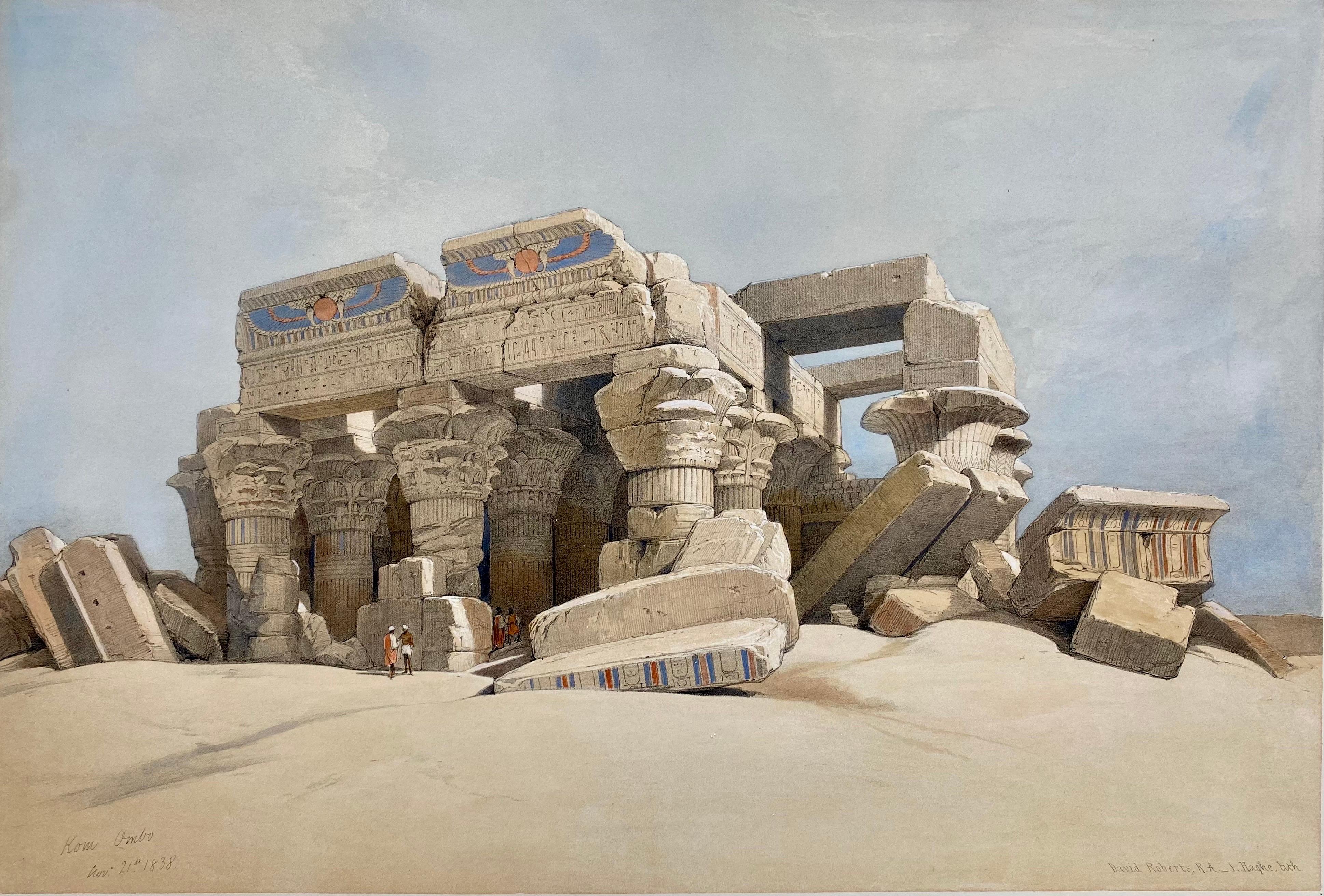
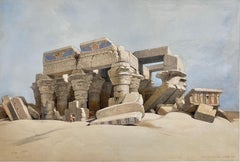
Kom Ombo - David Roberts - Orientalist
By David Roberts
Located in London, GB
David Roberts
1796 - 1864
Kom Ombo
First Edition lithograph
Full plate: 210
Presented in an acid free mount
Category
1840s Landscape Prints
Materials
Lithograph
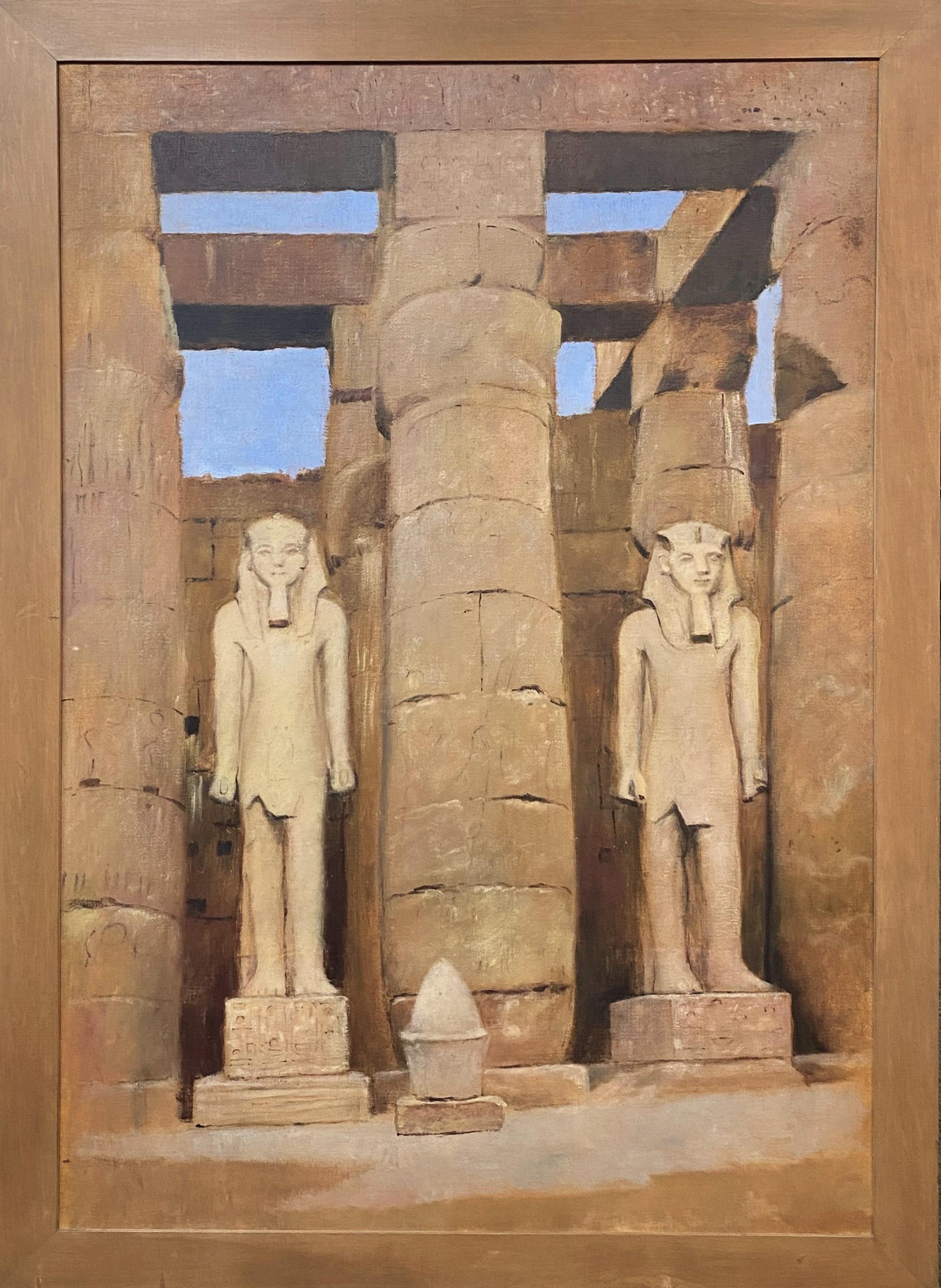
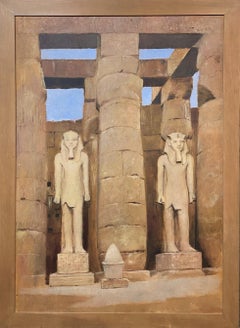
Ramses Statues at Luxor Temple, Karnak
By Joseph Lindon Smith
Located in Milford, NH
A fine Egyptian archaelogical oil painting by American artist Joseph Lindon Smith (1863-1950). Smith was born in Pawtucket, Rhode Island and after attending Brown University and MIT,...
Category
1920s Landscape Paintings
Materials
Canvas, Oil
Ruins of Kom Ombo
Located in New York, NY
John Henry Rollin Tilton
American, 1828 - 1888
Ruins of Kom Ombo
Oil on canvas
Signed in hieroglyphics bottom right
31 1⁄2 x 49 1⁄2 inches
Provenance: Private Collection, New York
Ca...
Category
Mid-19th Century Romantic Landscape Paintings
Materials
Canvas, Oil
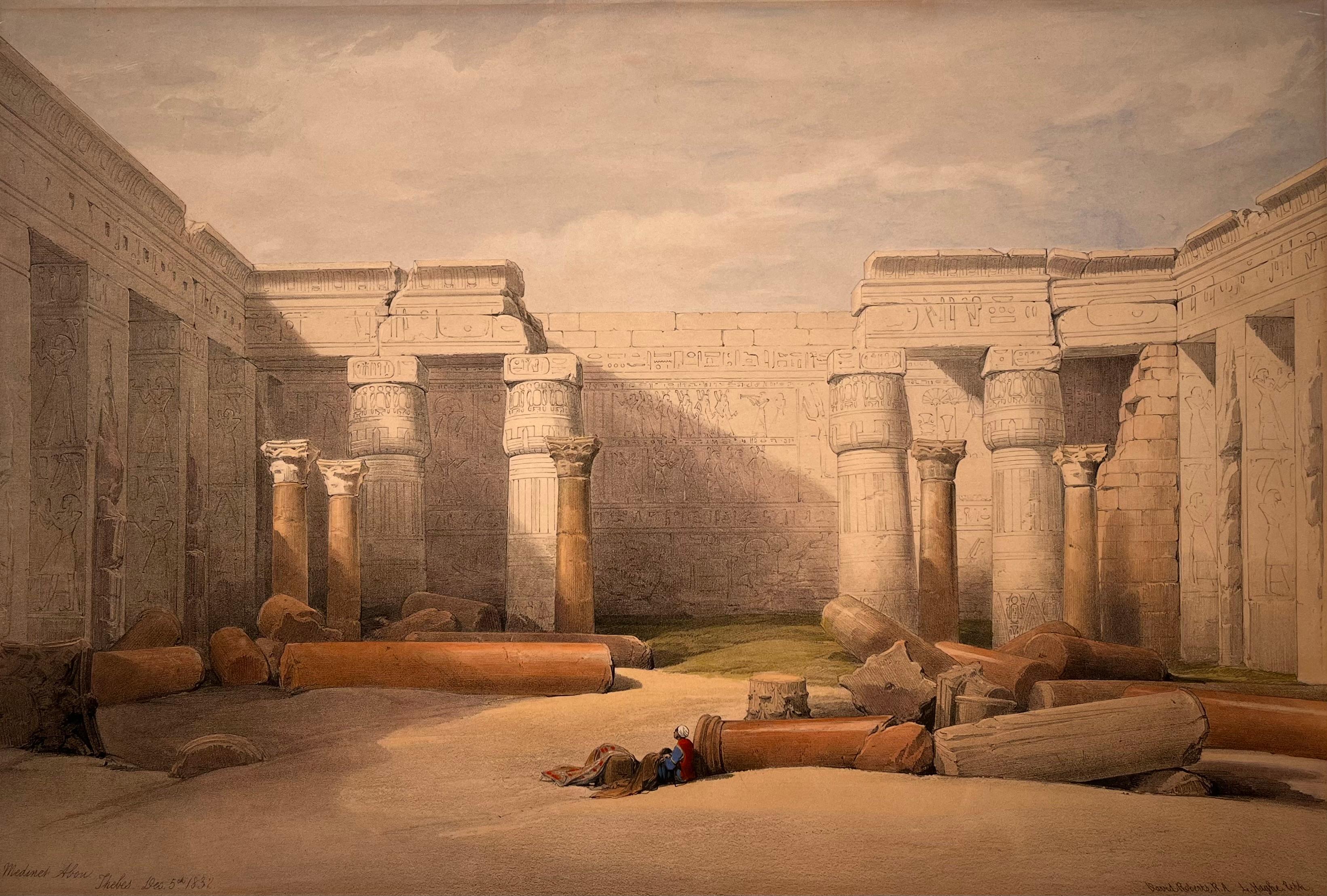
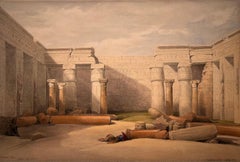
Medinet Abou, Thebes
By David Roberts
Located in London, GB
David Roberts RA
Medinet Abou, Thebes
1796 - 1864
Subscription and first Edition lithographs
Full plate: 186
Presented in a acid free mount
Category
1840s Realist Landscape Prints
Materials
Laid Paper, Lithograph
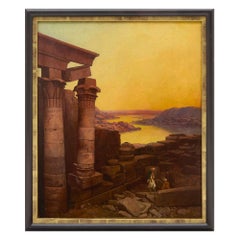
Antique Oil Painting Orientalist Egypt Nile Sunset Samuel John Egbert Jones
By Samuel John Egbert Jones
Located in London, GB
Antique Oil Painting Orientalist Egypt Nile Sunset Samuel John Egbert Jones
Canvas: Height 61cm, width 51cm
Frame: Height 68cm, width 58cm, depth 3cm
Painted in 1852 by Samuel John ...
Category
Mid-19th Century English School Landscape Paintings
Materials
Canvas, Oil
More Ways To Browse
F Brown Painting
Paris Street Scene Painting Large Canvas Painting
19th Century Orientalist Paintings
Egyptian Pharaoh
Rare Antique Oil Painting
Egypt Statue
Framed Egyptian Art
Landscape Oil Painting Orientalist
Egyptian Oil Painting
Antique Egyptian Statues
Egyptian Statue Antique
Pharaoh Statue
Landscape Oil Painting Egypt
Orientalist Egypt Paintings
Oil Painting Of Houses
1895 Painting
Durand Paris
Snow In Oil Painting