Items Similar to Antique American Marine Seascape Oil Painting Crashing Surf Atlantic Coast Maine
Want more images or videos?
Request additional images or videos from the seller
1 of 18
Frederick Judd WaughAntique American Marine Seascape Oil Painting Crashing Surf Atlantic Coast MaineCirca 1910
Circa 1910
$12,500
£9,525.23
€10,985.22
CA$17,753.74
A$19,075.40
CHF 10,233.92
MX$224,730.23
About the Item
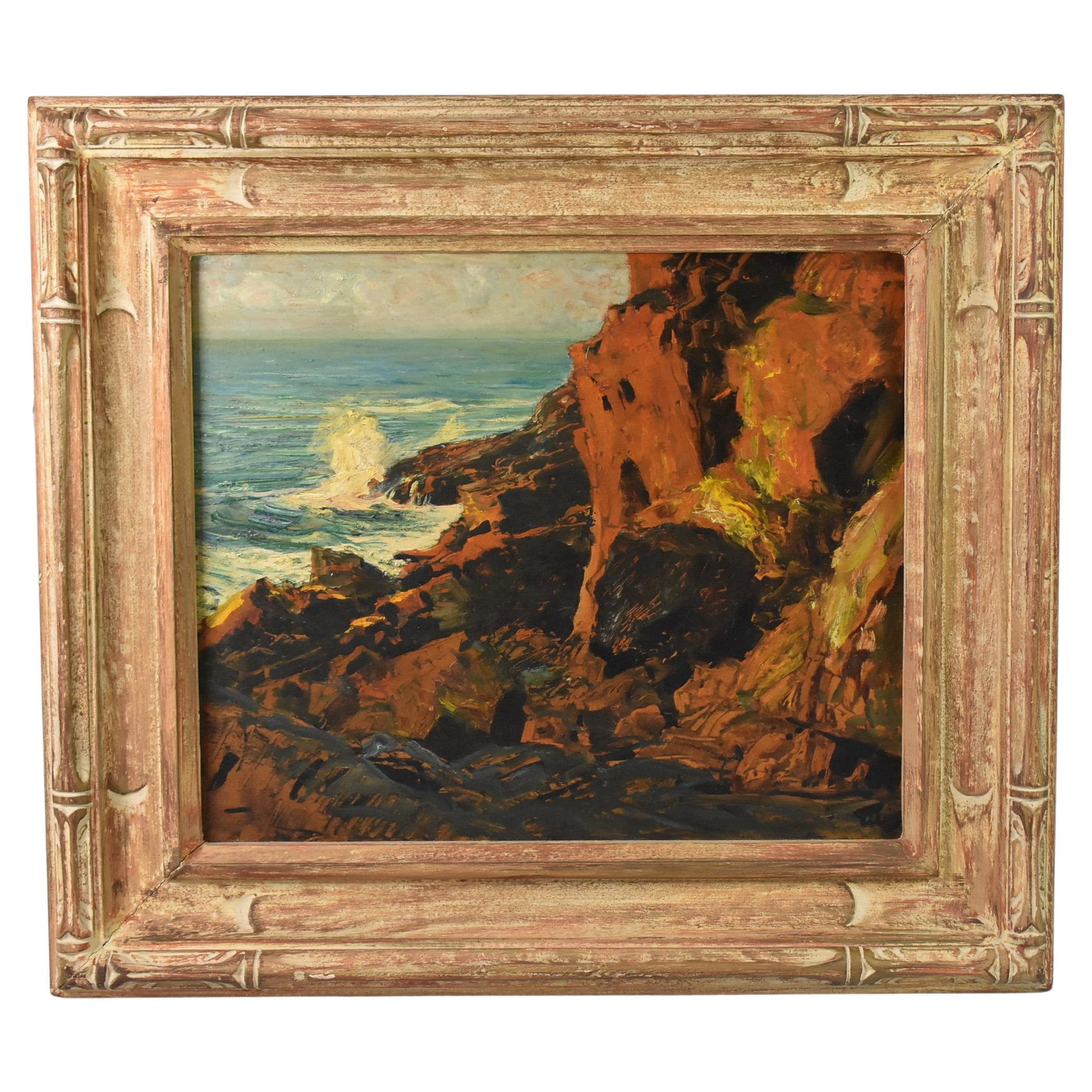
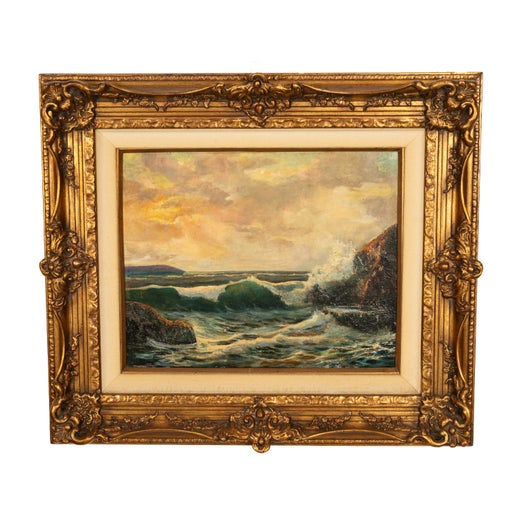
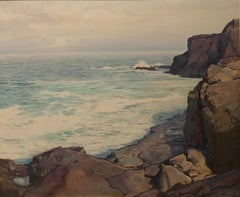
A fine antique seascape oil painting on panel by the celebrated marine artist, Frederick Judd Waugh (1861-1940), depicting the Atlantic of the coast of Maine, circa 1910.
The painting is finely executed with bold and decisive brush strokes with crisp edges, one can almost hear the roar of the ocean as the surf crashes upon the rocks. The painting is signed lower right "Waugh" and is housed in the original carved
gilded frame.
Condition is very good indeed, this fine seascape by one of America's most acclaimed late 19th early 20th century marine artists is ready to grace your wall. The painting will be accompanied with a certicificate of authenticity
provenance.
Frederick Judd Waugh was an American artist, primarily known as a marine artist. During World War I, he designed ship camouflage for the U.S. Navy, under the direction of Everett L. Warner.
Waugh was the son of a well-known Philadelphia portrait painter, Samuel Waugh. He studied at the Pennsylvania Academy of Fine Arts with Thomas Eakins, and at the Académie Julian in Paris with Adolphe-William Bouguereau. After leaving Paris, he moved to England, residing on the island of Sark in the English Channel, where he made his living as a seascape painter. In 1898 he was recorded as living in Heath and Reach, Bedfordshire.
In 1908, Waugh returned to the U.S., settling in Montclair Heights, New Jersey. He had no studio until art collector William T. Evans (a railroad financier and President of the dry goods firm, Mills Gibbs Corporation) offered him one in exchange for one painting a year. In later years, he lived on Bailey Island, Maine, and in Provincetown, Massachusetts.
Waugh’s marinescapes were highly acclaimed, garnering him the Popular Prize at the Carnegie International Exhibition for five years in a row, a feat accomplished by no other artist. In 1914, he was a judge of the art exhibit on Monhegan Island, Maine during the 1914 Ter-Centenary celebration of the Voyage of Captain John Smith.
In addition to his marinescapes, Waugh sometimes published work in periodicals, such as The Green Sheaf, to which he contributed at least one illustration. He also produced paintings and sketches on legendary and mythological themes; see, for instance, his 1921 sketch “Levitation in Dream No. 3”, and his c. 1912 painting “The Knight of the Holy Grail”.
In 1918, Waugh was recommended to serve as a camouflage artist (or camoufleur) for the U.S. Navy, as a member of the Design Section of its marine camouflage unit. That section was located in Washington, D.C., and was headed by American painter Everett L. Warner.
According to a biography of Waugh, “Many large ships, including the Leviathan, were painted according to his designs. Though the enterprise was of course a team effort in which no man played a solo part, he had every reason to be proud of his record. Only one ship with his system of camouflage was lost during the war”.
Waugh was known to produce literary work, publishing a short poem in Pamela Colman Smith’s short-lived periodical The Green Sheaf; a fairy tale in The English Illustrated Magazine; and, in 1916, the book The Clan of Munes. Intended as a work of American folklore aimed at children, the book lays out the fictional history and adventures of the “Munes, or tribe of American Fairies”, creatures Waugh regarded as a “gift to his fellow countrymen”. He reported that the idea for these driftwood-based fairies had come to him two summers previously when painting at Monhegan, Maine.
Together with his non-marine artworks, these pieces reflect Waugh’s lifelong interest in fairy lore and the supernatural. In an interview with New York City paper The Sun (4 November 1916, p. 9), he asserted that he “dreamed dreams and saw visions—real ones”, and described his history of writing fairy tales, along with his regret at burning the stories he had written while in London.
At sight without frame 20" x 16"
- Creator:Frederick Judd Waugh (1861-1940, American)
- Creation Year:Circa 1910
- Dimensions:Height: 26.5 in (67.31 cm)Width: 30.5 in (77.47 cm)Depth: 3.25 in (8.26 cm)
- Medium:
- Movement Style:
- Period:
- Condition:Very good condition.
- Gallery Location:Portland, OR
- Reference Number:Seller: BB-97121stDibs: LU1366214945512
Frederick Judd Waugh
Frederick Judd Waugh was born into an artist's family. His first teachers were his father, Samuel B. Waugh, a respected Philadelphia portrait painter, and his mother, Mary Eliza Young Waugh, a miniaturist. With encouragement from his parents, he attended the Pennsylvania Academy of the Fine Arts, where he studied with Thomas Eakins and Thomas Anshutz. After three years, he left for Paris, where he entered the Académie Julian and studied under Adolphe William Bougereau and Tony Robert-Fleury. In 1883, while he was still a student, his work was accepted for the Paris Salon. His father's death in 1885 brought him back to the United States, where he spent the next seven years doing commercial work and painting some portraits. In 1892 he returned to Paris. Although Waugh was very versatile and accomplished in depicting a variety of subjects, it was his marine paintings that brought him critical attention. Visiting Sark Island in the English Channel in 1893, he began to study water, rocks, and sky, often battling the elements to paint en plein air. By 1895, Waugh had set up his studio in the English coastal town of Saint Ives, Cornwall, where J. M. W. Turner had painted eighty years earlier. A large window in the studio provided an intimate view of the ocean, and he could continue his intensive study of waves in greater comfort. His wave paintings have been referred to as majesty in motion. Waugh remained in England for twelve years, working as an illustrator for various newspapers and magazines in London, and returning to Saint Ives to paint when time allowed. In 1907, Waugh returned to the United States, eventually settling in Provincetown, Massachusetts. He was elected a member of the National Academy of Design in 1911. For five consecutive years he was voted the favorite artist of the prestigious Carnegie International Exhibition in Pittsburgh. Waugh was known to have painted up to ten canvases a month to keep up with the demand for his work. The United States government called on him to help camouflage the naval fleet in World War I. Fittingly, upon his death, he was buried on the New England coast within sound and sight of the sea.
About the Seller
5.0
Gold Seller
Premium sellers maintaining a 4.3+ rating and 24-hour response times
Established in 1990
1stDibs seller since 2020
65 sales on 1stDibs
Typical response time: <1 hour
- ShippingRetrieving quote...Shipping from: Portland, OR
- Return Policy
More From This Seller
View AllAntique 19th Century Marine Seascape Coastal Maritime English Channel Painting
By James Webb
Located in Portland, OR
A good antique marine oil painting by James Webb (1825-1895), circa 1860, ex-Sothebys.
The painting depicts a stormy or squally sea, most likely the English channel, the rocky cliff...
Category
Mid-19th Century Romantic Landscape Paintings
Materials
Oil, Board
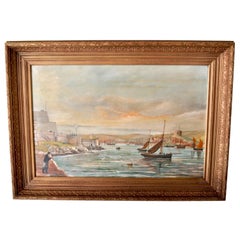
Antique Oil on Canvas Seascape Maritime Ships Painting by William Turner Davey
Located in Portland, OR
Large antique Oil on Canvas maritime seascape Painting of a harbor at the Coast, by William Turner Davey (1818-1900), the painting signed and dated 1843. The painting depicts a harbo...
Category
1840s Landscape Paintings
Materials
Canvas, Oil
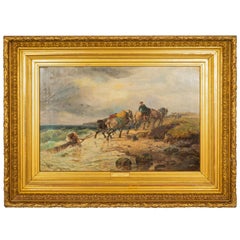
Antique British Oil Painting Seascape Coast Scene Shipwreck Landscape Horses
Located in Portland, OR
A very good antique 19th century British oil on canvas painting, seascape coastal scene by Samuel C. Bird, circa 1870.
This very attractive oil on canvas painting depicts a coastal s...
Category
1870s English School Landscape Paintings
Materials
Oil, Canvas
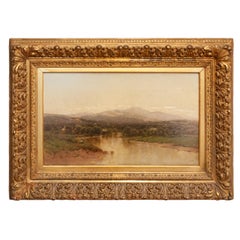
Hudson River School Landscape Oil Painting Lake Geneva Adirondacks New York
By John Bunyan Bristol
Located in Portland, OR
A fine & large antique Hudson River School oil on canvas painting, by John Bunyan Bristol (New York- Massachusetts 1826-1909), likely Lake Geneva New York circa 1870.
The painting d...
Category
1870s Hudson River School Landscape Paintings
Materials
Canvas, Oil
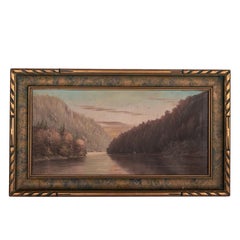
Antique American 19th C Realist California River Landscape Oil on Canvas 1888
Located in Portland, OR
A good late 19th century realist oil on canvas California river landscape painting, circa 1888, by Albert Horatio Slade (1843-1922).
The painting depicts a river through a mountainou...
Category
Late 19th Century Realist Landscape Paintings
Materials
Oil, Canvas
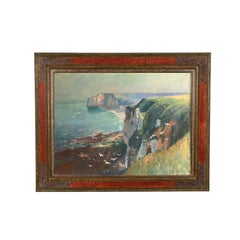
Antique French School Oil Painting Canvas Cliffs at Etretat Normandy France 1910
Located in Portland, OR
A fine & large antique oil painting on canvas by Raimond Louis Lecourt (1882-1946), the cliffs at the Atlantic Ocean, Etretat, Normandy, France, circa 1910.
Lecourt was the quintessential painter of scenes of Normandy France, this is a large and very fine example of his work. The painting depicts the Falaise d' Amont located near Etretat, Normandy, the Falaises (cliffs) are on the Atlantic coast and are a very impressive formation of flint cliffs with huge naturally created archways. The painting is beautifully rendered and in some areas the artist has employed impasto technique (thickly applied paint) to provide texture to the ocean & cliffs, in the foreground of the cliffs is a flock of herring gulls circling overhead. The painting is signed "Lecourt" lower right with a dedication, the painting is housed in the original sponge decorated gesso frame, also created by the artist. Condition is excellent, this charming painting is ready to hang on your wall.
The artist was born in Le Havre, and studied at the National School of Fine Arts and the Regional School of Fine Arts of Rouen, he studied under Charles Lhuillier and Léon Bonnat. He received the Croix de Guerre 1914-1918
Military medal during WW1. Lecourt studied at the Le Havre School of Fine Arts under the direction of Charles Lhuillier , then with Léon Bonnat at the Paris School of Fine Arts . He then lived in Fontaine-la-Mallet , where he painted in the Normandy region, which was his favorite subject.
In 1899, Lecourt obtained the honorary prize for the upper course with the city's silver medal. A municipal scholarship which allowed him to enter the Paris School of Fine Arts in the studio of the painter Léon Bonnat . There he found his comrades from Le Havre who had preceded him there: Othon Friesz , Raoul Dufy , the brothers René and Henri de Saint-Delis .
He debuted at the Salon of French Artists in 1901 with his painting Le Herseur . He completed his studies in the studio of Luc-Olivier Merson and it was around this time that he got into the habit of spending his holidays in Fontaine-la-Mallet with his comrade Othon Friesz . He settled there permanently in 1907, after a trip to Brittany from where he brought back numerous sketches and portraits.
During the First World War , he was mobilized on August 1, 1914 in the same regiment and behaved like a hero, decorated with the Croix de Guerre and the Military Medal . During an engagement at Courcy - Brimont , September 14, he was injured by a gunshot to the right forearm. He continued to draw with his left hand then, after a long rehabilitation, he regained the use of his right hand. He became a member of the Society of French Artists, also exhibited at the Salon des Indépendants, and made regular submissions to the Salons. Many paintings by him appear in museums & galleries in Denmark , Germany, the United States, Japan, and in England where the "Dogs of the Duchess of Manchester" painting was exhibited and won Lecourt great acclaim.
After the outbreak of World War II, Lecourt takes the German Occupation of France very badly. After General Philippe Petains's handshake with Hitler in Montoire-sur-le-Loir, he returned his military medal to the Chancellery, accompanied by this comment: "We have no need for decorations in a country which no longer has the sense of honor"
During this period, he resided with Charles Toussaint, a Le Havre broker and companion from the 74th infantry regiment, at the Frescinet manor, a property which would disappear under the bombings of the September 11, 1944. At this time, he painted mainly on wood, as canvases were rare and expensive at this time.
In the winter of 1943-1944, he was hit by a military truck which skidded on the ice, during the fighting for the liberation of the port of Le Havre, the village of Fontaine-la-Mallet, where he lived, was raised to the ground under heavy bombing. His house, his studio, his notes and sketches were destroyed. However he went back to work with courage, but something had broken inside him. The following winter, he caught a cold and contracted pneumonia which took him away in eight days, unable to be properly treated following the refusal of an American army colonel, to give to civilians penicillin that only the Americans had at the time.
His friends mourned him and others said that he was a gifted painter of Cauchoise (Normandy) painting, and who knew so well how to render plough horses, Normandy cows...
Category
1910s French School Landscape Paintings
Materials
Canvas, Oil
You May Also Like
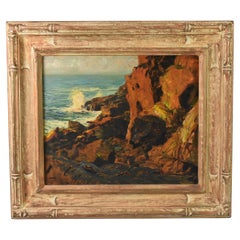
Seascape Oil Painting by Frederick Judd Waugh
By Frederick Judd Waugh
Located in Toledo, OH
Seascape oil painting by Frederick Judd Waugh (1861-1940). Waves crash against cliffs in this dramatic seascape on board with shades of rust and blue greens. Signed lower right. Over...
Category
Early 20th Century Paintings
Materials
Paint
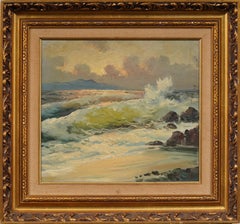
Antique American Crashing Waves and Rocks Seascape Original Oil Painting
Located in Buffalo, NY
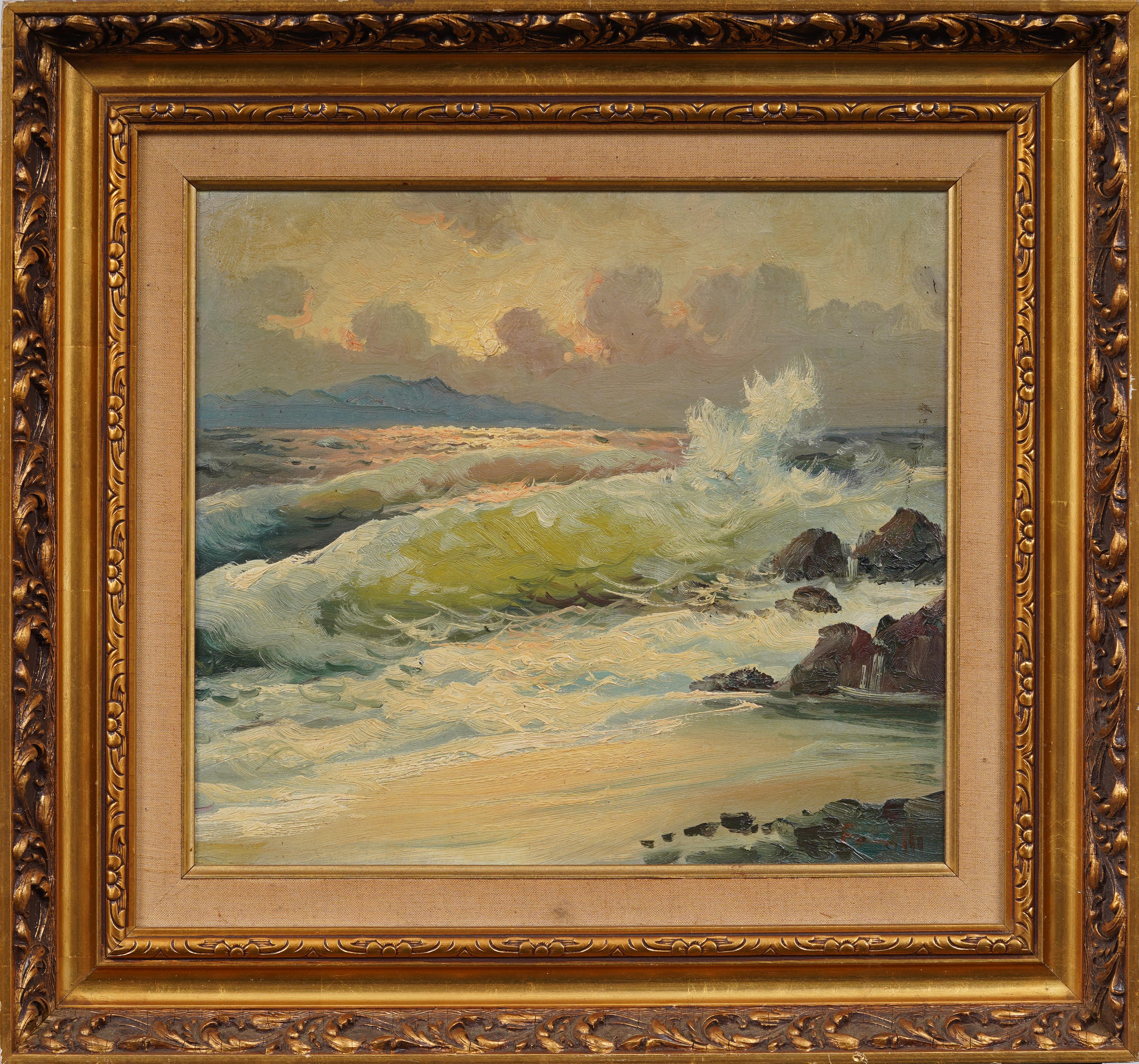
Vintage American impressionist coastal seascape. Framed. Measuring: 18 by 19 inches overall and 14 by 15 painting alone. Signed. Excellent condition, ready to hang and enjoy.
Category
20th Century American Impressionist Landscape Paintings
Materials
Oil, Canvas
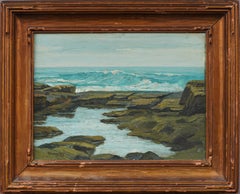
Antique American Impressionist Seascape Crashing Waves Framed Oil Painting
Located in Buffalo, NY
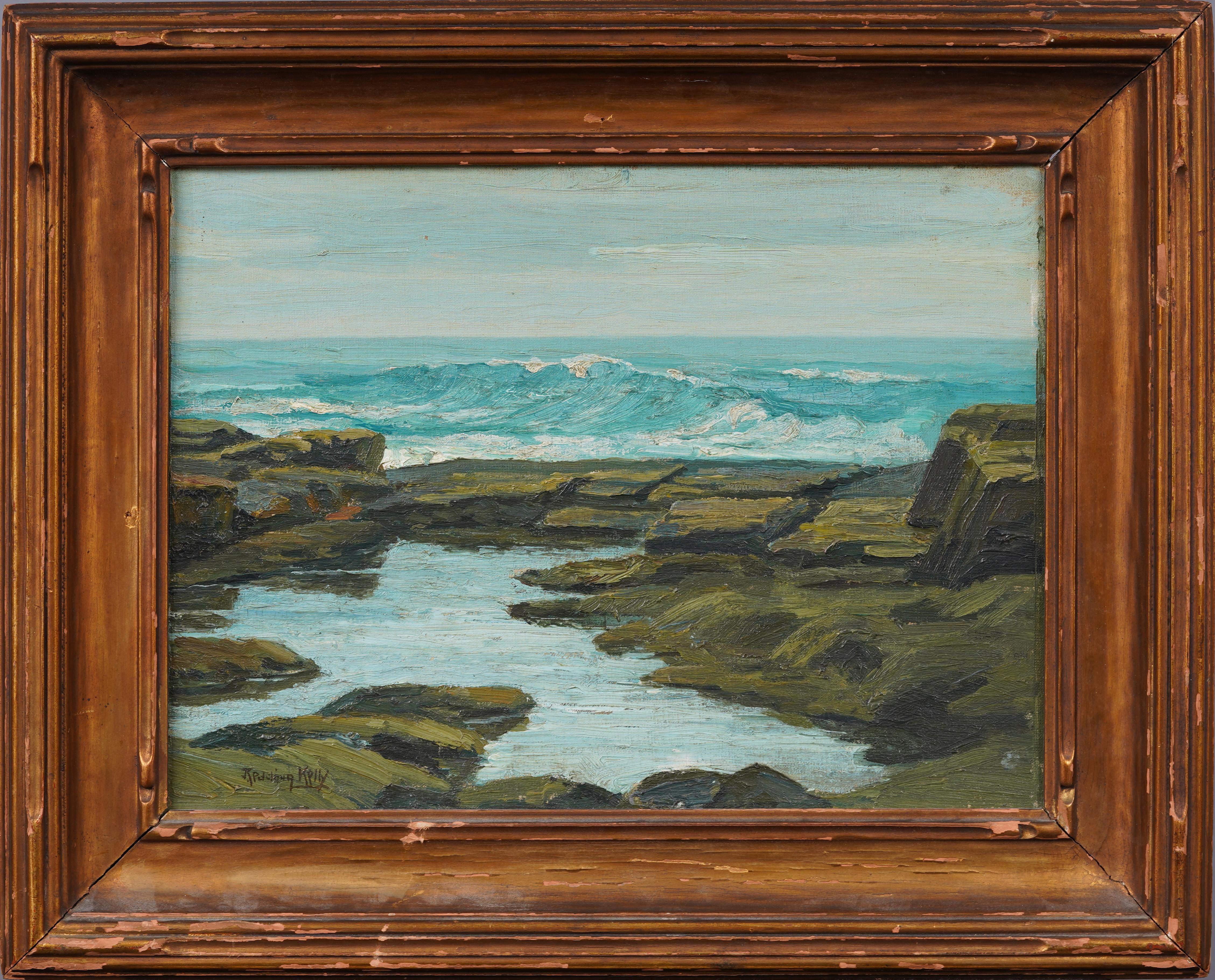
Antique American impressionist seascape oil painting by J. Redding Kelly (1870 - 1939). Oil on board. Signed. Framed. Measuring 18 by 21 inches overall and 12 by 16 painting alone.
Category
1890s Impressionist Landscape Paintings
Materials
Canvas, Oil
$1,020 Sale Price
20% Off
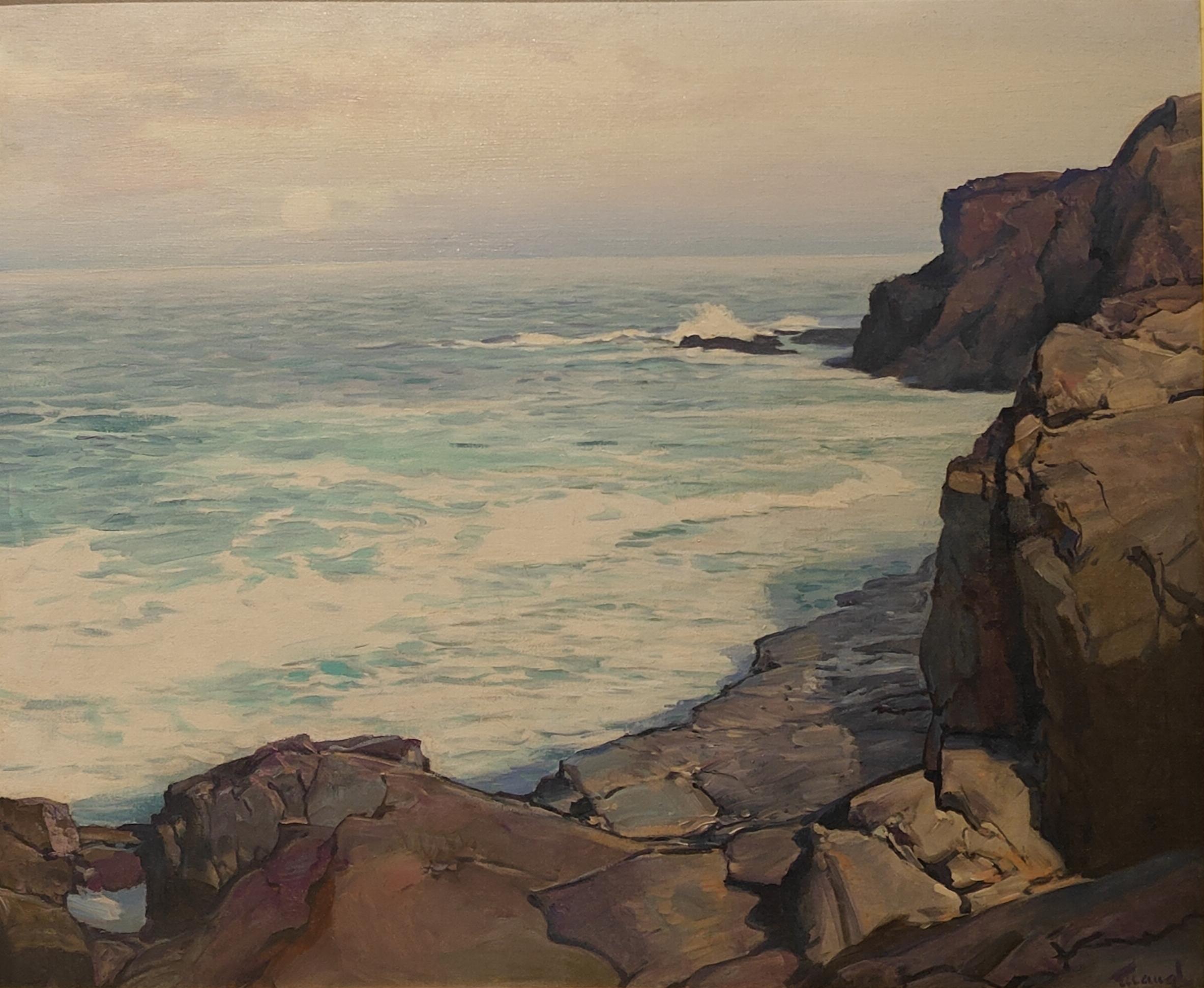
"Risen Moon" Frederick Judd Waugh, Coastal Landscape, Rocky Coast Marine Scene
By Frederick Judd Waugh
Located in New York, NY
Frederick Judd Waugh
Risen Moon
Signed lower right, Grand Central Art Galleries Inc. label on verso
Oil on board
25 x 30 inches
Mainly known as a marine painter. Waugh's sea paintings were enthusiastically received; for five consecutive years, he was awarded the Popular Prize at the Carnegie International Exhibition. Waugh was the son of a well-known Philadelphia portrait painter, Samuel Waugh...
Category
1920s American Impressionist Figurative Paintings
Materials
Canvas, Oil
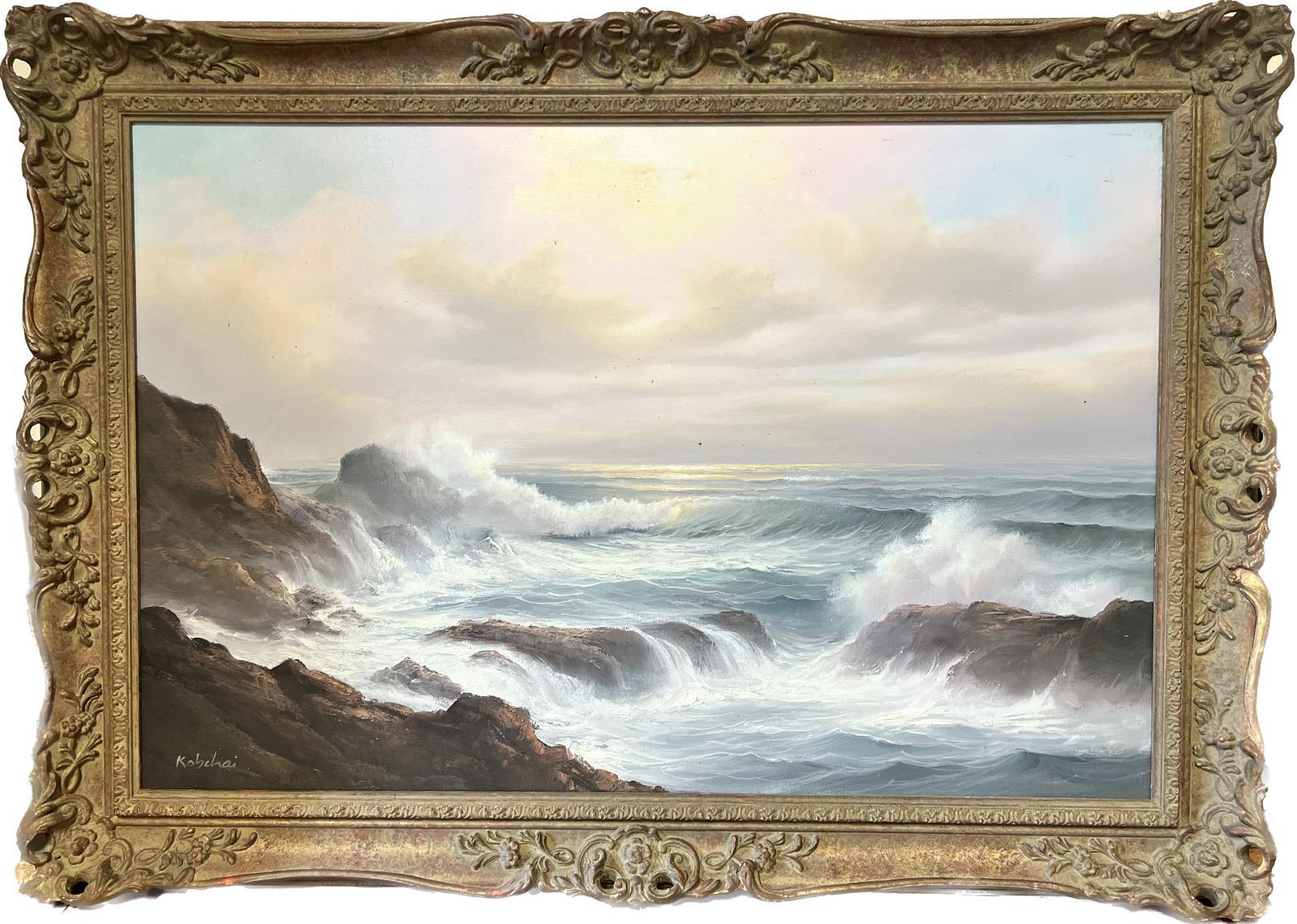
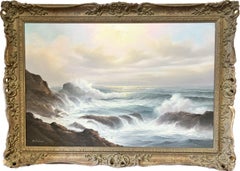
Crashing Waves Rocky Coast Large Traditional Signed Oil Painting Gilt Frame
Located in Cirencester, Gloucestershire
European artist, second half 20th century
signed lower corner
oil on canvas, framed
framed: 25 x 35 inches
canvas: 20 x 30 inches
provenance: private ...
Category
Late 20th Century Impressionist Landscape Paintings
Materials
Canvas, Oil
$1,747 Sale Price
20% Off
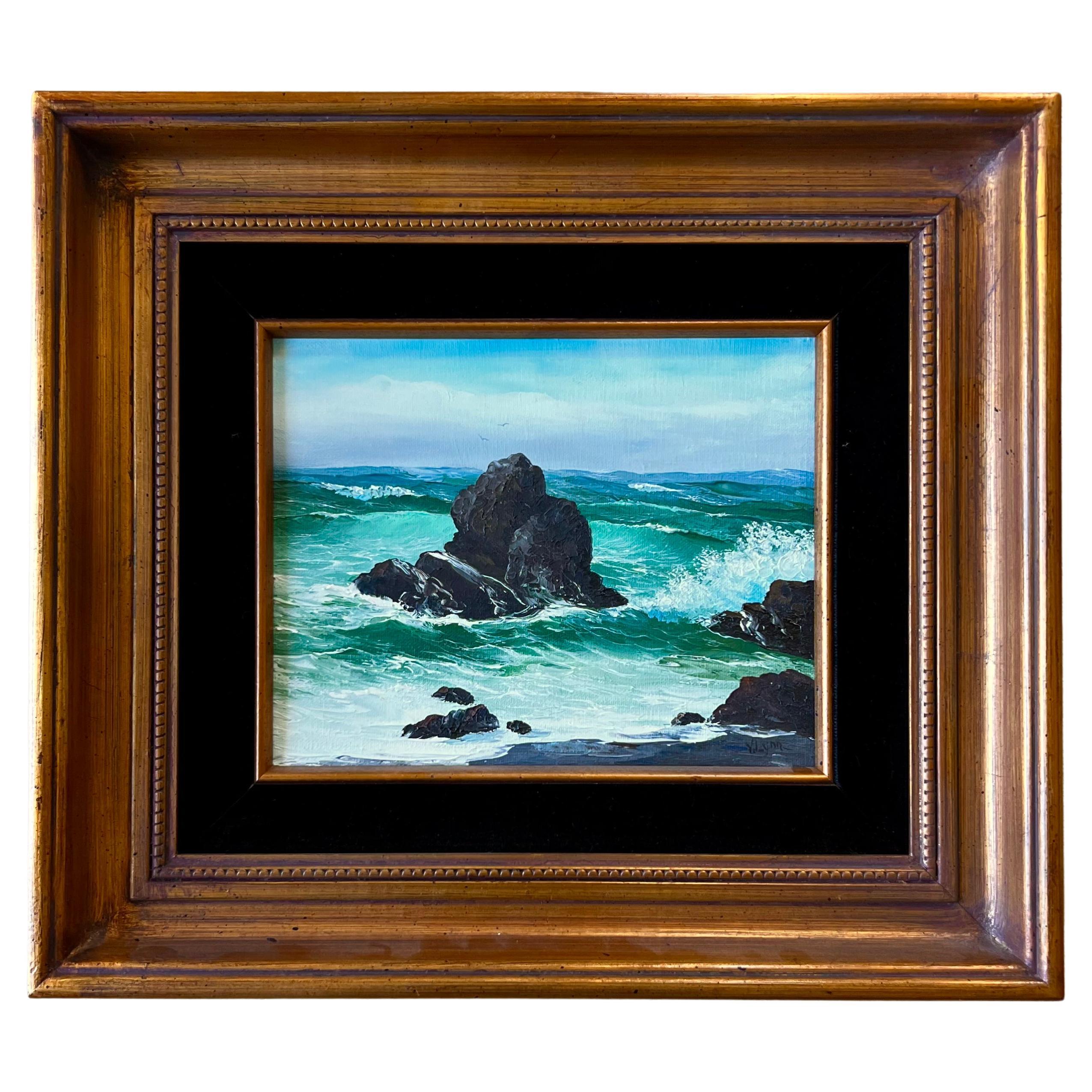
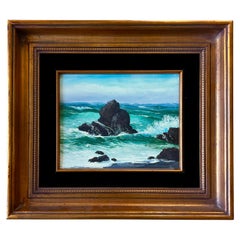
Painting « Crashing Waves » by Virginia Lynn, Oil on Canvas, 20th Century
Located in View Park, CA
Crashing waves: a painting by Virginia Lynn, oil on canvas, 20th century. Expert brushwork from this American artist shows the tide crashing upon basalt ...
Category
Mid-20th Century American Paintings
Materials
Canvas, Wood, Giltwood, Paint
$1,040 Sale Price
20% Off
More Ways To Browse
Antique Fairy
19th Century Oil Portraits Of Children
Holy Grail
Marine Antiques
Philadelphia Portrait
Antique Surf
Maine Antiques
Monhegan Paintings
Paintings Of Knights
Seascape Maine
Maine Seascape Paintings
Captain Smith
Maine Coast Oil Painting
Everett Warner
Oil Paintings Of Parks
Oil Ship Seascape
Painting In Egg Tempera
Rafael Duran Benet