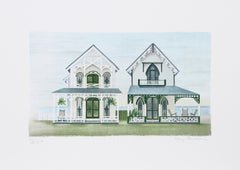
Items Similar to Our Native Summer Home, J B Close
Want more images or videos?
Request additional images or videos from the seller
1 of 10
Fritz VogtOur Native Summer Home, J B Close1896
1896
$95,000
£71,009.87
€81,934.96
CA$132,990.41
A$140,516.24
CHF 75,581.32
MX$1,682,455.32
NOK 946,945.56
SEK 867,264.69
DKK 611,826.60
About the Item
ARTIST: Fritz Vogt (Active 1890 – 1900) (1842-1900)
TITLE: “Our Native Summer Home”
DESCRIPTION: Pencil drawing with colored pencil, 37 ½ x 25 ½ inches
signed and dated September 23, 1996. “Our Native Summer Home, J B Close”
FRAMING: Original frame with modern mat. Frame size 45 ½ x 33 ½ inches
Provenance: Upstate NY State Collector
Exhibited: Drawn Home: Fritz Vogt’s Rural America (Fenimore Art Museum
American Folk Art Museum, organized by the Fenimore Art Museum in Cooperstown, NY, and also traveled to the American Folk Art Museum in New York City in 2002.).
Auction high for this artist is $145,000.00 in 2008 at Sotheby's New York.
Description :
This pencil-colored drawing titled “Our Native Summer Home” is a classic and valuable example of work by Fritz Vogt (1842-1900) . It dates from 1896. It depicts a homestead property in Glen, NY (Montgomery, New York), a known area of activity for Vogt.
The Empire style house is identifiable by its mansard roof, and central tower topped with a decorative iron finial. Vogt has meticulously rendered the fish-scale shingles on the roof and the decorative brackets under the eaves.
Vogt’s strength was his ability to sell the "American Dream" back to his patrons, who usually were the owners of the homes and farmsteads he painted . This home is shown as pristine, the lawns are perfectly flat, and the fences are straight. The neatness and perhaps even the size of the structure flattered the owner, projecting a sense of order and prosperity.
At the bottom of his drawing, in his typical calligraphy, Vogt has titled the work "Our Native Summer Home" and identified the location as the "Village of Glen." This inscription is a crucial element of his work, transforming the drawing from a mere picture into a historical document or deed of sorts. The house is shown from an elevated, almost bird's-eye view. This was a specific choice by Vogt to ensure the viewer could see the layout of the paths, the depth of the property, and the grandeur of the roofline all at once.
This drawing was part of a traveling exhibit called “Drawn Home: Fritz Vogt’s Rural America “ (Fenimore Art Museum
American Folk Art Museum). The title of the drawing "Our Native Summer Home" suggests this was a retreat for a successful family, possibly one that had moved to a city and returned to upstate New York for the summer. This aligns with the historical context of the region in the 1890s, where rail travel allowed for the rise of summer tourism in rural New York.
His drawings are important for several reasons: The "Optimism" of Rural America in Vogt’s work captures a very specific moment—the "apogee" of rural life in central New York before the massive industrial shifts of the 20th century. His drawings do not show the hardship of farm life or rural life; instead, they project optimism and pride of place. Vogt’s farms and homes appear orderly, prosperous, and booming. The pride of ownership is prevalent. His art was a collaboration with his patrons. The farmers and homestead owners wanted to be remembered as successful, and Vogt obliged by often exaggerating the size of the buildings or the neatness of the grounds. His work validates the "American Dream" for these rural communities, preserving a visual record of what they were most proud of: their homes.
Because he was so precise, Vogt’s drawings serve as excellent historical records of 19th-century vernacular architecture. He captured the specific way homes, barns, and hop houses (a key structure in that region's agriculture) were built and arranged, providing details that photography of the time often missed. Vogt’s works appear on the scene during a time of late century transition. Scholars note that his work documents a "successful, well-organized world" just before it vanished. Vogt preserved the "golden hour" of this specific rural landscape.
Hundreds of his drawings chronicle the homes, the architecture and agriculture of late 19th-century rural New York. The quirky distortions, bright crayon highlights, speak to a man bringing warmth to form. Vogt was truly “on the road”—sleeping in barns, hotels or the very homes he sketched, living the life of an artist laborer paid in room and board or modest sums (some drawings cost just $2, indicated on the back!) (Source: Antiques and the Arts Weekly)
Artist Biography: Fritz Vogt (1841–1900)
Fritz Vogt was a German immigrant who arrived in the United States in 1890, though little is known about his life before his arrival. Unlike many settled studio artists, Vogt lived an (often referred to as a "tramp artist" or vagabond). He traveled on foot across the rural counties west of Albany, New York—specifically Montgomery, Schoharie, Otsego, Fulton, and Herkimer counties.
Vogt funded his travels by offering to draw the homes and farms of prosperous locals. He would often stay with the families he worked for, receiving room, board, and a small fee in exchange for his art. His career in America was brief, lasting only the last decade of the 19th century (1890–1899). He died on January 1, 1900.
Research Sources
Drawn Home: Fritz Vogt’s Rural America (Fenimore Art Museum
American Folk Art Museum).
Maine Antique Digest and The Newtown Bee have extensively covered the market for his work, noting that his drawings, once traded for a night's sleep, now command significant prices at major Americana auctions
- Creator:Fritz Vogt (1842 - 1900, American)
- Creation Year:1896
- Dimensions:Height: 25.5 in (64.77 cm)Width: 37.5 in (95.25 cm)Depth: 2 in (5.08 cm)
- Medium:
- Movement Style:
- Period:
- Condition:
- Gallery Location:Saratoga Springs, NY
- Reference Number:1stDibs: LU170217320062
About the Seller
4.2
Vetted Professional Seller
Every seller passes strict standards for authenticity and reliability
Established in 1992
1stDibs seller since 2015
32 sales on 1stDibs
Typical response time: 16 hours
- ShippingRetrieving quote...Shipping from: Saratoga Springs, NY
- Return Policy
More From This Seller
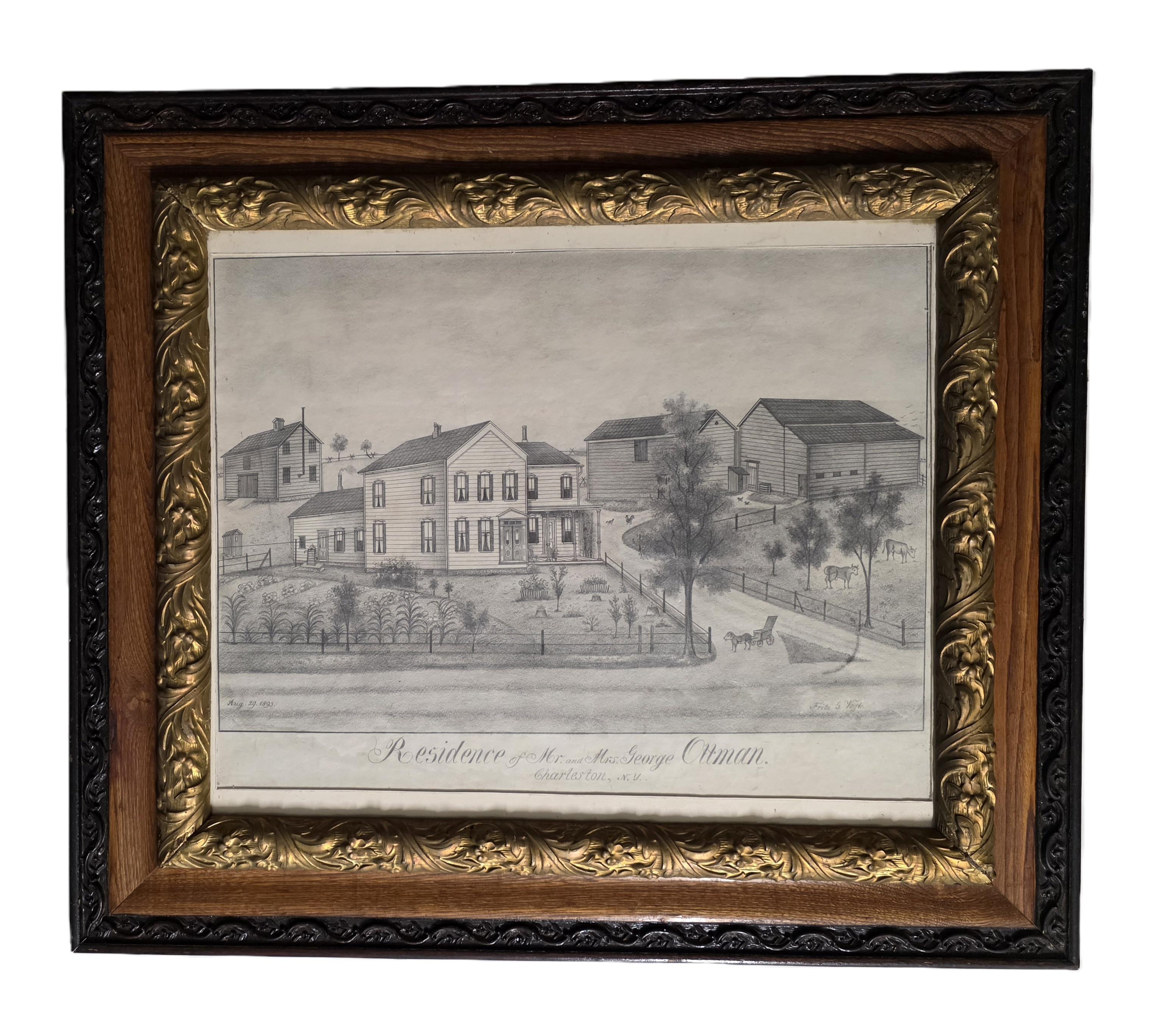
View AllResidence of Mr. and Mrs. Gerge Ottman / Charleston, N.Y.
Located in Saratoga Springs, NY
Signed lower right and dated lower left August 29, 1893
Little is known about Fritz Vogt until 1890 to 1900 when he earned a reputation for doing nearly 500 graphic architectural drawings near Sharon Springs and Ames in upstate New York. These were rural agricultural towns of German immigrants.
His renderings were precise and detailed and indicate he had studied architecture either in Germany or America. His work resembles drawing produced for the Beers Company of Philadelphia, publishers of atlases, but extensive attempts to research his life before 1890 have not been successful. It is known that when he did his upstate New York drawings he stayed with farm families and worked with paper, pencil, and ruler, and that he often worked outdoors. He played musical instruments and sometimes worked as a farm hand.
His drawings, many of them in color pencil, showed the types of crops planted, the animals, and details of the buildings. He also did several drawings of churches...
Category
1890s Folk Art Landscape Paintings
Materials
Paper, Pencil
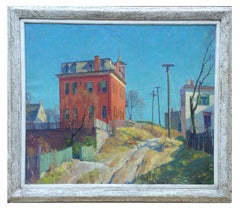
Red House (The Hoffman House)
By Harry Leith-Ross
Located in Saratoga Springs, NY
Harry Leith-Ross (American, 1886 - 1973)
Red House (Hoffman House)
Oil on canvas, weathered wood 20th century frame
35” x 30”
Signed lower right, ‘Leith-Ross’
Exhibition sticker v...
Category
Mid-20th Century American Modern Landscape Paintings
Materials
Canvas, Oil
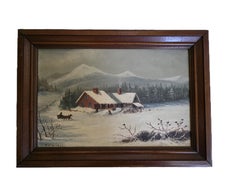
Winter Home
By Samuel Griggs
Located in Saratoga Springs, NY
Samuel W. Griggs (1827–1898)
Winter Homestead with Sleigh, ca. 1870s
Signed lower left
Oil on board
Sight size: 10.5 x 16.5 inches
Over all size: 14.5 x 20.5 inches
Auction high for...
Category
1870s Landscape Paintings
Materials
Oil, Board
$4,850
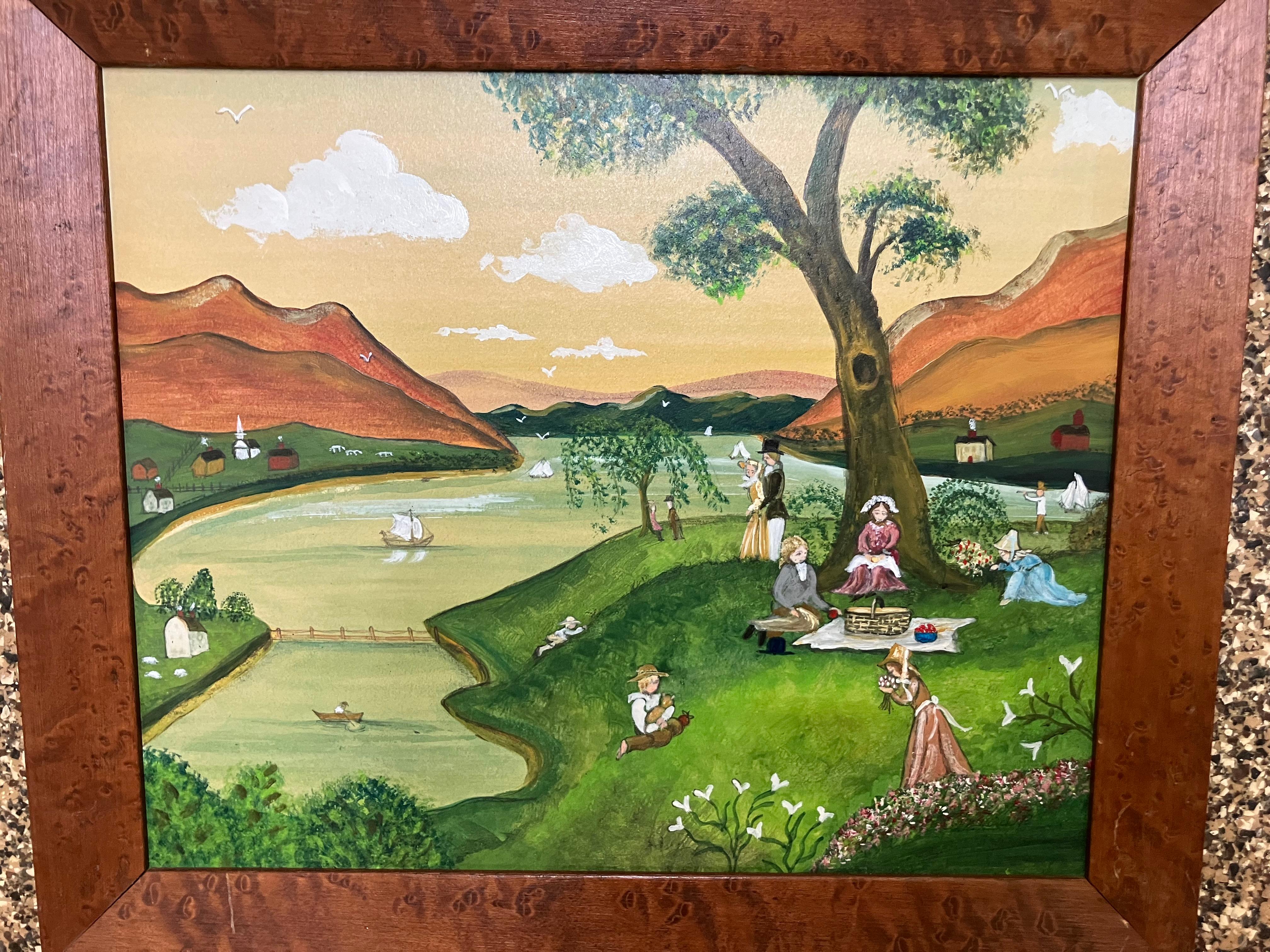
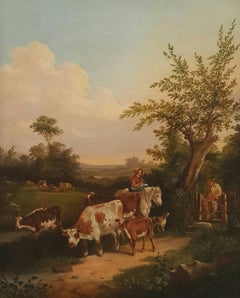
A Summer Gathering
By Ambrose Andrews
Located in Saratoga Springs, NY
Signed lower right.
An itinerant portrait, miniature, and landscape painter, Ambrose Andrews had a wide-ranging career geographically that saw him in many regions including New York (1829-31), Connecticut (1837), Texas (1837-1841) and Louisiana (1841-42). After 1844, he was active in St. Louis, New York City, Buffalo, New York, Vermont and Canada. He was born in West Stockbridge, Massachusetts, and in 1824, attended the National Academy of Design.
Andrews exhibited paintings at the Republic of Texas Capitol...
Category
19th Century Hudson River School Landscape Paintings
Materials
Canvas, Oil
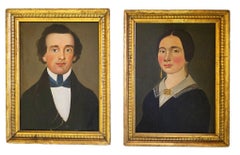
A Gentlemen
Lady
Located in Saratoga Springs, NY
Pair of Portraits, attributed to the Prior-Hamblen School
American, ca. 1840–1855
The painting is not signed
Oil on panel, housed in original gilt frames with patterned borders
This...
Category
1840s Folk Art Portrait Paintings
Materials
Oil, Board
$14,500
Harvesting, Cedar Rapids, Iowa
Located in Saratoga Springs, NY
Signed lower right and dated 1950.
Edward J. Burns’ Harvesting, Cedar Rapids, Iowa captures the essence of rural American labor with striking realism and heartfelt reverence. Painte...
Category
1950s Realist Landscape Paintings
Materials
Oil, Board
You May Also Like
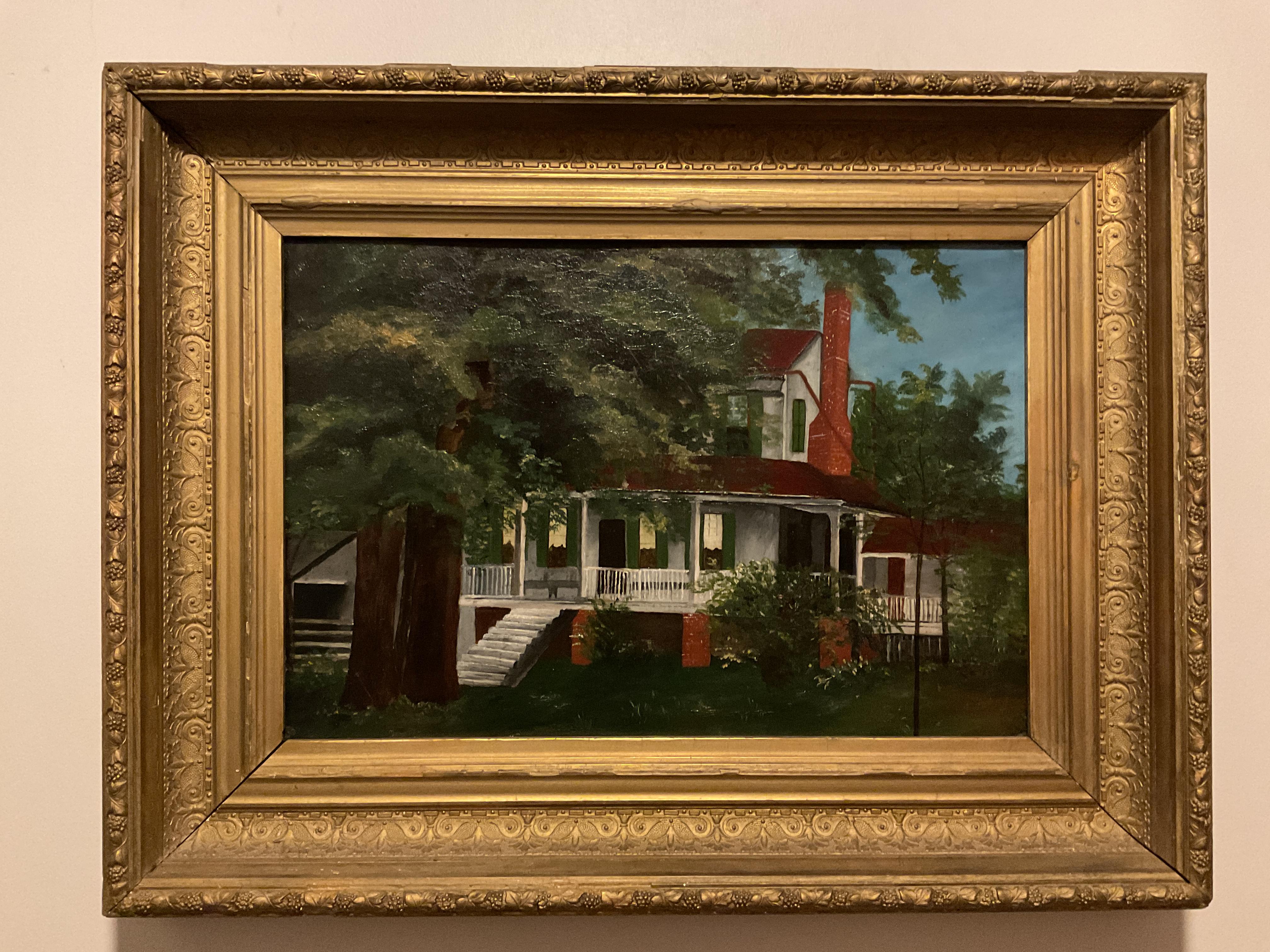
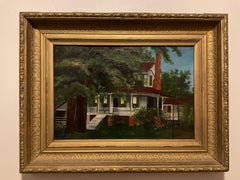
Historical Southern Painting - North Carolina Homestead - Belcross, Camden Co.
Located in Baltimore, MD
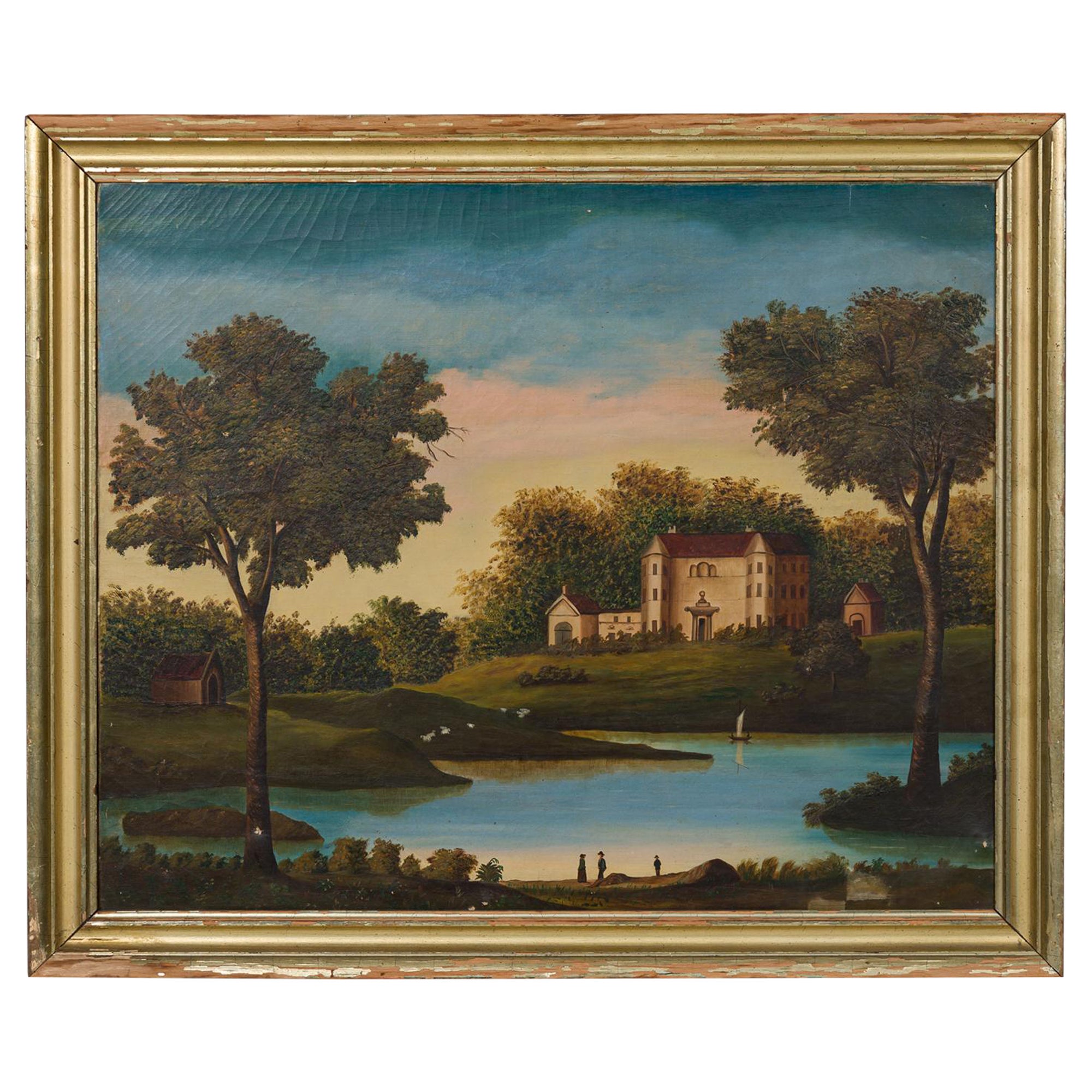
If you have interest in Eastern North Carolina Tidewater history and architecture, this painting may be a fine addition to your home or collection. It is an oil on board of the Sanderlin House in Belcross, Camden County. There is quite a bit of history written on a card on the back board that describes the family members of the house in the late 19th century.
Camden is the courthouse town for Camden County. It is a small town located on the east side of the Pasquotank River, a few miles from Elizabeth City. Belcross is an area just outside of town. Apparently two near-identical houses were built ca 1840’s by the Sanderlin brothers, William and Joseph. One was left to ruin and disappeared, the other seems to possibly remain. In any event, per the information included, this is a view of the house by artist Miss Ella Bidgood, ca 1895. An Ella Bidgood, born in Baltimore in 1855, has been identified and she was a resident of Norfolk, Virginia with her family in the 1900 census. She is likely the artist of this painting. It is painted in a somewhat naive style but competently shows details of the house in nice, vivid colors. The painting is not signed but the information on the back side seems completely reliable.
The painting itself is oil on board and measures 12” x 18”. It has been recently cleaned and varnished. It is in very good condition with no issues to report. It is housed in a substantial gold painted frame of the period with interesting detailing. Overall framed measurements are 19” x 24”. The frame is in good solid condition with no issues to report, other than expected very minor age-related wear. Note that the photos show some glare from the varnish in places that really doesn’t show in general light.
Southern paintings...
Category
1890s Folk Art Landscape Paintings
Materials
Oil
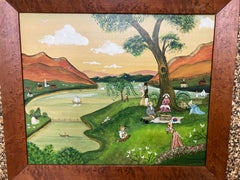
Vintage Folk Art Painting
Located in San Francisco, CA
Charming mid century or possibly earlier folk painting. It is an oil on board measuring 12 inches wide by 10 inches high. The frame measures 14 inches wide by 12 inches high.
Category
Mid-20th Century Folk Art Landscape Paintings
Materials
Oil
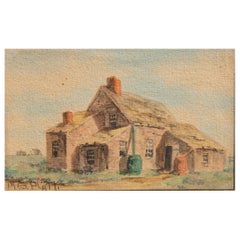
American Farm House 19th Century Landscape Painting
Located in Rochester, NY
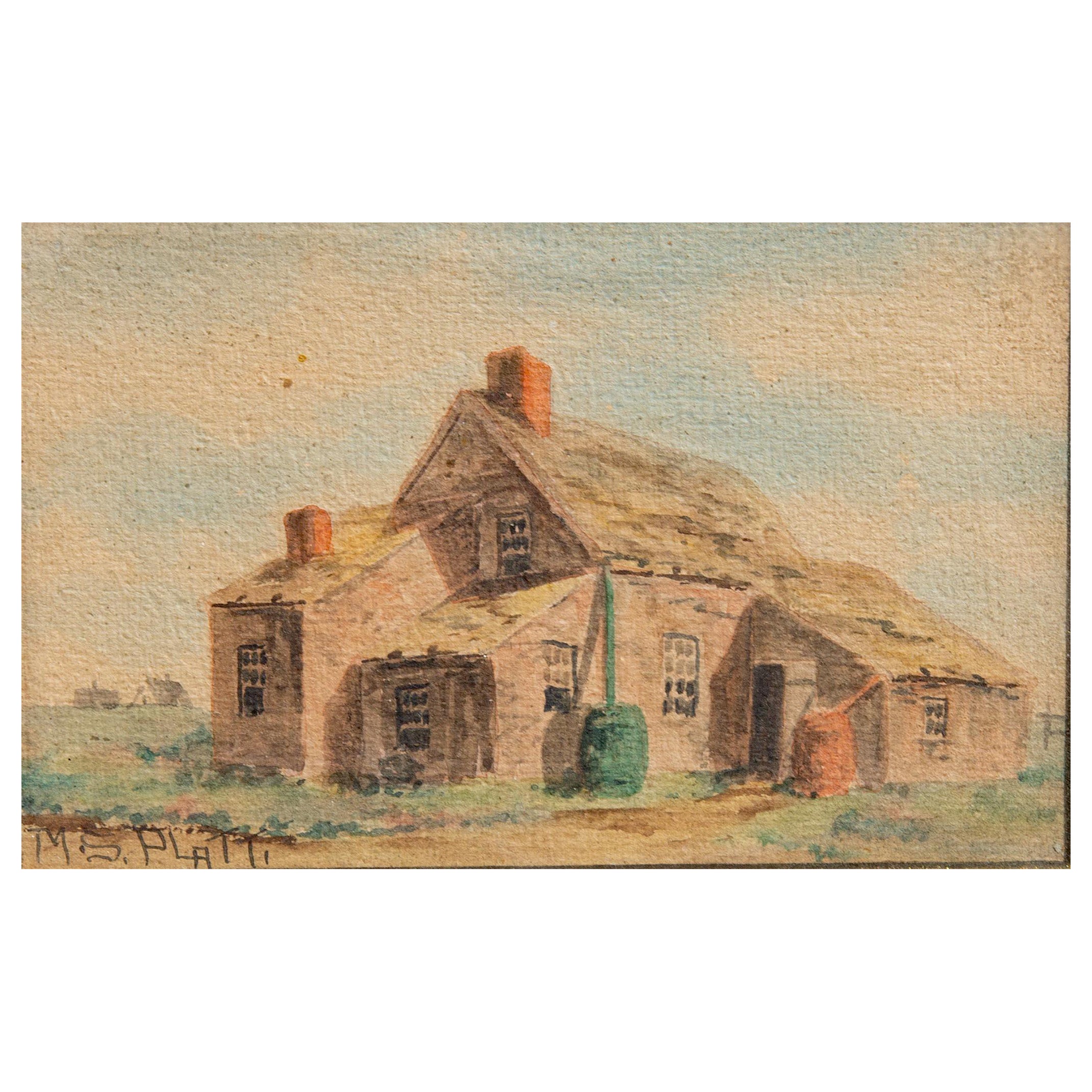
Bucolic American farm scene. Watercolor. Signed M.S. Platt.
Category
Antique 19th Century American Paintings
Materials
Paint
American School Farmhouse, 20th Century
Located in New York, NY
Mystery Artist
Untitled (Farmhouse), c. Early 20th Century
Oil on board
8 1/2 x 17 in.
Framed: 14 7/8 x 23 3/8 x 3/4 in.
Category
Early 20th Century American Impressionist Landscape Paintings
Materials
Oil, Board
American Victorian Landscape of House by a Stream
Located in Queens, NY
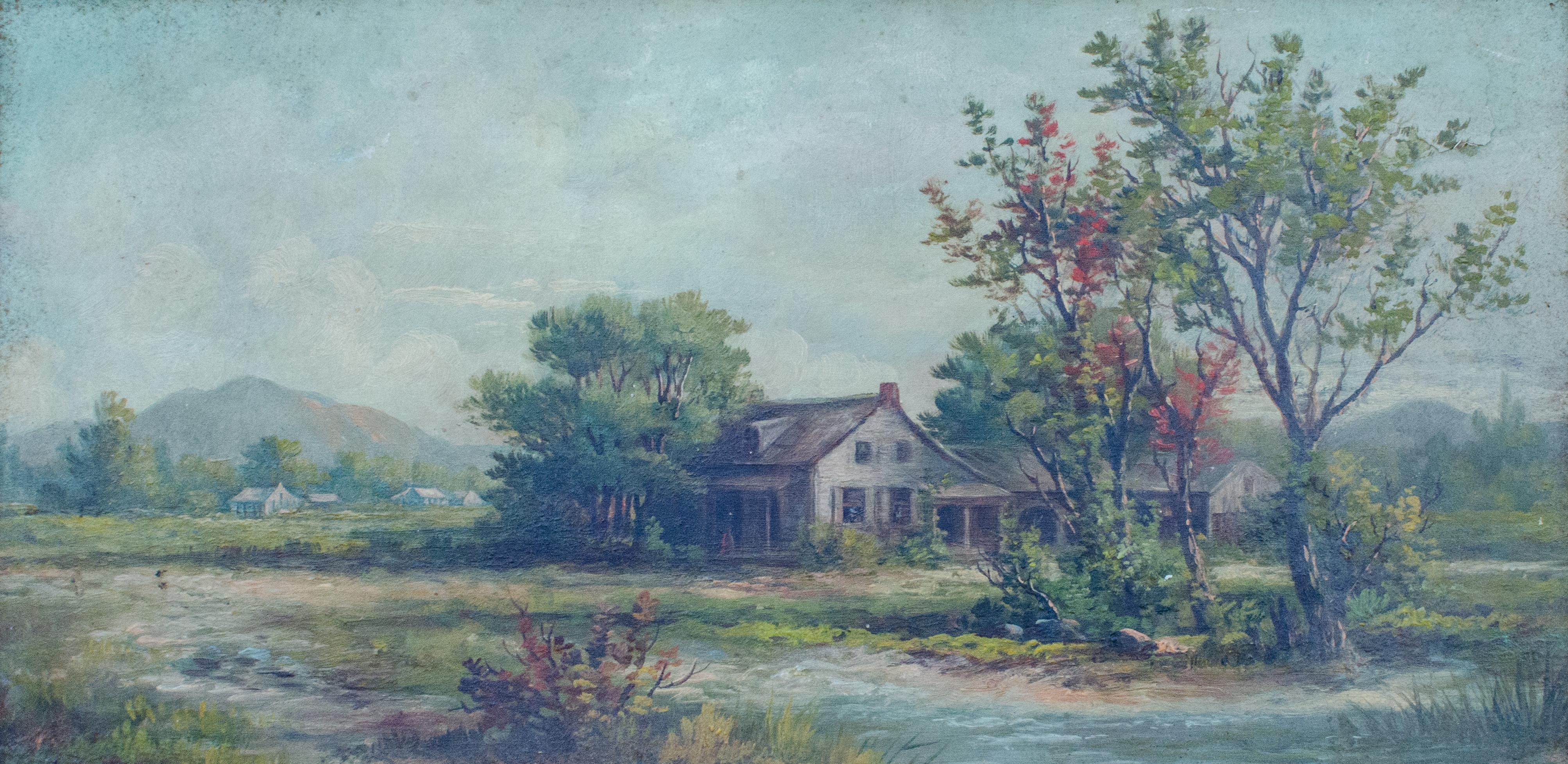
American Victorian Hudson River School style oil painting scene of a house by a stream with tree in foreground in a gold frame
Category
Antique Late 19th Century American Victorian Paintings
Materials
Giltwood
Cottage City, Folk Art Lithograph by Mary Faulconer
By Mary Faulconer
Located in Long Island City, NY
Mary Faulconer, American (1912 - 2011) - Cottage City, Year: circa 1980, Medium: Lithograph, signed and numbered in pencil, Edition: 250, AP 35, Image Size: 10 x 17 inches, Size:...
Category
1980s Folk Art Landscape Prints
Materials
Lithograph