Items Similar to Sheltering from the storm / - Romantic landscape illuminated by lightning bolt -
Want more images or videos?
Request additional images or videos from the seller
1 of 9
George MorlandSheltering from the storm / - Romantic landscape illuminated by lightning bolt -1794
1794
$10,787.55
£8,069.80
€9,000
CA$14,852.17
A$16,253.91
CHF 8,588.77
MX$194,001.22
NOK 109,603.37
SEK 100,241.20
DKK 68,569.83
About the Item
George Morland (1763 London - 1804 Brighton). Sheltering from the Storm. Oil on canvas, relined, 37.5 x 29.5 cm (visible size), 53.5 x 45.5 cm (frame), signed and dated at lower left "G. Morland pinxt. 1794".
- Romantic landscape with gnarled tree ruin illuminated by lightning bolt -
Seeking shelter from a thunderstorm, two farmers have retreated to the edge of a wood. Above them, the black, overcast sky is pierced by a bright, blinding flash of lightning. The landscape is torn apart by the storm. The mighty ruined tree, into which the standing peasant figure stretches, can almost be heard to creak and crack. The whole landscape is moving in the direction in which the two peasants are gazing, transfixed, from a safe vantage point. To emphasise the roar of the unleashed forces of nature, the reclining farmer, nestled in the embankment, has raised his hand in reassurance.
Integrated into the landscape in their own way, the two farmers are part of the nature they cultivate with their instruments. At the same time, however, they are silent witnesses to those forces that cannot be tamed, that nature itself seems to make groan, as the storm-whipped gnarled tree impressively demonstrates. Despite the unleashed forces of nature, it is the observing human being who is the real protagonist of the picture, his special position further emphasised by the gaze-binding red of the reclining peasant's vest.
Here George Morland takes up the older pictorial concepts of the pastoral and the picturesque in order to open them up to the sublime in a masterly way, and this, just before the turn of the century, gives new content to the traditional pictorial language that defines Romanticism.
About the artist
George Morland was encouraged to draw and copy as a child by his father, who was also a painter. The son's exceptional talent led him to exhibit at the Royal Academy's annual exhibition in 1773 - at the age of only ten. After completing his apprenticeship with his father, Morland travelled to Calais and St-Omer in 1785, where he painted sentimental genre scenes in the style of Louis-Léopold Boilly. In 1786 he married Anne, the sister of the painter and engraver William Ward, who printed 97 of Morland's pictures.
Especially his moralistic series in the tradition of William Hogarth, such as 'Laetitia' (Abduction and Fall of a Girl, 6 plates, engraved by J. R. Smith) and 'The Deserter' (4 plates, engraved by G. Keating), made Morland very popular, but his extravagant lifestyle got him into debt. He had to retire to the countryside to escape his creditors, and from the 1790s onwards he concentrated on rural scenes, which are among the highlights of his work. In 1799, once again in debt, he went into hiding on the Isle of Wight, where he painted scenes of beaches, fishermen and smugglers. On his return to London he was sent to debtors' prison, where he died.
Morland was a close friend of the painter William Armfield Hobday (1771-1831), who painted portraits of Morland. William Collins was his unofficial pupil and later wrote Morland's biography.
Selection of public collections that own paintings by George Morland:
Art Institute of Chicago, Ashmolean Museum at the University of Oxford, Courtauld Institute of Art London, Institute of Arts Detroit, Fitzwilliam Museum at the University of Cambridge, Harvard University Art Museums Massachusetts, Hermitage Museum St. Petersburg, Manchester City Art Gallery, Metropolitan Museum of Art New York, Minneapolis Institute of Arts Minnesota, Museum of Fine Arts Boston, Musée des Beaux-Arts de Rouen, National Gallery of Art Washington, National Gallery of Canada Ottawa, National Gallery of Victoria Australia, National Portrait Gallery London, Philadelphia Museum of Art, Seattle Art Museum, Southampton City Art Gallery, Tate Gallery London, The Wallace Collection London, Victoria and Albert Museum London.
Selective Bibliography
John Hassel, Memoirs of the life of the late George Morland. London 1806.
Ralph Richardson, George Morland. Painter. London (1763-1804). London 1895.
J. T. Nettleship, George Morland and the evolution from him of some later painters. London 1898.
J.T.H. Baily
Martin Hardie, George Morland. A biographical essay. London 1906.
G. C. Williamson, George Morland. His life and works, London 1907.
Davis Henry Wilson, George Morland, London 1907.
Sir Walter Gilbey E. D.
Cuming, George Morland. His life and works, London 1907.
Henderson, B.L.K. Morland and Ibbetson, London 1923.
The Arts Council of Great Britain (Ed.), George Morland. An exhibition of paintings and drawings, London 1954.
D. George Winter, George Morland. 1763-1804, Stanford 1977.
GERMAN VERSION
George Morland (1763 London - 1804 Brighton). Aufziehendes Gewitter. Öl auf Leinwand, doubliert, 37,5 x 29,5 cm (Innenmaß), 53,5 x 45,5 cm (Rahmen), links unten signiert und datiert "G. Morland pinxt. 1794".
- Vom Blitz illuminierte romantische Landschaft mit knorriger Baumruine -
Vor einem Unwetter schutzsuchend haben sich zwei Bauern an den Rand eines Gehölzes zurückgezogen. Über ihnen wird der schwarz verhangene Himmel von einem hell gleißenden Blitz durchzuckt. Die Szenerie ist bis in die Haare der Bauern hinein sturmbewegt. Den mächtigen ruinösen Baum, in welchen sich die stehende Bauernfigur hinein verlängert, meint man förmlich knarren und knacken zu hören. Die ganze Landschaft strebt in die Richtung, in welche die beiden Bauern - von sicherer Warte aus - gebannt blicken. Um das Tosen der entfesselten Naturgewalten noch zu unterstreichen, hat der liegende, in die Böschung eingefügte Bauer beruhigend die Hand erhoben.
Jeweils auf ihre Weise in die Landschaft integriert, sind die beiden Bauern Teil der Natur, die sie mit ihren Instrumenten kultivieren. Zugleich aber auch stumme Zeugen jener nicht zu domestizierenden Kräfte, die die Natur selbst zum Aufstöhnen zu bringen scheint, wie es der sturmgepeitschte knorrige Baum eindrucksvoll vor Augen führt. Trotz der entfesselten Naturgewalten ist der betrachtende Mensch dennoch der eigentliche Protagonist des Bildes, dessen Sonderstellung zusätzlich durch das den Blick bindende Rot des Untergewandes des liegenden Bauern herausgestellt wird.
George Morland greift hier die älteren Bildkonzepte der Pastorle und der Pittoreske auf, um sie auf meisterhafte Weise für das Erhabene zu öffnen, womit er - kurz vor der Jahrhundertwende - der traditionellen Bildsprache neue, die Romantik bestimmende Inhalte erschließt.
zum Künstler
George Morland wurde durch seinen Vater, der ebenfalls Maler war, bereits im Kindesalter zum Zeichnen und Kopieren angehalten. Das außergewöhnliche Talent des Sohnes führte dazu, dass er 1773 - im Alter von nur zehn Jahren - in der jährlichen Schau der Royal Academy ausstellte. Nach Beendigung der Lehre bei seinem Vater reiste Morland 1785 nach Calais und St-Omer, wo er sentimentale Genreszenen in der Art von Louis-Léopold Boilly malte. 1786 heiratete er Anne, die Schwester des Malers und Kupferstechers William Ward, der 97 von Morlands Bildern druckgrafisch umsetzte.
Insbesondere durch seine moralischen Bilderfolgen in der Tradition von William Hogarth, wie "Laetitia" (Entführung und Fall eines Mädchens, 6 Bilder, gestochen von J. R. Smith) und "Der Deserteur" (4 Bilder, gestochen von G. Keating) erlangte Morland schnell große Beliebtheit, geriet durch eine ausufernde Lebensführung jedoch in Schulden. Er musste sich vor seinen Gläubigern auf das Land zurückziehen, was ab den 1790er Jahren zu einer Konzentration auf Darstellungen ländlicher Szenen führte, die zu den Höhepunkten seines Schaffens zählen. 1799 hielt er sich - abermals verschuldet - auf der Insel Wight verborgen, wo er Strand-, Fischer- und Schmugglerdarstellungen malte. Nach London zurückgekehrt, kam er ins Schuldgefängnis und verstarb dort.
Morland war eng mit dem Maler William Armfield Hobday (1771-1831) befreundet, der Morland porträtierte. William Collins war sein inoffizieller Schüler, der später Morlands Biografie verfasst hat.
Auswahl öffentlicher Sammlungen, die Bilder von George Morland besitzen:
Art Institute of Chicago, Ashmolean Museum at the University of Oxford, Courtauld Institute of Art London, Institute of Arts Detroit, Fitzwilliam Museum at the University of Cambridge, Harvard University Art Museums Massachusetts, Hermitage Museum St. Petersburg, Manchester City Art Gallery, Metropolitan Museum of Art New York, Minneapolis Institute of Arts Minnesota, Museum of Fine Arts Boston, Musée des Beaux-Arts de Rouen, National Gallery of Art Washington, National Gallery of Canada Ottawa, National Gallery of Victoria Australia, National Portrait Gallery London, Philadelphia Museum of Art, Seattle Art Museum, Southampton City Art Gallery, Tate Gallery London, The Wallace Collection London, Victoria and Albert Museum London.
Auswahlbibliographie
John Hassel, Memoirs of the life of the late George Morland. London 1806.
Ralph Richardson, George Morland. Painter. London (1763-1804). London 1895.
J. T. Nettleship, George Morland and the evolution from him of some later painters. London 1898.
J.T.H. Baily
Martin Hardie, George Morland. A biographical essay. London 1906.
G. C. Williamson, George Morland. His life and works, London 1907.
Davis Henry Wilson, George Morland, London 1907.
Sir Walter Gilbey E. D.
Cuming, George Morland. His life and works, London 1907.
Henderson, B.L.K. Morland and Ibbetson, London 1923.
The Arts Council of Great Britain (Ed.), George Morland. An exhibition of paintings and drawings, London 1954.
D. George Winter, George Morland. 1763-1804, Stanford 1977.
- Creator:George Morland (1763 - 1804, English)
- Creation Year:1794
- Dimensions:Height: 14.77 in (37.5 cm)Width: 11.62 in (29.5 cm)Depth: 1.97 in (5 cm)
- Medium:
- Movement Style:
- Period:1790-1799
- Condition:
- Gallery Location:Berlin, DE
- Reference Number:1stDibs: LU2438215123692
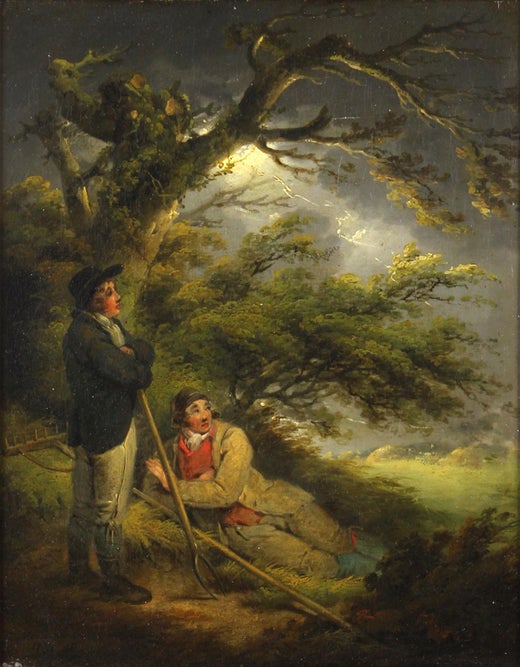
George Morland
George Morland (26 June 1763 in London – 29 October 1804 in Brighton) was an English painter. His early work was influenced by Francis Wheatley but after the 1790s he came into his own style. His best compositions focus on rustic scenes: farms and hunting; smugglers and gypsies; and rich, textured landscapes informed by Dutch Golden Age painting.
About the Seller
5.0
Vetted Professional Seller
Every seller passes strict standards for authenticity and reliability
Established in 2014
1stDibs seller since 2023
23 sales on 1stDibs
- ShippingRetrieving quote...Shipping from: Berlin, Germany
- Return Policy
More From This Seller
View AllHigh Moorland Landscape in the fog - The world as a transcendent phenomenon -
Located in Berlin, DE
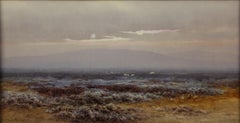
Charles Edward Brittan Jr (1870 Plymouth - 1949). High moor landscape in the fog. Gouache, signed at lower left "Charles E. Brittan", 18 x 34.5 cm (passepartout), 45 x 62 cm (frame)....
Category
Early 20th Century Realist Landscape Drawings and Watercolors
Materials
Watercolor
Woodland / - The Inner Drama of the Landscape -
Located in Berlin, DE
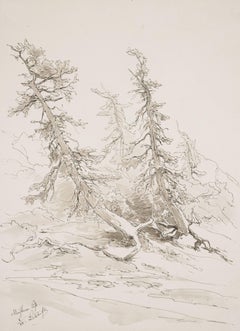
Eduard Peithner von Lichtenfels (1833 Vienna - 1913 Berlin), Woodland, 1884. Watercolor and pen and ink on drawing paper, 30.4 cm x 22.5 cm, signed, dated and inscribed by the artist...
Category
1880s Landscape Drawings and Watercolors
Materials
Paper
At the pond / - The longing of the landscape -
Located in Berlin, DE
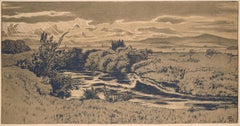
Hans Thoma (1839 Bernau - 1924 Karlsruhe), At the pond, 1897. Algraph on strong wove paper, published by Breitkopf und Härtel in Leipzig as ‘Zeitgenössisches Kunstblatt Nr. 148’, 23....
Category
1890s Realist Figurative Prints
Materials
Paper
Southern German summer landscape / - The profile of the landscape -
Located in Berlin, DE
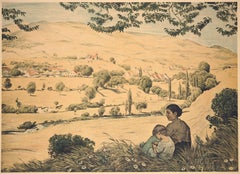
Hans Thoma (1839 Bernau - 1924 Karlsruhe), Southern German summer landscape, around 1897. Algraph on strong wove paper, published by Breitkopf und Härtel in Leipzig as ‘Zeitgenössisc...
Category
1890s Realist Figurative Prints
Materials
Paper
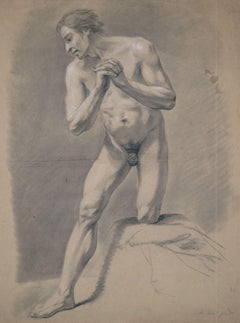
Male Nude / - The Drama of the Nude -
Located in Berlin, DE
Johann Heinrich Meil (1730 Gotha - 1820 Berlin), Male Nude, 1807. White heightened, occasionally wiped charcoal drawing on brownish paper, 51 cm x 39.5 cm, signed “J.[ohann] H.[einri...
Category
Early 19th Century Rococo Nude Drawings and Watercolors
Materials
Paper
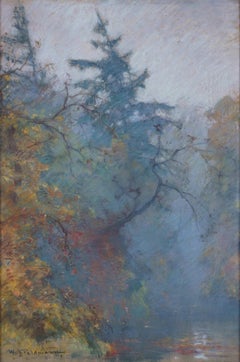
Impressionist Autumn Landscape with Lake / - Diffuse Concretion -
Located in Berlin, DE
Wilhelm Feldmann (1859 Lüneburg - 1932 Lübeck), Impressionist autumn landscape with lake, around 1905. Pastel on cardboard, 46 cm x 31 cm (inside dimension), 52 cm x 37 cm (frame), s...
Category
Early 1900s Impressionist Landscape Paintings
Materials
Gouache
You May Also Like
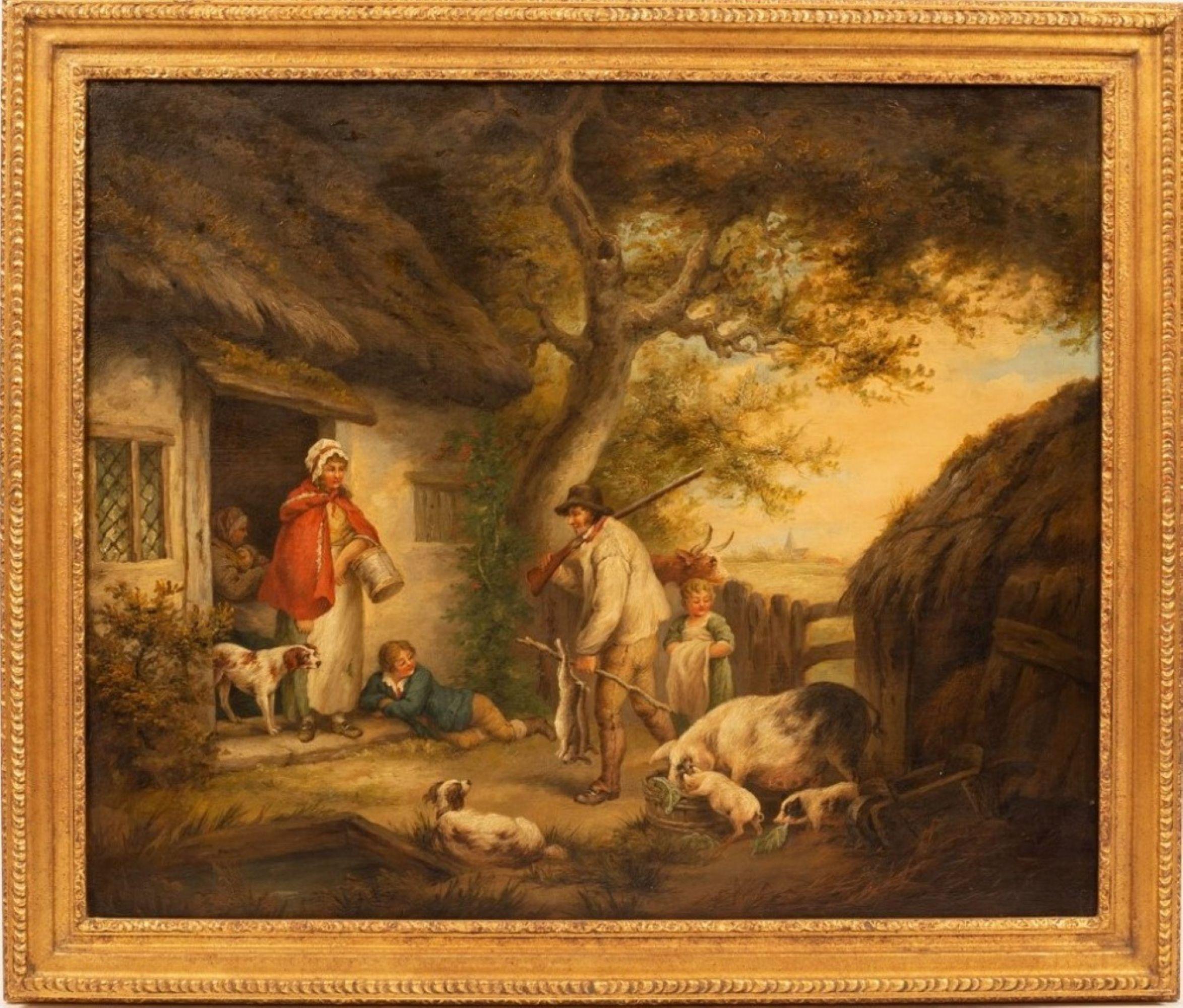
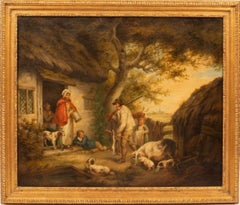
George Morland(follower) landscape, oil, country scene, dogs, pigs, cottage
Located in York, GB
Follower of George Morland landscape country scene depicting pigs and dogs etc With presumably husband wife and child outside their cottage also maybe gra...
Category
19th Century Realist Landscape Paintings
Materials
Oil
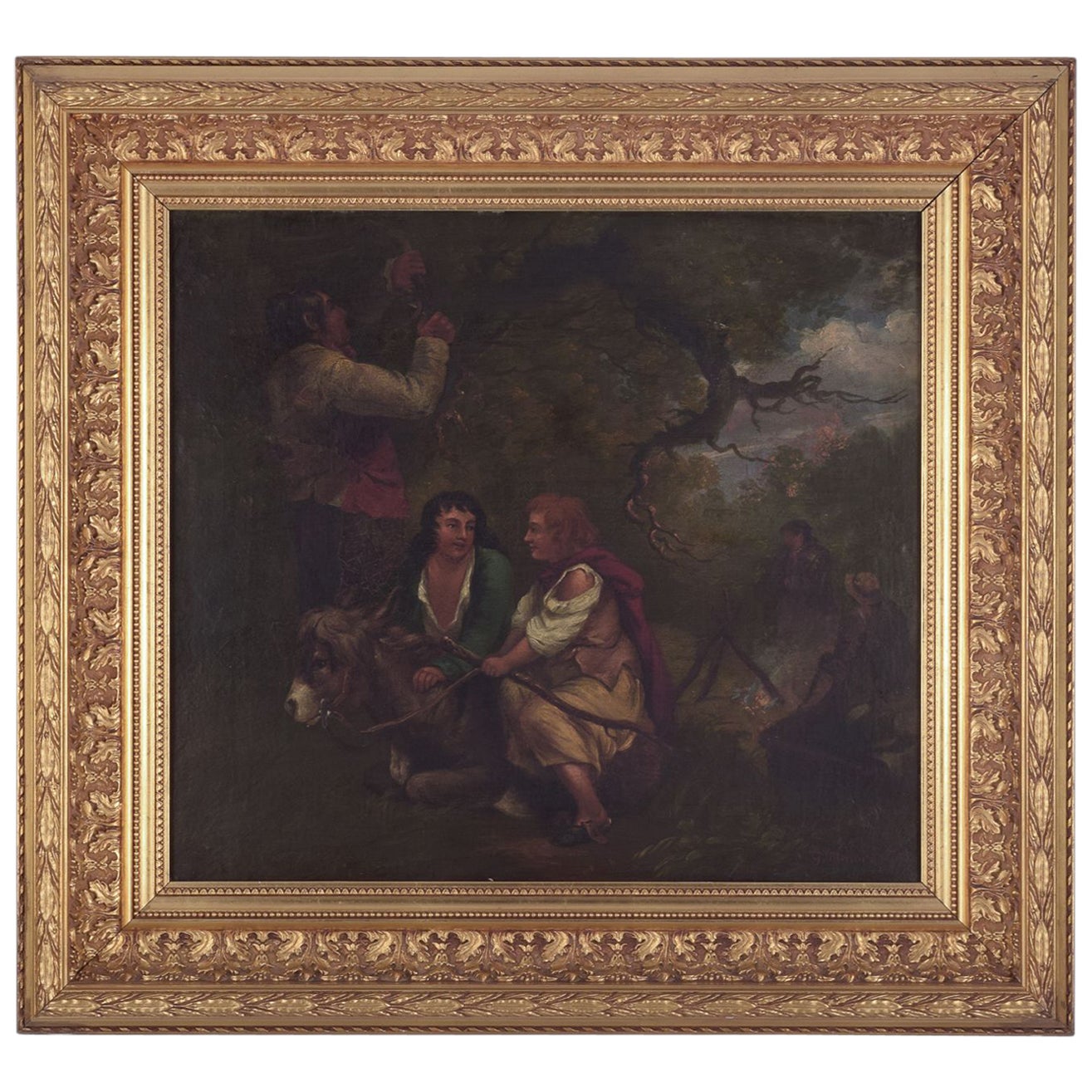
George Morland, well-listed British artist. Oil on canvas. Pastoral scene, 1792
Located in København, Copenhagen
George Morland (1763-1804), a well-listed British artist.
Oil on canvas.
A pastoral scene with shepherds by a woodland bonfire, accompanied by a donkey.
Signed G. Morland 1792.
Condi...
Category
Antique 1790s British Paintings
Materials
Canvas
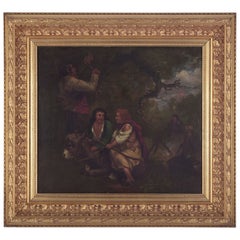
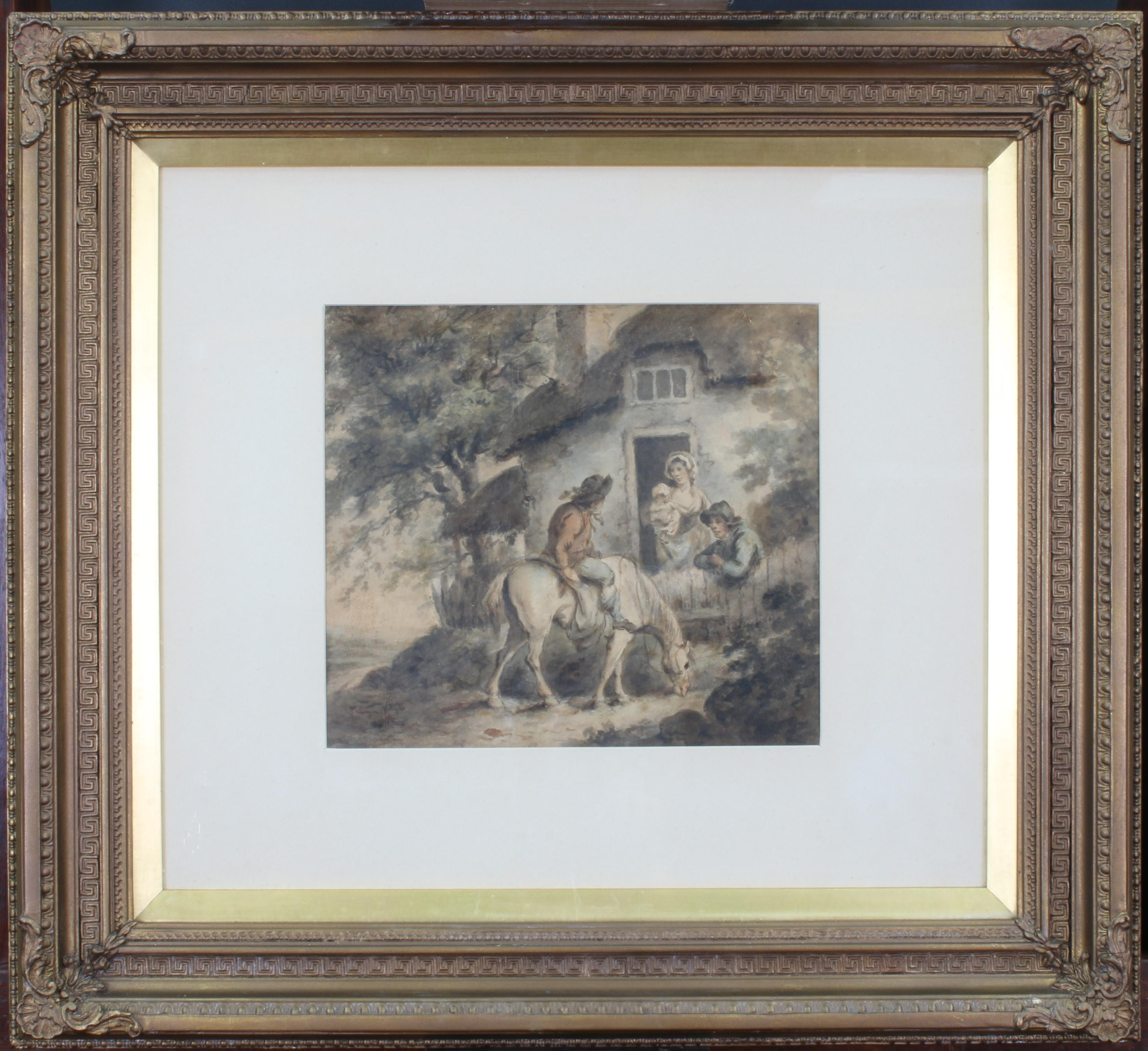
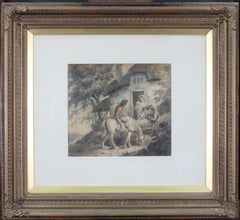
Conversation at the gate
By George Morland
Located in Douglas, Isle of Man
George Morland 1763-1804, was an English painter who was influenced by the painter Francis Wheatley , landscapes. After 1790 he had developed his own style of painting adopting rusti...
Category
18th Century Landscape Paintings
Materials
Watercolor, Paper
Early 1800
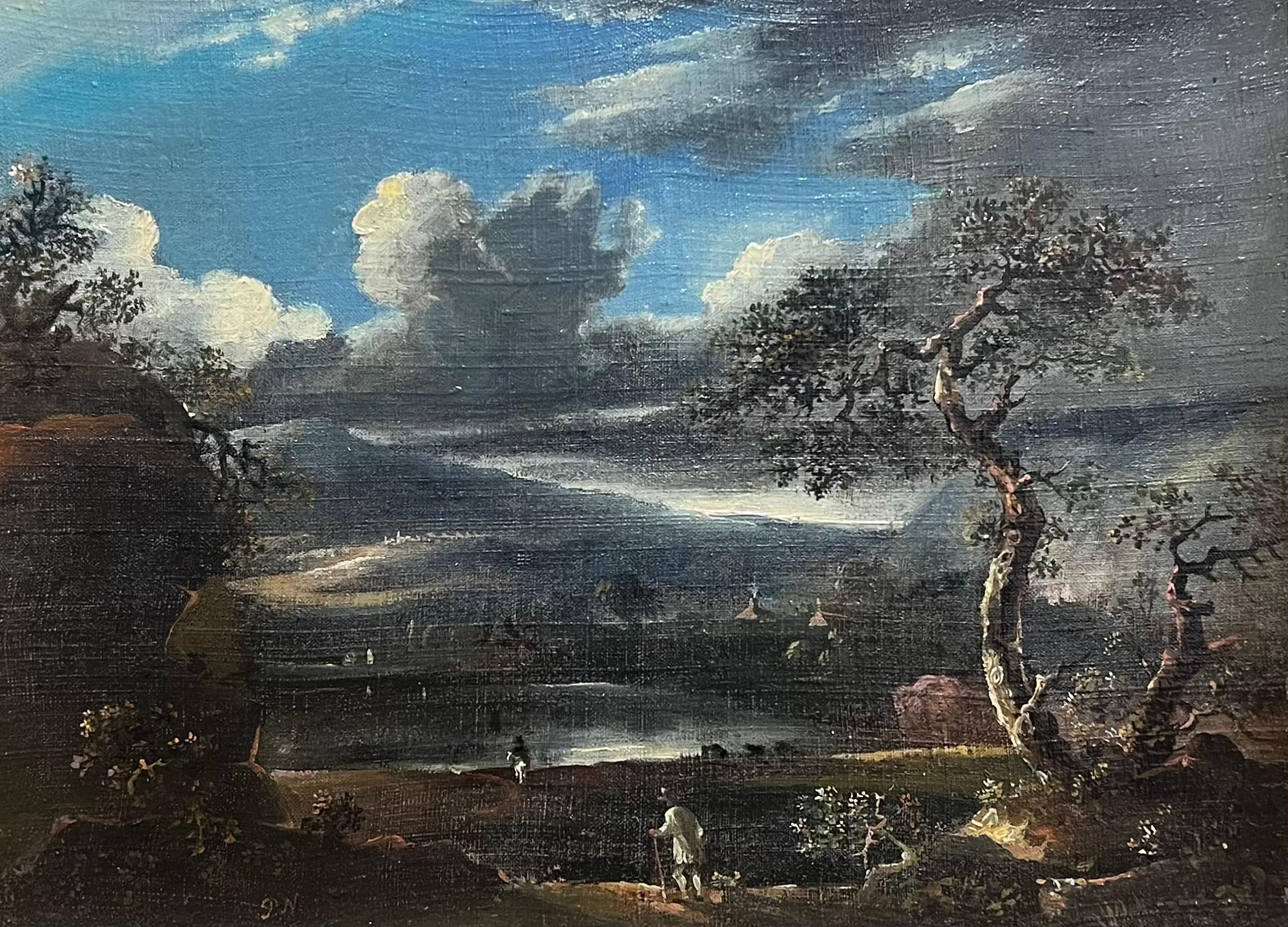
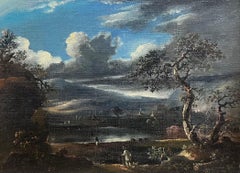
s British Oil Painting Figures in Brooding Nocturnal Hilly Landscape
Located in Cirencester, Gloucestershire
The Windswept Sky
Attributed to Patrick Nasmyth (Scottish 1787-1831)
oil on canvas laid over board, framed
Framed: 14 x 17 inches
painting: 11 x 14 inches
Provenance: private collect...
Category
Early 19th Century English School Landscape Paintings
Materials
Oil
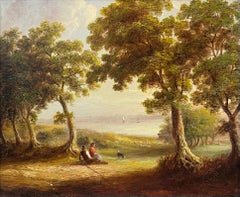
Antique English Oil Painting Figures Resting by River Woodland Landscape
Located in Cirencester, Gloucestershire
Resting by the River
English artist, 19th century
oil on canvas, framed
framed: 12.5 x 14.5 inches
canvas: 10 x 12.5 inches
provenance: private collection, England
condition: very go...
Category
19th Century Victorian Figurative Paintings
Materials
Oil
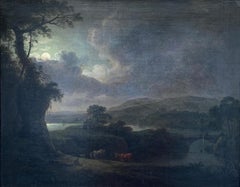
View Across the Valley, Late 18th Century English Moonlit Scene
Located in London, GB
Oil on canvas
Image size: 14 1/4 x 18 inches (36 x 45.7 cm)
Period gilt frame
In this painting the bright moon, partially obscured by mounting dark clouds, dramatically lights the l...
Category
1780s Landscape Paintings
Materials
Canvas, Oil
More Ways To Browse
Lightning Bolt
Metropolitan Gallery
Antique Whip
4 X 6 Antique Picture Frames
Philadelphia Portrait
1790 Oil Painting
C D Pierce And Son
Martin Hardie
G Morland
Loch Lomond
Oil Painting Mountains Scottish
Oil Painting Sullivan
Original Art For Sale
Rockport Oil
Romina Milano
1930 Impressionist Artist
Blue Impressionistic Painting
C Hunter