Items Similar to "Pueblo Indians, Taos, New Mexico, " Georgia Klitgaard, Southwest Landscape
Want more images or videos?
Request additional images or videos from the seller
1 of 9
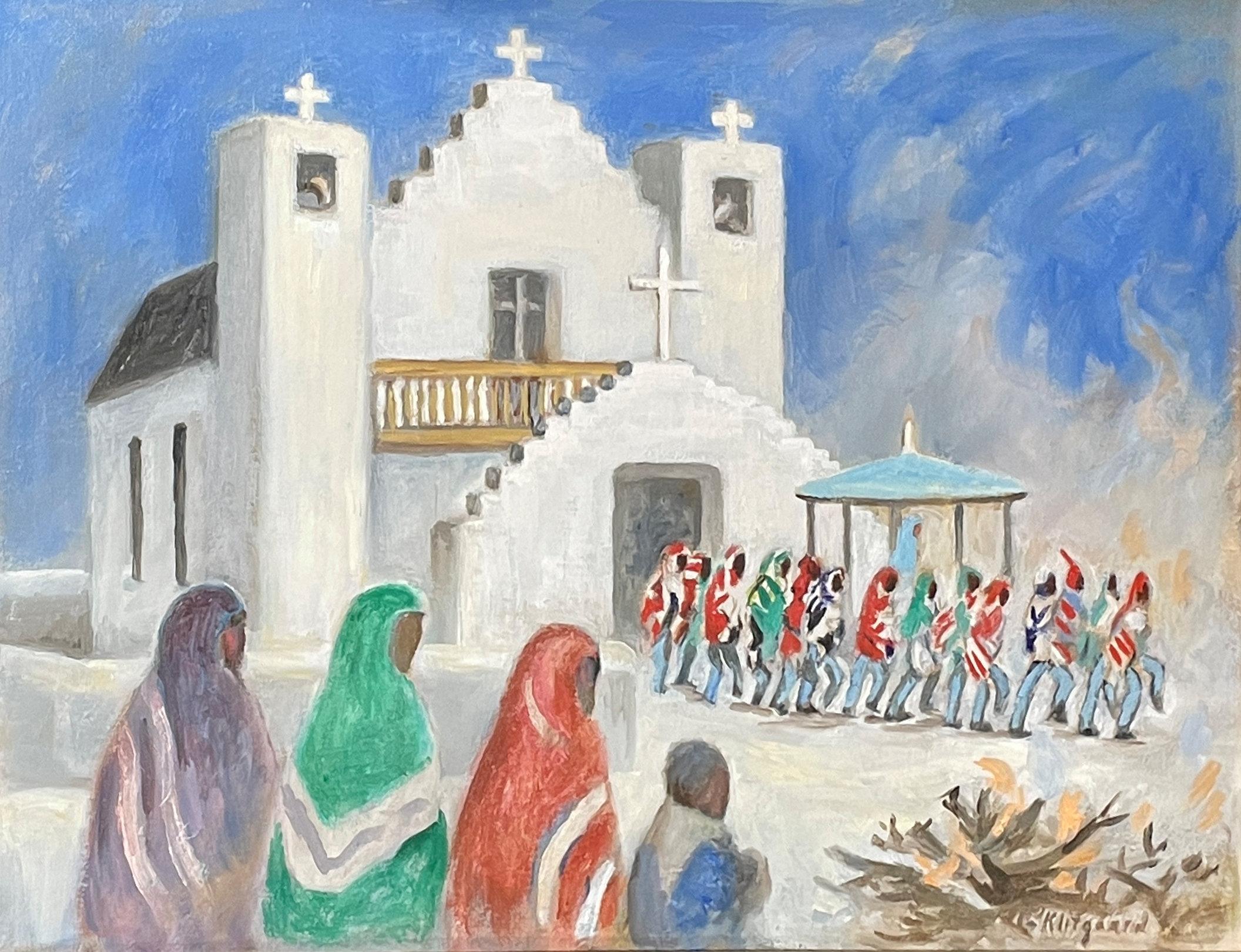
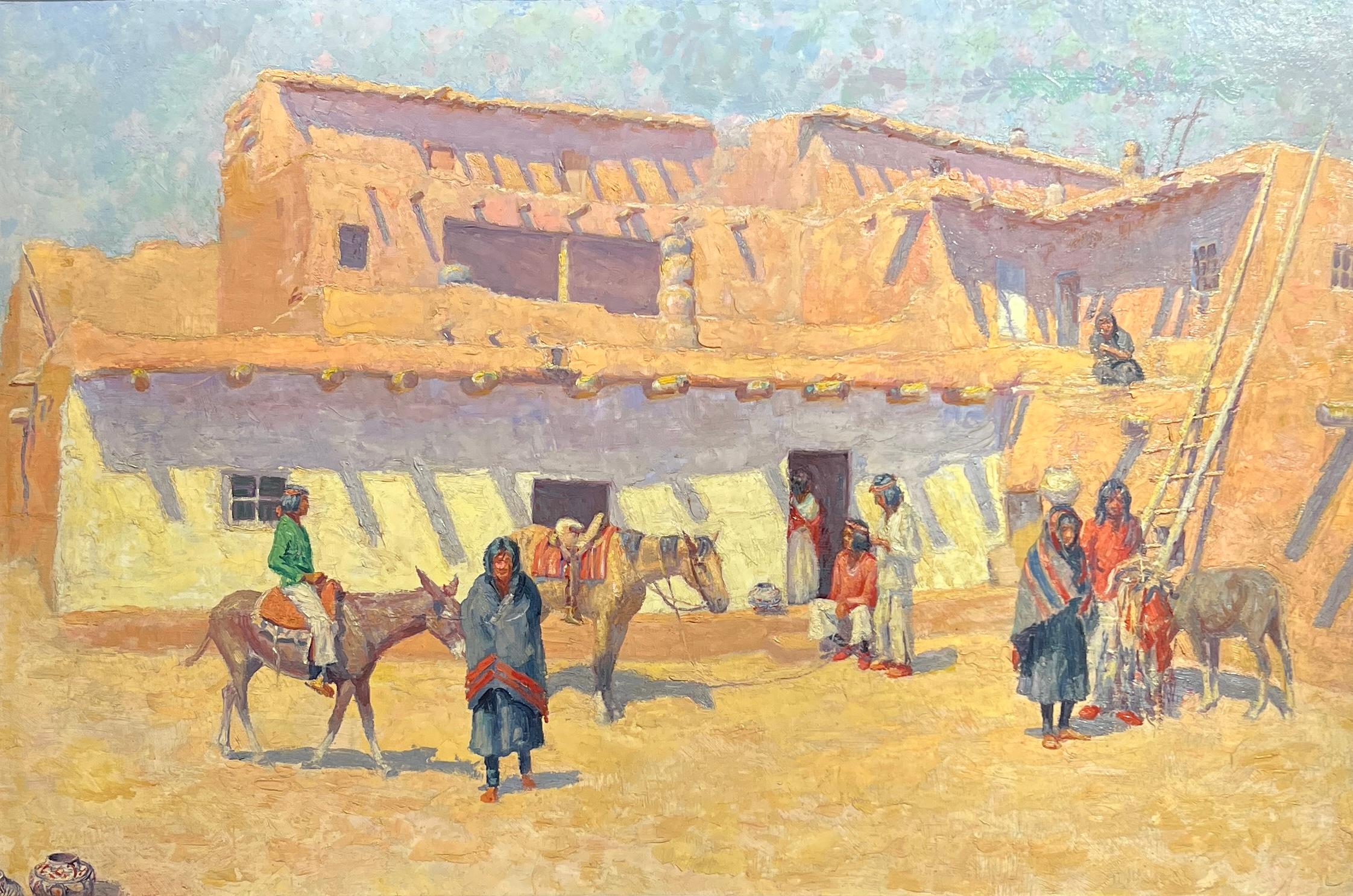
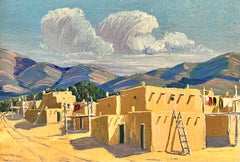
Georgina Klitgaard"Pueblo Indians, Taos, New Mexico, " Georgia Klitgaard, Southwest Landscape
$5,200
$6,50020% Off
£3,963.53
£4,954.4120% Off
€4,571.52
€5,714.4020% Off
CA$7,385.55
CA$9,231.9420% Off
A$7,936.56
A$9,920.6920% Off
CHF 4,258.42
CHF 5,323.0320% Off
MX$93,487.77
MX$116,859.7220% Off
NOK 53,544.94
NOK 66,931.1820% Off
SEK 48,912.96
SEK 61,141.2020% Off
DKK 34,165.72
DKK 42,707.1520% Off
About the Item
Georgina Klitgaard
Pueblo Indians, Taos, New Mexico
Signed lower right
Oil on canvas
18 x 24 inches
Georgina Berrian was born in Spuyten Duyvil, New York in 1893. She was educated at Barnard College and studied at the National Academy of Design in New York. She married the Danish-born mariner, artist, and writer Kaj Klitgaard in 1919. After visiting friends in Woodstock, the couple became committed to the area and built a home in 1922 in Bearsville which provided a panoramic view of the mountains and valleys of Woodstock.
Georgina Klitgaard's first exhibition in New York was held at the Whitney Studio Club from Dec.20, 1927 to January 7, 1928. Klitgaard's New York dealer was the Frank Rehn Galleries, where she began to exhibit in the 1930s, continuing that relationship into the 1950s. In 1939 and again in 1940 she had solo exhibitions with the Milch Gallery in New York. By the late 1920s, Klitgaard began to show works at museum invitationals. She sent work to the Carnegie International in Pittsburgh, Pennsylvania each year from 1928 to 1949. The Corcoran Gallery of Art in Washington, DC invited Klitgaard to exhibit each year from 1930 to 1945. Klitgaard also exhibited works at the Virginia Museum of Fine Art in Richmond and the Pennsylvania Academy of the Fine Arts in Philadelphia from 1930 to 1945 annually.
Klitgaard was also invited to exhibit regularly at the Whitney Museum of American Art from 1927 to 1944. In the 1936 works on paper component of the Whitney Biennial, Klitgaard exhibited Florida Landscape (No.116, a work on paper). In 1944 Klitgaard exhibited another Florida work, Early Spring, Florida (No. 7) at the Whitney. Based on this information, it seems likely that Klitgaard began to visit Florida in the winter during the 1930s and continued to do so until the 1940s. Many of her Woodstock artist friends, such as Doris Lee (1905-1983), found a way to spend time in Florida during the winter on a regular basis. Their experiences in Florida may have influenced Klitgaard to visit.
In 1933 Georgina Klitgaard received a Guggenheim Fellowship which provided funds to travel in Europe. In 1940 the family traveled around the U.S. while Kaj, himself now the recipient of a Guggenheim, wrote Through the American Landscape. During the Depression she was selected to paint murals in post offices in Pelham, Georgia and Goshen (1937) and Poughkeepsie (1940) in Upstate New York. The Metropolitan Museum of Art acquired Girl and Child Under A Pine Tree, a colorful portrait, in 1939. By the 1940s Klitgaard's work was also in the permanent collections of the Whitney Museum of American Art; the Newark Museum; the New Britain Museum of American Art; and the Dayton Art Institute, as well as other public and private collections.
Klitgaard was a member of the Audubon Artists and the American Society of Painters, Sculptors, and Gravers. She had a studio in New York City located at 659 Fifth Avenue. Klitgaard died in 1976. In Klitgaard's estate a few works from her travels to Georgia, Florida, and North Carolina remain, in addition to her summer work in Rhode Island and Nantucket. However, the bulk of her exhibited subjects were painted around the Woodstock or Bearsville area.
- Creator:Georgina Klitgaard (1893-1976, American)
- Dimensions:Height: 22.63 in (57.49 cm)Width: 28.25 in (71.76 cm)
- Medium:
- Movement Style:
- Period:
- Condition:
- Gallery Location:New York, NY
- Reference Number:1stDibs: LU1841211305762

Georgina Klitgaard
Georgina Berrian was born in Spuyten Duyvil, New York in 1893. She was educated at Barnard College and studied at the National Academy of Design in New York. She married the Danish-born mariner, artist, and writer Kaj Klitgaard in 1919. After visiting friends in Woodstock, the couple became committed to the area and built a home in 1922 in Bearsville which provided a panoramic view of the mountains and valleys of Woodstock. Georgina Klitgaard's first exhibition in New York was held at the Whitney Studio Club from Dec.20, 1927 to January 7, 1928. Klitgaard's New York dealer was the Frank Rehn Galleries, where she began to exhibit in the 1930s, continuing that relationship into the 1950s. In 1939 and again in 1940 she had solo exhibitions with the Milch Gallery in New York. By the late 1920s, Klitgaard began to show works at museum invitationals. She sent work to the Carnegie International in Pittsburgh, Pennsylvania each year from 1928 to 1949. The Corcoran Gallery of Art in Washington, DC invited Klitgaard to exhibit each year from 1930 to 1945. Klitgaard also exhibited works at the Virginia Museum of Fine Art in Richmond and the Pennsylvania Academy of the Fine Arts in Philadelphia from 1930 to 1945 annually. Klitgaard was also invited to exhibit regularly at the Whitney Museum of American Art from 1927 to 1944. In the 1936 works on paper component of the Whitney Biennial, Klitgaard exhibited Florida Landscape (No.116, a work on paper). In 1944 Klitgaard exhibited another Florida work, Early Spring, Florida (No. 7) at the Whitney. Based on this information, it seems likely that Klitgaard began to visit Florida in the winter during the 1930s and continued to do so until the 1940s. Many of her Woodstock artist friends, such as Doris Lee (1905-1983), found a way to spend time in Florida during the winter on a regular basis. Their experiences in Florida may have influenced Klitgaard to visit. In 1933 Georgina Klitgaard received a Guggenheim Fellowship which provided funds to travel in Europe. In 1940 the family traveled around the U.S. while Kaj, himself now the recipient of a Guggenheim, wrote Through the American Landscape. During the Depression she was selected to paint murals in post offices in Pelham, Georgia and Goshen (1937) and Poughkeepsie (1940) in Upstate New York. The Metropolitan Museum of Art acquired Girl and Child Under A Pine Tree, a colorful portrait, in 1939. By the 1940s Klitgaard's work was also in the permanent collections of the Whitney Museum of American Art; the Newark Museum; the New Britain Museum of American Art; and the Dayton Art Institute, as well as other public and private collections. Klitgaard was a member of the Audubon Artists and the American Society of Painters, Sculptors, and Gravers. She had a studio in New York City located at 659 Fifth Avenue. Klitgaard died in 1976. The bulk of her exhibited subjects were painted around the Woodstock or Bearsville area.
About the Seller
5.0
Platinum Seller
Premium sellers with a 4.7+ rating and 24-hour response times
Established in 2022
1stDibs seller since 2022
137 sales on 1stDibs
Typical response time: <1 hour
- ShippingRetrieving quote...Shipping from: New York, NY
- Return Policy
More From This Seller
View All"Pueblo Indians, Taos, New Mexico" Georgina Klitgaard, Modernist Figures
By Georgina Klitgaard
Located in New York, NY
Georgina Klitgaard
Pueblo Indians, Taos, New Mexico
Signed lower right
Oil on canvas
18 x 24 inches
Georgina Klitgaard’s art has sometimes gotten lost in the critical propensity to...
Category
Mid-20th Century American Modern Landscape Paintings
Materials
Canvas, Oil

"In Foreign Parts" Eugene Higgins, Southwestern Pueblo, Modern Figurative
By Eugene Higgins
Located in New York, NY
Eugene Higgins
In Foreign Parts, circa 1913
Signed lower right
Watercolor on paper
Sight 17 x 13 inches
Born William Victor Higgins in 1884 to a Shelbyville, Indiana farm family where the only art Victor was aware of as a child was his father's love of flowers. "He loved their forms and their colors, and he tended his garden as a painter might work a canvas." At the age of nine, Victor met a young artist who traveled the Indiana countryside painting advertisements on the sides of barns. He purchased paints and brushes so the young Higgins could practice his own artwork on the inside of his father's barn. He also taught Victor about art museums and especially about the new Chicago Art Institute. This information never left the young artist, and he saved his allowance until his father allowed him at the age of fifteen to attend Chicago Art Institute. He worked a variety of jobs to finance his studies both there and at the Academy of Fine Arts.
Victor Higgins traveled to New York in 1908, where he met Robert Henri, who became a significant influence by depicting every-day scenes and stressing the importance of the spirit and sense of place as important factors in painting. Higgins was also greatly affected by the New York Armory Modernism Show of Marsden Hartley in 1913.
While Victor Higgins was in Chicago he met former mayor and avid collector Carter H. Harrison who was to prove instrumental in the growth of Higgins career for several years. Harrison agreed to support Higgins for four years to go to Paris and Munich and paint and study in the great museums in Europe. While at the Academie de la Grande Chaumier in Paris (1910-1914) he met Walter Ufer, who was another Chicago artist being sponsored by Carter Harrison. This meeting was not only a life-long friendship, but the beginning of a great change in the way Higgins looked at "American" art. He decided that America needed it's own authentic style rather than the 19th Century classic style he was taught in Europe. Very soon after returning to Chicago in 1914, Harrison sent him and Walter Ufer on a painting trip to Taos, New Mexico for a year in exchange for paintings. Higgins made other similar agreements and was able to support himself with his painting. This trip was a life-changing experience and introduced Higgins to the authentic America he had been looking for.
In 1914 Taos was an isolated village about twelve hours from Santa Fe on an impossible dirt road. But the colorful life of the pueblo people and the natural beauty drew a collection of artists who became the Taos art colony, from which the Taos Society of Artists was founded in 1915. Victor Higgins became a permanent resident within a year of his arrival and a member of the society in 1917, exhibiting with Jane Peterson in 1925 and with Wayman Adams and Janet Scudder in 1927. The members would travel around the country introducing the Southwest scenes with great success. He remained a member until the Society's dissolution in 1927. Higgins was the youngest member of the group of seven. Other members were Joseph Henry Sharp, Bert Phillips...
Category
1910s American Modern Figurative Drawings and Watercolors
Materials
Paper, Watercolor
"Arroyo Seco, New Mexico" Georgina Klitgaard, Modernist Southwest Oil Landscape
By Georgina Klitgaard
Located in New York, NY
Georgina Klitgaard
Arroyo Seco, New Mexico
Signed lower right
Oil on canvas
28 x 42 inches
Georgina Klitgaard’s art has sometimes gotten lost in the critical propensity to assign a...
Category
1940s American Modern Figurative Paintings
Materials
Canvas, Oil
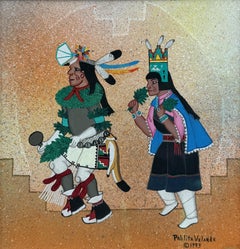
"Two Pueblo Dancers, Santa Clara" Pablita Velarde, New Mexico Native American
Located in New York, NY
Pablita Velarde
Two Pueblo Dancers, Santa Clara, 1993
Signed and dated lower right
Casein on paper
7 1/2 x 7 1/4 inches
Provenance
Adobe Gallery, New Mexico
Private Collection, Texa...
Category
1990s American Modern Figurative Paintings
Materials
Paper, Casein
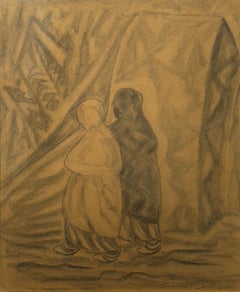
"Taos Women" Emil Bisttram, Modernist, New Mexico Artist, Southwestern, Figures
Located in New York, NY
Emil Bisttram
Taos Women
Signed lower right
Pencil on paper
11 1/2 x 9 1/2 inches
Provenance
David Cook Fine Art, Denver, Colorado
Clare Walker Fine Art, Tarrytown, New York
Bistt...
Category
1930s American Modern Figurative Drawings and Watercolors
Materials
Paper, Pencil
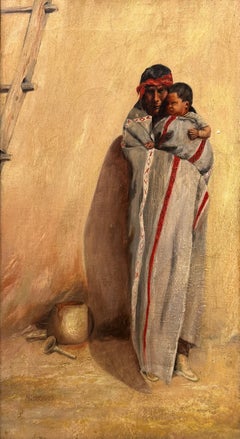
"A Tesuque Indian and Baby, New Mexico" Alice Coutts, Native American Southwest
Located in New York, NY
Alice Coutts
A Tesuque Indian and Baby, New Mexico, circa 1910
Signed lower left
Oil on canvas
20 1/4 x 12 1/4 inches
Provenance
Scott Tevis, Santa Barbara, California
A native of...
Category
1910s Academic Figurative Paintings
Materials
Canvas, Oil
You May Also Like
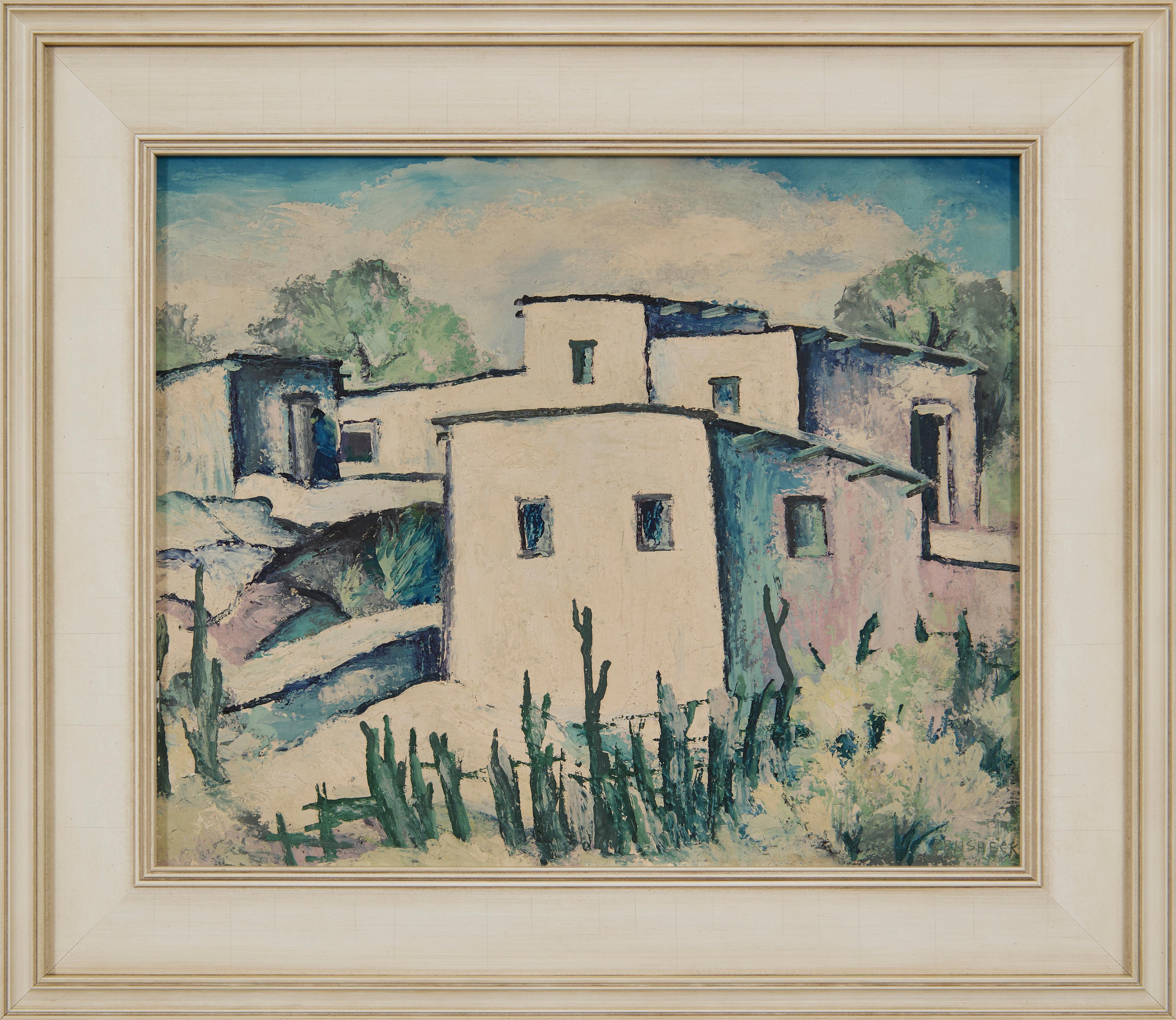
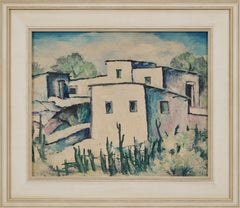
Adobe Homes, New Mexico Western Landscape
By Harvey Gregory Prusheck
Located in Beachwood, OH
Harvey Gregory Prusheck (Slovenian/American, 1887-1940)
Adobe Homes, New Mexico
Oil on board
Signed lower right
14 x 17 inches
19.5 x 22.5 inches, framed
Harvey Gregory Prusheck was...
Category
Early 20th Century Landscape Paintings
Materials
Oil
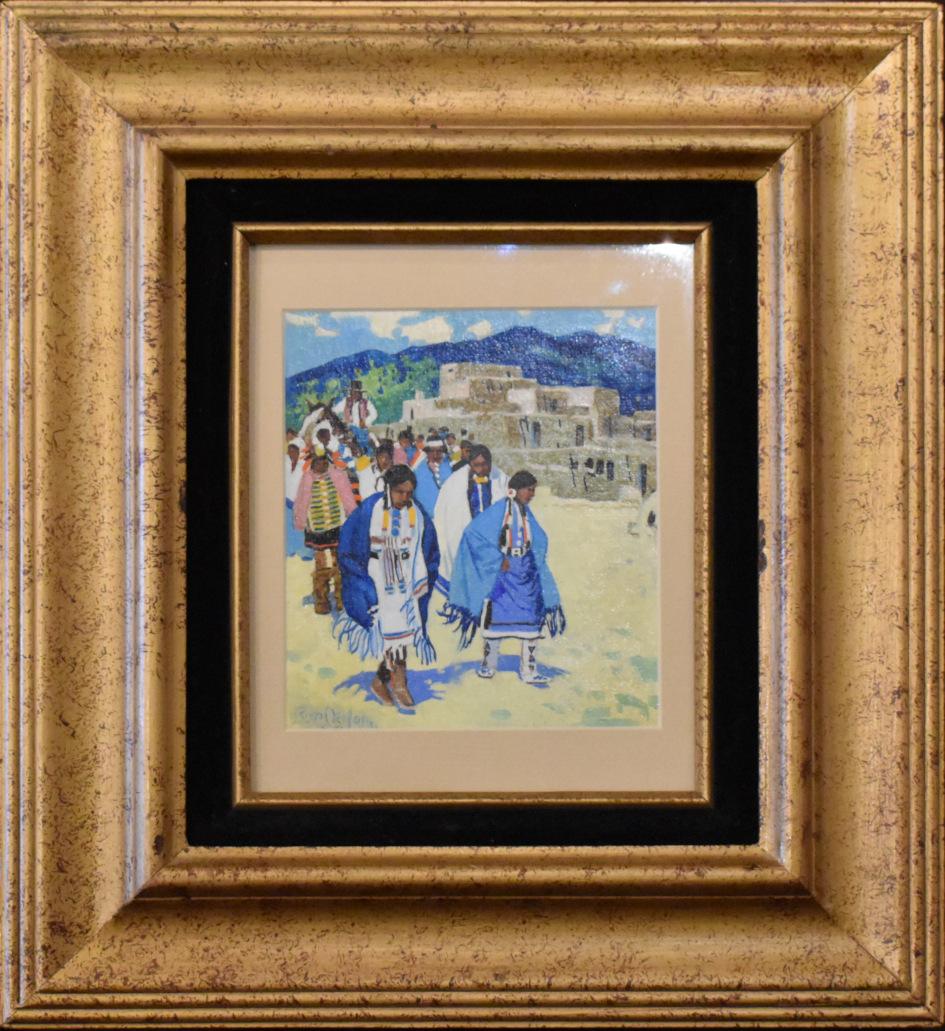
"PUEBLO" NATIVE AMERICAN MARCH IN FRONT OF PUEBLO ARIZONA ARTIST
Located in San Antonio, TX
Ross Stefan
(1934-1999)
Arizona / Wisconsin Artist
Image Size: 7.5 x 6.5
Frame Size: 18 x 16
Medium: Oil
"Pueblo"
Biography
Ross Stefan (1934-1999)
Born in...
Category
20th Century Impressionist Figurative Paintings
Materials
Oil
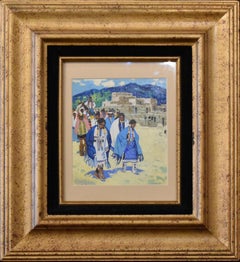
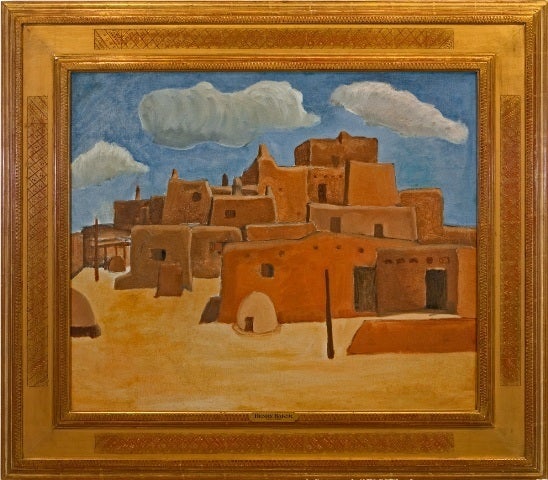
"Pueblos"
By Henry Baker
Located in Lambertville, NJ
Jim’s of Lambertville is proud to offer this artwork by:
Henry Hudson Baker (1900 - 1957)
Henry Baker, an Ivy League graduate from Yale University, was born in Dunkirk, New York, in 1900. Baker was one of New Hope's important modernist painters as well as a talented musician residing in the area from 1932-1950.
After graduating from Yale, Baker studied at the Art Students League in New York and upon the suggestion of his close friend, artist Ralston Crawford, he came to Merion, Pennsylvania, to study at the Barnes Foundation. While there, Baker befriended Edith Wood, a student from the Pennsylvania Academy. Miss Wood, familiar with the New Hope art colony and its charming surroundings, thought it might appeal to Baker. It did, and soon after his arrival to New Hope in 1932, Baker purchased and restored a beautiful old colonial home.
Two years prior to Baker's arrival, a break had occurred between impressionist and modernist painters. His first participation with the New Hope artists...
Category
1930s American Modern Landscape Paintings
Materials
Canvas, Oil
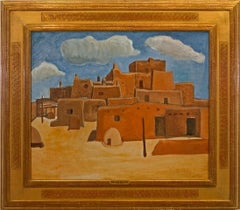
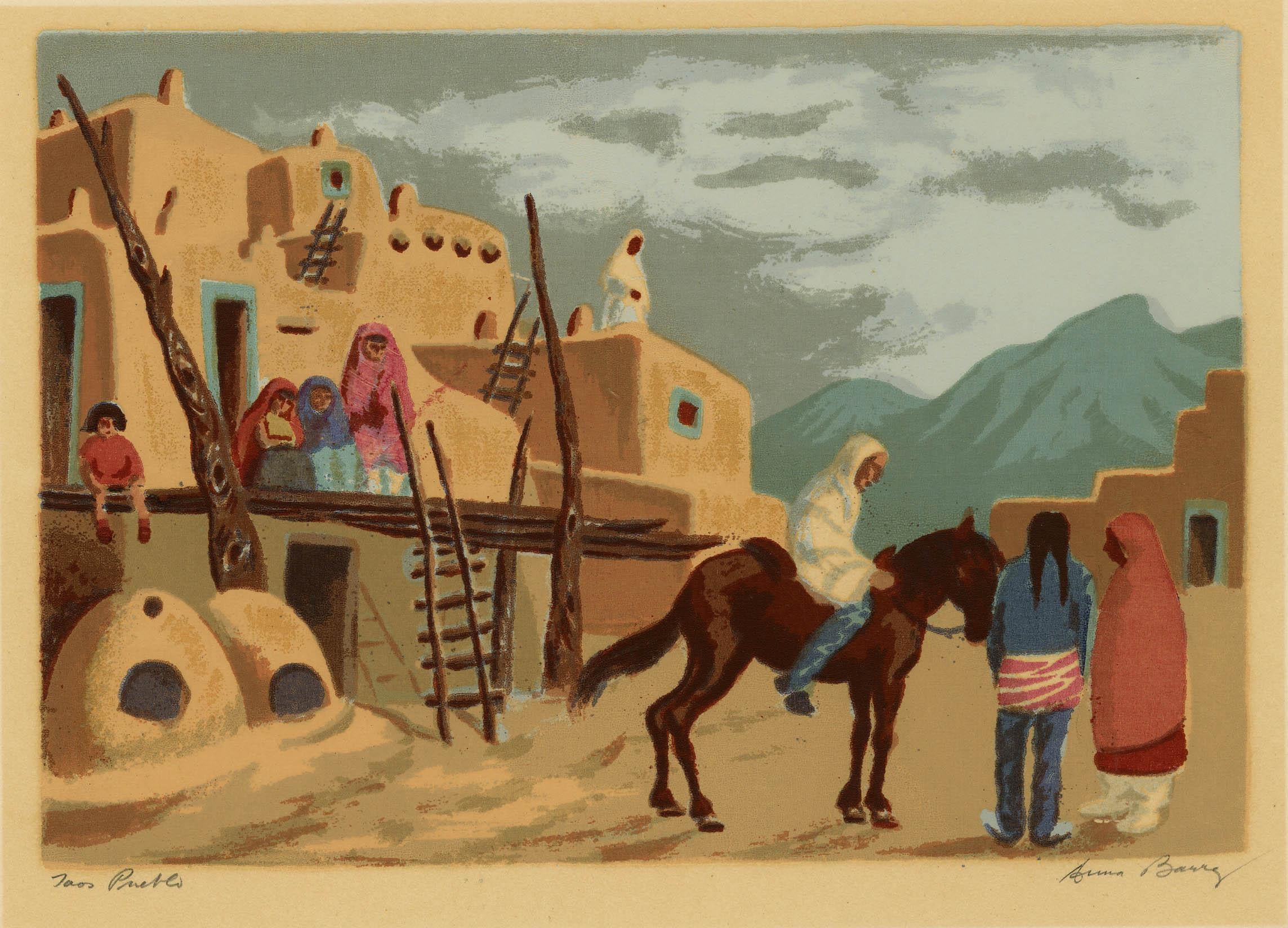
Taos Pueblo
By Anna Barry
Located in Fairlawn, OH
Taos Pueblo
Screen print in colors, c. 1945
Signed and titled in pencil by the artist
Printed in Taos
Taos is the oldest continually inhabited city/village in North America.
How old ...
Category
1940s American Modern Landscape Prints
Materials
Screen
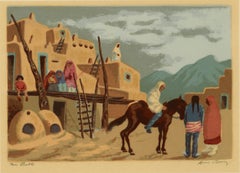
Mid-day, Zuni Village
By Frank Reed Whiteside
Located in Missouri, MO
Mid-day, Zuni Village, 1897
By. Frank Reed Whiteside (American, 1866-1929)
Unframed: 20" x 30"
Framed: 28" x 38"
Frank Reed Whiteside, born in Philadelphia on 20 August 1867, became a student of Thomas Anshutz at the Pennsylvania Academy of the Fine Arts (1888-92). He already began exhibiting there during his student years (1887-98). In 1893, he enrolled in the Académie Julian in Paris where he received instruction from Jean-Paul Laurens and Benjamin Constant. After his French academic training, Whiteside taught art in Philadelphia high schools. He took frequent trips to the Southwest between 1890 and 1928 to live with and paint the Zuni Indians. Whiteside depicted ceremonial dances, Zuni buildings, and other genre scenes, usually in blinding afternoon sunlight. He carefully observed the effects of light on vibrant color, using a finely crafted impressionist technique. He was fond of broad areas of color, subtle combinations of hues, and simplified shapes and silhouettes. Whiteside continued to exhibit at the PAFA (1905-15), at the Art Institute of Chicago (1896-1916), at the Carnegie International (1905 and 1907) and at the Corcoran Gallery (1907). He was a member of Philadelphia art societies and beginning in 1909 had a summer studio in Ogunquit, Maine, where he took part in Hamilton Easter Field's discussion groups. Frank's wife, Clara Walker Whiteside, who published Touring New England in 1926, was active in the Ogunquit Art Association.
Like Stanford White, Frank Reed Whiteside was the victim of murder, on 19 September 1929, but Whiteside's case remains unsolved. One night, the sixty-three year-old painter answered the doorbell. Two witnesses...
Category
Late 19th Century Other Art Style Figurative Paintings
Materials
Canvas, Oil
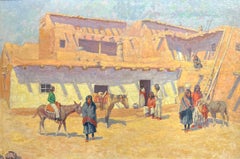
Price Upon Request
Taos School Western Painting titled "Taos, New Mexico"
By John Sloan
Located in Fredericksburg, VA
This painting, attributed to John Sloan or his circle within the Taos School, captures the distinctive architecture and radiant atmosphere of the American Southwest with remarkable v...
Category
Early 20th Century Impressionist Landscape Paintings
Materials
Canvas, Oil
More Ways To Browse
Modern Mexican Art
Mexico Mid Century Art
Vintage Southwest Art
Mexico Landscapes Paintings
Pueblo Art
Mexican Mid Century Painting
Mid Century Southwest
Taos New Mexico Art
New Mexico Landscape Painting
Mexican Oil On Canvas
Indian Landscape Painting
New Mexico Oil Paintings
Taos Oil Painting
Taos Modern
Pueblo Painting
Modern Southwest Art
Taos Landscape Painting
Southwest Landscape Paintings