Items Similar to "Mexican Mountains, " Hendrik Glintenkamp, Modernist Landscape
Want more images or videos?
Request additional images or videos from the seller
1 of 7
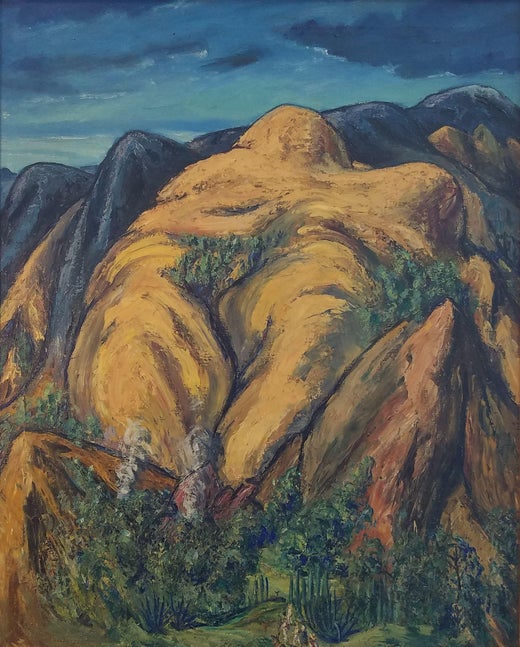
Hendrik Glintenkamp"Mexican Mountains, " Hendrik Glintenkamp, Modernist Landscape1940
1940
$7,800
$9,75020% Off
£5,907.78
£7,384.7220% Off
€6,784.88
€8,481.1020% Off
CA$10,930.35
CA$13,662.9420% Off
A$11,883.50
A$14,854.3720% Off
CHF 6,300.64
CHF 7,875.8020% Off
MX$142,452.98
MX$178,066.2220% Off
NOK 80,077.94
NOK 100,097.4220% Off
SEK 73,362.28
SEK 91,702.8520% Off
DKK 50,708.36
DKK 63,385.4520% Off
About the Item
Hendrik (Henry) J Glintenkamp (1887 - 1946)
Mexican Mountains, 1940
Oil on canvas
32 x 26 inches
Signed lower left; signed and dated on the reverse
The painter and illustrator Henry Glintenkamp (1887-1946) is known mainly for his anti-war illustrations that appeared in The Masses and other publications in the early twentieth century. As a painter, he was additionally successful, particularly in his landscape and urban scenes. Born in Augusta, New Jersey, the son of Hendrik and Sophie Dietz Glintenkamp, Henry received his elementary art training at the National Academy of Design (1903-06) before his study with Robert Henri the two years following.
Henri consequently attracted artists like Glintenkamp interested in returning to a sense of human qualities. Setting up his studio in the Lincoln Arcade Building with Stuart Davis and Glenn O. Coleman, Glintenkamp did work that reflects a preoccupation with urban scenes and landscapes.
In May of 1910 Glintenkamp exhibited his works as a student at the Henri School and at the Exhibition of Independent Artists of 1910. Two years later, he accepted the position of instructor at the Hoboken Arts Club in New Jersey and in 1913, he took up with others in the organization of The Masses, designed as a publication devoted to humanitarian causes. This publication stood in stark opposition to war, as its articles and cartoons reflected pacifism. At the Armory Show (1913), Glintenkamp exhibited The Village Cemetery. In 1917, Glintenkamp moved to Mexico to avoid the draft, and remained there until 1924, supporting "the socialist agenda of Mexico's new leadership."
The period following 1917 marks a new phase in the artist's development. Brighter in color and compositionally more involved, his later works are more discordant than the artist's earlier work. The artist sacrificed the atmospheric quality of the limited palette for the increased influence of modernist movements. After extensive travels in Europe, Glintenkamp returned to New York in 1934, and became a teacher at the New York School of Fine and Industrial Art and the John Reed Club School of Art. As chairman for the committee responsible for the organization of an Exhibition in Defense of World Democracy, in 1937, Glintenkamp continued his humanitarian purpose, though never really took up with the socialist rebels, many of whom followed similar groups and publications. Indeed, Glintenkamp was instrumental in founding the American Artists' Congress; he continued serving its needs as both the organization's president and secretary. A peripheral member of the impressionist-tonalist group in his early career, Glintenkamp had progressed through many American movements by the time of his death in 1946.
- Creator:Hendrik Glintenkamp (1887 - 1946, American)
- Creation Year:1940
- Dimensions:Height: 34 in (86.36 cm)Width: 28 in (71.12 cm)
- Medium:
- Movement Style:
- Period:
- Condition:Excellent.
- Gallery Location:New York, NY
- Reference Number:1stDibs: LU184129905842
Hendrik Glintenkamp
The painter and illustrator Henry Glintenkamp (1887-1946) is known mainly for his anti-war illustrations that appeared in The Masses and other publications in the early twentieth century. As a painter, he was additionally successful, particularly in his landscape and urban scenes. Born in Augusta, New Jersey, the son of Hendrik and Sophie Dietz Glintenkamp, Henry received his elementary art training at the National Academy of Design (1903-06) before his study with Robert Henri the two years following. Henri consequently attracted artists like Glintenkamp interested in returning to a sense of human qualities. Setting up his studio in the Lincoln Arcade Building with Stuart Davis and Glenn O. Coleman, Glintenkamp did work that reflects a preoccupation with urban scenes and landscapes. In May of 1910 Glintenkamp exhibited his works as a student at the Henri School and at the Exhibition of Independent Artists of 1910. Two years later, he accepted the position of instructor at the Hoboken Arts Club in New Jersey and in 1913, he took up with others in the organization of The Masses, designed as a publication devoted to humanitarian causes. This publication stood in stark opposition to war, as its articles and cartoons reflected pacifism. At the Armory Show (1913), Glintenkamp exhibited The Village Cemetery. In 1917, Glintenkamp moved to Mexico to avoid the draft, and remained there until 1924, supporting "the socialist agenda of Mexico's new leadership." The period following 1917 marks a new phase in the artist's development. Brighter in color and compositionally more involved, his later works are more discordant than the artist's earlier work. The artist sacrificed the atmospheric quality of the limited palette for the increased influence of modernist movements. After extensive travels in Europe, Glintenkamp returned to New York in 1934, and became a teacher at the New York School of Fine and Industrial Art and the John Reed Club School of Art. As chairman for the committee responsible for the organization of an Exhibition in Defense of World Democracy, in 1937, Glintenkamp continued his humanitarian purpose, though never really took up with the socialist rebels, many of whom followed similar groups and publications. Indeed, Glintenkamp was instrumental in founding the American Artists' Congress; he continued serving its needs as both the organization's president and secretary. A peripheral member of the impressionist-tonalist group in his early career, Glintenkamp had progressed through many American movements by the time of his death in 1946.
About the Seller
5.0
Platinum Seller
Premium sellers with a 4.7+ rating and 24-hour response times
Established in 2022
1stDibs seller since 2022
135 sales on 1stDibs
Typical response time: <1 hour
- ShippingRetrieving quote...Shipping from: New York, NY
- Return Policy
More From This Seller
View All"Arroyo Seco, New Mexico" Georgina Klitgaard, Modernist Southwest Oil Landscape
By Georgina Klitgaard
Located in New York, NY
Georgina Klitgaard
Arroyo Seco, New Mexico
Signed lower right
Oil on canvas
28 x 42 inches
Georgina Klitgaard’s art has sometimes gotten lost in the critical propensity to assign a...
Category
1940s American Modern Figurative Paintings
Materials
Canvas, Oil
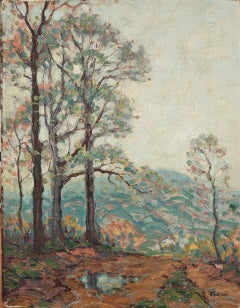
"Woodstock Landscape" Albert Heckman, American Modernist, Atmospheric Valley
By Albert Heckman
Located in New York, NY
Albert Heckman
Woodstock Landscape
Oil on board
10 x 8 inches
Albert Heckman was born in Meadville, Western Pennsylvania, 1893. He went to New York City to try his hand at the art ...
Category
1940s American Modern Figurative Paintings
Materials
Oil, Board
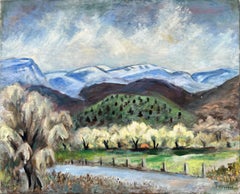
"Catskill Mountains" Georgina Klitgaard, Country Landscape Modernist Hills
By Georgina Klitgaard
Located in New York, NY
Georgina Klitgaard
Catskill Mountains
Signed lower right
Oil on canvas
24 x 30 inches
Georgina Klitgaard’s art has sometimes gotten lost in the critical propensity to assign artist...
Category
Early 20th Century American Modern Figurative Paintings
Materials
Canvas, Oil
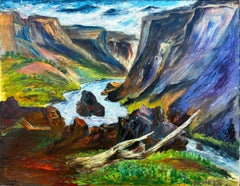
"Cumbres Pass, Colorado" Chuzo Tamotzu, 1956 Intense Color, Modernist Landscape
Located in New York, NY
Chuzo Tamotzu
Cumbres Pass, Colorado, 1956
Signed and dated lower left; titled on artist label on the reverse
Oil on Masonite
36 x 48 inches
Tamotzu was born in Kagoshima Prefectur...
Category
1950s Modern Figurative Paintings
Materials
Masonite, Oil
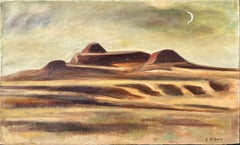
"Desert" Georgina Klitgaard, Modernist Desert Landscape With Waning Moon
By Georgina Klitgaard
Located in New York, NY
Georgina Klitgaard
Desert
Signed lower right
Oil on canvas
18 x 30 inches
Georgina Klitgaard’s art has sometimes gotten lost in the critical propensity to assign artists to members...
Category
1940s Modern Landscape Paintings
Materials
Oil
"View of Arizona Desert near Wickenberg" Will Foote, Impressionist Western Scene
Located in New York, NY
Will Foote
View of Arizona Desert near Wickenberg, circa 1927
Signed lower center; titled and dated on the reverse
Oil on artist's board
12 x 16 inches
Foote was born on June 29, 1874 in Grand Rapids, Michigan, and died on January 27, 1965, in Sarasota, Florida. He was in Old Lyme, 1901-65; and in Cos Cob, 1903.
Will Howe Foote was one of the earliest artists at Old Lyme and one who adopted the town as home. He first went there the summer of 1901 with his uncle, William H. Howe, a painter of cattle, who had been told about the beauties of the countryside by Henry Ward Ranger. Foote had himself heard of Old Lyme when he had met Clark Voorhees in France. He and his uncle were both from Grand Rapids, Michigan, where Foote's father was an executive in the furniture industry that made the city famous. Encouraged to be an artist by his father, he began his professional training at the Art Institute of Chicago in 1894. He became friends there with a fellow Michigan student, Frederick Frieseke, who would study with him again at the Art Students League in New York, where Foote worked in 1895-96 under H. Siddons Mowbray and Kenyon Cox.
In 1897 he and Frieseke went to the Academic Julian in Paris, where Foote studied under Jean-Paul Laurens and Benjamin Constant. He was at Julian's until 1900, except for an Italian trip, summers at Laren, Holland, or Etaples, France, and a short period at Whistler's school in Paris. He exhibited twice at the Old Salon, and when he returned to the United States in 1900, he had a one-man exhibition in his hometown.
Will Howe Foote's paintings were well received on his return from abroad. He exhibited frequently at the National Academy of Design and became an associate member in 1910. His awards included a bronze medal at the St. Louis Exposition in 1904 and a silver medal at the Panama-Pacific Exposition in San Francisco in 1915.
Once he visited Old Lyme, Foote returned every summer. In 1902 he was hired as assistant to Frank DuMond at the Lyme Summer School of Art, which was sponsored by the Art Students League of New York. Sometime in 1903 he also taught a session in Cos Cob. After 1906, when the League moved its Lyme classes to Woodstock, New York, Foote continued in Old Lyme as a private instructor.
In 1907 he was married to Helen Kirtland Freeman, whom he had met a year or two earlier when she had come to the Lyme art colony as a student of Henry Rankin Poore. Fellow artist William Chadwick was best man at the wedding. The Footes began building a house on Sill Lane in Old Lyme and upon its completion in 1909 spent every spring, summer and fall there, where Foote devoted full time to painting. The Gregory Smiths, old friends from Grand Rapids, arrived in Old Lyme in 1910 and became neighbors. Foote's early works in Connecticut, such as A Summer's Night reflect the artist's interest in soft, atmospheric scenes dominated by a single, overriding tone. The arrival of Childe Hassam and Walter Griffin...
Category
1920s American Impressionist Figurative Paintings
Materials
Oil, Board
You May Also Like
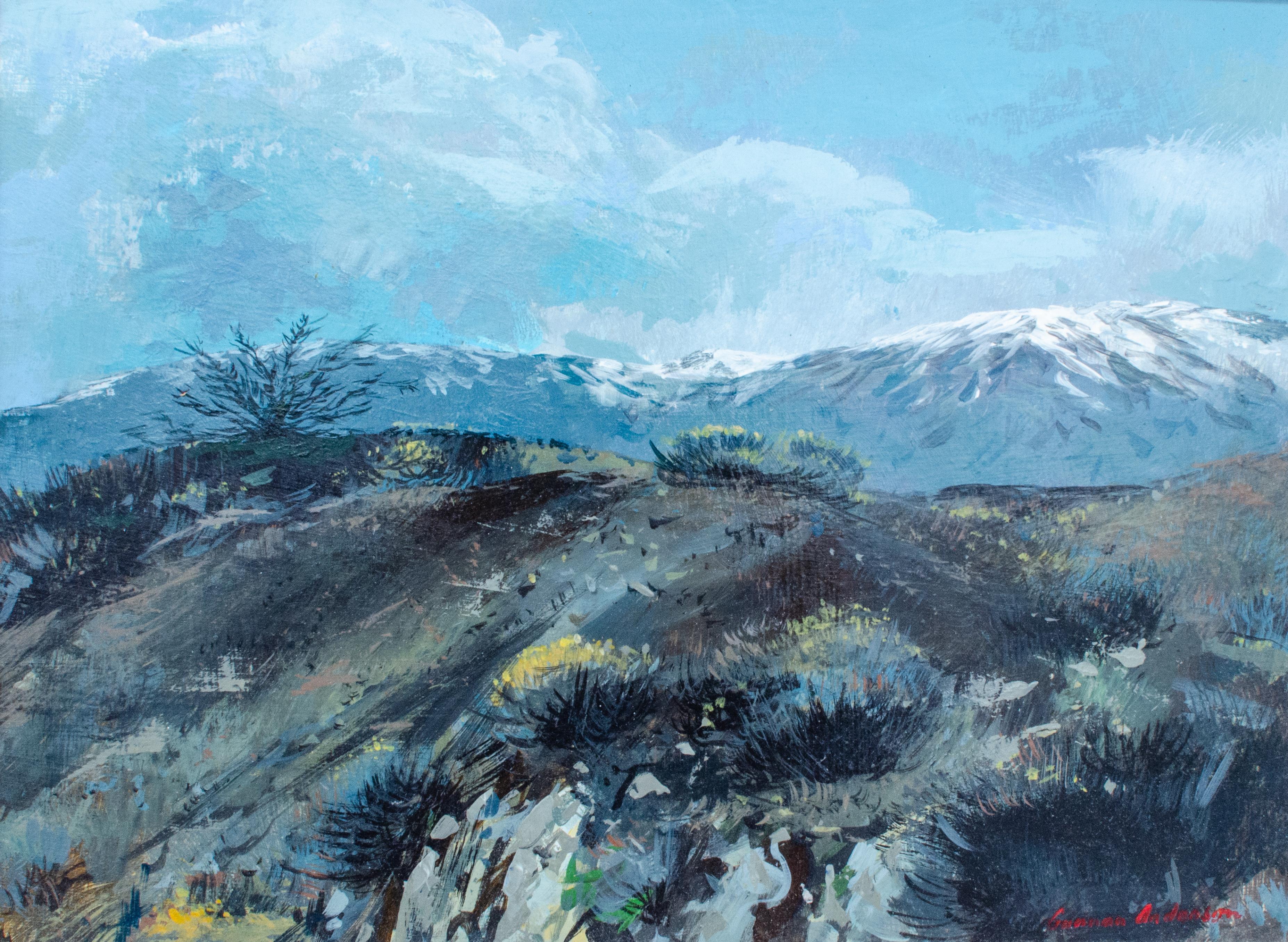
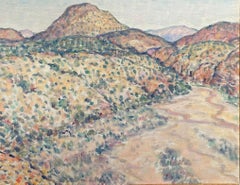
American West Mountainscape by Gunnar Anderson
Located in New York, NY
Gunnar Donald Anderson (American, 1927-2022)
Untitled, c. 20th Century
Oil on board
Sight: 11 1/2 x 15 3/4 in.
Framed: 20 1/2 x 24 1/2 x 1 1/4 i...
Category
20th Century American Modern Landscape Paintings
Materials
Oil, Board
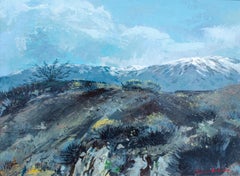
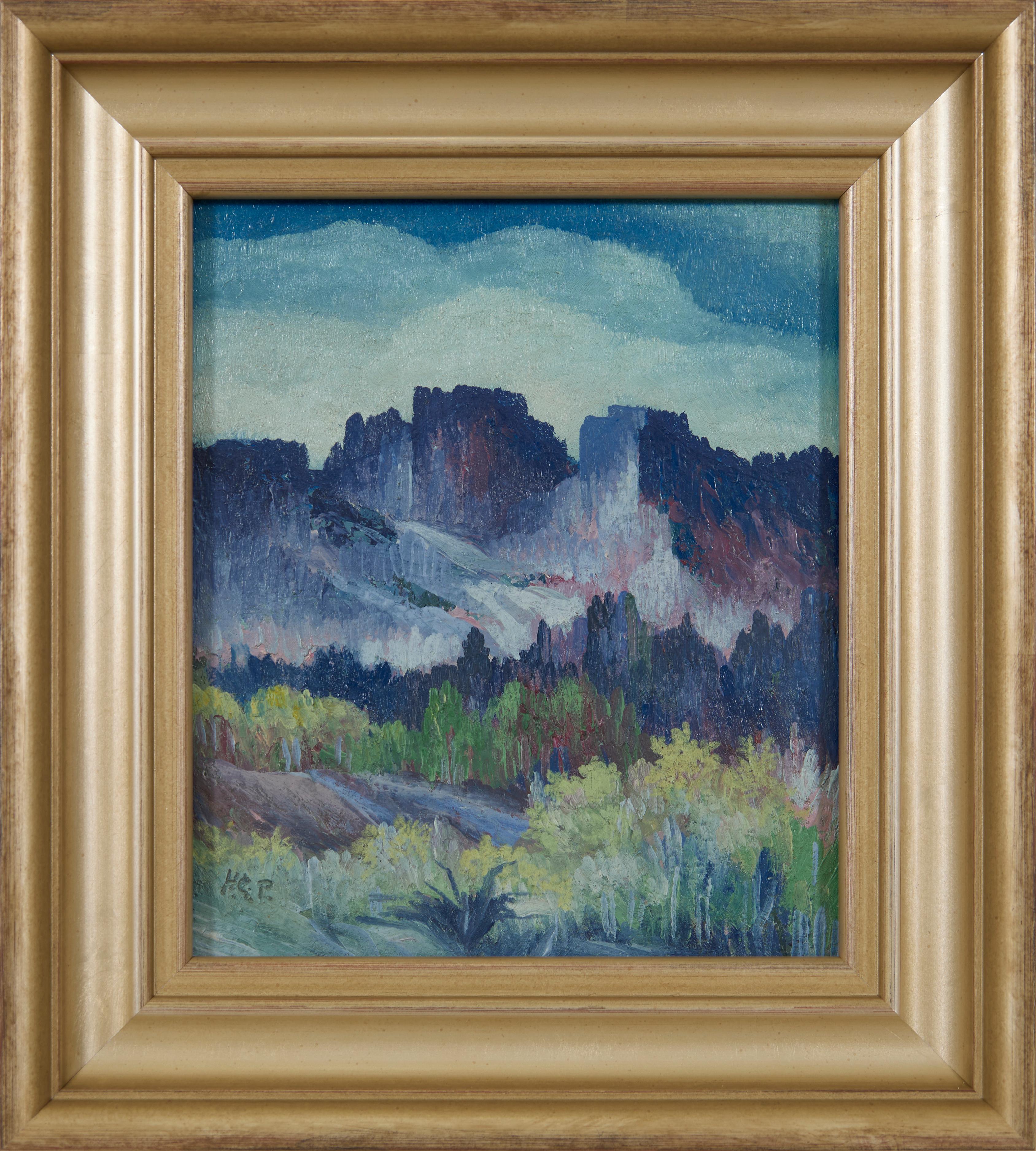
Western Mountainous Landscape, Slovenian-American Artist
By Harvey Gregory Prusheck
Located in Beachwood, OH
Harvey Gregory Prusheck (Slovenian/American, 1887-1940)
Western Landscape
Oil on board
Monogram lower left
9.5 x 8 inches
11.75 x 10.5 inches, framed
Harvey Gregory Prusheck was a S...
Category
Early 20th Century Landscape Paintings
Materials
Oil
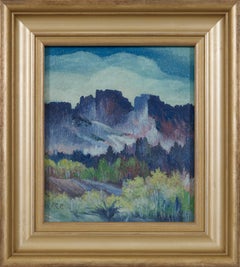
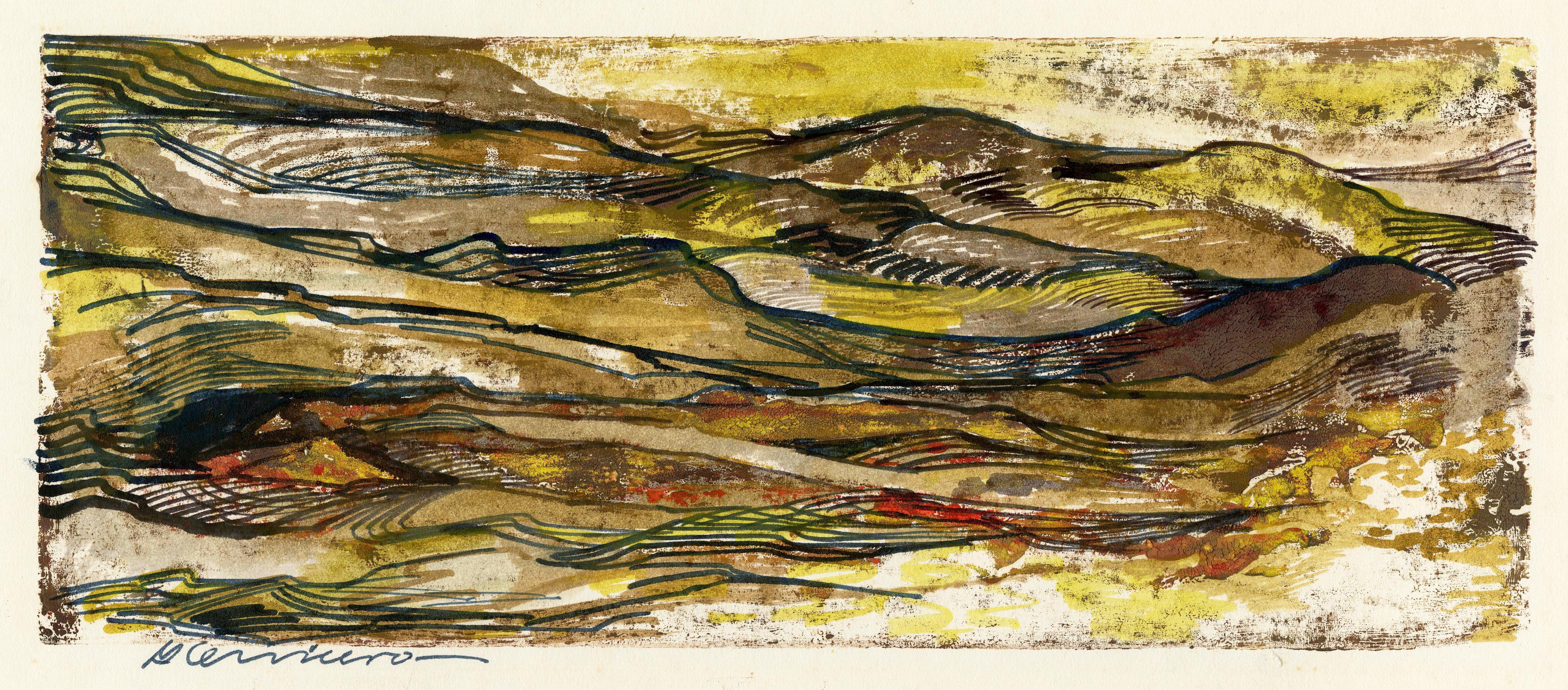
Mountainous Landscape, Mexico
Located in Fairlawn, OH
Mountainous Landscape, Mexico
Monotype in colors on heavy paper, c. 1960's
Signed in ink lower left "G Ceniceros"
Condition: Excellent
Image size: 6 x 14 1/2" (15.24 x 36.83cm)
Sheet size: 12 7/8 x 19 11/16 inches
Guillermo Ceniceros (born May 7, 1939) is a Mexican painter and muralist, best known for his mural work in Mexico City, as well as his figurative easel work. He began his mural painting career as an assistant to mural painters such as Federico Cantú, Luis Covarrubias and then David Alfaro Siqueiros who was a mentor and a key influence. Ceniceros is the most notable of Siqueiros' assistants. While he has experimented with abstract expression, his easel work mostly classifies as figurativism and is influenced by the geometrical construct of Mexican muralism. He has had over 300 individual and collective exhibitions in Mexico and the International stage. His work has been recognized by the Mexican Ministry of Culture and several of its institutions. He has painted over 20 large scale Mural Paintings with some of the most notable being the large scale work for the Legislative Palace of San Lazaro (Mexico's Legislative Building) as well as his murals in the Metro Subway System. He is a member of the Salón de la Plástica Mexicana. In 1995, the State of Durango, Ceniceros' native state, opened to the public the Guillermo Ceniceros Art Museum within the oversight of the Ministry of Culture. Ceniceros has been reviewed by notable critics such as Berta Taracena, Raquel Tibol, Alaide Foppa, Graciela Kartofel, José Angel Leyva and Eduardo Blackaller among others. There are several publications about his work including a vast review of his art life endeavors developed by the Ministries of Culture of Durango and Nuevo León. He is married to the artist Esther González and lives in his studio house in the Colonia Roma of Mexico City.
Life
Interview with the subject Ceniceros and Siqueiros
Ceniceros was born in a small village called El Salto, located in the municipality of Pueblo Nuevo in the Mexican state of Durango. His father was a woodworker who made toys and furniture in his workshop. His father's shop would become an influence in Ceniceros' life long interest in developing his own innovative working tools. When he was twelve the family moved to Monterrey to seek better economic opportunities. There he attended school and when he was fourteen he entered the Fabricación de Máquinas, S.A. (FAMA), a school/business, where he studied industrial drawing. He considers this early training important as it taught him the importance of geometry, use of space and materials. While at FAMA he met painters Gerardo Cantú and Ignacio Ortiz, and collaborated with them on sketches for publications of Alfonso Reyes, Pedro Garfias and other notable writers.
In 1955, he enrolled in the Taller de Artes Plásticas at the Universidad Autónoma de Nuevo León, graduating in 1958. At the Taller he met fellow Mexican artist Esther González, whom he married and with whom he has two children.
In 1962 he moved to Mexico City with the goal of working in the Taller of the Maestro David Alfaro Siqueiros. He became Siqueiros' first assistant working on his last murals while at the same time working at night on his easel painting work. Siqueiros supported Ceniceros decision to leave his Taller and supported him in his career until his death in 1974. By then Ceniceros was already a break thru artist having had several individual exhibitions including the prestigious Palacio De Bellas Artes as well as other recognitions. Thru the 70's and 80s Ceniceros continued his work with an emphasis on exhibits and exchanges abroad and traveling to Eastern Europe, Cuba, China, Chile, Ecuador, Italy and the United States. His Mexico City contemporaries and circle would include names that today have become reference such as Sebastian, José Luis Cuevas, Gilberto Aceves Navarro, Benjamin Dominguez, Gustavo Arias Murueta, Byron Galvez, Leonel Maciel among others. In the 70's his Row-House neighbors in the colonia Roma were Francisco Toledo and Alejandro Jodorowski.
His focus on mural painting is renewed in the mid 80's thru his large scale work in the Metro Subway System with him working on major commissions consistently and into the new century. While the Mexican school of Muralism had been challenged by the Ruptura members, the interest in Mural painting as a unique national form of expression continues.
He lives in Mexico City at a studio/home in the Colonia Roma. His home is a frequent gathering place for writers, poets, painters, singers, actors and journalists. He has a strong interest in Spanish language literature. Juan Rulfo...
Category
1960s Modern Landscape Drawings and Watercolors
Materials
Monotype
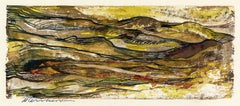
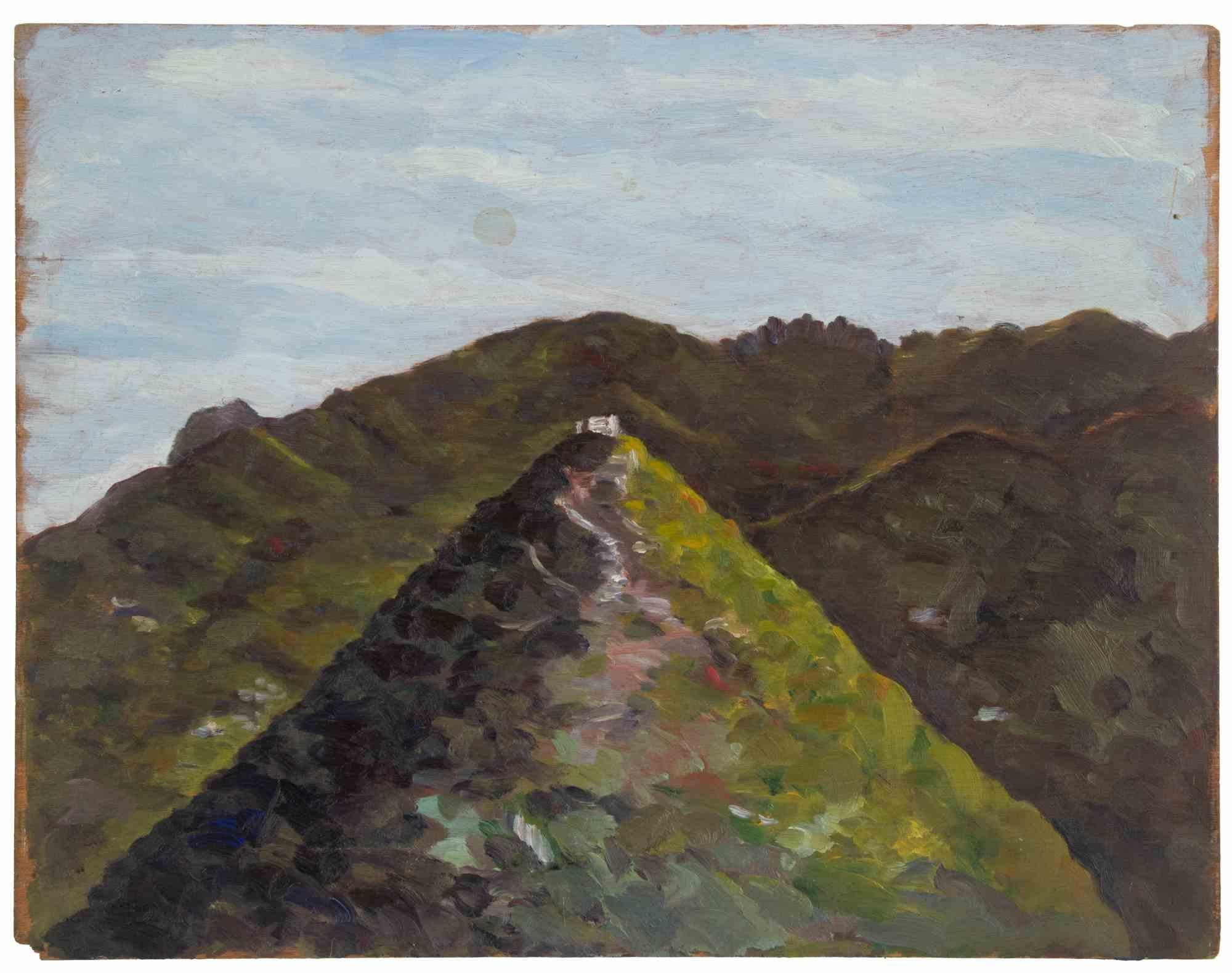
Mountain Landscape - Painting by Francesco Settimj - 1930s
Located in Roma, IT
Oil on wooden panel realized in 1930s.
Good condition.
Category
1930s Modern Figurative Paintings
Materials
Oil
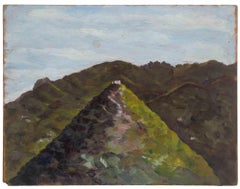
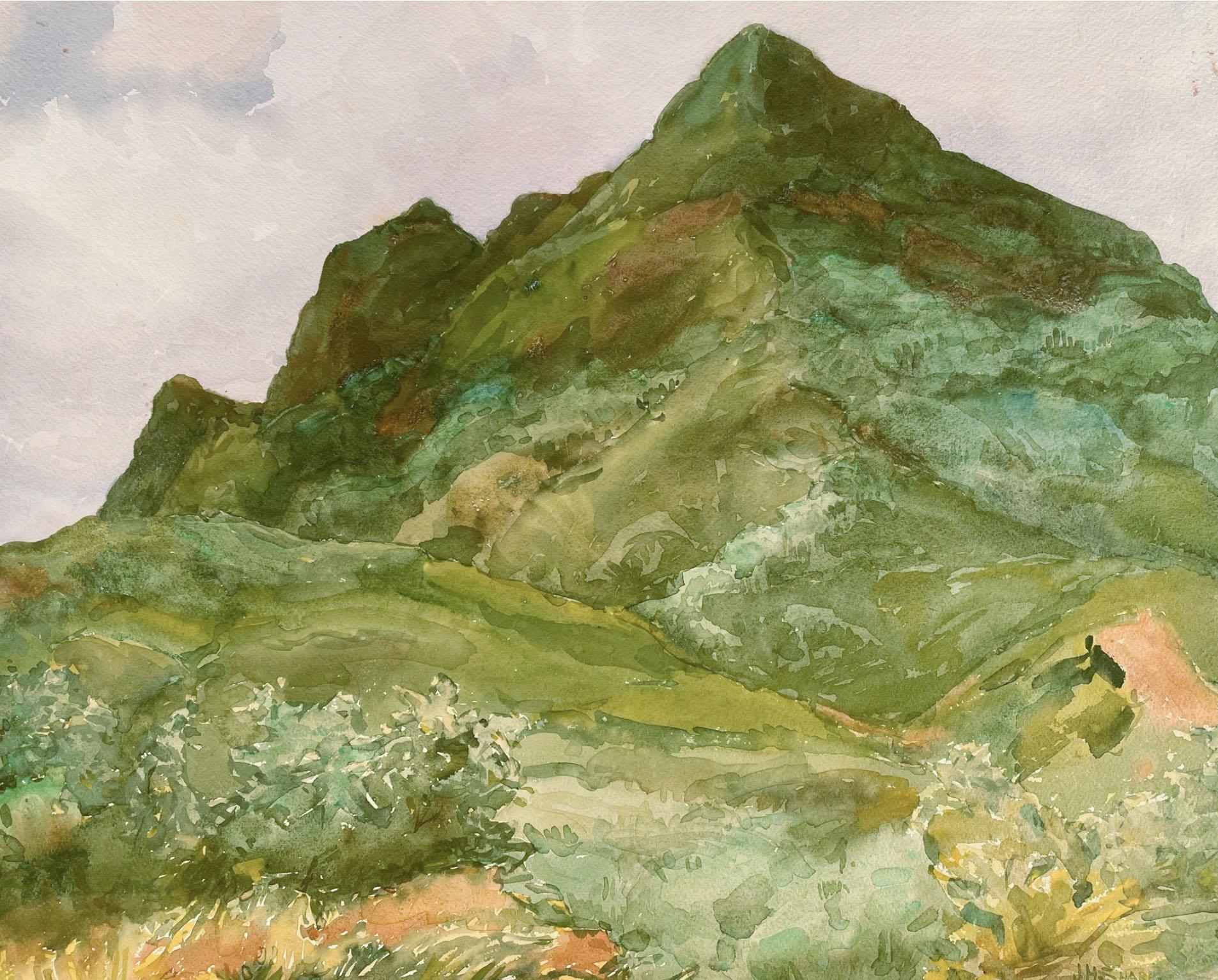
New Mexican Mountain Scene
By Joseph Henry Sharp
Located in New York, NY
New Mexico Mountain Scene by Joseph Henry Sharp (1859-1953)
Watercolor on paper
15 ¾ x 19 ½ inches unframed (40.005 x 49.53 cm)
23 x 26 ¾ inches framed...
Category
20th Century Post-Modern Landscape Drawings and Watercolors
Materials
Watercolor
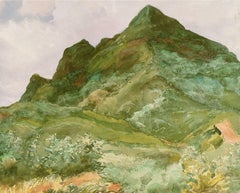
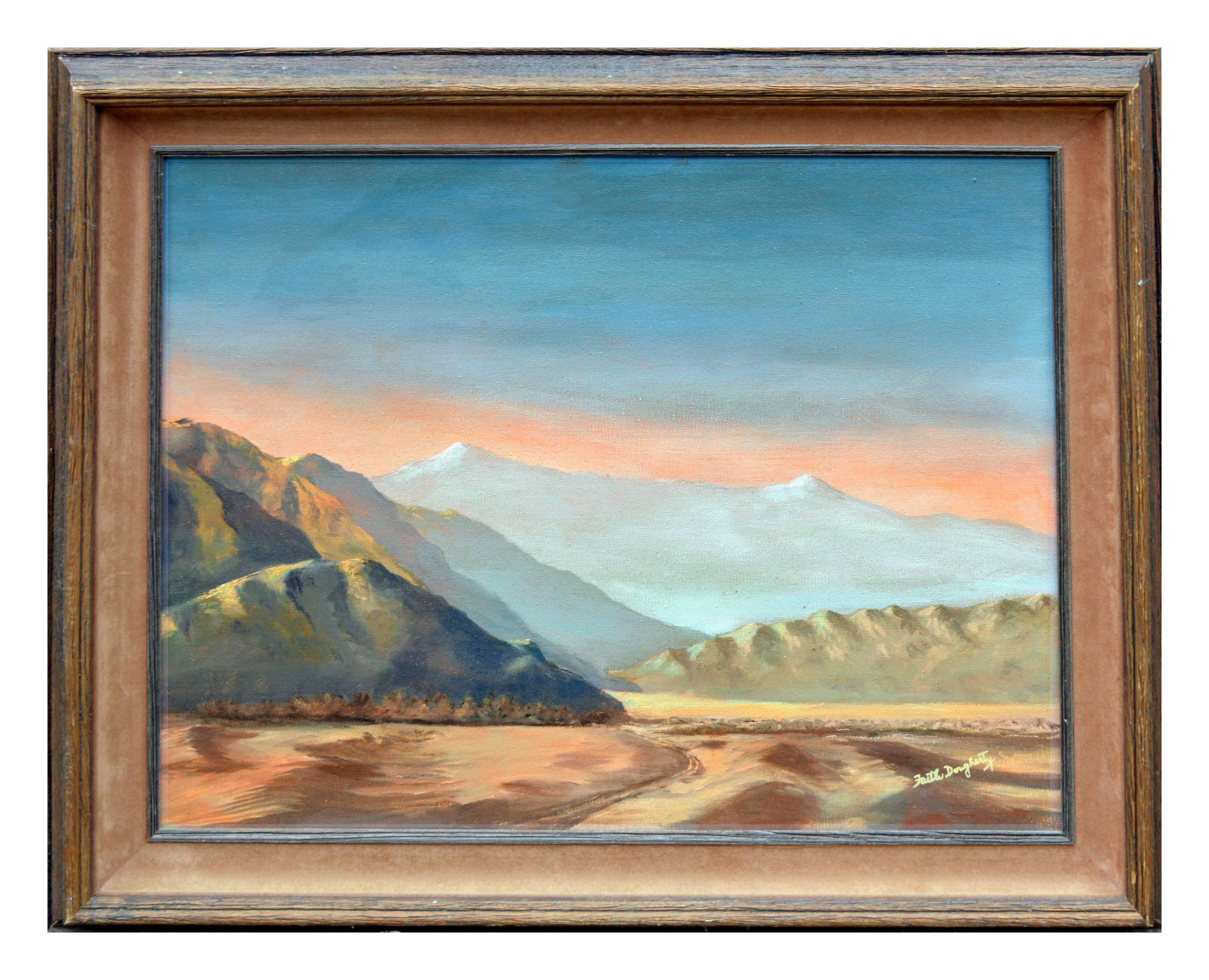
Mid Century Desert Mountain Landscape
By Faith Dougherty
Located in Soquel, CA
Mid Century Desert Mountain Landscape
Sweeping mid century landscape of stark desert mountains by Faith Dougherty (American, 20th Century). The viewer looks out over a dry valley, s...
Category
1960s Contemporary Landscape Paintings
Materials
Canvas, Oil
More Ways To Browse
Modern Mexican Art
Mexican Oil On Canvas
Harry Potter Art
Heidi Jung
Henry Deacon Hillier
Henry Deacon
Hillier Parker
Holland Painting Of Boats
Hunting Scene Horse Hound
Idaho Landscape Painting
Impasto Painting Boat
Ireland Sketch
Irwin Whitaker
James Reynolds
Josep Maria Vayreda Canadell On Sale
Joshua Tree Painting
Jules Noel
Kansas Oil Painting