Want more images or videos?
Request additional images or videos from the seller
1 of 8
Henry Martin Gasser"End of the Tracks, Johnstown, Pennsylvania, " Henry Gasser, American Scenecirca 1940
circa 1940
Price:$9,000
$13,000List Price
About the Item
- Creator:Henry Martin Gasser (1909-1981, American)
- Creation Year:circa 1940
- Dimensions:Height: 20.75 in (52.71 cm)Width: 16.25 in (41.28 cm)
- Medium:
- Movement Style:
- Period:
- Condition:
- Gallery Location:New York, NY
- Reference Number:1stDibs: LU184129905342
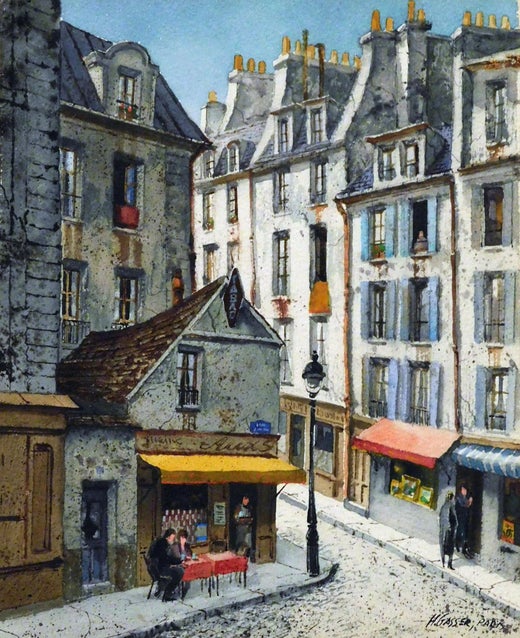
Henry Martin Gasser
Henry Martin Gasser was an American painter in every sense. From his working-class industrial town, he sought out the greatest artists in the area in order to study from them and found inspiration in his backyard. Through persistence and a spirit of originality, Gasser turned humble scenes of urban American life in the mid-twentieth century into extraordinary works of art that were widely praised by the art world. After achieving fame for his paintings, he extended his reach further by educating future artists and writing instructional books on his innovative techniques. Gasser was born in Newark, New Jersey, where he lived for most of his life. He studied painting at the Newark School of Fine and Industrial Arts as well as the Grand Central School of Art and the Art Students League in New York City. The well-known artist John R. Grabach (1886–1981), a fellow New Jersey native, privately tutored Gasser, and the two artists developed a close relationship. Despite its highly individualistic style, Gasser’s work still fits neatly into the tradition established by his American predecessors. In addition to exhibiting influence from Grabach, Gasser’s realist depictions of everyday life continued the legacy of the Ashcan painters. The majority of Gasser’s work portrays his native New Jersey. By the time he reached artistic maturity in the mid-twentieth century, Newark had become a major industrial center. Such cities, although the life force of American industry and ingenuity, were not known for their scenic qualities. Nonetheless, Gasser found beauty in his surroundings. His artworks typically feature urban scenes, such as residential streets lined with houses and blue-collar suburban communities. Along with painting in New Jersey and New York, he embarked on excursions with Grabach to New England to capture coastal views and winter scenery. During World War II, Gasser was stationed in South Carolina as a sergeant in a Visual Aid Unit of the army, where he painted the vibrant Southern culture surrounding him. Although adept at painting with oils, he found his stride in watercolors. Paralleling his ability to transform unassuming subjects into captivating pictures, Gasser elevated watercolor—a medium that was more common at the time for preliminary sketches or commercial use—to a fine art. During his life, Gasser exhibited his paintings widely to remarkable critical acclaim. He was honored with numerous solo exhibitions in New York and New Jersey and was included in group exhibitions at the country’s finest museums and galleries. Gasser won more than one hundred exhibition prizes nationally, including the prestigious Hallgarten Prize awarded by the National Academy of Design. Gasser was actively engaged in the art community, belonging to over twenty organizations, including the Allied Artists of America, the Art Students League, the National Arts Club, and the Salmagundi Club. He served as vice president of both the National Academy of Design and the American Watercolor Society, and designed the latter’s certificate of membership.
About the Seller
5.0
Platinum Seller
Premium sellers with a 4.7+ rating and 24-hour response times
Established in 2022
1stDibs seller since 2022
135 sales on 1stDibs
Authenticity Guarantee
In the unlikely event there’s an issue with an item’s authenticity, contact us within 1 year for a full refund. DetailsMoney-Back Guarantee
If your item is not as described, is damaged in transit, or does not arrive, contact us within 7 days for a full refund. Details24-Hour Cancellation
You have a 24-hour grace period in which to reconsider your purchase, with no questions asked.Vetted Professional Sellers
Our world-class sellers must adhere to strict standards for service and quality, maintaining the integrity of our listings.Price-Match Guarantee
If you find that a seller listed the same item for a lower price elsewhere, we’ll match it.Trusted Global Delivery
Our best-in-class carrier network provides specialized shipping options worldwide, including custom delivery.You May Also Like
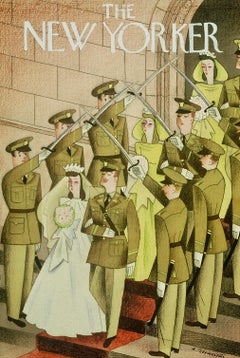
Original Painting New Yorker Mag Cover proposal. Army Wedding American Scene WPA
By Antonio Petruccelli
Located in New York, NY
Original Painting New Yorker Mag Cover proposal. Army Wedding American Scene WPA
Antonio Petruccelli (1907 – 1994)
Army Wedding
New Yorker cover proposal, c. 1939
11 1/2 X 8 inches ...
Category
1930s American Realist Landscape Paintings
Materials
Gouache, Board
1960s "Mountain Side" Watercolor Landscape California Gold Country Mid Century
Located in Arp, TX
Thelma Corbin Moody
AbEx Mountain Side
c. 1960's
Watercolor on Arches Paper
29.5" x 22", Unframed
Thelma Corbin Moody (1908-1986) of Modesto, CA....
Category
Late 20th Century American Realist Landscape Paintings
Materials
Paper, Watercolor

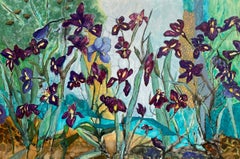
Irises Ink, Watercolor, Oil on Yupo paper 26” x 40” Framed 31 ¼” x 45 ¼”
Located in Houston, TX
Irises by Texas artist Julie England is an Ink and Watercolor, Oil on Yupo paper. The size of Irises is Image 26” x 40” Framed 31 ¼” x 45 ¼” Art is...
Category
2010s American Realist Landscape Paintings
Materials
Mixed Media, Oil, Watercolor
$3,300
H 26 in W 40 in D 1 in
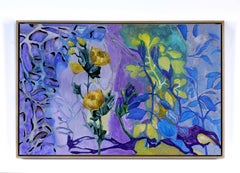
Yellow Poppies Ink Watercolor Oil on Yupo paper 26” x 40” Framed 31 ¼” x 45 ¼”
Located in Houston, TX
Yellow Poppies by Texas artist Julie England is an Ink and Watercolor, Oil on Yupo paper. The size of Yellow Poppies is Image 26” x 40” Framed 31 ¼” x 45 ¼” Yellow Poppies by Julie England is floated in a white 2” depth gallery frame with OP3 plexi glazing. Look for free shipping at checkout. Available for shipping on March 28.
Yellow Poppies was inspired by the idea of abstract art meets botanical illustration. Whether a mass of color blur or the focal point of a bloom like a botanical illustration, each is recording its environment and time. A meditative connection to the wild land comes with observation and ecological awareness. I paint natural, organic imagery with a focus on mark-making and use of material transparencies. My work includes vegetative and topological forms and gestures using color as a vehicle to convey energy from nature. I create images of imaginary environments inviting viewers to visit.
YELLOW POPPIES was included in the Natural Diversity Art...
Category
2010s American Realist Landscape Paintings
Materials
Mixed Media, Oil, Watercolor
$3,200
H 26 in W 40 in D 1 in
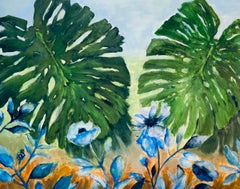
Cool Afternoon Oil Watercolor Yupo Paper 11″ x 14″ Image 16″ x 21 3/4″ Frame
Located in Houston, TX
Cool Afternoon by Texas artist Julie England is an Ink and Watercolor, Oil on Yupo paper. The size of Cool Afternoon is 11″ x 14″ Image
16″ x 21 3/4″...
Category
2010s American Realist Landscape Paintings
Materials
Oil, Watercolor
$800
H 11 in W 14 in D 1 in
Épuisement du motif, Watercolor and Charcoal, Contemporary Marine Landscape, Sky
Located in AIX-EN-PROVENCE, FR
Medium : Watercolour, Charcoal and Gouache on Archival Watercolour paper 300Gsm.
Artist : Fabien Granet
Subject : Epuisement du motif (French Title)
This original watercolor by Fabie...
Category
21st Century and Contemporary Contemporary Landscape Paintings
Materials
Charcoal, Watercolor, Archival Paper, Gouache
$1,136
H 11.82 in W 15.75 in D 0.4 in
Sea Coast Landscape, Original Watercolour, Pastel, Gouache, Britany
Located in AIX-EN-PROVENCE, FR
Work : Original Drawing, Handmade Artwork, Unique Work. Not Framed. Museum matting & backing included, ready to be framed in a standard frame 40x30 cm.
Medium : Watercolour, Gouache...
Category
21st Century and Contemporary Impressionist Landscape Paintings
Materials
Charcoal, Watercolor, Archival Paper, Pastel, Gouache
$1,184
H 11.82 in W 15.75 in D 0.2 in
Latent
By Sandy Litchfield
Located in New York, NY
Sandy Litchfield’s "Latent" reflects her signature approach of transforming landscapes into lyrical, abstracted visions. Drawing from memory, walking, and direct observation, Litchfi...
Category
2010s Contemporary Landscape Paintings
Materials
Pastel, Gouache, Archival Paper, Color Pencil
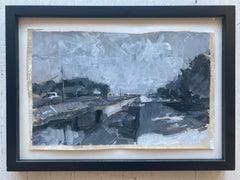
"Canal at Indian Mound Road" RARE Ben Fenske Gouache work on paper black
white
By Ben Fenske
Located in Sag Harbor, NY
Painted during the 2015 Winter Equestrian Festival in Wellington, Florida. A black and white depiction of a canal, is barely recognizable, due to Fenske's wild brushstrokes and lack...
Category
21st Century and Contemporary American Impressionist Landscape Paintings
Materials
Paper, Gouache
Dark Night, 2020, watercolor, oil pastel, black, frame, landscape, fantasy, blue
By Shamona Stokes
Located in Jersey City, NJ
Watercolor on paper, framed. Dark Night, 2020, watercolor, oil pastel, black, frame, landscape, fantasy, blue, creature. Framed and matted, frame size measures 24" x 35.75" x 1.25"
...
Category
2010s Contemporary Landscape Paintings
Materials
Paper, Oil Pastel, Ink, Watercolor, Gouache, Color Pencil
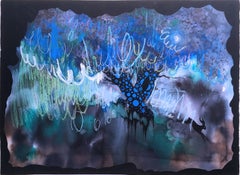
Shamona StokesDark Night, 2020, watercolor, oil pastel, black, frame, landscape, fantasy, blue, 2020
Price Upon Request
H 22.5 in W 29.75 in D 0.125 in
More From This Seller
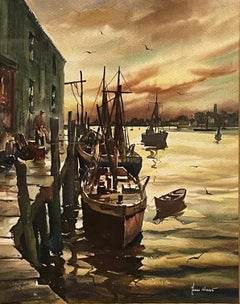
View All"Gloucester Harbor at Sunset, " John Hare, Cape Ann, New England Watercolor View
Located in New York, NY
John Hare
Gloucester Harbor at Sunset, Massachusetts
Signed lower right
Watercolor on paper
16 x 12 inches
John Cuthbert Hare, 1908-1978, was a watercolorist who painted boats, seascapes and harbor scenes. He was primarily associated New England, especially Cape Cod, Massachusetts where he spent his summers from 1938 to 1965. However, he was in Florida where he was a member of the St. Augustine Art Association, and other locations on the East Coast.
It is likely Hare was born in New York City. He first studied commercial art in Brooklyn at the Pratt Institute and also studied at the Art Students League in Manhattan. He worked for Hearst newspapers corporation, and in 1933 married. In the next few years, he and his wife traveled extensively, camping and painting and exhibiting his work in galleries.
In 1935, they visited St. Augustine and an exhibition of his watercolors was held there in the old bank...
Category
Mid-20th Century Impressionist Landscape Drawings and Watercolors
Materials
Paper, Watercolor
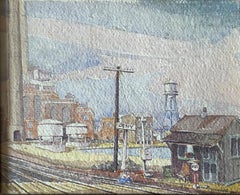
"Train Station, " Max Kuehne, Industrial City Scene, American Impressionism
By Max Kuehne
Located in New York, NY
Max Kuehne (1880 - 1968)
Train Station, circa 1910
Watercolor on paper
8 1/4 x 10 1/4 inches
Signed lower right
Provenance:
Private Collection, Illinois
Max Kuehne was born in Halle, Germany on November 7, 1880. During his adolescence the family immigrated to America and settled in Flushing, New York. As a young man, Max was active in rowing events, bicycle racing, swimming and sailing. After experimenting with various occupations, Kuehne decided to study art, which led him to William Merritt Chase's famous school in New York; he was trained by Chase himself, then by Kenneth Hayes Miller. Chase was at the peak of his career, and his portraits were especially in demand. Kuehne would have profited from Chase's invaluable lessons in technique, as well as his inspirational personality. Miller, only four years older than Kuehne, was another of the many artists to benefit from Chase's teachings. Even though Miller still would have been under the spell of Chase upon Kuehne's arrival, he was already experimenting with an aestheticism that went beyond Chase's realism and virtuosity of the brush. Later Miller developed a style dependent upon volumetric figures that recall Italian Renaissance prototypes.
Kuehne moved from Miller to Robert Henri in 1909. Rockwell Kent, who also studied under Chase, Miller, and Henri, expressed what he felt were their respective contributions: "As Chase had taught us to use our eyes, and Henri to enlist our hearts, Miller called on us to use our heads." (Rockwell Kent, It's Me O Lord: The Autobiography of Rockwell Kent. New York: Dodd, Mead and Co., 1955, p. 83). Henri prompted Kuehne to search out the unvarnished realities of urban living; a notable portion of Henri's stylistic formula was incorporated into his work.
Having received such a thorough foundation in art, Kuehne spent a year in Europe's major art museums to study techniques of the old masters. His son Richard named Ernest Lawson as one of Max Kuehne's European traveling companions. In 1911 Kuehne moved to New York where he maintained a studio and painted everyday scenes around him, using the rather Manet-like, dark palette of Henri.
A trip to Gloucester during the following summer engendered a brighter palette. In the words of Gallatin (1924, p. 60), during that summer Kuehne "executed some of his most successful pictures, paintings full of sunlight . . . revealing the fact that he was becoming a colorist of considerable distinction." Kuehne was away in England the year of the Armory Show (1913), where he worked on powerful, painterly seascapes on the rocky shores of Cornwall. Possibly inspired by Henri - who had discovered Madrid in 1900 then took classes there in 1906, 1908 and 1912 - Kuehne visited Spain in 1914; in all, he would spend three years there, maintaining a studio in Granada. He developed his own impressionism and a greater simplicity while in Spain, under the influence of the brilliant Mediterranean light. George Bellows convinced Kuehne to spend the summer of 1919 in Rockport, Maine (near Camden). The influence of Bellows was more than casual; he would have intensified Kuehne's commitment to paint life "in the raw" around him.
After another brief trip to Spain in 1920, Kuehne went to the other Rockport (Cape Ann, Massachusetts) where he was accepted as a member of the vigorous art colony, spearheaded by Aldro T. Hibbard. Rockport's picturesque ambiance fulfilled the needs of an artist-sailor: as a writer in the Gloucester Daily Times explained, "Max Kuehne came to Rockport to paint, but he stayed to sail." The 1920s was a boom decade for Cape Ann, as it was for the rest of the nation. Kuehne's studio in Rockport was formerly occupied by Jonas Lie.
Kuehne spent the summer of 1923 in Paris, where in July, André Breton started a brawl as the curtain went up on a play by his rival Tristan Tzara; the event signified the demise of the Dada movement. Kuehne could not relate to this avant-garde art but was apparently influenced by more traditional painters — the Fauves, Nabis, and painters such as Bonnard. Gallatin perceived a looser handling and more brilliant color in the pictures Kuehne brought back to the States in the fall. In 1926, Kuehne won the First Honorable Mention at the Carnegie Institute, and he re-exhibited there, for example, in 1937 (Before the Wind). Besides painting, Kuehne did sculpture, decorative screens, and furniture work with carved and gilded molding. In addition, he designed and carved his own frames, and John Taylor Adams encouraged Kuehne to execute etchings. Through his talents in all these media he was able to survive the Depression, and during the 1940s and 1950s these activities almost eclipsed his easel painting. In later years, Kuehne's landscapes and still-lifes show the influence of Cézanne and Bonnard, and his style changed radically.
Max Kuehne died in 1968. He exhibited his work at the National Academy of Design, the Art Institute of Chicago, the Carnegie Institute in Pittsburgh, the Memorial Art Gallery of the University of Rochester, and in various New York City galleries. Kuehne's works are in the following public collections: the Detroit Institute of Arts (Marine Headland), the Whitney Museum (Diamond Hill...
Category
1910s American Impressionist Landscape Drawings and Watercolors
Materials
Paper, Watercolor
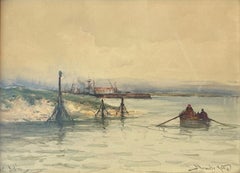
"Gray Morning" James MacMaster, Scottish Seascape, Marine Ship Landscape
By James MacMaster
Located in New York, NY
James MacMaster
Gray Morning
Signed and titled lower left
Watercolor on paper
10 1/4 x 14 inches
Provenance:
Private Collection, New Jersey
Category
Late 19th Century Landscape Paintings
Materials
Paper, Watercolor
$540 Sale Price
70% Off
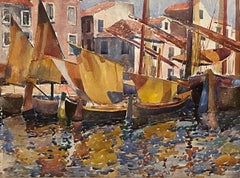
"Gondolas at the Dock, Venice, Italy" Louis Wolchonok, Boats in the Harbor Scene
By Louis Wolchonok
Located in New York, NY
Louis Wolchonok (1898 - 1973)
Gondolas at the Dock, Venice, Italy, 1928
Watercolor on paper
Sight 18 x 23 1/2 inches
Signed and dated lower right
Louis Wolchonok was an author of ar...
Category
1920s Post-Impressionist Landscape Drawings and Watercolors
Materials
Paper, Watercolor
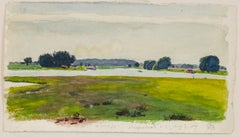
"Sheepshead, Brooklyn, Long Island" Oscar Bluemner, Modernist Watercolor
By Oscar Bluemner
Located in New York, NY
Oscar Bluemner
Sheepshead, Long Island, 1907
Signed with the artist's conjoined initials "OB" and dated "4-30 - 5 - 30" / "Aug 3, 07"
Watercolor on paper
6 x 10 inches
Provenance:
J...
Category
Early 1900s American Modern Landscape Drawings and Watercolors
Materials
Paper, Watercolor
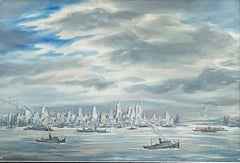
"New York City Skyline View from the East River, " Lionel Reiss, Jewish Artist
By Lionel Reiss
Located in New York, NY
Lionel S. Reiss (1894 - 1988)
New York City Skyline View from the East River
Watercolor on paper
13 x 19 inches
Signed lower left
In describing his own style, Lionel Reiss wrote, “By nature, inclination, and training, I have long since recognized the fact that...I belong to the category of those who can only gladly affirm the reality of the world I live in.” Reiss’s subject matter was wide-ranging, including gritty New York scenes, landscapes of bucolic Bucks County, Pennsylvania, and seascapes around Gloucester, Massachusetts. However, it was as a painter of Jewish life—both in Israel and in Europe before World War II—that Reiss excelled. I.B. Singer, the Nobel Prize winner for Literature, noted that Reiss was “essentially an artist of the nineteenth century, and because of this he had the power and the courage to tell visually the story of a people.”
Although Reiss was born in Jaroslaw, Poland, his family immigrated to the United States in 1898 when he was four years old. Reiss's family settled on New York City’s Lower East Side and he lived in the city for most of his life. Reiss attended the Art Students League and then worked as a commercial artist for newspapers and publishers. As art director for Metro-Goldwyn-Mayer, he supposedly created the studio’s famous lion logo.
After World War I, Reiss became fascinated with Jewish life in the ‘Old World.’ In 1921 he left his advertising work and spent the next ten years traveling in Europe, the Middle East, and North Africa. Like noted Jewish photographers Alter Kacyzne and Roman Vishniac, Reiss depicted Jewish life in Poland prior to World War II. He later wrote, “My trip encompassed three main objectives: to make ethnic studies of Jewish types wherever I traveled; to paint and draw Jewish life, as I saw it and felt it, in all aspects; and to round out my work in Israel.”
In Europe, Reiss recorded quotidian scenes in a variety of media and different settings such as Paris, Amsterdam, the Venice ghetto, the Jewish cemetery in Prague, and an array of shops, synagogues, streets, and marketplaces in the Jewish quarters of Warsaw, Lodz, Krakow, Lublin, Vilna, Ternopil, and Kovno. He paid great attention to details of dress, hair, and facial features, and his work became noted for its descriptive quality.
A selection of Reiss’s portraits appeared in 1938 in his book My Models Were Jews. In this book, published on the eve of the Holocaust, Reiss argued that there was “no such thing as a ‘Jewish race’.” Instead, he claimed that the Jewish people were a cultural group with a great deal of diversity within and between Jewish communities around the world. Franz Boas...
Category
1940s American Modern Landscape Drawings and Watercolors
Materials
Paper, Watercolor
$2,800 Sale Price
20% Off