Items Similar to Henry Ward Ranger Connecticut Landscape Oil Painting 1858–1916 American Tonalist
Want more images or videos?
Request additional images or videos from the seller
1 of 13
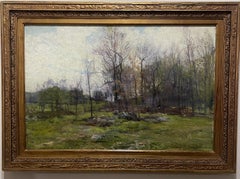
Henry Ward RangerHenry Ward Ranger Connecticut Landscape Oil Painting 1858–1916 American Tonalistcirca 1900
circa 1900
$14,000
£10,626.72
€12,186.18
CA$19,760.92
A$21,211.50
CHF 11,294.04
MX$251,226.41
NOK 142,725.76
SEK 130,348.43
DKK 91,036.30
About the Item
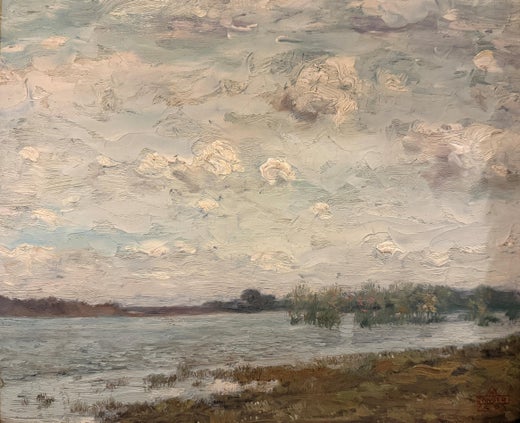
Henry Ward Ranger
Connecticut Landscape
oil/panel 12 x 16 image size 21 3/8 x 25 3/8 x 2 3/4 framed
signed LL also a plaque attached
A wonderful example of Rangers painting style of glazes and areas of impasto textures throughout housed in an original frame that shows some wear but shows well. No signs of repair or restoration.
With Rangers style of using glazes, etc., it is very difficult to get exact colors in the photos as digital cameras read thru time but the photos re close and representative of this painting.
The back has cardboard with hand written notes as seen in the photos which I kept even though the actual board underneath, also pictured, has a typed version of the notes on a label.
All of the original hardware is still attached but I added securing clips and new hanger and wires to help with the weight as pictured. Fairly heavy for its size.
Borrowed from Wikipedia
Henry Ward Ranger (January 29, 1858 – November 7, 1916) was an American artist. Born in western New York State, he was a prominent landscape and marine painter, an important Tonalist, and the leader of the Old Lyme Art Colony. Ranger became a National Academician (1906), and a member of the American Water Color Society. Among his paintings are, Top of the Hill, Corcoran Gallery of Art, Washington, D.C.; and East River Idyll, Carnegie Institute, Pittsburgh, Pennsylvania.[1]
Borrowed from Artsy
Henry Ward Ranger
American, 1858–1916
By 1914, Henry Ward Ranger was known as the leader of the “Tonal School” in American art circles. A habitué of the artist colony at Old Lyme, Connecticut, he later moved up the coast to the remote fishing town of Noank where he was inspired by abandoned farms and ancient oaks: the “civilized landscape”, as George Inness described it. Of all the major Tonalists, Ranger maintained a lingering allegiance to Barbizon models of paint handling and the Dutch tradition of landscape painting. But after 1900, he developed a freer and more vigorous personal style that allowed him to explore the American landscape with a new intimacy, employing James Abbott McNeill Whistler’s design principles of cropping and emphasis on subtle patterns. Ranger’s paint surfaces have a mosaic-like quality, glittering darkly—especially when the ground of the canvas or panel is allowed to show through the pigment, a nod to the veils of glazing the artist so admired in Venetian painting.
Borrowed from Questroyal Fine Art
Referred to as “the dean of the American landscape” by the New York Times in 1916, Henry Ward Ranger was one of the country’s most important Tonalists. Born in Syracuse, New York, Ranger developed his soft, atmospheric style after studying art in France and Holland. The young artist was deeply influenced by the moody, tonal landscape paintings of the Barbizon and Dutch Schools and began painting forest interiors in the Tonalist manner. He exhibited extensively at prestigious venues including the National Academy of Design, the Brooklyn Art Association, the Boston Art Club, and the Paris Salon, and won medals at the Paris Exposition of 1900, the Buffalo Pan-American Exposition of 1902, and the American Artist Society’s 1907 show. Yet Ranger was most famous as one of the founders of the Old Lyme art colony in Connecticut, where he began painting in the late 1890s. The colony became “an American version of Barbizon” during the height of the Tonalist movement and maintained a vital artistic presence throughout the twentieth century. Ranger’s paintings are now featured in the collections of the Whitney Museum of American Art, the Metropolitan Museum of Art, the Corcoran Gallery of Art, the National Gallery of Art, the Smithsonian American Art Museum, and the Brooklyn Museum of Art. The Florence Griswold Museum held a Ranger retrospective in 1999, which generated renewed interest in his work.
SELLERS STATEMENT
I have been in the art business as an artist and collector since the early 80's. I'm currently offering select paintings from my collection like this one. In order to collect new paintings, I must sell off some of my current collection.
For art that I have painted, it is derived in a variety of ways. I'm a responder. I respond to light, color, design, etc. and I love painting both outdoors on location and in the studio under a controlled environment. I try to convey an idea, mood or just simply a beautiful setting. I'm inspired by a wide variety of subject matter and styles of painting and do not adhere to just one way.
My paintings have won numerous awards over the years and have been collected both nationally and internationally. They can be found in three museum collections, the White House Collection and many private collections.
- Creator:Henry Ward Ranger (1858 - 1916, American)
- Creation Year:circa 1900
- Dimensions:Height: 21.38 in (54.31 cm)Width: 25.38 in (64.47 cm)Depth: 3 in (7.62 cm)
- Medium:
- Movement Style:
- Period:
- Condition:
- Gallery Location:Chesterfield, NJ
- Reference Number:1stDibs: LU1254117512482
Henry Ward Ranger
A key person in the establishment of the Old Lyme, Connecticut art colony in 1899, Henry Ward Ranger is regarded as the leader of the Tonalist movement in America and was a leading painter in this country in the late 19th and early 20th-centuries. He was born in Geneseo and raised in Syracuse, New York, and in 1873, enrolled in the College of Fine Arts at Syracuse University, where his father was a professor of photography and drawing. Two years later, he became a re-toucher of paintings in his father's studio and did not earn a college degree. He also spent much time in New York City, where he was a writer of music criticism and visited galleries, where he had his first exposure to French Barbizon painting. During much of the 1880s, he painted watercolors of marine subjects, and exhibited those in New York City, Boston, and Paris. As a student in France, he became greatly interested in the Barbizon School of painters, and then a trip to The Hague, Holland, was even more influential when he met a large colony of Dutch painters called "The Hague School", whose emphasis was on Realism and Tonalism. Their soft, Atmospheric and Tonalist style of sombre colors seemed to suit him. However, his soft colors later became a special problem for anyone trying to restore his paintings as it was difficult to distinguish original color from soil on canvases. He did his sketches "en plein air" but finished his paintings in his studio. In 1885, Ranger moved to New York City and took up easel painting increasingly favoring oils over watercolors. In 1892, he had a one-man exhibition at the Knoedler Galleries in New York City. Many of his works in that show were forest interiors and tree studies. Gradually his palette lightened with color and luminosity suggesting the influence of George Inness. In the summer of 1899, Ranger discovered Florence Griswold's boardinghouse in Old Lyme, Connecticut, and he returned in the summer of 1900. With his influence and the friendship of Florence Griswold, he became the leader of the artists' colony of Old Lyme, "an American version of Barbizon" for three years. However, the prevalent style changed to Impressionism with the 1903 arrival of Childe Hassam. He became disenchanted with painting at Old Lyme with the arrival of Childe Hassam in 1903 and the subsequent influence of his Impressionist style. In protest of the plein-air, fast painting, and lightened palette and abstraction of these Impressionists, Ranger, in 1905, moved farther down the coast to Noank, Connecticut near the Mystic River. Like many of his associates, he also maintained a studio in New York City where he was very prominent and often lectured and wrote about art and took an active part in the art community. He was a member of the National Academy of Design and the National Arts Club, and he wrote articles about art that were published.
About the Seller
4.9
Platinum Seller
Premium sellers with a 4.7+ rating and 24-hour response times
Established in 2019
1stDibs seller since 2019
235 sales on 1stDibs
Typical response time: <1 hour
- ShippingRetrieving quote...Shipping from: Chesterfield, NJ
- Return Policy
More From This Seller
View AllEmil Carlsen American Impressionist landscape oil Painting Salmagundi Club
By Soren Emil Carlsen
Located in Chesterfield, NJ
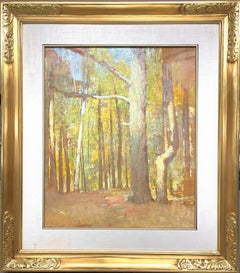
Yellow Landscape/Wood Interior/Birch Forest, Yellow Landscape
oil /panel
image 20 x 24 unframed, Framed 34 1/2 x 30 1/2
3 different titles on 3 labels verso
Not signed and bears ...
Category
Early 20th Century Tonalist Landscape Paintings
Materials
Oil
Chauncey Foster Ryder Landscape with Figures Oil Painting 1868-1949 Tonalist
By Chauncey Foster Ryder
Located in Chesterfield, NJ
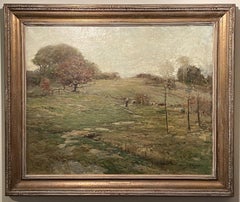
CHAUNCEY FOSTER RYDER (American, 1868-1949),
Pasture Lands
oil/canvas signed LR
31.5 x 39.5 image, 40.5 x 48.5 framed
A wonderfully subtle Tonalist painting by Ryder incorporating ...
Category
20th Century Tonalist Landscape Paintings
Materials
Oil
Chauncey Foster Ryder Landscape with Figures Oil Painting 1868-1949 Tonalist
By Chauncey Foster Ryder
Located in Chesterfield, NJ
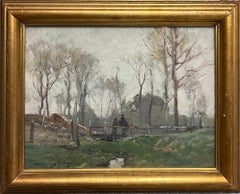
CHAUNCEY FOSTER RYDER (American, 1868-1949),
Canvas 12-1/4''h, 16''w. unframed and 16 x 20 framed as pictured.
oil on canvas, signed lower left.
Landscape with figures on a bridge. ...
Category
21st Century and Contemporary Impressionist Landscape Paintings
Materials
Oil
Winter Landscape Oil Painting Matt Read Smith Colorado Winter Morning
By Matt Smith
Located in Chesterfield, NJ
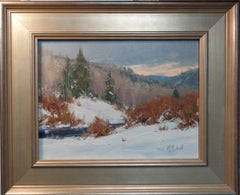
Colorado Winter Morning
oil/canvas laid down to board
signed LR dated 1996 verso
image 12 x 15.75 unframed
Bio
Matt Smith was born in Kansas City, Missouri in 1960. At an early age ...
Category
1990s Impressionist Landscape Paintings
Materials
Oil
$2,800 Sale Price
20% Off
After American Painter Hugh Bolton Jones 1848-1927 New England Landscape
By Hugh Bolton Jones
Located in Chesterfield, NJ
In the style of Hugh Bolton Jones 1848-1927
New England Landscape
oil/canvas board signed LR
16 x 24 unframed, 21 x 29 framed
Painting looks and feels lined and in good condition in...
Category
21st Century and Contemporary Realist Landscape Paintings
Materials
Oil
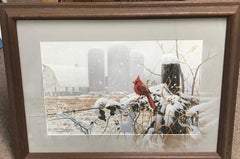
Winter Cardinal, Contemporary Wildlife Art Print with Remarque hand painted mat
By Michael Budden
Located in Chesterfield, NJ
A limited edition offset print by award winning contemporary artist Michael Budden that showcases a cardinal in his natural rural environment at a moments rest on a fence line create...
Category
21st Century and Contemporary Realist Landscape Paintings
Materials
Oil, Acrylic, Offset
You May Also Like
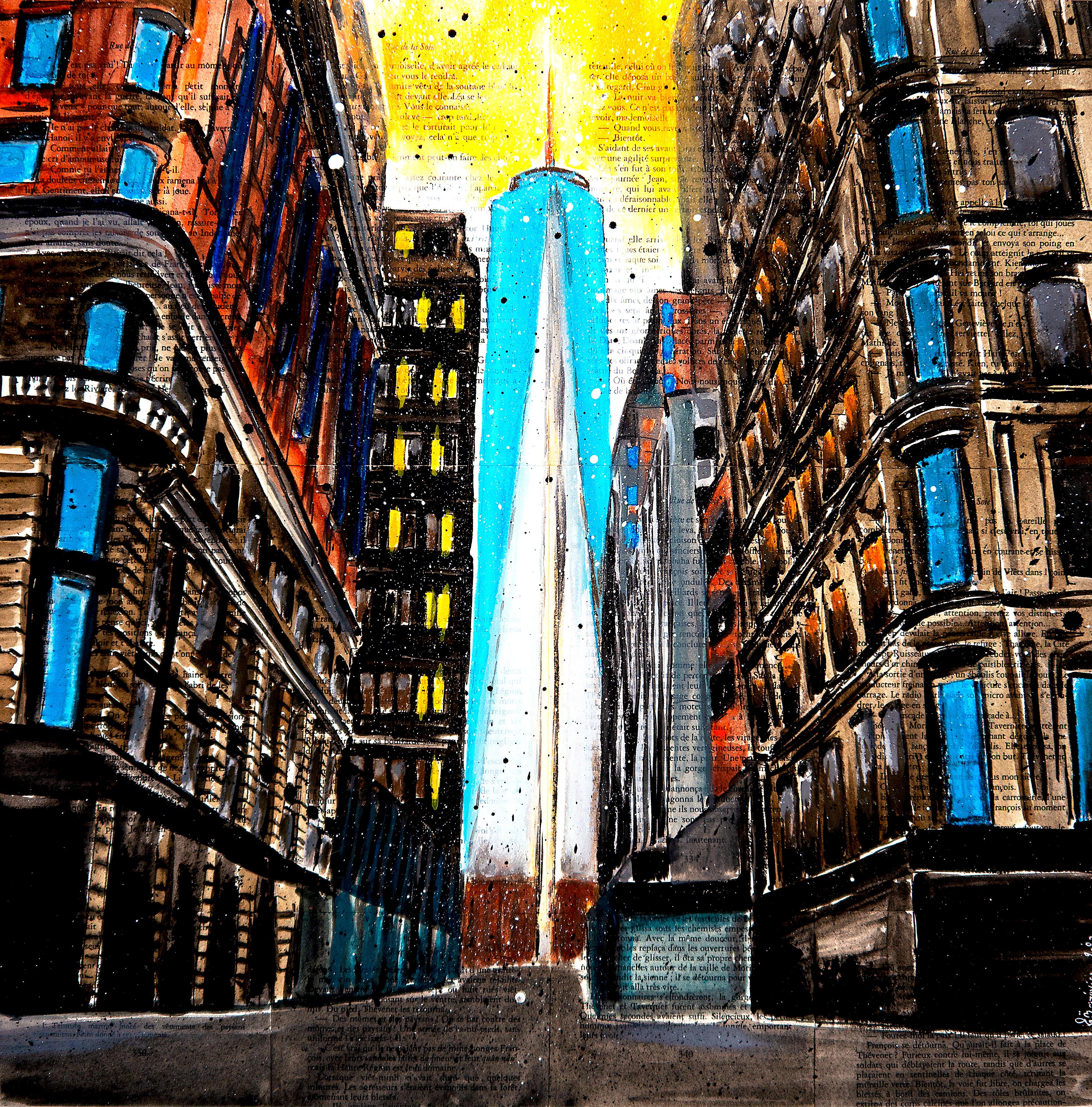
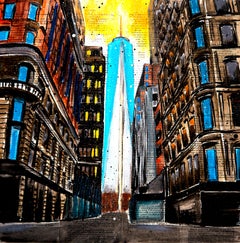
French School - Landscape New York WTC Sunset - NYC Building DLC (Large)
Located in Zofingen, AG
New York One World Trade Center urban view
⭐Technique⭐: oil, acrylic, and ink on old book pages on wooden frame 55x55cm ■■ 21,6x21,6 inch
➡️》R E A D Y -- T O -- H A N G《⬅️
🟢 → O...
Category
Early 1900s Tonalist Figurative Paintings
Materials
Oil, Acrylic, Ink
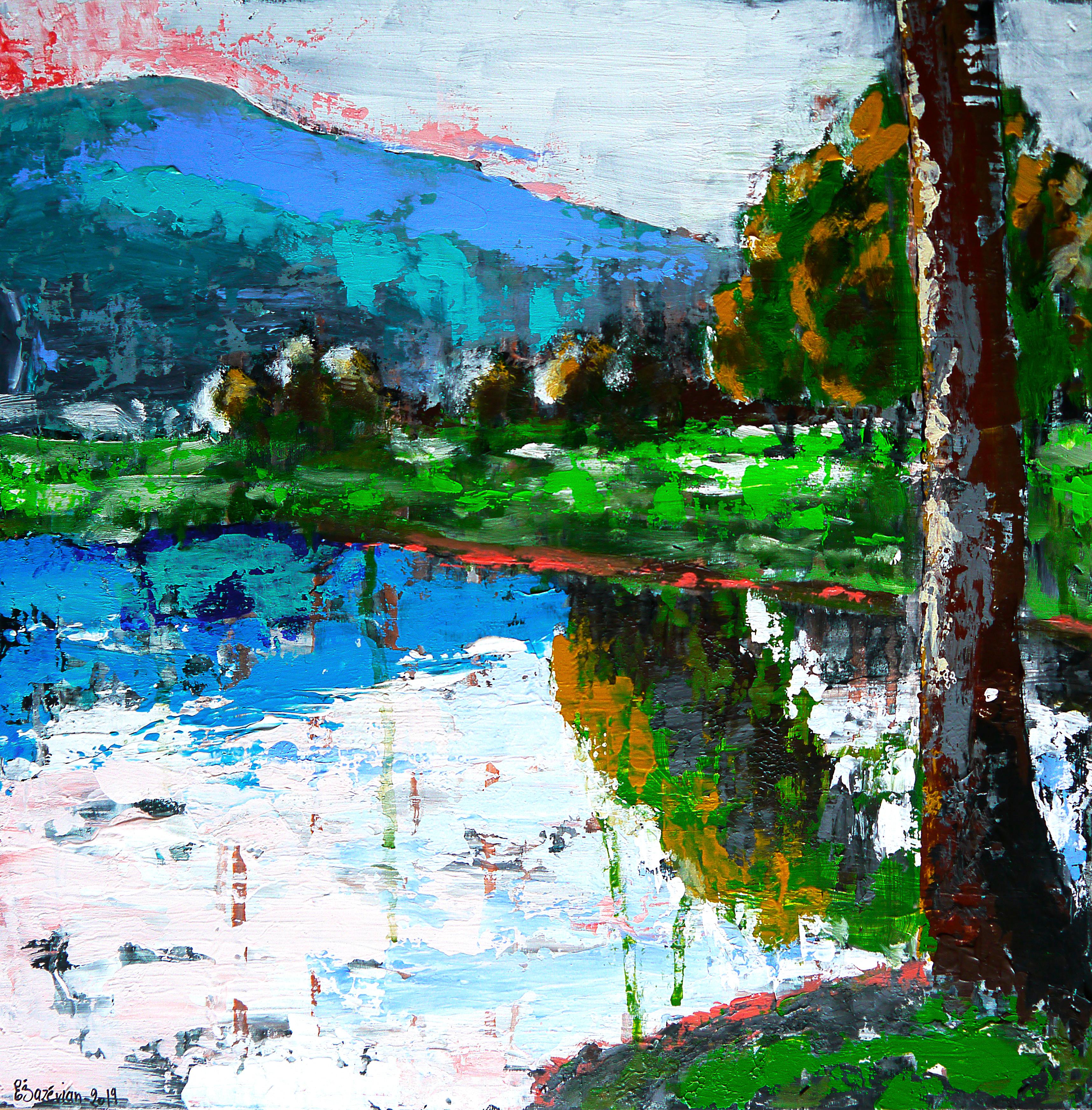
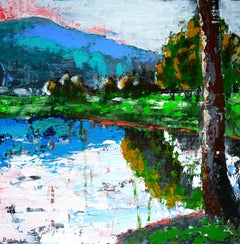
French School Impressionist Landscape Le Lac Rose th century MAK
Located in Zofingen, AG
Landscape Le lac Rose - Pink Lake
Technique: oil, acrylic, ink on wood frame 40x40cm / 15,7x15,7inch
⭐Sustainability⭐: Wooden frame is made by the artist by ...
Category
Early 1900s Tonalist Figurative Paintings
Materials
Ink, Oil, Acrylic
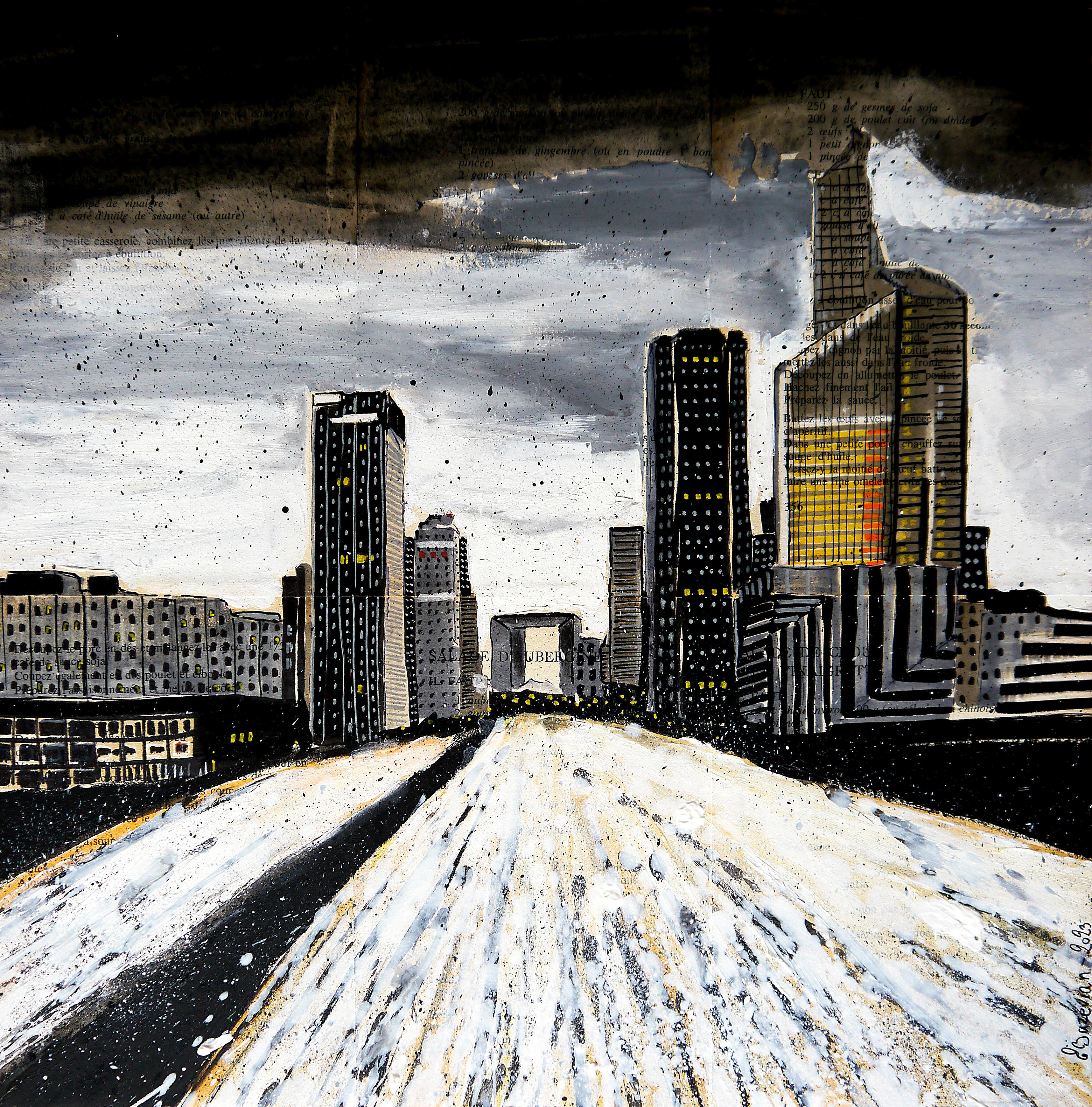
FRENCH SCHOOL Urbanscape La defense France PARIS - SNOW - Chut les Barbizons!
Located in Zofingen, AG
⭐ La Défense ⭐
It's a cityscape, dominated by modern, high-rise buildings (Sky scrappers, office in Paris ) buried on snow.. The architecture suggests a contemporary urban environme...
Category
Early 1900s Tonalist Figurative Paintings
Materials
Glue, Mixed Media, Oil, Spray Paint, Acrylic
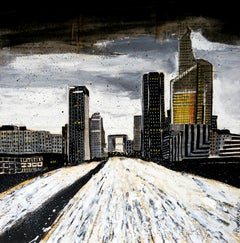
French School Road Line III New York City oil Post Impressionist th century AUC
Located in Zofingen, AG
Road Line III
Landscape - Sky scrappers, office- NYC Building avenue Painting with mirror effect
Technique: oil, acrylic, and ink on old book pages on wooden frame 40x40cm ■■ 15,7x...
Category
Early 1900s Tonalist Landscape Paintings
Materials
Oil, Acrylic, Glue, Mixed Media, Stretcher Bars
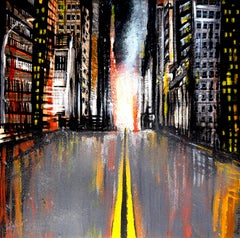
French School Road Line III New York City Impressionist Chut Les Barbizons!
Located in Zofingen, AG
☀️⭐Road Line III ⭐☀️
Landscape - Sky scrappers, office- NYC Building avenue Painting with mirror effect
Technique: oil, acrylic, and ink on old book pages on wooden strecher frame ...
Category
1920s Tonalist Landscape Paintings
Materials
Glue, Mixed Media, Oil, Acrylic
French School - Entre chien et Loup City - NYC Building Painting New York
Located in Zofingen, AG
Urban view with sunset
Technique: oil, acrylic, ink on wood frame 40x40cm / 15,7x15,7inch
⏩》R E A D Y -- T O -- H A N G《⏪
🟢 → Original signed work. Certificate of authenticity i...
Category
Early 1900s Tonalist Figurative Paintings
Materials
Oil, Acrylic, Mixed Media, Stretcher Bars