IAN HORNAK (1944–2002)
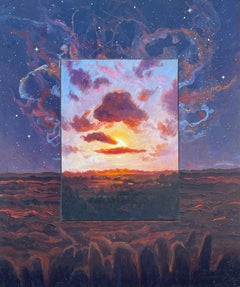
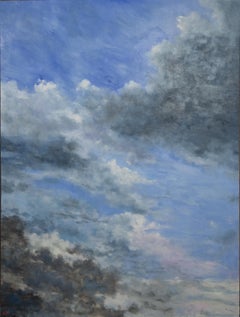
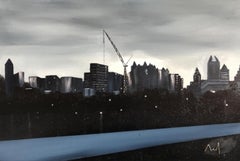
Title: Last Song: Beim Schlafengehen (Going to Sleep)
Date: 1985–2001
Medium: Acrylic on Canvas, with Artist Painted Frame
Dimensions: 47 x 59 inches (119.38 x 149.86 cm)
Condition: Excellent
Inscription: Signed, recto; double signed and dated on the frame and canvas, verso; titled, verso
Provenance: Armstrong Gallery, West 57th Street, New York, NY; Estate of Ian Hornak, East Hampton, NY
Exhibition History: Armstrong Gallery, West 57th Street, New York, NY, 1985; Forest Lawn Museum, Glendale, CA, 2012; Board of Governors of the Federal Reserve System, Mariner Eccles Building, National Mall, Washington D.C., 2012–13; Washington County Art Museum, Hagerstown, MD, 2013; Anton Art Center, Mount Clemens, MI, 2014; Moss-Thorns Gallery, Patricia Schmidt Foundation Center, Fort Hays State University, Hays, KS, 2023
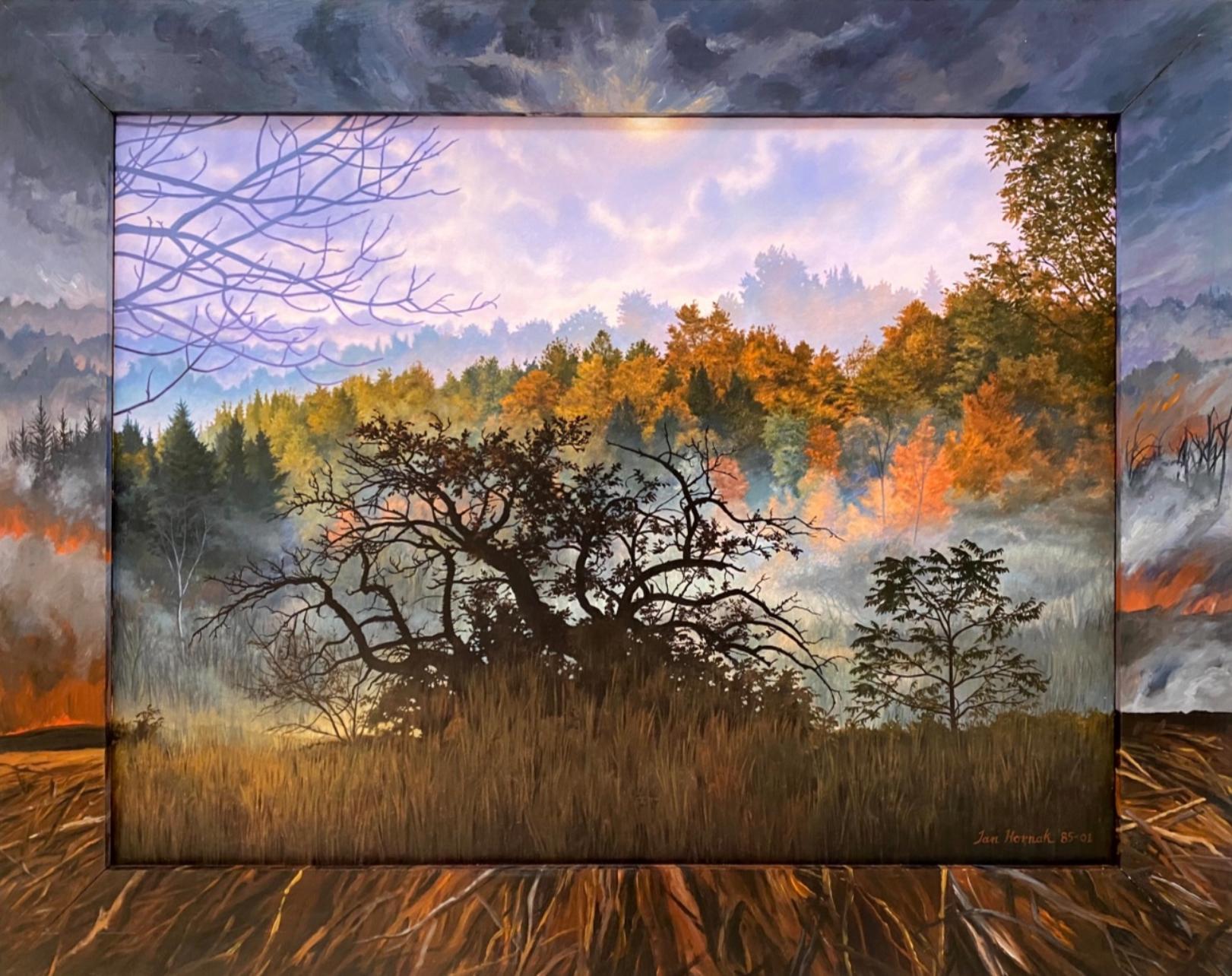
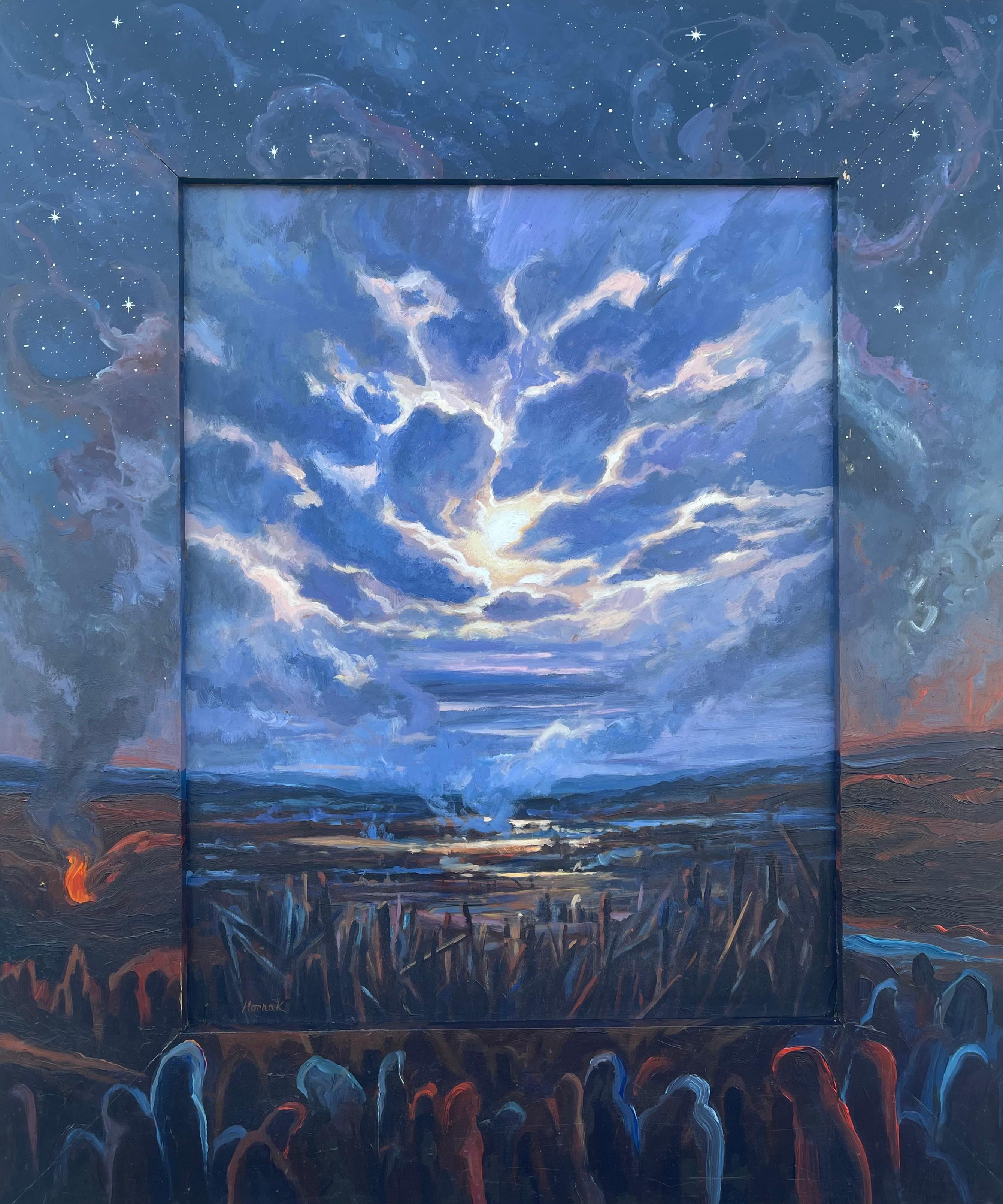
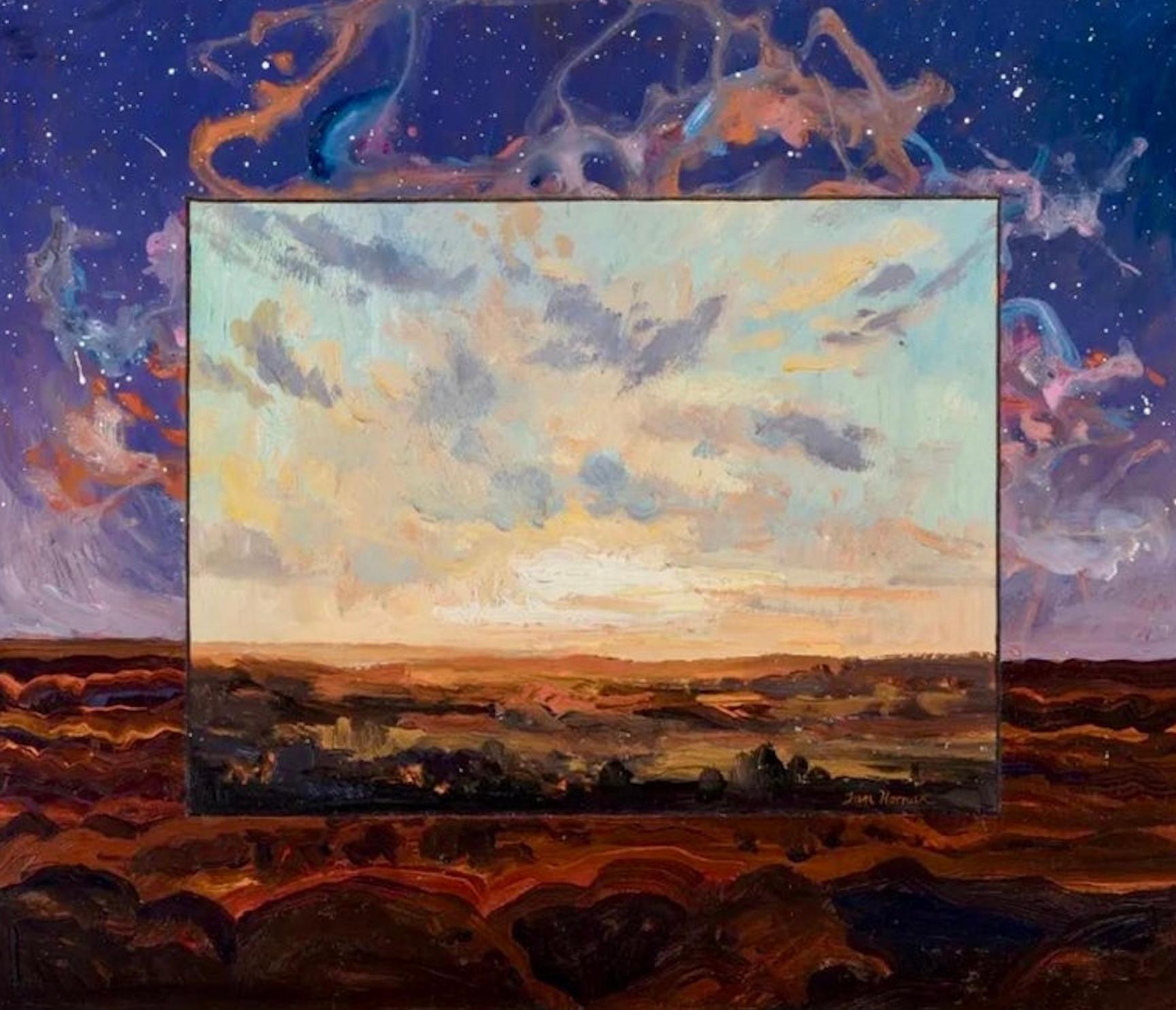
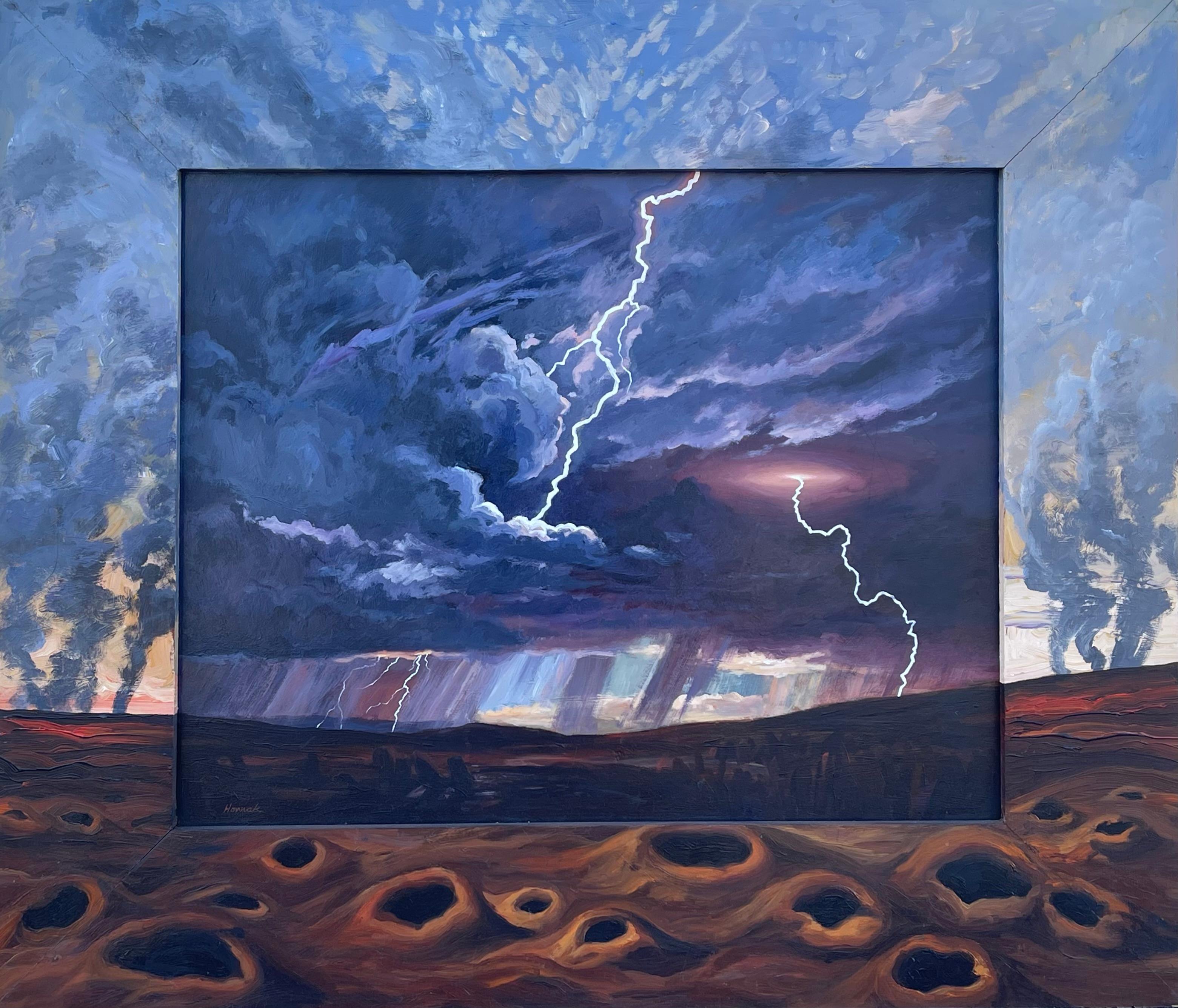
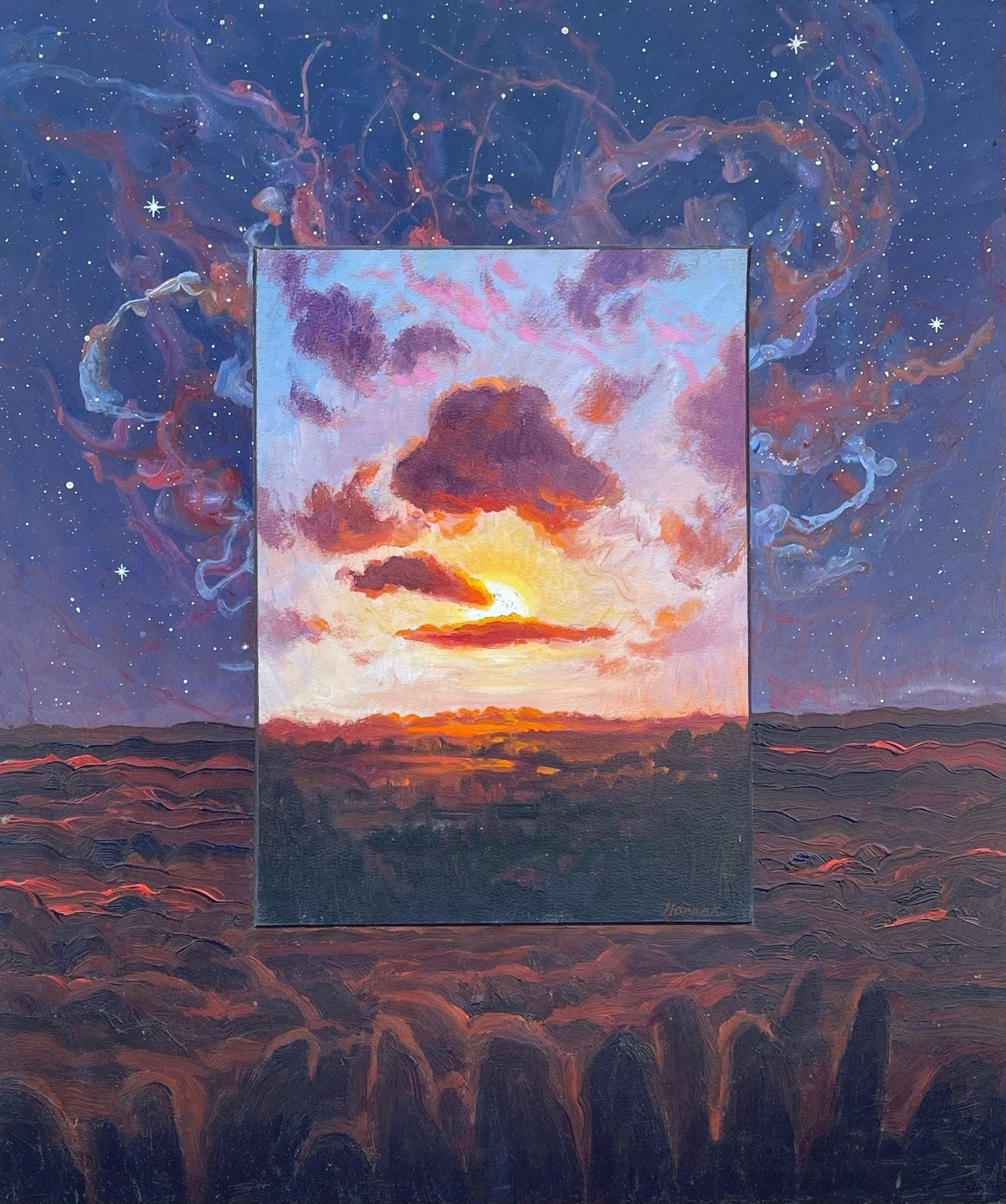
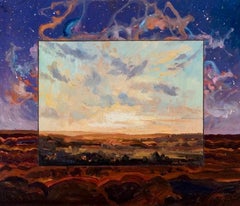
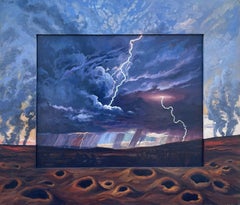
This distinguished painting by Ian Hornak, titled Last Song: Beim Schlafengehen (Going to Sleep), was created between 1985 and 2001 and stands among the artist’s most conceptually resonant and emotionally profound works. The title honors composer Richard Strauss (1864–1949) and his final composition “Beim Schlafengehen” from 1948, one of the Four Last Songs, in which Strauss meditates on the passage from life to death with peaceful resignation. Music critic Herbert Glass wrote of these compositions, “[These] are…songs of farewell – to life, to art, to a vanished world. There is nothing like them in music for the sheer intensity of their concentrated, gentle heartache…. Strauss’ songs are music of finality….[he] says goodbye wistfully, but not tragically.” At its core, Strauss conceived “Beim Schlafengehen” as a reflection on existence and the inevitability of mortality, exploring the emotional threshold between wakefulness and eternal rest. The lyrics, written by Hermann Hesse, capture this introspection with serene acceptance, and Hornak’s painting translates that same sentiment visually—a tranquil meditation on the serenity of slumber preceding the final passage of life. This work forms part of Hornak’s apocalyptic series, first conceived in 1985 at the encouragement of his friend, painter Jimmy Ernst (1920–1984), the son of surrealist master Max Ernst (1891–1976) and stepson of renowned collector Peggy Guggenheim (1898–1979). The series was realized the year following Ernst’s death for Hornak’s solo exhibition at the Armstrong Gallery on West 57th Street in New York, prearranged by Ernst himself. Last Song: Beim Schlafengehen represents one of the most contemplative compositions from the series, symbolizing the moment of absolute serenity before the unknown. The painting features one of Hornak’s defining innovations, the “painted frame,” in which the imagery of the primary panel extends seamlessly across the surrounding frame, dissolving spatial boundaries between artwork and environment. It is also among the few paintings in his oeuvre that unites this hallmark painted-frame technique with his pioneering Photorealist multiple exposure landscape method, which he first introduced in 1971. Together, these dual innovations mark the work as a major statement of Hornak’s technical mastery, visionary discipline, and metaphysical depth.
Ian Hornak (1944–2002) was an American draughtsman, painter, and printmaker. He was one of the founding artists of the Hyperrealist and Photorealist fine art movements, credited with having been the first Photorealist artist to incorporate the effect of multiple exposure photography into his landscape paintings, which foreshadowed the prevalence of digital manipulation in painting and photography, and the first contemporary artist to entirely expand the imagery of his primary paintings onto the frames. His brilliant fusion of technical precision, poetic imagination, and visionary detail positioned him among the most accomplished and conceptually innovative painters of the postwar era. Born in Philadelphia and raised in Michigan, Hornak became a key figure in the development of Photorealism and later Hyperrealism, producing luminous landscapes, intricate floral still lifes, and dreamlike multi-exposure compositions that elevate realism beyond the photographic into the spiritual and psychological. Drawing on the breakthroughs of Pablo Picasso, Alexander Calder, Alberto Giacometti, Salvador Dali, Joan Miro, Wassily Kandinsky, Marcel Duchamp, and Man Ray, he synthesized the lessons of Cubism, Surrealism, and high Modernism with a rigorously classical technique rooted in Renaissance glazing and Dutch-Flemish draftsmanship. He openly admired the visual intelligence of the Golden Age masters—Rembrandt van Rijn, Johannes Vermeer, Peter Paul Rubens, Anthony van Dyck, Jan van Eyck, Frans Hals, Jacob Jordaens, Pieter Bruegel the Elder, Jan Steen, and Aelbert Cuyp—whose mastery of light, atmosphere, and symbolic detail profoundly shaped his aesthetic. At the same time, he moved in New York circles that included Pop and contemporary artists—Andy Warhol, Roy Lichtenstein, Robert Rauschenberg, Jasper Johns, Alex Katz, Lowell Nesbitt, and Willem de Kooning—positioning him at the crossroads of realism, abstraction, and conceptual exploration. Hornak’s paintings have been acquired by and exhibited at respected institutions, including the Smithsonian Institution’s National Museum of American Art, the Smithsonian Institution’s National Museum of American History, the Library of Congress, the Corcoran Gallery of Art, the Detroit Institute of Arts, the Board of Governors of the Federal Reserve System, the Museum of Fine Arts, Boston, the Albrecht-Kemper Museum of Art, the Allen Memorial Art Museum, the Austin Museum of Art, the Barbara Ann Karmanos Cancer Institute, the Canton Museum of Art, the Children’s Hospital of Philadelphia, the Hood Museum of Art at Dartmouth College, the Detroit Historical Museum, the Flint Institute of Arts, the Forest Lawn Museum, Galleria Internazionale, The George Washington University Art Galleries, Guild Hall, the Children’s Hospital Boston (Harvard Medical School affiliate), the Kinsey Institute for Research in Sex, Gender and Reproduction, the Long Island Museum of American Art, History, and Carriages, the National Czech
Slovak Museum
Library, the National Hellenic Museum, the Ringling College of Art and Design, the Rockford Art Museum, the Jane Voorhees Zimmerli Art Museum at Rutgers University, the Florida State Capitol, St. Mary’s University, Texas, The Art Gallery at the University of Maryland, the University of Texas at San Antonio, the Frances Lehman Loeb Art Center at Vassar College, and the Washington County Museum of Fine Arts. This wide institutional recognition attests to Hornak’s significance as a major American painter whose technical mastery and conceptual depth have earned enduring scholarly and curatorial attention. His paintings are distinguished by jewel-like surfaces, luminous transparency, and an exceptional command of layered color and form, and his technique—often extending the painted image beyond its traditional boundaries with illusionistic frames and architectural motifs—has had a lasting impact on generations of realist, botanical, and hyperrealist artists who continue to explore the psychological and perceptual complexities of visual experience. Celebrated during his lifetime for uniting Old Master craftsmanship with late-20th-century visual culture, Hornak remains a pivotal figure in American realism. In 2017, a painting by Ian Hornak created in 1988, Large Orchid Bouquet, was sold in a private transaction to the Van Andel family, the co-owners of Amway, for 165,000 USD (219,168.11 USD, calculated for inflation in 2025), setting the record for the highest price paid for a floral painting by the artist.
Keywords: Ian Hornak painting, Photorealism, Hyperrealism, American Realism, apocalypse series, Armstrong Gallery, East Hampton art, 1980s American painting, acrylic on canvas, painted frame, multiple exposure landscape, Postwar American art, Photorealist masterwork, contemporary realism, collectible American art.