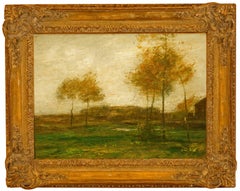
Items Similar to 1909 Tonalist Oil Landscape "Showers, The Lower San Joaquin River, California"
Want more images or videos?
Request additional images or videos from the seller
1 of 11
James Everett Stuart1909 Tonalist Oil Landscape "Showers, The Lower San Joaquin River, California"1909
1909
$7,000
£5,297.23
€6,073.65
CA$9,793.01
A$10,659.94
CHF 5,654.56
MX$128,332.40
NOK 71,797.97
SEK 65,707.99
DKK 45,362.56
About the Item
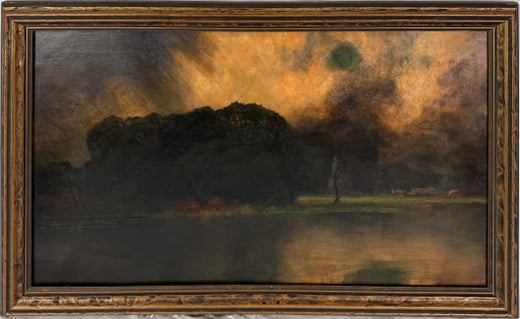
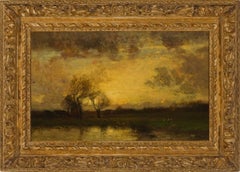
Early 20th Century California Tonalist Oil Landscape "Showers, The Lower San Joaquin River, California" by James Everett Stuart, 1909.
This stellar tonalist oil painting by James Everett Stuart (American, 1852-1941) depicts the San Joaquin River during showers in 1909 beneath a dramatic, glowing sky. Dark, tree-covered riverbanks are silhouetted against swirling amber and green clouds, while soft reflections ripple across the water. Stuart’s layered brushwork and atmospheric palette create a sense of solitude and timelessness, capturing the quiet power and beauty of the Western landscape.
Artist: James Everett Stuart (American, 1852-1941)
Title: "Showers, The Lower San Joaquin River, California"
Signature: Signed lower left corner with inventory number; title, date and signature on verso on linen
Created: August 25, 1909
Presented in period appropriate patinated gilt-toned frame
Condition: Very good: Professionally cleaned and conserved
Canvas Size: 18"H x 30'W
Frame Size: 21.50"H x 33.50"W
Born in Bangor, Maine, James Everett Stuart became known for his panoramic landscapes from Maine to California to Alaska to the Panama Canal, but especially of the American West with focus on Northern California and Oregon. Reportedly he painted more than 5000 paintings during his lifetime and originated a method of painting on aluminum and wood with a special adhering process that he thought made his work quite durable but proved not to be so. He also wrote on the back of most of his paintings
His parents took him to California at the age of eight, and the family settled in San Francisco where he attended the public schools and studied art with Virgil Williams, Raymond Yelland, Thomas Hill, and William Keith at the San Francisco School of Design. His early work was dramatic California landscape including the Sacramento and San Joaquin rivers, and in style the works were moody and mysterious and suggestive of the French Barbizon School. He first traveled to the Northwest in 1876, and in 1881, he opened his studio in Portland, Oregon and from there traveled throughout the West and East Coast and into Mexico. Subjects included Yosemite as well as California missions and adobes. He painted landscapes whose sales ultimately were financially remunerative and which established his reputation.
in 1885, he first went to Yellowstone where he camped for several weeks, supplied himself with fish for food, climbed steep cliffs including Electric Peak, and filled his sketchbook for studio paintings. The following summer, Stuart returned, having negotiated a free pass from the Northern Pacific Railroad in exchange for paintings. At the end of the summer, he went East to New York City on the return part of his train pass. Settling a studio in New York for four years, he continued to arrange several more summer railroad passes to Yellowstone. He was unable to arrange a formal arrangement for painting sales from the Park's gift shop, so he sold paintings from his tent.
Of those years, he expressed that he much preferred being in the park to studio painting, but he stopped visiting in 1889 and instead traveled to Alaska and the Coastal Range.
During much of the 1890s, he lived in Chicago, but in 1912 returned to San Francisco until his death in 1941. There, from his studio near Union Square, he was highly successful and popular among his peers, underscored by his membership in the Bohemian Club. Many of the owners of old homes in California have his paintings on the wall, suggestive of a time of grandeur. One of his paintings is in the White House, and his work is in the historical societies of Oregon, Washington, and Montana.
- Creator:James Everett Stuart (1852-1941, American)
- Creation Year:1909
- Dimensions:Height: 21.5 in (54.61 cm)Width: 33.5 in (85.09 cm)Depth: 2 in (5.08 cm)
- Medium:
- Movement Style:
- Period:
- Condition:Very good: Professionally cleaned and restored of yellowed varnish and minor missing paint repaired; presented in period appropriate wood gilt-toned frame that is included as-is.
- Gallery Location:Soquel, CA
- Reference Number:Seller: D82561stDibs: LU54216893832
James Everett Stuart
Born in Bangor, Maine, James Everett Stuart became known for his panoramic landscapes from Maine to California to Alaska to the Panama Canal, but especially of the American West with focus on Northern California and Oregon. Reportedly he painted more than 5000 paintings during his lifetime and originated a method of painting on aluminum and wood with a special adhering process that he thought made his work quite durable but proved not to be so. He also wrote on the back of most of his paintings His parents took him to California at the age of eight, and the family settled in San Francisco where he attended the public schools and studied art with Virgil Williams, Raymond Yelland, Thomas Hill, and William Keith at the San Francisco School of Design. His early work was dramatic California landscape including the Sacramento and San Joaquin rivers, and in style the works were moody and mysterious and suggestive of the French Barbizon School. He first traveled to the Northwest in 1876, and in 1881, he opened his studio in Portland, Oregon and from there traveled throughout the West and East Coast and into Mexico. Subjects included Yosemite as well as California missions and adobes. He painted landscapes whose sales ultimately were financially remunerative and which established his reputation. in 1885, he first went to Yellowstone where he camped for several weeks, supplied himself with fish for food, climbed steep cliffs including Electric Peak, and filled his sketchbook for studio paintings. The following summer, Stuart returned, having negotiated a free pass from the Northern Pacific Railroad in exchange for paintings. At the end of the summer, he went East to New York City on the return part of his train pass. Settling a studio in New York for four years, he continued to arrange several more summer railroad passes to Yellowstone. He was unable to arrange a formal arrangement for painting sales from the Park's gift shop, so he sold paintings from his tent. Of those years, he expressed that he much preferred being in the park to studio painting, but he stopped visiting in 1889 and instead traveled to Alaska and the Coastal Range. During much of the 1890s, he lived in Chicago, but in 1912 returned to San Francisco until his death in 1941. There, from his studio near Union Square, he was highly successful and popular among his peers, underscored by his membership in the Bohemian Club. Many of the owners of old homes in California have his paintings on the wall, suggestive of a time of grandeur. One of his paintings is in the White House, and his work is in the historical societies of Oregon, Washington, and Montana.
About the Seller
5.0
Platinum Seller
Premium sellers with a 4.7+ rating and 24-hour response times
Established in 1986
1stDibs seller since 2014
3,065 sales on 1stDibs
Typical response time: <1 hour
- ShippingRetrieving quote...Shipping from: Soquel, CA
- Return Policy
More From This Seller
View AllLate 19th Century Tonalist Landscape with Oak Trees
By Willard LeRoy Metcalf
Located in Soquel, CA
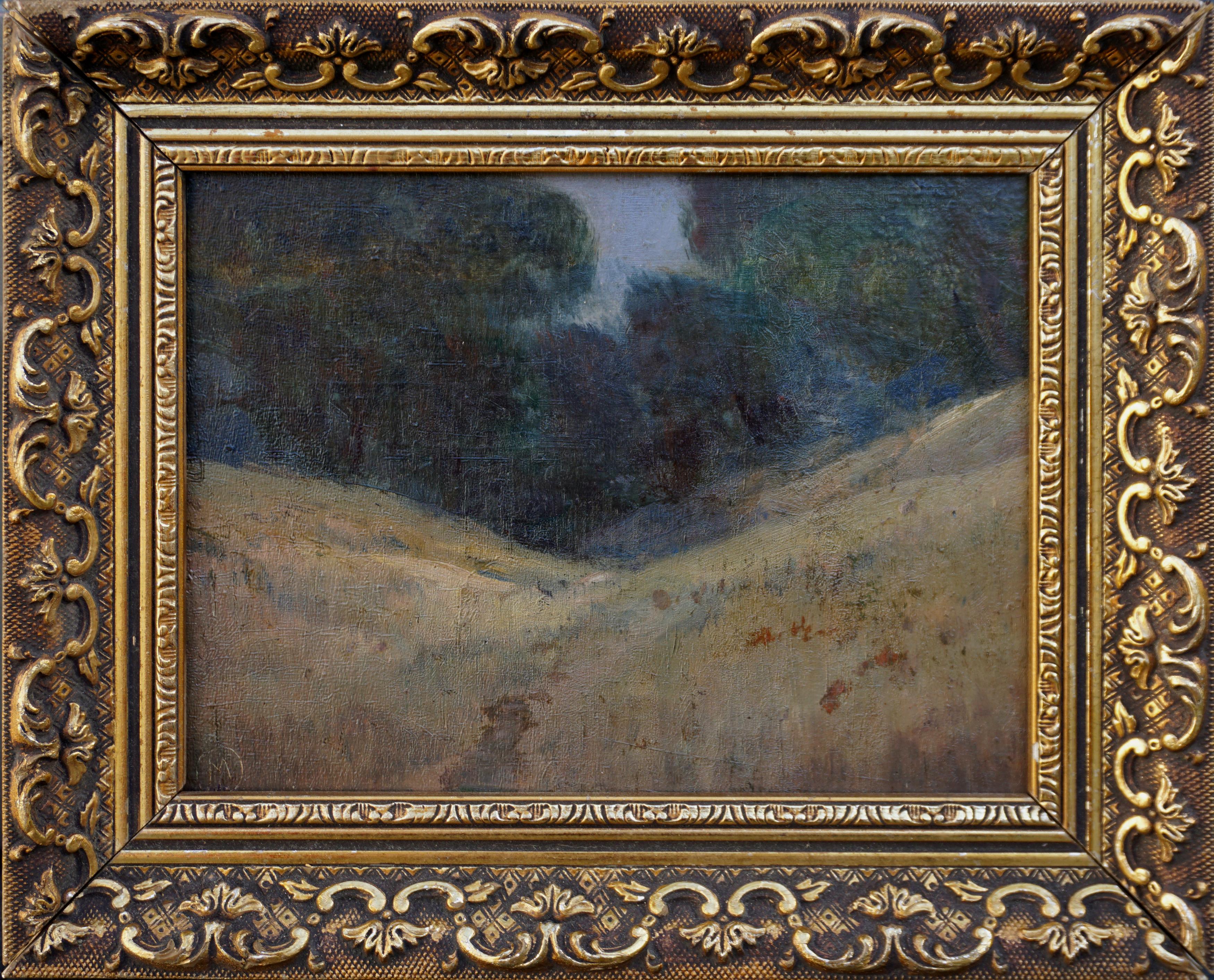
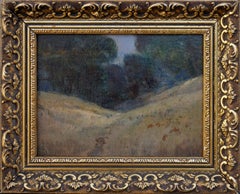
Gorgeous late 19th century Tonalist landscape painting of foothills and oak trees in the style of Willard Leroy Metcalf circa 1900. Inscribed "M" in circle monogram lower left corner and on frame verso. Presented in original rustic giltwood frame. Image size: 6"H x 8"W. Framed size: 8.5"H x 10.5"W.
Tonalist are usually intimate works, painted with a limited palette. Tonalist paintings are softly expressive, suggestive rather than detailed, often depicting the landscape at twilight or evening, when there is an absence of contrast. Tonalist paintings could also be figurative, but in them, the figure was usually out of doors or in an interior in a low-key setting with little detail.
Tonalism had its origins in the works of the French Barbizon school and in the works of American painters who were influenced by them. California Tonalism was born when the emphasis in California landscape painting passed from the grand landscapes of works like those of Thomas Hill and William Keith's early career, to more intimate views of a domesticated landscape. At the same time, the parallel Pictorialist Photography...
Category
1890s Tonalist Landscape Paintings
Materials
Oil, Cardboard
Early 20th Century Tonalist Pastel Landscape
By William Henry Chandler
Located in Soquel, CA
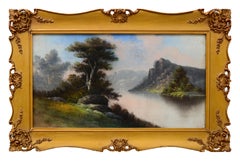
Early 20th Century Tonalist Pastel Landscape
Beautiful tonal landscape, c.1915, by pastel artist William Henry Chandler (American, 1854-1928). The viewer looks out over a serene riv...
Category
1910s Tonalist Landscape Paintings
Materials
Paper, Pastel
Cattle By Pond At Dusk, Mid-19th Century Tonalist Landscape by William Keith
By William Keith
Located in Soquel, CA
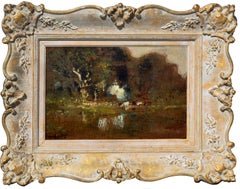
Cattle By Pond At Dusk, Mid-19th Century Tonalist Landscape by William Keith
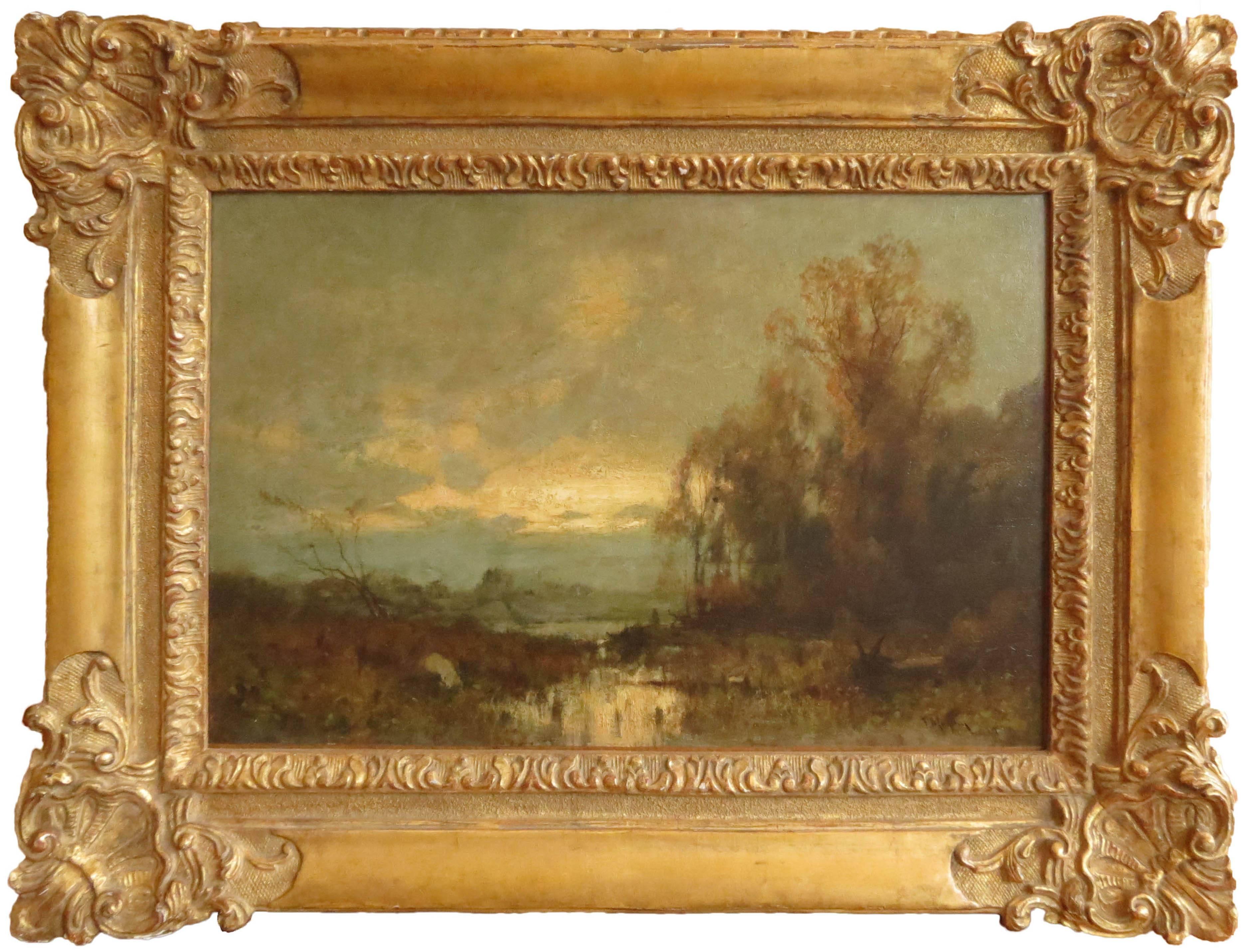
Gorgeous mid-19th century landscape painting by William Keith (American, 1838-1911), circa 1860. This impressive Tonalist landscape, titled "In the Woods", depicts cattle beside a pond in the forest at dusk. Keith uses loose, blended brush strokes and a muted earthy palette to create an atmospheric mood that Tonalism is known for.
Signed "W. Keith" lower left.
Museum label on verso from Santa Barbara Museum of Art.
Presented in an antique giltwood frame.
Image size: 9"H x 13"W. With frame measures: 16"H x 20"W x 3"D.
Provenance:
Mrs. Eugene Patterson; Santa Barbara Museum of Art.
Authenticity guaranteed and certificate include.
Condition:
Very good. Cleaning and restoration required signature to be re-touched, original images pre-restoration available.
About the Artist:
Brought to New York City in 1850, William Keith was apprenticed to a wood engraver in 1856 working for "Harper's" magazine. In 1858 (or 1859) he visited California for "Harper's" and then after a trip to Great Britain, settled in California as an engraver in 1862. He began exhibiting paintings in 1864 in San Francisco where he opened his studio, after having been taught painting by his wife.
The Northern Pacific Railroad...
Category
1890s Pre-Raphaelite Figurative Paintings
Materials
Oil, Illustration Board
Early Tonalist Landscape -- California Coastal Live Oaks William Schneider 1915
Located in Soquel, CA
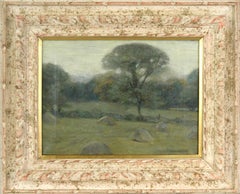
Early Tonalist Landscape -- California Coastal Live Oaks William Schneider 1915
Beautiful early 20th Century tonalist landscape of California by New York artist William G. Schneider ...
Category
1910s Tonalist Landscape Paintings
Materials
Linen, Oil, Stretcher Bars
Late 19th Century Tonalist Landscape -- Afternoon by the Pond
Located in Soquel, CA
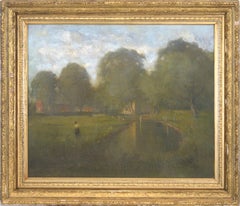
Gorgeous tonalist oil painting woman walking in field by pond with home in background by Willis Seaver Adams (American, 1844-1921), circa 1880. Trees and an amazing sky in the background add depth and interest to this beautiful piece. Signed "W. S. Adams" lower right corner. Condition: Previous restoration includes relining of canvas. Frame is vintage gilt molded and wood frame and shows previous repair of molding losses. Image size: 20"H x 24"W.
Auctions records for the artist exceed $6,000.
Willis Seaver Adams was known for his landscapes of the Connecticut River Valley. A relative recluse for much of his artistic life, his loneliness can be seen in much of his works. Oil miniatures were the focus for almost all of his later works. He is credited with over 425 oils, watercolors, and drawings.
Willis Seaver was born in 1844 on a farm in Suffield, near the Connecticut River. He intermittently attended the Suffield Academy, and always wanted to be a painter. A wealthy doctor became his patron, and financed his studies in 1868 at the Royal Academy in Antwerp. When the doctor passed away, Adams returned home and struggled to make a living painting. After working for a photographer for three years, he opened his own studio.
Adams helped organize Cleveland's first watercolor exhibit in 1876. Soon thereafter, he completed a portrait of Rutherford B. Hayes, then governor of Ohio, prior to his becoming President of the United States. This portrait enhanced Adams notoriety.
In 1878, Adams traveled to Italy where he opened a studio in Venice, and became friendly with neighbor James Whistler. Prior to returning to Springfield, Adams lived in Florence, Italy for three years. He returned to became an instructor for the Springfield Art Association, and began to exhibit his works at the galleries of James D. Gill. His first one-man exhibit was held there in 1894. Other successful exhibitions took place in Chicago, New York, and Boston. Although his works garnered respectable prices and reflected his success, Adams felt he was due more recognition.
In 1906, he moved to Greenfield, Massachusetts and converted a barn into a studio. There, he fell into relative obscurity, accompanied mainly by his dog, Collie. In 1921, Adams passed away.
Examples of Willis Adams works can be seen at the Kent Memorial Library, the Wadsworth Atheneum, and the Suffield Academy. Several Suffield residents are thought to own Adams paintings.
Category
1880s Hudson River School Landscape Paintings
Materials
Linen, Oil
Artist Sitting by the stream 19th Century Tonalist Landscape
Located in Soquel, CA
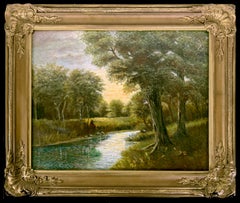
An Artist sitting by the stream, Mid-19th Century Tonalist Landscape
Gorgeous landscape painting by unknown artist, 1900+-. This impressive Tonalist landscape, untitled, depicts a s...
Category
1890s Tonalist Figurative Paintings
Materials
Oil, Illustration Board, Linen
You May Also Like
Tonalist Landscape
Located in Milford, NH
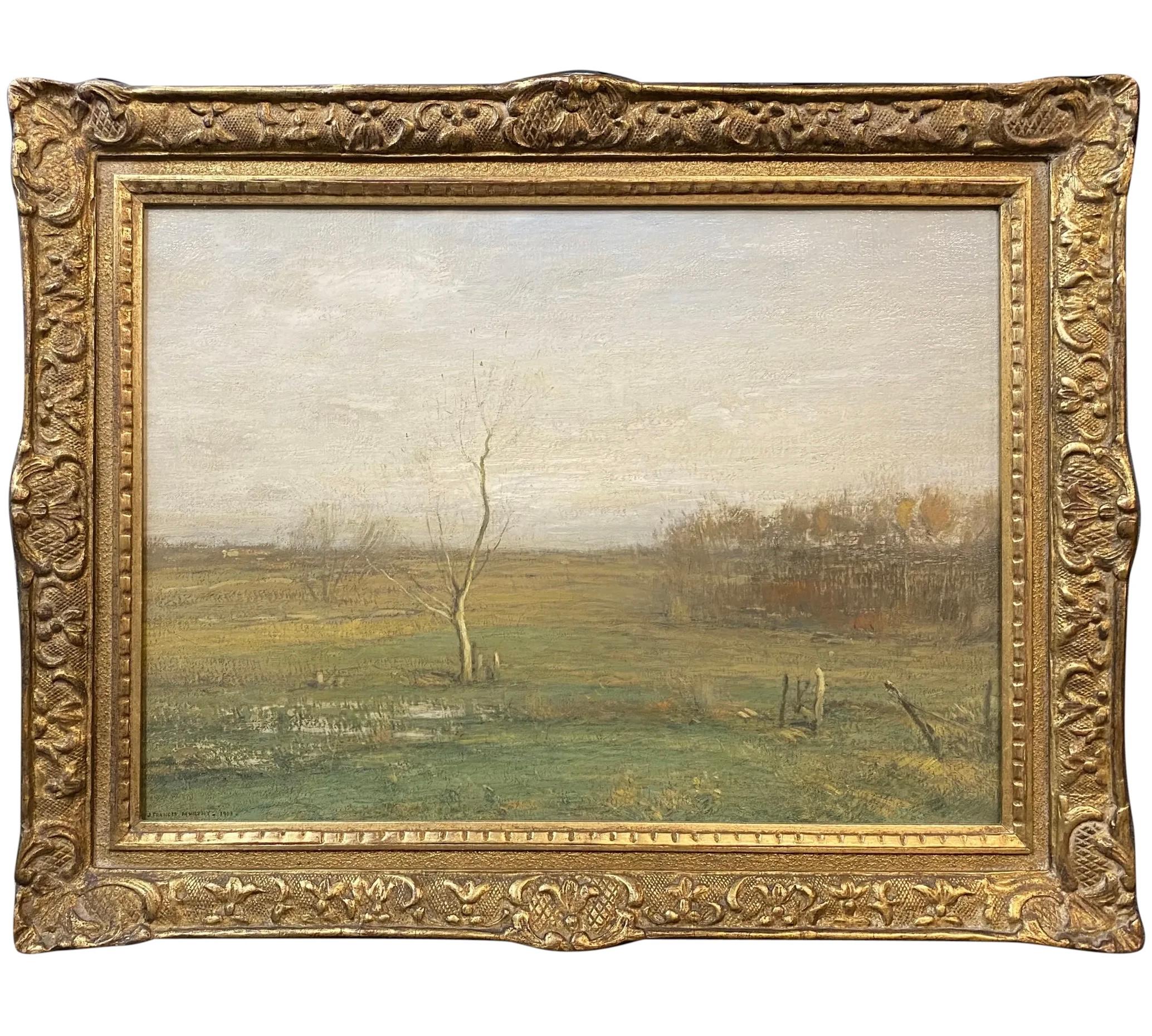
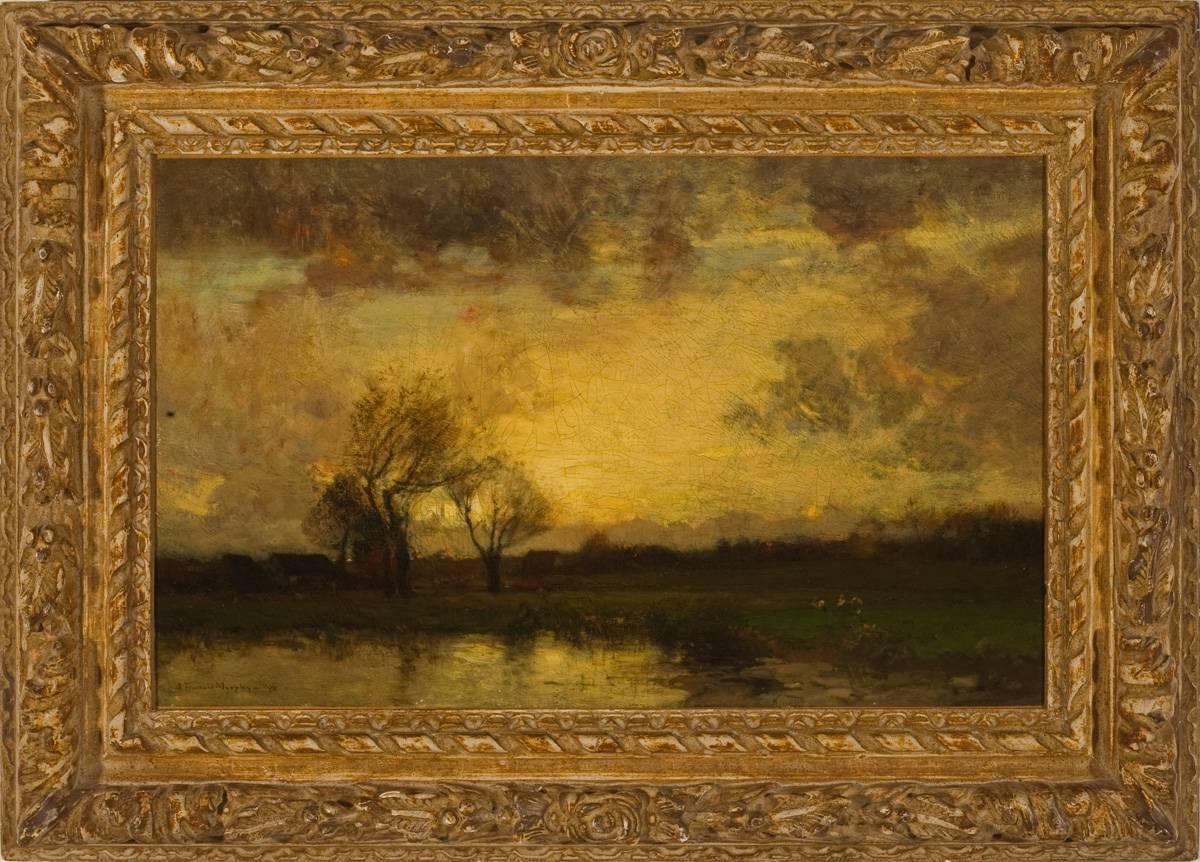
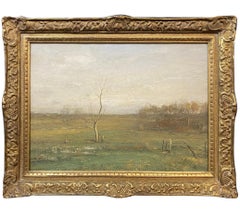
A fine tonalist landscape by American artist J. Francis Murphy (1853-1921). Murphy was born in Oswego, New York, he moved to Chicago in 1868, where his father was employed in the shipping industry. In Chicago, Murphy began working as a scene painter in a local theatre and was quickly promoted to lead his co-workers. Largely self-taught, his only training consisted of a few classes at the Chicago Academy of Design. There he became friends with Emil Carlsen and Theodore Robinson, and in 1873, Academy members elected him an Associate; a few weeks later, he became an Academician. His work was first exhibited at the National Academy of Design in 1876, where he was inducted eleven years later.He won numerous prizes, medals and honors for his landscape paintings, which are said to rank with those of George Inness, Alexander Wyant, and Homer Martin. Although his world was a limited one, his landscapes captured the forms of nature and the subtle nuances of the scene. Murphy was referred to as the "American Corot" because of his similarity to the painting style of Camille Corot (1796-1875), one of the original Barbizon...
Category
Early 1900s Tonalist Landscape Paintings
Materials
Canvas, Oil
"After the Rain"
By John Francis Murphy
Located in Lambertville, NJ
Signed Lower Right
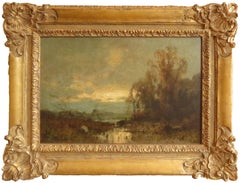
Known for his Tonalist-style landscape paintings, John Francis Murphy was referred to as the "American Corot" because of his similarity to the painting style of Camille Corot (1796-1875), one of the original Barbizon...
Category
Late 19th Century Tonalist Landscape Paintings
Materials
Canvas, Oil
"Landscape with Trees and Pond"
By John Francis Murphy
Located in Lambertville, NJ
Jim’s of Lambertville is proud to offer this artwork.
Signed and Dated Lower Left
John Francis Murphy (1853 - 1921)
John Francis Murphy is increasingly recognized today as one o...
Category
1890s Tonalist Landscape Paintings
Materials
Canvas, Oil
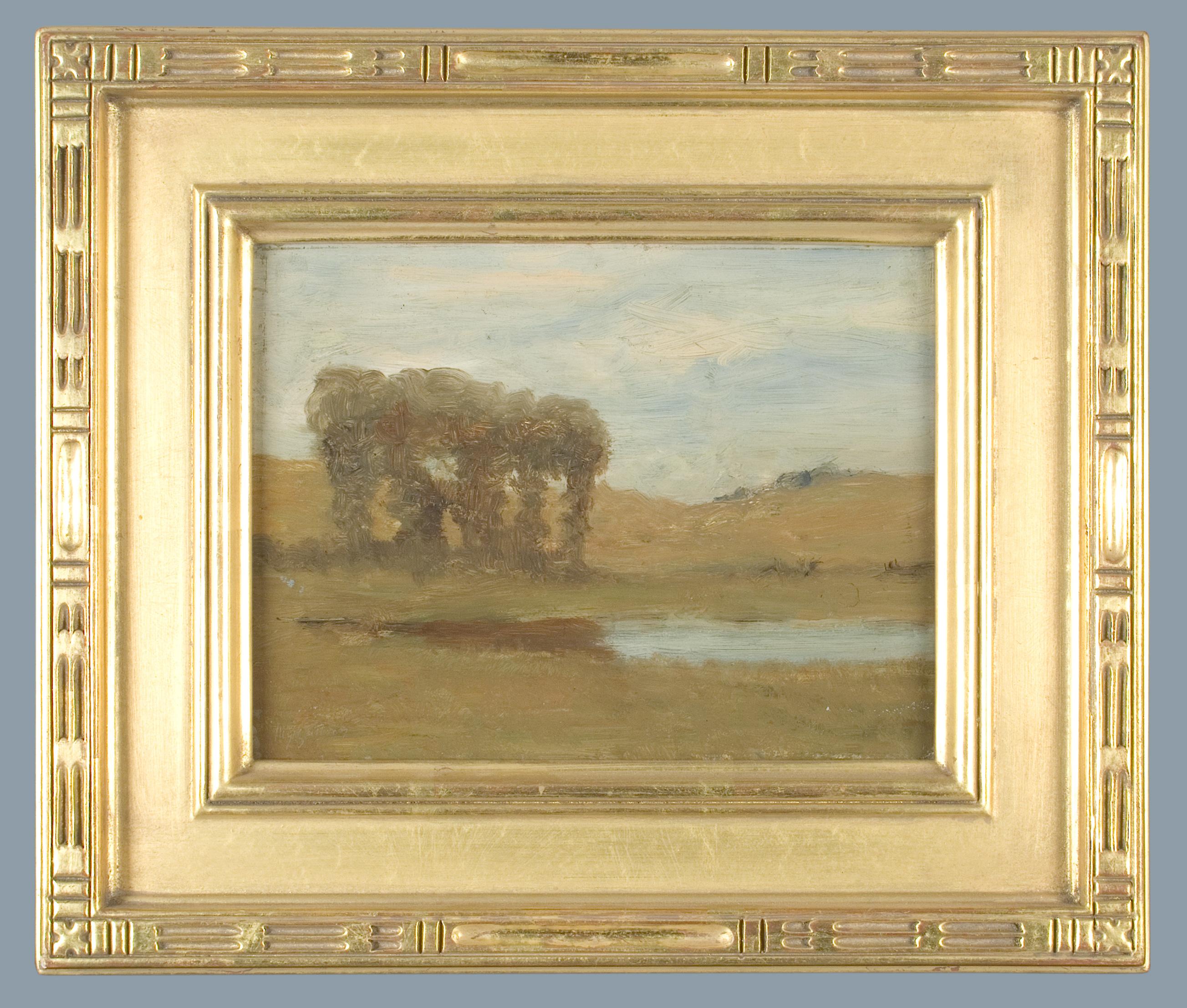
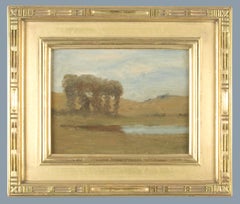
Small Tonalist Landscape by Robertson Mygatt
Located in Philadelphia, PA
Robertson K. Mygatt
(American, 1862-1919)
Trees by a Small Pond
Oil on panel, 5 1/8 x 6 3/4 inches
Framed: 9 1/2 x 11 1/2 inches (approx.)
Unsigned
The landscape painter and etcher...
Category
Early 1900s Tonalist Landscape Paintings
Materials
Oil, Panel
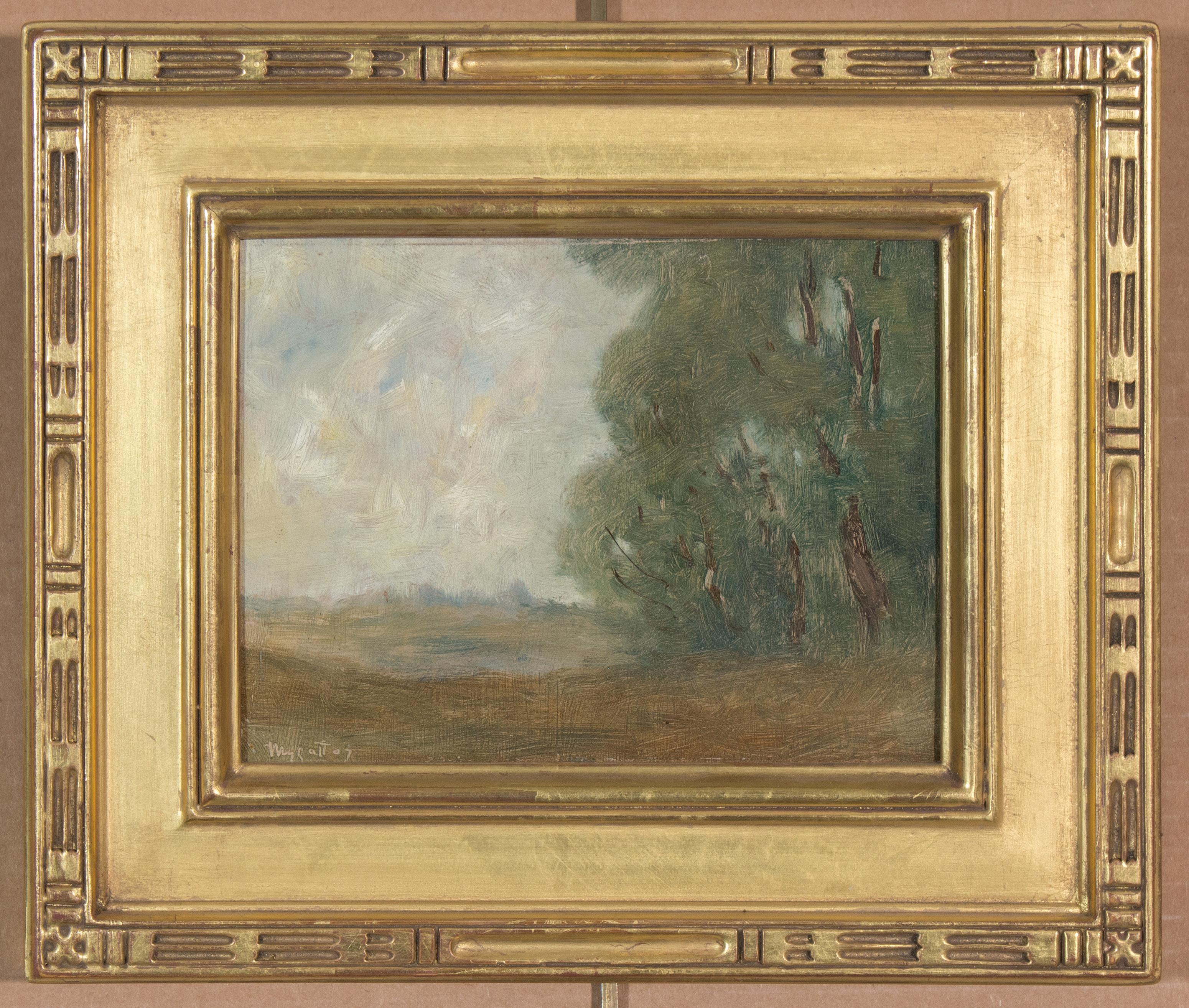
Landscape: the Uplands by Massachusetts artist Robertson Mygatt
Located in Philadelphia, PA
Robertson K. Mygatt
(American, 1862-1919)
Uplands
Oil on panel, 5 1/4 x 6 5/8 inches
FRAMED: 9 x 10 1/2 inches (approx.)
Exhibition label on verso: "Salamagundi Club/Thumb-box Exhibi...
Category
Early 1900s Tonalist Landscape Paintings
Materials
Oil, Panel
"The Low Lands"
By John Francis Murphy
Located in Lambertville, NJ
Jim’s of Lambertville is proud to offer this artwork.
Signed and Dated Lower Left
John Francis Murphy (1853 - 1921)
John Francis Murphy is increasingly recognized today as one o...
Category
Early 1900s Tonalist Landscape Paintings
Materials
Canvas, Oil