Want more images or videos?
Request additional images or videos from the seller
1 of 14

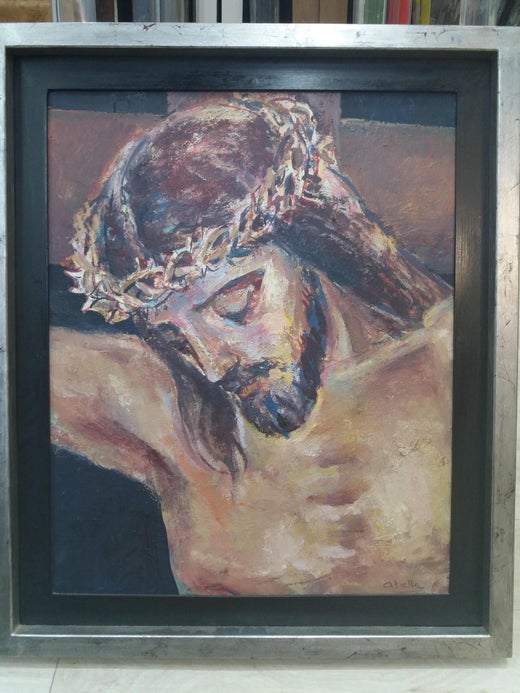
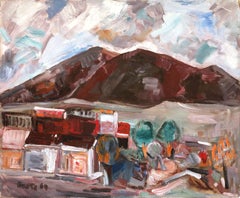
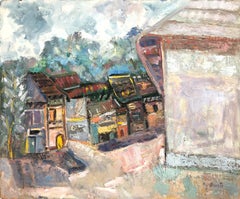
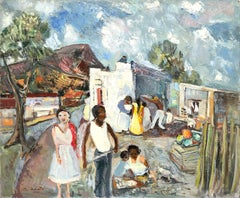
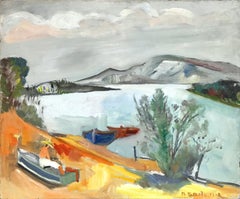
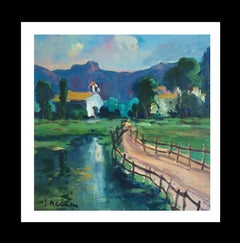
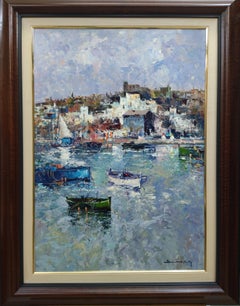
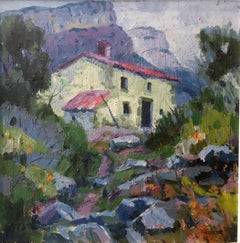
Juan Jose Abella Rubio
Abella Town Street Original landscape Cubist acrylic painting

1994

$1,950List Price

You May Also Like

"Mexican Countryside Landscape Mountain Scene with Trees" Expressionistic Style
By Michael Baxte
Located in New York, NY
A strong modernist oil painting depicted in 1962 by Russian painter Michael Baxte. Mostly known for his abstracted figures on canvas or street scenes, this piece is a wonderful repre...
Category

1960s Expressionist Landscape Paintings

Materials

Oil, Masonite

"Mexican Countryside Landscape Scene with Trees on Hills" Expressionistic Style
By Michael Baxte
Located in New York, NY
A strong modernist oil painting depicted in 1963 by Russian painter Michael Baxte. Mostly known for his abstracted figures on canvas or street scenes, this piece is a wonderful repre...
Category

1960s Expressionist Landscape Paintings

Materials

Oil, Masonite

"Landscape of a Village Near Mountains" Expressionistic Oil Painting on Masonite
By Michael Baxte
Located in New York, NY
A strong modernist oil painting depicted in 1969 by Russian painter Michael Baxte. Mostly known for his abstracted figures on canvas or street scenes, this piece is a wonderful representation of his bold still life paintings, with expressive use of color, shape, and form. Later in his career, Baxte explores Expressionism, infusing both European and North American stylistic trends. This piece is from later in his career, but we can feel this underlying style throughout. Art measures 18 x 21.75 inches Michael Posner Baxte was born in 1890 in the small town of Staroselje Belarus, Russia. For the first half of the 19th century it was a center of the Chabad movement of Hasidic Jews, but this group was gone by the middle of the 19th century. By the time the Baxte family immigrated to the United States at the beginning of the 20th century, the Jewish population numbered only on the hundreds. The native language of the Baxte family was Yiddish. It is likely that the death of Michael Baxte’s father triggered the family’s immigration. Three older brothers arrived in New York between 1903 and 1905. Michael and his mother, Rebecca, arrived in 1907. By 1910 Michael, his mother, and brother, Joseph, were living in New Orleans and may have spent some time on a Louisiana plantation. Around 1912, Michael Baxte returned to Europe to study the violin. In 1914 he, his mother, and Joseph moved to New York City. Meanwhile, in Algeria, a talented young woman painter, Violette Mege, was making history. Since for the first time, a woman won the prestigious Beaux Art competition in Algeria. At first, the awards committee denied her the prize but, with French government intervention, Mege eventually prevailed. She won again 3 years later and, in 1916, used the scholarship to visit the United States of America. When Violette came to New York, she met Baxte, who was, by then, an accomplished violinist, teacher, and composer. Baxte’s compositions were performed at the Tokyo Imperial Theater, and in 1922 he was listed in the American Jewish Yearbook as one of the prominent members of the American Jewish community. As a music teacher he encouraged individual expression. Baxte stated, “No pupil should ever be forced into imitation of the teacher. Art is a personal experience, and the teacher’s truest aim must be to awaken this light of personality through the patient light of science.” By 1920 Michael Baxte and Violette Mege were living together in Manhattan. Although they claimed to be living as husband and wife, it seems that their marriage did not become official until 1928. On their “unofficial” honeymoon around 1917, in Algiers, Baxte confided to her his ambition to paint. There and later in New Mexico where the wonderful steeped sunlight approximates the coloring of Algiers, she taught him his heart’s desire. He never had any other teacher. She never had any other pupil. For ten years she devoted all her time, energy, and ambition to teaching, encouraging, inspiring him. Then in 1928, their mutual strivings were rewarded, as his works were being chosen as one of the two winners in the Dudensing National Competition for American Painters. Out of 150 artists from across the country participated in the Dudensing, and Michael Posner Baxte and, Robert Fawcett, were the winners. In his 1924 naturalization application, he indicated that he was sometimes known as “Michael Posner Baxte.” One of the witnesses to his application was Bernard Karfiol, a Jewish American artist. That’s when Michael may...
Category

1960s Expressionist Landscape Paintings

Materials

Oil, Masonite

"Colorful Mexican Village Scene" Expressionistic Oil Painting on Masonite
By Michael Baxte
Located in New York, NY
A strong modernist oil painting depicted Circa 1960 by Russian painter Michael Baxte. Mostly known for his abstracted figures on canvas or street scenes, this piece is a wonderful representation of his bold still life paintings, with expressive use of color, shape, and form. Later in his career, Baxte explores Expressionism, infusing both European and North American stylistic trends. This piece is from later in his career, but we can feel this underlying style throughout. Art measures 18 x 21.75 inches Michael Posner Baxte was born in 1890 in the small town of Staroselje Belarus, Russia. For the first half of the 19th century it was a center of the Chabad movement of Hasidic Jews, but this group was gone by the middle of the 19th century. By the time the Baxte family immigrated to the United States at the beginning of the 20th century, the Jewish population numbered only on the hundreds. The native language of the Baxte family was Yiddish. It is likely that the death of Michael Baxte’s father triggered the family’s immigration. Three older brothers arrived in New York between 1903 and 1905. Michael and his mother, Rebecca, arrived in 1907. By 1910 Michael, his mother, and brother, Joseph, were living in New Orleans and may have spent some time on a Louisiana plantation. Around 1912, Michael Baxte returned to Europe to study the violin. In 1914 he, his mother, and Joseph moved to New York City. Meanwhile, in Algeria, a talented young woman painter, Violette Mege, was making history. Since for the first time, a woman won the prestigious Beaux Art competition in Algeria. At first, the awards committee denied her the prize but, with French government intervention, Mege eventually prevailed. She won again 3 years later and, in 1916, used the scholarship to visit the United States of America. When Violette came to New York, she met Baxte, who was, by then, an accomplished violinist, teacher, and composer. Baxte’s compositions were performed at the Tokyo Imperial Theater, and in 1922 he was listed in the American Jewish Yearbook as one of the prominent members of the American Jewish community. As a music teacher he encouraged individual expression. Baxte stated, “No pupil should ever be forced into imitation of the teacher. Art is a personal experience, and the teacher’s truest aim must be to awaken this light of personality through the patient light of science.” By 1920 Michael Baxte and Violette Mege were living together in Manhattan. Although they claimed to be living as husband and wife, it seems that their marriage did not become official until 1928. On their “unofficial” honeymoon around 1917, in Algiers, Baxte confided to her his ambition to paint. There and later in New Mexico where the wonderful steeped sunlight approximates the coloring of Algiers, she taught him his heart’s desire. He never had any other teacher. She never had any other pupil. For ten years she devoted all her time, energy, and ambition to teaching, encouraging, inspiring him. Then in 1928, their mutual strivings were rewarded, as his works were being chosen as one of the two winners in the Dudensing National Competition for American Painters. Out of 150 artists from across the country participated in the Dudensing, and Michael Posner Baxte and, Robert Fawcett, were the winners. In his 1924 naturalization application, he indicated that he was sometimes known as “Michael Posner Baxte.” One of the witnesses to his application was Bernard Karfiol, a Jewish American artist. That’s when Michael may...
Category

1960s Expressionist Landscape Paintings

Materials

Oil, Masonite

"Landscape Scene of Mexican Villagers" Expressionistic Oil Painting on Masonite
By Michael Baxte
Located in New York, NY
A strong modernist oil painting depicted in 1971 by Russian painter Michael Baxte. Mostly known for his abstracted figures on canvas or street scenes, this piece is a wonderful representation of his landscape paintings, with expressive use of color, shape, and form. Later in his career, Baxte explores Expressionism, infusing both European and North American stylistic trends. This piece is from later in his career, but we can feel this underlying style throughout. Art measures 18 x 21.75 inches Michael Posner Baxte was born in 1890 in the small town of Staroselje Belarus, Russia. For the first half of the 19th century it was a center of the Chabad movement of Hasidic Jews, but this group was gone by the middle of the 19th century. By the time the Baxte family immigrated to the United States at the beginning of the 20th century, the Jewish population numbered only on the hundreds. The native language of the Baxte family was Yiddish. It is likely that the death of Michael Baxte’s father triggered the family’s immigration. Three older brothers arrived in New York between 1903 and 1905. Michael and his mother, Rebecca, arrived in 1907. By 1910 Michael, his mother, and brother, Joseph, were living in New Orleans and may have spent some time on a Louisiana plantation. Around 1912, Michael Baxte returned to Europe to study the violin. In 1914 he, his mother, and Joseph moved to New York City. Meanwhile, in Algeria, a talented young woman painter, Violette Mege, was making history. Since for the first time, a woman won the prestigious Beaux Art competition in Algeria. At first, the awards committee denied her the prize but, with French government intervention, Mege eventually prevailed. She won again 3 years later and, in 1916, used the scholarship to visit the United States of America. When Violette came to New York, she met Baxte, who was, by then, an accomplished violinist, teacher, and composer. Baxte’s compositions were performed at the Tokyo Imperial Theater, and in 1922 he was listed in the American Jewish Yearbook as one of the prominent members of the American Jewish community. As a music teacher he encouraged individual expression. Baxte stated, “No pupil should ever be forced into imitation of the teacher. Art is a personal experience, and the teacher’s truest aim must be to awaken this light of personality through the patient light of science.” By 1920 Michael Baxte and Violette Mege were living together in Manhattan. Although they claimed to be living as husband and wife, it seems that their marriage did not become official until 1928. On their “unofficial” honeymoon around 1917, in Algiers, Baxte confided to her his ambition to paint. There and later in New Mexico where the wonderful steeped sunlight approximates the coloring of Algiers, she taught him his heart’s desire. He never had any other teacher. She never had any other pupil. For ten years she devoted all her time, energy, and ambition to teaching, encouraging, inspiring him. Then in 1928, their mutual strivings were rewarded, as his works were being chosen as one of the two winners in the Dudensing National Competition for American Painters. Out of 150 artists from across the country participated in the Dudensing, and Michael Posner Baxte and, Robert Fawcett, were the winners. In his 1924 naturalization application, he indicated that he was sometimes known as “Michael Posner Baxte.” One of the witnesses to his application was Bernard Karfiol, a Jewish American artist. That’s when Michael may...
Category

1960s Expressionist Landscape Paintings

Materials

Oil, Masonite

"Landscape Scene of Fisherman by Lake" Expressionistic Oil Painting on Masonite
By Michael Baxte
Located in New York, NY
A strong modernist oil painting depicted in 1963 by Russian painter Michael Baxte. Mostly known for his abstracted figures on canvas or street scenes, this piece is a wonderful representation of his figures in water landscapes with expressive use of color, shape, and form. Later in his career, Baxte explores Expressionism, infusing both European and North American stylistic trends. This piece is from later in his career, but we can feel this underlying style throughout. Art measures 18 x 21.75 inches Michael Posner Baxte was born in 1890 in the small town of Staroselje Belarus, Russia. For the first half of the 19th century it was a center of the Chabad movement of Hasidic Jews, but this group was gone by the middle of the 19th century. By the time the Baxte family immigrated to the United States at the beginning of the 20th century, the Jewish population numbered only on the hundreds. The native language of the Baxte family was Yiddish. It is likely that the death of Michael Baxte’s father triggered the family’s immigration. Three older brothers arrived in New York between 1903 and 1905. Michael and his mother, Rebecca, arrived in 1907. By 1910 Michael, his mother, and brother, Joseph, were living in New Orleans and may have spent some time on a Louisiana plantation. Around 1912, Michael Baxte returned to Europe to study the violin. In 1914 he, his mother, and Joseph moved to New York City. Meanwhile, in Algeria, a talented young woman painter, Violette Mege, was making history. Since for the first time, a woman won the prestigious Beaux Art competition in Algeria. At first, the awards committee denied her the prize but, with French government intervention, Mege eventually prevailed. She won again 3 years later and, in 1916, used the scholarship to visit the United States of America. When Violette came to New York, she met Baxte, who was, by then, an accomplished violinist, teacher, and composer. Baxte’s compositions were performed at the Tokyo Imperial Theater, and in 1922 he was listed in the American Jewish Yearbook as one of the prominent members of the American Jewish community. As a music teacher he encouraged individual expression. Baxte stated, “No pupil should ever be forced into imitation of the teacher. Art is a personal experience, and the teacher’s truest aim must be to awaken this light of personality through the patient light of science.” By 1920 Michael Baxte and Violette Mege were living together in Manhattan. Although they claimed to be living as husband and wife, it seems that their marriage did not become official until 1928. On their “unofficial” honeymoon around 1917, in Algiers, Baxte confided to her his ambition to paint. There and later in New Mexico where the wonderful steeped sunlight approximates the coloring of Algiers, she taught him his heart’s desire. He never had any other teacher. She never had any other pupil. For ten years she devoted all her time, energy, and ambition to teaching, encouraging, inspiring him. Then in 1928, their mutual strivings were rewarded, as his works were being chosen as one of the two winners in the Dudensing National Competition for American Painters. Out of 150 artists from across the country participated in the Dudensing, and Michael Posner Baxte and, Robert Fawcett, were the winners. In his 1924 naturalization application, he indicated that he was sometimes known as “Michael Posner Baxte.” One of the witnesses to his application was Bernard Karfiol, a Jewish American artist. That’s when Michael may...
Category

1960s Expressionist Landscape Paintings

Materials

Oil, Masonite

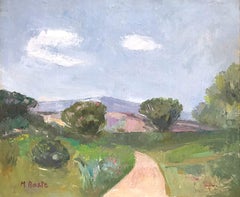
"Countryside Landscape Hills Scene with Path" Expressionistic Style Oil Painting
By Michael Baxte
Located in New York, NY
A strong modernist oil painting depicted in the Mid Century by Russian painter Michael Baxte. Mostly known for his abstracted figures on canvas or street scenes, this piece is a wonderful representation of his landscapes with expressive use of color, shape, and form. Later in his career, Baxte explores Expressionism, infusing both European and North American stylistic trends. Art measures 15 x 18 inches Michael Posner Baxte was born in 1890 in the small town of Staroselje Belarus, Russia. For the first half of the 19th century, it was a center of the Chabad movement of Hasidic Jews, but this group was gone by the middle of the 19th century. By the time the Baxte family immigrated to the United States at the beginning of the 20th century, the Jewish population numbered only on the hundreds. The native language of the Baxte family was Yiddish. It is likely that the death of Michael Baxte’s father triggered the family’s immigration. Three older brothers arrived in New York between 1903 and 1905. Michael and his mother, Rebecca, arrived in 1907. By 1910 Michael, his mother, and brother, Joseph, were living in New Orleans and may have spent some time on a Louisiana plantation. Around 1912, Michael Baxte returned to Europe to study the violin. In 1914 he, his mother, and Joseph moved to New York City. Meanwhile, in Algeria, a talented young woman painter, Violette Mege, was making history. For the first time, a woman won the prestigious Beaux Art competition in Algeria. At first, the awards committee denied her the prize but, with French government intervention, Mege eventually prevailed. She won again 3 years later and, in 1916, used the scholarship to visit the United States of America. When Violette came to New York, she met Baxte, who was, by then, an accomplished violinist, teacher, and composer. Baxte’s compositions were performed at the Tokyo Imperial Theater, and in 1922 he was listed in the American Jewish Yearbook as one of the prominent members of the American Jewish community. As a music teacher, he encouraged individual expression. Baxte stated, “No pupil should ever be forced into the imitation of the teacher. Art is a personal experience, and the teacher’s truest aim must be to awaken this light of personality through the patient's light of science.” By 1920 Michael Baxte and Violette Mege were living together in Manhattan. Although they claimed to be living as husband and wife, it seems that their marriage did not become official until 1928. On their “unofficial” honeymoon around 1917, in Algiers, Baxte confided to her his ambition to paint. There and later in New Mexico where the wonderful steeped sunlight approximates the coloring of Algiers, she taught him his heart’s desire. He never had any other teacher. She never had any other pupil. For ten years she devoted all her time, energy, and ambition to teaching, encouraging, inspiring him. Then in 1928, their mutual strivings were rewarded, as his works were being chosen as one of the two winners in the Dudensing National Competition for American Painters. Out of 150 artists from across the country participated in the Dudensing, and Michael Posner Baxte and, Robert Fawcett...
Category

Mid-20th Century Expressionist Landscape Paintings

Materials

Oil, Masonite

"Mexican Landscape Scene of Mother with Children" Expressionistic Style Painting
By Michael Baxte
Located in New York, NY
A strong modernist oil painting depicted in 1962 by Russian painter Michael Baxte. Mostly known for his abstracted figures on canvas or street scenes, this piece is a wonderful representation of his portraits in countryside landscapes with expressive use of color, shape, and form. Later in his career, Baxte explores Expressionism, infusing both European and North American stylistic trends. Art measures 21.25 x 25.5 inches Michael Posner Baxte was born in 1890 in the small town of Staroselje Belarus, Russia. For the first half of the 19th century, it was a center of the Chabad movement of Hasidic Jews, but this group was gone by the middle of the 19th century. By the time the Baxte family immigrated to the United States at the beginning of the 20th century, the Jewish population numbered only on the hundreds. The native language of the Baxte family was Yiddish. It is likely that the death of Michael Baxte’s father triggered the family’s immigration. Three older brothers arrived in New York between 1903 and 1905. Michael and his mother, Rebecca, arrived in 1907. By 1910 Michael, his mother, and brother, Joseph, were living in New Orleans and may have spent some time on a Louisiana plantation. Around 1912, Michael Baxte returned to Europe to study the violin. In 1914 he, his mother, and Joseph moved to New York City. Meanwhile, in Algeria, a talented young woman painter, Violette Mege, was making history. For the first time, a woman won the prestigious Beaux Art competition in Algeria. At first, the awards committee denied her the prize but, with French government intervention, Mege eventually prevailed. She won again 3 years later and, in 1916, used the scholarship to visit the United States of America. When Violette came to New York, she met Baxte, who was, by then, an accomplished violinist, teacher, and composer. Baxte’s compositions were performed at the Tokyo Imperial Theater, and in 1922 he was listed in the American Jewish Yearbook as one of the prominent members of the American Jewish community. As a music teacher, he encouraged individual expression. Baxte stated, “No pupil should ever be forced into the imitation of the teacher. Art is a personal experience, and the teacher’s truest aim must be to awaken this light of personality through the patient's light of science.” By 1920 Michael Baxte and Violette Mege were living together in Manhattan. Although they claimed to be living as husband and wife, it seems that their marriage did not become official until 1928. On their “unofficial” honeymoon around 1917, in Algiers, Baxte confided to her his ambition to paint. There and later in New Mexico where the wonderful steeped sunlight approximates the coloring of Algiers, she taught him his heart’s desire. He never had any other teacher. She never had any other pupil. For ten years she devoted all her time, energy, and ambition to teaching, encouraging, inspiring him. Then in 1928, their mutual strivings were rewarded, as his works were being chosen as one of the two winners in the Dudensing National Competition for American Painters. Out of 150 artists from across the country participated in the Dudensing, and Michael Posner Baxte and, Robert Fawcett...
Category

1960s Expressionist Figurative Paintings

Materials

Oil, Masonite

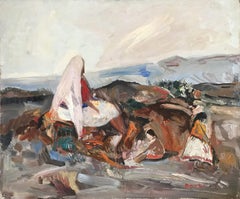
"Mexican Villagers Scene with Man on a Horse" Expressionistic Style Oil Painting
By Michael Baxte
Located in New York, NY
A strong modernist oil painting depicted in the Mid Century by Russian painter Michael Baxte. Mostly known for his abstracted figures on canvas or street scenes, this piece is a wonderful representation of his portraits in village landscapes with expressive use of color, shape, and form. Later in his career, Baxte explores Expressionism, infusing both European and North American stylistic trends. Art measures 25.5 x 21.25 inches Michael Posner Baxte was born in 1890 in the small town of Staroselje Belarus, Russia. For the first half of the 19th century, it was a center of the Chabad movement of Hasidic Jews, but this group was gone by the middle of the 19th century. By the time the Baxte family immigrated to the United States at the beginning of the 20th century, the Jewish population numbered only on the hundreds. The native language of the Baxte family was Yiddish. It is likely that the death of Michael Baxte’s father triggered the family’s immigration. Three older brothers arrived in New York between 1903 and 1905. Michael and his mother, Rebecca, arrived in 1907. By 1910 Michael, his mother, and brother, Joseph, were living in New Orleans and may have spent some time on a Louisiana plantation. Around 1912, Michael Baxte returned to Europe to study the violin. In 1914 he, his mother, and Joseph moved to New York City. Meanwhile, in Algeria, a talented young woman painter, Violette Mege, was making history. For the first time, a woman won the prestigious Beaux Art competition in Algeria. At first, the awards committee denied her the prize but, with French government intervention, Mege eventually prevailed. She won again 3 years later and, in 1916, used the scholarship to visit the United States of America. When Violette came to New York, she met Baxte, who was, by then, an accomplished violinist, teacher, and composer. Baxte’s compositions were performed at the Tokyo Imperial Theater, and in 1922 he was listed in the American Jewish Yearbook as one of the prominent members of the American Jewish community. As a music teacher, he encouraged individual expression. Baxte stated, “No pupil should ever be forced into the imitation of the teacher. Art is a personal experience, and the teacher’s truest aim must be to awaken this light of personality through the patient's light of science.” By 1920 Michael Baxte and Violette Mege were living together in Manhattan. Although they claimed to be living as husband and wife, it seems that their marriage did not become official until 1928. On their “unofficial” honeymoon around 1917, in Algiers, Baxte confided to her his ambition to paint. There and later in New Mexico where the wonderful steeped sunlight approximates the coloring of Algiers, she taught him his heart’s desire. He never had any other teacher. She never had any other pupil. For ten years she devoted all her time, energy, and ambition to teaching, encouraging, inspiring him. Then in 1928, their mutual strivings were rewarded, as his works were being chosen as one of the two winners in the Dudensing National Competition for American Painters. Out of 150 artists from across the country participated in the Dudensing, and Michael Posner Baxte and, Robert Fawcett...
Category

Mid-20th Century Expressionist Figurative Paintings

Materials

Oil, Masonite

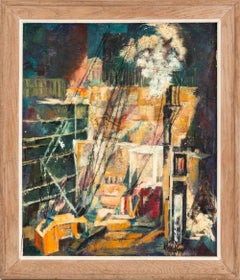
"Urban Renewal"
Located in Astoria, NY
Katherine S. Kirkman (American, XX-XXI), "Urban Renewal", Oil on Masonite, signed lower right, titled and signed to verso, wood frame. Image: 23.5" H x 19.5" W; frame: 26" H x 24" W....
Category

Late 20th Century Expressionist Landscape Paintings

Materials

Masonite, Oil

"Urban Renewal"
$650 Sale Price
45% Off
H 26 in W 24 in D 1 in

More From This Seller

View All
Meneses. MALLORCA. square. LANDSCAPE- original acrylic wodd painting
By Josep Meneses
Located in CORAL GABLES - MIAMI, FL
MAJORCA. LANDSCAPE- original acrylic wodd painting. This Catalan painter, settled for years in Mallorca, offers a series of landscapes in which the natural is treated in the impress...
Category

Late 20th Century Expressionist Landscape Paintings

Materials

Wood, Oil

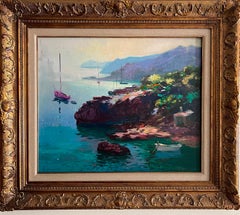
Benavente Solís 15 Landscape - original expressionist
By Benavente Solis
Located in CORAL GABLES - MIAMI, FL
Landscape original expressionist painting. frame Work of the Spanish artist BENAVENTE SOLIS. Perfect state . During its first exhibition in Paris, the French press catalogs it lik...
Category

1990s Expressionist Landscape Paintings

Materials

Wood, Oil

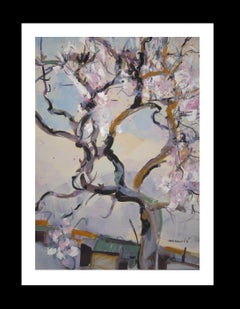
J. Meunie Tree Almond Blossom Vertical original acrylic painting
By Julen Meunie
Located in CORAL GABLES - MIAMI, FL
" ALMOND BLOSSOM original acrylic painting. framed Julien was born in 1948 in Vichy, France. He studied art and theater in Clermont-Ferrand at the same time as finishing his degree ...
Category

Late 20th Century Expressionist Landscape Paintings

Materials

Wood, Oil

Codorniu 25 Majorca expressionist acrylic painting
By Daniel Codorniu
Located in CORAL GABLES - MIAMI, FL
original expressionist acrylic painting. frame Painter and draftsman born in Ciutat de Mallorca in 1943. In 1959 moved his address to Barcelona. He was a student of the School of A...
Category

21st Century and Contemporary Expressionist Landscape Paintings

Materials

Canvas, Oil

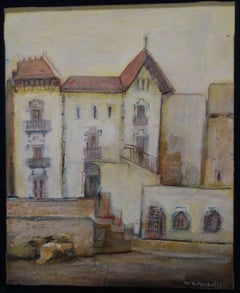
Raventos CADAQUES Small Vertical original expressionist acrylic canvas
By Maria Asuncion Raventos
Located in CORAL GABLES - MIAMI, FL
RAVENTÓS Mª Assumpció – (San Sadurní d’Anoia, Barcelona 1930). Raventos trained at the elite Sant Jordi School of Fine Arts in Barcelona. Raventós expanded her studies in etching and...
Category

Late 20th Century Expressionist Landscape Paintings

Materials

Canvas, Oil

Tarrasso square. House in the countryside. Original acrylic painting
Located in CORAL GABLES - MIAMI, FL
Les Guilleries. Original oil on canvas Casimiro Martínez Tarrassó, a painter known simply as Tarrassó. He was trained at the La Llotja School in Barcelona. He completed his studies i...
Category

1940s Expressionist Landscape Paintings

Materials

Canvas, Oil

Still Thinking About These?

All Recently Viewed