1 of 7
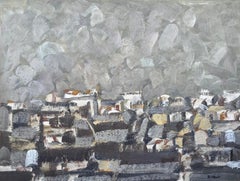
LeConte StewartSouth Weber, 19401940
1940
$29,500List Price
About the Item
- Creator:LeConte Stewart (1891 - 1990, American)
- Creation Year:1940
- Dimensions:Height: 12 in (30.48 cm)Width: 16 in (40.64 cm)
- Medium:
- Period:
- Condition:
- Gallery Location:Salt Lake City, UT
- Reference Number:1stDibs: LU386505012
Authenticity Guarantee
In the unlikely event there’s an issue with an item’s authenticity, contact us within 1 year for a full refund. DetailsMoney-Back Guarantee
If your item is not as described, is damaged in transit, or does not arrive, contact us within 7 days for a full refund. Details24-Hour Cancellation
You have a 24-hour grace period in which to reconsider your purchase, with no questions asked.Vetted Professional Sellers
Our world-class sellers must adhere to strict standards for service and quality, maintaining the integrity of our listings.Price-Match Guarantee
If you find that a seller listed the same item for a lower price elsewhere, we’ll match it.Trusted Global Delivery
Our best-in-class carrier network provides specialized shipping options worldwide, including custom delivery.You May Also Like
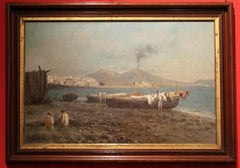
Italian Impressionist Oil on Board Marine Landscape Painting Naples Bay View
By Francesco Coppola Castaldo
Located in Firenze, IT
Everyday fishermen life is captured in this wonderful Italian impressionist late 19th century oil painting on thin board titled fishermen ashore. We love the neutral and natural colo...
Category
Late 19th Century Impressionist Landscape Paintings
Materials
Oil, Board
$4,179
H 20.08 in W 28.75 in D 1.19 in
Home Safe
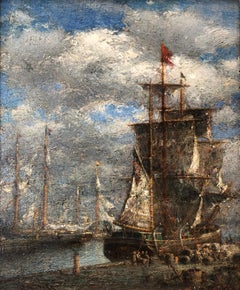
By James Gale Tyler
Located in Greenville, DE
Very well executed seascape. Alternate title "In Point" inscribed on the rear. 17 x 15in in frame, including linen liner. ...
Category
Late 19th Century Impressionist Landscape Paintings
Materials
Oil, Board
Native American Encampment
By William Harnden
Located in Greenville, DE
Very well executed work by American artist William Harnden who specialized in Native American subjects. 23 3/4 x 29 1/2 in excellent condition frame.
Category
Mid-20th Century Realist Landscape Paintings
Materials
Oil, Board

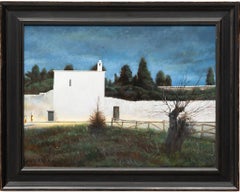
"Passage to Town, " Oil on Board
By Bruno Surdo
Located in Chicago, IL
Chicago-based fine art painter Bruno A. Surdo is classically trained in drawing and oil painting in the tradition of Renaissance masters. With strong command of the human form, Surdo...
Category
21st Century and Contemporary Old Masters Landscape Paintings
Materials
Oil, Board
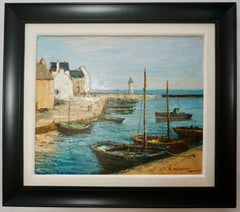
Port Brenton
By Gabriel Deschamps
Located in Berlin, MD
Gabriel Deschamps (1919 - , France) "Port Brenton". Oil on board, framed. The frame is 21” x 24," the board is 15" high by 18" wide. This is a beautiful port scene with blues, gre...
Category
Late 20th Century French School Landscape Paintings
Materials
Oil, Board
New England Sunrise, 1910 by Lockwood DeForest (American, 1850-1932)
Located in New York, NY
"New England Sunrise," 1910 by Hudson River School painter Lockwood DeForest (American, 1850-1932) is oil on artists card-stock and measures 9.75 x 14 inches. The work is signed by DeForest and dated Sept. 17, 1910 at lower left. The work is framed in an elegant, period appropriate frame, and ready to hang.
Lockwood de Forest was born in New York in 1850 to a prominent family. He grew up in Greenwich Village and on Long Island at the family summer estate in Cold Spring Harbor. As was customary for a cultivated family in the Gilded Age, the de Forests made frequent trips abroad. Excursions to the great museums, which were prominent on the de Forests agenda, deepened the young Lockwood's familiarity with European painting and sculpture. Though he had begun drawing and painting somewhat earlier, it was during a visit to Rome in 1868 that nineteen-year-old de Forest first began to study art seriously, taking painting lessons from the Italian landscapist Hermann David Salomon Corrodi (1844–1905). More importantly, on the same trip, Lockwood met one of America’s most celebrated painters, (and his maternal great-
uncle by marriage) Frederic Edwin Church (1826–1900), who quickly became his mentor. DeForest accompanied Church on sketching trips around Italy and continued this practice when they both returned to America in 1869. Early on in his career, de Forest made a habit of recording the date and often the place of his oil sketches, as to create a visual diary of his travels. Lockwood’s profession as a landscape painter can be primarily attributed to Frederic E. Church and his belief in the young artist’s talent.
De Forest often visited Church in the Hudson River community of Catskill where, in addition to sketching trips and afternoons of painting, he assisted with the architectural drawings and planning of Olana. In 1872, de Forest took a studio at the Tenth Street Studio Building in New York. During these formative years de Forest counted among his friend’s artists such as Sanford Robinson Gifford (1823–80), George Henry Yewell (1830–1923), John Frederick Kensett (1816–72), Jervis McEntee (1828–91), and Walter Launt Palmer (1854–1932).
Over the next decade de Forest experienced success as a painter. He exhibited for the first time at the National Academy of Design in 1872, and made two more painting trips abroad, in 1875–76 and 1877–78, traveling to the major continental capitals but also the Middle East and North Africa. His trip to the Middle East and the library at Church’s home, Olana, established his interest in design during his mid-twenties. From about 1878 to 1902, landscape painting was overshadowed by his activities and preoccupation with East Indian architecture and décor, a style that became quite fashionable in late nineteenth century America. From 1879-1883, de Forest founded Associated Artists along with Louis Comfort Tiffany, Candace Wheeler...
Category
Early 20th Century Hudson River School Landscape Paintings
Materials
Oil, Board
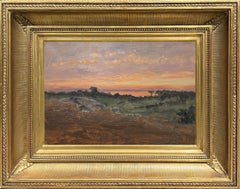
$15,000
H 9.75 in W 14 in
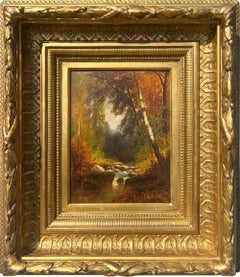
Adirondack Stream by Hudson River artist Joseph Antonio Hekking (1830-1903)
By Joseph Antonio Hekking
Located in New York, NY
Painted by Hudson River School artist Joseph Antonio Hekking (1830-1903), "Adirondack Stream in Fall" is oil on board and measures 8.5 x 6.5 inches. The painting is signed at the low...
Category
19th Century Hudson River School Landscape Paintings
Materials
Oil, Board
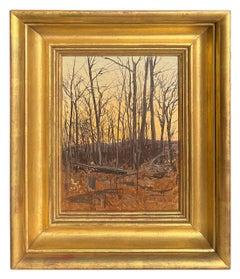
Dusk Forest Scene, Catskills by Lockwood DeForest (American, 1850-1932)
Located in New York, NY
"Dusk Forest Scene, Catskills," 1875 by Hudson River School painter Lockwood DeForest (American, 1850-1932) is oil on artists card-stock and measures 9.5 x 7 inches. The work is signed by DeForest, and dated May 13, 1875 at lower right. The work is framed in an elegant, period appropriate frame, and ready to hang.
Lockwood DeForest was born in New York in 1850 to a prominent family. He grew up in Greenwich Village and on Long Island at the family summer estate in Cold Spring Harbor. As was customary for a cultivated family in the Gilded Age, the DeForests made frequent trips abroad. Excursions to the great museums, which were prominent on the DeForests agenda, deepened the young Lockwood's familiarity with European painting and sculpture. Though he had begun drawing and painting somewhat earlier, it was during a visit to Rome in 1868 that nineteen-year-old DeForest first began to study art seriously, taking painting lessons from the Italian landscapist Hermann David Salomon Corrodi (1844–1905). More importantly, on the same trip, Lockwood met one of America’s most celebrated painters, (and his maternal great-
uncle by marriage) Frederic Edwin Church (1826–1900), who quickly became his mentor. DeForest accompanied Church on sketching trips around Italy and continued this practice when they both returned to America in 1869. Early on in his career, de Forest made a habit of recording the date and often the place of his oil sketches, as to create a visual diary of his travels. Lockwood’s profession as a landscape painter can be primarily attributed to Frederic E. Church and his belief in the young artist’s talent.
DeForest often visited Church in the Hudson River community of Catskill where, in addition to sketching trips and afternoons of painting, he assisted with the architectural drawings and planning of Olana. In 1872, DeForest took a studio at the Tenth Street Studio Building in New York. During these formative years DeForest counted among his friend’s artists such as Sanford Robinson Gifford (1823–80), George Henry Yewell (1830–1923), John Frederick Kensett (1816–72), Jervis McEntee (1828–91), and Walter Launt Palmer (1854–1932).
Over the next decade DeForest experienced success as a painter. He exhibited for the first time at the National Academy of Design in 1872, and made two more painting trips abroad, in 1875–76 and 1877–78, traveling to the major continental capitals but also the Middle East and North Africa. His trip to the Middle East and the library at Church’s home, Olana, established his interest in design during his mid-twenties. From about 1878 to 1902, landscape painting was overshadowed by his activities and preoccupation with East Indian architecture and décor, a style that became quite fashionable in late nineteenth century America. From 1879-1883, de Forest founded Associated Artists along with Louis Comfort Tiffany, Candace Wheeler...
Category
19th Century Hudson River School Landscape Paintings
Materials
Oil, Board
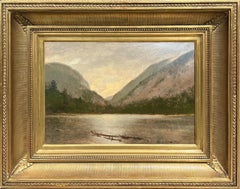
Hudson Highlands by Lockwood DeForest (American, 1850-1932)
Located in New York, NY
"Hudson Highlands," by Hudson River School painter Lockwood DeForest (American, 1850-1932) is oil on artists card-stock and measures 9.5 x 14 inches. The work is framed in an elegant, period appropriate frame, and ready to hang.
Lockwood de Forest was born in New York in 1850 to a prominent family. He grew up in Greenwich Village and on Long Island at the family summer estate in Cold Spring Harbor. As was customary for a cultivated family in the Gilded Age, the de Forests made frequent trips abroad. Excursions to the great museums, which were prominent on the de Forests agenda, deepened the young Lockwood's familiarity with European painting and sculpture. Though he had begun drawing and painting somewhat earlier, it was during a visit to Rome in 1868 that nineteen-year-old de Forest first began to study art seriously, taking painting lessons from the Italian landscapist Hermann David Salomon Corrodi (1844–1905). More importantly, on the same trip, Lockwood met one of America’s most celebrated painters, (and his maternal great-
uncle by marriage) Frederic Edwin Church (1826–1900), who quickly became his mentor. DeForest accompanied Church on sketching trips around Italy and continued this practice when they both returned to America in 1869. Early on in his career, de Forest made a habit of recording the date and often the place of his oil sketches, as to create a visual diary of his travels. Lockwood’s profession as a landscape painter can be primarily attributed to Frederic E. Church and his belief in the young artist’s talent.
De Forest often visited Church in the Hudson River community of Catskill where, in addition to sketching trips and afternoons of painting, he assisted with the architectural drawings and planning of Olana. In 1872, de Forest took a studio at the Tenth Street Studio Building in New York. During these formative years de Forest counted among his friend’s artists such as Sanford Robinson Gifford (1823–80), George Henry Yewell (1830–1923), John Frederick Kensett (1816–72), Jervis McEntee (1828–91), and Walter Launt Palmer (1854–1932).
Over the next decade de Forest experienced success as a painter. He exhibited for the first time at the National Academy of Design in 1872, and made two more painting trips abroad, in 1875–76 and 1877–78, traveling to the major continental capitals but also the Middle East and North Africa. His trip to the Middle East and the library at Church’s home, Olana, established his interest in design during his mid-twenties. From about 1878 to 1902, landscape painting was overshadowed by his activities and preoccupation with East Indian architecture and décor, a style that became quite fashionable in late nineteenth century America. From 1879-1883, de Forest founded Associated Artists along with Louis Comfort Tiffany, Candace Wheeler...
Category
19th Century Hudson River School Landscape Paintings
Materials
Oil, Board
Vue de Paris/View of Paris
Located in Montfort l’Amaury, FR
Reference number F296
Framed with a natural oak floated frame
51 x 66 cm frame included (46 x 61 cm without frame)
This work is painted with oil on a paper that is mounted on a canva...
Category
1990s French School Figurative Paintings
Materials
Oil, Board
Still Thinking About These?
All Recently ViewedMore Ways To Browse
Leconte Stewart
Agave Painting
Alfred De Breanski Sr
All Flower Art
Andre Demonchy
Antique Oil Painting Waves
Aspen Tree Paintings
Athens Painting
Bentley Painting Oil
Bermuda Painting
British Guiana
California Poppy Art
Coit Tower
Colorado Western Landscape
Dutch Windmills Oil Painting
Ecuador Painting
Edward Hill
Errol Barron