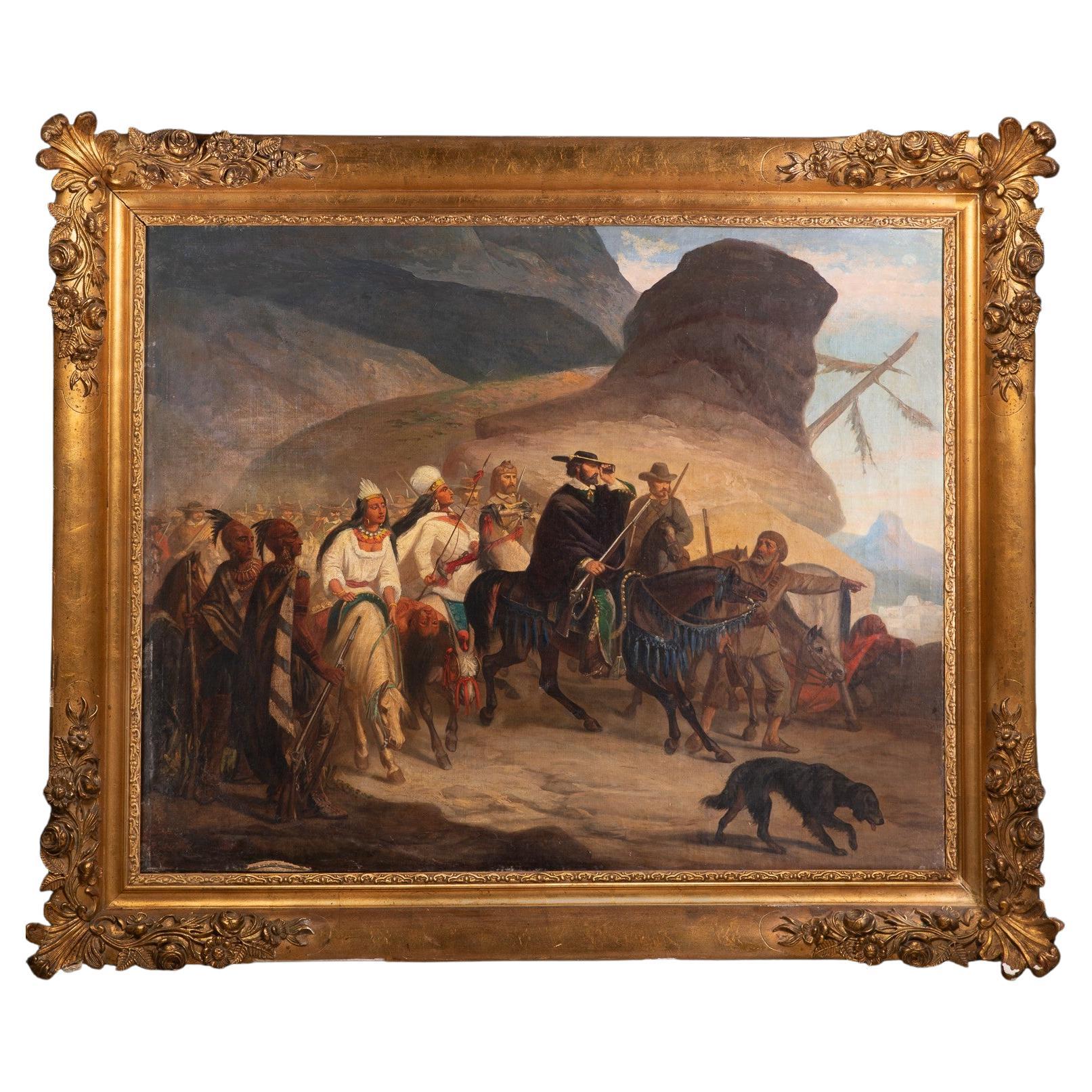
Items Similar to Allegorical Scene of the Lewis and Clark Expedition (1804–1806) .
Want more images or videos?
Request additional images or videos from the seller
1 of 7
Allegorical Scene of the Lewis and Clark Expedition (1804–1806) .-
-
$41,605.92
£30,967.08
€35,000
CA$57,703.25
A$62,122.80
CHF 33,267.97
MX$748,557.58
NOK 419,749.55
SEK 384,138.63
DKK 266,764.67
About the Item
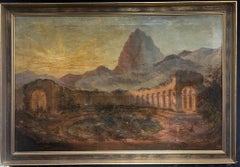
Allegorical Scene of the Lewis and Clark Expedition (1804–1806)
Attributed to Léon Cogniet (1794–1880)
This ambitious and romanticized composition captures a defining moment in American history: the Lewis and Clark Expedition, commissioned by President Thomas Jefferson to chart a route to the Pacific Ocean through the newly acquired western territories. The painting centers on meticulously rendered figures—Lewis, Clark, Seaman (?), Charbonneau, Sacajawea, and her brother—each embodying the mythos surrounding the legendary journey.
A student of Pierre-Narcisse Guérin, like Delacroix and Géricault, Léon Cogniet worked during a stylistic transition, moving away from strict Neoclassicism while still retaining elements of it. His early work, Briséis Weeping over Patroclus, though unsuccessful in securing the Prix de Rome in 1815, reveals his classical roots and emerging coloristic sensibility. During his stay in Rome (1817–1822), he painted Castor and Pollux Rescuing Helen, a competition piece with a somber, mannerist tone influenced by Guérin.
Upon returning to France, Cogniet gained recognition, particularly at the Salon of 1824 with Scene of the Massacre of the Innocents, which marked a departure from the idealized narratives of Neoclassicism. Though he received official commissions and honors such as the Légion d'Honneur, he remained a discreet contributor to major public projects like the Musée de Versailles.
Highly praised by Baudelaire in 1845, Cogniet's portraits were favored over his historical vignettes. His works are held in various collections, including the Musée des Beaux-Arts d’Orléans. He also created a number of inventive landscape studies, showcasing his versatility and imaginative approach.
Provenance:
Marc Arthur Kohn Auctions, Hôtel Le Bristol, Paris, July 2, 2013
Cornelius Engelen, Leuven, Belgium
Private Collection, Belgium
Scène allégorique de l’expédition de Lewis et Clark (1804–1806)
Attribuée à Léon Cogniet (1794–1880)
Cette composition ambitieuse et idéalisée illustre un moment fondateur de l’histoire américaine : l’expédition de Lewis et Clark, commandée par le président Thomas Jefferson afin d’explorer les territoires de l’Ouest jusqu’à l’océan Pacifique. Le peintre met en scène des figures centrales soigneusement détaillées — Lewis, Clark, Charbonneau, Sacajawea et son frère — chacun incarnant un aspect du mythe entourant cette expédition légendaire.
Élève de Pierre-Narcisse Guérin, tout comme Delacroix et Géricault, Léon Cogniet évolue dans une période de transition stylistique, s’éloignant du néo-classicisme tout en en conservant certains éléments. Son œuvre Briséis pleurant Patrocle, qui ne lui vaut pas le Prix de Rome en 1815, témoigne encore de conventions classiques, bien que l’on y perçoive une sensibilité coloriste naissante. Lors de son séjour à Rome (1817–1822), il peint Castor et Pollux délivrant Hélène, un tableau de concours à l’atmosphère funèbre et maniériste, sous l’influence de Guérin.
De retour en France, Cogniet connaît le succès, notamment au Salon de 1824 avec sa Scène du massacre des Innocents, qui marque un rejet des canons idéalistes du néo-classicisme. Bien qu’il reçoive des commandes officielles et soit décoré de la Légion d’Honneur, il reste un contributeur discret aux grands chantiers publics tels que le Musée de Versailles.
Baudelaire loue particulièrement ses portraits, qu’il préfère à ses scènes historiques. Plusieurs de ses œuvres sont conservées au Musée des Beaux-Arts d’Orléans. Cogniet s’est également distingué par la fraîcheur et l’inventivité de ses nombreuses études de paysages.
Provenance :
Vente aux enchères Marc Arthur Kohn, Hôtel Le Bristol, Paris, 2 juillet 2013
Cornelius Engelen, Louvain, Belgique
Collection privée, Belgique
Allegorische scène van de expeditie van Lewis en Clark (1804–1806)
Toegeschreven aan Léon Cogniet (1794–1880)
Deze ambitieuze en geromantiseerde compositie verbeeldt een bepalend moment in de Amerikaanse geschiedenis: de expeditie van Lewis en Clark, in opdracht van president Thomas Jefferson om de westelijke gebieden van het continent tot aan de Grote Oceaan te verkennen. De schilder brengt centraal in beeld gedetailleerde figuren — Lewis, Clark, Charbonneau, Sacajawea en haar broer — die elk een aspect van de mythe rond deze legendarische reis vertegenwoordigen.
Léon Cogniet, leerling van Pierre-Narcisse Guérin, net als Delacroix en Géricault, werkte in een periode van stilistische overgang waarin hij zich geleidelijk verwijderde van het neoclassicisme, zonder het volledig los te laten. Zijn werk Briséis treurend om Patroclus, dat hem in 1815 de Prix de Rome niet opleverde, toont nog klassieke conventies, hoewel er al een gevoel voor kleurgebruik zichtbaar is. Tijdens zijn verblijf in Rome (1817–1822) schilderde hij Castor en Pollux bevrijden Helena, een wedstrijdstuk met een sombere, maniëristische sfeer, beïnvloed door Guérin.
Na zijn terugkeer in Frankrijk kreeg Cogniet erkenning, vooral op de Salon van 1824 met Scène van de kindermoord, waarin hij afstand neemt van de idealistische en totaliserende benadering van het neoclassicisme. Hoewel hij officiële opdrachten en de Légion d’Honneur ontving, bleef zijn rol in grote staatsprojecten zoals het Musée de Versailles bescheiden.
Baudelaire prees vooral zijn portretten, die hij verkoos boven Cogniets historische scènes. Verschillende van zijn werken bevinden zich in het Musée des Beaux-Arts in Orléans. Cogniet onderscheidde zich ook met zijn levendige en inventieve landschapstudies.
Herkomst:
Veiling Marc Arthur Kohn, Hôtel Le Bristol, Parijs, 2 juli 2013
Cornelius Engelen, Leuven, België
Particuliere collectie, België
Allegorische Szene der Lewis-und-Clark-Expedition (1804–1806)
Zugeschrieben Léon Cogniet (1794–1880)
Diese ambitionierte und romantisierte Komposition zeigt ein zentrales Kapitel der amerikanischen Geschichte: die Lewis-und-Clark-Expedition, die von Präsident Thomas Jefferson in Auftrag gegeben wurde, um die westlichen Gebiete des nordamerikanischen Kontinents bis zum Pazifischen Ozean zu erkunden. Im Mittelpunkt des Bildes stehen sorgfältig ausgearbeitete Figuren – Lewis, Clark, Charbonneau, Sacajawea und ihr Bruder – die jeweils symbolisch für den Mythos dieser legendären Reise stehen.
Léon Cogniet, ein Schüler von Pierre-Narcisse Guérin – ebenso wie Delacroix und Géricault – wirkte in einer Zeit des stilistischen Umbruchs. Er entfernte sich allmählich vom strengen Klassizismus, ohne ihn ganz aufzugeben. Sein Werk Briseis beweint Patroklos, das ihm 1815 nicht den Prix de Rome einbrachte, zeigt noch klassische Konventionen, lässt jedoch bereits ein Gespür für koloristische Effekte erkennen. Während seines Romaufenthalts (1817–1822) schuf er das Gemälde Castor und Pollux befreien Helena, ein Wettbewerbsbild mit düsterer, manieristischer Atmosphäre, beeinflusst von Guérin.
Nach seiner Rückkehr nach Frankreich wurde Cogniet vor allem auf dem Salon von 1824 bekannt, wo er Szene des Kindermords ausstellte – ein Werk, das sich deutlich von der idealisierten neoklassizistischen Gesamtdarstellung distanziert. Er erhielt offizielle Aufträge und wurde mit der Ehrenlegion ausgezeichnet, spielte jedoch nur eine zurückhaltende Rolle bei großen Staatsprojekten wie dem Musée de Versailles.
Baudelaire lobte besonders Cogniets Porträts, denen er den Vorzug vor seinen historischen „Vignetten“ gab. Mehrere seiner Werke befinden sich heute im Musée des Beaux-Arts in Orléans. Cogniet widmete sich zudem einer Vielzahl von Landschaftsstudien, die durch besondere Frische und Einfallsreichtum bestechen.
Provenienz:
Auktion Marc Arthur Kohn, Hôtel Le Bristol, Paris, 2. Juli 2013
Cornelius Engelen, Leuven, Belgien
Privatsammlung, Belgien
- Attributed to:Léon Cogniet (1794 - 1880, French)
- Creation Year:-
- Dimensions:Height: 40.56 in (103 cm)Width: 49.22 in (125 cm)Depth: 4.73 in (12 cm)
- Medium:
- Period:
- Condition:
- Gallery Location:brussel, BE
- Reference Number:Seller: 25511stDibs: LU1509213370262
About the Seller
5.0
Vetted Professional Seller
Every seller passes strict standards for authenticity and reliability
1stDibs seller since 2021
15 sales on 1stDibs
- ShippingRetrieving quote...Shipping from: leuven, Belgium
- Return Policy
More From This Seller
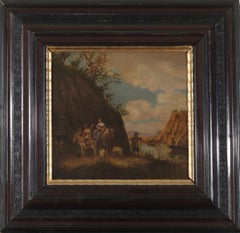
View All17th C., Baroque, Genre Painting, Stop of the Travelers
Located in brussel, BE
As the Dutch painter Philips Wouwerman often did, this artist painted travellers stopping at an inn or a farm. One of the men got off his horse to urinate against the facade of the building. The motif of a peeing man was far from an exception in Dutch genre paintings...
Category
17th Century Baroque Figurative Paintings
Materials
Oil, Canvas
17th C Landscape with Noblewoman and Squire, Dutch Shool, Oil on Copper, Framed
Located in brussel, BE
This charming bucolic landscape bathes in a soft yellow light. A lady on horseback, accompanied by a boy on a donkey, stops near a shepherd. The herd looks at two fishers and quietly...
Category
17th Century Land Figurative Paintings
Materials
Copper
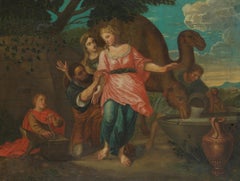
18th C, In the Style of the Classicizing Baroque, Biblical, Rebekka and Eliëzer
Located in brussel, BE
Willem Muys was a Dutch, 18th-century painter of history pieces, portraits and cabinet pieces. Above all, he appears to have been active as a painter of ‘wallpaper’. Until the mid-18th century, ‘wallpaper’ was not painted on paper but on coarsely woven linen. Wealthy citizens had their mansions or country estates adorned with ‘wallpaper’ with landscapes, exotic birds or chinoiseries.
Willem Muys mainly painted ‘wallpaper’, which means that few of his works have been preserved. They are hardly represented in public collections. The works of his sons, Nicolaas en Robbert, both painters, are a little less rare. The painting with Rebecca and Eliezer...
Category
18th Century Baroque Figurative Paintings
Materials
Canvas, Oil
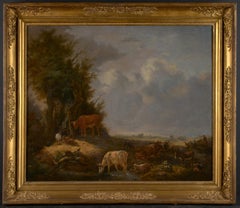
Country landscape with cows, Mechelse school, 1838
Located in brussel, BE
We know very little about the Mechelen landscape painter Karel De San. He appears to have been mainly active during the period 1829-1848. The painterly landscape with the dramatic sk...
Category
19th Century Romantic Landscape Paintings
Materials
Oil, Canvas
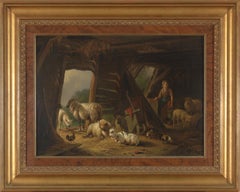
Sheepstable, 19th C Genre Painting, Oil on panel, Signed and dated P.Plas 1849.
Located in brussel, BE
Pieter Plas placed himself with this pastoral scene in the tradition of the 17th-century painters and draughtsmen such as Nicolaes Pietersz Berchem, Karel du Jardin, Marcus de Bye an...
Category
19th Century Romantic Figurative Paintings
Materials
Oil
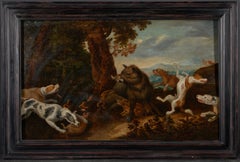
17th C, Baroque, Hunting Scene, Wild Boar Hunt in the style of Frans Snijders
Located in brussel, BE
Hunting played an essential role in the lives of princes and nobles for centuries. It was no different in the 17th century. Paintings depicting hunting scenes were hung, for example, in the hunting lodges of elites. It should be noted that the upper bourgeoisie also began to show interest in painted hunting scenes during the 17th century. In the Southern Netherlands there were a number of skilled animal painters who produced hunting scenes, including Frans Snijders, Paul De Vos, Jan Roos, Pieter Boel and Jan Fyt. Snijders knew how to render the anatomy of the animals masterfully. Also, he managed to make his animals look intelligent. He let them express a variety of feelings. His colleague, Paul De Vos, seems to have been less familiar with animal anatomy. His animals lack a kind of individuality and psychological expression. The panel shows a boar hunt with dogs. It was a prevalent theme, portrayed by Rubens, Snijders, De Vos and others.
Buyers were especially interested in the showdown between animal species. The mental and physical strength appealed to their imagination. The painter of this little work has no solid knowledge of dog breeds. Due to a lack of insight into dogs' bone and muscle structure, he makes them look rather stiff. Mainly the heads have something naïve about them. It cannot be ruled out that the artist of this painting is Jan van Kessel...
Category
17th Century Baroque Landscape Paintings
Materials
Canvas, Oak, Oil
You May Also Like
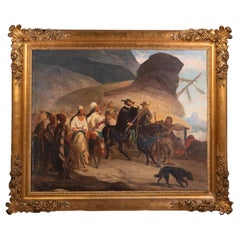
Allegorical Scene of the Lewis and Clark Expedition (1804–1806) Attr. to L.Cogni
Located in Leuven , BE
Allegorical Scene of the Lewis and Clark Expedition (1804–1806)
Attributed to Léon Cogniet (1794–1880)
This ambitious and romanticized composition captures a defining moment in Amer...
Category
Antique 19th Century French Paintings
Materials
Canvas
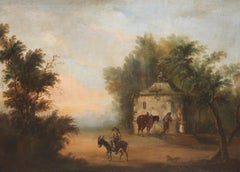
Óleo sobre tela - Viajeros y campesinos junto al pozo
Located in Sant Celoni, ES
La obra no va firmada, es de autor anónimo
Se presenta enmarcada la obra con un marco de la época de la pintura en madera dorada (el marco presenta algunas pequeñas faltas)
El esta...
Category
1860s Old Masters Landscape Paintings
Materials
Oil
Kidnapped by the Raiders By French School Student Academic Realist Oil Canvas
Located in Jacksonville, FL
Frame Size: Width: 46″ x Hight: 39″
Frame Thickness: 6″
Picture Size: Width: 35.25″ x 27.75″
French School: Masters of Artistic Expression
The French School of art emerged as a p...
Category
19th Century Figurative Paintings
Materials
Canvas, Oil
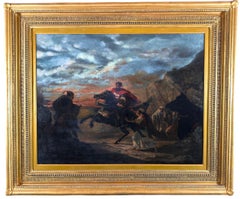
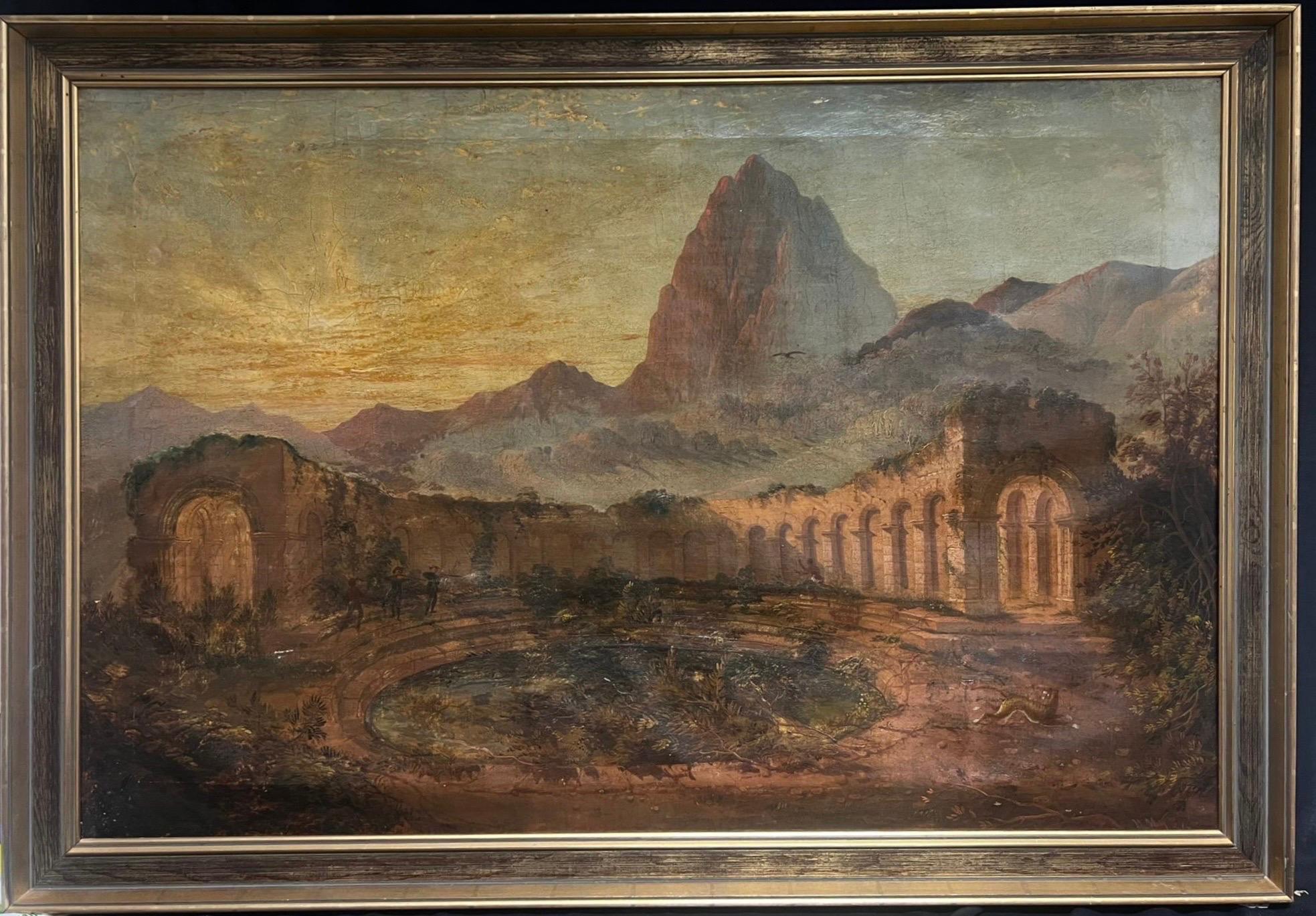
19thC. Figures Hunting Classical Ruins Mountainous Sunset Landscape North Africa
By Continental School
Located in Cirencester, Gloucestershire
Continental, 19th Century
oil on canvas, framed
Monogrammed 'WM' and dated '1868' lower right
framed: 34 x 48.5 inches
canvas : 29.5 x 44 inches
Provenance: private collection, UK
Co...
Category
19th Century Old Masters Landscape Paintings
Materials
Oil
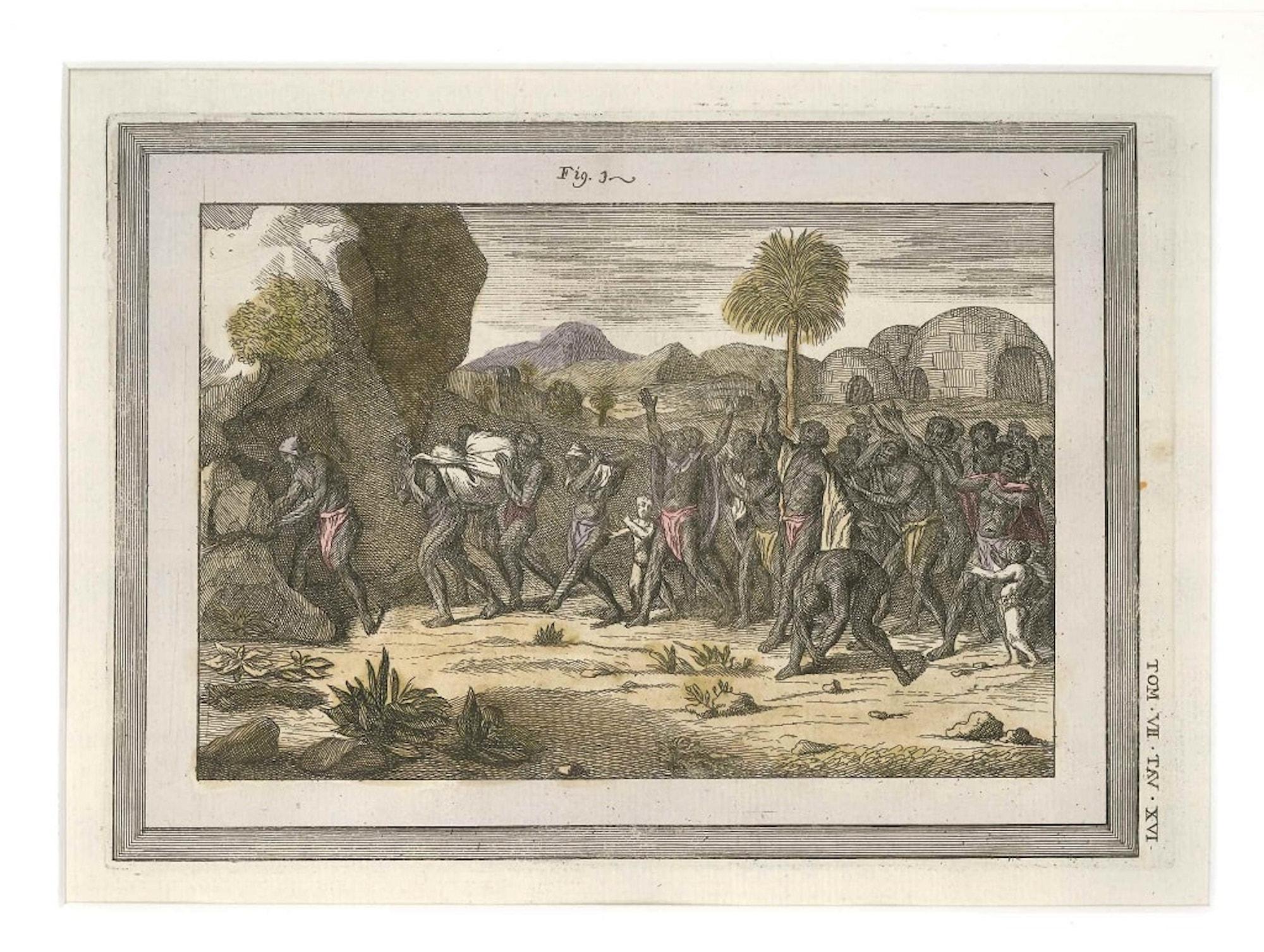
Funeral Procession among the Indigenouses - by G. Pivati - 1746-1751
By Gianfrancesco Pivati
Located in Roma, IT
Funeral Procession among the indigenouses - From “New Scientific and Curious Dictionnary concerning the Sacred and the Profane
Etchings, Hand-Water...
Category
1740s Old Masters Figurative Prints
Materials
Etching
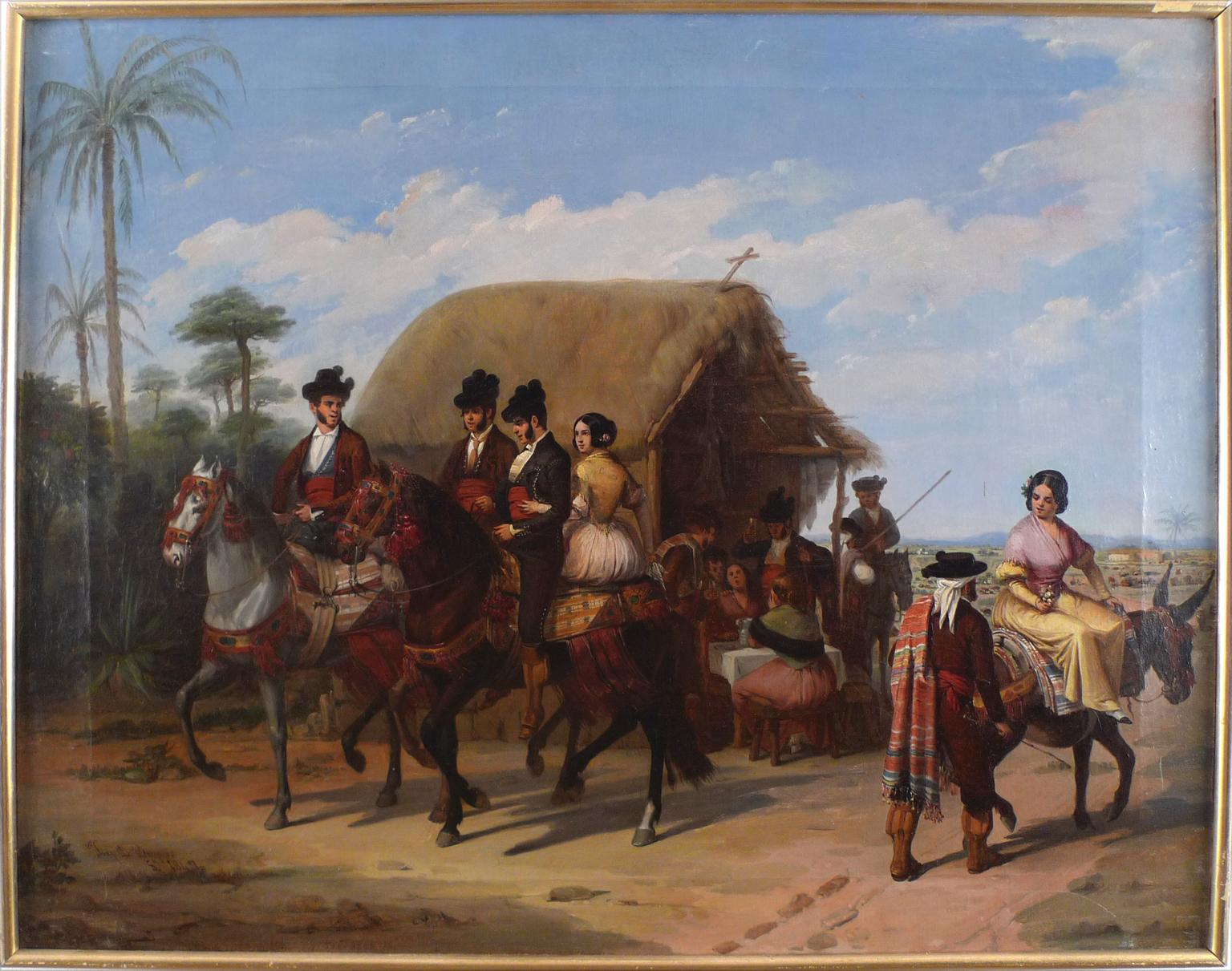
"Riders Passing by a Tavern", 19th Century Oil on Canvas by Joaq. D. Bécquer
By Joaquín Domínguez Bécquer
Located in Madrid, ES
JOAQUÍN DOMÍNGUEZ BÉCQUER
Spanish, 1817 - 1879
RIDERS PASSING BY A TAVERN
signed, located & dated "Joaq. D. Becquer. Sevilla, 1847." (lower l...
Category
1840s Romantic Figurative Paintings
Materials
Canvas, Oil