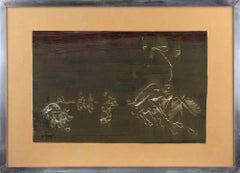
Items Similar to Surrealist Oil Painting Circus Horse Scene Lionel Kalish Fantasy Scene New York
Want more images or videos?
Request additional images or videos from the seller
1 of 19
Lionel KalishSurrealist Oil Painting Circus Horse Scene Lionel Kalish Fantasy Scene New York1961
1961
$3,600
£2,726.67
€3,131.11
CA$5,045.14
A$5,487.15
CHF 2,907.99
MX$65,747.53
NOK 36,959.05
SEK 33,859.51
DKK 23,403.86
About the Item
Lionel Kalish (American B.1931)
Hand signed lower right
Oil on canvas
Titled: "The Arrival"
Dimensions: (Frame) H 22" x W 28" (Sight) H 25.5" x W 19.75"
Modernist circus scene depicting nude people with an angel and a horse.
Provenance: The Contemporaries, a Madison Avenue gallery.
The Contemporaries" was a 1950s New York City gallery and print workshop founded by Margaret Lowengrund, It was a pioneering space that combined a gallery with a printmaking studio. She showed some incredible artists including Philippe Hiquily, Alexander Archipenko, Milton Avery, Will Barnet, Warrington Colescott, Stuart Davis, Adolf Dehn, Jim Dine, Gego (Gertrud Goldschmidt), David Hockney, Gabor Peterdi, Michael Ponce de León, Liliana Porter, June Wayne, Ian Woodner and Tibor Freund.
Lionel Kalish born 1931 New York, NY A painter and childrens book illustrator.
Education: 1951 Cooper Union of the Advancement of Science and Art, New York, NY
Following an illustrious early career as an illustrator, with an active cult following, Lionel has been painting, drawing and exhibiting his work for many years.
Lionel's works are characterized by their vibrant colors and playful imagery, often depicting whimsical scenes that appeal to both children and adults alike. His paintings graphic work and illustrations are known for their ability to transport viewers into another world, one that is filled with magic and wonder. Over the years, Lionel has garnered a significant following, with his works being exhibited in numerous galleries and museums across the world. His paintings and illustrations have also been featured in various children's books, where they have been praised for their ability to inspire young readers and foster a love for art. Lionel's artistic talents have been recognized by many, and he has received numerous awards and accolades for his contributions to the world of art.His work has been shown both nationally and internationally in galleries such as Forum Gallery, ACA Galleries, Zabriskie Gallery, and Hoorn-Ashby Gallery, all in New York City, Gremillion
Co Fine Art and Ellio Fine Art Gallery in Houston, Clark Gallery outside of Boston, and Galerie Brusberg in Berlin. Taking a super-realist approach, Lionel draws his inspiration from the landscapes, waterways and villages of Italy. This work has a Neo Romantic Magic Realism, Michael Parkes feel to it. He is married to Muriel kalish and was a principal in Kalish Rapp studios.
Selected Solo Exhibitions:
1978 Forum Gallery, New York, NY
1980 Galerie Brusberg, Hannover, Germany
1981 ACA Galleries, New York, NY
1982 Galerie Stubler, Frankfurt Germany
1984 Galerie Brusberg, Berlin, Germany
1990 Sid Deutch Gallery, New York, NY
1994 Lewis Newman Galleries, Beverly Hills, CA
Galerie Brusberg, Berlin, Germany
1996 The Horwitch Newman Gallery, “Italy: The Poetry of Landscape,” Scottsdale, AZ
Gremillion
Co. Fine Arts, “Italy: The Timeless Landscape,” Houston, TX
1997 Hoorn-Hashby Gallery, “Color and Light: The Italian Façade,” New York, NY
1998 Hoorn-Hashby Gallery, “Sun and Shadow: A Mediterranean Vision,” Nantucket, MA
2000 Hoorn-Hashby Gallery, “Italy: Visual Poetry,” New York, NY in the same genre as Seymour Chwast, Sid Chafetz, Saul Bass, Ivan Chermayeff, Milton Glaser, Paul Rand, Ikko Tanaka, Henryk Tomaszewski a great modernist illustration style.
Selected group Exhibitions:
1975 Galerie Brusberg, Hannover, Germany
1977 Forum Gallery, New York, NY
1978 Forum Gallery, “Fourteen Still Life Paintings: A New York Sensibility,” New York, NY
1979 Galerie Brusberg, “Neuerwerbungen der Galerie,” Hannover, Germany
National Academy of Design: 154th Annual Exhibition, New York, NY
Forum Gallery, “Artists and Sculptors of Forum,” New York, NY
1980 Galerie Brusberg, “Malerei der Gegenwart,” Hannover, Germany
Basel Art Fair, “Sie, She, Elle,” Switzerland
The Butler Institute of American Art, “45th Annual Midyear Show,” Youngstown, OH
1981 Oklaoma Art Center, “New York Gallery Shocase,” Oklaoma City, OK
1982 Galerie Brusberg, West Berlin, Germany
1983 AKA Galleries, New York, NY
1984 Galerie Stubler, Frankfurt, Germany
1985 AKA Galleries, New York, NY
1986 Galerie Brusberg, West Berlin, Germany
1987 Galerie Brusberg, West Berlin, Germany
1988 Galerie Brusberg, West Berlin, Germany
National Academy of Design: 163rd Annual Exhibition, New York, NY
1989 Sid Detusch Gallery, “American Masters; Inaugural Exhibition,” New York, NY
1990 Contemporary Realist Gallery, “The Italian Landscape,” San Francisco, CA
Arkansas Art Center, Annual Collector’s Exhibition
1990 Gremillion
Co. Fine Arts, Houston, TX
1991 Sid Detusch Gallery, New York, NY
Galerie Brusberg, Berlin, Germany
Gremillion
Co. Fine Arts, Houston, TX
1992 Galerie Brusberg, Berlin, Germany
Gremillion
Co. Fine Arts, Houston, TX
1993 Lewis Newman Gallery, Beverly Hills, CA
Gremillion
Co. Fine Arts, Houston, TX
1994 Lewis Newman Galleries, “Contemporary Perspectives,” Beverly Hills, CA
1995 Horwitch Newman Gallery and Koplin Gallery, Santa Monica, CA
Horwitch Newman Gallery, “About American Realism,” Scottsdale, AZ
1996 Horwitch Newman and Jerry Solomon Gallery, ‘An LA Premiere,” Los Angeles, CA
1997 Pennsylvania Academy of Fine Arts, “U.S. Artists ’97”
1998 Pennsylvania Academy of Fine Arts, “U.S. Artists ’98”
Galerie Brusberg, Berlin, Germany
1999 Pennsylvania Academy of Fine Arts, “U.S. Artists ’99”
2000 Horn-Ashby Gallery, Nantucket, MA
Gremillion
Co. Fine Arts, Houston, TX
SELECTED COLLECTIONS
Credit Suisse, New York, NY
Jenswold, King
Associates, Houston, TX
H. Seward Johnson, New York, NY
Exxon Collection
- Creator:Lionel Kalish (1931, American)
- Creation Year:1961
- Dimensions:Height: 22 in (55.88 cm)Width: 28 in (71.12 cm)
- Medium:
- Movement Style:
- Period:
- Condition:
- Gallery Location:Surfside, FL
- Reference Number:1stDibs: LU38217301222
About the Seller
4.9
Platinum Seller
Premium sellers with a 4.7+ rating and 24-hour response times
Established in 1995
1stDibs seller since 2014
1,855 sales on 1stDibs
Typical response time: <1 hour
- ShippingRetrieving quote...Shipping from: Surfside, FL
- Return Policy
More From This Seller
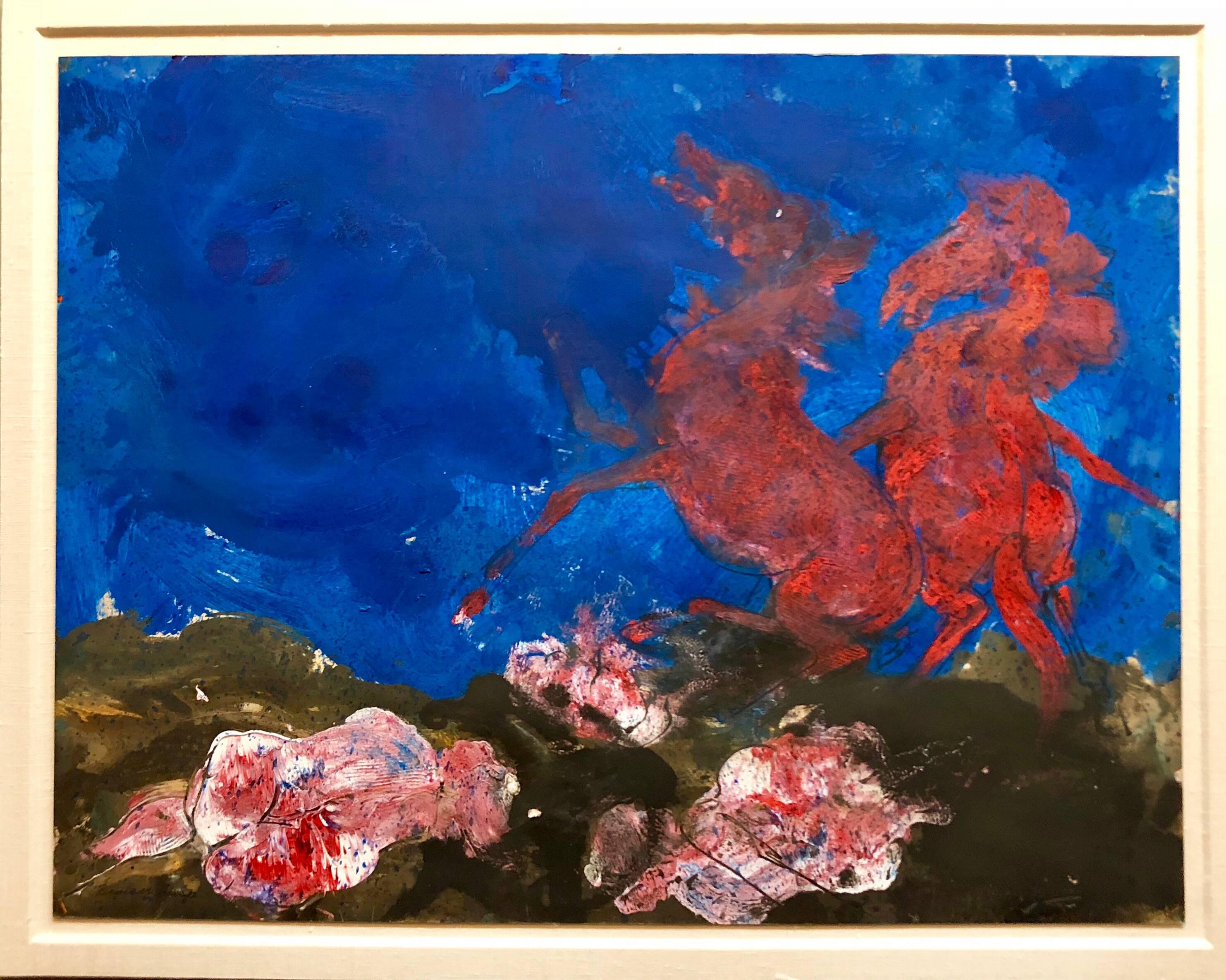
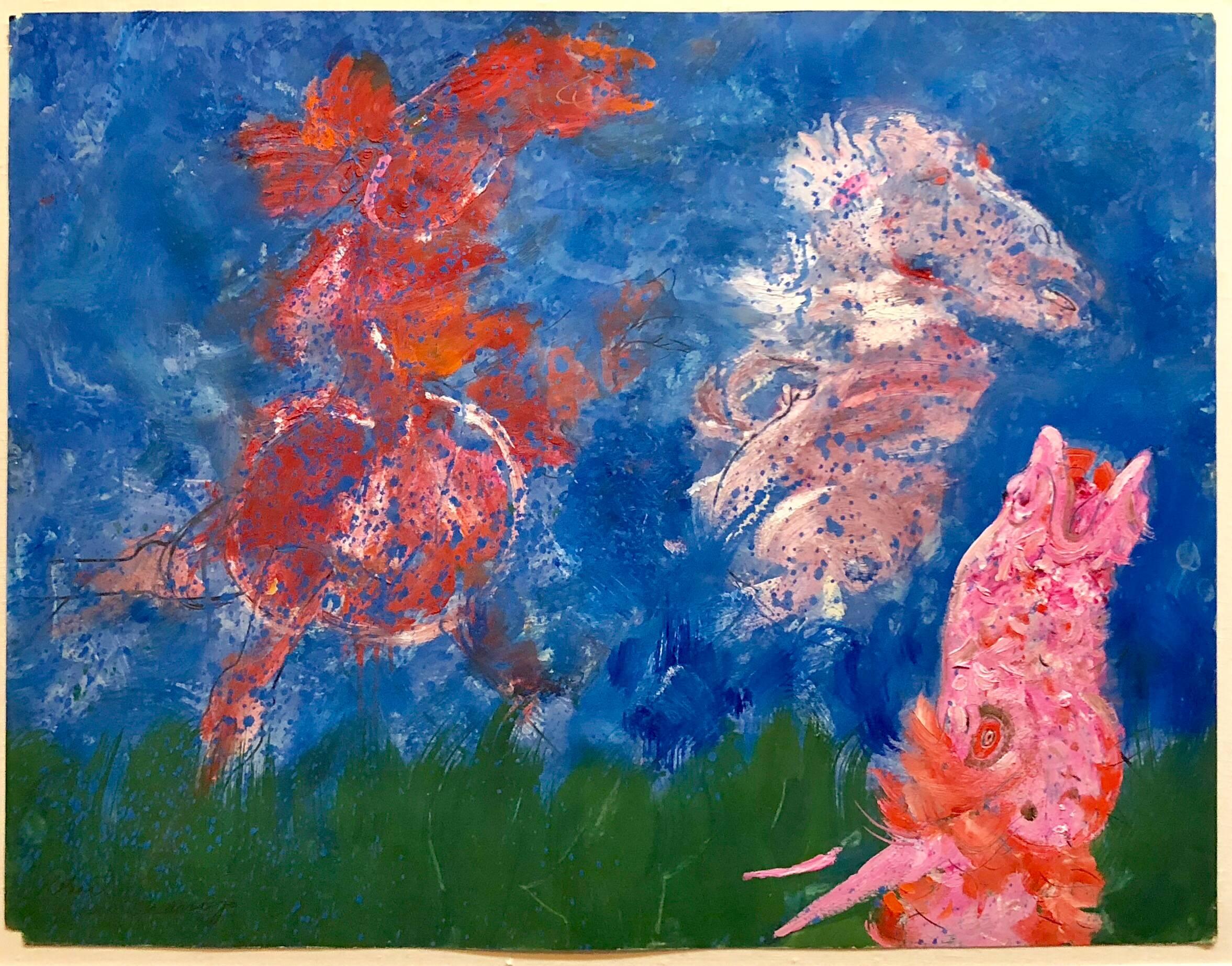
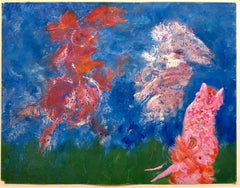
View AllAmerican Neo Expressionist "Wild Horses" Modernist Oil Painting
By Robert Beauchamp
Located in Surfside, FL
Robert Beauchamp (1923 – March 1995) was an American figurative painter and arts educator. Beauchamp's paintings and drawings are known for depicting dramatic creatures and figures with expressionistic colors. His work was described in the New York Times as being "both frightening and amusing,". He was a Guggenheim Fellow and a student of Hans Hofmann.
Robert Beauchamp was born in Denver, Colorado in 1923. He had three brothers and three sisters, and the children were orphaned by both parents by the time Beauchamp was three. The family grew up impoverished due to the Great Depression, living in a community house with other families. As a child he dabbled in art but it wasn't until high school that he began taking art classes. When not creating art he also played sports; football and basketball, and enjoyed chemistry and geology.
He was told he was good at drawing, and replaced study hall classes with art classes, receiving instruction and inspiration from a Welsh teacher named R. Idris Thomas. While in high school Beauchamp would go, every Monday, to the public library and a local museum where he would read books about art; specifically French painting, as assigned by Thomas. Beauchamp absorbed the tenets of European Modernism and American Abstract Expressionism—with which he eventually broke. While abstraction, with its focus on color and form, underlies his compositions, he filled canvas and paper with psychologically acute portraits of himself and others, nudes, animals, and objects of all kinds. Beauchamp would spend upwards of four hours a day in the art room and eventually won the Carter Memorial Prize, which provided a scholarship to the Colorado Springs Fine Arts Center. At Colorado Springs he studied under Boardman Robinson, painting landscapes in nature.
Beauchamp eventually joined the Navy and then returned to Colorado Springs to continue his studies. Traveling the world as an Armed Guard, he spent a year and a half at sea and the rest of the three years in San Francisco. Seeking to make money, and to follow his love for a girl, Beauchamp decided to attend Cranbrook Academy of Art from 1947–1948. There he studied pottery, believing one could "make more money selling pots than you could selling paintings." He described his experience at Cranbrook as intimidating and claustrophobic, and eventually switched to sculpture before switching to painting.
Beauchamp moved to New York City in the early 1950s and was involved in the Tenth Street galleries, which provided outlets for more experimental artists and the second generation of abstract expressionists. Despite his involvement with 10th Street and friendships with abstract artists, abstract art never interested in him. He showed at numerous galleries in New York and Provincetown, socializing with gallery owners, artists and collectors. His first exhibition was at the Tanager Gallery in New York, he also showed during the 1950s at the Hansa Gallery. In New York and Provincetown he studied under Hans Hofmann Eventually he felt that abstract expressionism became dull and stalemated.
During the 1960s he showed at the Green Gallery. C. 1960 he was awarded a Fulbright Award allowing him to travel to La Romola, Italy. He traveled frequently to cities such as Rome and worked constantly. Beauchamp returned to the states and lived in Provincetown at Walter Gutman's house, who awarded Beauchamp a grant. That year he met his future wife, Nadine Valenti, whom he married in 1967. Beauchamp taught at a variety of schools during his lifetime including Brooklyn College, School of Visual Arts, Cooper Union and the Art Students League of New York during the last fifteen years of his life.
Beauchamp described his drawings as painterly, seeking the spontaneity in an image. He would develop a drawing then a painting, and vice versa. His heavily impastoed paintings, often described as sculptures themselves, came from the pouring of paint from a can, with little planning and constant evolution in the medium upon the canvas. He preferred little planning to his creations, believing that an artists work would become stale and repetitive with constant planning.
He also created large scale works, at times 70 inches long. Beauchamp had little intention of ever selling his large works, preferring to create them due to the slow and intense experience he received from the process. The large drawings he created on the floor, and the smaller works were created on a table. Paintings were created on either the floor or wall and he described his painting process as "splattering", "pushing the paint around," and sponging.
Animals often appear in his paintings, despite a dislike for domestic animals outside of his artistic creations. He called the characters in his paintings as Beauchamps. Some Beauchamps hold meaning, with Beauchamp rarely sharing the meaning behind the symbols and characters. He made up the creatures himself, seeking to emphasize the character of each.
In 2006 the University of Massachusetts Amherst College of Visual & Performing Arts hosted an exhibition of Beauchamp's pieces from the 1960s, curators stated that Beauchamp's work: "effortlessly blends innovative style elements with narrative, descriptive images. One senses equal enjoyment in the manipulation of, and interaction with, color and paint, and the often sudden and unexpected presence of a wasp or a lump of sugar."
included in the important exhibit "Twelve New York Painters." New York: David Findlay Jr. Fine Art with Mary Abbott, Alcopley, Robert Beauchamp, Byron Browne, Charles Cajori, Jim Forsberg, Carl Heidenreich, Angelo Ippolito, Emily Mason, Robert Natkin, Robert Richenburg and Nina Tryggvadottir...
Category
20th Century Neo-Expressionist Abstract Paintings
Materials
Paper, Oil
American Neo Expressionist "Wild Horses" Modernist Oil Painting
By Robert Beauchamp
Located in Surfside, FL
Signed lower left.
Robert Beauchamp (1923 – March 1995) was an American figurative painter and arts educator. Beauchamp's paintings and drawings are known for depicting dramatic creatures and figures with expressionistic colors. His work was described in the New York Times as being "both frightening and amusing,". He was a Guggenheim Fellow and a student of Hans Hofmann.
Robert Beauchamp was born in Denver, Colorado in 1923. He had three brothers and three sisters, and the children were orphaned by both parents by the time Beauchamp was three. The family grew up impoverished due to the Great Depression, living in a community house with other families. As a child he dabbled in art but it wasn't until high school that he began taking art classes. When not creating art he also played sports; football and basketball, and enjoyed chemistry and geology.
He was told he was good at drawing, and replaced study hall classes with art classes, receiving instruction and inspiration from a Welsh teacher named R. Idris Thomas. While in high school Beauchamp would go, every Monday, to the public library and a local museum where he would read books about art; specifically French painting, as assigned by Thomas. Beauchamp absorbed the tenets of European Modernism and American Abstract Expressionism—with which he eventually broke. While abstraction, with its focus on color and form, underlies his compositions, he filled canvas and paper with psychologically acute portraits of himself and others, nudes, animals, and objects of all kinds. Beauchamp would spend upwards of four hours a day in the art room and eventually won the Carter Memorial Prize, which provided a scholarship to the Colorado Springs Fine Arts Center. At Colorado Springs he studied under Boardman Robinson, painting landscapes in nature.
Beauchamp eventually joined the Navy and then returned to Colorado Springs to continue his studies. Traveling the world as an Armed Guard, he spent a year and a half at sea and the rest of the three years in San Francisco. Seeking to make money, and to follow his love for a girl, Beauchamp decided to attend Cranbrook Academy of Art from 1947–1948. There he studied pottery, believing one could "make more money selling pots than you could selling paintings." He described his experience at Cranbrook as intimidating and claustrophobic, and eventually switched to sculpture before switching to painting.
Beauchamp moved to New York City in the early 1950s and was involved in the Tenth Street galleries, which provided outlets for more experimental artists and the second generation of abstract expressionists. Despite his involvement with 10th Street and friendships with abstract artists, abstract art never interested in him. He showed at numerous galleries in New York and Provincetown, socializing with gallery owners, artists and collectors. His first exhibition was at the Tanager Gallery in New York, he also showed during the 1950s at the Hansa Gallery. In New York and Provincetown he studied under Hans Hofmann Eventually he felt that abstract expressionism became dull and stalemated.
During the 1960s he showed at the Green Gallery. C. 1960 he was awarded a Fulbright Award allowing him to travel to La Romola, Italy. He traveled frequently to cities such as Rome and worked constantly. Beauchamp returned to the states and lived in Provincetown at Walter Gutman's house, who awarded Beauchamp a grant. That year he met his future wife, Nadine Valenti, whom he married in 1967. Beauchamp taught at a variety of schools during his lifetime including Brooklyn College, School of Visual Arts, Cooper Union and the Art Students League of New York during the last fifteen years of his life.
Beauchamp described his drawings as painterly, seeking the spontaneity in an image. He would develop a drawing then a painting, and vice versa. His heavily impastoed paintings, often described as sculptures themselves, came from the pouring of paint from a can, with little planning and constant evolution in the medium upon the canvas. He preferred little planning to his creations, believing that an artists work would become stale and repetitive with constant planning.
He also created large scale works, at times 70 inches long. Beauchamp had little intention of ever selling his large works, preferring to create them due to the slow and intense experience he received from the process. The large drawings he created on the floor, and the smaller works were created on a table. Paintings were created on either the floor or wall and he described his painting process as "splattering", "pushing the paint around," and sponging.
Animals often appear in his paintings, despite a dislike for domestic animals outside of his artistic creations. He called the characters in his paintings as Beauchamps. Some Beauchamps hold meaning, with Beauchamp rarely sharing the meaning behind the symbols and characters. He made up the creatures himself, seeking to emphasize the character of each.
In 2006 the University of Massachusetts Amherst College of Visual & Performing Arts hosted an exhibition of Beauchamp's pieces from the 1960s, curators stated that Beauchamp's work: "effortlessly blends innovative style elements with narrative, descriptive images. One senses equal enjoyment in the manipulation of, and interaction with, color and paint, and the often sudden and unexpected presence of a wasp or a lump of sugar."
included in the important exhibit "Twelve New York Painters." New York: David Findlay Jr. Fine Art with Mary Abbott, Alcopley, Robert Beauchamp, Byron Browne, Charles Cajori, Jim Forsberg, Carl Heidenreich, Angelo Ippolito, Emily Mason, Robert Natkin, Robert Richenburg and Nina Tryggvadottir...
Category
20th Century Neo-Expressionist Abstract Paintings
Materials
Paper, Oil
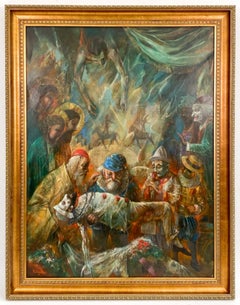
Large Oil Painting Circus Scene Clowns Rediscovered NY Artist Jonah Kinigstein
By Jonah Kinigstein
Located in Surfside, FL
Jonah Kinigstein
"Death of a Clown"
Large Oil on Board Painting of macabre circus scene with clowns
Hand signed lower left and signed and titled verso
Frame: 55 X 43 Image: 48 X 36
...
Category
20th Century Expressionist Portrait Paintings
Materials
Oil, Board
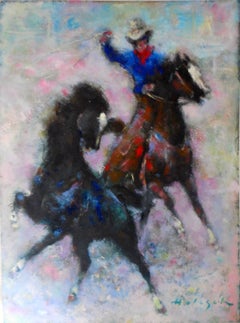
Western Scene (Cowboy on Horseback)
By Denes de Holesch
Located in Surfside, FL
This is an oil on artist board (unframed) by the important Hungarian-born and internationally celebrated Denes de Holesch (1910-1983).
Denes de Holesch was an international equestrian artist. His works have been exhibited all over the world, including in New York, Beverly Hills, Boston, Chicago, Paris, Mexico City, Montreal, Tokyo, Sydney, and Madrid. His horse paintings fall into one of seven themes, including polo, cowboys, circus, rodeo, hunt, bull-fight, race-course and running free. His mastery of the subject has been compared to that of Picasso, Delacroix and Franc Marc.
1910 Denes Dezo George de Holesch was born on 9 February, 1910 at Banska-Bystrica, Northern Hungary. He was the third child and youngest son of Hugo de Holesch, an architect and Margit, nee Wagner. Many generations of the de Holesch family had worked as professional architects. He studied at the Hungarian Academy of Fine Arts in Budapest on a scholarship. Early in his career he traveled to China, Japan, Philippines, Java, Bali and Australia, where his reputation grew rapidly. Here he produced portraits in oils, and lithographs of the Chinese, as well as landscape works in oils,depicting the local countryside, and canal, street and city scenes. His exposure to the arts of the Chinese, with their simplicity of line, greatly influenced his later works. In 1939 he established a studio at Lavender Bay near Sydney. In 1940 he exhibited at the Macquarie Galleries in Sydney. In 1944 he married Joyce Greer, the Melbourne concert pianist. In 1945 the couple moved to New York where his interest in horses grew. He held exhibitions at Gallery Wildenstein, Herve, and FAR Gallery. In 1946 Holesch moved to Montreal where he exhibited at the National Gallery of Montreal. In 1947 he moved to Boston where he continued painting portraits and horses. He exhibited there at the Ehrmann and Vose galleries. Later in the year he moved to San Francisco where he was invited to participate in the "Renoir to Picasso" Exhibition held at the Maxwell Gallery.1946 He moved to Montreal, Canada and exhibited at the National Gallery of Montreal. (Frederic Remington and Charles Russell)
1947 Early in the year he moved to Boston and continued painting portraits and horses. In June, he painted the portrait of Harvard Law School Dean, Erwin N. Griswold, and in October his works were exhibited at Margaret Brown's Galerie Intime, Newbury Street, Boston.
1948 He produced a clay sculpture head of Egon Petri, one of a number of clay sculptures that he produced. He also produced a number of wood carvings. His paintings were chosen for inclusion in a Group Exhibition in the National Gallery of San Francisco, and in the important and prestigious 'Renoir to Picasso' Exhibition held at Maxwell's Galleries, 372 Sutter Street, San Francisco.
1953 His works were included in a Group Impressionists Exhibition held at the Ohana Gallery, London
1954 He travelled to New York, where he was commissioned to paint Herbert Gasser, Nobel Prize Winner in Biochemistry.
1955 He returned to England, and then travelled to Paris to exhibit works in the Galerie Marcel Lenoir.
1956 He again returned to New York to work on portrait commissions and for exhibitions of his works, mainly of horses. These exhibitions were held in New York, Boston, San Francisco and late in the year at the Galleries of Frank J. Oehlschlaeger at 107 East Oak Street, Chicago. During this year, visits with his family to Ringling Circus and to a rodeo in Tucson, Arizona must have impressed him greatly, for images of these events soon appeared on his canvases. His work was greatly admired by Hollywood film- stars, such as Ann Rutherford and Burt Lancaster, and David Niven purchased one of the horse paintings to give as his wedding present to Grace Kelly on her marriage to Sovereign Prince Rainier III of Monaco.
1959 The prints of 'Courtship' and 'Chargers' were produced. It has been estimated that close to a million copies of his prints were sold over the next ten years, with 'Courtship' being advertised by Stern's Book Dpt. on 5th Avenue, New York along with prints by Picasso...
Category
20th Century American Realist Figurative Paintings
Materials
Oil, Board
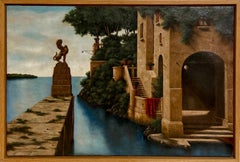
Surrealist Oil Painting Magical Realism Lionel Kalish Italian Home Fantasy Scene
Located in Surfside, FL
Lionel Kalish (American B.1931)
"A Villa on the Sea",
c. 1980
Oil on canvas
Hand signed lower right L.Kalish
Bark Frameworks Inc. N.Y. label verso
16" x 24"
Lionel Kalish born...
Category
1980s Surrealist Landscape Paintings
Materials
Oil, Canvas
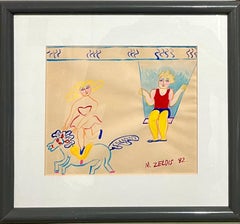
Malcah Zeldis Folk Art Gouache Painting Outsider Circus Trapeze Horse Acrobats
Located in Surfside, FL
MALCAH ZELDIS
Circus, Trapeze Artists, Horse rider and Acrobats
gouache on paper
Hand signed and dated bottom right. titled in pencil on paper verso.
Framed to 15 X 16.5 sheet is 9 ...
Category
1980s Folk Art Figurative Paintings
Materials
Paper, Gouache
You May Also Like
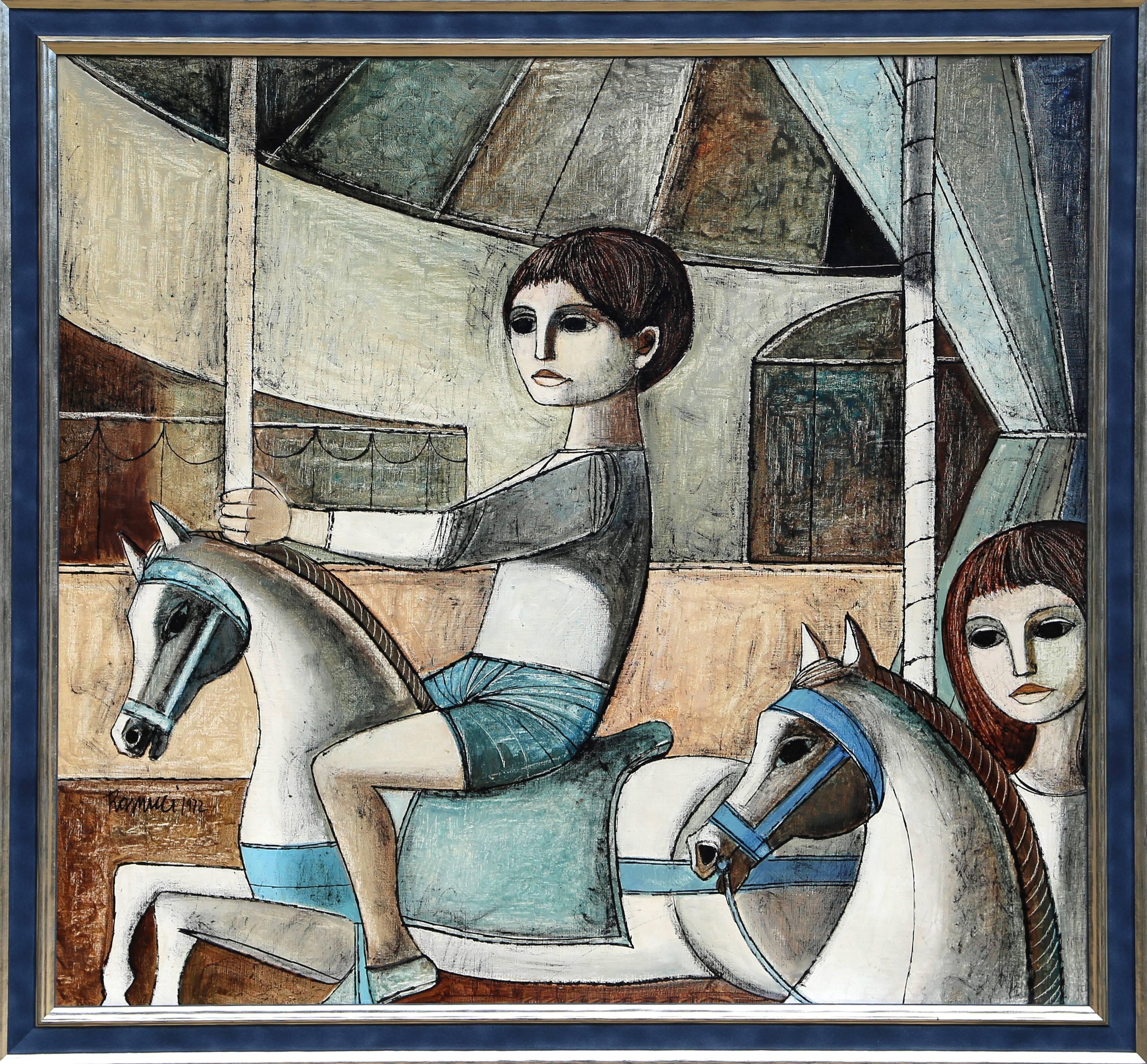
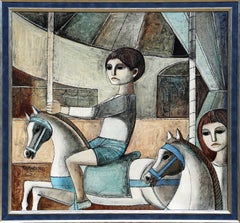
Les Chevause de Bois, Surrealist Oil Painting by Lucio Ranucci
By Lucio Ranucci
Located in Long Island City, NY
Artist: Lucio Ranucci, Italian (1925 - )
Title: Les Chevause de Bois
Year: 1972
Medium: Oil on Canvas, signed and dated
Size: 28 x 30 in. (71.12 x 76.2 cm)
Frame Size: 35.5 x 37.5 in...
Category
1970s Modern Figurative Paintings
Materials
Oil
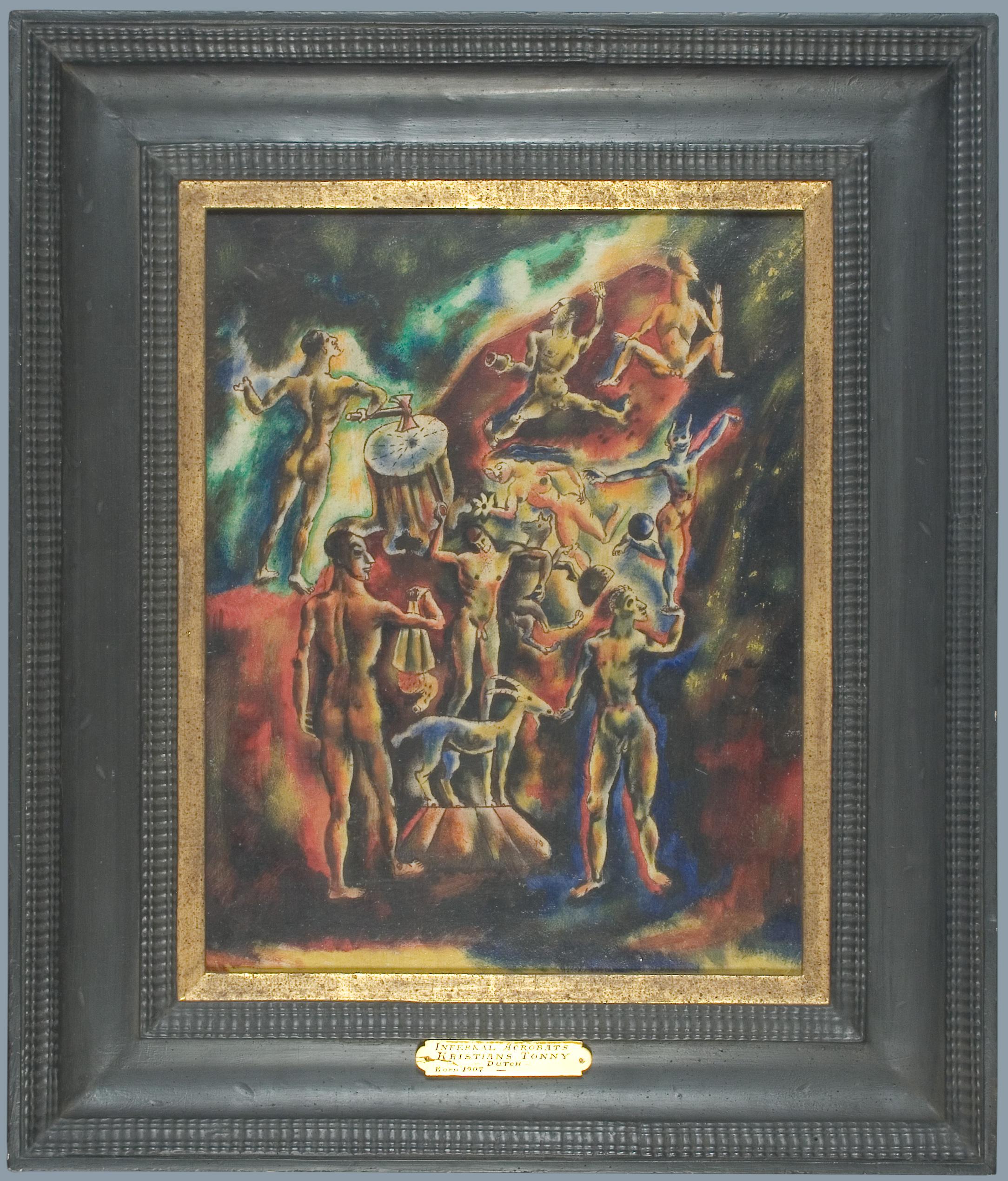
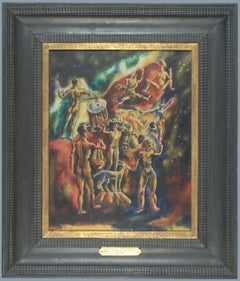
French Neo-Romantic Surrealist Painting "Circus" by Kristians Tonny
Located in Philadelphia, PA
Kristians Tonny
(French, born Holland; 1907-1977)
Circus
Oil on prepared board, 16 1/2 x 13 inches
Framed: 22 x 19 inches (approx.)
Inscribed on reverse: (in pencil) "cadre noir/ave...
Category
1920s Surrealist Abstract Paintings
Materials
Oil, Board
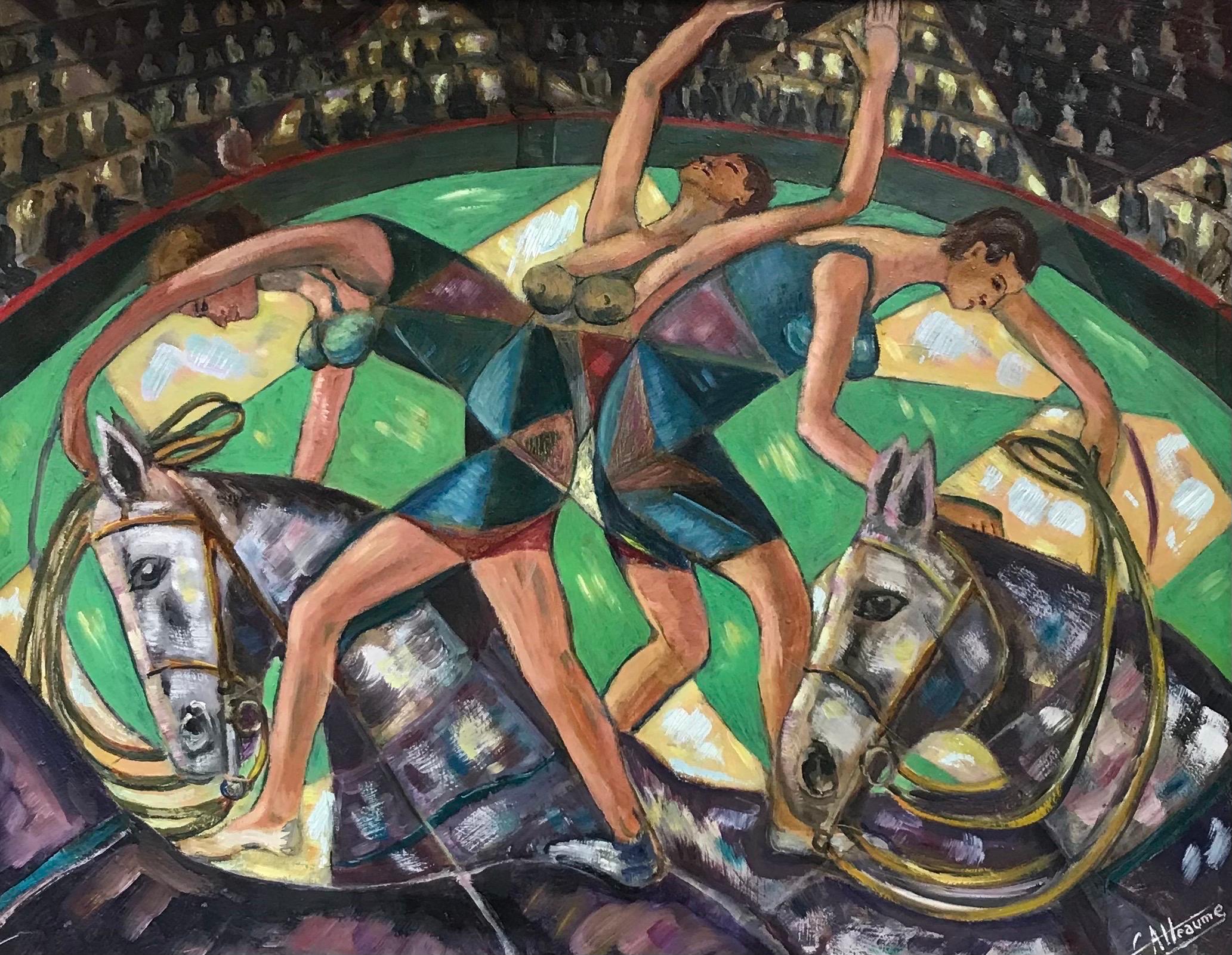
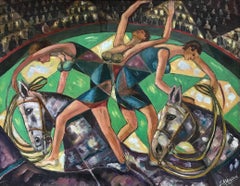
Large French Signed Oil - Abstract Circus Performers Acrobats on Horseback
Located in Cirencester, Gloucestershire
Artist/ School: French School, circa 1960's, signed
Title: The Circus Acrobats
Medium: oil on board, framed
Framed: 32 x 39.5 inches
Board: 29 x 36 inches
Provenance: private col...
Category
Mid-20th Century Abstract Impressionist Figurative Paintings
Materials
Oil
Ronde, Figurative Surrealist Signed Oil Painting
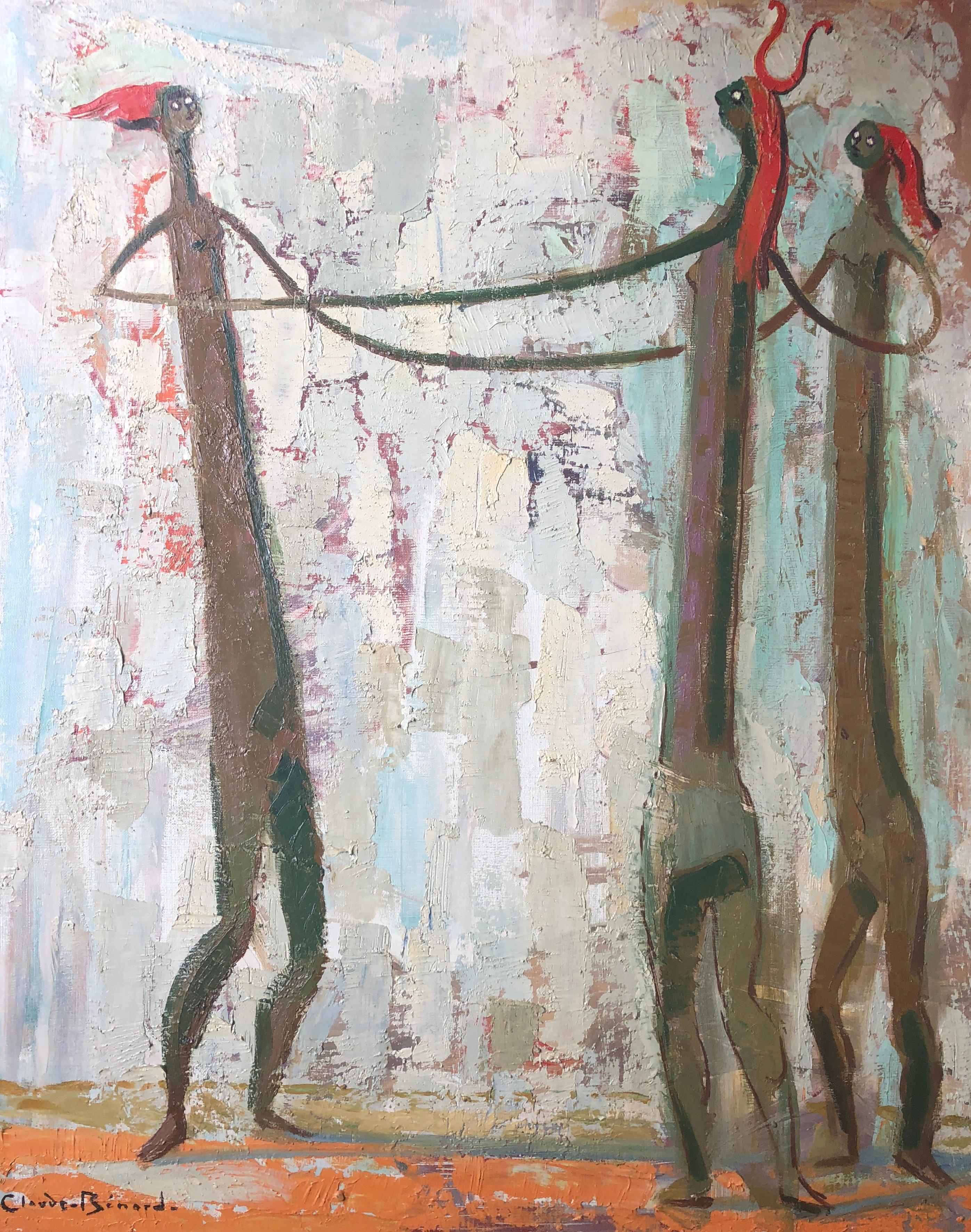
By Claude Benard
Located in Cirencester, Gloucestershire
Ronde, Signed Oil Painting
By French artist Claude Benard, (1926 - 2016)
Signed by the artist on the lower left hand corner,
titled verso
Oil painting on canvas, unframed
Canvas size...
Category
Mid-20th Century Surrealist Figurative Paintings
Materials
Oil
$3,131 Sale Price
20% Off
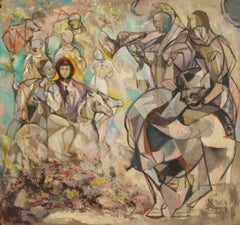
Figures on Horseback, Cubist Oil on Board Painting by John F. Leonard
Located in Long Island City, NY
Figures on Horseback (6) by John F. Leonard, American (1921–1987)
Date: circa 1965
Oil on Board (unsigned)
Size: 36 in. x 38 in. (91.44 cm x 96.52 cm)
Category
1960s Cubist Figurative Paintings
Materials
Oil, Board
Horses - Oil Painting by Vincenzo Di Giorgio - Mid-20th Century
Located in Roma, IT
Horses is a modern artwork realized by Vincenzo Di Giorgio in the mid-20th century
Painting on paper.
Includes frame
Hand signed on the lower margin
Category
Mid-20th Century Modern Animal Paintings
Materials
Canvas, Oil