Items Similar to New England Sunrise, 1910 by Lockwood DeForest (American, 1850-1932)
Want more images or videos?
Request additional images or videos from the seller
1 of 6
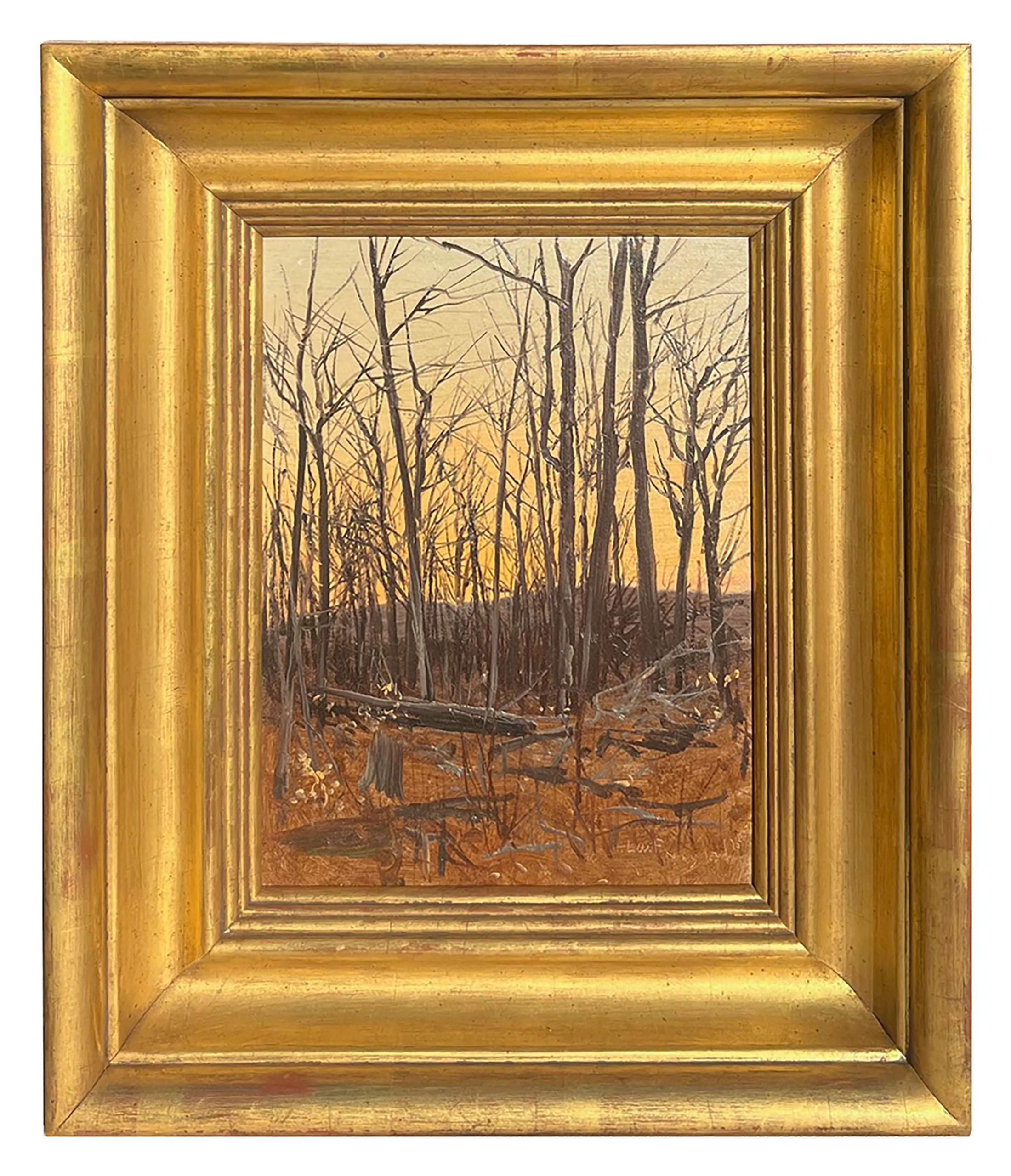
Lockwood DeForestNew England Sunrise, 1910 by Lockwood DeForest (American, 1850-1932)1910
1910
$15,000
£11,361.11
€13,046.31
CA$21,021.44
A$22,863.13
CHF 12,116.62
MX$273,948.03
NOK 153,996.03
SEK 141,081.30
DKK 97,516.08
About the Item
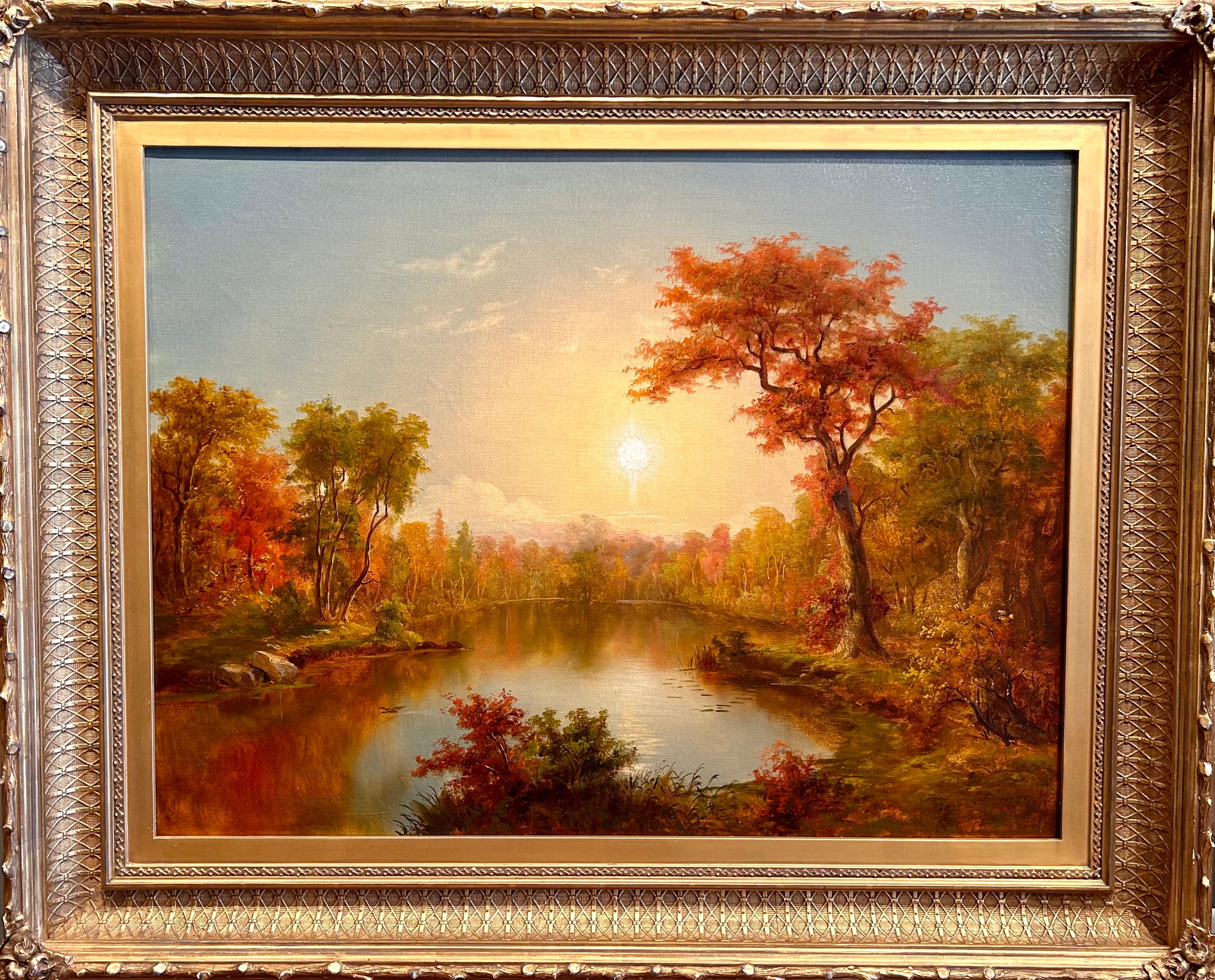
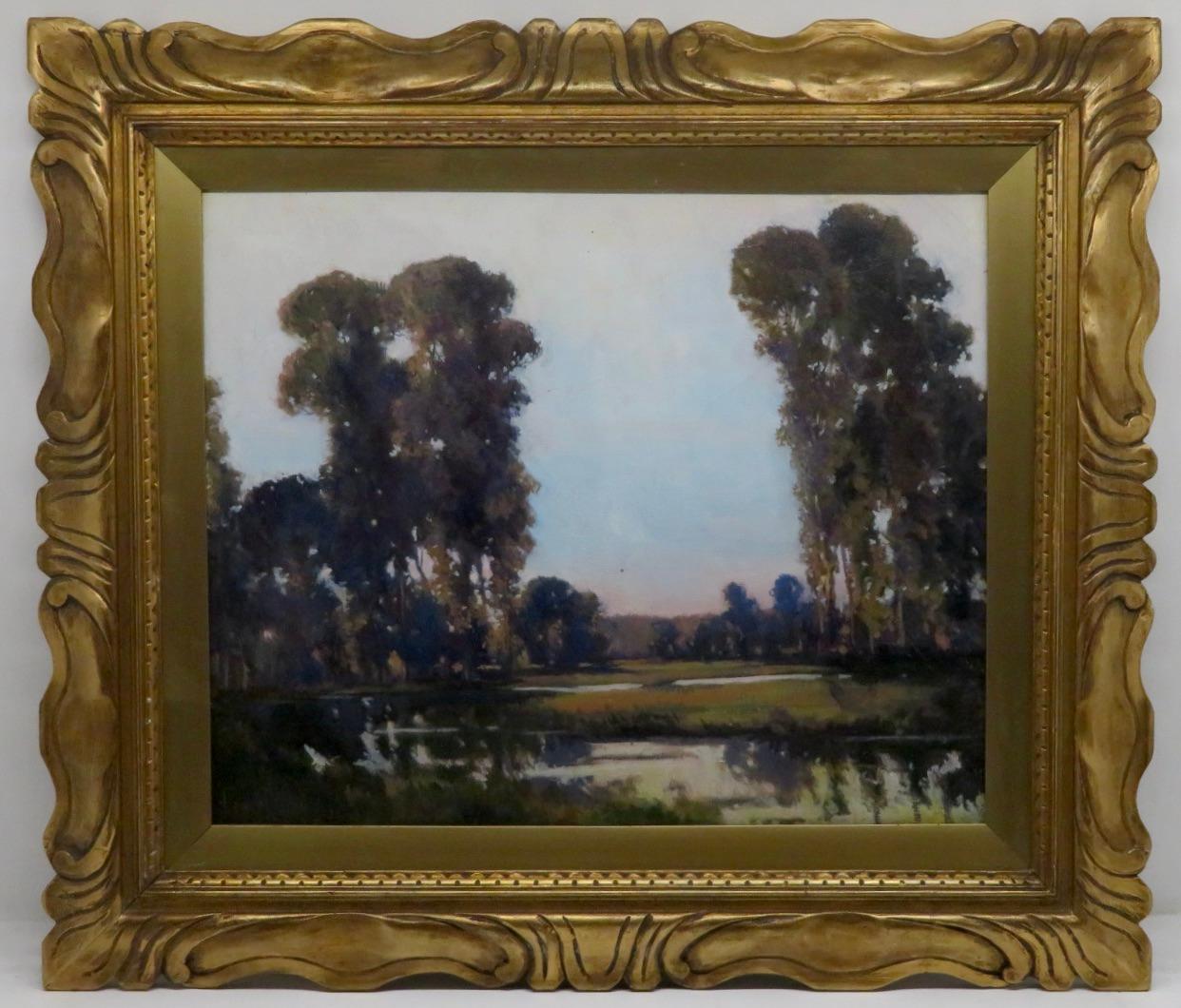
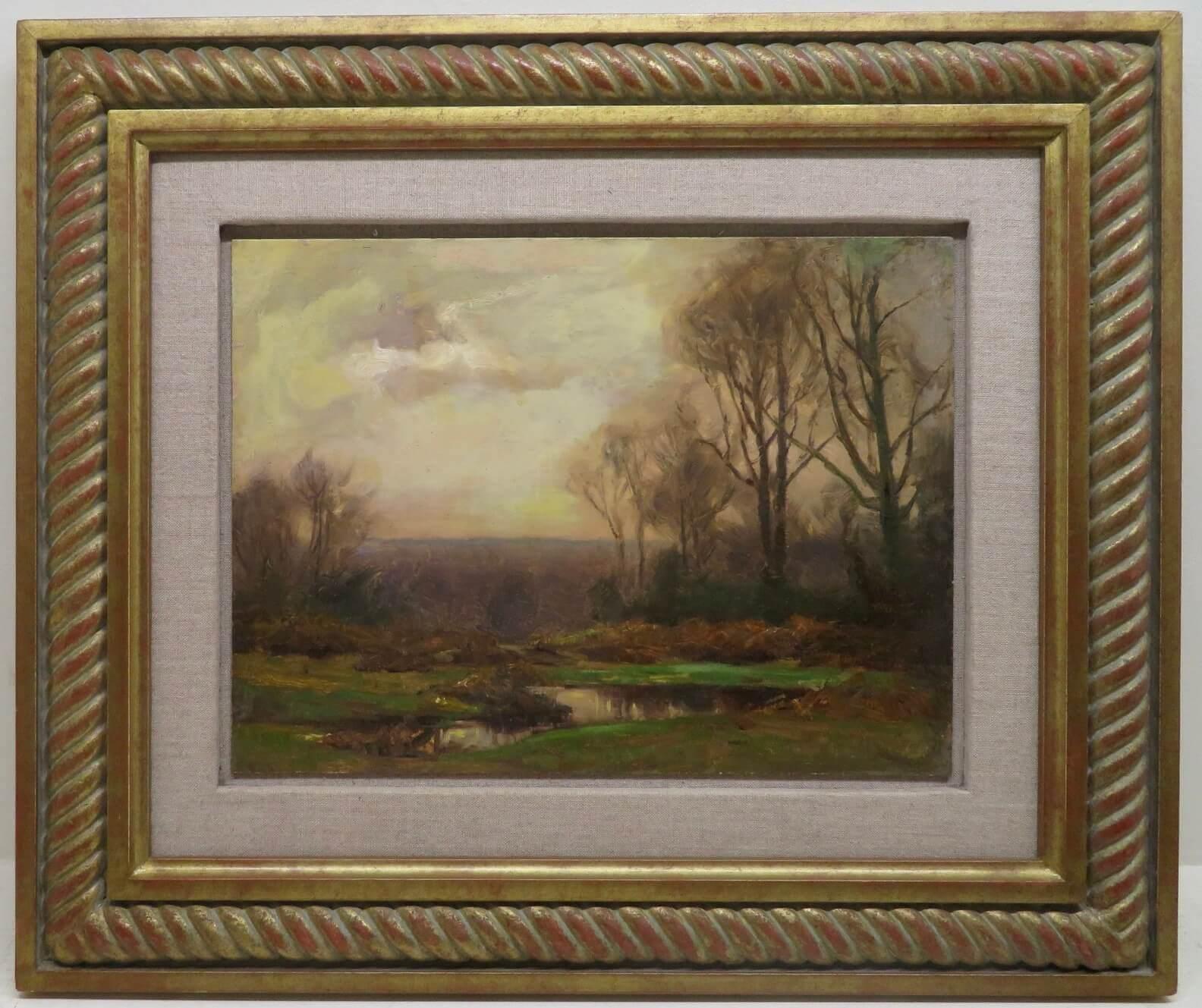
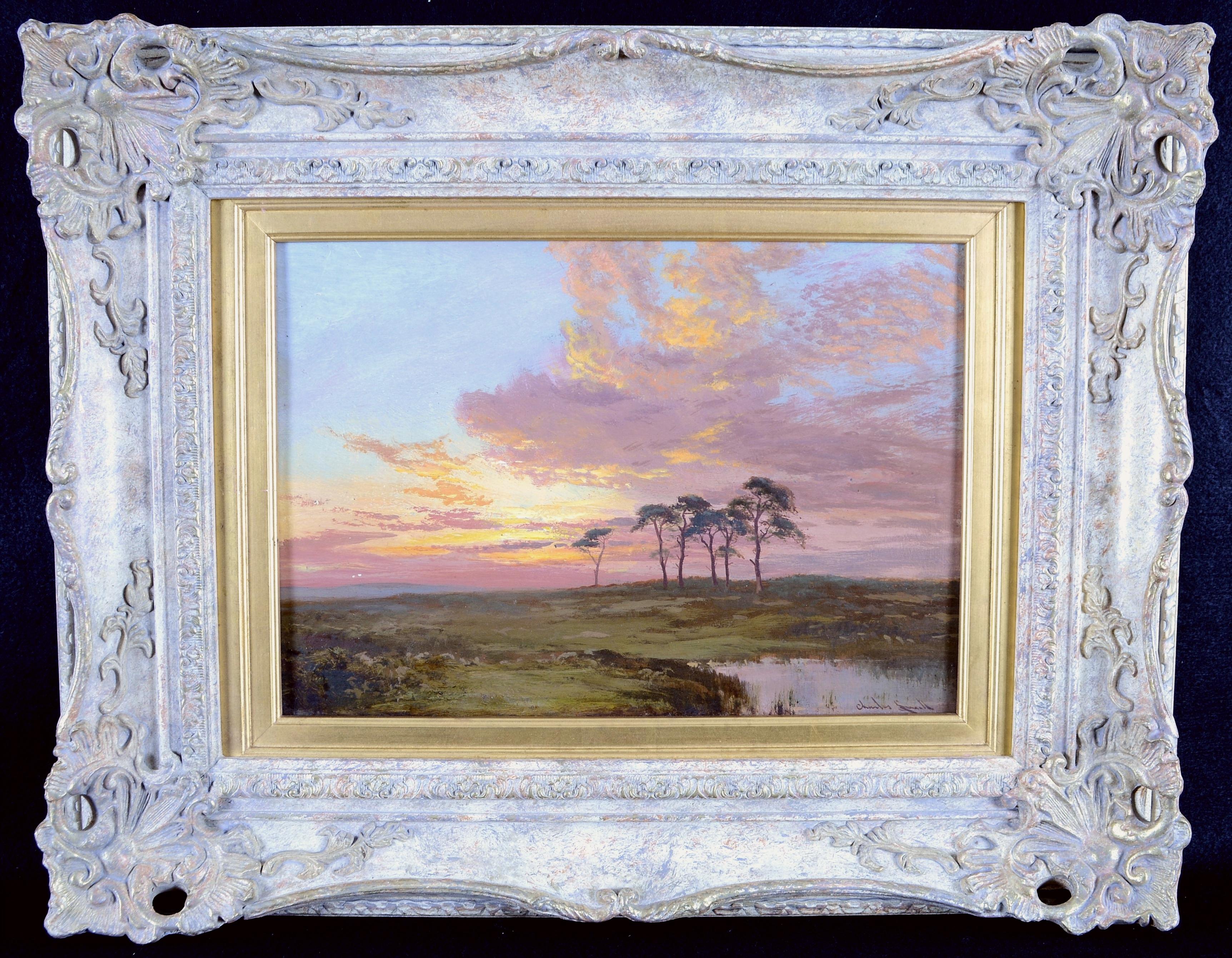
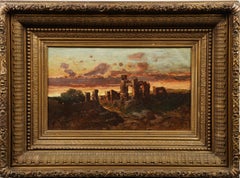
"New England Sunrise," 1910 by Hudson River School painter Lockwood DeForest (American, 1850-1932) is oil on artists card-stock and measures 9.75 x 14 inches. The work is signed by DeForest and dated Sept. 17, 1910 at lower left. The work is framed in an elegant, period appropriate frame, and ready to hang.
Lockwood de Forest was born in New York in 1850 to a prominent family. He grew up in Greenwich Village and on Long Island at the family summer estate in Cold Spring Harbor. As was customary for a cultivated family in the Gilded Age, the de Forests made frequent trips abroad. Excursions to the great museums, which were prominent on the de Forests agenda, deepened the young Lockwood's familiarity with European painting and sculpture. Though he had begun drawing and painting somewhat earlier, it was during a visit to Rome in 1868 that nineteen-year-old de Forest first began to study art seriously, taking painting lessons from the Italian landscapist Hermann David Salomon Corrodi (1844–1905). More importantly, on the same trip, Lockwood met one of America’s most celebrated painters, (and his maternal great-
uncle by marriage) Frederic Edwin Church (1826–1900), who quickly became his mentor. DeForest accompanied Church on sketching trips around Italy and continued this practice when they both returned to America in 1869. Early on in his career, de Forest made a habit of recording the date and often the place of his oil sketches, as to create a visual diary of his travels. Lockwood’s profession as a landscape painter can be primarily attributed to Frederic E. Church and his belief in the young artist’s talent.
De Forest often visited Church in the Hudson River community of Catskill where, in addition to sketching trips and afternoons of painting, he assisted with the architectural drawings and planning of Olana. In 1872, de Forest took a studio at the Tenth Street Studio Building in New York. During these formative years de Forest counted among his friend’s artists such as Sanford Robinson Gifford (1823–80), George Henry Yewell (1830–1923), John Frederick Kensett (1816–72), Jervis McEntee (1828–91), and Walter Launt Palmer (1854–1932).
Over the next decade de Forest experienced success as a painter. He exhibited for the first time at the National Academy of Design in 1872, and made two more painting trips abroad, in 1875–76 and 1877–78, traveling to the major continental capitals but also the Middle East and North Africa. His trip to the Middle East and the library at Church’s home, Olana, established his interest in design during his mid-twenties. From about 1878 to 1902, landscape painting was overshadowed by his activities and preoccupation with East Indian architecture and décor, a style that became quite fashionable in late nineteenth century America. From 1879-1883, de Forest founded Associated Artists along with Louis Comfort Tiffany, Candace Wheeler and Samuel Colman. Besides being patronized by the most prominent families in America, Associated Artists was commissioned to redecorate the White House in 1882.
While working in the decorating business, De Forest had continued to paint at home and wherever he traveled. He exhibited his work frequently at the Century Club and the National Academy of Design. In 1898, de Forest was made a full member of the Academy. After spending many winters in Santa Barbara, California around 1889, de Forest built a house and moved there permanently in 1922. De Forest created hundreds of oil sketches of Californian sites and also
traveled to the Pacific Northwest (1903), Maine (1905 and 1908), the Grand Canyon (1906 and 1909), Mexico (1904, 1906–7 and 1911), Massachusetts (1910), and Alaska (1912). Lockwood de Forest died in Santa Barbara in 1932.
- Creator:Lockwood DeForest (1850 - 1932, American)
- Creation Year:1910
- Dimensions:Height: 9.75 in (24.77 cm)Width: 14 in (35.56 cm)
- Medium:
- Movement Style:
- Period:
- Condition:
- Gallery Location:New York, NY
- Reference Number:1stDibs: LU2151214841022
About the Seller
5.0
Recognized Seller
These prestigious sellers are industry leaders and represent the highest echelon for item quality and design.
Established in 2004
1stDibs seller since 2022
5 sales on 1stDibs
- ShippingRetrieving quote...Shipping from: New York, NY
- Return Policy
More From This Seller
View AllDusk Forest Scene, Catskills by Lockwood DeForest (American, 1850-1932)
Located in New York, NY
"Dusk Forest Scene, Catskills," 1875 by Hudson River School painter Lockwood DeForest (American, 1850-1932) is oil on artists card-stock and measures 9.5 x 7 inches. The work is signed by DeForest, and dated May 13, 1875 at lower right. The work is framed in an elegant, period appropriate frame, and ready to hang.
Lockwood DeForest was born in New York in 1850 to a prominent family. He grew up in Greenwich Village and on Long Island at the family summer estate in Cold Spring Harbor. As was customary for a cultivated family in the Gilded Age, the DeForests made frequent trips abroad. Excursions to the great museums, which were prominent on the DeForests agenda, deepened the young Lockwood's familiarity with European painting and sculpture. Though he had begun drawing and painting somewhat earlier, it was during a visit to Rome in 1868 that nineteen-year-old DeForest first began to study art seriously, taking painting lessons from the Italian landscapist Hermann David Salomon Corrodi (1844–1905). More importantly, on the same trip, Lockwood met one of America’s most celebrated painters, (and his maternal great-
uncle by marriage) Frederic Edwin Church (1826–1900), who quickly became his mentor. DeForest accompanied Church on sketching trips around Italy and continued this practice when they both returned to America in 1869. Early on in his career, de Forest made a habit of recording the date and often the place of his oil sketches, as to create a visual diary of his travels. Lockwood’s profession as a landscape painter can be primarily attributed to Frederic E. Church and his belief in the young artist’s talent.
DeForest often visited Church in the Hudson River community of Catskill where, in addition to sketching trips and afternoons of painting, he assisted with the architectural drawings and planning of Olana. In 1872, DeForest took a studio at the Tenth Street Studio Building in New York. During these formative years DeForest counted among his friend’s artists such as Sanford Robinson Gifford (1823–80), George Henry Yewell (1830–1923), John Frederick Kensett (1816–72), Jervis McEntee (1828–91), and Walter Launt Palmer (1854–1932).
Over the next decade DeForest experienced success as a painter. He exhibited for the first time at the National Academy of Design in 1872, and made two more painting trips abroad, in 1875–76 and 1877–78, traveling to the major continental capitals but also the Middle East and North Africa. His trip to the Middle East and the library at Church’s home, Olana, established his interest in design during his mid-twenties. From about 1878 to 1902, landscape painting was overshadowed by his activities and preoccupation with East Indian architecture and décor, a style that became quite fashionable in late nineteenth century America. From 1879-1883, de Forest founded Associated Artists along with Louis Comfort Tiffany, Candace Wheeler...
Category
19th Century Hudson River School Landscape Paintings
Materials
Oil, Board
Hudson Highlands by Lockwood DeForest (American, 1850-1932)
Located in New York, NY
"Hudson Highlands," by Hudson River School painter Lockwood DeForest (American, 1850-1932) is oil on artists card-stock and measures 9.5 x 14 inches. The work is framed in an elegant, period appropriate frame, and ready to hang.
Lockwood de Forest was born in New York in 1850 to a prominent family. He grew up in Greenwich Village and on Long Island at the family summer estate in Cold Spring Harbor. As was customary for a cultivated family in the Gilded Age, the de Forests made frequent trips abroad. Excursions to the great museums, which were prominent on the de Forests agenda, deepened the young Lockwood's familiarity with European painting and sculpture. Though he had begun drawing and painting somewhat earlier, it was during a visit to Rome in 1868 that nineteen-year-old de Forest first began to study art seriously, taking painting lessons from the Italian landscapist Hermann David Salomon Corrodi (1844–1905). More importantly, on the same trip, Lockwood met one of America’s most celebrated painters, (and his maternal great-
uncle by marriage) Frederic Edwin Church (1826–1900), who quickly became his mentor. DeForest accompanied Church on sketching trips around Italy and continued this practice when they both returned to America in 1869. Early on in his career, de Forest made a habit of recording the date and often the place of his oil sketches, as to create a visual diary of his travels. Lockwood’s profession as a landscape painter can be primarily attributed to Frederic E. Church and his belief in the young artist’s talent.
De Forest often visited Church in the Hudson River community of Catskill where, in addition to sketching trips and afternoons of painting, he assisted with the architectural drawings and planning of Olana. In 1872, de Forest took a studio at the Tenth Street Studio Building in New York. During these formative years de Forest counted among his friend’s artists such as Sanford Robinson Gifford (1823–80), George Henry Yewell (1830–1923), John Frederick Kensett (1816–72), Jervis McEntee (1828–91), and Walter Launt Palmer (1854–1932).
Over the next decade de Forest experienced success as a painter. He exhibited for the first time at the National Academy of Design in 1872, and made two more painting trips abroad, in 1875–76 and 1877–78, traveling to the major continental capitals but also the Middle East and North Africa. His trip to the Middle East and the library at Church’s home, Olana, established his interest in design during his mid-twenties. From about 1878 to 1902, landscape painting was overshadowed by his activities and preoccupation with East Indian architecture and décor, a style that became quite fashionable in late nineteenth century America. From 1879-1883, de Forest founded Associated Artists along with Louis Comfort Tiffany, Candace Wheeler...
Category
19th Century Hudson River School Landscape Paintings
Materials
Oil, Board
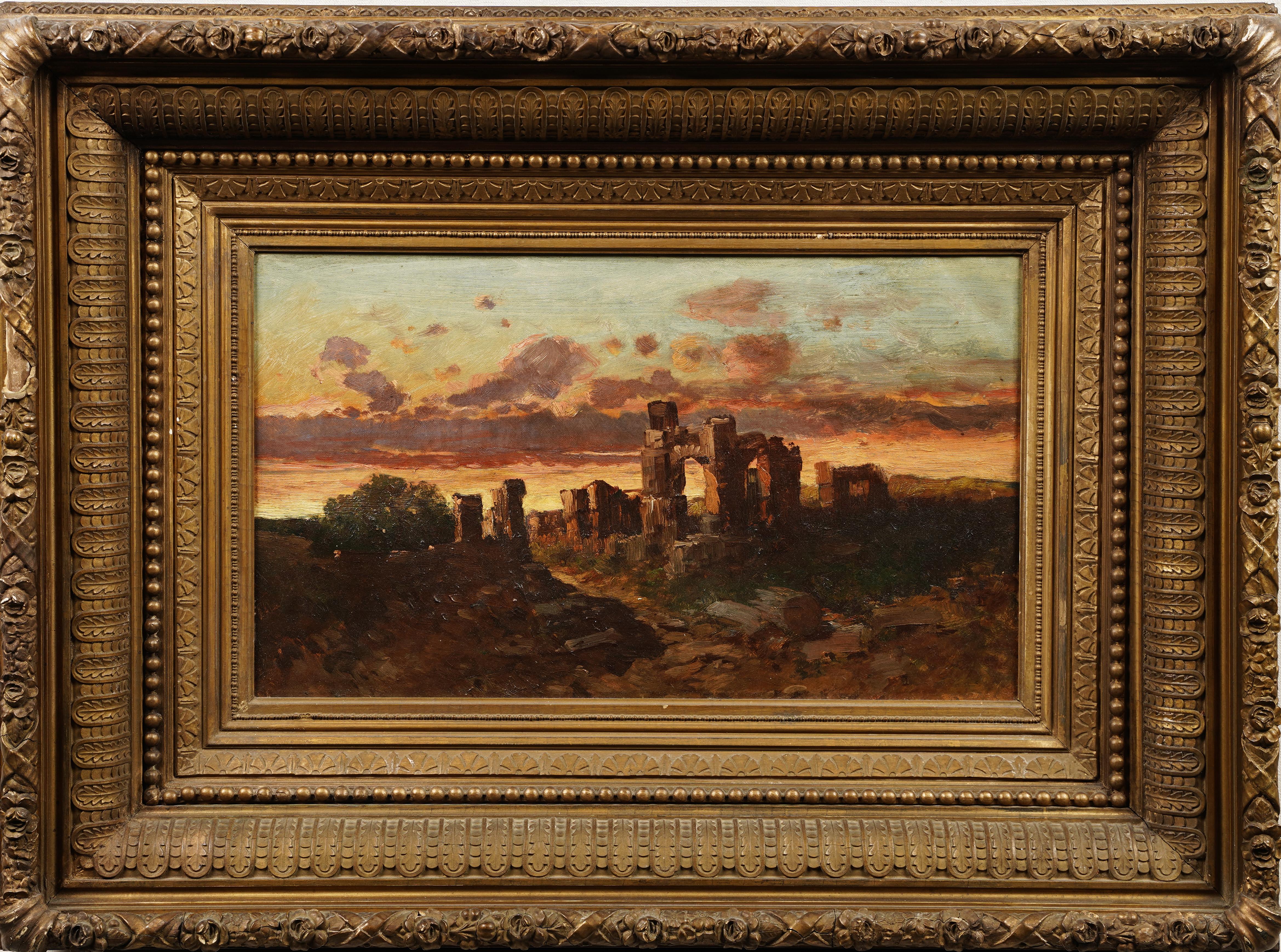
Sunset on the Hudson River by Hermann Simon (American, 1846-1895)
Located in New York, NY
Painted by Hudson River School artist Hermann Simon (1846-1895) , "Sunset on the Hudson River" is oil on canvas, measures 15 x 25 inches, and is signed and dated 1875 at the lower ri...
Category
19th Century Hudson River School Landscape Paintings
Materials
Canvas, Oil
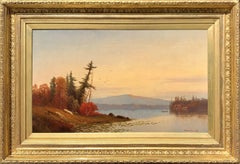
Autumn Landscape (NH) by Hudson River artist Henry A. Ferguson (1845-1911)
By Henry A. Ferguson
Located in New York, NY
Painted by Hudson River School artist Henry A. Ferguson (1845-1911), "Autumn Landscape (NH)" is oil on canvas and measures 9 x 15 inches. The painting is signed and dated 1864, at th...
Category
19th Century Hudson River School Landscape Paintings
Materials
Canvas, Oil
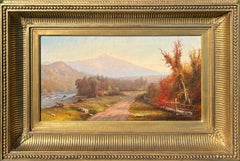
View of South Pond, New York, 1879 by Ida H. Stebbins (American, b. 1851)
Located in New York, NY
Painted by Hudson River School artist Ida H. Stebbins (b. 1851), "View of South Pond, New York," 1879 is oil on canvas, measures 23 x 33 1/2 inches, and is signed and dated 1879 at the lower left. The work is framed in an elegant Barbizon style frame and ready to hang.
Ida H. Stebbins was born in January 1851 in Chelsea, Massachusetts to Mary and Isaac Stebbins, a teacher. Though scant records remain of Stebbins’ artistic training or career, various personal details of her life have been gleaned from contemporary newspapers and federal documents. By the time View of South Pond, New York was painted in 1879, she was living in Boston. Like many artists of her generation, Stebbins likely traveled throughout the Northeast region, gaining inspiration for her paintings from the landscape of New England and New York. Stebbins was likely visiting
upstate New York when she painted this sweeping view of South Pond and the surrounding mountains near Long Lake in the Adirondacks just south of Deerland. Here, Stebbins captures the stunning vermillion, burnt orange and brown tones of the autumn landscape with the style and precise rendering often seen in paintings produced by the Hudson River School.
Shortly after the completion of View of South Pond, New York, Stebbins married Frank H. Slack, a clerk, in her hometown of Chelsea on December 14, 1881 at the age of thirty. The couple moved to Hotel Comfort in Boston, where their son, Roland Stewart Slack was born on May 22, 1883. It seems likely that her husband died in the mid-1880s since on December 3, 1889, records indicate that Ida and Roland changed their last name back to her maiden name of Stebbins.
Roland Stewart Stebbins (1883-1974) inherited his mother’s interest in art, studying at the Pennsylvania Academy of the Fine Arts, Columbia University in New York, and the Art Students League of New York. He also studied at the Académie de la Grand Chaumière and the Munich Academy of Fine Arts. Today, he is remembered for his marine and genre paintings and for his legacy as a respected professor of art education at the University of Wisconsin, Madison.
On January 1, 1890, Ida married her second husband, Timothy Jarvis, in Somerville, Massachusetts. Their daughter, Ida Hazel Jarvis, was born soon after in 1893. However, the child suffered paralysis from a brain tumor...
Category
19th Century Hudson River School Landscape Paintings
Materials
Canvas, Oil
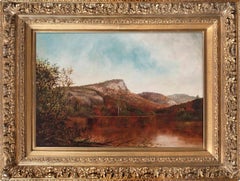
Lake George by Hudson River School artist William Richardson Tyler (1825-1896)
Located in New York, NY
Hudson River School artist William Richardson Tyler's (1825-1896) "Lake George," is oil on canvas and measures 8 x 13 inches. The painting is signed at the lower center and signed an...
Category
19th Century Hudson River School Landscape Paintings
Materials
Canvas, Oil
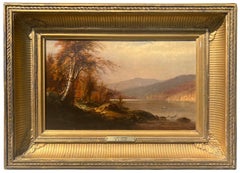
You May Also Like
Oil Sunset titled "Virginia Sunset"
Located in Fredericksburg, VA
William H. Langworthy (1836–1900) was an American painter known for his contributions to landscape and genre painting during the late 19th century. Little is known about Langworthy's...
Category
Mid-19th Century Hudson River School Landscape Paintings
Materials
Canvas, Oil
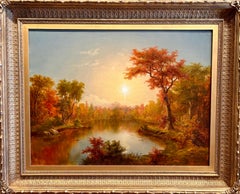
Lewis Taylor Gibb (1873-1945) English large Oil Painting SUNSET LANDSCAPE
Located in Cirencester, GB
ARTIST: Lewis Taylor Gibb (1873-1945) English
TITLE: "Tranquil River Landscape At Dusk"
SIGNED: lower left
MEDIUM: oil on canvas
SIZE: 78cm x 68cm inc frame
CONDITION: excellent just a couple of very light cracks to the paint commensurate with age
PRICE: £650
DETAIL: Painter, printmaker, notably of London landscapes and flowers, lecturer, born in London, daughter of the artist H Clarence Whaite. She studied at the Slade School of Fine Art, 1952–6, at the University of London Institute of Education, 1958–9, and at the Royal Academy Schools, 1968–9 and 1977–8. She became lecturer, then senior art lecturer at St Gabriel...
Category
Early 20th Century Impressionist Landscape Paintings
Materials
Oil
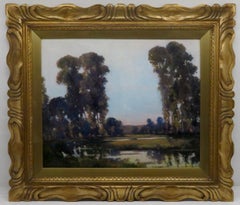
1863-1936 English Impressionist signed Oil painting NEW FOREST SUNSET HAMPSHIRE
By Frederick Golden Short
Located in Cirencester, GB
ARTIST: Frederick Golden Short (1863-1936) British
TITLE: "New Forest Sunset"
SIGNED: unsigned - labelled verso for Louise Kosman Gallery where originally purchased
MEDIUM: oil on ...
Category
Mid-20th Century Post-Impressionist Landscape Paintings
Materials
Oil
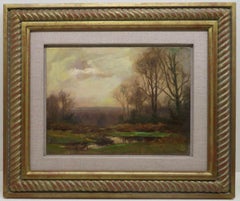
Sunset Landscape - 19th Century Antique English Impressionist Oil Painting
Located in Sevenoaks, GB
A beautiful late 19th century English impressionist oil on board depicting an extensive landscape at sunset.
Excellent quality work by an accomplished artist. Indistinctly signed lo...
Category
1890s Impressionist Landscape Paintings
Materials
Canvas, Oil
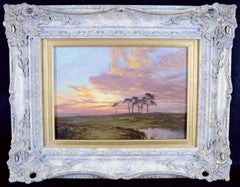
Antique American Sunset Landscape Hudson River School Framed Oil Painting
Located in Buffalo, NY
Important framed 19th century Hudson River School landscape. Possibly estate stamped. Housed in an impressive period frame. Oil on canvas.
Category
1860s Hudson River School Landscape Paintings
Materials
Canvas, Oil
$6,800 Sale Price
20% Off
Twilight in the Hills
By William Louis Sonntag Sr. 1
Located in Wiscasett, ME
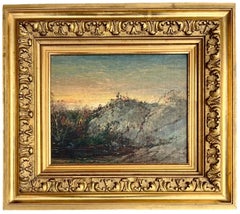
A luminous Autumn oil on canvas board landscape, probably of the hills in the Hudson River Valley, by the noted American artist William Louis Sonntag (1822-1900). Signed in the lower right. Sonntag was born near Pittsburgh, PA and moved to Cincinnati, OH in the 1840’s to study art. He studied for a brief time with G. Frankenstein at the Cincinnati Academy of Fine Art and his idealized paintings of American wilderness and visionary paintings of imagined European ruins were commercially successful. He traveled twice to Europe in the 1850’s to improve his skills, eventually settling in New York City. He joined the National Academy of Design, where he exhibited his works for forty years. His mature works identify him with the Hudson River School of landscape painters. A romantic and naturalistic painter of his surroundings, Sonntag also created idealized paintings of Roman ruins, recalling his European trips of earlier years. Sonntag was an Associate (1860) and Academician (1861) at the National Academy of Design, and a member of the American Watercolor Society, Artists Fund Society, and the American Art Union...
Category
19th Century Hudson River School Landscape Paintings
Materials
Oil
More Ways To Browse
Artist Robinson
Antique Architectural Plans
Frederic Church
Antique Sunrise Painting
Salomon Corrodi
R Thomas
Schmidt Oil Painting
Tuscany Landscape Paintings
19th Century Farm Paintings
Industrial Scene Painting
Modernist Cityscape Painting
Moored Boat Oil Painting
Mountain Scene Painting
New Mexico Oil Paintings
Pierre Neveu
Snow River
Vintage Art Melbourne
Wave Crashing Oil Painting