Items Similar to Dancing cranes II by Lumi Mizutani - Small Japanese style painting, gold, birds

Want more images or videos?
Request additional images or videos from the seller
1 of 7
Lumi MizutaniDancing cranes II by Lumi Mizutani - Small Japanese style painting, gold, birds2022
2022
$1,922
£1,422.59
€1,600
CA$2,630.40
A$2,864.25
CHF 1,515.34
MX$34,541.83
NOK 19,280.34
SEK 17,626.29
DKK 12,188.45
About the Item
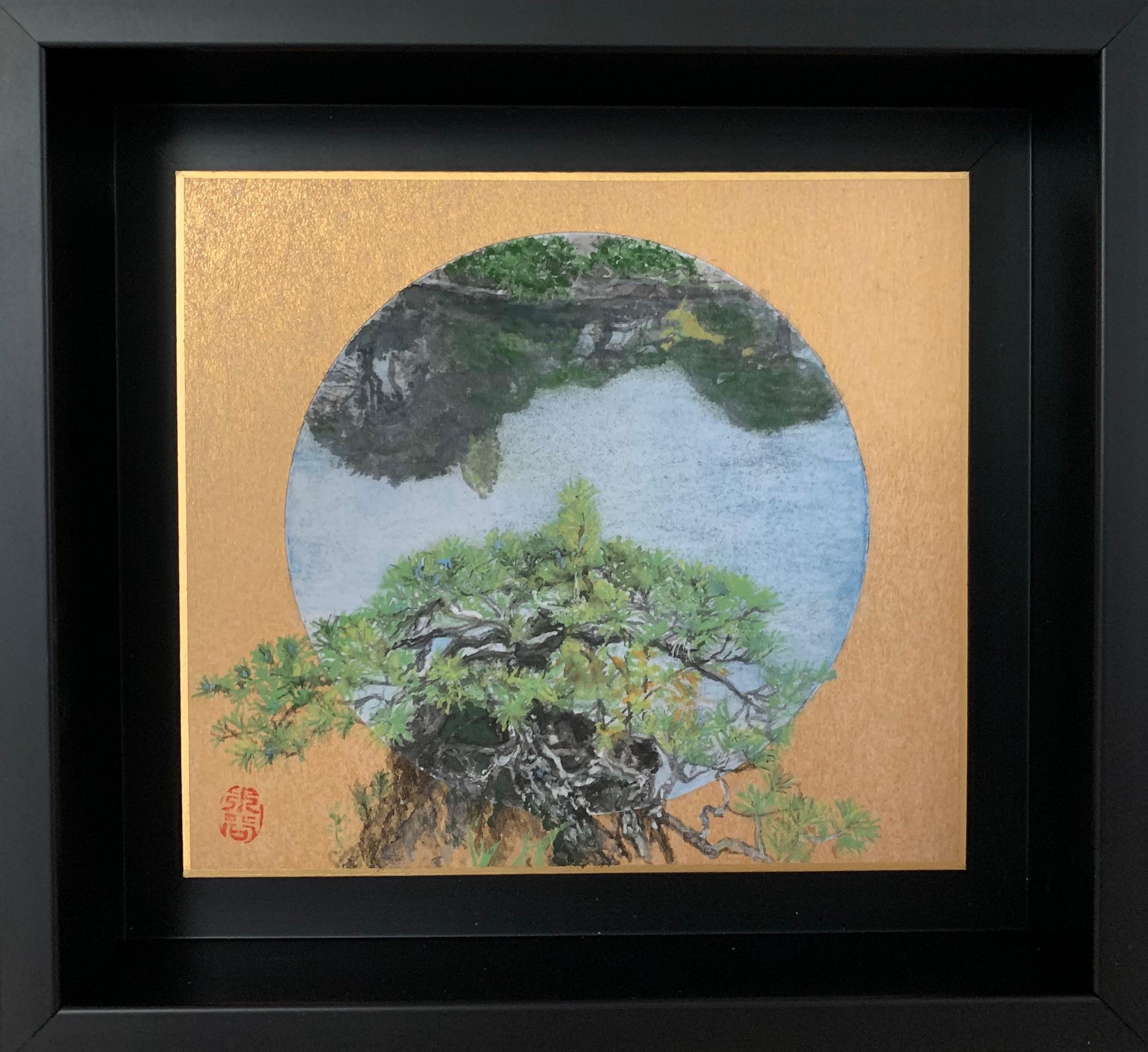
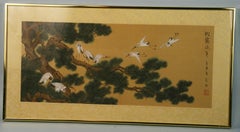
Dancing cranes II is a unique painting by contemporary artist Lumi Mizutani. The painting is made with India ink, Japanese pigments and silver leaf on Japanese cardboard, dimensions are 27.3 × 24.2 cm (10.7 × 9.5 in). Dimensions of the framed artwork are 32.4 x 29.3 cm (12.7 x 11.5 in).
The artwork is signed, sold framed and comes with a certificate of authenticity.
Two red-crowned cranes are depicted in this miniature painting, which was done in coloured pigments and Indian ink. With long necks and legs that give them a very graceful appearance, they are among the largest birds in the world. They are unusual in that they are white and black with a small red portion on top of the head, giving them the Chinese name "vermilion-topped cranes."
Lumi Mizutani pays homage to Japan and its wonderful landscapes especially those at Higashiyama-ku in Kyoto and Ueno in Tokyo. The artist places a lot of emphasis on nature and trees in her works of art.
Lumi Mizutani works on the alchemy between different elements she uses: paper, ink and water. Through the magic play of the materials, Lumi invites the viewer to enter the world of her artworks full of emotion. The artist juggles with the codes by using traditional techniques, on the one hand, and permanently reinventing with her own techniques, on the other.
- Creator:Lumi Mizutani (1948)
- Creation Year:2022
- Dimensions:Height: 10.75 in (27.3 cm)Width: 9.53 in (24.2 cm)
- Medium:
- Movement Style:
- Period:
- Condition:
- Gallery Location:Paris, FR
- Reference Number:1stDibs: LU803117420942
Lumi Mizutani
Painter and lithographer, Lumi Mizutani draws her inspiration from traditional Chinese and Japanese painting techniques. Her ink drawings and her paintings extend this tradition, and, through constant experimentation, carry her towards new horizons. For a few years now Lumi Mizutani’s work has revolved around the duality between abstract and figurative, black and colour, the spontaneity of the gesture (the ink painting) and the patient composition work (the painting with pigment). Thanks to these antagonisms she finds the necessary and complementary resources to express herself. “I felt the desire to introduce colors, especially Japanese color pigments, familiar to my childhood. Japanese painting thus entered my artistic expression and my life. While respecting the ancestral techniques and codes, I strive to create a personal and contemporary footprint that challenges the viewer by the emotion it arouses.“
About the Seller
5.0
Platinum Seller
Premium sellers with a 4.7+ rating and 24-hour response times
Established in 2013
1stDibs seller since 2017
529 sales on 1stDibs
Typical response time: 4 hours
- ShippingRetrieving quote...Shipping from: Paris, France
- Return Policy
More From This Seller
View AllThe other shore by Lumi Mizutani - Japanese landscape painting, gold, pigments
By Lumi Mizutani
Located in Paris, FR
The other shore is a unique painting by contemporary artist Lumi Mizutani. The painting is made with pigments, India ink on Japanese cardboard, dimensions are 12.1 × 13.6 cm (4.8 × 5...
Category
2010s Contemporary Landscape Paintings
Materials
Ink, Pigment, Cardboard
Maples by Lumi Mizutani - Japanese style landscape painting, black and gold
By Lumi Mizutani
Located in Paris, FR
Maples is a unique painting by contemporary artist Lumi Mizutani. The painting is made with pigments, India ink, gold leaf on panel mounted on Japanese paper, diameter is 22.7 cm (8....
Category
2010s Contemporary Landscape Paintings
Materials
Gold Leaf
Urban Landscape V – Migratory Birds by Lumi Mizutani - Japanese art, diptych
By Lumi Mizutani
Located in Paris, FR
Urban Landscape V – Migratory Birds is a unique painting by contemporary artist Lumi Mizutani. The painting is made with Japanese pigments and gold leaves on Japanese paper mounted o...
Category
2010s Contemporary Landscape Paintings
Materials
Gold Leaf
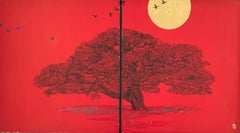
Imperial Pine III by Lumi Mizutani - Japanese style painting, gold leaf, red
By Lumi Mizutani
Located in Paris, FR
Imperial Pine III is a unique painting by contemporary artist Lumi Mizutani. The painting is made with Chinese painting, Japanese pigment and gold leaf on Japanese cardboard, dimensi...
Category
2010s Contemporary Figurative Paintings
Materials
Gold Leaf
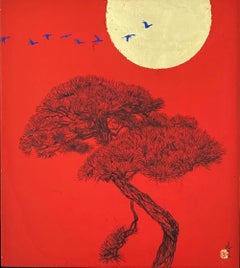
Good Weather by Lumi Mizutani - Japanese style painting, tree, gold leaf
By Lumi Mizutani
Located in Paris, FR
Good Weather is a unique painting by Japanese contemporary artist Lumi Mizutani. This painting is made with Japanese pigments, India ink and gold leaf on Japanese cardboard. Dimensio...
Category
2010s Contemporary Landscape Paintings
Materials
Gold Leaf
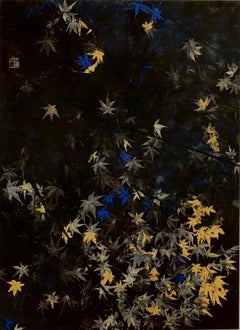
Nocturn VI by Lumi Mizutani - Japanese style landscape painting, black and gold
By Lumi Mizutani
Located in Paris, FR
Nocturn VI is a unique painting by contemporary artist Lumi Mizutani. The painting is made with japanese pigments, gold leaves on Japanese paper mounted on panel, dimensions are 72.7...
Category
2010s Contemporary Landscape Paintings
Materials
Gold Leaf
You May Also Like
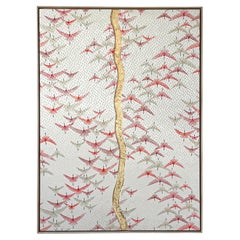
Vintage kimono textile art " Cranes ~ Kintsugi ~ " by ikasu White Red Gold Japan
By Kimono ikasu
Located in Setagaya City, JP
<
The frame for this work is made of paulownia wood taken from antique Kiritansu - chest-of-drawers for kimono.
I use antique kiritansu that can’t be used as furniture anymore to create basis and frames for my works. It adds them even more authentic atmosphere of traditional wabisabi spirit. Can you feel it?
The piece uses the concept of "kintsugi" - it "unites" the pieces of antique kimono back together with golden leaf to give it a second wind as art work.
<< Period / Story
The kimono used in this piece was originally crafted during the late Showa period (1960-80ies).
<< Explanation and meaning of pattern and colors
The Japanese saying goes, "A crane lives a thousand years, a tortoise lives ten thousand years," making cranes a symbol of longevity.
Cranes are also known for staying with the same partner for their entire lives, which is why they are often used at weddings and other celebrations to symbolize "marital bliss" and the desire for harmony between husband and wife.
On this particular piece, cranes are flying through snow woven on the fabric, as if they are overcoming all the disasters to get to their beloved ones.
The color scarlet, or deeply dyed red, used for the most of the cranes here, has long been associated with the meaning of "warding off evil." It is believed to possess the power to repel malevolent forces and invite good fortune.
During the Heian period, scarlet was reserved for sacred buildings and ceremonial objects that held great significance. Ordinary people were prohibited from wearing scarlet-red kimonos, which made it a highly special color.
<< Characteristics of the fabric
Cranes, going up and down, are generously decorated by kimpaku here. "Kimpaku" (金箔) refers to gold leaf/foil in Japanese. Gold leaf is a traditional material used in various aspects of Japanese culture, including art, crafts, and even in culinary applications.
In traditional Japanese art, gold leaf is often applied to religious objects, sculptures, paintings, and lacquerware to create a luxurious and decorative effect. The use of gold leaf in art dates back centuries and is associated with a sense of wealth, prestige, and the divine.
Traditional kimpaku technique is used here to make an accent decoration in the middle.
<< About the frame
This artwork frame is crafted from paulownia wood, a uniquely Japanese material closely tied to the world of kimonos, and it serves to convey the refined beauty of Japanese nature.
Paulownia wood is known as the lightest wood in Japan, prased for its natural luster, resistance to moisture, and resilience against cracking. Since ancient times, it has been used in crafting furniture, chests, and musical instruments.
Paulownia wood is closely linked to kimono culture. During the Edo period, it became customary to store cherished kimonos in paulownia chests...
Category
Late 20th Century Japanese Japonisme Paintings and Screens
Materials
Gold Leaf
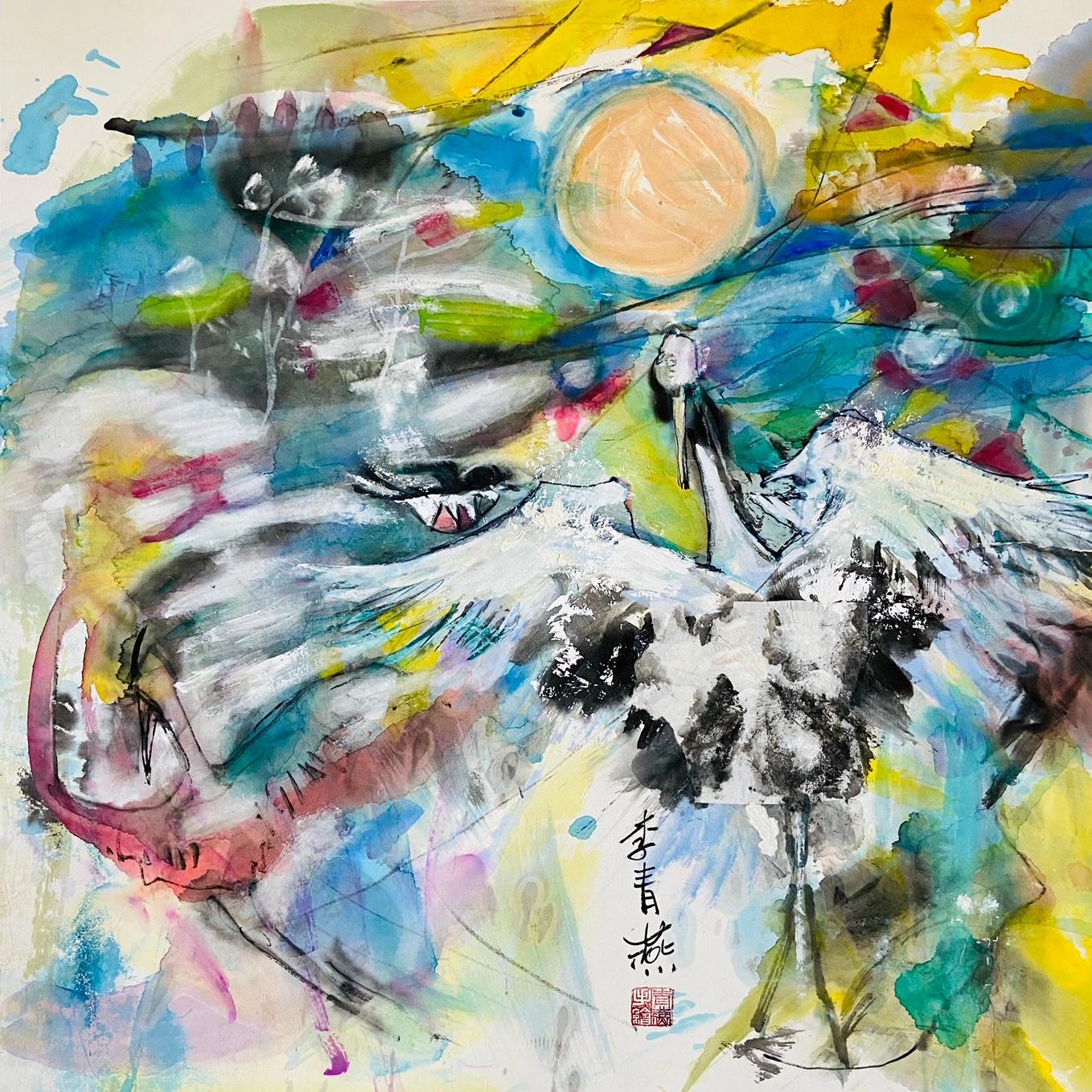
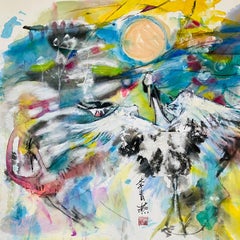
Chinese Contemporary art by Li Qingyan - Dancing Cranes
Located in Paris, IDF
Ink & watercolor on rice paper, Framed 80 x 80 x 5 cm
Li Qingyan is a female Chinese artist born in 1972 who lives and works in Beijing, China. Qingyan is a painter by profession. S...
Category
2010s Abstract Drawings and Watercolors
Materials
Ink, Watercolor, Rice Paper
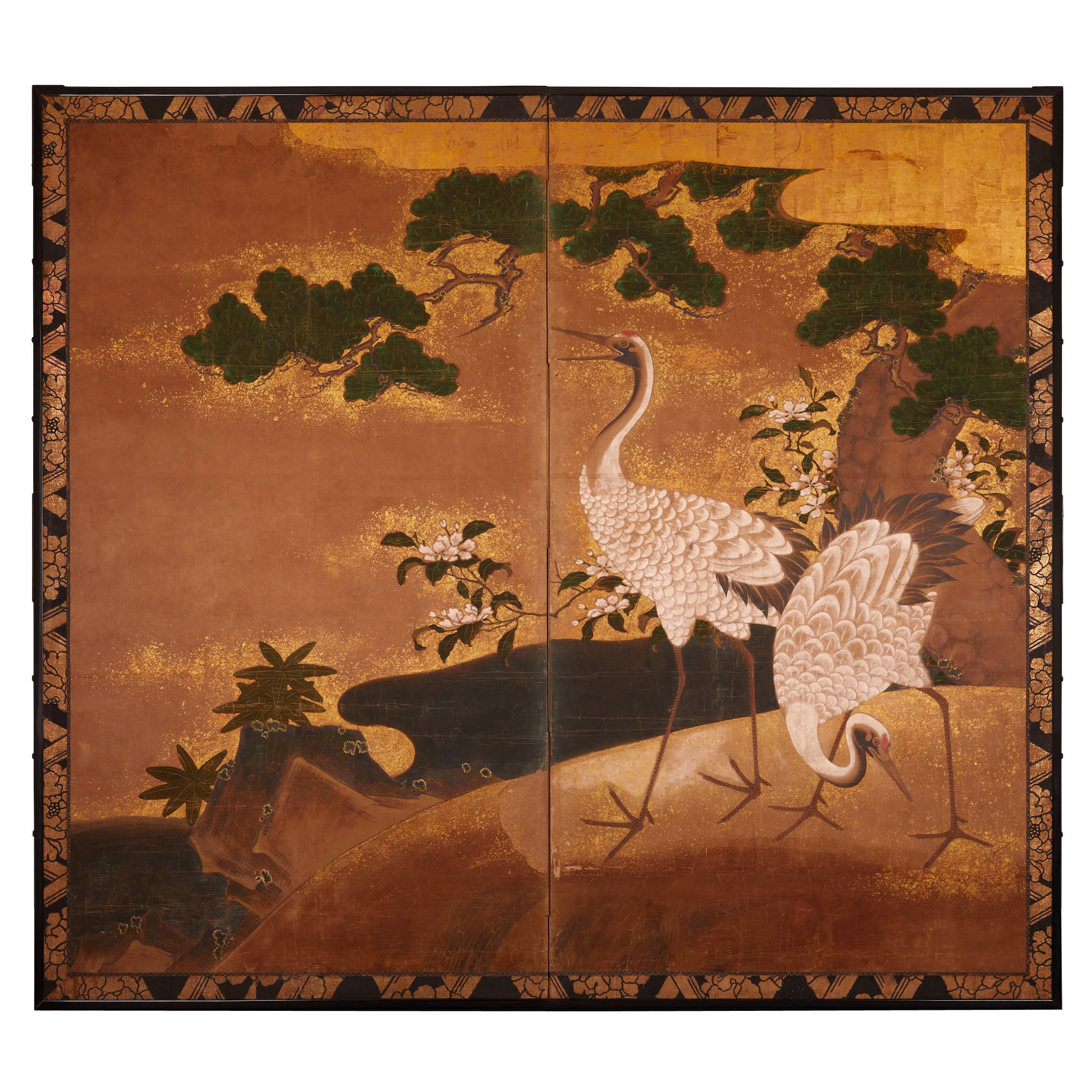
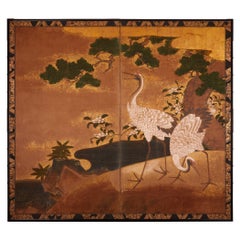
Japanese Two-Panel Screen: Cranes on Gold
Located in Hudson, NY
Early Kano School painting of pine trees overlooking two beautifully painted cranes and floral design in a natural setting by water’s edge. Mineral pig...
Category
Antique Late 18th Century Japanese Paintings and Screens
Materials
Gold, Gold Leaf
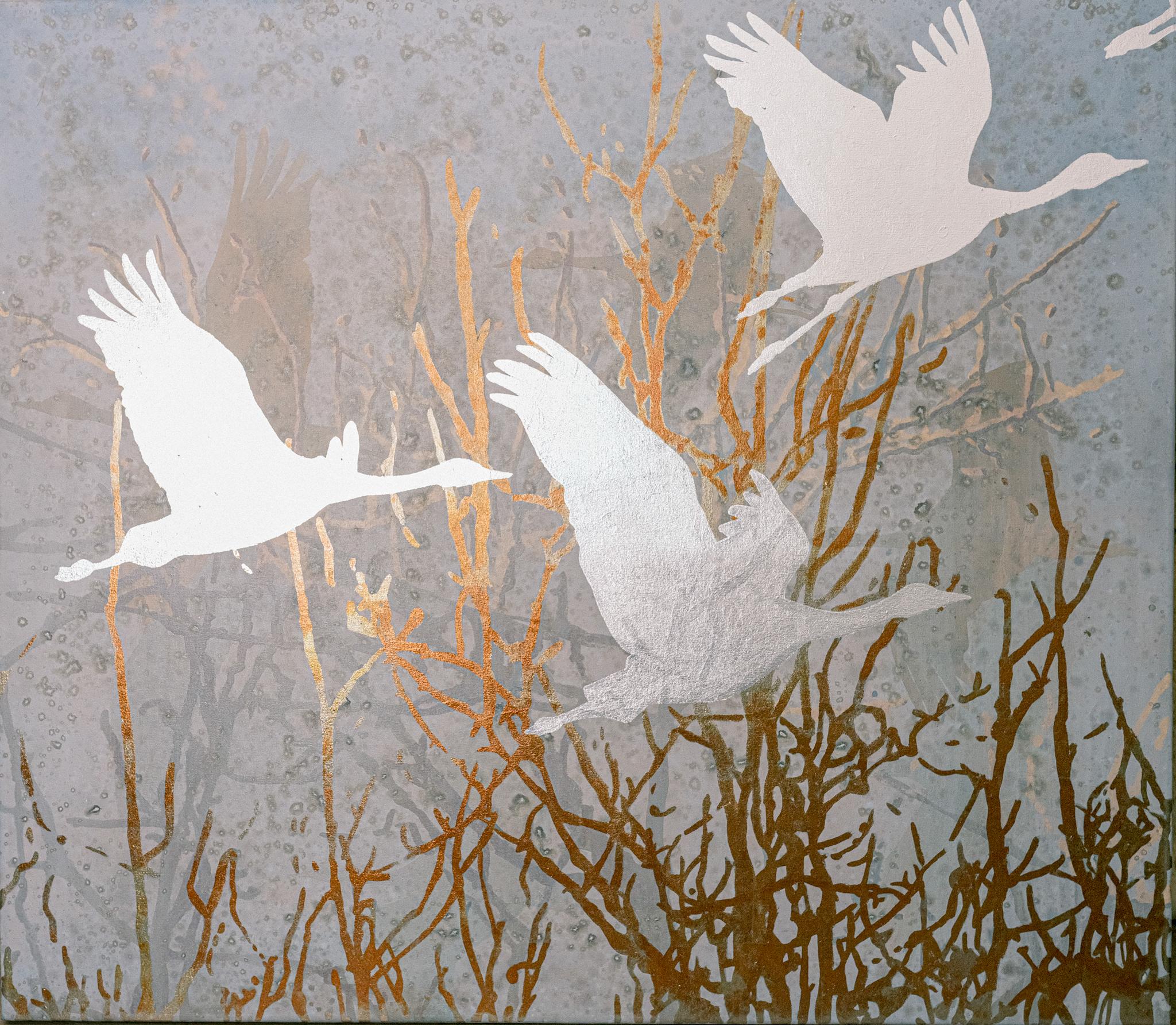
"Migration of Silver Geece" Large Painting of Birds and Trees with Gold Leaf
By Thomas Swanston
Located in Austin, TX
Mixed Media on Canvas
50 x 56 in.
A stunningly beautiful painting that portrays the grace and wild beauty of migrating geese with a combination of naturalistic subject matter and ab...
Category
21st Century and Contemporary Neo-Expressionist Animal Drawings and Wate...
Materials
Gold Leaf

Japanese Two-Panel Screen with Snow Cranes on a Willow Tree, 19th C
Located in New York, NY
This great masterpiece is one of the most amazing screen paintings we have seen, each snow crane is painted with its own personality and attitude, using the finest pigments and Gofun...
Category
Antique 1860s Japanese Japonisme Paintings and Screens
Materials
Brocade, Wood
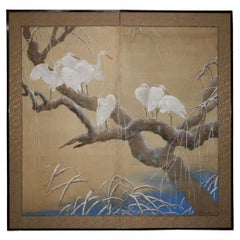
Japanese Landscape and Cranes Painting on Silk #One
Located in Douglas Manor, NY
3874 Japanese gouache landscape with trees and cranes
Set in brass finish metal frame
Category
1960s Animal Paintings
Materials
Gouache
Read More
This Weathered-Steel Sculpture Distills a Form of Protest into a Minimalist Monument
Part of Alejandro Vega Beuvrin’s “Barricada” series, the work is a subversive tribute to the street smarts of citizen activists.
Tom Price Sculpted One of These Benches from Resin, the Other from Coal
Part art, part seating, they offer a fascinating meditation on life’s dualities.