Items Similar to Forains sur la plage

Want more images or videos?
Request additional images or videos from the seller
1 of 9
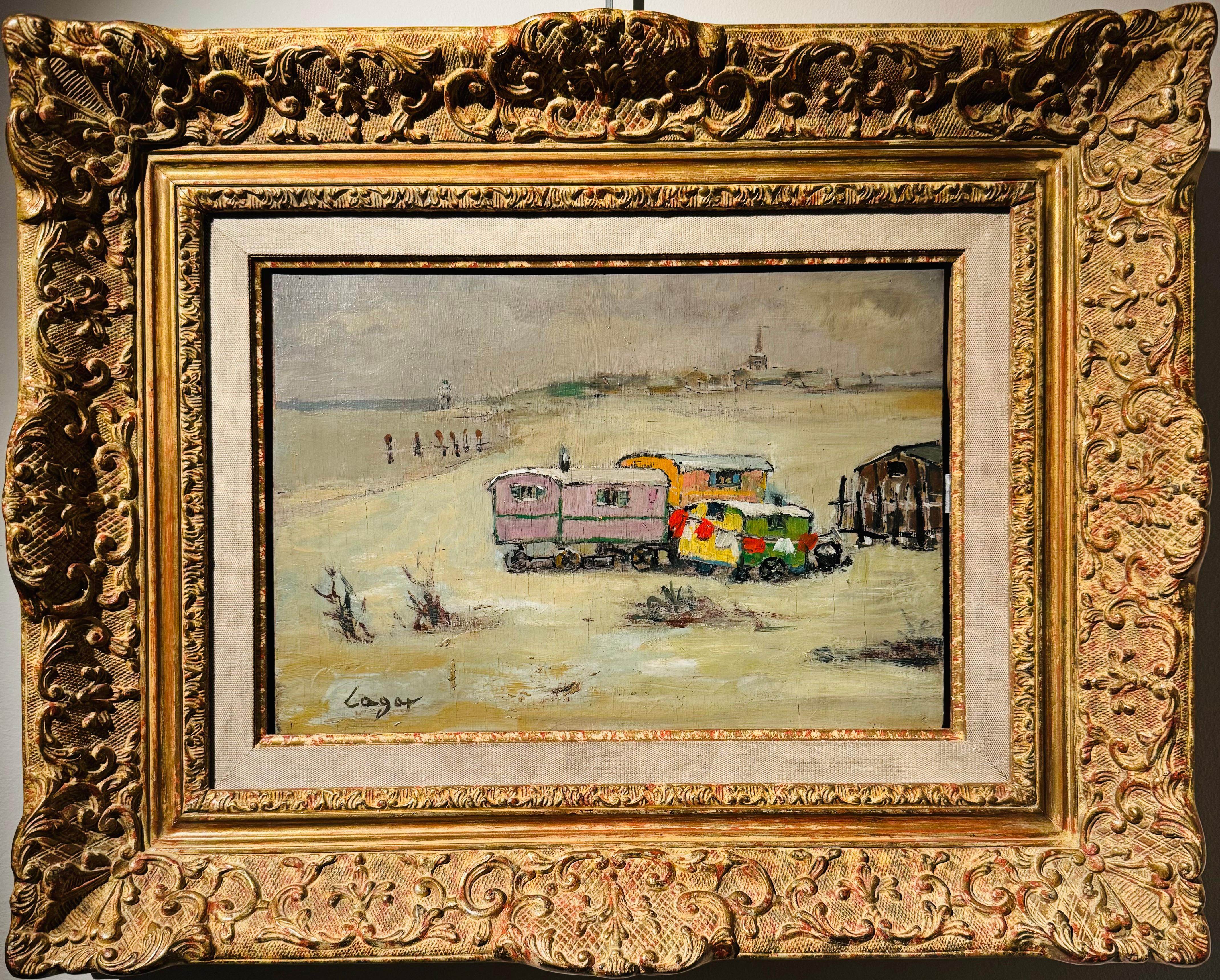
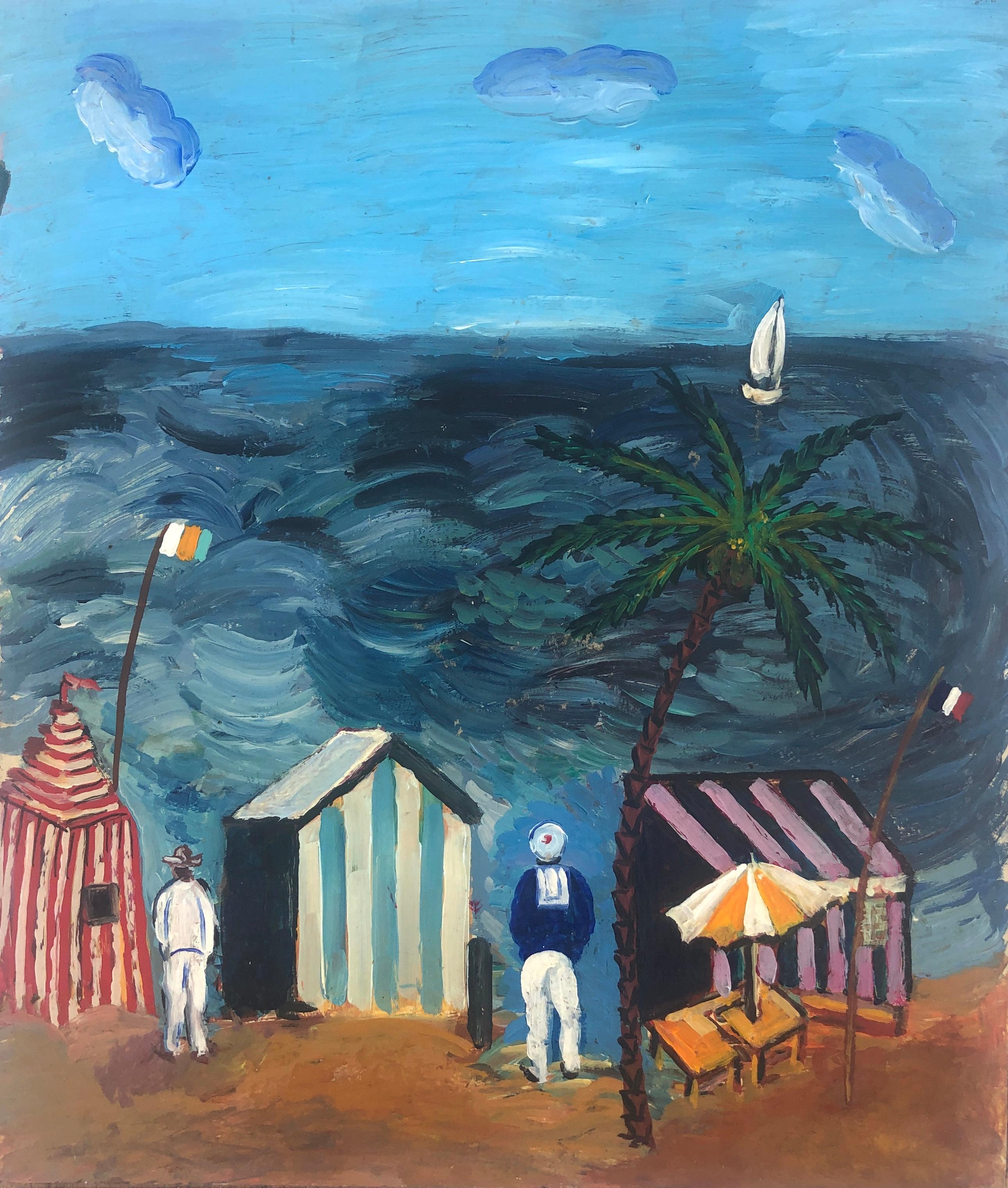
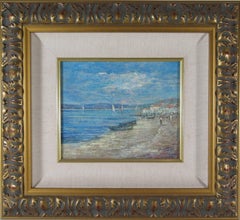
Celso LagarForains sur la plage1951
1951
$4,786.57
£3,575.07
€4,000
CA$6,594.38
A$7,186.71
CHF 3,805.67
MX$86,319.94
NOK 48,180.65
SEK 44,297.37
DKK 30,473.08
About the Item
CELSO LAGAR
Spanish, 1891 - 1966
FORAINS SUR LA PLAGE
signed "Lagar" (lower right)
signed, located, dated and titled “Lagar Pennedepie sur Honfleur / 1951 / Forains dans la Grove” (on the reverse)
oil on canvas
11-1/2 x 16-1/8 inches (29 x 41 cm.)
framed: 16-1/8 × 20-2/3 inches (41 × 52.5 cm.)
PROVENANCE
Private French Collector
Celso Lagar Arroyo (Ciudad Rodrigo, 1891 - Seville, 1966) was an expressionist Spanish painter of the first generation of the School of Paris, where he lived most of his life. He was influenced by avant-gardes of all kinds, such as cubism and fovism. He painted mainly landscapes and still lifes. From a personal point of view, he is a depressive person and completely dependent on his wife, the French sculptor Hortense Begué.
From his native Ciudad Rodrigo, he went to Madrid to be part of the workshop of one of the best sculptors of the moment, Miguel Blay. During 1910 and 1911 he visited Barcelona. Later he studied sculpture in Paris in 1911 advised by Blay, where he met Joseph Bernard, his friend Amedeo Modigliani and his future wife, the French sculptor, Hortense Begué. It will be precisely at that moment when, gradually, he leaves the sculpture in favor of painting.
The outbreak of the First World War will mean, in the life and work of Celso Lagar, the beginning of a new stage. He remained in Barcelona during the war, where he achieved a certain recognition, which allows him to return to Paris. In 1919 he settled permanently in France. His time until the end of the 30s, is the moment of his greatest splendor of the artist. He manages to exhibit his works in the best Parisian galleries, his production is abundant and constant. Both in his residence in Paris and in his rooms, since 1928, in Normandy he will develop an artistic production with very specific themes: still lifes, Spanish reminiscences, landscapes and his celebrated circus scenes. After the period of avant-garde influences of all kinds (Cubism, Fauvism, Vibrationism, Biologism, Simultaneism, Ultraist, ...), Celso Lagar will find his own path marked mainly by Goyesque and Picasian inspiration. Critical and public recognition increases.
With the onset of World War II, its golden age will end. Lagar and Hortense are forced to take refuge in the French Pyrenees amid very difficult living conditions. His return after the liberation of Paris did not have such an impact. Lagar will continue with the same themes and techniques before the war but the public is already looking for new content. Gradually, success fades and economic hardships affect the couple.
At this time around the year 1950, his wife Hortense enters the hospital Broca and in 1955 dies. Lagar falls into a deep depression and will enter the psychiatric hospital of Sainte Anne. His artistic work ends completely. At that time, by court order, two auctions of the works that remained in his workshop are held, to pay for his stay in the asylum. In October 1964 he returned to Spain living in Seville with a sister until his death on September 6, 1966.
His paintings are found in numerous museums throughout Europe, such as: La Rochelle, Goya Museum in Castres, Honfleur (France), Petit-Palais de Geneva, Reina Sofía National Art Center Museum, Casa Lis de Salamanca, Carmen Thyssen Museum ( Malaga) and in prestigious collections such as Crane Kallman (London) or Zborowski (Paris).
He was illustrator of several magazines, among them, the Spanish Magazine Nova, Un enemic del Poble and Troços.
- Creator:Celso Lagar (1891 - 1966, Spanish)
- Creation Year:1951
- Dimensions:Height: 11.42 in (29 cm)Width: 16.15 in (41 cm)
- More Editions Sizes:29 x 41 cm.Price: $4,787
- Medium:
- Movement Style:
- Period:
- Condition:
- Gallery Location:Madrid, ES
- Reference Number:1stDibs: LU1281110384452
Celso Lagar
Celso Lagar Arroyo (Ciudad Rodrigo, 1891 - Seville, 1966) was an expressionist Spanish painter of the first generation of the School of Paris, where he lived most of his life. He was influenced by avant-gardes of all kinds, such as cubism and fovism. He painted mainly landscapes and still lives. From his native Ciudad Rodrigo, he went to Madrid to be part of the workshop of one of the best sculptors of the moment, Miguel Blay. During 1910 and 1911 he visited Barcelona. Later he studied sculpture in Paris in 1911 advised by Blay, where he met Joseph Bernard, his friend Amedeo Modigliani and his future wife, the French sculptor, Hortense Begué. It will be precisely at that moment when, gradually, he leaves the sculpture in favor of painting. The outbreak of the First World War will mean, in the life and work of Celso Lagar, the beginning of a new stage. He remained in Barcelona during the war, where he achieved a certain recognition, which allows him to return to Paris. In 1919 he settled permanently in France. His time until the end of the 30s, is the moment of his greatest splendor of the artist. He manages to exhibit his works in the best Parisian galleries, his production is abundant and constant. Both in his residence in Paris and in his rooms, since 1928, in Normandy he will develop an artistic production with very specific themes: still lifes, Spanish reminiscences, landscapes and his celebrated circus scenes. After the period of avant-garde influences of all kinds (Cubism, Fauvism, Vibrationism, Biologism, Simultaneism, Ultraist, ...), Celso Lagar will find his own path marked mainly by Goyesque and Picasian inspiration. Critical and public recognition increases. With the onset of World War II, its golden age will end. Lagar and Hortense are forced to take refuge in the French Pyrenees amid very difficult living conditions. His return after the liberation of Paris did not have such an impact. Lagar will continue with the same themes and techniques before the war but the public is already looking for new content. Gradually, success fades and economic hardships affect the couple. At this time around the year 1950, his wife Hortense enters the hospital Broca and in 1955 dies. Lagar falls into a deep depression and will enter the psychiatric hospital of Sainte Anne. His artistic work ends completely. At that time, by court order, two auctions of the works that remained in his workshop are held, to pay for his stay in the asylum. In October 1964 he returned to Spain living in Seville with a sister until his death on September 6, 1966. His paintings are found in numerous museums throughout Europe, such as: La Rochelle, Goya Museum in Castres, Honfleur (France), Petit-Palais de Geneva, Reina Sofía National Art Center Museum, Casa Lis de Salamanca, Carmen Thyssen Museum ( Malaga) and in prestigious collections such as Crane Kallman (London) or Zborowski (Paris).
About the Seller
5.0
Vetted Professional Seller
Every seller passes strict standards for authenticity and reliability
Established in 1977
1stDibs seller since 2019
21 sales on 1stDibs
Typical response time: 2 hours
- ShippingRetrieving quote...Shipping from: Madrid, Spain
- Return Policy
More From This Seller
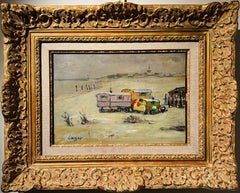
View All"Les Roulottes", 20th Century Oil on Wood Panel by Spanish Artist Celso Lagar
By Celso Lagar
Located in Madrid, ES
CELSO LAGAR
Spanish, 1891 - 1966
LES ROULOTTES
signed "Lagar" (lower left)
oil on wood panel
9-1/2 x 13 inches (24 x 33 cm.)
framed: 17-1/8 x 21-1/2 inches (43.5 x 54.5 cm.)
PROVEN...
Category
1930s Fauvist Figurative Paintings
Materials
Oil, Wood Panel
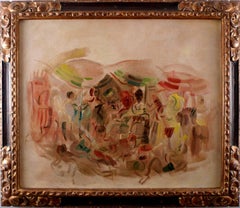
Francisco Bores, Sur la plage
By Francisco Bores
Located in Madrid, ES
FRANCISCO BORES
Spanish, 1898 - 1972
SUR LA PLAGE
signed and dated "Borès / 29" (middle centre)
oil on canvas
21-1/3 x 25-1/2 inches (54 x 65 cm.)
framed: 26-1/5 x 30-1/2 inches (66.5 x 77.5 cm.)
NOTE:
THIS WORK IS ACCOMPANIED BY A CERTIFICATE OF AUTHENTICITY ISSUED BY “ARCHIVO FRANCISCO BORES”.
PROVENANCE
Private Collection, Madrid
Francisco Bores López (Madrid, May 5, 1898 - Paris, May 10, 1972) was a Spanish painter of the so-called New School of Paris.
His artistic training originated both in the Cecilio Pla...
Category
1920s Abstract Impressionist Abstract Paintings
Materials
Oil, Canvas
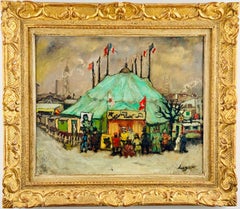
Pavillon de Cirque
By Celso Lagar
Located in Madrid, ES
CELSO LAGAR
Spanish, 1891 - 1966
PAVILLON DE CIRQUE
signed "Lagar" (lower right)
oil on canvas
15 x 18 inches (38 x 46 cm.)
framed: 21-1/2 x 24-1/2 inches (54 x 62 cm.)
NOTE:
THIS W...
Category
1930s Fauvist Figurative Paintings
Materials
Oil, Canvas
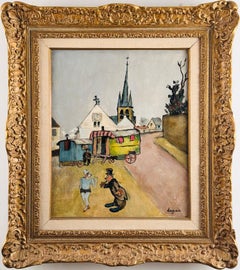
Fairgoers in front of roulottes
By Celso Lagar
Located in Madrid, ES
CELSO LAGAR
Spanish, 1891 - 1966
FAIRGOERS IN FRONT OF ROULOTTES
signed "Lagar" (lower right)
oil on canvas
18-1/4 x 15 inches (46 x 38 cm.)
framed: 29-1/4 x 26 inches (74 x 66 cm.)
PROVENANCE
Private French Collector
Celso Lagar Arroyo (Ciudad Rodrigo, 1891 - Seville, 1966) was an expressionist Spanish painter of the first generation of the School of Paris, where he lived most of his life. He was influenced by avant-gardes of all kinds, such as cubism and fovism. He painted mainly landscapes and still lifes...
Category
1930s Fauvist Landscape Paintings
Materials
Canvas, Oil
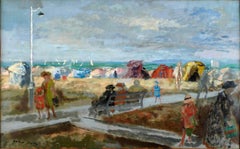
"Plage de Trouville" Sept. 1953, 20th Century oil on canvas by Emilio Grau Sala
By Emilio Grau Sala
Located in Madrid, ES
EMILIO GRAU SALA
Spanish, 1911 - 1975
TROUVILLE, SEPTEMBRE 1953
signed Grau Sala (lower left)
signed again, located & dated "Grau Sala, Trouville, Septembre 1953" on the reverse
oil...
Category
1950s Impressionist Landscape Paintings
Materials
Canvas, Oil

"Plage de Trouville" 1953, 20th Century oil on canvas by Emilio Grau Sala
By Emilio Grau Sala
Located in Madrid, ES
EMILIO GRAU SALA
Spanish, 1911 - 1975
PLAGE DE TROUVILLE
signed Grau Sala (lower left)
signed again, located & dated "Grau Sala, Trouville, 1953" on the reverse
oil on canvas
15 X 24 inches (38 X 61 cm.)
framed: 24-1/2 X 33-3/4 inches (62.5 X 85.5 cm.)
PROVENANCE
Private French Collection
Emilio Grau Sala came from a family of artists. He was born in Barcelona in 1911 and his father, a good cartoonist, had been one of the promoters of the "Salon des Humanistes" and made his exhibitions normally in the Parés Hall.
His first works were exhibited at the Salon des Independents, in the years 1930-33.
Grau Sala was essentially a Mediterranean painter, son of post-impressionism and enriched with French painting of the last fifty years.
Grau Sala lived and absorbed all the avant-garde movements that broke through in Paris, but never adhered to any. Creating your personal style. His pictorial lyricism and naturalism superimposed the evotative and sensitive quality of the image to any other concern. In 1953 Grau Sala spends his first summer in Honfleur becoming one of the most active Honflerian painters. Honfleur forms a coast triangle next to Deauville and Trouville, and in that August of 53, Grau Sala pinto is an elegant beach, which at that time met French and European high society.
His works can be found in the Museums of the Villa de Paris, L'Ile de France Museum, at the Château de Sceaux, Honfleur Museum, La Rochelle Museum, Barcelona Museum, Tossa de Mar...
Category
1950s Post-Impressionist Landscape Paintings
Materials
Canvas, Oil
You May Also Like
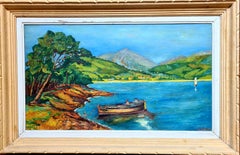
Fauvist Marine Landscape, The Cote d
Azur
Located in Cotignac, FR
French fauvist Marine Landscape, probably the Mediterranean, mid century oil on board. The painting is signed bottom right but as yet undeciphered. Presented in a period chip carved ...
Category
Mid-20th Century Fauvist Landscape Paintings
Materials
Oil
France beach acrylic painting seascape
Located in Sitges, Barcelona
Acrylic on paper laid board.
Frameless.
Category
1990s Fauvist Landscape Paintings
Materials
Acrylic, Board, Laid Paper
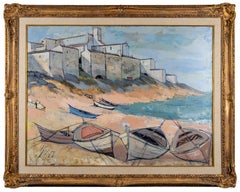
$574 Sale Price
46% Off
La Plage a Girolato
By Charles Levier
Located in Sheffield, MA
Charles Levier
French, 1920-2004
La Plage a Girolato
Oil on Canvas
30 by 40 in, w/ frame 38 ⅝ by 49 in
Signed lower left, titled verso
Charles Levier was born in 1920 from a French...
Category
Mid-20th Century Modern Landscape Paintings
Materials
Oil
France beach acrylic painting seascape
Located in Sitges, Barcelona
Acrylic on paper laid board.
Frameless.
Needs restoration
Category
1990s Fauvist Landscape Paintings
Materials
Acrylic, Board, Laid Paper
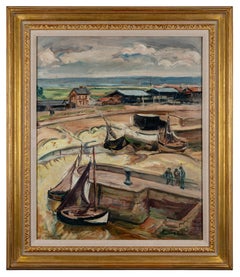
$837 Sale Price
41% Off
Vieux Bassin de Honfleur
By Achille-Émile Othon Friesz
Located in Sheffield, MA
Achille-Emile Othon Friesz
French, 1879-1949
Vieux Bassin de Honfleur
Oil on canvas
23 ½ by 28 ¾ in, w/ frame 31 ⅜ by 36 ½ in
Signed lower right
Achille-Emile Othon Friesz, who lat...
Category
Early 20th Century Fauvist Landscape Paintings
Materials
Oil
Beach in Provence
By Claude Gardy
Located in San Francisco, CA
This artwork, entitled "Beach in Provence," is an original oil painting on canvas by French impressionist artist Claude Gardy (b. 1949). It is hand signed in the lower right corner by the artist. The canvas size is 8.75 in. x 10.65 in. and is framed in a custom wooden gold frame. The piece depicts a tranquil beach scene with provincial houses in the background. In excellent condition.
Claude Gardy was born in the city of Lille in north of France in 1949. He is a self taught artist that gained recognition for his colorful small impressionist paintings...
Category
Late 20th Century Impressionist Landscape Paintings
Materials
Oil
More Ways To Browse
Dior 1955
Big Sur
View Of Venice
Farmer Painting
Italian Street
Mid Century Painting Signed Bernard
Antique Venice Painting
Antwerp Art
Findlay Gallery
Impressionist Painting With Pink House
Modern House Painting
Tuscany Art
French Impressionist Oil Painting Pierre
Impasto Impressionist
New Hope Art
19th Century Paris Street Scene
Pastoral Art
Scottish Victorian Paintings