Items Similar to "BLUEBONNET HILLTOP" TEXAS HILL COUNTRY FRAMED 17.25 X 21.25
Want more images or videos?
Request additional images or videos from the seller
1 of 7
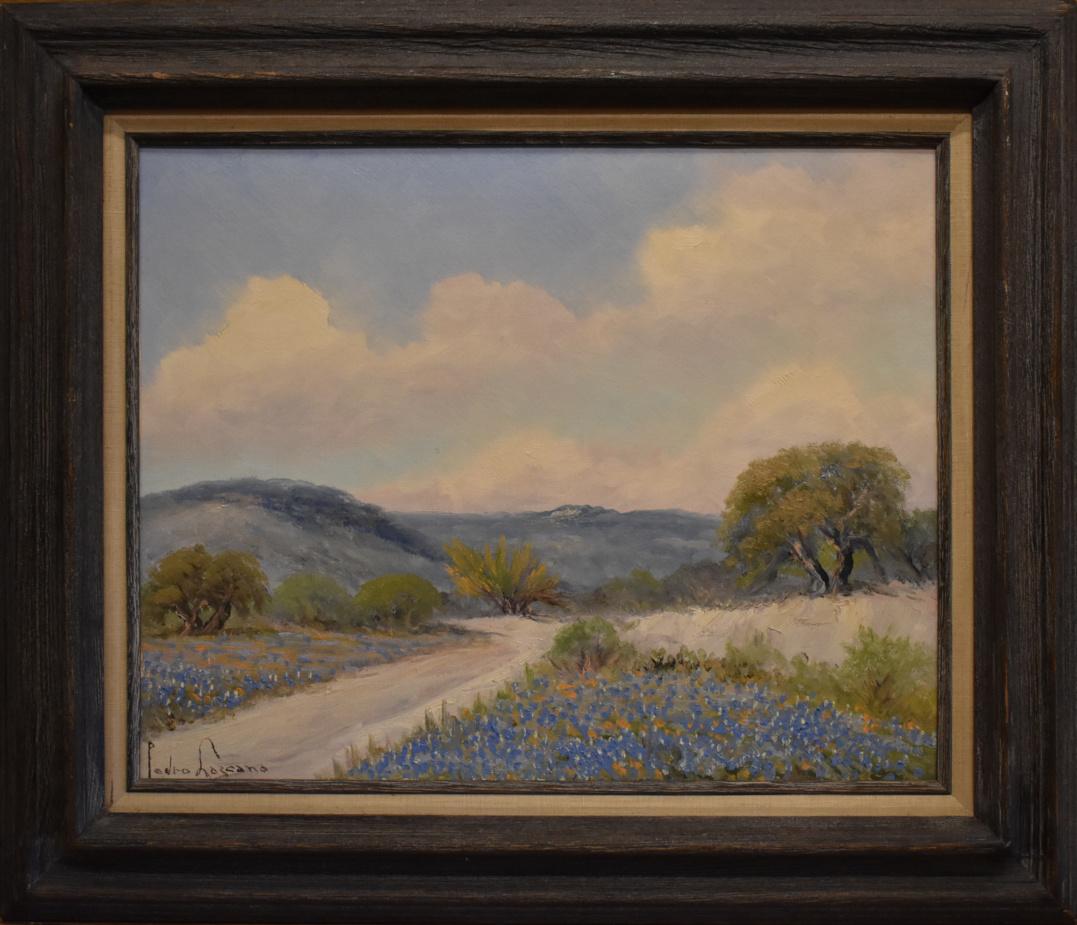
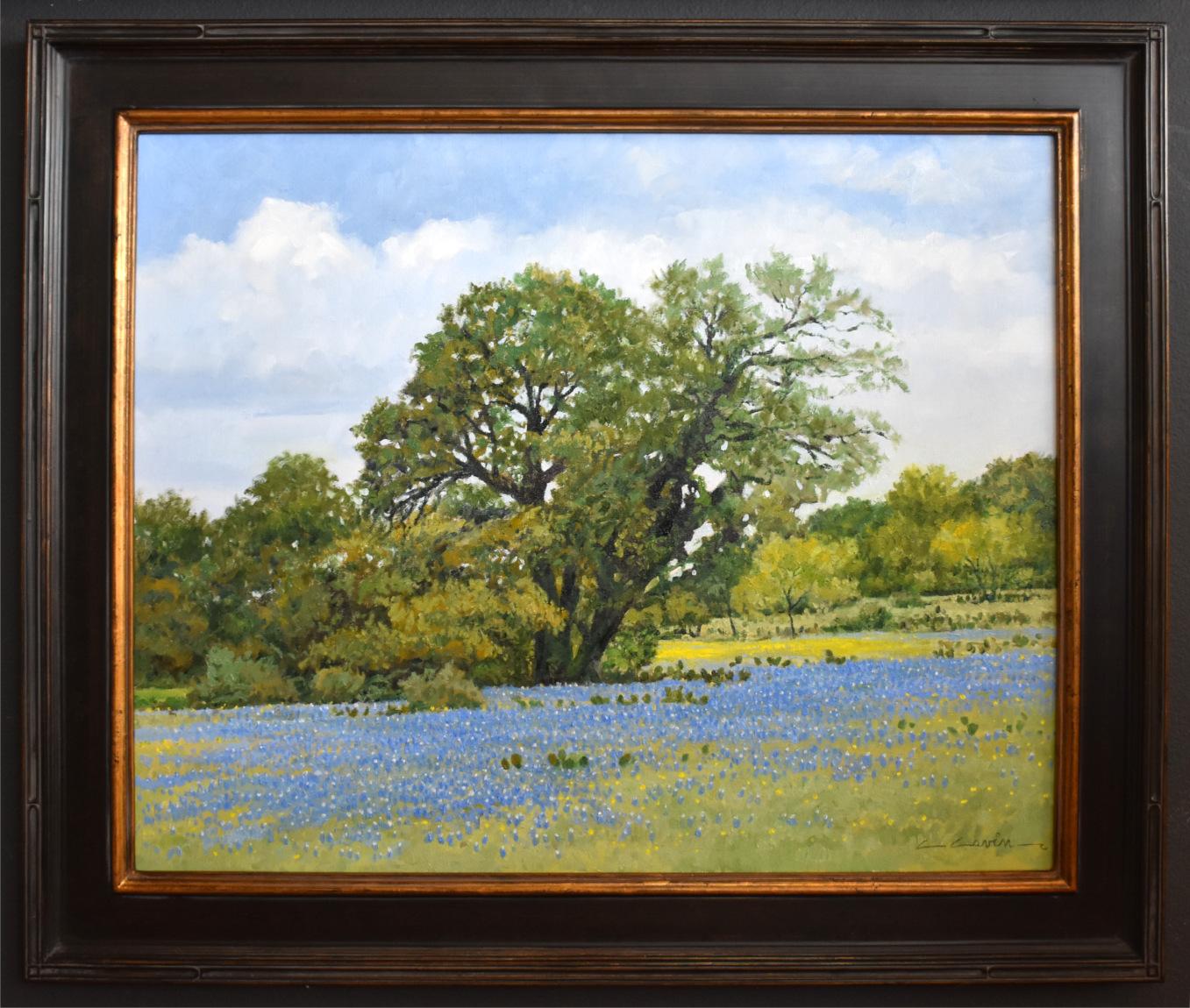
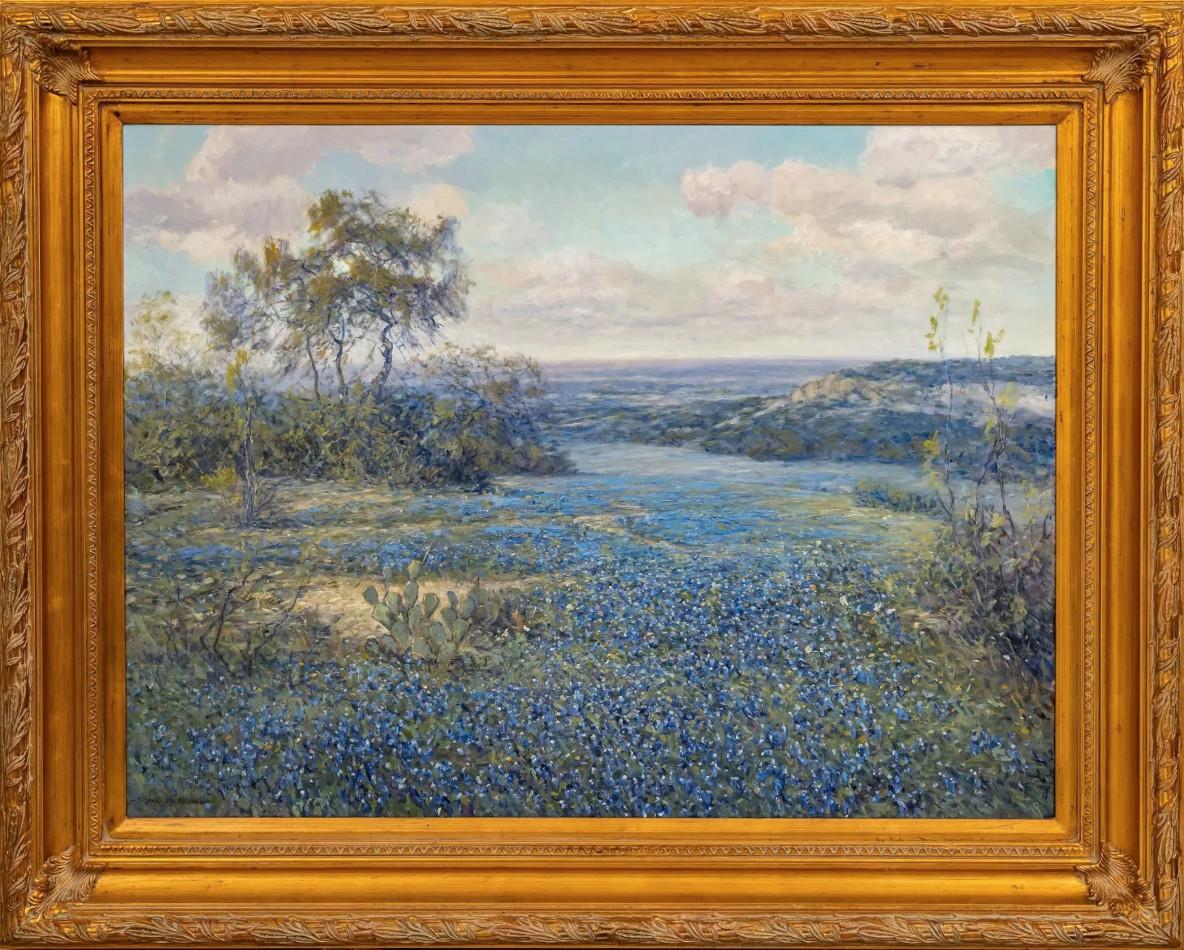
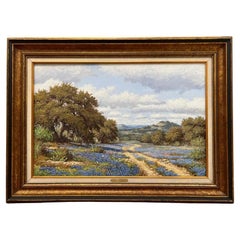
Pedro Lazcano"BLUEBONNET HILLTOP" TEXAS HILL COUNTRY FRAMED 17.25 X 21.25Circa 1960
Circa 1960
$1,200
£908.89
€1,043.83
CA$1,681.59
A$1,828.23
CHF 969.33
MX$21,915.84
NOK 12,319.68
SEK 11,286.50
DKK 7,801.29
About the Item
Pedro Lazcano
(1909-1970)
San Antonio Artist
Image Size: 12 x 16
Frame Size: 17.25 x 21.25
Medium: Oil
"Bluebonnet Hill Top"
Pedro Lazcano (1909-1970)
I was always curious about Pedro Lazcano's background but never could find much information. Lazcano and Porfirio Salinas were painting and drinking buddies. I have found out bits and pieces from a few of my customers as well as a couple of Lazcano's relatives. A gentleman came into my gallery a few years ago. He spotted a Lazcano Landscape. He identified it from across the room. He had been in the oil business in the 1950s-60s. He had an office in the Tower Life building in San Antonio. He told me an interesting story about two artists. He said that two artists would come around the offices in the building every month or so trying to peddle their artwork. One was a skinny guy, and one was a little chubby. They were desperate to sell their paintings. Even though the prices were cheap the oil man wasn't finding much oil and couldn't afford to spend money on paintings. He said his rent on the office was about the same as the price for the paintings and they would have to pay the rent and pass on the art. The two artists said they would sell them for the same amount as their suite number. Their suite number was 24. They would offer their paintings to him for $24.00. The oil man still didn't buy any. After a few years of the two of them coming around one stopped coming. The skinny one kept coming around. The oilman asked what happened to the chubbier one. The skinny one said that his friend's paintings had started to sell pretty regularly, and he didn't have to knock on as many doors. You have probably guessed by now. The skinny guy was Pedro Lazcano and the chubby guy was Porfirio Salinas. I also had dealings with a son of Lazcano. Unfortunately, he didn't go into great detail about his father's life. He did tell me that prior to Lazcano becoming a full-time artist that he was an engraver for a San Antonio engraving company. After many, many years with the engraving company, with the advent of better technology, Lazcano's skills were replaced by a machine. Lazcano's position with the company was eliminated and he was left with only his artwork to try to sell to support his family. The son stated that if Lazcano didn't sell a painting or two every day that the family would not eat. He also claimed that for the last 10 years or so of his life he had a Lone Star beer in one hand and a paint brush in the other. While the son was in my gallery, he called his mother (Lazcano's wife). She told that him that Lazcano and Salinas went many times somewhere North of San Antonio to study with Robert Wood.
- Creator:Pedro Lazcano (1909 - 1970, American)
- Creation Year:Circa 1960
- Dimensions:Height: 12 in (30.48 cm)Width: 16 in (40.64 cm)Depth: 2 in (5.08 cm)
- More Editions Sizes:Image Size: 12 x 16 Frame Size: 17.25 x 21.25Price: $1,200
- Medium:
- Movement Style:
- Period:
- Framing:Frame IncludedFraming Options Available
- Condition:Please visit my 1stdibs storefront for a large selection of Vintage, Mid Century, and Contemporary Texas Art, paintings, Sculptures, pottery more. Charles Morin Fine Art.
- Gallery Location:San Antonio, TX
- Reference Number:1stDibs: LU769314150092
About the Seller
5.0
Vetted Professional Seller
Every seller passes strict standards for authenticity and reliability
Established in 1974
1stDibs seller since 2017
104 sales on 1stDibs
Typical response time: 1 hour
- ShippingRetrieving quote...Shipping from: San Antonio, TX
- Return Policy
More From This Seller
View All"BLUEBONNET AND HUISACHE" TEXAS HILL COUNTRY FRAMED 23 X 27
By Pedro Lazcano
Located in San Antonio, TX
Pedro Lazcano
(1909-1970)
San Antonio Artist
Image Size: 16 x 20
Frame Size: 23 x 27
Medium: Oil on Canvas
"Bluebonnet and Huisache" Texas Hill Country
Pedro Lazcano (1909-1970)
I wa...
Category
1960s Impressionist Landscape Paintings
Materials
Oil
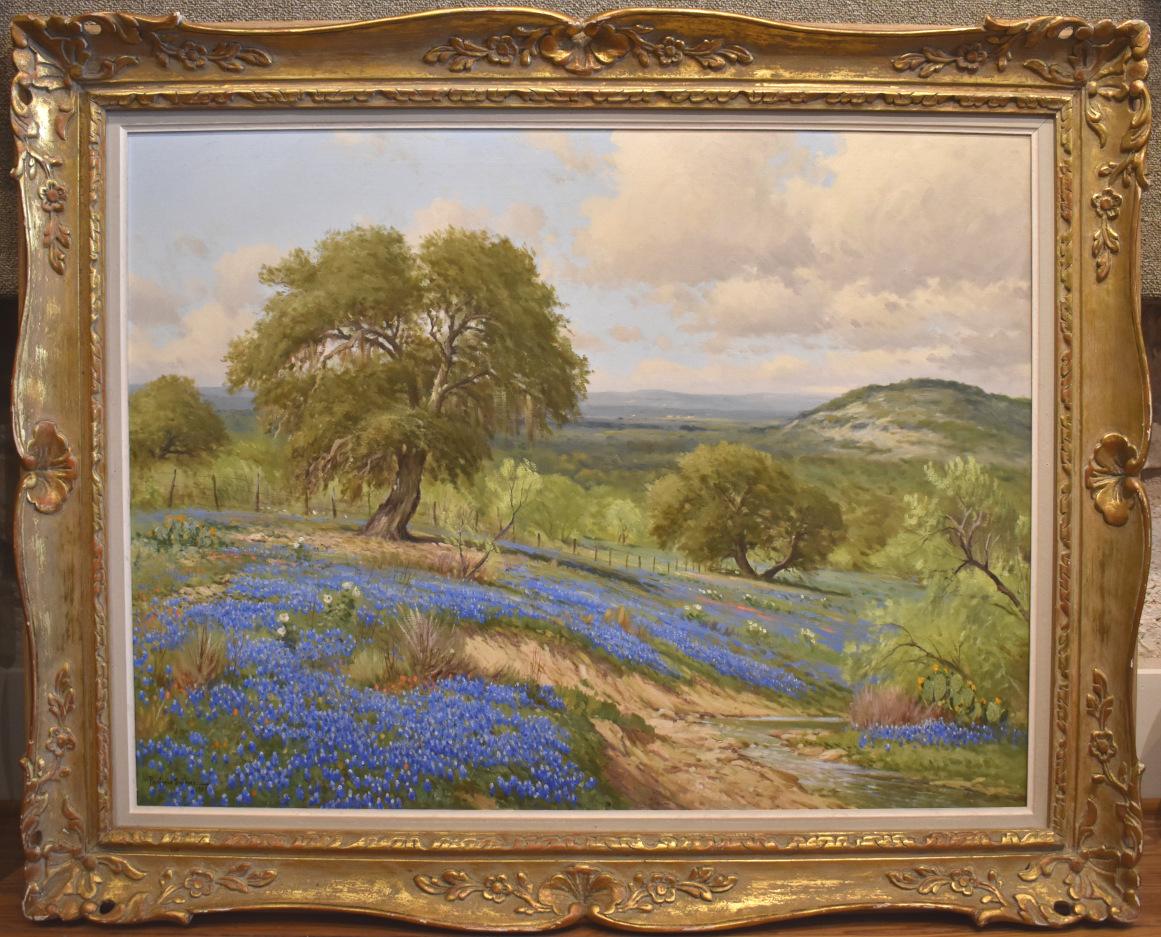
"Bluebonnet Creek" Texas Hill Country 1957 39 x 49 Framed!!!
By Porfirio Salinas
Located in San Antonio, TX
Porfirio Salinas
(1910-1973)
San Antonio Artist
Image Size: 30 x 40
Frame Size: 39 x 49
Medium: Oil on Canvas
Dated 1957
"Bluebonnet Creek" Texas Hill Country
Biography
Porfirio Salinas (1910-1973)
Porfirio Salinas was a self-taught artist who painted landscapes of Central Texas with an emphasis on the vast bluebonnet fields that grow there in the springtime. Born in 1910 in Bastrop, Texas, he attended public schools in San Antonio. He also observed works in progress by the director of the San Antonio Art School, Jose Arpa, as well as landscape painter, Robert Wood. Wood is said to have paid Salinas five dollars a picture to paint bluebonnets because "he hated to paint bluebonnets". Salinas served in the military from 1943 to 1945. Although he was assigned to Fort Sam Houston, he was allowed to live at home. At the fort, Colonel Telesphor Gottchalk assigned him to paint murals for the officer's lounge and various other projects, and Salinas continued to be able to paint during his entire conscripted period. Even before he achieved notoriety among galleries, dealers, and museums, Salinas was widely followed and appreciated by many Texans, including former President Lyndon B. Johnson, who may be considered responsible for launching Salinas popularity beyond the boundaries of Texas. In 1973, Texas capital, Austin, honored Salinas for having "done much to bring the culture of Mexico and Texas closer together with his paintings". Salinas died in April 1973 in San Antonio, Texas.
From
the years of the Great Depression through President Lyndon Johnson's
Great Society of the 1960s, Texan Porfirio Salinas (1910-1973) remained
one of the Lone Star State's most popular artists. Today, his works
remain popular with Texas collectors and those who love landscapes of
the beautiful "Hill Country" that lies in the center of the
state. One of the first Mexican American painters to become
widely recognized for his art, Salinas was a favorite of President
Lyndon Johnson and his wife, Lady Bird Johnson, as well as of Sam
Rayburn, the longest-serving Speaker of the House of Representatives,
and Texas Governor John Connelly. In fact, President Johnson was so
enamored with his Salinas paintings that the artist will forever be
associated with America's first Texas-born President. Works by Porfirio
Salinas are in a number of museum collections, grace the halls of the
Texas State Capitol and the Governor's Mansion in Austin, and are
included in virtually every major private collection of Early Texas Art.
Porfirio
Salinas was born on November 6, 1910, near the small town of Bastrop,
Texas, about thirty miles from Austin. His father, Porfirio G. Salinas
(1881-1967), and his mother, Clara G. Chavez, struggled to make a
hardscrabble living as tenant farmers, but eventually were forced to
give up farming. The family moved to San Antonio, where Salinas' father
was able to get a job working as a laborer for the railroad, but the
scenic area around Bastrop, with its pine trees and the wide expanse of
the Rio Grande River, would forever remain a touchstone for the artist.
For the rest of his life, Salinas and his brothers went back frequently
to visit their grandmother in her little farmhouse. When in Bastrop,
Porfirio painted on the banks of the Rio Grande or in the groves of
pine trees. The Salinas family was close-knit and Porfirio was the
middle child of five children, so he had an older brother and sister as
well as a younger brother and sister. His mother was a native of
Mexico, so throughout his childhood the family made the long drive to
Mexico to visit Clara Salinas' family.
As a child growing up in
the bi-lingual section of San Antonio, Salinas drew and painted
incessantly and by the time he was ten, he was already producing work
that was mature enough to sell to his schoolteachers. Many years later
in an article in the New York Times he was described as a "boy whose
textbooks were seldom opened and whose sketchbook was never closed."
Instead of studying, the young artist spent his spare time watching
artists paint in and around San Antonio. As an aspiring painter,
Salinas was fortunate to grow up in the historic city, which had the
most active art scene in Texas. It was his exposure to older,
professional painters that encouraged the precocious young painter to
leave school early in order to help his family and pursue a career as a
professional artist, despite his father's inability to see art as a
career with any future for his son.
When Salinas was about
fifteen he came to know the artist Robert W. Wood (1889-1979). He met
Wood while he was employed in an art supply store and he soon began to
work as an assistant to the English-born painter, who had moved from
Portland to San Antonio in 1924. Although the diminutive Englishman was
already an established professional artist, he did not have a great
deal of formal art training and so he was then studying with the
academically trained Spanish painter Jose Arpa (1858-1952) in order to
augment his knowledge and give his work a more polished look. Salinas
was an eager young man, and while working in Wood's downtown San
Antonio studio he learned to stretch canvases, frame paintings and to
sketch in larger compositions from small plein-air studies for the
English artist. He began to accompany Wood and Arpa to the hills
outside San Antonio, where they painted small Plein-air studies of
fields of blue lupin - the state flower, the famous "Bluebonnets" of
Texas - in the springtime and scenes of the gnarled Red Oaks as they
changed color in the fall. He was soon assisting Wood in the tedious
work of painting the tiny blue flowers that collectors wanted to see in
the landscapes they purchased of central Texas. According to a
1972 newspaper story, "Legend has it that one day in the 1920s artist
Robert Wood decided he could not bear to paint another bluebonnet in
one of his landscapes. He hired young Porfirio Salinas to paint
them in for him at five dollars a painting." Whether this story is
accurate or apocryphal isn't clear, but the ambitious and independent
young Salinas wasn't destined to be anyone's assistant for very long.
The
formative event of Porfirio Salinas' teenage years was the Texas
Wildflower Competitive Exhibitions, a Roaring-Twenties dream of the
eccentric oilman Edgar B. Davis (1873-1951). These competitive shows of
paintings of wildflowers and Texas life were mounted in San Antonio
from 1927 to 1929. Held at the newly opened Witte Museum each spring,
the exhibition featured large cash prizes donated by the philanthropic
Davis, which were an inducement for artists to travel from all over the
United States to paint in the Hill Country of Texas. The "Davis
Competitions," as they were known, helped to cement San Antonio's
reputation as an art center, a legacy that remains with the "River
City" today. The shows generated a great deal of excitement in the
area, helping to make celebrities of the some of the artists who had
already settled there and encouraging others to make San Antonio their
home. Over the three years that the wildflower competitions were held,
more than 300 paintings were exhibited, and many thousands of viewers
saw the paintings at the Witte Museum and on tours throughout the state
and in New York. Each year Davis would generously purchase the winning
paintings and then donate them to the San Antonio Art League. Young
Porfirio Salinas would have been able to not only watch his two mentors
- Robert W. Wood and Jose Arpa - paint the works that they entered in
the Davis Competitions, he would have been able to see Arpa take
several of the major prizes, receiving the judge's accolades for
"Verbena," "Cactus Flower" and "Picking Cotton," works that are still
on view at the San Antonio Art League Museum today. Unfortunately,
Davis eventually put his donations to work in other charitable
endeavors, bringing to an end the wildflower events, but only after
they inspired Salinas and other young painters and had helped to make
wildflower paintings the most sought-after subject for traditionalist
Texas collectors.
In 1930, when he was only twenty, Salinas
hung out a shingle and began to paint professionally, augmenting the
sales of his easel paintings with what little business he could garner
by painting signs for local concerns. It was a struggle for the young
artist to make a living, as the effects of the Great Depression were
settling in. His early works are very similar to those of Robert
Wood's, both in subject matter and treatment. Salinas did small
paintings of Bluebonnets for the tourists who visited San Antonio to
see the famous Alamo as well as paintings of the Texas missions...
Category
1950s Impressionist Landscape Paintings
Materials
Oil
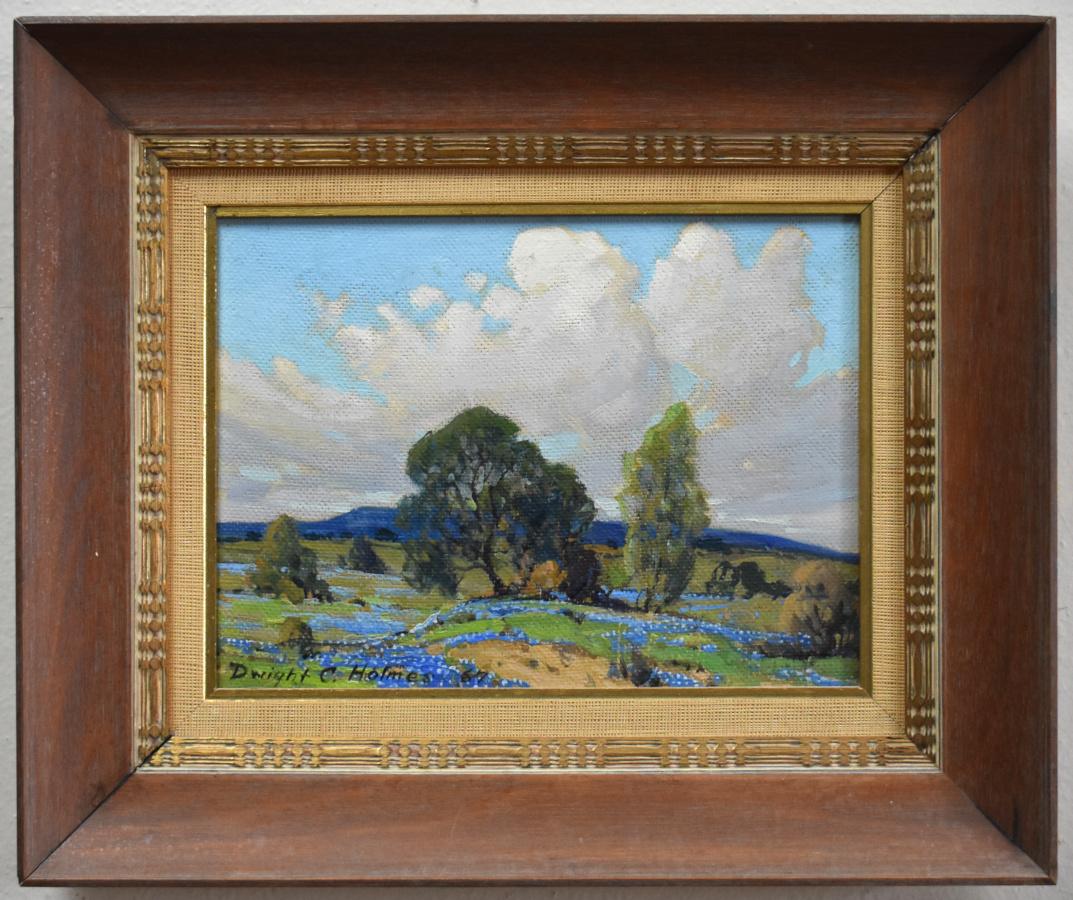
"BLUEBONNETS WEST OF COPPERAS COVE TEXAS"
By Dwight Holmes
Located in San Antonio, TX
Dwight Holmes
(1900-1986)
Fort Worth, San Angelo Artist
Image Size: 9 x 12
Frame Size: 12 x 18
Medium: Oil
Dated 1967
"West of Copperas Cove" Texas
Dwight Holmes (1900-1986)
Dwight C...
Category
1960s Impressionist Landscape Paintings
Materials
Oil
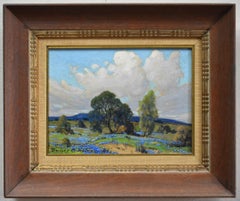
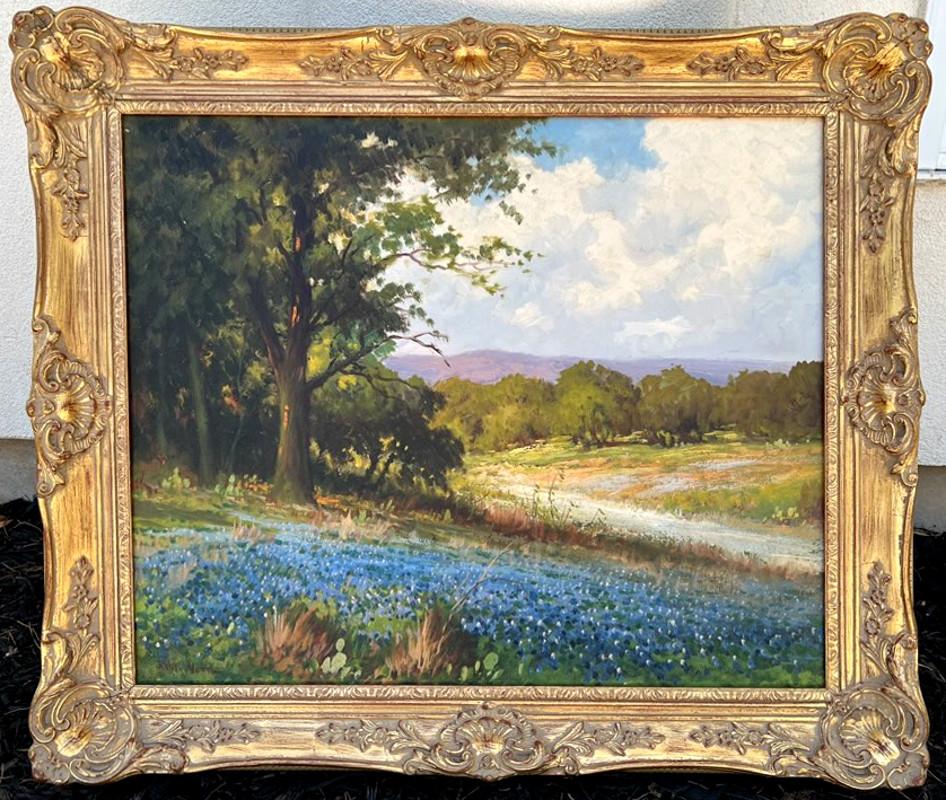
"Bluebonnets Texas Hill Country"
Located in San Antonio, TX
Robert Wood (G. Day)
(1889 -1979)
San Antonio Artist
Image Size: 20 x 24
Frame Size: 29 x 33
Medium: Oil
Signed Lower left
"Bluebonnet"
Biography
Robert Wood (G. Day) (1889 -1979)
A painter of realistic landscapes reflecting a vanishing wilderness in America, Robert Wood (not to be confused with Robert E. Wood) is reportedly one of the most mass-produced artists in the United States. His painting became so popular he was unable to meet all of the demands, and many of his works were reproduced in lithographs and mass distributed as prints, place mats, and wall murals by companies including Sears, Roebuck. He was born in Sandgate, Kent on the south coast of England near Dover, the son of W.L. Wood, a famous home and church painter who recognized and supported his son's talent. In fact, he forced his son to paint by keeping him inside to paint rather than playing with his friends. At age 12, Wood entered the South Kensington School of Art. As a youth, he came to the United States in 1910, having served in the Royal Army, and he never returned to England. He traveled extensively all over the United States, especially in the West, often in freight cars, and also painted in Mexico and Canada. His itinerant existence took him to Illinois where he worked as a farmhand, to Pensacola, Florida where he married, briefly in Ohio, Seattle, Washington, and Portland, Oregon. In 1912, he was in Los Angeles, and in the late 1920s and early 1930s, in San Antonio, Texas, where he lived and in 1928 exhibited in the "Texas Wildflower Competition." From San Antonio, he gained a national reputation for his strong colored, dramatic paintings. Some of that prestige has been credited to his association with Jose Arpa, prominent Texas artist. Wood also gave art lessons, and one of his students was Porfirio Salinas. During this period, Wood sometimes signed his paintings G. Day or Trebor, which is Robert spelled backwards. In 1941 he went to California and painted numerous desert and mountain landscapes and coastal scenes. He lived in Carmel for seven years, and then moved to Woodstock, New York, but he soon returned to California, settling first in Laguna Beach, then San Diego, and finally in the High Sierras, where he and his wife built a home and studio near Bishop and lived until his death in 1979. Robert Wood was born March 4, 1889, in Sandgate, England, a small town on the Kentish coast not far from the white cliffs of Dover. His father, W. J. Wood, was a successful painter who recognized Robert's unusual talent. At the age of twelve, his father enrolled Wood in art school in the small town of Folkstone. He then attended the South Kensington School of Art. While attending art school, Wood won four first awards and three second awards, one each year, a record. In 1910 after service in the Royal Army, nineteen-year-old Wood and his friend, Claude Waters, immigrated to America. Initially, he settled in Illinois and worked as a hired hand on a farm belonging to Water's uncle. He would then strike out on his own, living the life of an itinerant painter. Wood traveled as a hobo, hopping freight trains and selling or bartering small paintings to support him along the way. When times were hard, he worked at whatever job was available. In this manner, he saw most of the United States and fell in love with rural America. By 1912, Wood visited Los Angeles for the first time, arriving on the day of the Titanic tragedy. Later that year, he had met, courted and married young Eyssel Del Wagoner in Florida. The couple moved to Ohio where a daughter, Florence, was born. During World War I, the family moved to Seattle where a son, John Robert Wood, was born in 1919. In the early 1920's, the young Wood family was almost constantly on the move. They stayed for short periods in Kansas, Missouri, California and for a longer time in Portland, Oregon, where Wood's friend Claude Waters had settled. Wood's seemingly endless wanderings disrupted his family life and delayed his development as a painter. However, through his travels he developed an appreciation for the American landscape that would inspire him for the rest of his career. Although aware of the current movement away from traditional realism in American art, he elected to travel that solitary path and remain true to his own vision of American’s grandeur and beauty poetically translated through his landscape and seascape paintings. In 1923, the Wood family discovered the beautiful city of San Antonio, Texas and it was there that he and his family would finally settle. He studied briefly at the San Antonio Art School with Spanish colorist Jose Arpa y Perea (1860-1952), who had arrived in San Antonio that same year. In the latter part of the 1920’s, Jose Arpa’s influence quickly became evident. Wood after several years of experimentation was becoming fine easel painter, capable of great subtlety with a new mature original style. Like Texas painters Robert Onderdonk (1853-1917) and his son Julian Onderdonk (1882-1922), Robert Wood concentrated on the distinctive Texas landscape with its Red Oak trees and wildflowers that covered the hill country landscape. He developed a reputation for his scenes of Blue Bluebonnets, the state flower. In the spring, the Texas prairie is covered with wildflowers, especially in the hill country surrounding San Antonio and Austin. Wood incorporated native stone barns and rough wood farmhouses that added authenticity and romance to his compositions. In 1925, Wood was divorced from his wife. In 1932, he moved to the famous scenic loop on San Antonio's outskirts. While still living in Texas, he took extensive western sketching trips that brought him to California. It is evident that his 1930’s California...
Category
1950s Impressionist Landscape Paintings
Materials
Oil
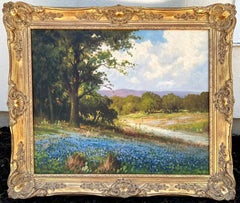
"SPRINGTIME BLUES" TEXAS BLUEBONNET TEXAS HILL COUNTRY
By CLIFF CAVIN
Located in San Antonio, TX
Cliff Cavin
Texas Artist
Size: 24 x 30
Frame: 30.5 x 36.5
Medium: Oil
2022
"Springtime Blues"
Biography
Cliff Cavin
Cliff Cavin, a native of San Antonio, Texas, is a landscape artist...
Category
2010s Impressionist Landscape Paintings
Materials
Oil
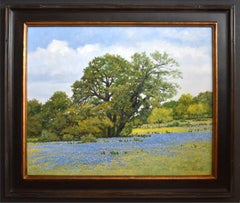
"BLUEBONNET AND CACTUS" TEXAS HILL COUNTRY BORN 1949 FRAME 40 X 50
By Robert Harrison
Located in San Antonio, TX
Robert Harrison
(Born 1949)
San Antonio Artist
Image Size: 30 x 40
Frame Size: 40 x 50
Medium: Oil
"Bluebonnet and Cactus" Texas Hill Country Landscape
Biography
Robert Harrison (Bor...
Category
20th Century Impressionist Landscape Paintings
Materials
Oil
You May Also Like
"Texas Pastoral Bluebonnet Scene" Framed Oil Painting Spring Wildflowers Farm
By Dalhart Windberg
Located in Austin, TX
Canvas size: 9 x 12 in.
Frame size: 17 x 19.5 in.
Signed, bottom left in red "Windberg"
A serene, nostalgic scene that captures a Central Texas pastoral landscape with a soft, impre...
Category
1970s American Impressionist Landscape Paintings
Materials
Canvas, Oil
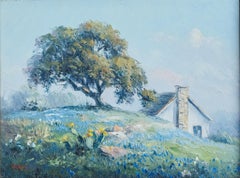
Spring in Weimer Texas Hill Country Bluebonnets, Oil Texas Landscape 18" x 24"
By Steve Parker
Located in Houston, TX
Spring in Weimer is painted from a plein aire study from a day in Weimar, Texas. This was painted in the spring when the bluebonnets are beginning to bloom. It is common for people t...
Category
2010s American Impressionist Landscape Paintings
Materials
Canvas, Oil
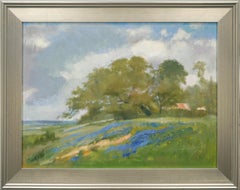
Bluebonnets under Texas Sun
By Morris Walton Leader
Located in Houston, TX
Morris Walton Leader (1877- 1966)
Morris Walton Leader was born in Marshall, Texas, in 1877. He died in Austin, Texas, where he had lived since he was a young boy. He studied with ...
Category
1940s Other Art Style Landscape Paintings
Materials
Oil
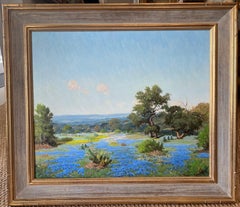
"Texas Hill Country Bluebonnet Landscape" Oil on Canvas Painting of Nature Scene
By Manuel Garza
Located in Austin, TX
Manuel Garza (American; 1940 - 2022)
Medium: Oil on Canvas
Canvas size: 16" x 20"
Frame Size: 20.5" x 24.5"
Signed, Lower Left: "Manuel Garza"
Category
Late 20th Century American Realist Landscape Paintings
Materials
Oil, Canvas
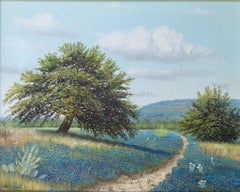
Bluebonnets Field
By Robert Harrison
Located in Houston, TX
US artist from San Antonio, TX. Very well represented in the multiple galleries and private collections.
“Bluebonnets Field” , late 20th century
Oil on canvas, signed lower left
...
Category
1990s Other Art Style Landscape Paintings
Materials
Oil
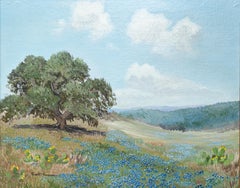
Spring Pastoral Landscape with Bluebonnets and Yellow Prickly Pear
By Robert Harrison
Located in Austin, TX
A luminous landscape painting depicting the Texas Hill Country in springtime, blanketed with bluebonnets and dotted with yellow, blooming prickly pear cactus in the foreground. A stately live oak tree...
Category
20th Century Landscape Paintings
Materials
Canvas, Oil
More Ways To Browse
Texas Hill Country Painting
Vintage Chubby
Texas Bluebonnets
Bluebonnet Painting
Bluebonnet Oil Paintings
Bluebonnets Landscape Paintings
Lone Ones
Texas Bluebonnet Paintings
Texas Bluebonnet Landscape Painting
Texas Landscapes Bluebonnets
Bluebonnets Texas Hill Country
Utah Paintings
Volcano Art
Yellow Tree Paintings
Arthur Tooth
Cooper Oil Painting
Early 20th Century Irish Oil
Foggy Landscape