Items Similar to Le Cerisier (The Cherry Tree)
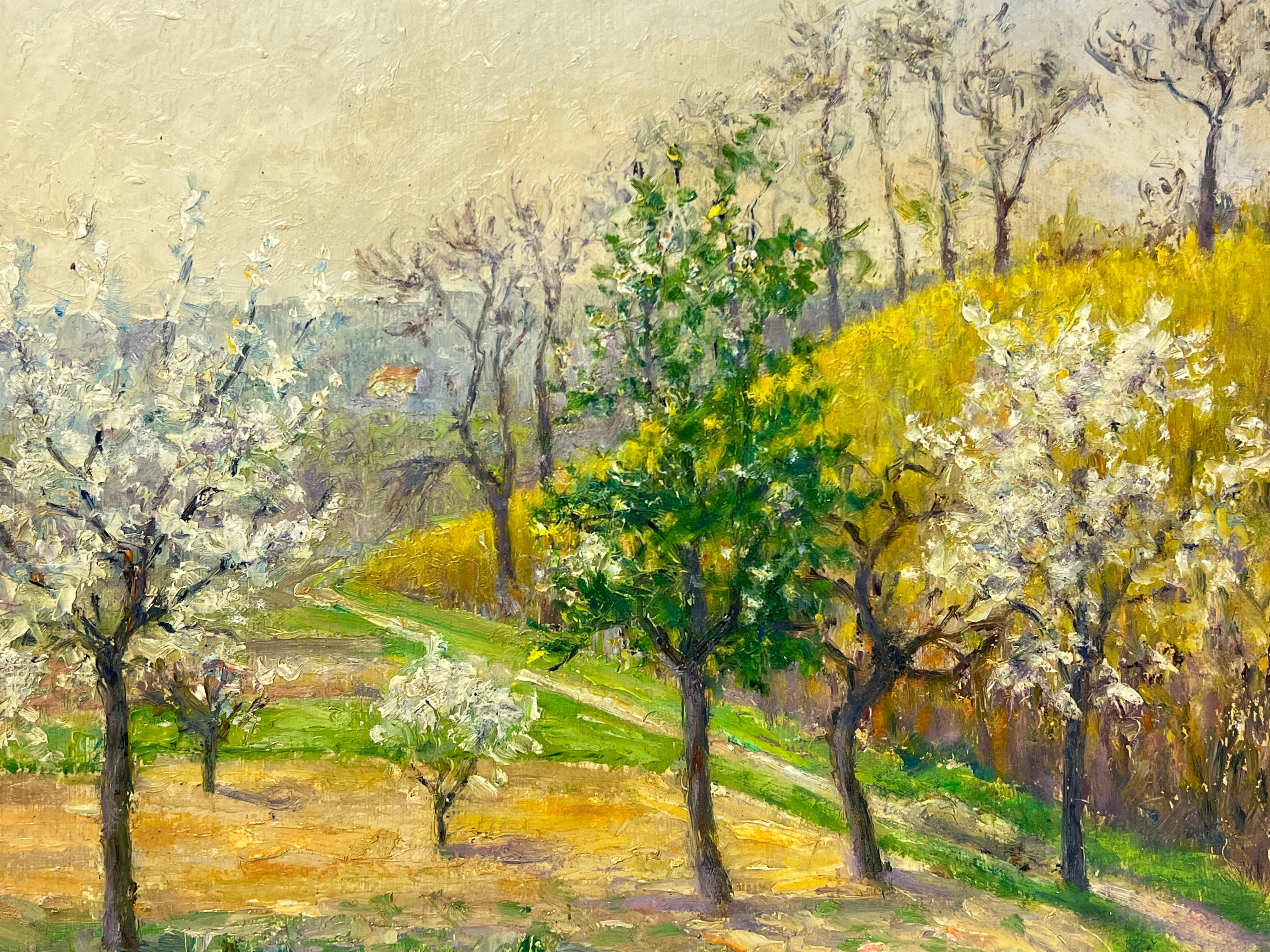
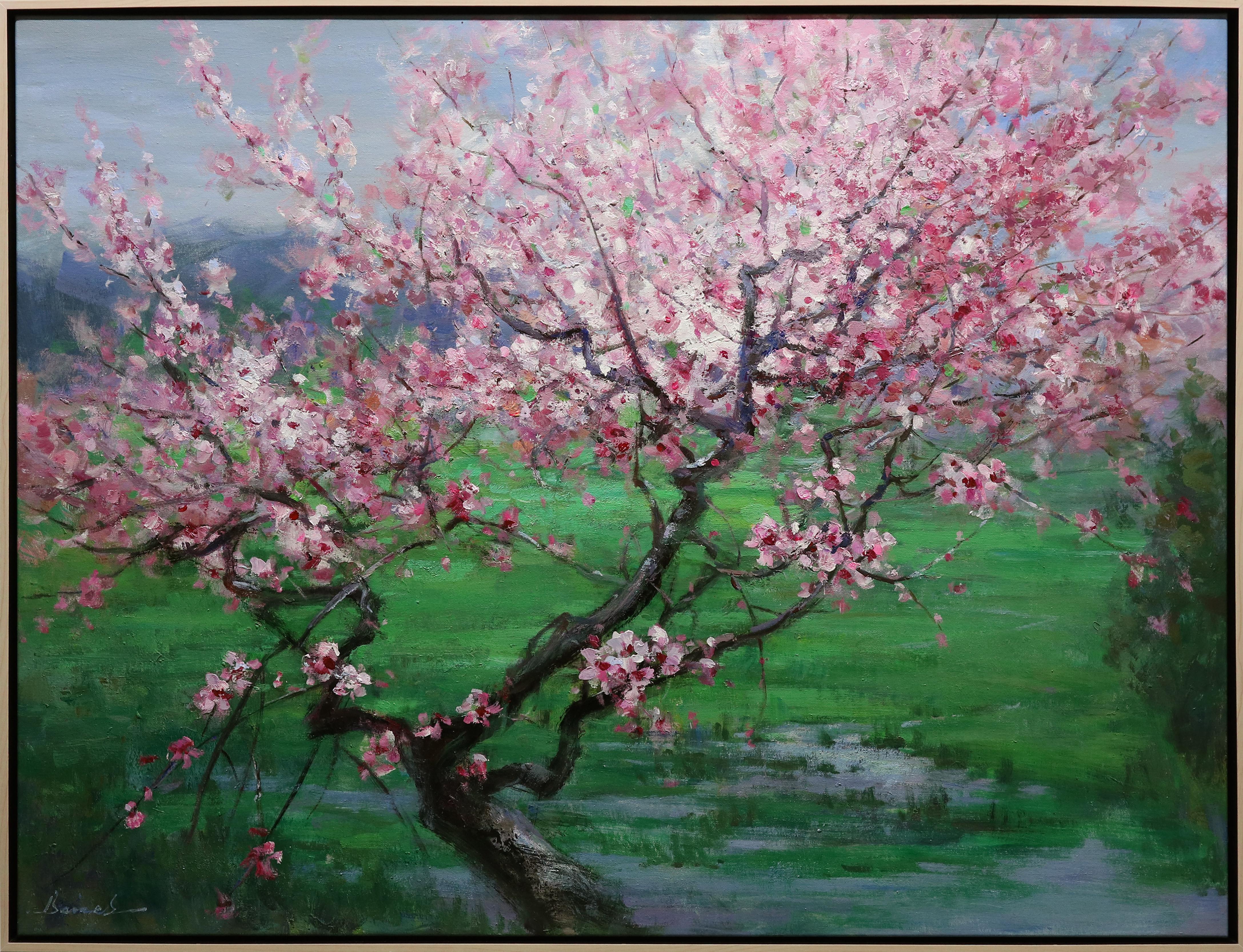
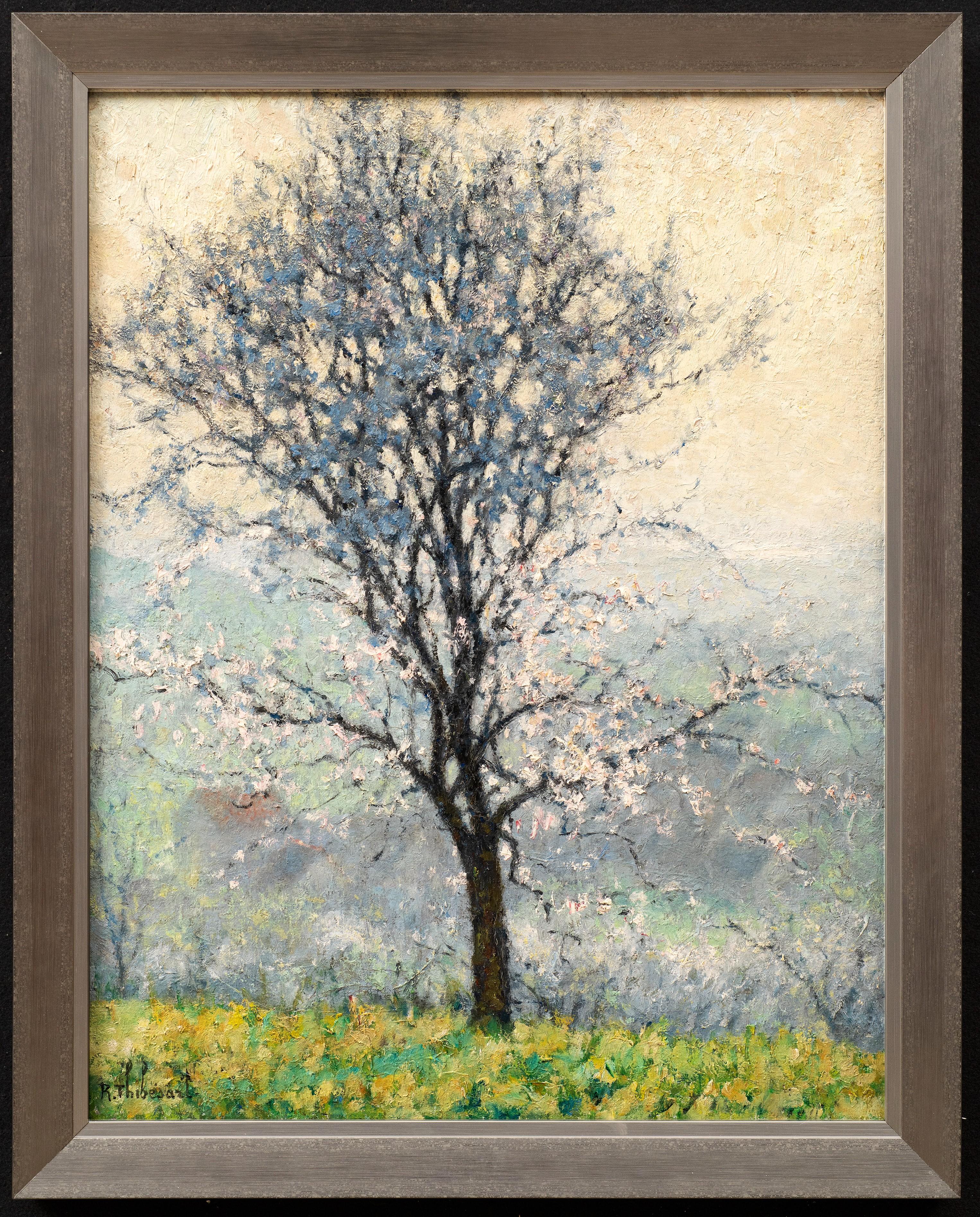
Want more images or videos?
Request additional images or videos from the seller
1 of 5
Robert DeborneLe Cerisier (The Cherry Tree)
$51,700.85
£37,858
€44,069.03
CA$71,227.39
A$77,625.31
CHF 41,105.95
MX$932,361.80
NOK 520,410.44
SEK 478,466.21
DKK 329,146.81
About the Item
Robert Deborne
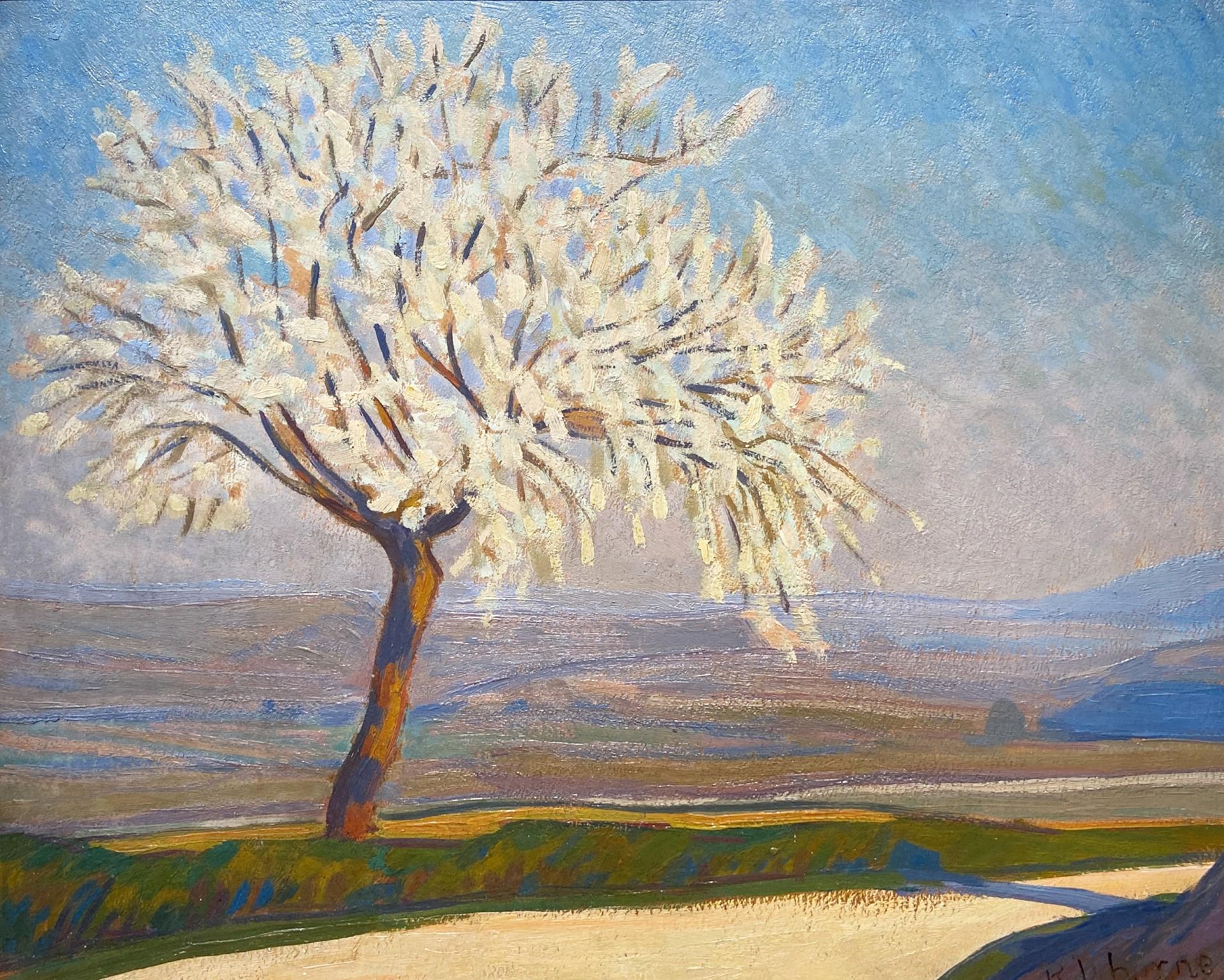
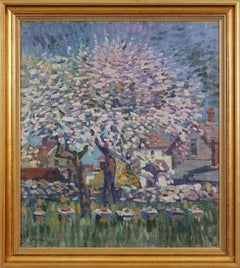
Le Cerisier (The Cherry Tree)
1870-1944
Oil on canvas, signed lower right
Image size: 26 3/4 x 41 inches (68 x 104 cm)
Handmade giltwood frame
This beautiful painting depicts a blossoming tree as it unfurls its white petals. This scene contrasts with Deborne's usual landscapes, which are vibrantly and non-naturalistically coloured, dominated by oranges and greens. The colour palette of this work seems lighter, perhaps due to to the dominance of white with regard to the blossom and the white-plaster building behind the tree. However, the vibrancy of the blue sky and verdant grass and trees is still suggestive of Deborne's Fauvist inclinations.
There is also a wonderful attention to detail regarding the workings of light in this image. The central monolith of the blossoming tree casts a large shadow over the wall behind and grass below it. The shadow cast on the wall is particularly magnificent, as it is permeated by a few specks of sunlight - much how rays of light would filter through leaves or blossom. This attention to light is true to style for Post-Impressionism, with Deborne demonstrating his masterful ability to play with the relationship between light and colour. This is further accentuated by the thick brushstrokes, a typical Impressionist technique used to create the sense of an instant in time, where the light was filtering through the cherry tree's blossoms in a specific manner.
Robert Deborne
Robert François Abel Deborne was born in 1870 in Viviers, a small cathedral city in the south of France. His father was a wealthy landowner and his mother was a member of a prestigious wine producing dynasty, located in nearby Gigondas. Little is known about Deborne’s childhood, but given his parentage it is likely to have been a comfortable one. He attended school in Viviers and then went to the École Nationale Supérieure des Beaux-Arts in Lyon. Here he resided in the Rue Fournet in the Brotteaux district.
In 1900, Deborne moved to Meudon, a suburb in Paris. Here he married Marie Morel and they had two children Jacques (1904 – 1976) and May (dates unknown).
At the Paris Salon of 1903, Deborne exhibited a nude study entitled Femme au Miroir, which has sadly since been lost. In 1905, he participated in the Salon d’Automne, a breakaway exhibition established by Renoir and Rodin as a rival to the summer Salon, which many artists felt had become too bureaucratic and conservative. At this very Salon, in 1905, the Fauvism movement was sensationally launched - a movement that Deborne was part of.
The Deborne family moved to Corsica in 1911, but the happiness was not to last. Shortly before the First World War, Deborne abandoned his family on the island and returned to his birthplace in Viviers. Here, he was able to pursue his passion for painting without encumbrance or distraction.
He exhibited many times at the Salon du Sud-Est over the following years, mainly landscapes of Vivarais and the neighbouring Rhone regions. There is no evidence that Deborne followed any profession at all, preferring instead to dedicate his life to his painting. Given his wealthy background, it is no great surprise that he felt no need to host solo exhibitions or engage with any patrons or dealers during his lifetime, as he had no need to earn his living. A legacy from a maiden aunt named Anna Barruol (on the wine-producing side of the family) also helped in this regard, enabling him to set up a studio at number 4, Avenue de la Station in Viviers in 1929.
Leading a rather solitary existence, Deborne was often to be seen carrying his easel, canvas and paintbox down the quiet country lanes of Viviers , apparently usually under the shelter of an oversized hat. He mainly stayed within the Vivirais region, with occasional excursions to the banks of the Rhone nearer to the location of his maternal family’s chateau and vineyards. He painted en plein air, returning again and again to the same locations to capture the differences in the seasons. In fact, all his known paintings only depict the various landscapes during the spring, summer and autumn – there are no known winter scenes. This seasonal approach is also part of the reason that Deborne did not exhibit at the Paris Salon and instead favoured the Salon d’Automne. The Paris Salon took place in summer, when Deborne was on his painting excursions in his local area. One of his few companions on these expeditions was the Post-Impressionist artist Paul Signac, who became close friends with Deborne after they exhibited together at the Salon du Sud-Est. Signac would often visit Deborne in Viviers, where he would reside at the Villa les Maraniousques.
In 1942, the Nazi forces occupied Viviers. Deborne hid his works in his studio, but passed away in July of 1944, only two months before the liberation of his hometown. His works remained safely hidden in his workshop for over 80 years, until the artist’s grandson stumbled across Deborne’s hidden trove. It is perhaps for this reason that Deborne’s works have been neglected by the Post-Impressionist canon.
- Creator:Robert Deborne (1870 - 1944, French)
- Dimensions:Height: 26.75 in (67.95 cm)Width: 41 in (104.14 cm)
- Medium:
- Movement Style:
- Period:
- Condition:
- Gallery Location:London, GB
- Reference Number:1stDibs: LU52417339502
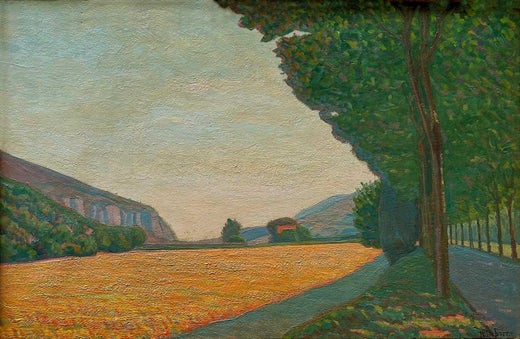
Robert Deborne Robert Deborne was born in 1870 in Viviers, a small cathedral town in the South of France. Little is known of the finer details of Deborne’s life and he remains rather an enigma. He was the son of a rich farmer, which gave him the opportunity to concentrate on his painting without financial pressures. Indeed, he was so dedicated that he abandoned his family just before the First World War, enabling him to focus completely on his work. Despite his prolificacy, he decided never to hold a solo exhibition nor had any connection with an art dealer to sell his works, although he exhibited often at the Salon d’Automne in Paris (becoming a member in 1923) and the Salon du Sud-Est. A noted talent in his day, Deborne exhibited with major artists at the Salon du Sud-Est. This salon exhibition was on during the winter, which was perfect for Deborne as he was able to paint all summer, his preferred season. The Salon was a forum for unknown, innovative, emerging artists. His paintings were hung alongside works by Paul Cézanne, Henri Matisse, Paul Gaugin, Georges Rouault, André Derain, Albert Marquet, Felix Vallotton and Edouard Vullard, to name but a few. Deborne was exhibiting at the Salon du Sud-Est in 1905, the year when the press coined the then rather disparaging term of ‘Fauves’ (French for ‘wild beasts’) to describe artists using strong, separate, unnatural colours in a representational manner, moving away from the realism of impressionism. The phrase stuck and the new movement of Fauvism was recognised, of which Deborne was certainly a part and influenced by. Deborne had a close friendship with Paul Signac with whom he exhibited on several occasions at the Salon de Sud-Est. Signac spent some time in Viviers with Deborne, and the two are known to have been together on the banks of the Rhône, sketching and painting. He mostly painted scenes of Viviers, his home town on the Rhône and its environs. He also featured Nebbio in Corsica in many of his paintings. His works are very much centered on these places that he loved, and his depictions of the Rhône, its banks and the hills beside it are poetically marked by variations in time, weather and season. He was particularly fond of painting at dawn and dusk. Robert Deborne returned to the same landscapes again and again, portraying them from different perspectives and in changing light. This was a deliberate choice – he wanted to share the beauty of these inspiring places that were immediately before him. Vivarais to Deborne was what the Montagne Sainte-Victoire was for Cézanne or the banks of the Creuse were for Guillaumin. These landscapes were his life, and every brushstroke illuminates the beauty of these places for others to experience.
About the Seller
5.0
Gold Seller
Premium sellers maintaining a 4.3+ rating and 24-hour response times
Established in 2007
1stDibs seller since 2014
85 sales on 1stDibs
Typical response time: 3 hours
- ShippingRetrieving quote...Shipping from: London, United Kingdom
- Return Policy
More From This Seller
View AllArbre en Fleurs, Oil Landscape, French Post-Impressionist
Located in London, GB
Oil on board, mounted on panel, signed lower right
Image size: 19 x 23 (48 x 58 cm)
Contemporary style handmade frame
£10,000
Provenance
Artists Estate
The Artist
Robert Deborne...
Category
Early 20th Century Post-Impressionist Landscape Paintings
Materials
Oil, Board
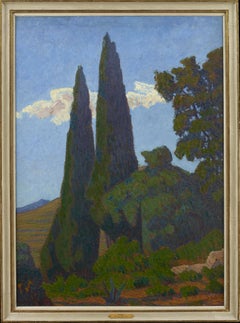
Les Cypres, French Post-Impressionist Landscape Painting, Signed
Located in London, GB
Robert Deborne
Les Cypres (The Cypresses)
1870 - 1944
Oil on canvas, signed lower right
Image size: 30 x 41 1/3 inches (76 x 105 cm)
Contemporary style handmade frame
This work is d...
Category
Early 20th Century Post-Impressionist Landscape Paintings
Materials
Canvas, Oil
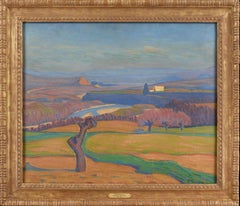
Paysage du Viviers, French Post-Impressionist Oil Painting
Located in London, GB
Robert Deborne
French 1870 - 1944
Viviers
Oil on canvas, signed lower right
Image size: 25 3/4 x 20 1/2 inches
Gilt frame
Robert Deborne (1870-1944) ...
Category
Late 19th Century Post-Impressionist Landscape Paintings
Materials
Canvas, Oil
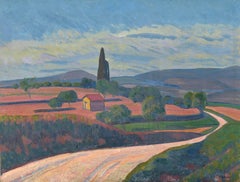
Ferme à Vivarais (Farm in Vivarais)
Located in London, GB
Robert Deborne
Ferme à Vivarais (Farm in Vivarais)
1870-1944
Oil on board, signed lower right
Image size: 20 1/3 x 26 3/4 inches (51.8 x 68 cm)
Contemporary-style hand-made frame
Th...
Category
Early 20th Century Post-Impressionist Landscape Paintings
Materials
Oil, Board
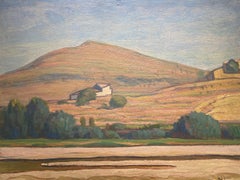
Paysage du Vivarais avec une Ferme, French Post-Impressionist, Signed Painting
Located in London, GB
Oil on canvas, signed bottom right
Image size: 26 1/4 x 19 3/4 inches (41.5 x 50 cm)
Hand made gilt frame
Provenance
Artist's Estate
This work is sold with a certificate of authe...
Category
Early 20th Century Post-Impressionist Landscape Paintings
Materials
Canvas, Oil
Spring in Dorset, 20th Century English Oil Landscape, Female Artist
Located in London, GB
Oil on board, unsigned
Image size: 12 1/2 x 15 1/2 inches (31.75 x 40 cm)
Contemporary style handmade frame
Exhibitions
1952 Royal Academy of Arts Exhibition, Gallery no. VII, no.429.
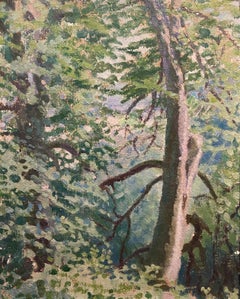
This forest scene invites the viewer into a multi-sensory event where the cool, damp shadows of the foliage can almost be felt and the rich bouquet of the forest floor recalled. Here, Sherlock has chosen a somewhat unusual angle and composition, dissecting each truck and tree form so that only a part can be seen. Furthermore, as we look into the depths of this space it becomes clear that we are stood gazing down into a valley that is in the distance, behind this wooded area. Indeed, instead of giving us an uninterrupted view of this vista, as perhaps would be expected, this view is deliberately blocked and our focus is directed instead towards the organic forms in the foreground.
The Artist
Marjorie Sherlock was born at Fir Tree Cottage, George Lane, Wanstead, Essex, on 3 February 1891, the elder child of the civil engineer, Henry Sherlock, and his wife, Alice (née Platts), who was born in Benares, India. By 1901, the family was living at ‘The Limes’, 121 Mill Road, Cambridge, and Marjorie received an education locally. In 1918, she entered into marriage with her cousin, Major Wilfrid Barrett, though this proved unsuccessful and they later divorced (he remarrying in 1941). She then continued to live at the family home until the Second World War.
During the First World War, Marjorie Sherlock studied at Westminster Technical Institute under the Camden Town School painters, Walter Sickert and Harold Gilman.
She exhibited at the Royal Academy of Arts from 1917, when she showed a powerful view of the interior of Liverpool Street Station (Government Art Collection) (to which the current etching [202] relates). In time, she would exhibit at the International Society, the New English Art Club, the Royal Society of British Artists, the Society of 207 Graphic Art and the Women’s International Art Club (becoming a member of the last two). She also showed work internationally.
Developing as a printmaker as well as a painter, Sherlock studied etching under Malcolm Osborne at the Royal College of Art in 1925. She published her etchings in four series, the titles of which indicate her love of travel: ‘English Etchings, ‘Egyptian Etchings’ (both 1925), ‘German Etchings’ (1929) and ‘Indian Etchings’ (1932). During this period, she also visited the united States. More admiring of Continental painters than British ones, she furthered her studies, in 1938, by working in Paris under André L’Hôte and André Dunoyer de Segonzac.
During the Second World War, Sherlock moved to East Devon and settled at Oxenways, a Victorian hunting lodge...
Category
1950s Modern Landscape Paintings
Materials
Canvas, Oil
You May Also Like
Blossoming Trees in a Spring Orchard, A Pastoral Landscape in Full Bloom
Located in Cirencester, Gloucestershire
Blossoming Trees
by Regine David (female French artist, 1910-2018)
oil painting on board, unframed
board: 13 x 16 inches
inscribed verso
condition: This painting is in excellent cond...
Category
Mid-20th Century Post-Impressionist Landscape Paintings
Materials
Oil
Among the Cherry Trees
Located in Atlanta, GA
Born in the San Si Providence of China, Jang Jin Joong, known as his artist’s name Barnes, fell in love with art since he was a child. His passion for art continued into his pursuit ...
Category
2010s Impressionist Landscape Paintings
Materials
Canvas, Oil
$2,120 Sale Price
20% Off
Springtime: Almond Tree in Bloom (Printemps:Amandier en Fleur) Raymond Thibesart
By Raymond Thibesart
Located in SANTA FE, NM
Springtime: Almond Tree in Bloom (Printemps: Amandier en Fleur)
Raymond Thibesart (France, 1874-1968)
Oil on canvas, circa 1920s
19 x 25 1/2 (22 3/4 x 28 1/2 framed) inches
Raymond ...
Category
1920s Post-Impressionist Landscape Paintings
Materials
Canvas, Oil
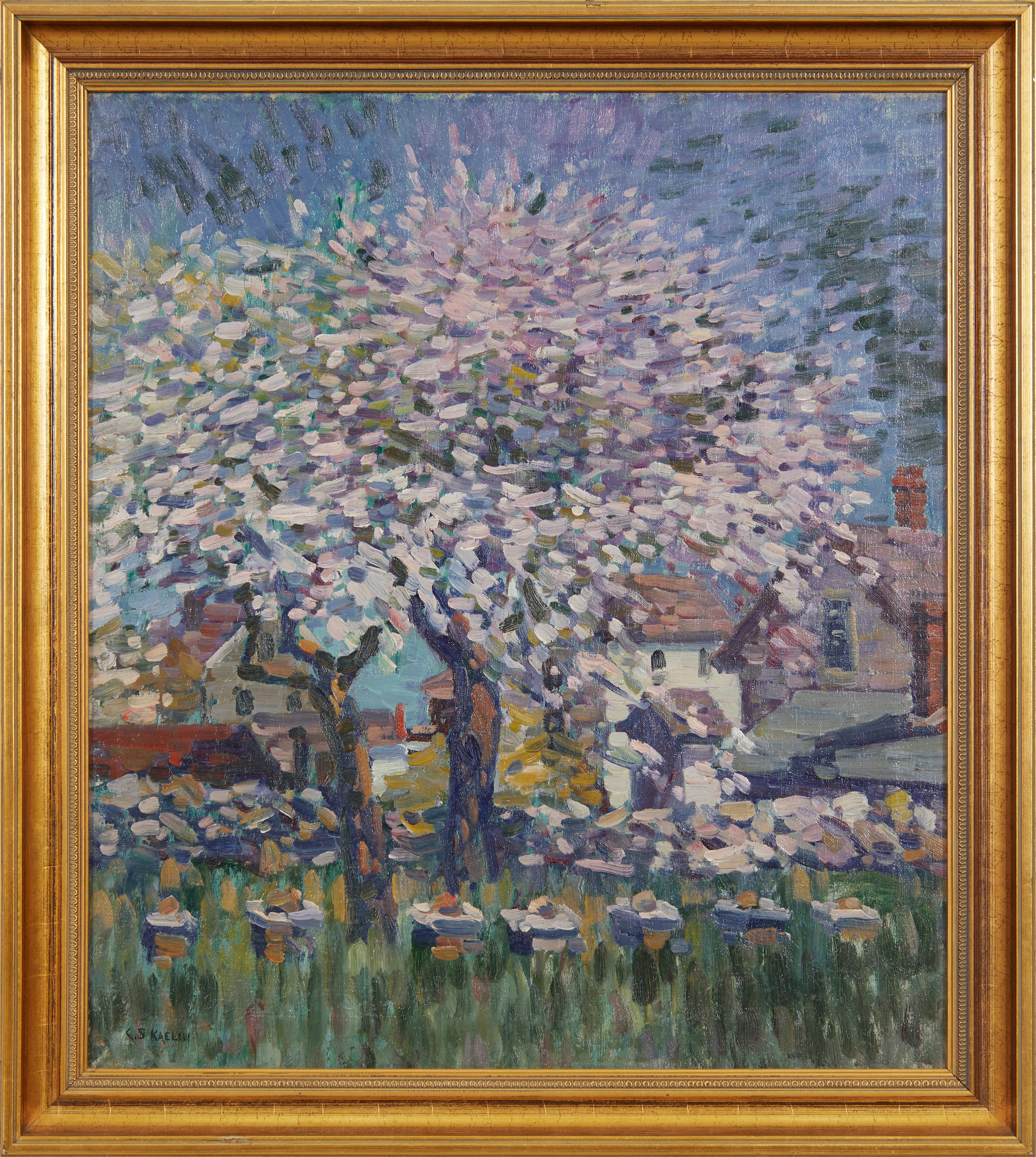
Flowering Tree Backyard Impressionist Landscape
By Charles Salis Kaelin
Located in Beachwood, OH
Charles Salis Kaelin (American, 1858–1929)
Flowering Tree Landscape
Oil on canvas
Signed lower left
25 x 22 inches
28.25 x 25.5 inches, framed
Described as an artist whose "love of ...
Category
Early 20th Century American Impressionist Landscape Paintings
Materials
Oil
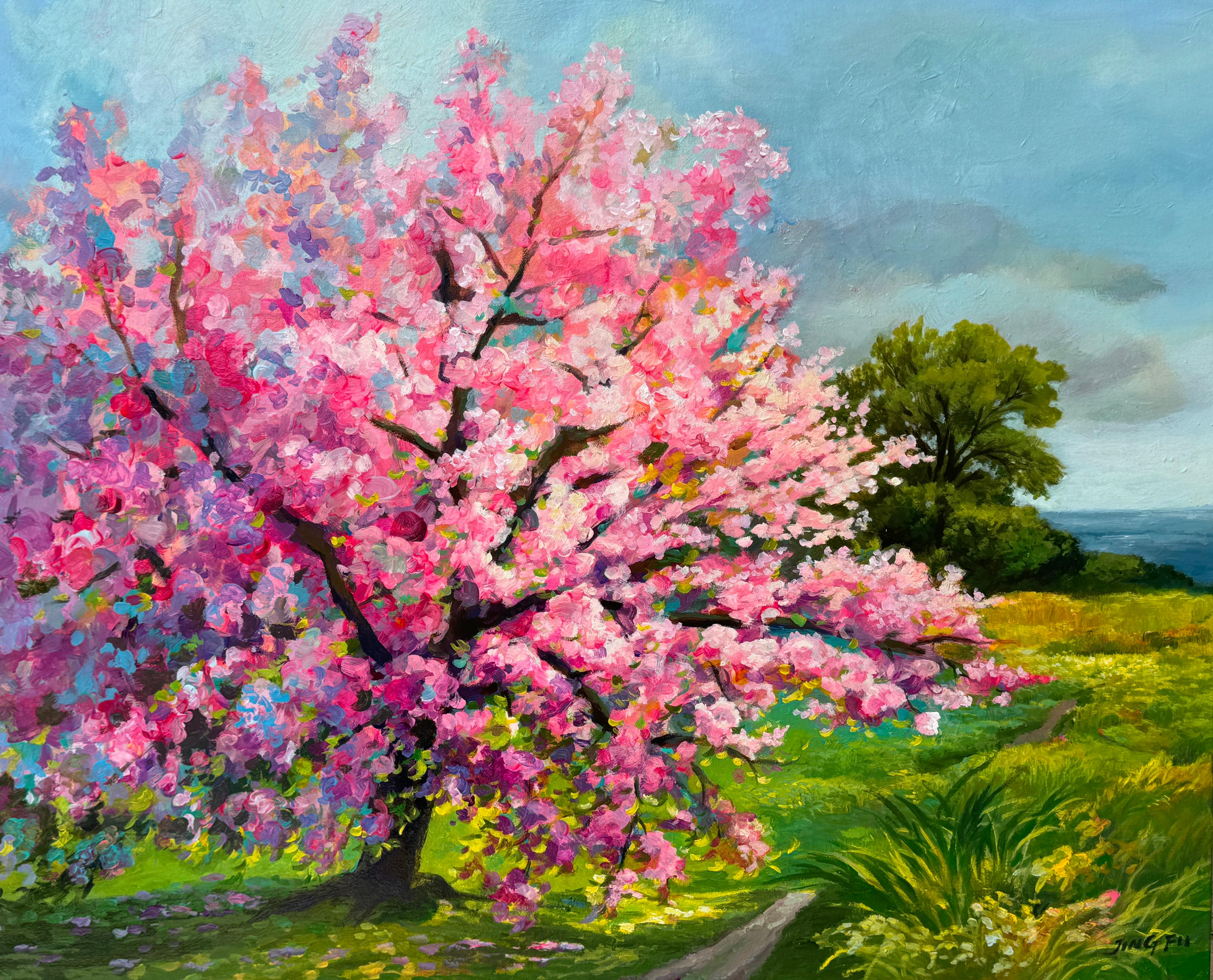
Spring Zest (landscape cherry blossom tree in bloom floral colorful pink)
Located in Quebec, Quebec
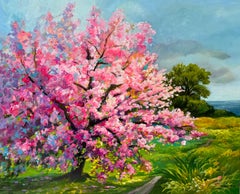
Spring Zest is a vibrant acrylic painting on canvas depicting a blossoming tree in the spring.
Comes unframed and ready to hang.
Category
2010s Post-Impressionist Landscape Paintings
Materials
Canvas, Acrylic
A Blossoming Fruit Tree, A Unique Double-Sided Painting by Ture Ander
Located in Stockholm, SE
We are pleased to present a rare and remarkable work by Swedish artist Ture Ander (1881–1959), often referred to as "The Flower Painter." What makes this painting especially unique i...
Category
1920s Post-Impressionist Landscape Paintings
Materials
Oil, Board
