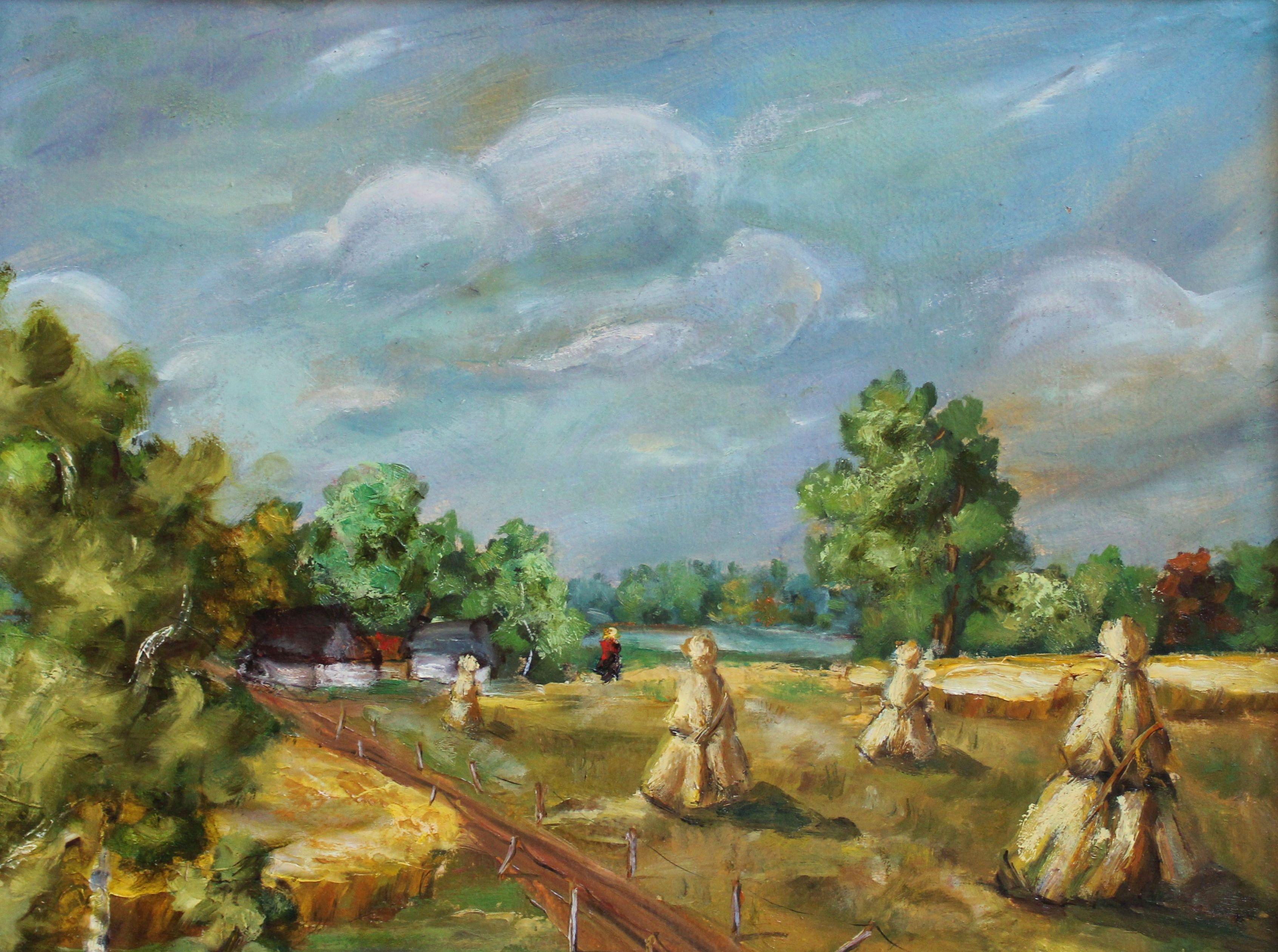
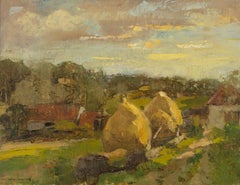
Items Similar to Harvest, The Haystacks, Mid-Century Impressionist Oil on Panel.
Want more images or videos?
Request additional images or videos from the seller
1 of 10
Robert PerniauxHarvest, The Haystacks, Mid-Century Impressionist Oil on Panel.1952
1952
$402.14
$658.2638% Off
£296.65
£485.5938% Off
€336
€55038% Off
CA$553.52
CA$906.0638% Off
A$597.98
A$978.8438% Off
CHF 318.13
CHF 520.7538% Off
MX$7,195.38
MX$11,778.1538% Off
NOK 4,028.24
NOK 6,593.8538% Off
SEK 3,683.94
SEK 6,030.2538% Off
DKK 2,560.29
DKK 4,190.9538% Off
About the Item
Mid-century oil on panel by Robert Perniaux , Belgian artist, signed and dated 1952 bottom right.
Robert Perniaux , born in Grez-Doiceau in 1906 and died in 1973, was a Belgian architect, painter, ceramicist and illustrator. He trained from 1923 to 1929 at the Royal Academy of Fine Arts in Brussels.
His work as a ceramicist, illustrator, watercolourist and painter had a characteristic style, which according to Paul Piron was "close to popular art " .
He illustrated many books with his unique style of art.
Robert Perniaux was the husband of the painter Georgette Devroye with whom he came to settle in La Ciotat in 1954 which was where he died in 1973.
His work was exhibited at the Quadrennial Ghent Fair in 1954.
- Creator:Robert Perniaux
- Creation Year:1952
- Dimensions:Height: 14.38 in (36.5 cm)Width: 18.31 in (46.5 cm)
- Medium:
- Movement Style:
- Period:
- Condition:The paintwork is in good order however there is cracking to the surface of the panel as the wood has dried out over the years. The painting is unframed.
- Gallery Location:Cotignac, FR
- Reference Number:Seller: GB/Perniaux/Harvest.1stDibs: LU143028350342
About the Seller
5.0
Platinum Seller
Premium sellers with a 4.7+ rating and 24-hour response times
Established in 2000
1stDibs seller since 2020
290 sales on 1stDibs
Typical response time: 1 hour
- ShippingRetrieving quote...Shipping from: Cotignac, France
- Return Policy
More From This Seller
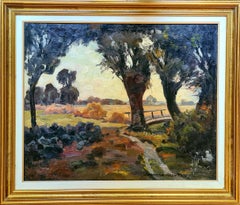
View AllMid Century Expressionist Landscape, Oil on Canvas. The Countryside
Located in Cotignac, FR
Mid Century oil on canvas landscape painting by Franco Hungarian artist Elemer Vagh Weinmann. The painting is signed bottom right and is presented in a custom gilt frame with a white...
Category
Mid-20th Century Expressionist Landscape Paintings
Materials
Canvas, Oil
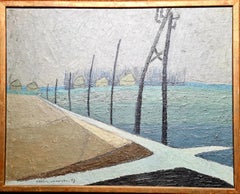
Mid Century Modern Large French Oil On Board Landscape, Paysage de Beauce
Located in Cotignac, FR
Mid Century Modern French oil on board landscape of Beauce in France. The painting is signed and dated bottom left and presented in a plain period wood frame with light gilding.
A l...
Category
Mid-20th Century Modern Landscape Paintings
Materials
Oil
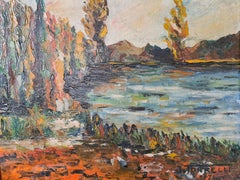
Mid-Century Barbizon School Impressionist Lakeside Landscape, Oil on Board.
Located in Cotignac, FR
Mid-Century impressionist oil on board by Italian artist J. Torrelli.
This painting of a lakeside at dusk, reminiscent of the 'Barbizon School', showcases impressionist painting tec...
Category
Mid-20th Century Landscape Paintings
Materials
Oil, Board
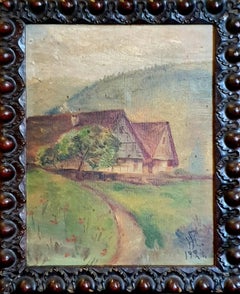
Early 20th Century Folk Art Impressionist Oil on Board,
View to the Farmhouse
.
Located in Cotignac, FR
Early 20th century Folk Art Impressionist oil on board view of a farmhouse. Initial signed but artist unknown and dated 1924 to the bottom right. Presented in a really beautiful peri...
Category
Early 20th Century Folk Art Landscape Paintings
Materials
Oil, Board
$315 Sale Price
37% Off
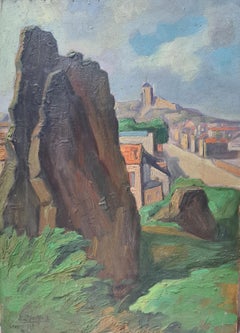
French Impressionist Oil on Panel Landscape, Lourdes
Located in Cotignac, FR
Oil on panel view of Lourdes in France by Jacques Buecher. The painting is signed, titled and dated bottom left. There is an inscription to the back of the board top left.
A very ch...
Category
Mid-20th Century Impressionist Landscape Paintings
Materials
Oil, Wood Panel
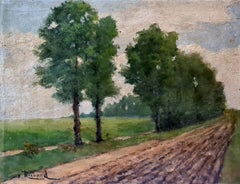
Barbizon School Landscape, The Poplar Trees, Late 19th Century Oil on Wood Panel
Located in Cotignac, FR
Late 19th Century French Barbizon School oil on wood panel of poplar trees in a landscape by Richard. The painting is signed bottom left. The painting is on a quality chamfered panel.
A very charming, almost impressionist, rendition of a line of iconic French trees in a landscape. Before them an earth drive has been ploughed up by the wheels of passing carts and horses. Richard has created a wonderful perspective that draws us in to the painting and he has created a contrast between the strong greens of the trees and fields against the whites and blues of the sky. The painting is reminiscent of the works of Monet from the 1890s. to whom the poplar trees were a continuing inspiration.
The Barbizon school of painters was part of an art movement towards Realism in art, which arose in the context of the dominant Romantic Movement of the time. The Barbizon school was active roughly from 1830 through 1870. It takes its name from the village of Barbizon, France, on the edge of the Forest of Fontainebleau, where many of the artists gathered. Most of their works were landscape paintings, but several of them also painted landscapes with farmworkers, and genre scenes of village life. Some of the most prominent features of this school are its tonal qualities, colour, loose brushwork, and softness of form.
The leaders of the Barbizon school were: Théodore Rousseau, Charles-François Daubigny, Jules Dupré, Constant Troyon, Charles Jacque, and Narcisse Virgilio Díaz. Jean-François Millet lived in Barbizon from 1849, but his interest in figures with a landscape backdrop sets him rather apart from the others. Jean-Baptiste-Camille Corot was the earliest on the scene, first painting in the forest in 1829, but his work has a poetic and literary quality which sets him somewhat apart. Other artists associated with the school, often pupils of the main group, include: Henri Harpignies, Albert Charpin, François-Louis Français and Émile van Marcke.
In 1824 the Salon de Paris exhibited works of John Constable, an English painter. His rural scenes influenced some of the younger artists of the time, moving them to abandon formalism and to draw inspiration directly from nature. Natural scenes became the subjects of their paintings rather than mere backdrops to dramatic events. During the Revolutions of 1848 artists gathered at Barbizon to follow Constable's ideas, making nature the subject of their paintings. The French landscape became a major theme of the Barbizon painters.
Millet extended the idea from landscape to figures — peasant figures, scenes of peasant life, and work in the fields. In The Gleaners (1857), for example, Millet portrays three peasant women working at the harvest. Gleaners are poor people who are permitted to gather the remains after the owners of the field complete the main harvest. The owners (portrayed as wealthy) and their laborers are seen in the back of the painting. Millet shifted the focus and the subject matter from the rich and prominent to those at the bottom of the social ladders. To emphasize their anonymity and marginalized position, he hid their faces. The women's bowed bodies represent their everyday hard work.
In the spring of 1829, Jean-Baptiste-Camille Corot came to Barbizon to paint in the Forest of Fontainebleau, he had first painted in the forest at Chailly in 1822. He returned to Barbizon in the autumn of 1830 and in the summer of 1831, where he made drawings and oil studies, from which he made a painting intended for the Salon of 1830; "View of the Forest of Fontainebleau'" (now in the National Gallery in Washington) and, for the salon of 1831, another "View of the Forest of Fontainebleau"'. While there he met the members of the Barbizon school: Théodore Rousseau, Paul Huet, Constant Troyon, Jean-François Millet, and the young Charles-François Daubigny.
During the late 1860s, the Barbizon painters attracted the attention of a younger generation of French artists studying in Paris. Several of those artists visited Fontainebleau Forest to paint the landscape, including Claude Monet, Pierre-Auguste Renoir, Alfred Sisley and Frédéric Bazille. In the 1870s those artists, among others, developed the art movement called Impressionism and practiced 'plein air' painting. In contrast, the main members of the school made drawings and sketches on the spot, but painted back in their studios.
The Post-Impressionist painter Vincent Van Gogh studied and copied several of the Barbizon painters as well, including 21 copies of paintings by Millet. He copied Millet more than any other artist. He also did three paintings in Daubigny's Garden.
The Barbizon painters also had a profound impact on landscape painting in the United States. This included the development of the American Barbizon school by William Morris Hunt. Several artists who were also in, or contemporary to, the Hudson River School studied Barbizon paintings for their loose brushwork and emotional impact. A notable example is George Inness, who sought to emulate the works of Rousseau. Paintings from the Barbizon school also influenced landscape painting in California. The artist Percy Gray...
Category
Late 19th Century Barbizon School Landscape Paintings
Materials
Oil, Wood Panel
You May Also Like
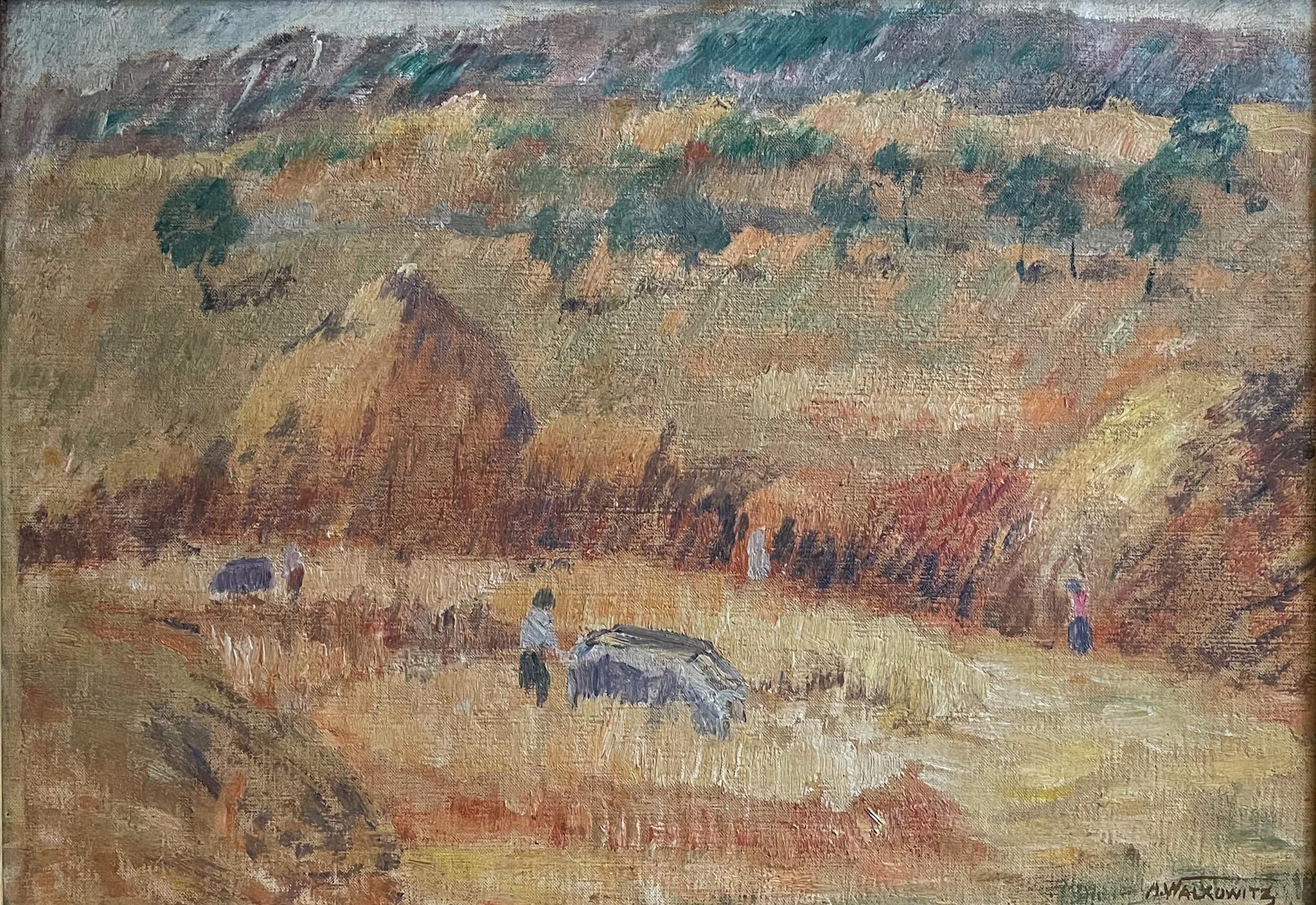
Haystacks
By Abraham Walkowitz
Located in New York, NY
Haystacks by Abraham Walkowitz (1878-1965)
Oil on canvas
14 x 20 inches unframed (35.56 x 50.8 cm)
19 ½ x 25 ½ inches framed (49.53 x 64.77 cm)
Signed on lower right
Description:
Ab...
Category
20th Century American Impressionist Landscape Paintings
Materials
Oil
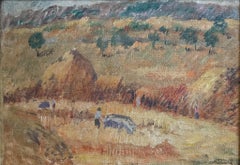
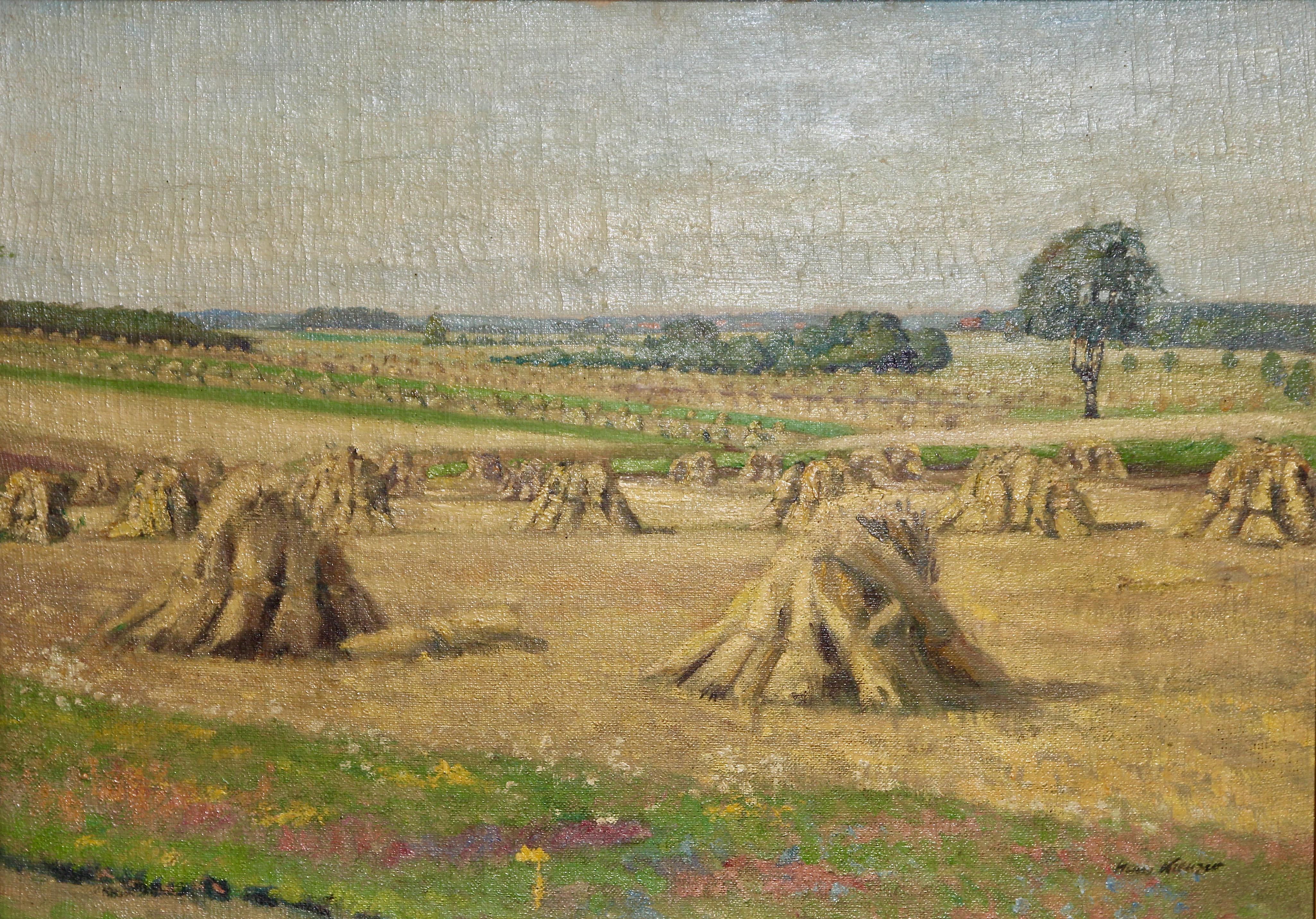
Oil painting by Hans Kreuzer. Hay, straw harvest. Signed and dated.
Located in Berlin, DE
Old oil painting, Hans Kreuzer, hay, straw harvest. Signed and dated.
Age-related condition.
Dimensions without frame.
Category
20th Century Landscape Paintings
Materials
Canvas, Oil

$952 Sale Price
20% Off
Free Shipping
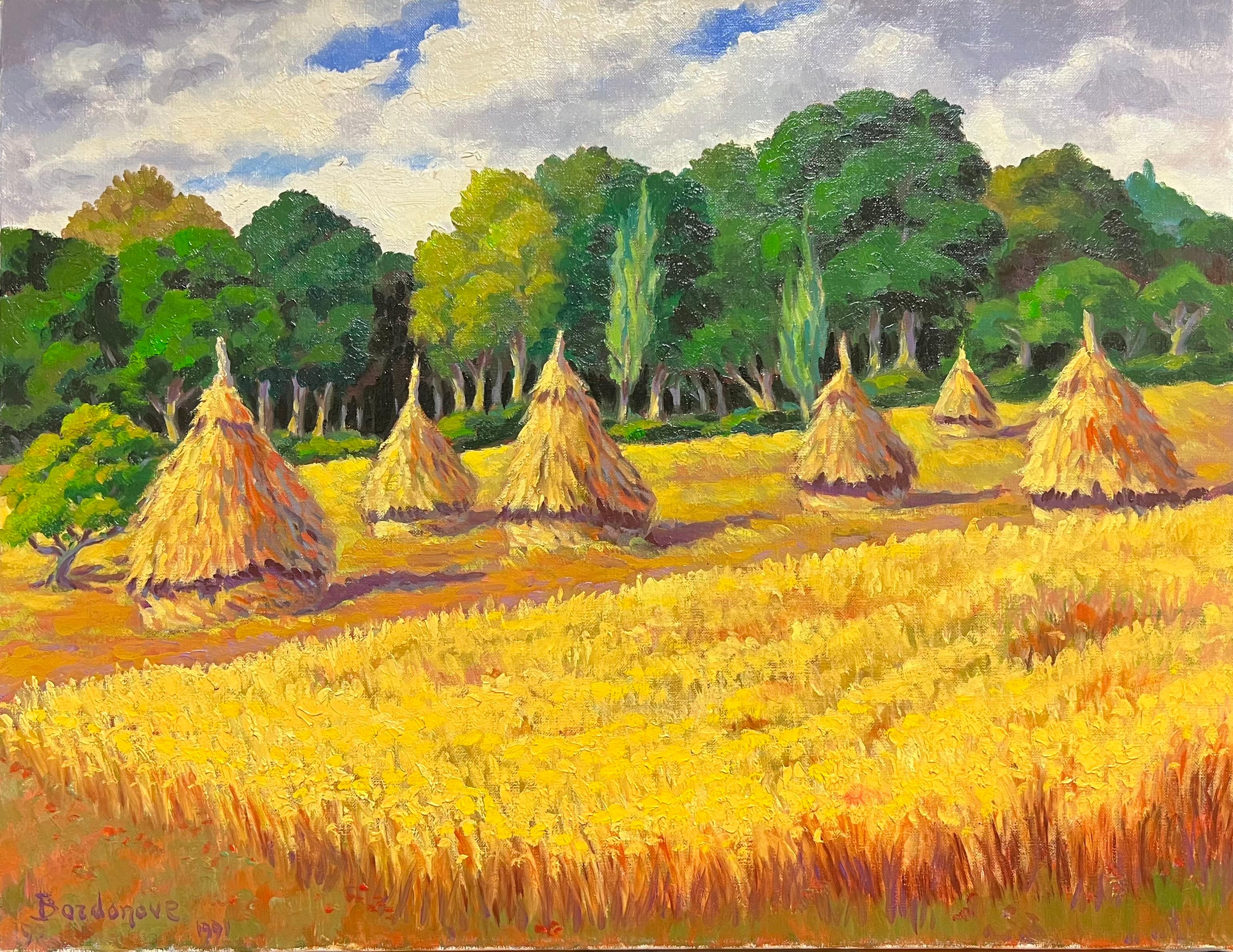
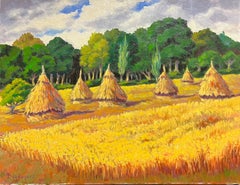
French Impressionist Oil Painting Golden Harvest Landscape with Haystacks
Located in Cirencester, Gloucestershire
Golden Harvest Landscape
by Georges Bordonave (French contemporary)
signed oil painting on canvas, unframed
dated 1991
canvas: 20 x 25.5 inches
condition: very good
provenance: from ...
Category
Late 20th Century Impressionist Landscape Paintings
Materials
Oil
$1,039 Sale Price
20% Off
After the Harvest - Mid Century Landscape in Oil on Canvas
Located in Soquel, CA
Robert Azensky Fine Art is pleased to offer this Mid Century Landscape in Oil on Canvas "After the Harvest"
Wonderful mid century landscape of...
Category
1950s Impressionist Landscape Paintings
Materials
Canvas, Oil
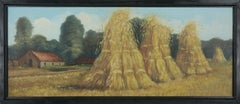
Summer during the hay harvest. Middle of the 1940s, oil on cardboard, 40, 5x53cm
By Harijs Veldre
Located in Riga, LV
Summer during the hay harvest
Middle of the 1940s, oil on cardboard, 40,5x53 cm
Harijs Veldre (Bullis till 1947) (1927.8.III – 1999.6.V)
Harijs Veldre learned in Riga school of app...
Category
1940s Impressionist Landscape Paintings
Materials
Oil, Cardboard
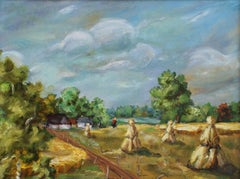
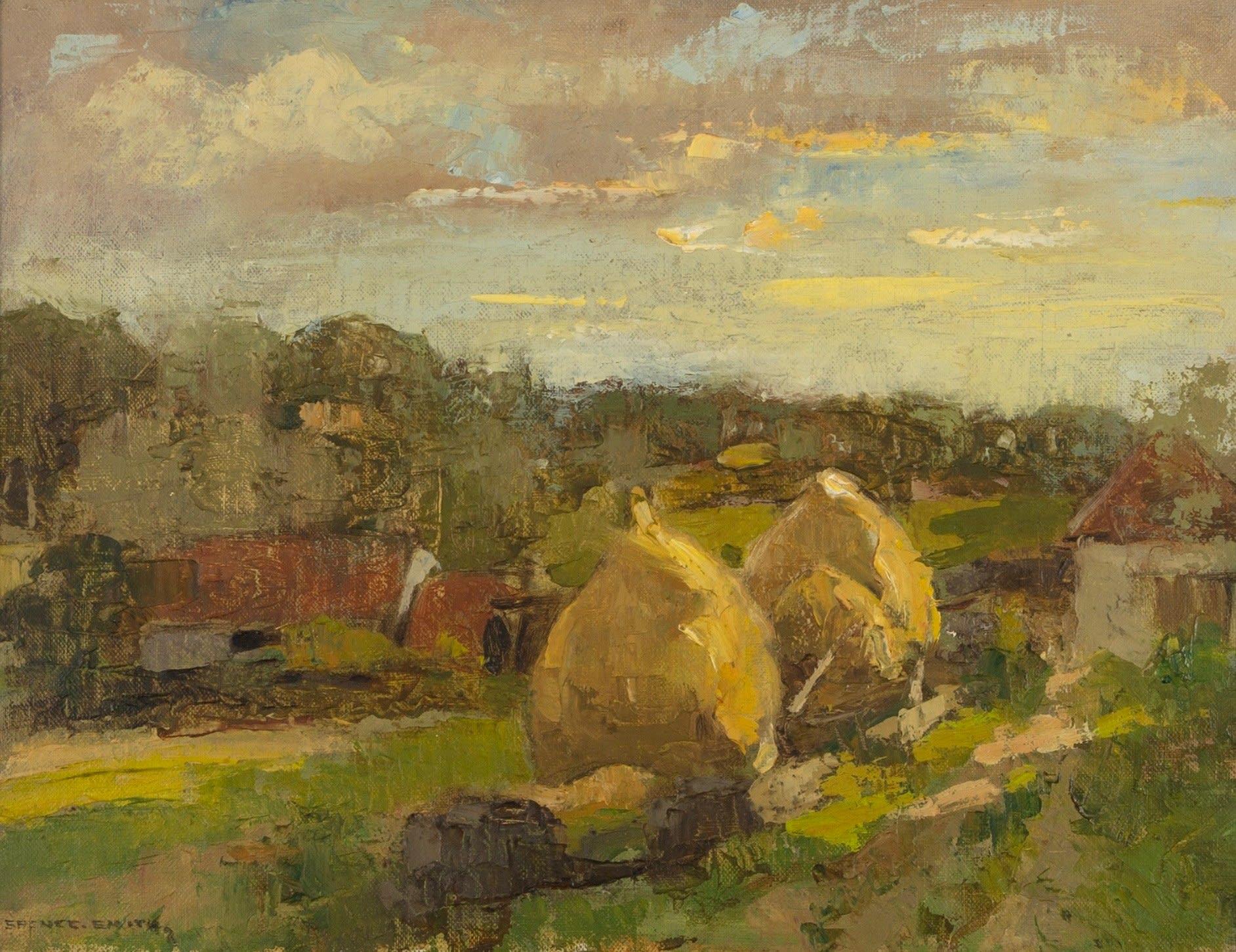
Haystacks, Oil on Canvas Board by John Guthrie Spence Smith
Located in Kingsclere, GB
Haystacks, Oil on Canvas Board by John Guthrie Spence Smith
Additional information:
Medium: Oil on Canvas Board
32 x 42 cm
12 5/8 x 16 1/2 in
Signed
Category
20th Century Landscape Drawings and Watercolors
Materials
Canvas
More Ways To Browse
Vintage Panels
Midcentury La
Alicia Dubnyckyj
Amalfi Coast Oil Painting
Ameglio Merio
Ana Guzman
Andre Devambez
Andreas Schelfhout
Bill Moore
Bouvard Antoine
Brad Teare
Cabin In The Woods
California Desert Landscape Paintings
California Oak Painting
California Oak Trees
California Plein Air Artists
Caribou Oil Painting
Carl Wilhelms