Items Similar to "APRIL" TEXAS HILL COUNTRY BLUEBONNETS IMAGE: 25 X 30 FRAME: 33 X 38 CIRCA 1940S
Want more images or videos?
Request additional images or videos from the seller
1 of 6
Robert Wood"APRIL" TEXAS HILL COUNTRY BLUEBONNETS IMAGE: 25 X 30 FRAME: 33 X 38 CIRCA 1940SCirca 1940s
Circa 1940s
On Hold
$42,000
On Hold
£32,044.96
On Hold
€36,480.66
On Hold
CA$59,031.46
On Hold
A$64,889.96
On Hold
CHF 34,066.92
On Hold
MX$771,588.28
On Hold
NOK 437,496.69
On Hold
SEK 398,512.20
On Hold
DKK 272,569.07
About the Item
Robert Wood (G. Day)
(1889 -1979)
San Antonio Artist
Image Size: 25 x 30
Frame Size: 33 x 38
Medium: Oil
"April" Texas Hill Country Bluebonnets
Biography
Robert Wood (G. Day) (1889 -1979)
A painter of realistic landscapes reflecting a vanishing wilderness in America, Robert Wood (not to be confused with Robert E. Wood) is reportedly one of the most mass-produced artists in the United States. His painting became so popular he was unable to meet all of the demands, and many of his works were reproduced in lithographs and mass distributed as prints, place mats, and wall murals by companies including Sears, Roebuck. He was born in Sandgate, Kent on the south coast of England near Dover, the son of W.L. Wood, a famous home and church painter who recognized and supported his son's talent. In fact, he forced his son to paint by keeping him inside to paint rather than playing with his friends. At age 12, Wood entered the South Kensington School of Art. As a youth, he came to the United States in 1910, having served in the Royal Army, and he never returned to England. He traveled extensively all over the United States, especially in the West, often in freight cars, and also painted in Mexico and Canada. His itinerant existence took him to Illinois where he worked as a farmhand, to Pensacola, Florida where he married, briefly in Ohio, Seattle, Washington, and Portland, Oregon. In 1912, he was in Los Angeles, and in the late 1920s and early 1930s, in San Antonio, Texas, where he lived and in 1928 exhibited in the "Texas Wildflower Competition." From San Antonio, he gained a national reputation for his strong colored, dramatic paintings. Some of that prestige has been credited to his association with Jose Arpa, prominent Texas artist. Wood also gave art lessons, and one of his students was Porfirio Salinas. During this period, Wood sometimes signed his paintings G. Day or Trebor, which is Robert spelled backwards. In 1941 he went to California and painted numerous desert and mountain landscapes and coastal scenes. He lived in Carmel for seven years, and then moved to Woodstock, New York, but he soon returned to California, settling first in Laguna Beach, then San Diego, and finally in the High Sierras, where he and his wife built a home and studio near Bishop and lived until his death in 1979. Robert Wood was born March 4, 1889, in Sandgate, England, a small town on the Kentish coast not far from the white cliffs of Dover. His father, W. J. Wood, was a successful painter who recognized Robert's unusual talent. At the age of twelve, his father enrolled Wood in art school in the small town of Folkstone. He then attended the South Kensington School of Art. While attending art school, Wood won four first awards and three second awards, one each year, a record. In 1910 after service in the Royal Army, nineteen-year-old Wood and his friend, Claude Waters, immigrated to America. Initially, he settled in Illinois and worked as a hired hand on a farm belonging to Water's uncle. He would then strike out on his own, living the life of an itinerant painter. Wood traveled as a hobo, hopping freight trains and selling or bartering small paintings to support him along the way. When times were hard, he worked at whatever job was available. In this manner, he saw most of the United States and fell in love with rural America. By 1912, Wood visited Los Angeles for the first time, arriving on the day of the Titanic tragedy. Later that year, he had met, courted and married young Eyssel Del Wagoner in Florida. The couple moved to Ohio where a daughter, Florence, was born. During World War I, the family moved to Seattle where a son, John Robert Wood, was born in 1919. In the early 1920's, the young Wood family was almost constantly on the move. They stayed for short periods in Kansas, Missouri, California and for a longer time in Portland, Oregon, where Wood's friend Claude Waters had settled. Wood's seemingly endless wanderings disrupted his family life and delayed his development as a painter. However, through his travels he developed an appreciation for the American landscape that would inspire him for the rest of his career. Although aware of the current movement away from traditional realism in American art, he elected to travel that solitary path and remain true to his own vision of American’s grandeur and beauty poetically translated through his landscape and seascape paintings. In 1923, the Wood family discovered the beautiful city of San Antonio, Texas and it was there that he and his family would finally settle. He studied briefly at the San Antonio Art School with Spanish colorist Jose Arpa y Perea (1860-1952), who had arrived in San Antonio that same year. In the latter part of the 1920’s, Jose Arpa’s influence quickly became evident. Wood after several years of experimentation was becoming fine easel painter, capable of great subtlety with a new mature original style. Like Texas painters Robert Onderdonk (1853-1917) and his son Julian Onderdonk (1882-1922), Robert Wood concentrated on the distinctive Texas landscape with its Red Oak trees and wildflowers that covered the hill country landscape. He developed a reputation for his scenes of Blue Bluebonnets, the state flower. In the spring, the Texas prairie is covered with wildflowers, especially in the hill country surrounding San Antonio and Austin. Wood incorporated native stone barns and rough wood farmhouses that added authenticity and romance to his compositions. In 1925, Wood was divorced from his wife. In 1932, he moved to the famous scenic loop on San Antonio's outskirts. While still living in Texas, he took extensive western sketching trips that brought him to California. It is evident that his 1930’s California and Texas works started to show an awareness of the then popular California Plein-Air movement. These more mature works are distinguished by a fine sense of detail reminiscent of late-19th-century American landscape painters laced with the colorful influence of American and French impressionism. With paintings being shipped to dealers across the continent, Wood’s reputation with collectors was growing nationally. It should be noted that from 1924 and 1940 Robert Wood also signed his paintings G. Day (Good Day) and Trebor (Robert backwards). He only used these signatures during these years (1924- 1940) and there is conflicting information as to why. In 1941 after seventeen years in Texas, Robert Wood and his second wife Tula, who he had met in San Antonio, moved to coastal town of Laguna Beach, California. Laguna had been an artist colony since early in the century and it was the birthplace for California Plein-Air School, which was still active. While in Laguna, he developed a following for both his landscapes and marine paintings. Wood's paintings of the California coast remained a significant part of his oeuvre. Living in Laguna for seven years, Robert Wood became an active member of the Laguna Art Association and an exhibitor at the annual Laguna Festival of the Arts. After the War in 1948, the Woods moved east and bought a home Woodstock, New York, which he had visited in the 1930’s. It was a popular artist colony located in the Catskills Mountains. He purchased a studio hidden deep in the Wood Stock Forest where Maples and Elms, as well as a quiet brook surrounded his small rustic studio. He found inspiration from the bold autumn colors of the forest, the Catskill Mountains covered in pillows of snow and the blossoming fruit trees of spring. During this period, he made sketching trips to New Hampshire, Vermont and along the Maine coast. Although included in his eastern subjects, these Vermont, New Hampshire and Maine subjects are rare when compared to the hundreds of paintings done while in Woodstock. The public was captivated with Roberts Wood’s seasonal Woodstock paintings. He began working with an inexpensive print publishing house (possibly Donald Art Publishing Co.) to reproduce several of his paintings. The reproductions were an immediate success. October Morn, which was his most successful prints, sold more than one million copies in less than two years. These inexpensive paper reproductions made Robert Wood one of American’s most famous landscape painters. After a few years in New York, Robert and Tula moved back to Laguna Beach. 1952 and 1953 were tumultuous years for Robert Wood. He and Tula became increasingly estranged and they were divorced in 1952. The following year, Wood was hit by a car on Pacific Coast Highway and nearly died. His friend and amateur artist Caryl Price helped him around the house during his recovery and the two were soon married. He had instructed Caryl in painting, and he would take her on sketching trips all throughout the west. During the 1950's, a combination of the popularity of Robert Wood's paintings and his print royalties eventually made him a comfortable living. It was during this period that Grand Tetons became a favorite subject. Although Robert Wood painted extensively in the Colorado Rockies in the 1930s and 1940s, he did not paint the Tetons until the late 1950s. By the early 1960s, the Tetons and the California coast made up a significant percentage of his artistic production. Wood would continue to paint his popular Texas landscapes, but his style had changed. Works from this period are more broadly painted with a more chromatic palette, which was considerably different than those from the 1930s and 1940s. In the 1960's, Robert Wood's found great success and his paintings brought higher prices, some selling in excess of five thousand dollars. At the age of eighty, the American Express Company commissioned him to paint a series of six works to be reproduced as limited-edition serigraphs for their Cardholders. Each print depicted one of the National Parks, subjects that were well known to Wood. Around 1964, Robert and Caryl Wood moved San Diego. They had purchased a wonderful Victorian house that Caryl wanted to restore. After several years in San Diego, they finally moved back to Bishop and the Sierras. Wood remained active and he continued to paint until just prior to his death in the spring of 1979, just weeks before his 90th birthday. Although Robert Wood shunned publicity and was modest about his accomplishments, he had millions of admirers who mourned his passing. There are thousands of artists in this country who learned a great deal by studying his work, his reproductions and through the art instruction books he authored
- Creator:Robert Wood (1889 - 1979, American)
- Creation Year:Circa 1940s
- Dimensions:Height: 33 in (83.82 cm)Width: 38 in (96.52 cm)Depth: 3 in (7.62 cm)
- More Editions Sizes:Image Size: 25 X 30Price: $42,000
- Medium:
- Movement Style:
- Period:
- Framing:Frame IncludedFraming Options Available
- Condition:Please check my 1stdibs storefront for more Vintage, Mid-Century, and Contemporary Texas paintings, sculpture, pottery, art pottery and more.
- Gallery Location:San Antonio, TX
- Reference Number:1stDibs: LU769311307802
About the Seller
5.0
Vetted Professional Seller
Every seller passes strict standards for authenticity and reliability
Established in 1974
1stDibs seller since 2017
104 sales on 1stDibs
Typical response time: 1 hour
- ShippingRetrieving quote...Shipping from: Fredericksburg, TX
- Return Policy
More From This Seller
View All"MEXICAN POTTERY DECORATOR"
By Bette Lou Voorhis
Located in San Antonio, TX
Bette Lou Voorhis "Mexican Pottery Decorator"
Born 1930
Austin Artist
Image Size: 36 x 24
Frame Size: 43 x 31
Medium: Oil
Biography:
Bette Lou Voorhis...
Category
1950s Impressionist Landscape Paintings
Materials
Oil
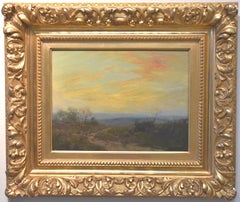
"Fall River Scene Texas Hill Country"
Located in San Antonio, TX
Loveta Strickland
Central Texas Artist Waco
Image Size: 24 x 36
Frame Size: 32 x 44
Medium: Oil
"Texas Hill Country Fall"
Category
1960s Impressionist Landscape Paintings
Materials
Oil
" Summer Evening Southwest Texas " 1909 Texas Hill Country Julian Onderdonk
By Julian Onderdonk
Located in San Antonio, TX
Julian Onderdonk "Summer Evening S. W. Texas" Texas Hill Country
(1882 - 1922)
San Antonio Artist
Image Size: 9 x 12
Frame Size: 15 x 18
Medium: Oil on panel
Dated 1909
"Summer Evening S. W. Texas"
"A Texas Painter Worked Under the Radar in New York," By Eve M. Kahn, March 6, 2014, The New York Times
Onderdonk, a San Antonio native who died of an intestinal ailment in 1922, at 40, is best known for painting swaths of Texas bluebonnets. Those canvases can bring more than $500,000 each, while his New York scenes usually end up in the five-figure range.
Onderdonk’s parents were painters in San Antonio, and in 1901, when he was a teenager, they sent him to New York for training. Through 1909, he lived in various Manhattan apartments and Staten Island houses. He then returned to Texas, but continued to spend months at a time in New York.
In 1902 he had married a Manhattan teenage neighbor, Gertrude Shipman. While she focused on raising their daughter, Adrienne, and worrying about their strained finances, “he created more than 600 works of art, often producing a painting or two a day,”
Eyewitnesses recorded his prolific pace in New York, but Onderdonk works bearing those dates rarely turn up. The puzzling gap in his productivity is explained in family correspondence that the Bakers uncovered: The artist admits that he was signing pieces with pseudonyms. He mostly used Chas. Turner and Chase Turner and occasionally resorted to Elbert H. Turner and Roberto Vasquez.
Julian Onderdonk was the son of the important Texas landscapist, Robert Onderdonk. He was the father's pupil at age 16. Sponsored by a Texas patron, he studied at the Art Students League in New York when he was 19, the pupil of Kenyon Cox, Frank DuMond, and Robert Henri. He also studied with William Merritt Chase on Long Island. In 1902, having lost his Texas patron because he married, he asked $18 for 12 paintings at a Fifth Avenue dealer in New...
Category
Early 1900s Impressionist Landscape Paintings
Materials
Oil
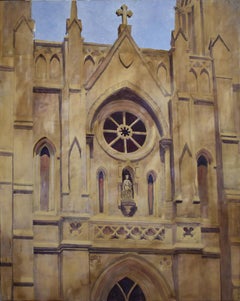
"Facade of San Fernando" Cathedral in Downtown San Antonio
By Randy Peyton
Located in San Antonio, TX
Randy Peyton
(1958 - present)
San Antonio Artist
Image Size: 60 x 48
Medium: Oil on Canvas
"Facade of San Fernando Cathedral"
Biography
Randy Peyton (Bo...
Category
Early 2000s Impressionist Landscape Paintings
Materials
Oil
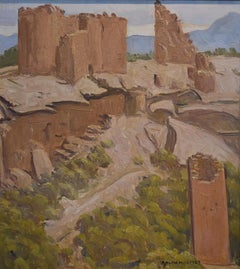
"Square Tower Ruins" Hovenweep National Monument, Utah
By Ralph Holmes
Located in San Antonio, TX
Ralph Holmes "Square Tower Ruins" Hovenweep National Monument, Utah Have included a photograph of how the subject looks today.
(1876 - 1963)
California, Illinois Artist
Image Siz...
Category
1930s Impressionist Landscape Paintings
Materials
Oil
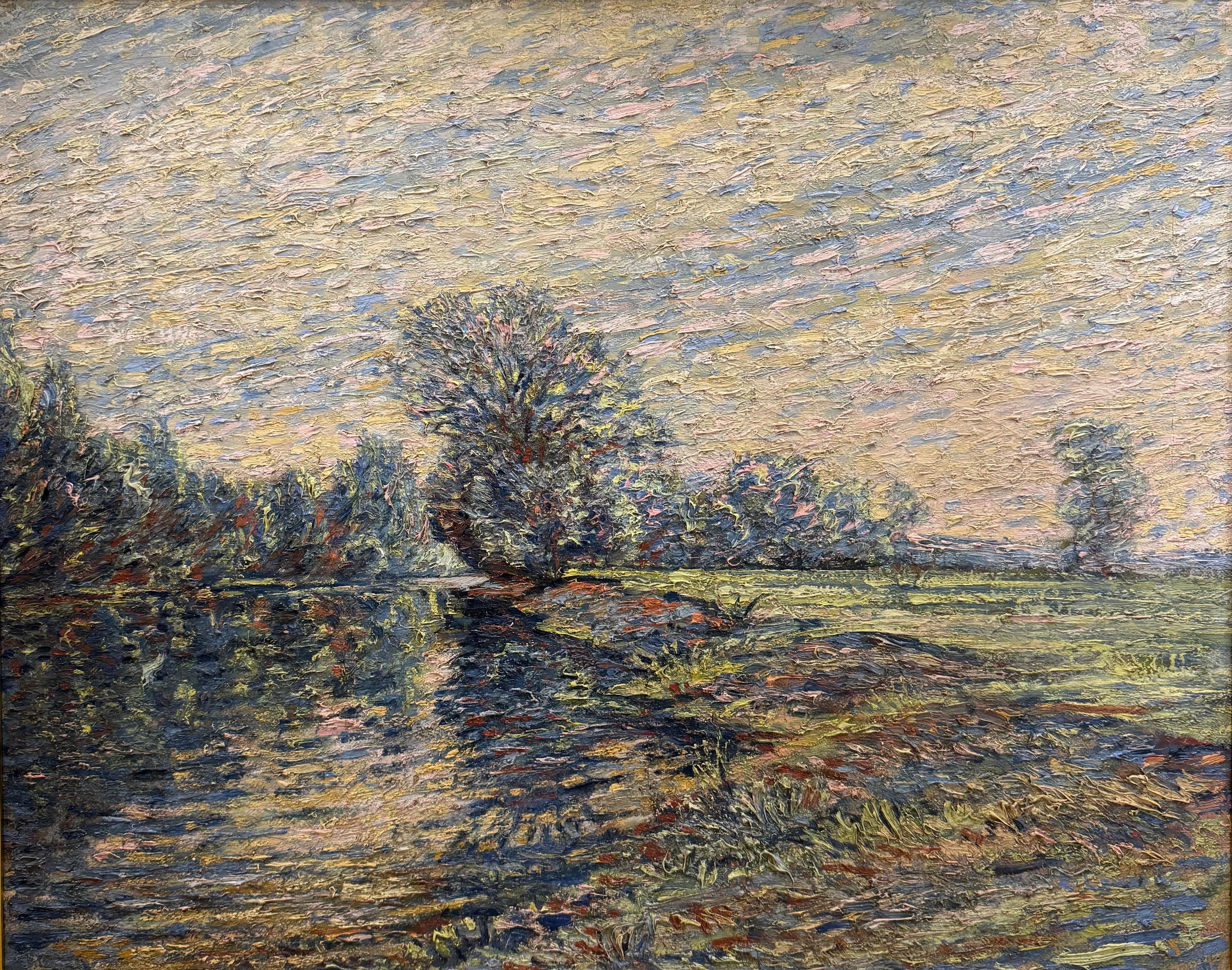
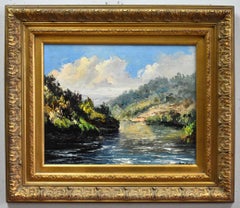
"RIVER BEND" OIL ON CANVAS APPLIED BY PALETTE KNIFE
By Jose Vives-Atsara
Located in San Antonio, TX
Jose Vives-Atsara
(1919-2004)
San Antonio Artist
Image Size: 16 x 20
Frame Size: 25 x 28.75
Medium: Oil on Canvas Applied by Palette Knife
"River Bend"
Biography
Jose Vives-Atsara (1919-2004)
His list of Pallbearers says it all. They were not just buyers of his art they were some of his closest friends.
Pallbearers: E. Glenn Biggs, James M. Cavender, III, Tom C. Frost, Jr., James W. Gorman, Jr., George B. Irish, Joseph R. Krier, Robert L. Mooney and H. Bartell Zachry, Jr.
Jose Vives-Atsara was born April 13, 1919, in Villafranca del Penedes near Barcelona, Spain. A native Spaniard, he developed a love of painting at an early age, and by age 11 had committed himself to becoming an artist. He studied at Colegio de San Ramon and had his first one-person show at age 14.
The Spanish Civil interrupted his idyllic young life as he was forced to serve in the Communist Army, and then was imprisoned, suffering many hardships.
Soon after the war he married Emilia Hill Domenech, and in 1947 set out to move with his wife and child aboard a tramp steamer to the United States. Unfortunately, immigration quotas did not allow them to move directly to the United States, and it was eight years before they achieved that goal. During this interim before obtaining temporary visas, he and his family lived first, in Caracas, Venezuela and then in Mexico City, Mexico.
The family settled in San Antonio, Texas, where he had made friends on a previous visit. He and his wife and children gained citizenship in time for their first Christmas in the United States. He became such an exemplary immigrant citizen that officials of the U.S. District Court for the Western District Court regularly invited him to share his thoughts and advice for living in America with newly naturalized citizens
Vives-Atsara also developed a close relationship with the Incarnate Word College, becoming, over the years, both a professor of art, and Artist in Residence. As a painter, he depicted many local scenes including San Antonio missions and the San Antonio River. For special guests such as Pope John Paul II, heads of state, and royalty from foreign countries, he was commissioned to provide paintings as gifts.
His paintings were also commissioned for Frost Bank and the San Antonio Chamber of Commerce. For his vibrant oil paintings, he used only nine colors, mixed in a variety of ways. They have been described as both realistic and impressionistic.
"Vives-Atsara believed that art is a reflection of the artist's soul, if this is true; his paintings reflect a beautiful, bright spirit." (Richardson) Jose Vives-Atsara died in San Antonio on January 13, 2004 and is buried there in Sunset Memorial Park Mausoleum.
Jose Vives-Atsara was born in Vilafranca del Panades in the Catalonian region of Spain on April 30, 1919. As a small boy he loved to sketch with pencil and paper. He began painting at the age of eleven. His first one-man show came at the ripe old age of fourteen. From that time on, painting has been his love and his way of life.
Jose studied art at Saint Raymond College and School of Fine Arts in Barcelona. He is quick to admit that his most inspirational teacher has been nature itself.
Mr. Vives-Atsara came to San Antonio in 1956 where he has established his art career. His use of a palette knife in painting allows him to blend rich pure pigments to achieve his goal of creating a powerful statement of color directly on the canvas. This style is intended to produce works that are distinctively 'Vives-Atsara'.
Vives-Atsara is represented in public collections including the Museum of Modern Art, Spain; Fort Worth Art Museum, Texas; His Royal Highness Juan Carlos...
Category
20th Century Impressionist Landscape Paintings
Materials
Oil
You May Also Like
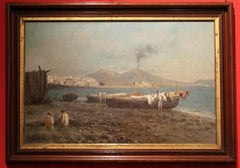
Italian Impressionist Oil on Board Marine Landscape Painting Naples Bay View
By Francesco Coppola Castaldo
Located in Firenze, IT
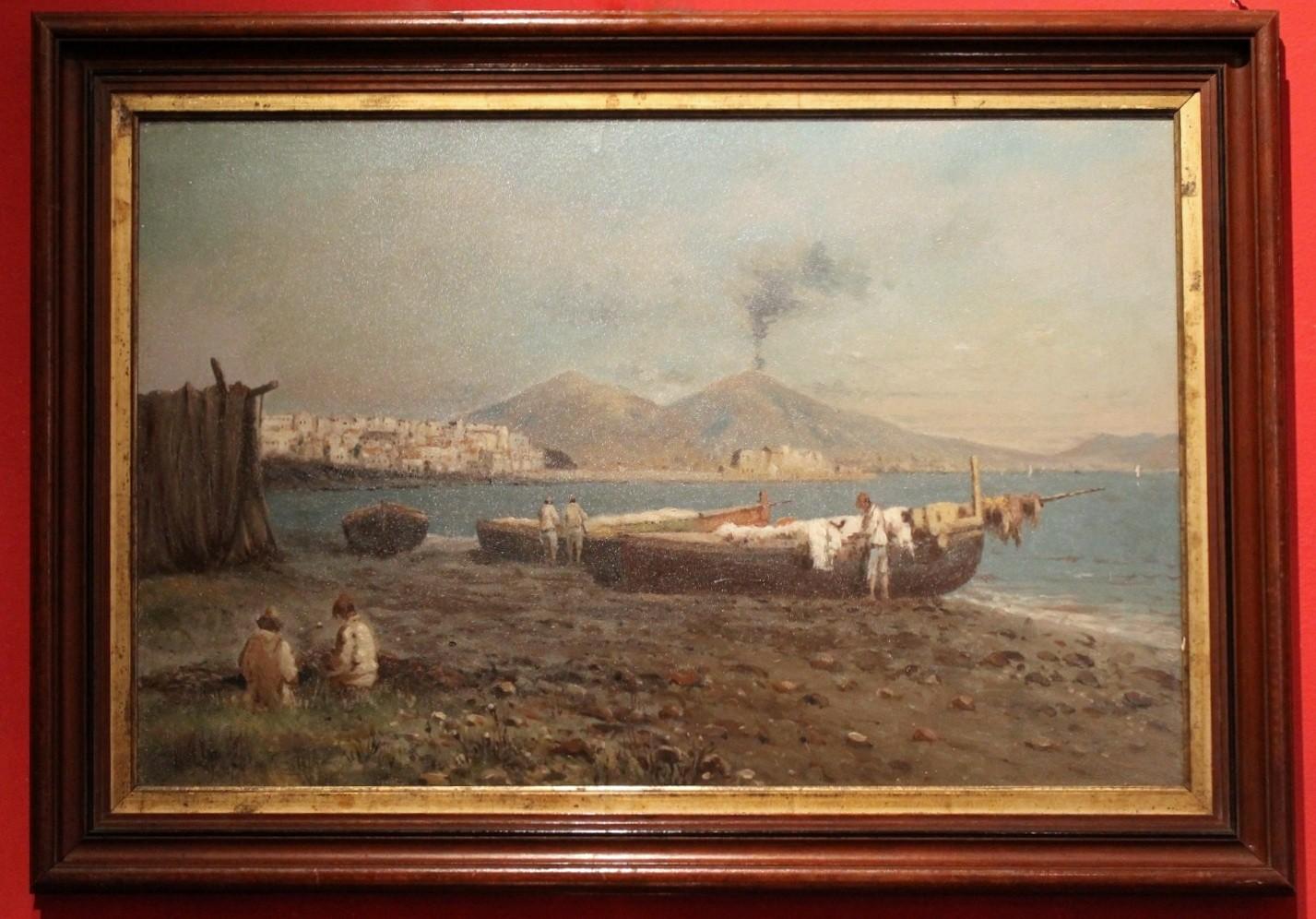
Everyday fishermen life is captured in this wonderful Italian impressionist late 19th century oil painting on thin board titled fishermen ashore. We love the neutral and natural colo...
Category
Late 19th Century Impressionist Landscape Paintings
Materials
Oil, Board
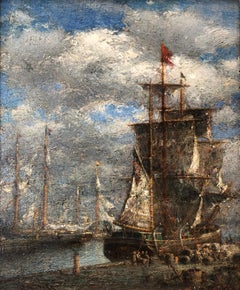
Home Safe
By James Gale Tyler
Located in Greenville, DE
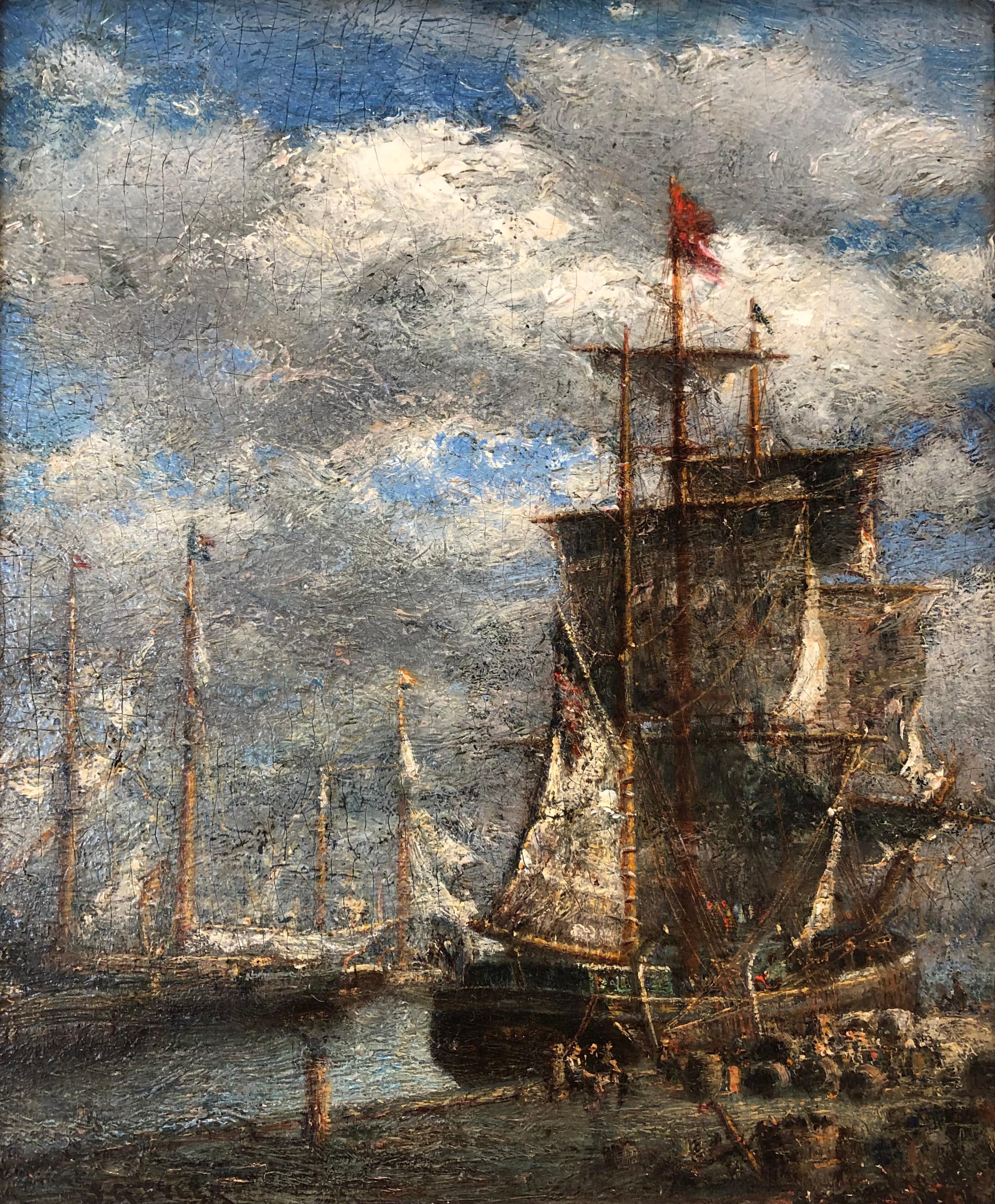
Very well executed seascape. Alternate title "In Point" inscribed on the rear. 17 x 15in in frame, including linen liner. ...
Category
Late 19th Century Impressionist Landscape Paintings
Materials
Oil, Board
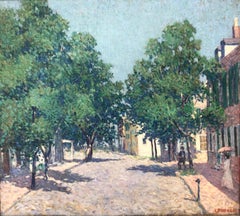
New Castle Street Scene
Located in Greenville, DE
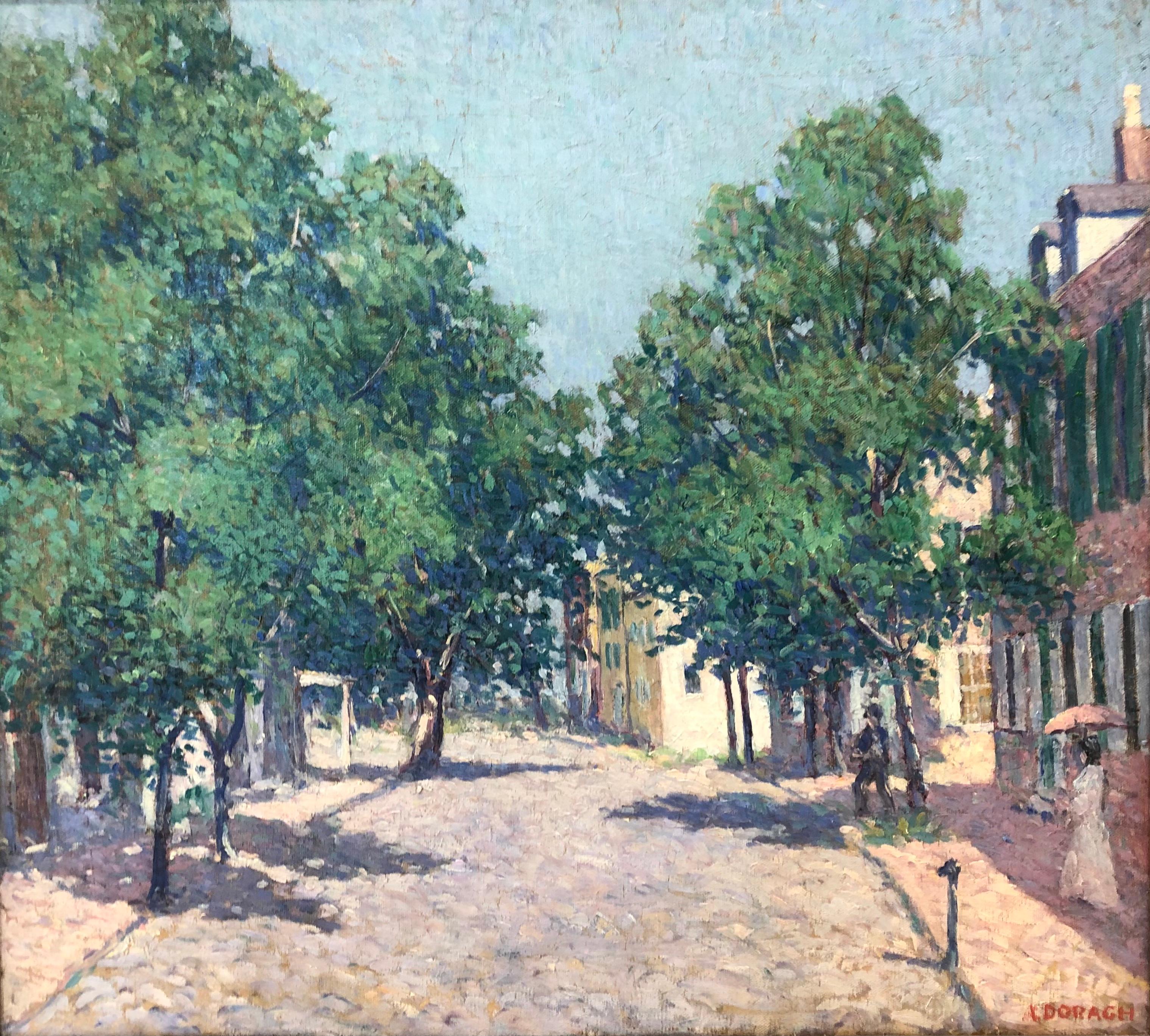
An excellent example of Doragh's best work. The scene is believed to be New Castle, Delaware circa 1920. The painting has been professionally restored. The ...
Category
1920s Impressionist Landscape Paintings
Materials
Canvas, Oil
Moonlight and Mist
By Eliot Clark
Located in Greenville, DE
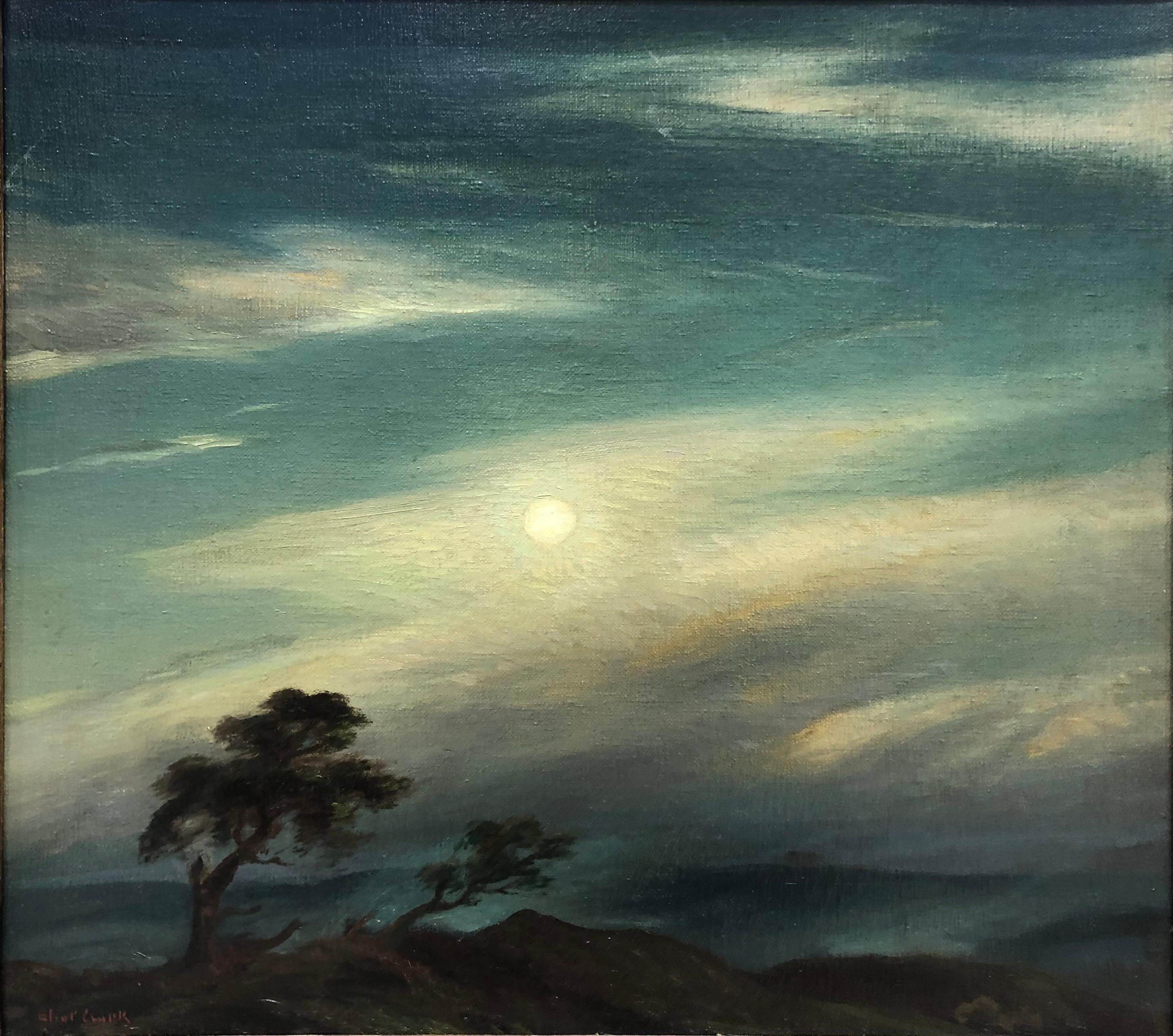
New York City artist Eliot Candee Clark was well known for his impressionist landscapes. He was the son of painter Walter Clark. Many of his paintin...
Category
Early 20th Century Impressionist Landscape Paintings
Materials
Canvas, Oil

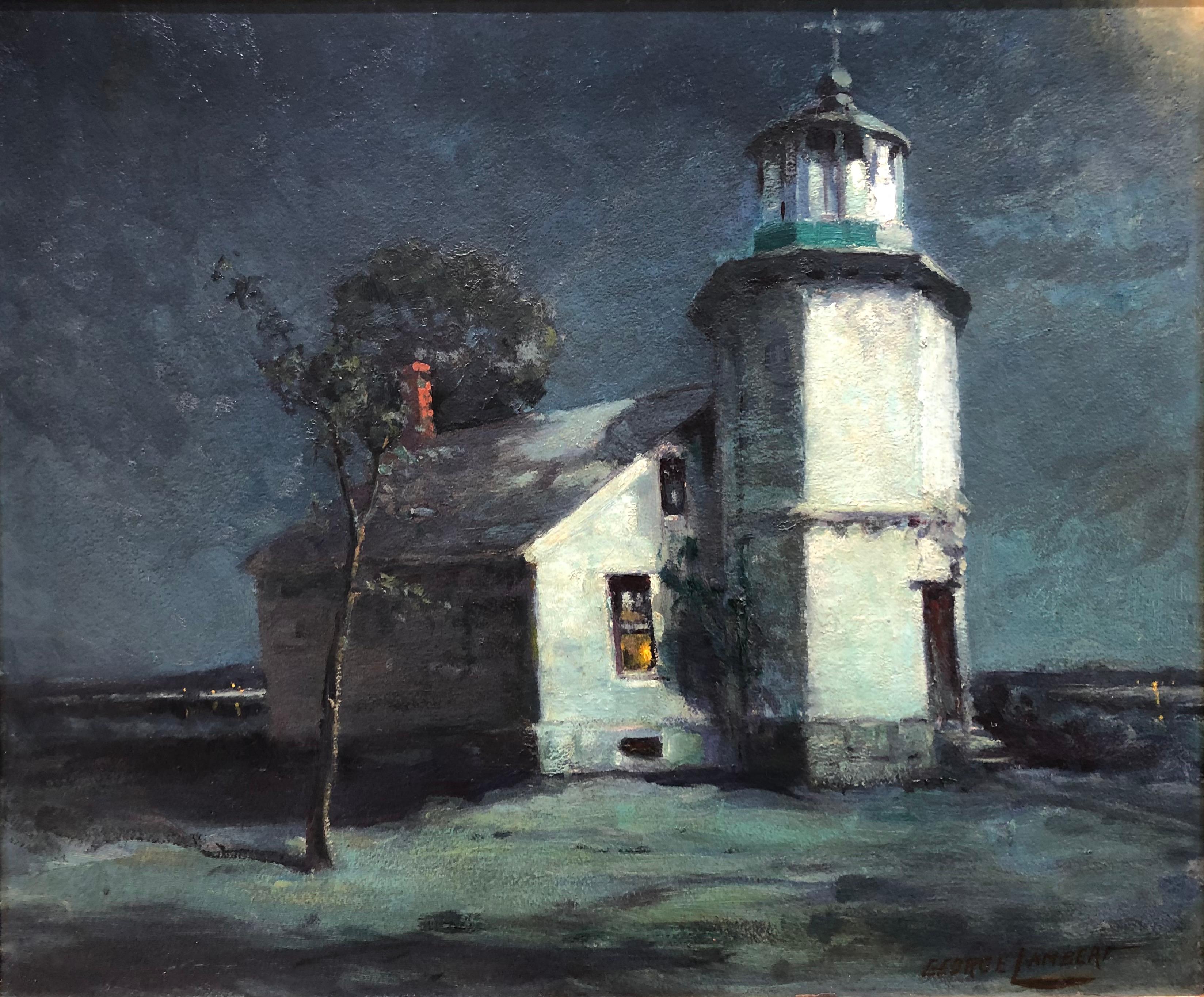
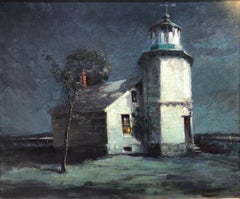
Still is the Night
By George Lambert
Located in Greenville, DE
George Lambert (1863-1946) *
Alternate title for painting is "Stonington Lighthouse". Signed lower right. Beautiful example of Lambert's best work. Painted very much in the style and...
Category
Early 20th Century Impressionist Landscape Paintings
Materials
Oil, Panel
Bronx River Reflections
By Ernest Lawson
Located in Greenville, DE
Excellent example of Lawson's work. Wonderful, thick impasto. Signed lower right. 31 x 37 1/4 in excellent condition frame.
Category
Early 20th Century Impressionist Landscape Paintings
Materials
Canvas, Oil
More Ways To Browse
19th Century Western Oil Paintings
Robert Wood Oil Painting
Pacific Coast Vintage
Wood Car
American Impressionism Painting
California Plein Air
Hill Country Painting
Used Barn Wood
Woodstock Painting
Texas Hill Country Painting
1930s California
Robert Hills
Freight Train
Texas Bluebonnets
Bluebonnet Painting
Grand Tetons
Bluebonnet Oil Paintings
Texas Wildflowers