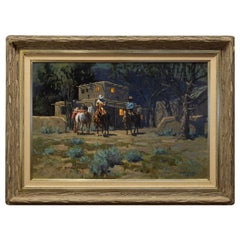
Items Similar to "JUST ENOUGH SHADE" ARIZONA ARTIST ROSS STEFAN (1934-1999) WESTERN HORSES MORE
Want more images or videos?
Request additional images or videos from the seller
1 of 6
Ross Stefan"JUST ENOUGH SHADE" ARIZONA ARTIST ROSS STEFAN (1934-1999) WESTERN HORSES MORE20th century
20th century
$3,700
£2,822.24
€3,220.73
CA$5,203.17
A$5,710.60
CHF 3,001.01
MX$67,955.01
NOK 38,361.77
SEK 35,055.06
DKK 24,062.04
About the Item
Ross Stefan
(1934-1999)
Image Size: 16 x 25
Frame Size: 26 x 34
Medium: oil on canvas
"Just Enough Shade"
Born in Milwaukee, Wisconsin, Ross Stefan became a painter of western scenes in traditional style. His subjects are Southwestern desert and mountain landscapes and stereotypical figures of that part of the country.
He had his first one-man show at age 13 and then living in Wisconsin, was much influenced by a studio visit to Dan Muller, an illustrator.In 1953, when he was a teenager, he moved to Tucson, Arizona with his family, and his father worked in advertising, which furthered Stefan's interest in illustration art. He studied art and philosophy at the University of Arizona and did part-time sketching for the Tucson newspaper. Norman Rockwell was one of his early heroes. Encouraged by Ivan Rosequist, pioneer Arizona art dealer in Tucson, Stefan quit his unproductive activities in the University of Arizona art department and set out on his own as a fine artist. Source: Peggy and Harold Samuels, "The Illustrated Biographical Encyclopedia of Artists of the American West" Ross Stefan was born in 1934 in Milwaukee, Wisconsin. His father, who worked in advertising, introduced him to art at a young age, and young Ross Stefan had his first one-man show at the age of 13. His first (and perhaps only) major influence was the noted Wisconsin illustrator Dan Muller, a visit to whose studio marked a major developmental turning point in his career. Due to ill health, Ross Stefan moved to southern Arizona in 1953, where he became an art student at the University of Arizona. In his spare time, Stefan worked as an illustrator for the Tucson Daily Citizen, using a melding of his own self-taught style with that of his early muse, Norman Rockwell. This foray into paid work convinced Ross Stefan to quit his studies at the University and begin painting full-time in 1955 in a studio and gallery he established in Tubac. It was also in 1955 that Ross Stefan first traveled out into the desert to spend time with Fame came to Ross Stefan in 1971, when his one-man show in New York City virtually sold out on opening night. From that point onward, Stefan's work was amongst the most coveted and best collected in the state of Arizona, with major retrospectives of his work at the Phippen Museum, the Harmsen Collection, the Denver Art Museum, the Pierce Western Collection, the Phoenix Art Museum and the Sangre de Cristo Arts Center. Ross Stefan's work is often described as "Southwestern Impressionist", a reduction that takes into account his broad strokes and heightened color palette without considering the proportional accuracy and spatial realism of his landscapes, figures and architectural depictions. Ross Stefan's scenes of pueblo life and the southern Arizona landscape are still archetypes of the genre, and his legacy is secure as one of the leading Arizona artists of the twentieth century. Born on June 13, 1934 in Milwaukee, Wisconsin, Ross Stefan developed a love for the arts at an early age. His father, who worked in advertising, provided Stefan with just the right amount of art to wet his lips. By the age of 13 Stefan debuted his first one-man show. Soon after, because of a health, he moved to southern Arizona. Engulfed in the love for the western atmosphere, Stefan began sketching landscapes. He has been called a self-taught artist, but got encouragement from the Wisconsin Illustrator, Dan Muller on several visits. Stefan became an art student at the University of Arizona. During his education he did part time sketching for the Tuscan Newspaper. He thrived on the works of his early muse, Norman Rockwell, as an inspiration in technique. It is rumored that Ivan Rosequist of the Rosequist Gallery in Tucson was the encouragement that Stefan needed to blossom as an artist to his fullest potential. Whether or not Rosequist was that influence, by 1955 Ross Stefan took the leap, and began painting full time with a studio and gallery in Tubac, Arizona. That same year, Stefan stayed with the Navajos, using the land and the people as his ongoing trademark. His paintings became a sensation. In 1971, his New York One-Man Show consisting of 16 oils of Southwestern landscapes and figures, proved to be quite successful with a virtual sell-out the first night. By his brush strokes, which are airy and wide, he has gained the reputation as an impressionist artist. His painting demonstrates the development of color, which has been called the highlight of impressionist art.
He had his first one-man show at age 13 and then living in Wisconsin, was much influenced by a studio visit to Dan Muller, an illustrator.In 1953, when he was a teenager, he moved to Tucson, Arizona with his family, and his father worked in advertising, which furthered Stefan's interest in illustration art. He studied art and philosophy at the University of Arizona and did part-time sketching for the Tucson newspaper. Norman Rockwell was one of his early heroes. Encouraged by Ivan Rosequist, pioneer Arizona art dealer in Tucson, Stefan quit his unproductive activities in the University of Arizona art department and set out on his own as a fine artist. Source: Peggy and Harold Samuels, "The Illustrated Biographical Encyclopedia of Artists of the American West" Ross Stefan was born in 1934 in Milwaukee, Wisconsin. His father, who worked in advertising, introduced him to art at a young age, and young Ross Stefan had his first one-man show at the age of 13. His first (and perhaps only) major influence was the noted Wisconsin illustrator Dan Muller, a visit to whose studio marked a major developmental turning point in his career. Due to ill health, Ross Stefan moved to southern Arizona in 1953, where he became an art student at the University of Arizona. In his spare time, Stefan worked as an illustrator for the Tucson Daily Citizen, using a melding of his own self-taught style with that of his early muse, Norman Rockwell. This foray into paid work convinced Ross Stefan to quit his studies at the University and begin painting full-time in 1955 in a studio and gallery he established in Tubac. It was also in 1955 that Ross Stefan first traveled out into the desert to spend time with Fame came to Ross Stefan in 1971, when his one-man show in New York City virtually sold out on opening night. From that point onward, Stefan's work was amongst the most coveted and best collected in the state of Arizona, with major retrospectives of his work at the Phippen Museum, the Harmsen Collection, the Denver Art Museum, the Pierce Western Collection, the Phoenix Art Museum and the Sangre de Cristo Arts Center. Ross Stefan's work is often described as "Southwestern Impressionist", a reduction that takes into account his broad strokes and heightened color palette without considering the proportional accuracy and spatial realism of his landscapes, figures and architectural depictions. Ross Stefan's scenes of pueblo life and the southern Arizona landscape are still archetypes of the genre, and his legacy is secure as one of the leading Arizona artists of the twentieth century. Born on June 13, 1934 in Milwaukee, Wisconsin, Ross Stefan developed a love for the arts at an early age. His father, who worked in advertising, provided Stefan with just the right amount of art to wet his lips. By the age of 13 Stefan debuted his first one-man show. Soon after, because of a health, he moved to southern Arizona. Engulfed in the love for the western atmosphere, Stefan began sketching landscapes. He has been called a self-taught artist, but got encouragement from the Wisconsin Illustrator, Dan Muller on several visits. Stefan became an art student at the University of Arizona. During his education he did part time sketching for the Tuscan Newspaper. He thrived on the works of his early muse, Norman Rockwell, as an inspiration in technique. It is rumored that Ivan Rosequist of the Rosequist Gallery in Tucson was the encouragement that Stefan needed to blossom as an artist to his fullest potential. Whether or not Rosequist was that influence, by 1955 Ross Stefan took the leap, and began painting full time with a studio and gallery in Tubac, Arizona. That same year, Stefan stayed with the Navajos, using the land and the people as his ongoing trademark. His paintings became a sensation. In 1971, his New York One-Man Show consisting of 16 oils of Southwestern landscapes and figures, proved to be quite successful with a virtual sell-out the first night. By his brush strokes, which are airy and wide, he has gained the reputation as an impressionist artist. His painting demonstrates the development of color, which has been called the highlight of impressionist art.
- Creator:Ross Stefan
- Creation Year:20th century
- Dimensions:Height: 16 in (40.64 cm)Width: 25 in (63.5 cm)
- More Editions Sizes:Image Size: 16 x 25 Frame Size: 26 x 34Price: $3,700
- Medium:
- Movement Style:
- Period:
- Framing:Frame IncludedFraming Options Available
- Condition:Please visit my storefront for more vintage and mid-century artwork. Please check my extensive inventory. With two large galleries in Texas I have approximately 1500 paintings, sculptures, Pottery.
- Gallery Location:San Antonio, TX
- Reference Number:1stDibs: LU769317360202
About the Seller
5.0
Vetted Professional Seller
Every seller passes strict standards for authenticity and reliability
Established in 1974
1stDibs seller since 2017
104 sales on 1stDibs
Typical response time: 1 hour
- ShippingRetrieving quote...Shipping from: Fredericksburg, TX
- Return Policy
More From This Seller
View All"Down By The Rio Grande" Texas Cowboy Western Dallas Artist Fred Darge 1900-1978
Located in San Antonio, TX
Fred Darge (1900-1978) Dallas Image Size: 24 x 30 Frame Size: 32 x 38 Medium: Oil, "Down By The Rio Grande"
Biography
Fred Darge (1900-1978)
Friedrich Ernst Darge Born: March 1 1900 Rendsburg, Germany Died: April 10 1978 Dallas, Texas Entered the U.S. ; Jan. 14 1923 at Port Arthur, Texas. By 1924 he was in Chicago painting under the W.P.A. Artists policy and attending the Art Institute of Chicago from where he graduated. While in Chicago he painted and made model sail boats...
Category
1940s Impressionist Landscape Paintings
Materials
Oil
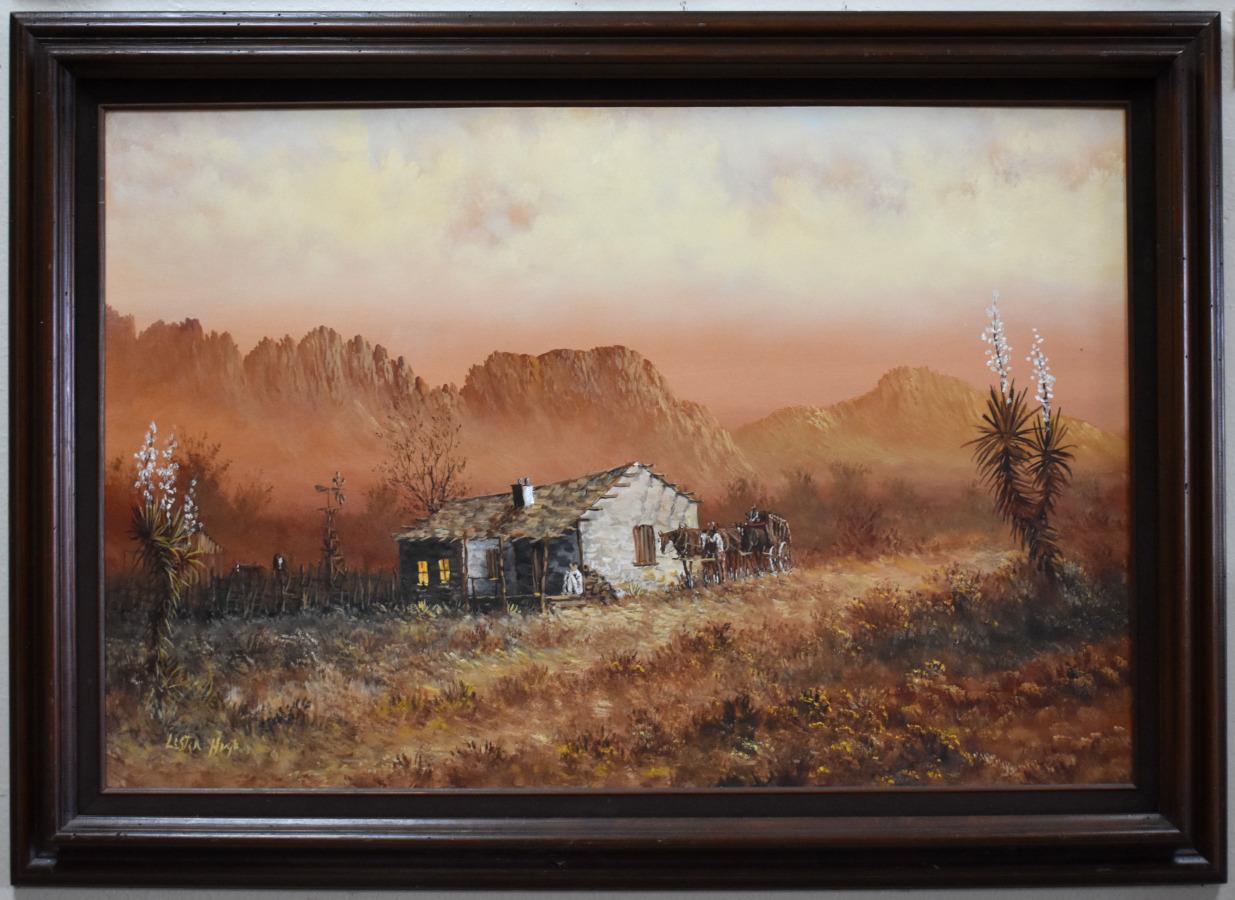
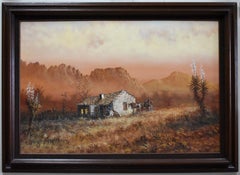
"PRAIRIE HOME" WESTERN HOMESTEAD El Paso Artist
By Lester Hughes
Located in San Antonio, TX
Lester Hughes
(1938-2021)
El Paso Artist
Image Size: 24 x 36
Frame Size: 21 x 43
Medium: Oil on Canvas
"Prairie Home"
Biography
Lester Hughes (1938-2021)
From El Paso, Texas, Lester ...
Category
20th Century Impressionist Landscape Paintings
Materials
Oil
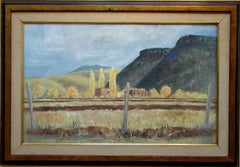
New Mexico Adobes
By Leslie R. Center
Located in San Antonio, TX
Leslie R. Center (1933-2009) Houston Artist Image Size: 18 x 29 Frame Size: 29 x 36 Medium: Mixed Media 1960
Biography
Leslie R. Center (1933-2009)
LESLIE R. CENTER, JR., 7...
Category
1960s Impressionist Landscape Paintings
Materials
Mixed Media
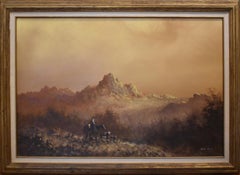
"LOST AND FOUND" CATTLE STRAYS IN WEST TEXAS. WESTERN COWBOY COWS. FRAME 30 X 42
Located in San Antonio, TX
Lester Hughes
(1938-2021)
El Paso Artist
Image Size: 24 x 36
Frame Size: 30 x 42
Medium: Oil
"Lost and Found" West Texas Cattle STRAYS
Biography
Lester Hughes (1938-2021)
From El Pas...
Category
1970s Impressionist Landscape Paintings
Materials
Oil
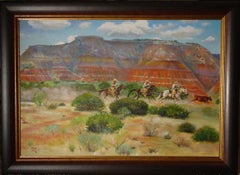
"Our Real Work Is In The Valley" West Texas Cowboy scene
By Randall Friemel
Located in San Antonio, TX
Randall Friemel (1970 - present) Texas Artist Image Size: 24 x 36 Frame Size: 32 x 44 Medium: Oil "Our Real Work Is In The Valley".
Biography
Randall Friemel (1970 - present)
Randall is a Ecclesial / Liturgical artist by trade. He began drawing many years ago. After using colored pencils for several years, he began experimenting with oil and found painting would not be much different. He has painted "Stations Of The Cross" for many churches throughout Texas. Randall has studied under Jack...
Category
2010s Impressionist Landscape Paintings
Materials
Oil
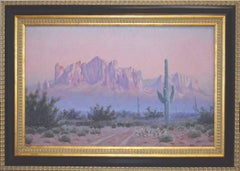
"El Paso Desert"
By Ricardo Diaz
Located in San Antonio, TX
Ricardo Diaz Purple Mountains pink sky. Saguaro Cactus
(1912-1981)
El Paso Artist
Image Size: 11 x 17
Frame Size: 15 x 21
Medium: Oil
Dated 1933
"El Paso Desert"
Biography
Ricardo Diaz 1912-81
Ricardo Diaz 1912-81. El Paso . Painter, muralist, teacher, frame maker.
Diaz attended Bowie High School, El Paso, where he participated in interscholastic art exhibitions. Emilio Garcia...
Category
1930s Impressionist Landscape Paintings
Materials
Oil
You May Also Like
Near Tubac, Arizona
Located in San Francisco, CA
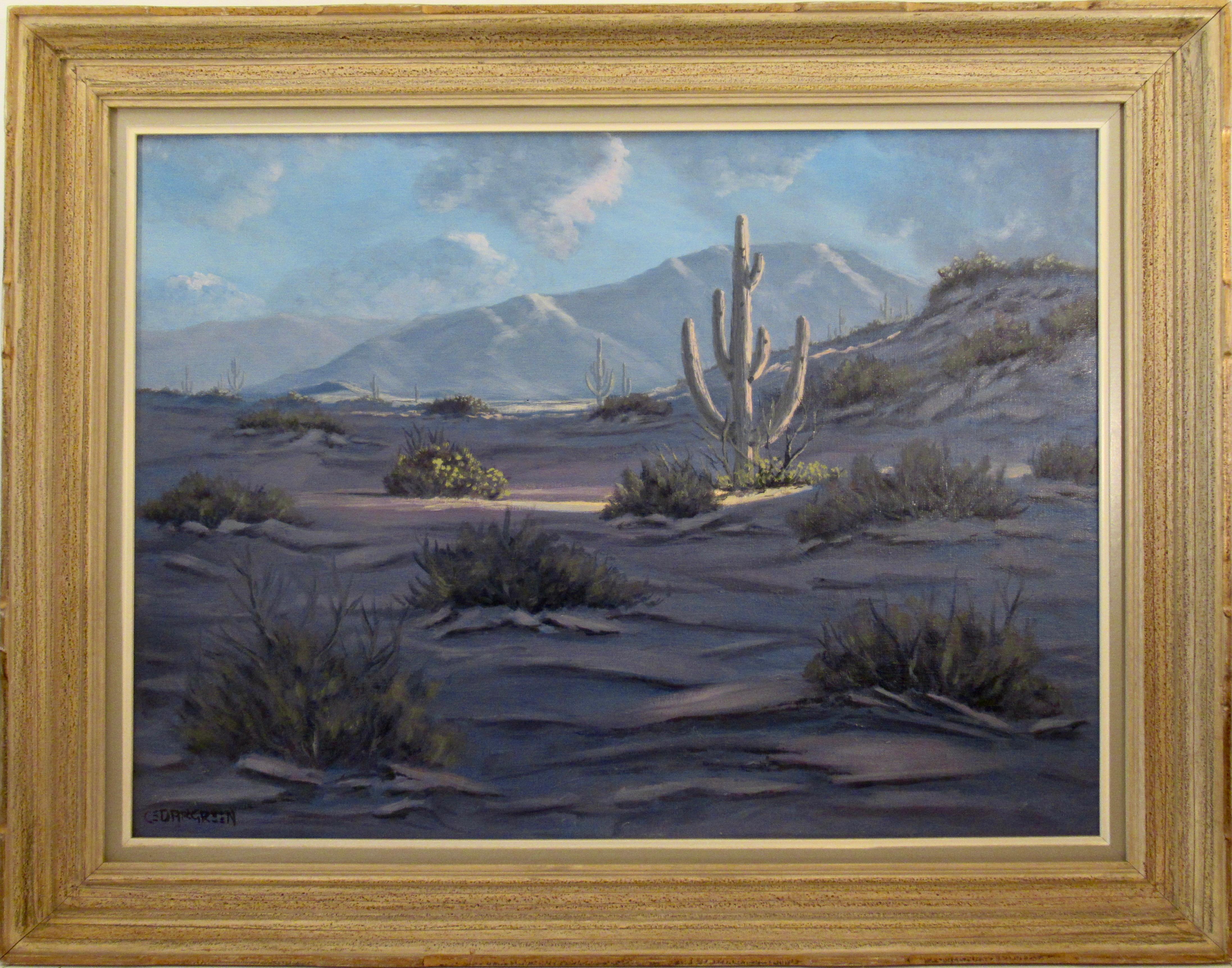
This artwork titled "Near Tubac, Arizona" c.1960 is an oil painting on canvas by noted southwestern artist Sid Cedargreen, 1904-2011. It is signed at the lower left corner by the artist. The canvas size is 22 x 30 inches, framed size is 28.5 x 36.5 inches. Framed in original wooden beige and gold frame. It is in excellent condition.
About the artist:
Sid Cedargreen was a mid-century painter whose art beautifully depicted the desert Southwest. In 1958, Mr. Cedargreen was part of an art collective that transformed Tubac into an art colony. While in Tubac, he founded the Tubac Center for the Arts and the Santa Cruz Art Association. During this time, he was the winner of the distinguished Master Mead award for depicting the Southwest.
His paintings are beautiful landscapes featuring areas in Arizona and all around the American Southwest. He continued to live in Arizona and paint its beauty for several years. In 2011, Sid Cedargreen passed away at the age of 89. After he passed away, Mr. Cedargreen's family found a plethora of paintings that Cedargeen had been storing in his house.
In his career as an artist, Mr. Cedargreen had many one-man shows, in Scottsdale, Phoenix, Tucson, Nogales, and Tubac, and in Santa Barbara, and Palm Desert, California; in Colorado Springs, Colorado; Ogunquit, Maine and in Taos, Deming, and Santa Fe, New Mexico. He has exhibited in the Camelback Galleries and Adrian Shaw Galleries in Scottsdale; the Hilltop Art Gallery in Nogales; the Fountains Gallery in Tucson; the Plaza Gallery and the Taos Inn in Taos; the Shop of the Rainbow Man in Santa Fe; the Old Town Book Shop in Wickenburg; the Santa Barbara Biltmore...
Category
Mid-20th Century American Impressionist Landscape Paintings
Materials
Oil
Mid Century California Plein Air Dry Creek Landscape
Located in Soquel, CA
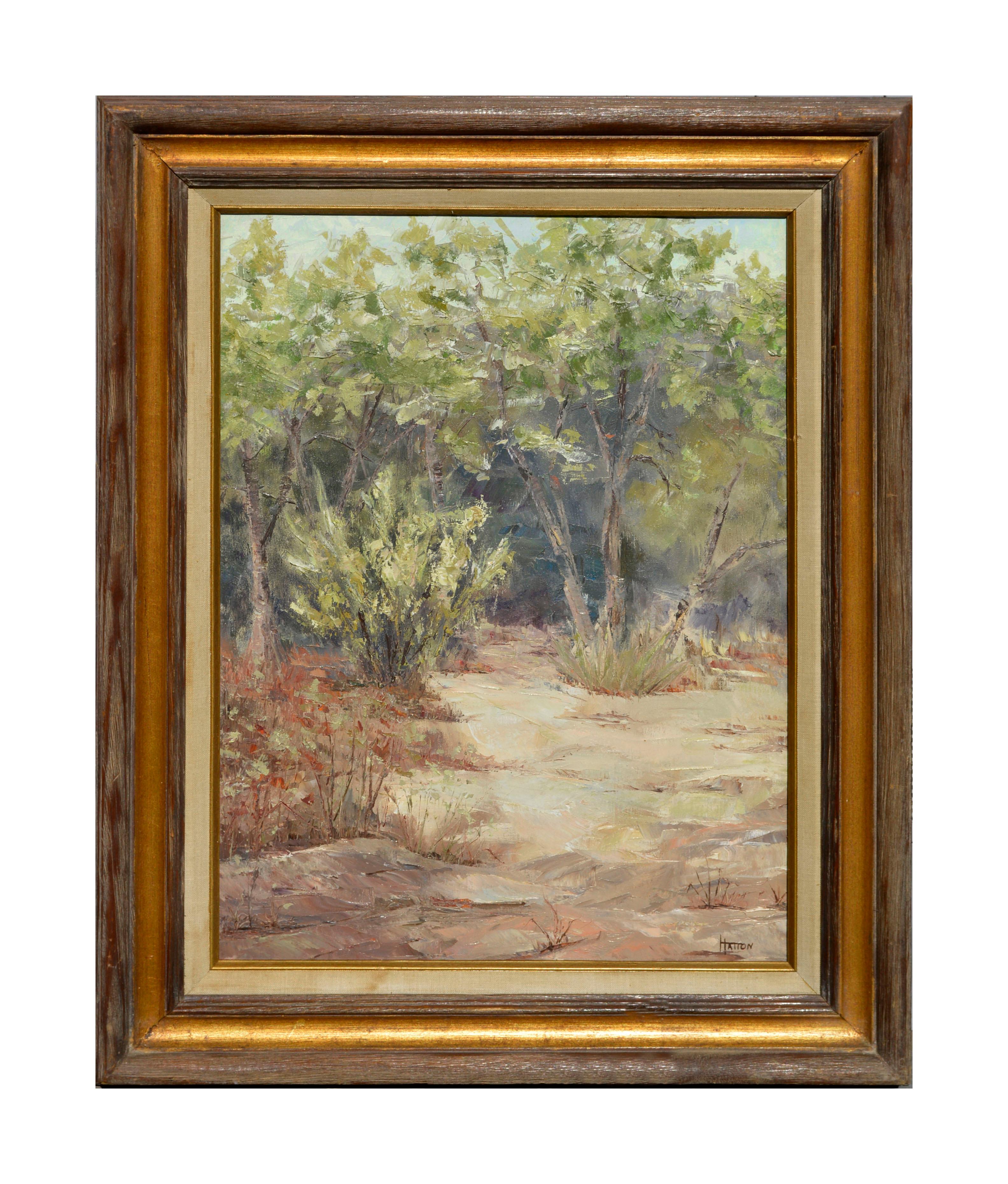
Beautiful mid-century plein air landscape of a California dry stream, by unknown artist Hatton (American, 20th Century), c.1960. Signed "Hatton" lower right. Presented in rustic wood...
Category
1960s American Impressionist Landscape Paintings
Materials
Canvas, Wood, Oil
$1,080 Sale Price
20% Off
Desert Living, Painting, Oil on Wood Panel
By Richard Szkutnik
Located in Yardley, PA
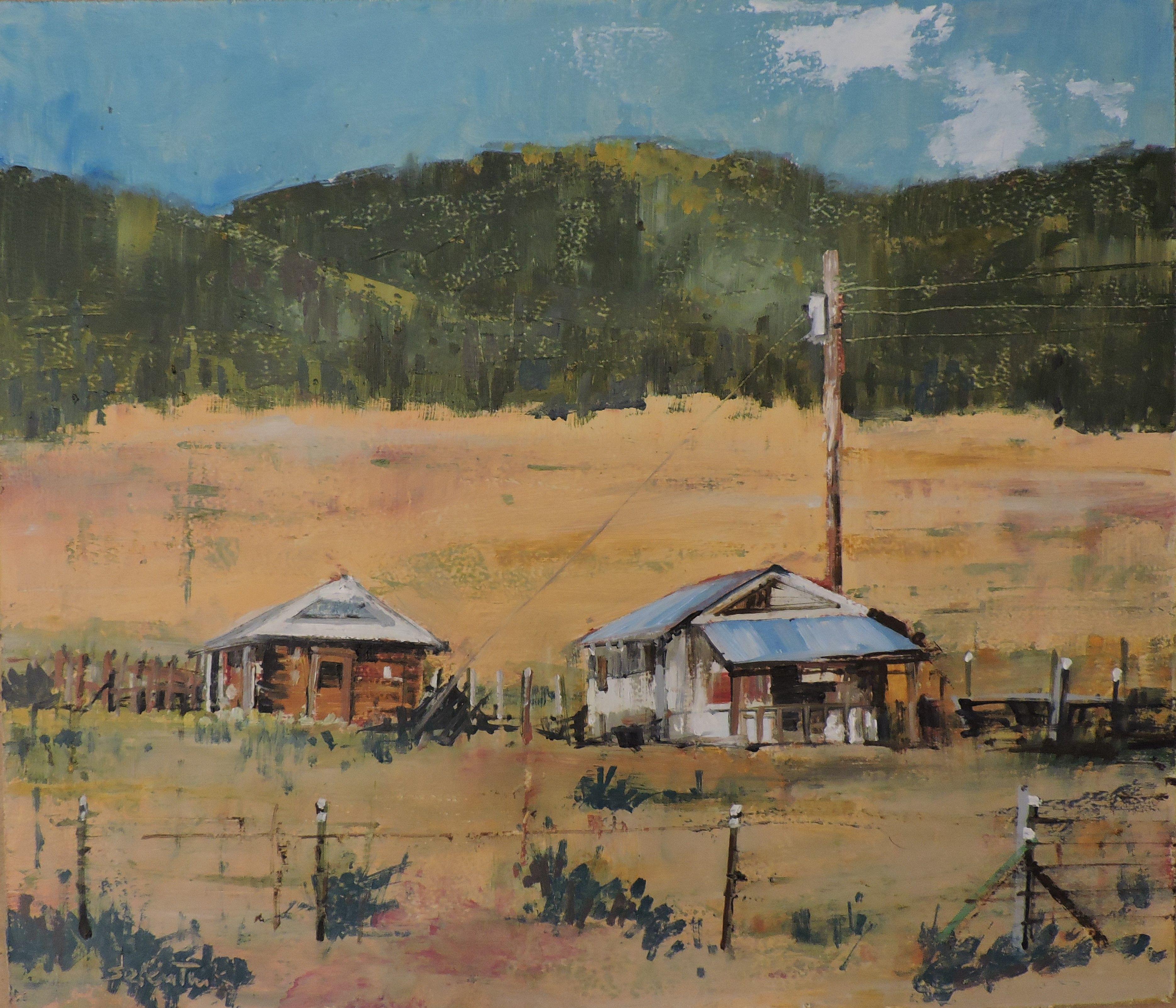
original en plein air oil on panel paint in New Mexico :: Painting :: Impressionist :: This piece comes with an official certificate of authenticity signed by the artist :: Ready to ...
Category
2010s Impressionist Paintings
Materials
Oil
Desert Color, Painting, Oil on Wood Panel
By Richard Szkutnik
Located in Yardley, PA
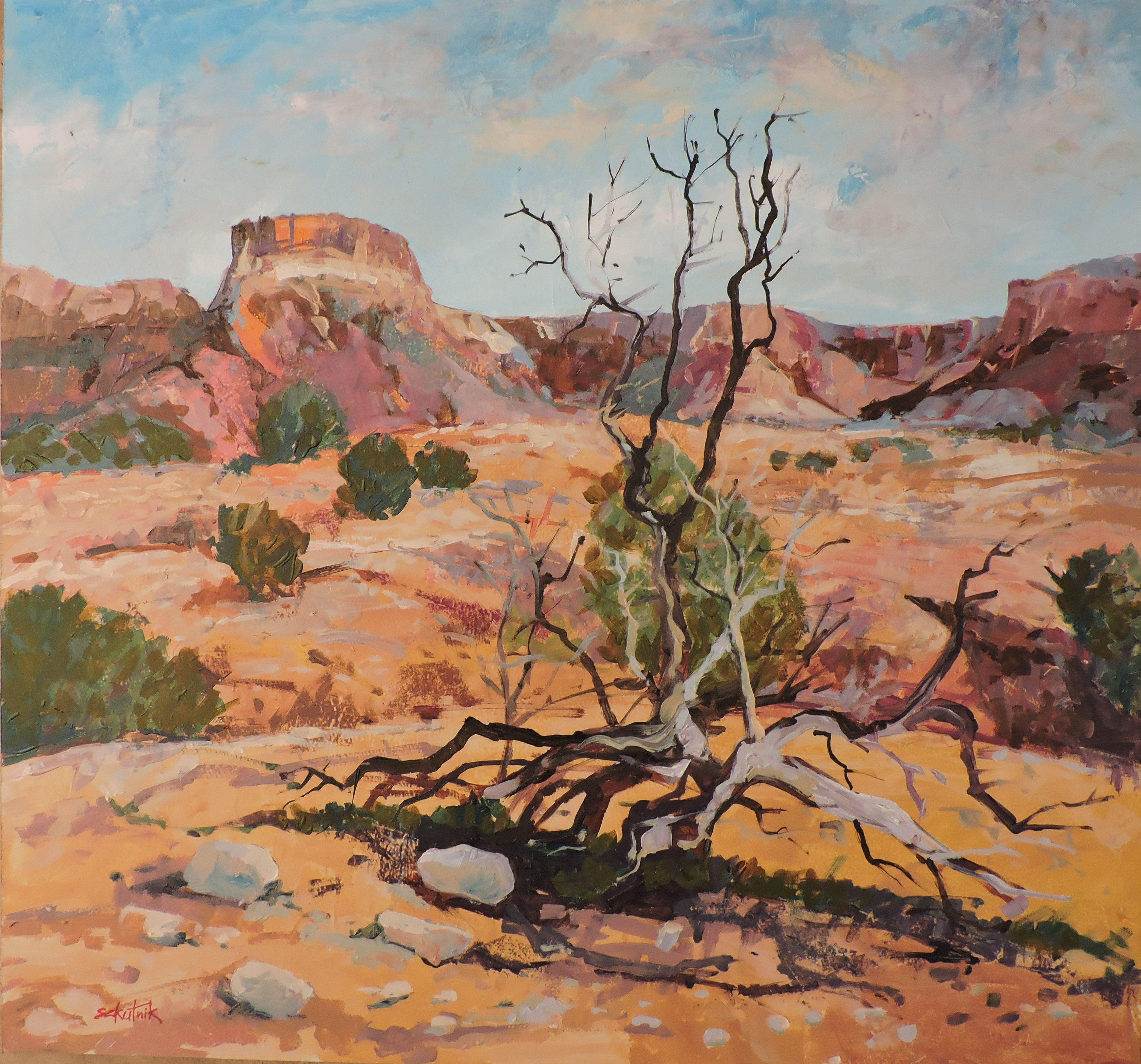
Original New Mexico landscape oil on panel paint in contemporary impressionism style :: Painting :: Impressionist :: This piece comes with an ...
Category
2010s Impressionist Paintings
Materials
Oil
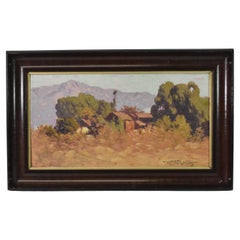
Oil Landscape Southwest Artist Warren Eliphalet Rollins
Located in Toledo, OH
Southwestern artist Warren Eliphalet Rollins (b.1861-1962). Landscape with cabin and mountain range in the distance. Signed lower right. Overall size is 14.25" x 23".
Category
20th Century North American Modern Paintings
Materials
Canvas
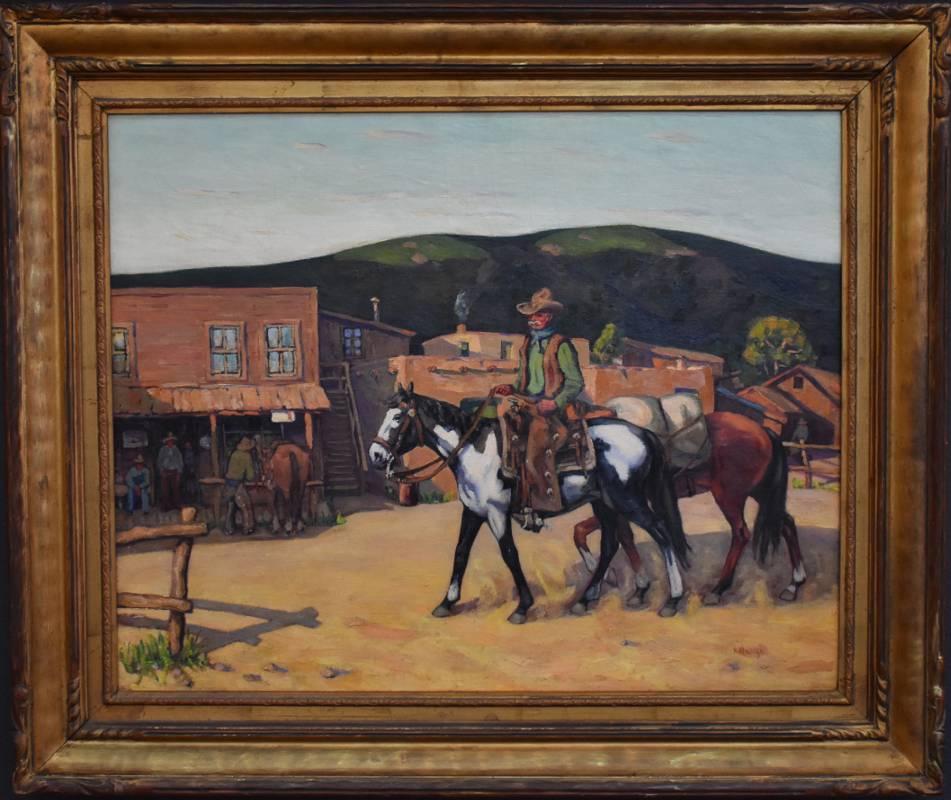
"In Old Santa Fe" Original Oil Painting by Martin Weekly
Located in Coeur d
Alene, ID
Oil on canvas; 24" x 36". Beginning in 1970 Martin devoted himself full time to his painting while living in a home and studio he built for himself in El Dorado Hills, California. Th...
Category
Early 2000s American Paintings
Materials
Paint