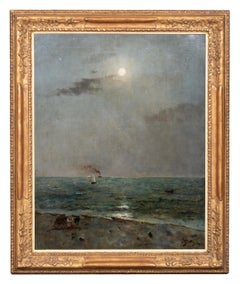
Items Similar to Oil painting on canvas coastal scene "Nightfall on the North Sea " ca. 1880
Want more images or videos?
Request additional images or videos from the seller
1 of 12
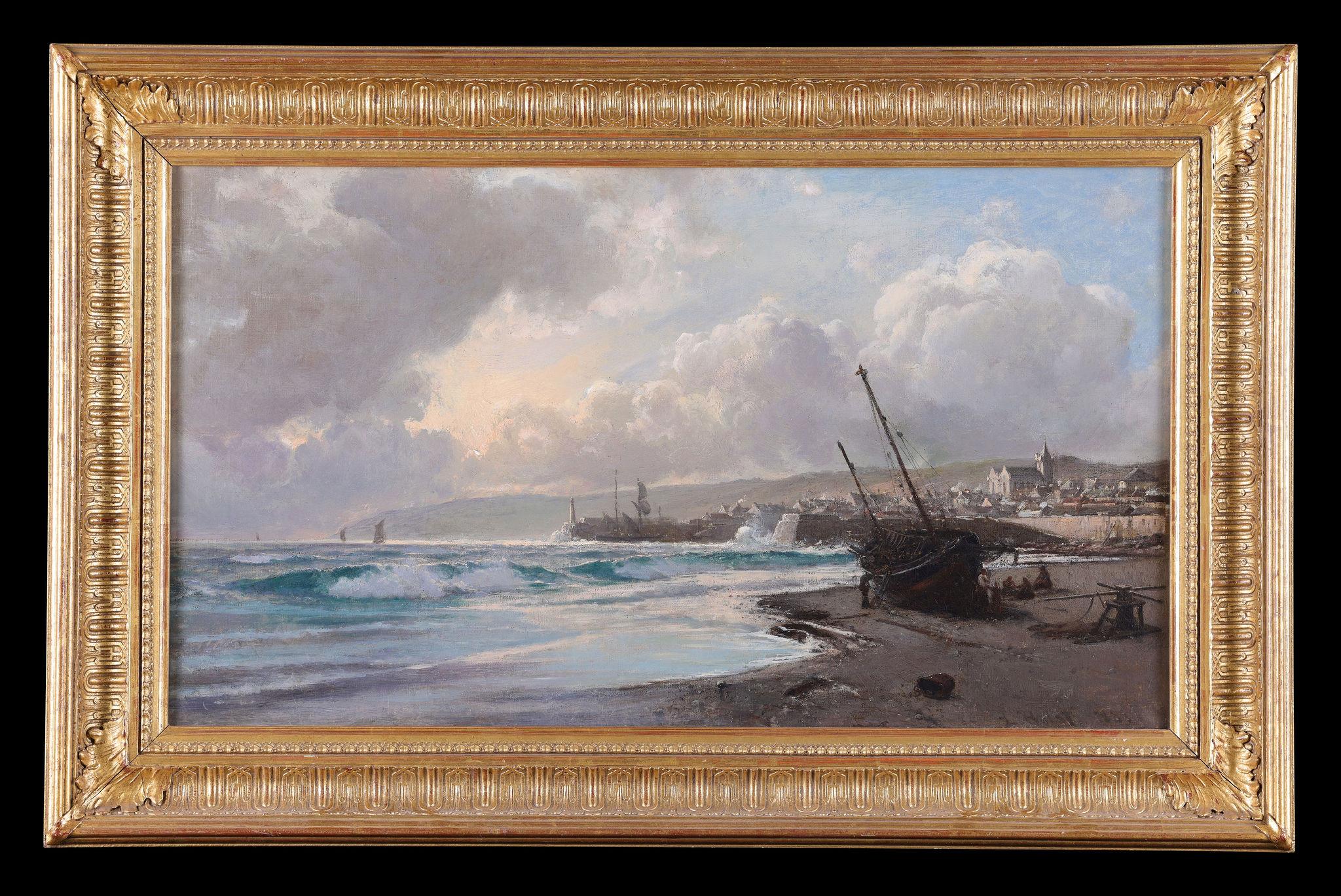
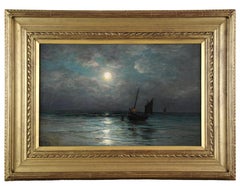
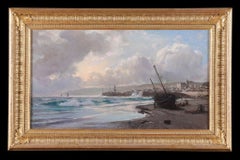
Théodore TSCHARNER (1826-1906)Oil painting on canvas coastal scene "Nightfall on the North Sea " ca. 1880ca 1880
ca 1880
$9,375.56
£6,993.56
€7,900
CA$13,049.37
A$13,999.64
CHF 7,509.12
MX$168,553.75
NOK 94,661.24
SEK 86,317.93
DKK 60,204.01
About the Item
Additional information:
Title: Coastal scene - Nightfall on the North Sea
Medium: oil on canvas
Signature: signed lower right
Provenance: Private collection Brussels
Canvas dimensions: 34 cm x 55 cm
Framed dimensions: 66 cm x 87 cm
Condition: Very good condition (restored, yellow varnish has been removed )
Artist: Théodore TSCHARNER (1826-1906)
School: school of Namur
Sold with a very nice old original frame in good condition
The artist's biography :
Théodore Tscharner studied at the Academy of Namur and continued his education with study trips to Italy and the United States. During a stay of several years in San Francisco, he produced a series of drawings and watercolours depicting scenes of miners, Native Americans and cityscapes. Back in Belgium, he settled in Veurne, where he mainly painted landscapes with refined brushwork and attention to atmosphere. He was a co-founder of the Société Libre des Beaux-Arts and was in contact with artists from the Tervuren School, such as Joseph Coosemans and Édouard Huberti.
His work can be found in museums in Mons, Brussels, Namur, Spa and the McMullen Museum of Art in Boston, among others.
Fast and careful shipping via DHL Express!!
- Creator:Théodore TSCHARNER (1826-1906)
- Creation Year:ca 1880
- Dimensions:Height: 26.78 in (68 cm)Width: 34.26 in (87 cm)Depth: 4.34 in (11 cm)
- More Editions Sizes:canvas : 34 cm x 55 cmPrice: $9,376
- Medium:
- Movement Style:
- Period:
- Condition:
- Gallery Location:Gavere, BE
- Reference Number:1stDibs: LU2667217060572
About the Seller
5.0
Gold Seller
Premium sellers maintaining a 4.3+ rating and 24-hour response times
Established in 2016
1stDibs seller since 2023
29 sales on 1stDibs
Typical response time: 1 hour
- ShippingRetrieving quote...Shipping from: Gavere, Belgium
- Return Policy
More From This Seller
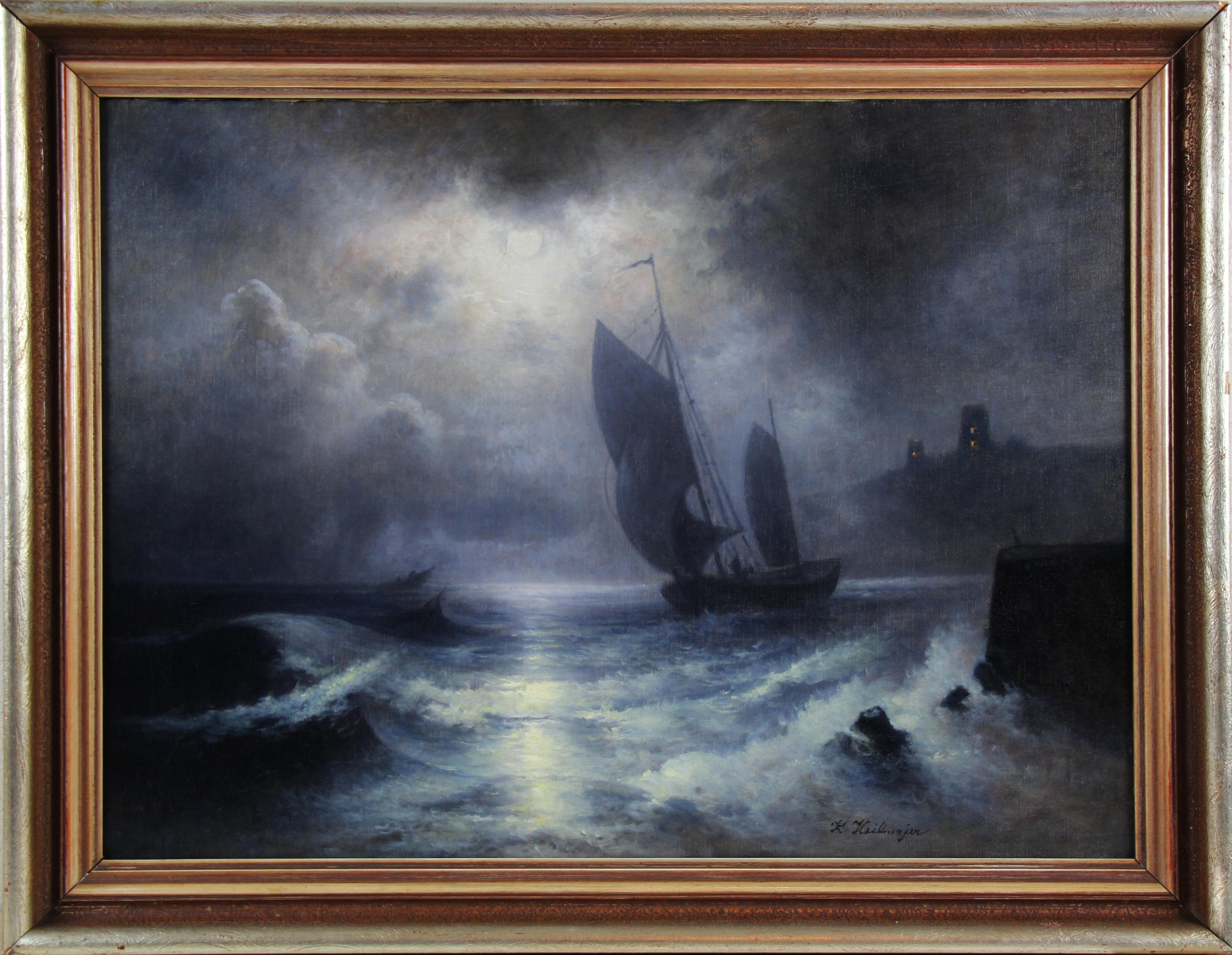
View AllFrench coastal scene, ship on rough sea at moonlight by Karl Heilmayer ca 1890
Located in Gavere, BE
French coastal scene ship on rough sea at moonlight by Karl Heilmayer ca 1890
A born Munich native, Karl Heilmayer, son of court actor Emil Heilmayer, ...
Category
1890s Landscape Paintings
Materials
Canvas, Oil
Coastal scene and fishing boats at moonlight, French Oil painting By G. Maroniez
Located in Gavere, BE
Maroniez is best known as an accomplished painter of the sea and the life of fishermen.
He painted mainly in Brittany ( France )
Museums and galleries holdings :
Boulogne: Mussel b...
Category
Early 1900s Impressionist Landscape Paintings
Materials
Oil, Wood Panel
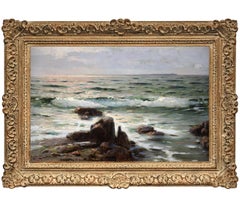
Oil painting on canvas " Rough sea with coastline on the horizon " by Schubring
By Richard Schubring
Located in Gavere, BE
Schubring, Richard (1853-1902)
Rough sea with coastline on the horizon
Oil on canvas. Signed and dated lower right. “1895”
Richard SCHUBRING is an artist born in 1853 and deceased...
Category
1890s Expressionist Landscape Paintings
Materials
Gold Leaf
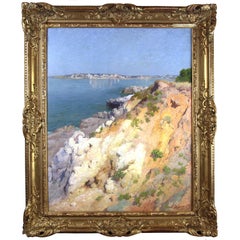
French southern seascape oil painting on canvas By Michel Richard Putz
Located in Gavere, BE
French southern seascape oil painting on canvas By Michel Richard Putz
Bio :
Michel Richard-Putz was born in Ichitem, Belgium in 1868.
He moved to Paris in the 1880's where he stud...
Category
Early 1900s Impressionist Landscape Paintings
Materials
Oil, Canvas
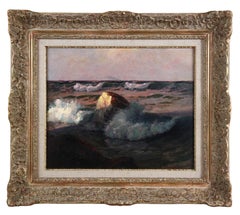
Oil painting on board "Rough sea with steamer on the horizon" by S.A.Vinogradoff
Located in Gavere, BE
Sergey VINOGRADOV ( 1869 - 1938 )
Rough sea with steamer on the horizon
Sergei Arsenievich Vinogradov ( Russian: 1869–1938 ) was a Russian-Soviet Impressionist painter; known for l...
Category
1920s Expressionist Landscape Paintings
Materials
Gold Leaf
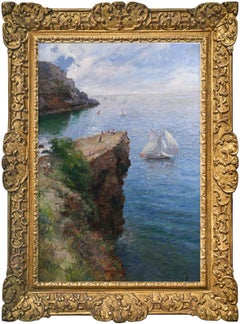
Oil painting On Canvas On Panel, Mediterranean View With Sailboat And Cliffs
Located in Gavere, BE
Oil On Canvas On Panel, Mediterranean View With Sailboat And Cliffs ** SOLD WITHOUT FRAME **
Additional information about the work:
Title: Mediterranean View
Medium: oil on canvas...
Category
Late 20th Century Impressionist Landscape Paintings
Materials
Canvas, Oil, Wood Panel
You May Also Like
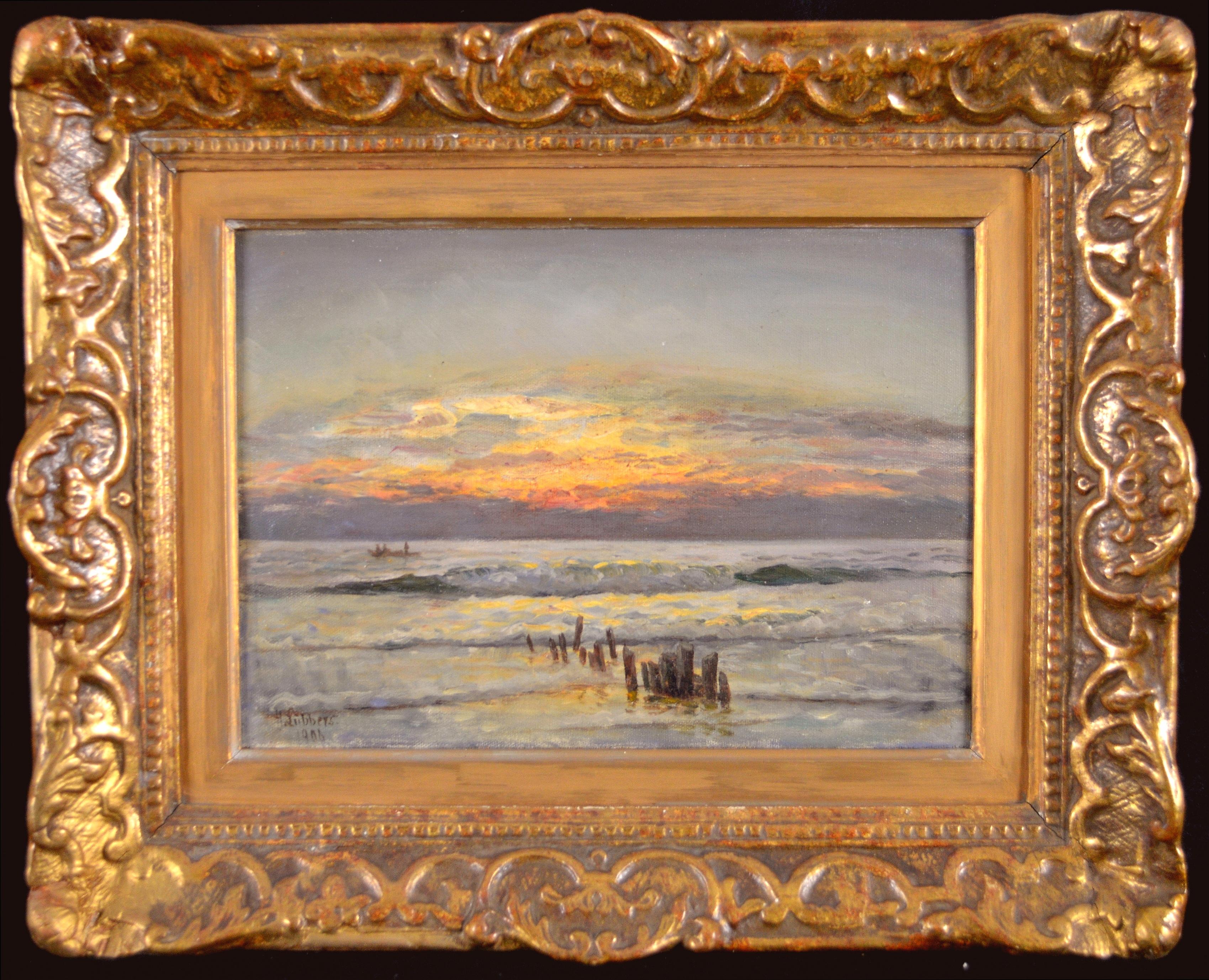
Sunset on the Coast - Antique Danish Impressionist Sea Seascape Oil Painting
Located in Sevenoaks, GB
A very beautiful signed and dated 1900 impressionist oil on board depicting a sunset on the coast, by Danish artist Holger Lübbers.
The work is signed ...
Category
Early 1900s Impressionist Landscape Paintings
Materials
Oil, Board
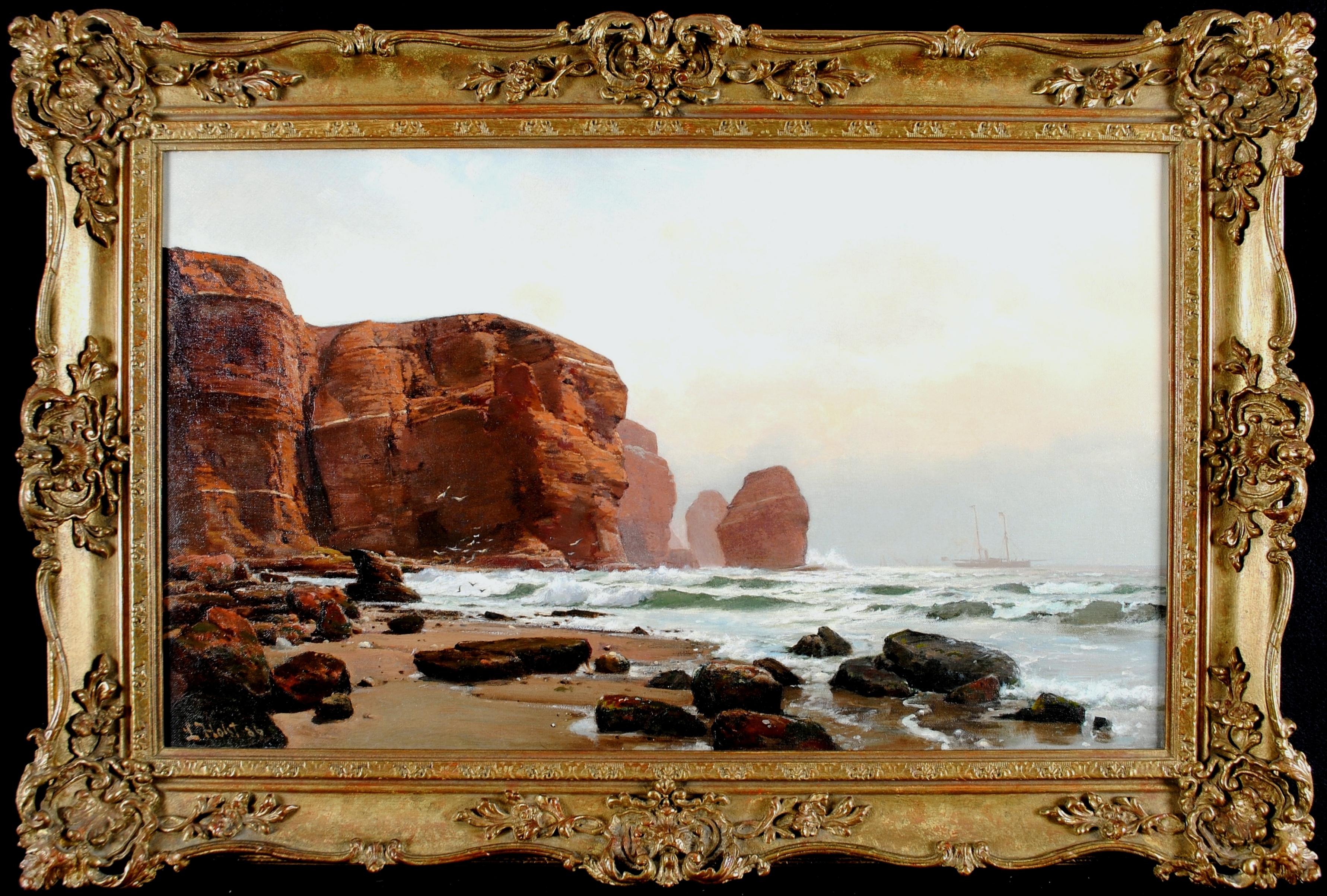
Coastal Sunrise - 19th Century Danish Antique Landscape Beach Marine Painting
By Laurits Bernhard Holst
Located in Sevenoaks, GB
A very beautiful signed and dated 1886 Danish oil on canvas depicting a coastal sunrise, by Laurits Bernhard Holst.
The work is exceptionally atmospheric, with cliffs bathed in hazy...
Category
1880s Landscape Paintings
Materials
Canvas, Oil
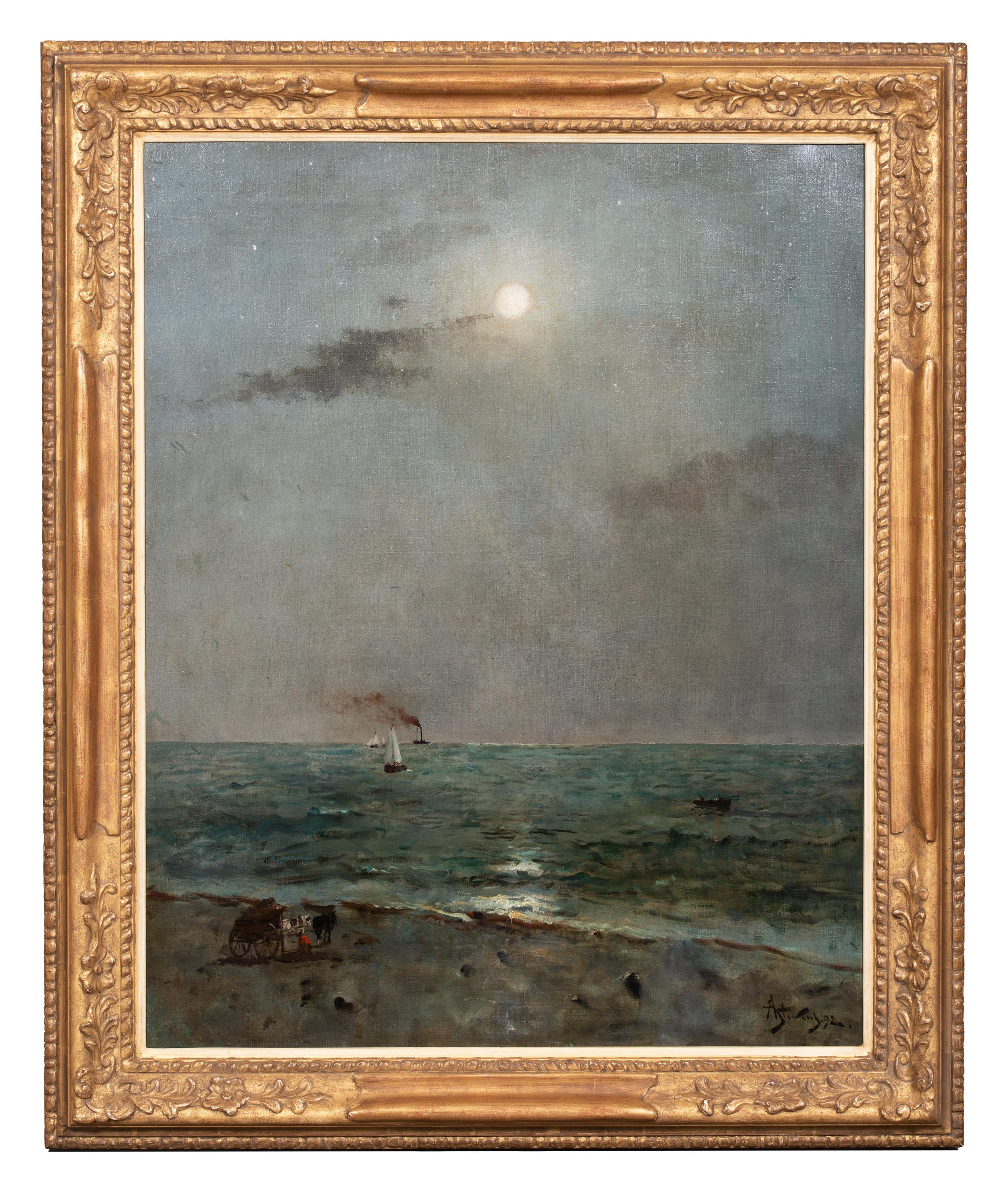
Moonlight on the Sea
by Alfred Stevens (Brussels 1823 – 1906 Paris) dated 1892
By Alfred Stevens
Located in Knokke, BE
Alfred Stevens
Brussels 1823 – 1906 Paris
Belgian Painter
'Moonlight on the Sea'
Signature: signed lower right and dated 1892 ‘A Stevens 92'
Medium: oil on canvas
Dimensions: image size 81 x 65 cm, frame size 97,5 x 81,5 cm
Biography: Alfred Stevens was born in Brussels, into a family deeply connected with the visual arts. His older brother Joseph (1816–1892) and his son Léopold (1866–1935) were both painters, while his other brother Arthur (1825–1899) was an art dealer and critic. His father, a veteran of the Napoleonic wars under the army of William I of the Netherlands, was an art collector with a notable collection of watercolors by Eugène Delacroix and other esteemed artists.
Stevens’s upbringing was influenced by the environment of Café de l’Amitié, run by his maternal grandparents in Brussels, which served as a meeting place for prominent figures from the political, literary, and artistic spheres. Following the death of his father in 1837, Stevens left middle school to enroll at the Académie Royale des Beaux-Arts in Brussels. There, he came under the tutelage of François Navez, a Neo-Classical painter and former student of Jacques-Louis David, who was both the director of the academy and an old acquaintance of Stevens’s grandfather. Following a traditional curriculum, he initially drew from casts of classical sculptures and later transitioned to drawing from live models. In 1843, Stevens journeyed to Paris to join his already established brother, Joseph. He gained admission to the École des Beaux-Arts, the preeminent art school in Paris, although claims of him being a student of the director, Jean Auguste Dominique Ingres, are likely unfounded. One of his early works, The Pardon or Absolution (Hermitage, St. Petersburg), signed and dated 1849, showcased his mastery of a conventional naturalistic style influenced by 17th-century Dutch genre painting.
Stevens’s work was first publicly exhibited in 1851, when three of his paintings were featured at the Brussels Salon. He received a third-class medal at the Paris Salon in 1853, followed by a second-class medal at the Universal Exposition in Paris in 1855. His painting Ce qu’on appelle le vagabondage (Musée d’Orsay, Paris) garnered attention from Napoleon III, leading to a change in policy regarding the use of soldiers to remove the poor from the streets. Two other paintings displayed at the Salon in Antwerp in the same year, Chez soi or At Home and The Painter and his Model, introduced subjects from “la vie moderne” that became characteristic of his oeuvre: elegant young women dressed in contemporary fashion and artists in their studios. In 1857, Stevens made his first significant sale to a private collector when Consolation was purchased for a rumored 6,000 francs by the Berlin collector and dealer Ravéné. He and his brother also became part of the artistic milieu in Paris, frequenting salons hosted by Princess Mathilde and popular cafes, where they mingled with the likes of the Goncourt brothers, Théophile Gautier, and Alexandre Dumas. Stevens married Fanny Juliette Albertine Marie Hortense Blanc (1836-1891), a member of a wealthy Belgian family and a long-time acquaintance of the Stevens family, in 1858. The wedding was witnessed by the renowned painter Eugène Delacroix. The couple had four children: Leopold, Jean, Catherine, and Pierre. Stevens depicted his wife in numerous portraits, including Regrets and Memories. After her passing, he expressed enduring grief at her loss. During the 1860s, Stevens rose...
Category
Late 19th Century Impressionist Landscape Paintings
Materials
Canvas, Oil
Waves Crashing along the Beach. Antique marine painting Oil on Canvas
By Laurits Bernhard Holst
Located in St. Albans, GB
Lauritz Holst
Exhibited 1878 - 1926
Picture Size: 16.5 x 29" (41.25 x 72.5cm)
Outside Frame Size: 22.5 x 35" (56.25 x 87.5cm)
He was born in Bogense, Denmark in 1848
Holst was a m...
Category
1880s Victorian Landscape Paintings
Materials
Oil
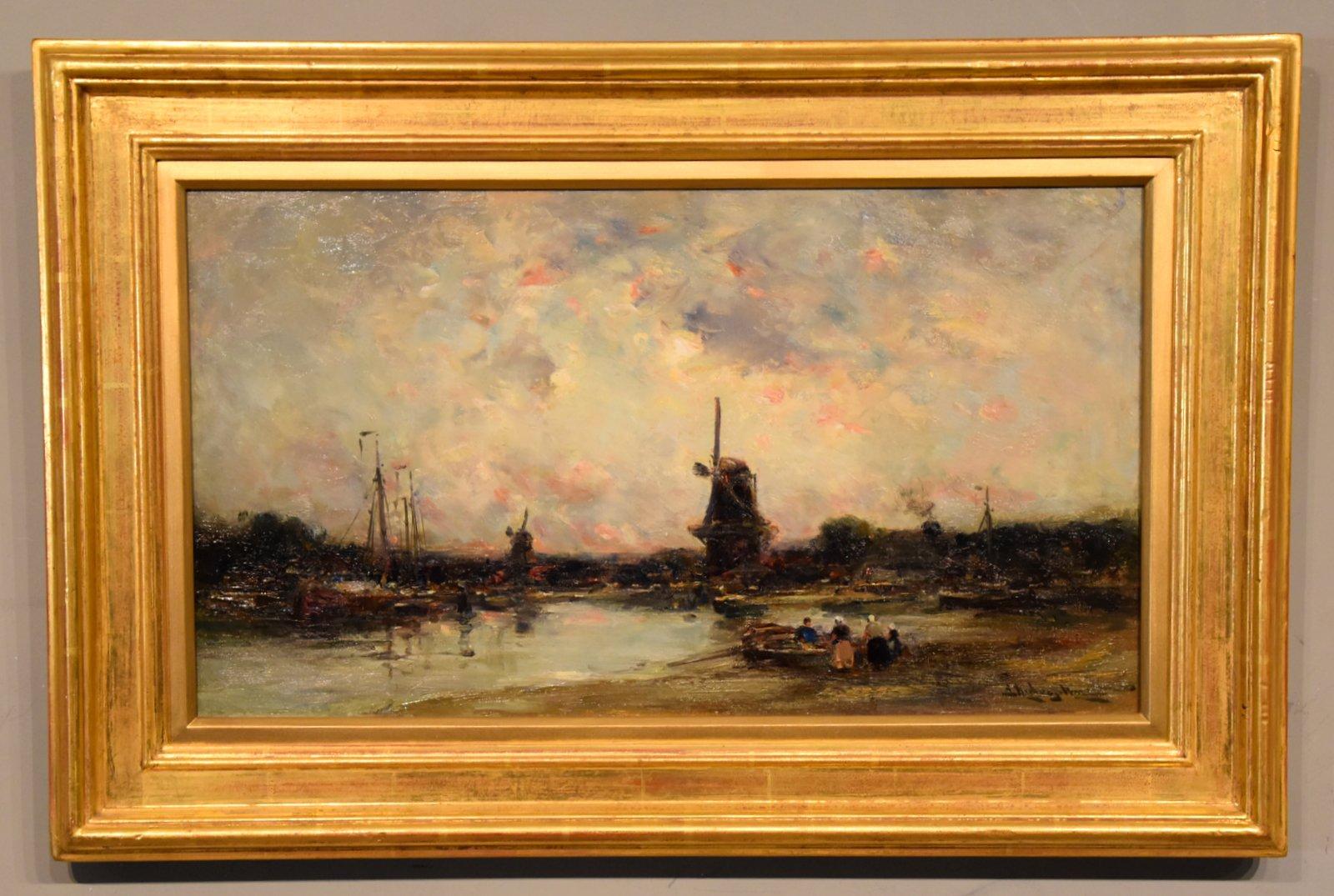
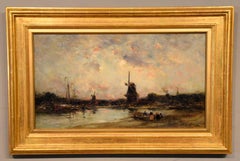
Oil Painting by Edmund Aubrey Hunt "A Dutch Estuary, Evening"
Located in Mere, GB
Oil Painting by Edmund Aubrey Hunt "A Dutch Estuary, Evening" 1855- 1922 Massachusetts painter who studied under Gerome in Paris who then settled in London. Exhibited at the Royal Ac...
Category
19th Century Landscape Paintings
Materials
Oil
Moonlight on the Sea
by Alfred Stevens ( Brussels 1823 – 1906 Paris )
By Alfred Stevens
Located in Knokke, BE
Alfred Stevens
Brussels 1823 – 1906 Paris
Belgian Painter
'Moonlight on the Sea'
Signature: signed lower right and dated 1892 ‘A Stevens 92'
Medium: oil on canvas
Dimensions: image size 81 x 65 cm, frame size 97,5 x 81,5 cm
Provenance:
Collection M. Klein, 1900
Galerie Petit, Paris, 18 June 1926, no. 22
Private collection, Europe
De Vuyst, Belgium, 1998
Galerie Kupperman, Amsterdam
Private collection, The Netherlands
Exhibitions:
Exposition of the Works of Alfred Stevens, Palais des Beaux-Arts, Brussels, 1928
Retrospective Alfred Stevens, École des Beaux-Arts, Paris, 1900, no. 100
Literature:
A. Stevens, Mercatorfonds, Brussels, p. 100
Alfred Stevens, François Boucher, Ed. Rieder, Paris, 1930, illustrated on p. 36
Documentation by Mrs. Christiane Lefebvre, 1998
Biography: Alfred Émile Léopold Stevens (11 May 1823 – 24 August 1906) was a prominent Belgian painter renowned for his depictions of elegant modern women. His works, characterized by a realistic style and meticulous attention to detail, reveal the influence of 17th-century Dutch genre painting. While he initially gained attention for his social realist portrayal of the hardships faced by impoverished vagrants, he later achieved great critical and popular success with his portrayals of upper-middle class Parisian life. Notably, he often used the same models repeatedly, with some of them being identified in the infamous Book of the Courtesans, a confidential surveillance file maintained by the Paris vice squad, as noted by author Summer Brennan.
Stevens was born in Brussels, into a family deeply connected with the visual arts. His older brother Joseph (1816–1892) and his son Léopold (1866–1935) were both painters, while his other brother Arthur (1825–1899) was an art dealer and critic. His father, a veteran of the Napoleonic wars under the army of William I of the Netherlands, was an art collector with a notable collection of watercolors by Eugène Delacroix and other esteemed artists. Stevens’s upbringing was influenced by the environment of Café de l’Amitié, run by his maternal grandparents in Brussels, which served as a meeting place for prominent figures from the political, literary, and artistic spheres. Following the death of his father in 1837, Stevens left middle school to enroll at the Académie Royale des Beaux-Arts in Brussels. There, he came under the tutelage of François Navez, a Neo-Classical painter and former student of Jacques-Louis David, who was both the director of the academy and an old acquaintance of Stevens’s grandfather. Following a traditional curriculum, he initially drew from casts of classical sculptures and later transitioned to drawing from live models. In 1843, Stevens journeyed to Paris to join his already established brother, Joseph. He gained admission to the École des Beaux-Arts, the preeminent art school in Paris, although claims of him being a student of the director, Jean Auguste Dominique Ingres, are likely unfounded. One of his early works, The Pardon or Absolution (Hermitage, St. Petersburg), signed and dated 1849, showcased his mastery of a conventional naturalistic style influenced by 17th-century Dutch genre painting.
Stevens’s work was first publicly exhibited in 1851, when three of his paintings were featured at the Brussels Salon. He received a third-class medal at the Paris Salon in 1853, followed by a second-class medal at the Universal Exposition in Paris in 1855. His painting Ce qu’on appelle le vagabondage [What is called vagrancy] (Musée d’Orsay, Paris) garnered attention from Napoleon III, leading to a change in policy regarding the use of soldiers to remove the poor from the streets. Two other paintings displayed at the Salon in Antwerp in the same year, Chez soi or At Home and The Painter and his Model, introduced subjects from “la vie moderne” that became characteristic of his oeuvre: elegant young women dressed in contemporary fashion and artists in their studios. In 1857, Stevens made his first significant sale to a private collector when Consolation was purchased for a rumored 6,000 francs by the Berlin collector and dealer Ravéné. He and his brother also became part of the artistic milieu in Paris, frequenting salons hosted by Princess Mathilde and popular cafes, where they mingled with the likes of the Goncourt brothers, Théophile Gautier, and Alexandre Dumas. Stevens married Fanny Juliette Albertine Marie Hortense Blanc (1836-1891), a member of a wealthy Belgian family and a long-time acquaintance of the Stevens family, in 1858. The wedding was witnessed by the renowned painter Eugène Delacroix. The couple had four children: Leopold, Jean, Catherine, and Pierre. Stevens depicted his wife in numerous portraits, including Regrets and Memories. After her passing, he expressed enduring grief at her loss. During the 1860s, Stevens rose...
Category
Late 19th Century Impressionist Landscape Paintings
Materials
Canvas, Oil