Items Similar to Nude Native American Indian Girl on Burlesque Stage
Video Loading
Want more images or videos?
Request additional images or videos from the seller
1 of 16
Seymour RosofskyNude Native American Indian Girl on Burlesque Stage1975
1975
$12,000
£9,144.22
€10,545.81
CA$17,043.59
A$18,312.39
CHF 9,824.56
MX$215,741.02
About the Item
A nude Native American Indian girl, crowned with a feathered headdress, poses on the Burlesque stage while male onlookers visually devour her. The painting was created on assignment for an interior story featured in Playboy Magazine. The work has an otherworldly feel to it. The expression on the nude performer's face is as if she is in a trance. The male onlookers are depicted as phantoms, and one male is wrapped in a snake-like object that terminates in a teddy bear. Technically, it is quite impressive, with a post-impressionist short, rapid-fire brushstrokes. The nude subject is rendered in a shimmering stage light while the onlookers are depicted in a rim light that lends a surreal feel to the image.
This artwork appeared on pages 78-79 of the June 1975 issue of Playboy Magazine, illustrating the fiction story by Peter Lars Sandberg titled "Blue Dog Mobile on Augsport Hill," with the caption "Had he really heard the girl's mayday call on his c.b., or was it a whiskey dream?"
Unsigned, Framed under plexiglass in original frame to 22.25 x26
Seymour Rosofsky (1924–1981) was an American artist who has been described as one of the key figures in twentieth-century Chicago art.He emerged in the late 1940s at the School of the Art Institute of Chicago (BFA, 1949; MFA, 1951), one of several G.I. Bill veterans, including Leon Golub, Cosmo Campoli and H. C. Westermann, who would join Don Baum, Dominick Di Meo, June Leaf, and Nancy Spero to form the influential movement later dubbed the "Monster Roster" by critic Franz Schulze, which was a precursor to the more well-known Chicago Imagists. Like others in the group, Rosofsky was drawn to the unsettling, macabre side of Surrealism,initially creating gestural, expressionist renderings of grotesque, existentially angst-ridden figures in isolated or uncomfortable situations, that gave way in the 1960s to more fantastical, observational paintings that examined power, politics and domestic relationships in an unflinching way.
Seymour Rosofsky, Unemployment Agency, Oil on canvas, 51" x 72", 1957, Collection of the Art Institute of Chicago.
Rosofsky was recognized for his deftness as a painter, his interest in drawing as a process and medium, and as a caricaturist. His work was exhibited in numerous Art Institute of Chicago "Chicago and Vicinity" shows, the Museum of Contemporary Art Chicago survey "Art in Chicago: 1945–1995," the Whitney Museum of American Art,and a retrospective at the Krannert Art Museum (1984). He was also featured in the Franz Schulze's book Fantastic Images (1972) and Monster Roster: Existential Art in Postwar Chicago (2016). His work can be found in the public collections of the Museum of Modern Art, Smithsonian American Art Museum, Art Institute of Chicago,Los Angeles County Museum of Art,[15] and Museum of Contemporary Art Chicago,among others.
Life and career
Rosofsky was born to Russian and Polish Jewish immigrants on the West Side of Chicago in 1924.[17] He painted from an young age and took weekend classes at the School of the Art Institute of Chicago (SAIC) as a young teen.[17] After he enrolled there, his studies were interrupted by military service in the Army during World War II from 1943–6; he completed his BFA in 1949 and an MFA in 1951, while also taking humanities courses at the University of Chicago and Northwestern UniversityAt SAIC, Rosofsky studied oil painting with the Russian–born artist Boris Anisfeld, a former student of Marc Chagall, whose disciplined, academic teaching instilled in him an appreciation for art history and classical painting skills. He exhibited in the seminal, student-driven Momentum Exhibitions of 1948-1950, organized in protest over the exclusion of students from the Art Institute's prestigious "Chicago and Vicinity" shows. He was also featured, along with Campoli, Golub, and Theodore Halkin in the Art Institute's "Veteran's Exhibition" of 1948.[1] In 1958, he received a Fulbright Fellowship to go to Rome; in 1962, a Guggenheim Foundation grant took him and his family to Paris.
Rosofsky was part of the loose group of artists dubbed the "Monster Roster," which attracted a degree of international attention in the 1950s as a "Chicago School" He was part of a 1956 show at Beloit College curated by Allan Frumkin that brought the group into focus, and the later shows, "The New Chicago Decade: 1950–1960" (Lake Forest College, 1959) and "Haut artistes de Chicago" (Paris, 1962).[11][4] Throughout his career, Rosofsky was associated with Chicago's more international galleries, such as Richard Feigen, Richard Gray, and B. C. Holland . Rosofsky's work has continued to be shown since his death in museums, galleries and public spaces.] In 2011, Chicago Mayor Rahm Emanuel chose Rosofsky's striking but grim Unemployment Agency (1957–8) from the Art Institute's collection to hang on the wall behind his desk at City Hall.
Seymour Rosofsky, Homage to Spain, Thalidomide Children and Others, Oil on canvas, 63" x 49", 1965, Collection of the Art Institute of Chicago.
Rosofsky taught at Chicago Loop College (later Harold Washington College) from 1964 until his death from a heart attack in 1981. He has been cited by many artists, including Phyllis Bramson and William Conger, as an influence.
Style and themes
Rosofsky wrestled with his experiences through intensely personal, penetrating, often brutal, imagery created in a staunchly figurative, gestural style that critics likened to June Leaf's, and described as a mix of expressionism and "surrealist hysteria."[11][23] Unlike most of the Monster Roster artists, however, his work was more grounded in realism, due to his studies with Boris Anisfeld.[24] Critic Franz Schulze applauded his "rich color, carefully interwoven tonalities and assured drawing."The Chicago Tribune's Alan Artner called his sense of composition masterly, his palette subtle, and his way with the figure strong, but noted a tendency to overload his works that sometimes made them difficult to understand.
Rosofsky was drawn to doleful and withering themes, such as the individual's loss of power in modern life, fraught male-female relationships, the abuse of power and the absurdity of war, often borne out in battered, distorted, sometimes grotesquely comic figures in haunting, fantastical interiors and cityscapes. A lifelong Chicagoan, Rosofsky is considered the post-war artist for whom Chicago—the lake, people, buildings, and abrasive character—was most integral, his bizarre figures and settings often bearing a specificity to the city's locales and conditions. Critic Alan Artner described him as a "poet of exhaustion" depicting an urban carnival of malaise, "disappointment and dejection, of things passing away without proper eulogy, of winter and fading light."
Seymour Rosofsky, The Couple, Color lithograph on white wove paper, 27.75" x 19.75", 1973. Collection of the Art Institute of Chicago.
Works
In the 1950s and early 1960s, Rosofsky often focused on nightmarish modern narratives that featured faceless men, often in hospitals, wheelchairs, and other uncomfortable, vulnerable situations or empty spaces, which he depicted in agitated lines that some critics liken to Alberto Giacometti's graphic work and Francis Bacon's tortured interiors (e.g., Patient in a Dentist Chair, 1961). Unemployment Agency (1957) features several rows of identical men in hats, sitting in severe, tall-backed chairs, facing rows of boxes that recede into a foreboding, bureaucratic infinity.[19] he depicts a funhouse mirror-laden carnival scene in similar fashion in Tilt-a-Whirl (1957).
Time spent in Paris on a fellowship led to a greater surrealist turn in Rosofsky's work, realized in a fantastical, frightening vocabulary of clowns, menacing faces, and bizarre scenarios urgency and a more intense color palette.He often employed these figures in works examining power (e.g., his sardonic depiction of Chicago politics, Daley Machine, 1968) and social issues (Homage to Spain, Thalidomide Children and Others, 1965) that in their focus on generalized dehumanization shared more with New York artist George Tooker, than with Rosofsky's former classmate, Leon Golub's more political work. By the 1970s, Rosofsky turned to caustic depictions of fraught male-female relationships and roles that portrayed cardboard cutouts or stage puppet-like men and women, enacting disturbing scenes in theatrical domestic scenes, such as The Couple (1973) or The Love Fountain (1967).Rosofsky's last works were lighter and more detached, and included "commedia dell'arte" drawings commissioned for the 1982 Venice Biennale's Carnevale del Teatro.
In 2024, his work The Inspector was featured as the cover art for Blake Butler's novel Void Corporation.
Collections
Rosofsky's work is held in the following permanent collections:
Museum of Modern Art
Smithsonian American Art Museum
Art Institute of Chicago
Los Angeles County Museum of Art
Museum of Contemporary Art, Chicago
National Gallery of Art
Fine Arts Museums of San Francisco
Hirshhorn Museum and Sculpture Garden
Pennsylvania Academy of Fine Arts
Smart Museum of Art
Block Museum of Art
Bio from Wikipedia
- Creator:Seymour Rosofsky (1924 - 1981, American)
- Creation Year:1975
- Dimensions:Height: 22 in (55.88 cm)Width: 25.75 in (65.41 cm)
- Medium:
- Movement Style:
- Period:
- Condition:Some scattered undulations are visible on the paper/board due to the moisture from the gouache paint. Otherwise the colors are bright and the work presents very well.
- Gallery Location:Miami, FL
- Reference Number:1stDibs: LU385317064762
About the Seller
5.0
Platinum Seller
Premium sellers with a 4.7+ rating and 24-hour response times
Established in 2005
1stDibs seller since 2016
122 sales on 1stDibs
Typical response time: 1 hour
- ShippingRetrieving quote...Shipping from: Miami, FL
- Return Policy
More From This Seller
View AllSurrealist Nude Female Figure
By Federico Castellon
Located in Miami, FL
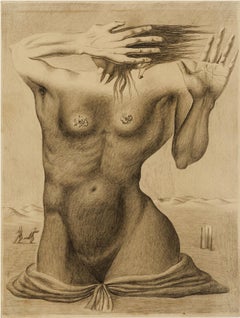
This is an important work that is loaded with Surrealist iconographies. The shape of her hands is echoed in the shape of her hair. Tiny man and woman figures...
Category
1930s Surrealist Figurative Drawings and Watercolors
Materials
Archival Paper, Graphite
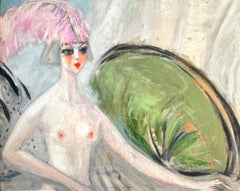
Odalisque à la Plume Rose - Nude Cabaret Dancer with Feathers
By Jacqueline Marval
Located in Miami, FL
Jacqueline Marval was close friends with Kees van Dongen and her work is of the same school as, Matisse and Marie Laurencin. Les Odalisques is quite contemporary looking with it's main figure having joyful life and vitality to her. Some refer to her as a Fauve and some as a post-impressionist. Clearly, she is an overlooked female artist. This work is over...
Category
1920s Post-Impressionist Nude Paintings
Materials
Canvas, Oil
Lilliputian Eskimo Fairy Tale - Indigenous People Folklore Story-Teller
Located in Miami, FL
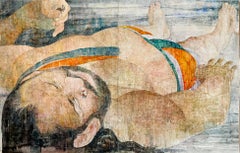
This work celebrates the customs and folklore of Indigenous People / Eskimo native life. Illustrator Gianni Benvenuti shows a partially clothed Eskimo man lying on his back in a tran...
Category
1960s Surrealist Figurative Paintings
Materials
Tempera, Cardboard
Surrealist Landscape, Mountain with Nude Woman - Perls Gallery
By Frederick Haucke
Located in Miami, FL
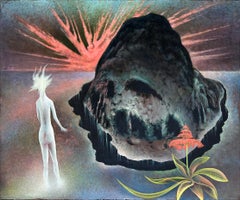
A nude white woman gazes out and over a Giorgio de Chirico like surrealist landscape to an overly dramatic sunset with stylized orange rays. In the center of the composition is a cut-out of a mountain with a moat. In the extreme foreground is a silhouetted orange plane with a spiral of leaves. Along with the empty landscapes of de Chirico, it's possible that Frederick Haucke was influenced by Salvador Dalí " The Persistence of Memory" in 1931, and Dali's painting was shown at the Museum of Modern Art in 1934. In that painting, Dali, paints a vacant landscape doted with symbols from the unconscious. This painting by Frederick Haucke owes a debt to giants of the Surrealist movement but still, Haucke carves out his style. The shape of the nude's hair echoes the shape of the sunset. What the symbolism to the mountain is and the flower in the foreground we will leave to the viewer to speculate. It was shown at the very prestigious Pearls Gallery in New York City. Artists in the famous Perls' stable included Derain, Dufy, Rouault, Matisse, Picasso, Modigliani, Pascin, Soutine, Chagall and Vlaminck. With a 1971 retrospective of Alexander Calder's work. This Haucke from the Perls Gallery...
Category
1940s Surrealist Nude Paintings
Materials
Masonite, Oil
Sexy Nude Woman Masturbating - From the Female Gaze
Located in Miami, FL
In 1976, Playboy Magazine hired a woman illustrator to artfully depict a young, attractive female masturbating. This could be a first: a major newsstand magazine and a magazine most...
Category
1970s American Modern Nude Drawings and Watercolors
Materials
Paper, Pastel
Eskimo Fairy Tales Fantasy
Located in Miami, FL
A young Eskimo child is depicted at the precise moment before he/she launches an arrow to the sun. According to Eskimo lore, the concept has deep symbolic meaning. To the viewer, t...
Category
1960s Surrealist Figurative Drawings and Watercolors
Materials
Tempera, Watercolor, Cardboard, Pencil
You May Also Like
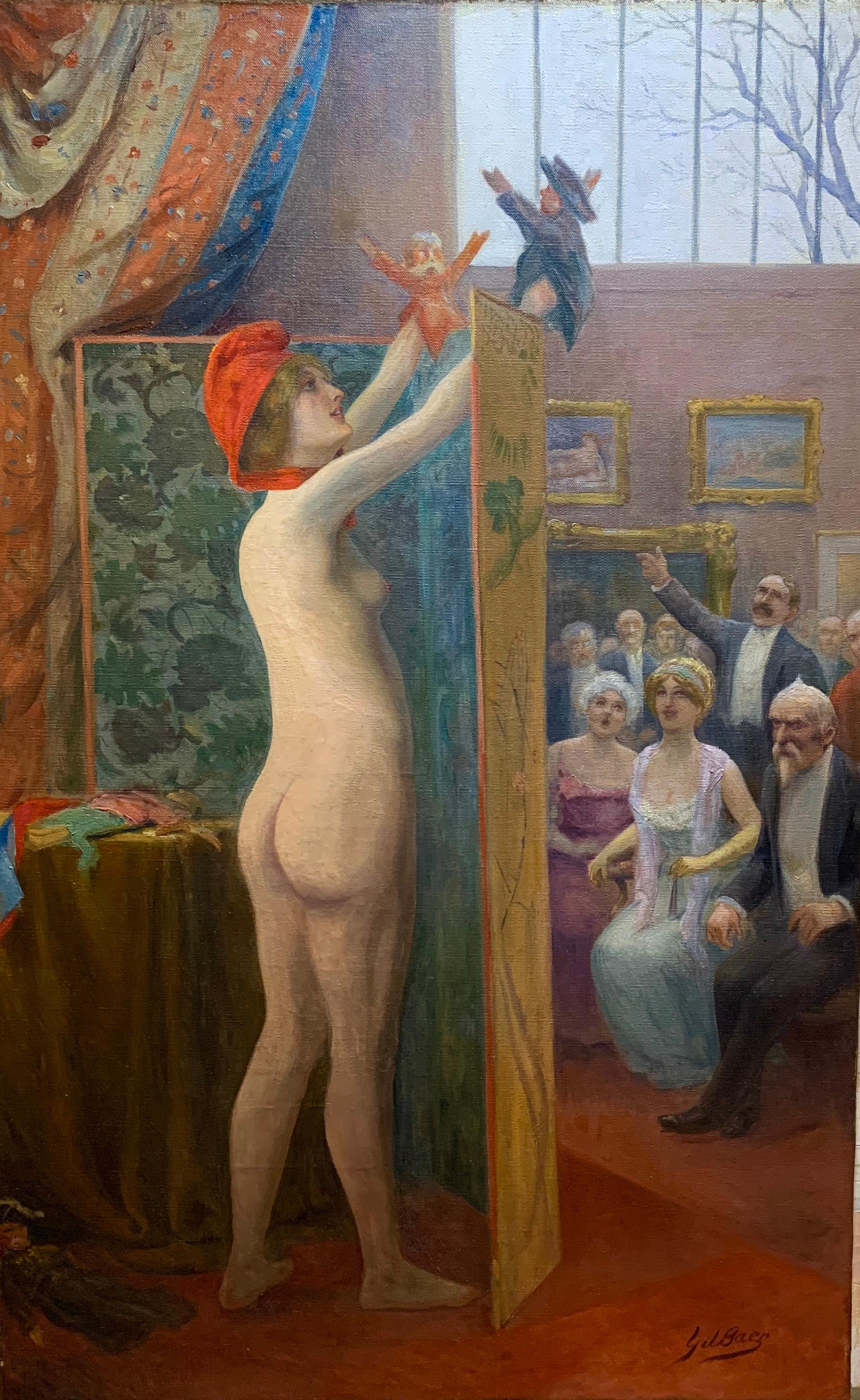
Antique Pin-up Gil Baer French Surrealist Nude Woman Puppet Show
By Gil Baer
Located in New York, NY
Soo Funny!
Gil Baer (1859-1931) is the artist of this beautiful, humorous painting. This is a surrealist illustration painting of a nude woman behind...
Category
Early 20th Century Surrealist Nude Paintings
Materials
Canvas, Oil
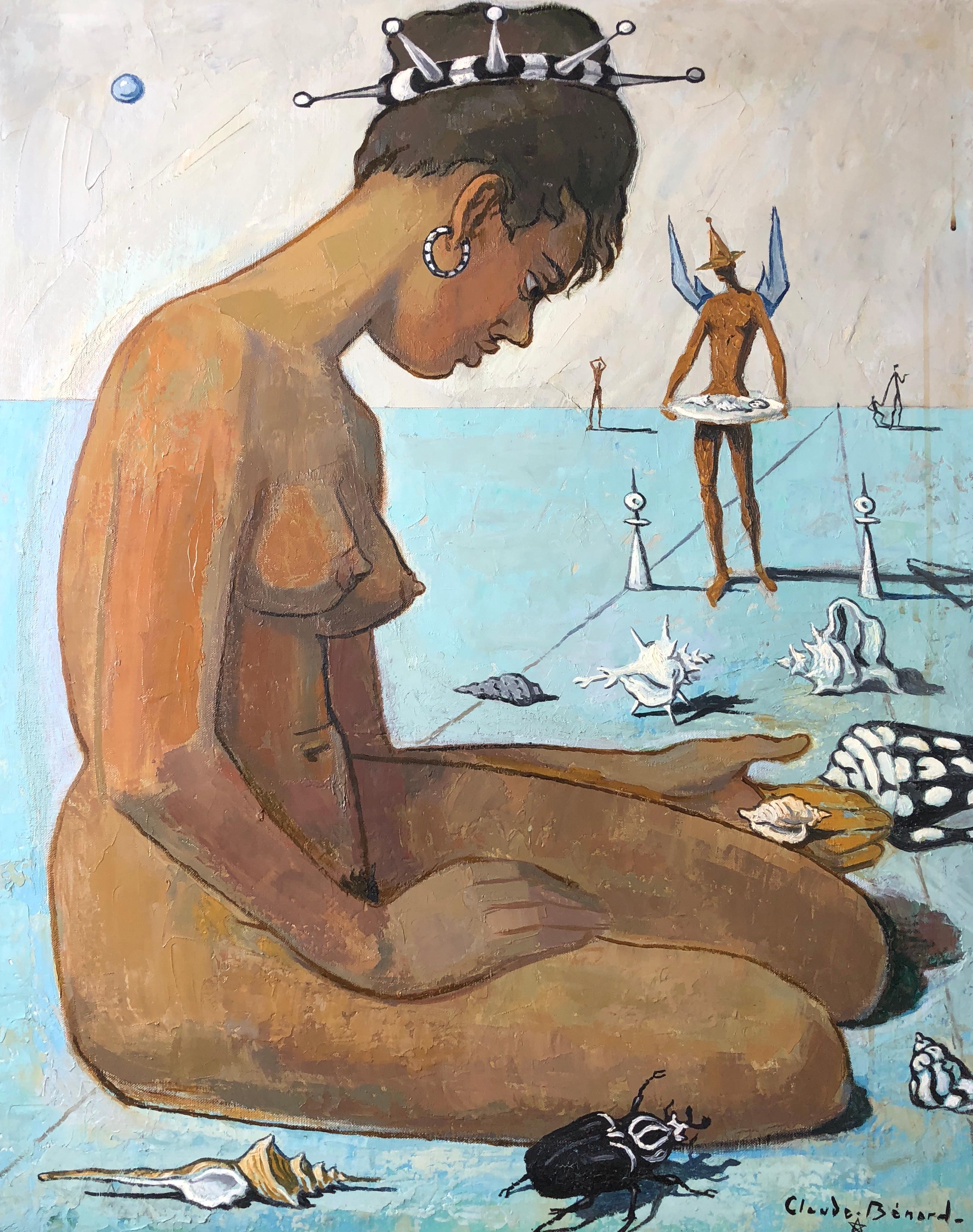
Nudist Woman, Surrealist Signed Oil Painting
By Claude Benard
Located in Cirencester, Gloucestershire
Nudist Women, Signed Oil Painting
By French artist Claude Benard, (1926 - 2016)
Signed by the artist on the lower left hand corner,
Oil painting on canvas, unframed
canvas size: 32 x...
Category
Mid-20th Century Surrealist Landscape Paintings
Materials
Oil
$1,637 Sale Price
63% Off
Nude on the Edge#2, colorful, whimsical imaginative nude
By Stephen Basso
Located in Brooklyn, NY
*ABOUT Stephen Basso
Stephen Basso's highly original pastels and oil paintings are romantic, yet thought provoking fantasies. His whimsical works are alive with boundless imagina...
Category
2010s Outsider Art Figurative Paintings
Materials
Canvas, Oil
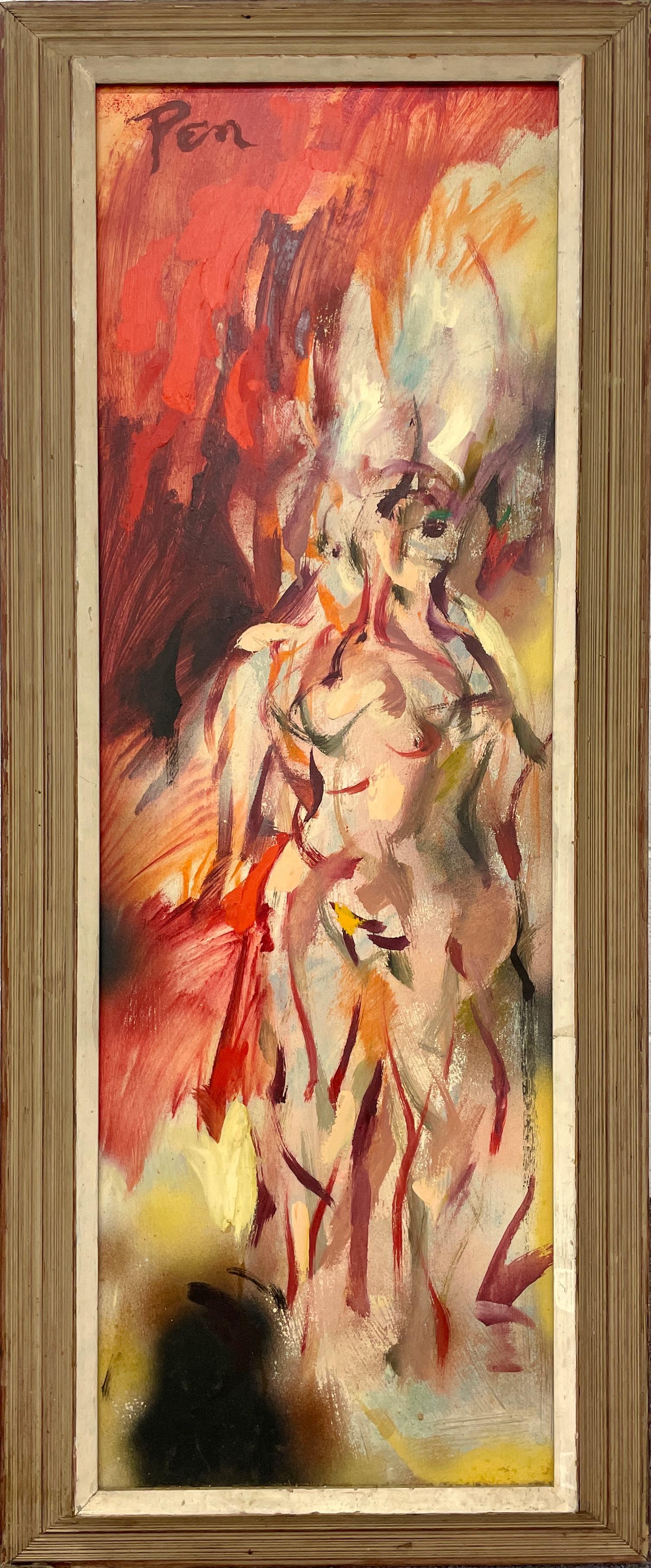
A Large, Sensational Mid-Century Modern Painting of a Showgirl, Burlesque Dancer
Located in Chicago, IL
A Large, Sensational Mid-Century Modern Painting of a Chicago Night Club Showgirl. Painted in the 1950s, this is a large, vertical, abstracted portrayal of a standing Burlesque danc...
Category
Mid-20th Century American Modern Figurative Paintings
Materials
Masonite, Oil
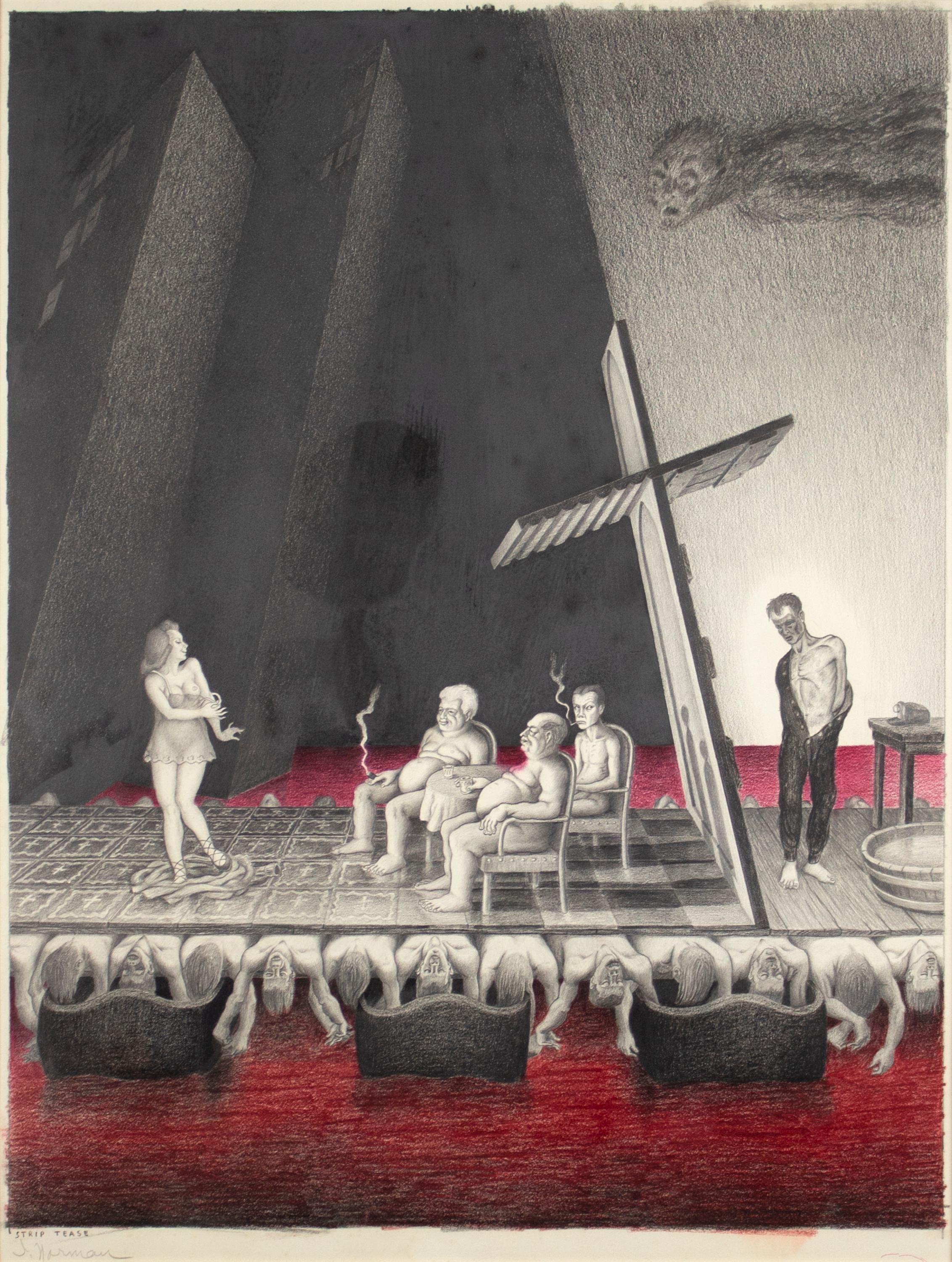
Striptease
By Irving Norman
Located in Palm Desert, CA
A drawing by Irving Norman. "Striptease" is a macabre cultural commentary drawing, pencil and color pencil on paper executed in a dark palette of blacks, grays, and reds by social su...
Category
Mid-20th Century American Modern Figurative Drawings and Watercolors
Materials
Pencil, Color Pencil
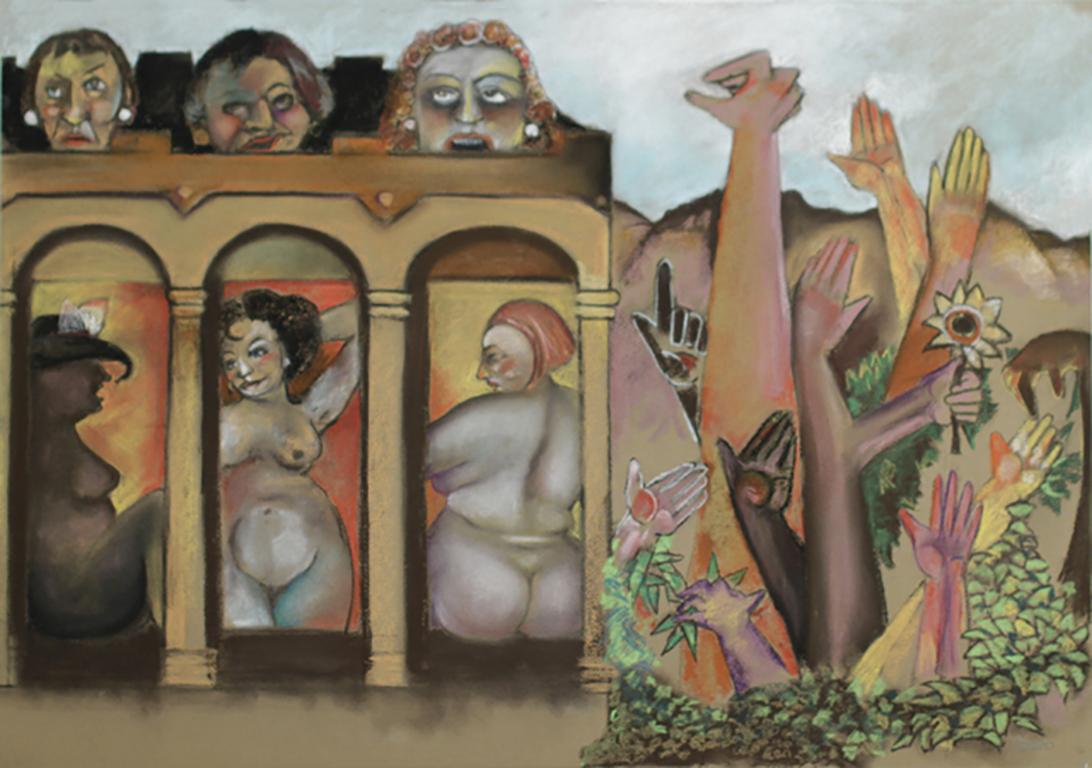
erotica al fresco, narrative architectural fantasy w female nudes
By Stephen Basso
Located in Brooklyn, NY
Pastel on toned paperABOUT Stephen Basso
Stephen Basso's highly original pastels and oil paintings are romantic, yet thought provoking fantasies. His whimsical works are alive wi...
Category
2010s Surrealist Nude Drawings and Watercolors
Materials
Paper, Pastel