Items Similar to A View of Edinburgh and Self Portrait
Want more images or videos?
Request additional images or videos from the seller
1 of 5
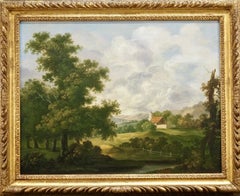
Patrick NasmythA View of Edinburgh and Self Portrait
$11,743.66
£8,572
€10,044.57
CA$16,231.18
A$17,257.09
CHF 9,332.11
MX$205,278.37
NOK 116,898
SEK 106,762.65
DKK 75,036.38
About the Item
Patrick Nasmyth
A View of Edinburgh and self portrait
1787-1831
Oil on panel, unsigned
Image size: 6 x 9 1/4 inches
Original gilt frame
This painting appears as a charming countryside scene, but closer inspection reveals a striking cityscape in the background, instantly recognisable as the skyline of Edinburgh. The castle naturally dominates the background, and yet remains dwarfed by the expanse of countryside surrounding the impregnable fortress. Against this dramatic background, Nasmyth has painted himself into the scene, crouched over a sketchbook as some cows graze idly nearby.
The influence of Dutch landscape artists is readily apparent in this worth by Nasmyth, particularly in regard to the use of an elevated viewpoint combined with smaller scale scenes and figures in the foreground. The realism of the natural life is vivid, and viewers are instantly able to see the striking effects of Nasmyth’s insistence on painting nature from real life. The softness of the clouds in the sky is rendered exquisitely, as is the threat of a storm cloud forming over the imposing Edinburgh Castle. Despite the menacing storm and desolate fortress, there is a sense of serenity to the painting, emulating the peacefulness Nasmyth must have felt when embarking on his painting expeditions.
Patrick Nasmyth
Nasmyth was born in Edinburgh in 1787 as the eldest son of artist Alexander Nasmyth, joining a family of immense artistic success and renown. Along with his siblings, Nasmyth was given art lessons from his father from an early age. After an unfortunate accident as a teenager, Nasmyth lost the use of his right hand and was forced to relearn how to paint with his left.
Nasmyth’s oeuvre is dominated by scenes of Scotland and Edinburgh, a subject matter that continued even after he moved to London in the early 19th century. As with his father, Nasmyth was heavily influenced by Dutch landscape masters, presumably having seen them on display at prominent London galleries. His landscape scenes were initially exhibited at the Royal Institution and the Scottish Academy Edinburgh from 1808, before receiving their debut at the Royal Academy and the British Institute in 1811, where they were immensely successful. Nasmyth was also one of the founding members of the Royal Society of British Artists. He was well known for his insistence on studying directly from nature, often embarking on painting expeditions with a small mobile tent that allowed him to keep working despite poor weather conditions.
In 1831, Nasmyth contracted pneumonia after painting a scene in the London countryside, and passed away shortly after. Despite the popularity of his work, Nasmyth died in poverty and the funds for his funeral were raised by many of his fellow artists. His works are part of collections in galleries in Edinburgh, the Fitzwilliam Museum Cambridge, the Ashmolean Museum, the National Gallery, the Victoria and Albert Museum, and the Metropolitan Museum of Art in New York.
- Creator:Patrick Nasmyth (1787 - 1831, Scottish)
- Dimensions:Height: 6 in (15.24 cm)Width: 9.25 in (23.5 cm)
- Medium:
- Period:
- Condition:
- Gallery Location:London, GB
- Reference Number:1stDibs: LU52417044372
Patrick Nasmyth
Patrick Nasmyth was the eldest son of Alexander Nasmyth (1758 – 1840) who was best known as ‘the father of landscape painting in Scotland’. Patrick was named after his father’s friend Patrick Miller of Dalswinton. He was taught the rudiments of drawing and painting by his father before moving to London in 1807. He suffered from poor health and an accident to his right hand when he was young meant that he had to learn to draw left-handed. A childhood illness also left him partially deaf, and he grew up to have a rather introspective nature. In his paintings he chose to depict the countryside of the Home Counties. He modelled his style on Dutch seventeenth-century artists, especially Meindert Hobbema, and was nicknamed the ‘Scottish Hobbema’.
About the Seller
5.0
Gold Seller
Premium sellers maintaining a 4.3+ rating and 24-hour response times
Established in 2007
1stDibs seller since 2014
87 sales on 1stDibs
Typical response time: 2 hours
- ShippingRetrieving quote...Shipping from: London, United Kingdom
- Return Policy
More From This Seller
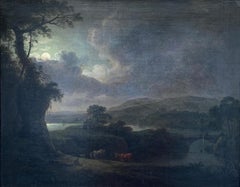
View AllView Across the Valley, Late 18th Century English Moonlit Scene
Located in London, GB
Oil on canvas
Image size: 14 1/4 x 18 inches (36 x 45.7 cm)
Period gilt frame
In this painting the bright moon, partially obscured by mounting dark clouds, dramatically lights the l...
Category
1780s Landscape Paintings
Materials
Canvas, Oil
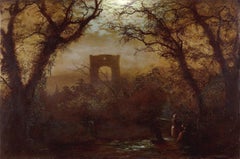
Kirkstall Abbey, 19th Century Romantic Moonlight Oil Landscape
Located in London, GB
William Henry James Boot
1848 - 1918
Kirkstall Abbey
Oil on canvas, monogrammed lower right and dated 1876
Image size: 24 x 36 inches (61 x 91.5 cm)
Exhibited Royal Academy, 1878 no. 692
Much like his contemporary, John Atkinson Grimshaw, Boot appears to have been influenced by the Pether family who were renowned painters of nocturnes. He was a book illustrator as well as a renowned oil and watercolour artist, producing engravings for the London Illustrated News and Art Journal. He wrote 'Trees and How to Paint Them' in 1883.
Boot was born in Manchester. He exhibited at the Royal Academy from 1874 to 1884, showing mainly English and Continental landscapes. He is known to have travelled extensively in Germany, France and North Africa.
Boot was a member of the Royal Society of British Artists and of the Arts Club, who listed him as a "painter and writer on Gothic architecture". Boot also painted domestic genre and interior scenes but tended to concentrate on landscapes.
Boot lived and married in London. He is buried with his wife in Hampstead.
The subject of this painting, Kirkstall Abbey in Yorkshire, was a place Boot often visited. Three figures to the right gaze admiringly at the view, with the moonlight reflected on the path they stand on.
THIS PAINTING IS IN THE 'MOONLIGHT IN PAINTINGS AND WATERCOLOURS' EXHIBITION CURRENTLY SHOWING AT DARNLEY FINE ART...
Category
19th Century Romantic Landscape Paintings
Materials
Canvas, Oil
Island of Gibraltar, Oil 19th Century Landscape
Located in London, GB
Oil on canvas
Image size: 8 3/4 x 12 1/2 inches (22 1/4 x 31 3/4 cm)
Gilt frame
This is a painting from the 19th Century depicts Gibraltar Island in Ohio, America, located within la...
Category
19th Century Victorian Landscape Paintings
Materials
Canvas, Oil
The Italian Old Town, 19th Century Italian Landscape, Framed Oil Painting
Located in London, GB
Oil on board
Image size: 13 1/2 x 9 inches (34.25 x 23 cm)
Hand made contemporary style frame
This is a classic Italian landscape painted in an academic style, taking inspiration fr...
Category
19th Century Italian School Landscape Paintings
Materials
Oil, Board
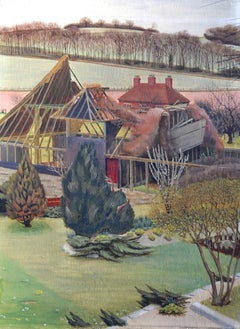
View from a Bedroom Window, 20th Century English School, Oil Landscape
Located in London, GB
Oil on board
Image size: 12 x 15 inches (30.5 x 38 cm)
Contemporary style frame
Category
20th Century Modern Landscape Paintings
Materials
Oil, Board
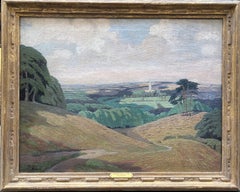
Cathedral View Through Fields
By Eric Brown
Located in London, GB
Eric Brown
Cathedral View Through Fields
1894-1955
Oil on canvas, signed lower left
Image Size: 20 x 26 ¼ inches (50.5 x 66.5 cm)
Hand carved gilt frame
Brown was born in 1894 in Sa...
Category
20th Century Paintings
Materials
Canvas, Oil
You May Also Like
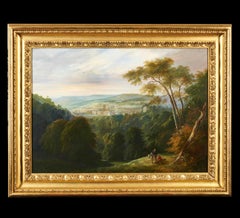
A view of Bath, England
Located in Stoke, Hampshire
Edmund Garvey (Kilkenny 1740-1813)
A view of Bath
Oil on canvas
Canvas Size 20 x 28 in
Framed Size 26 x 33 in
Edmund Garvey (1740 – 28 May 1813) was an Irish landscape painter whose...
Category
18th Century Old Masters Landscape Paintings
Materials
Oil
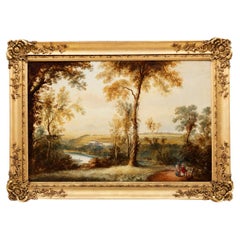
Oil On Canvas Landscape Scene
View of Old and New Lanark
Located in Dublin 8, IE
'View of Old and New Lanark', Scotland, circa 1830.
Oil on canvas landscape scene in gilt frame depicting ladies admiring the view of the River Clyde to the foreground with the town...
Category
Antique 19th Century Scottish Paintings
Materials
Canvas, Paint
A PAIR of Landscapes.
By Abraham Pether
Located in Stoke, Hampshire
Abraham Pether (1756-1812)
'Landscape near Chichester' and 'Drovers in a landscape'
A pair, Oil on canvas
One signed and inscribed 'Chichester'
Canvas size - 16 x 20 5/8 in
Framed si...
Category
18th Century Landscape Paintings
Materials
Oil
$10,275 Sale Price
42% Off
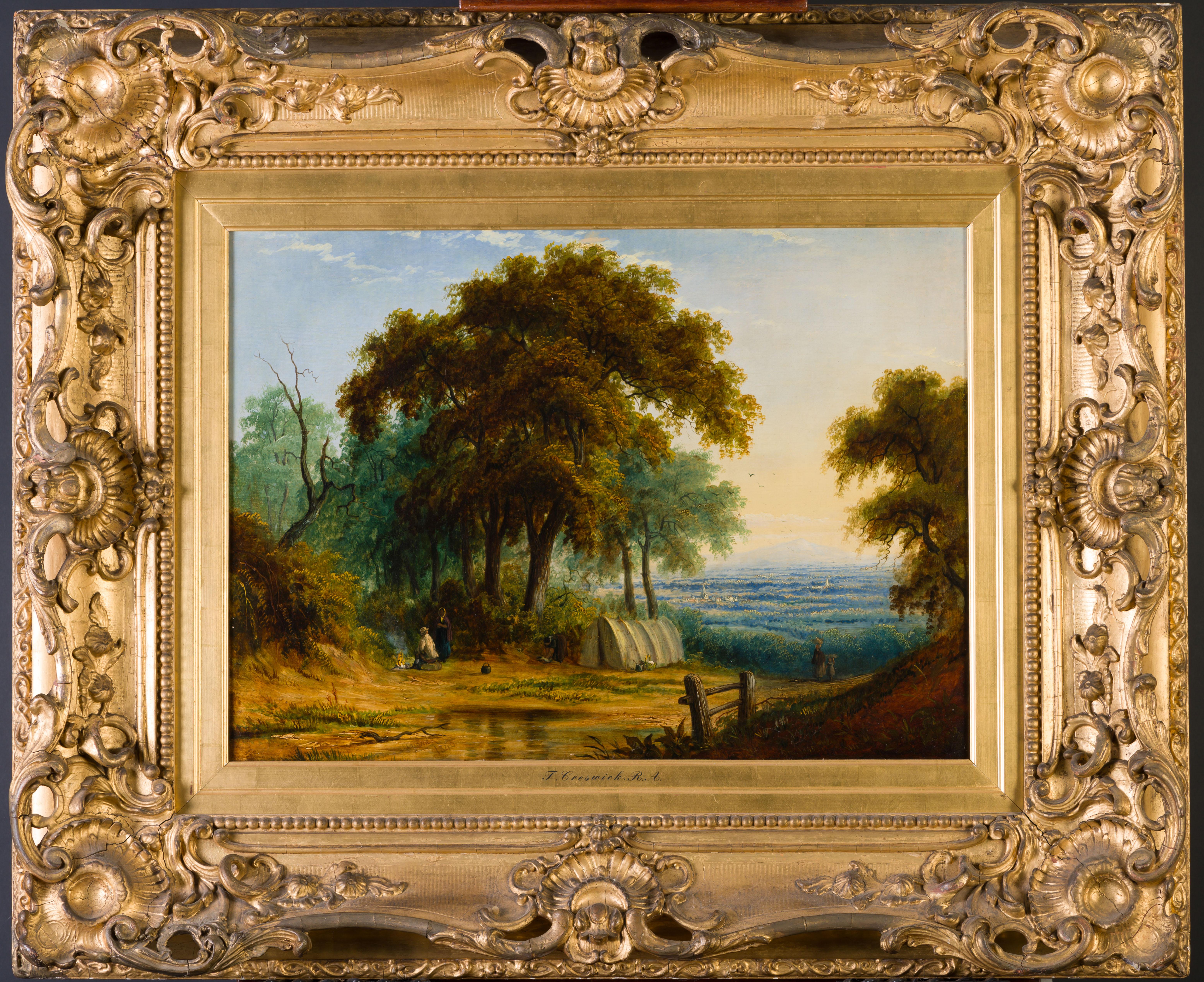
Extensive landscape
By Thomas Creswick
Located in Douglas, Isle of Man
Thomas Creswick R.A. 1811 - 1869, was an English landscape painter and illustrator. Creswick was one of the leading members of the Birmingham School of landscape painters and exhibit...
Category
1840s Landscape Paintings
Materials
Canvas, Oil
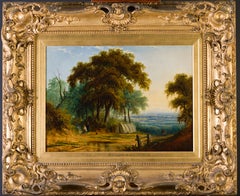
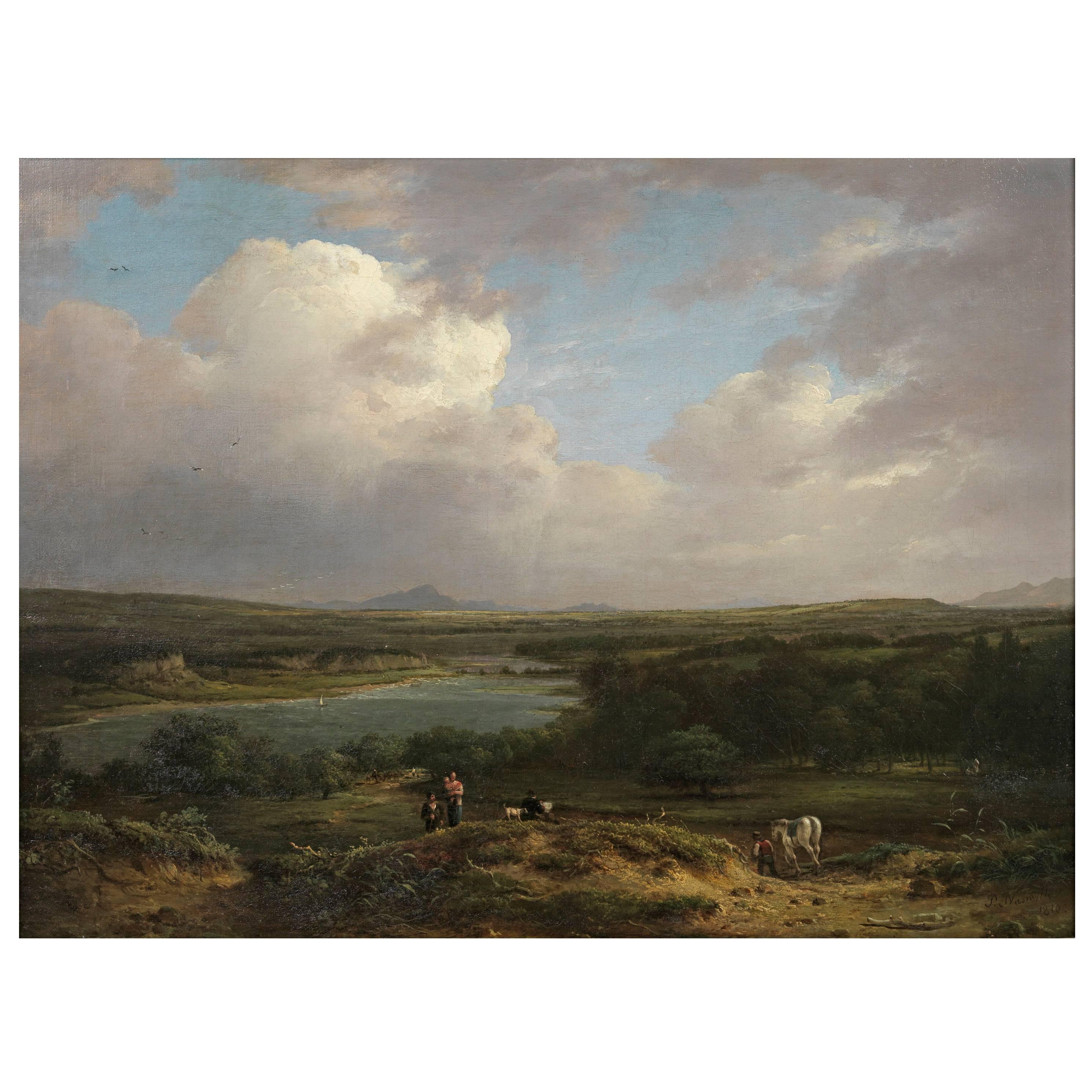
Scottish Oil Painting of Figures in a Landscape by Patrick Nasmyth, 1810
By Patrick Nasmyth
Located in London, GB
Patrick Nasmyth (Scottish, 1787- 1831)
Figures in a Landscape
Signed and dated, 'P. Nasmyth / 1810, lower right corner
oil on canvas
Held in a giltwood frame.
Provenance
The Co...
Category
Antique Early 19th Century Scottish Paintings
Materials
Canvas, Paint
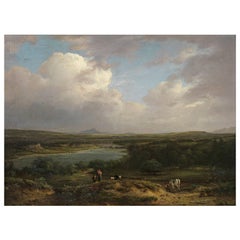
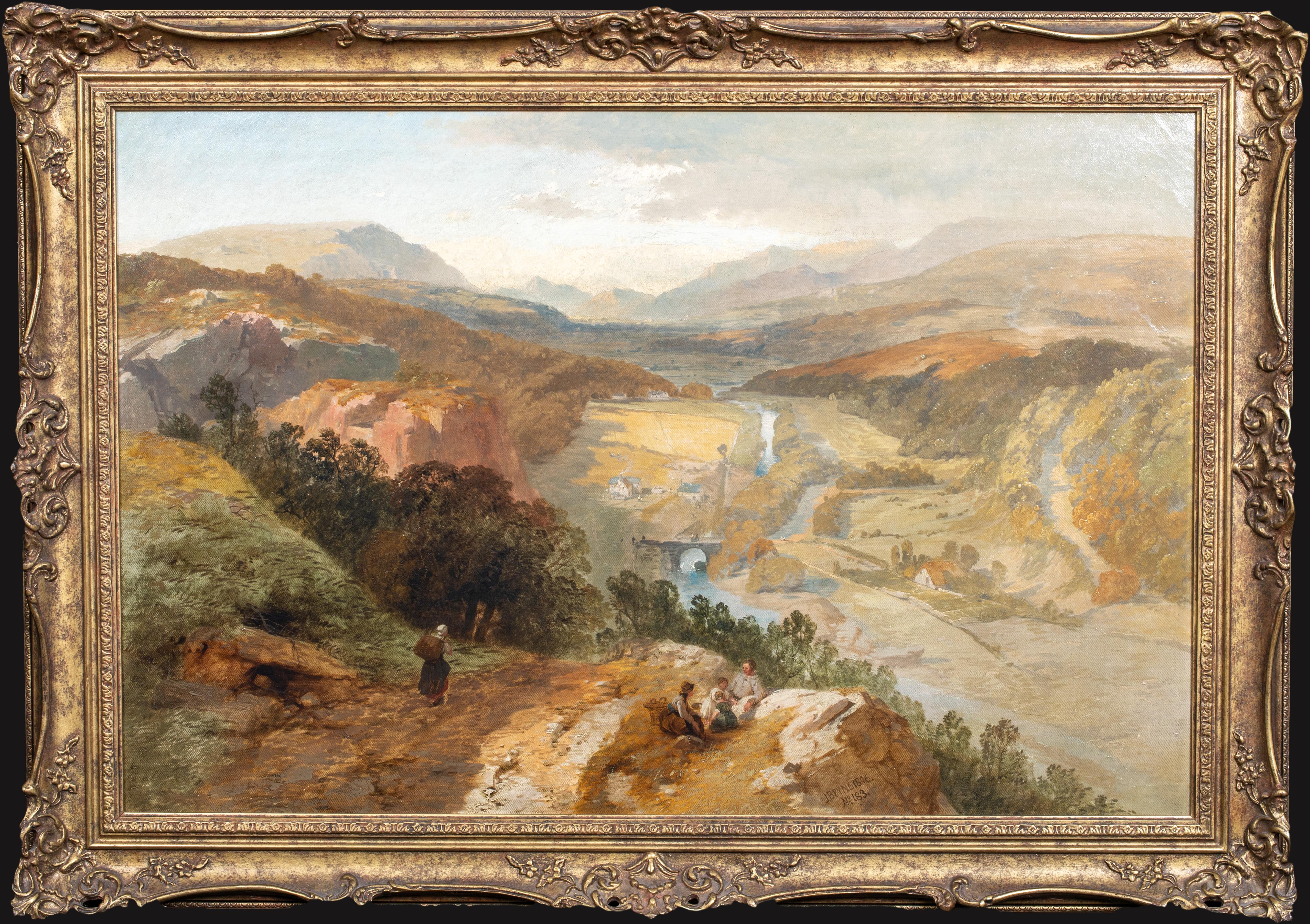
The Vale Of Neath, 19th Century
By James Baker Pyne
Located in Blackwater, GB
The Vale Of Neath, 19th Century
by James Baker PYNE (1800-1870)
Large 19th Century view of the Vale of Neath, Wales, oil on canvas by James Baker Pyne. Exce...
Category
19th Century Landscape Paintings
Materials
Canvas, Oil