Items Similar to Double Portrait Oil Painting Brothers George, 2nd Duke Buckingham
Lord Francis
Want more images or videos?
Request additional images or videos from the seller
1 of 7
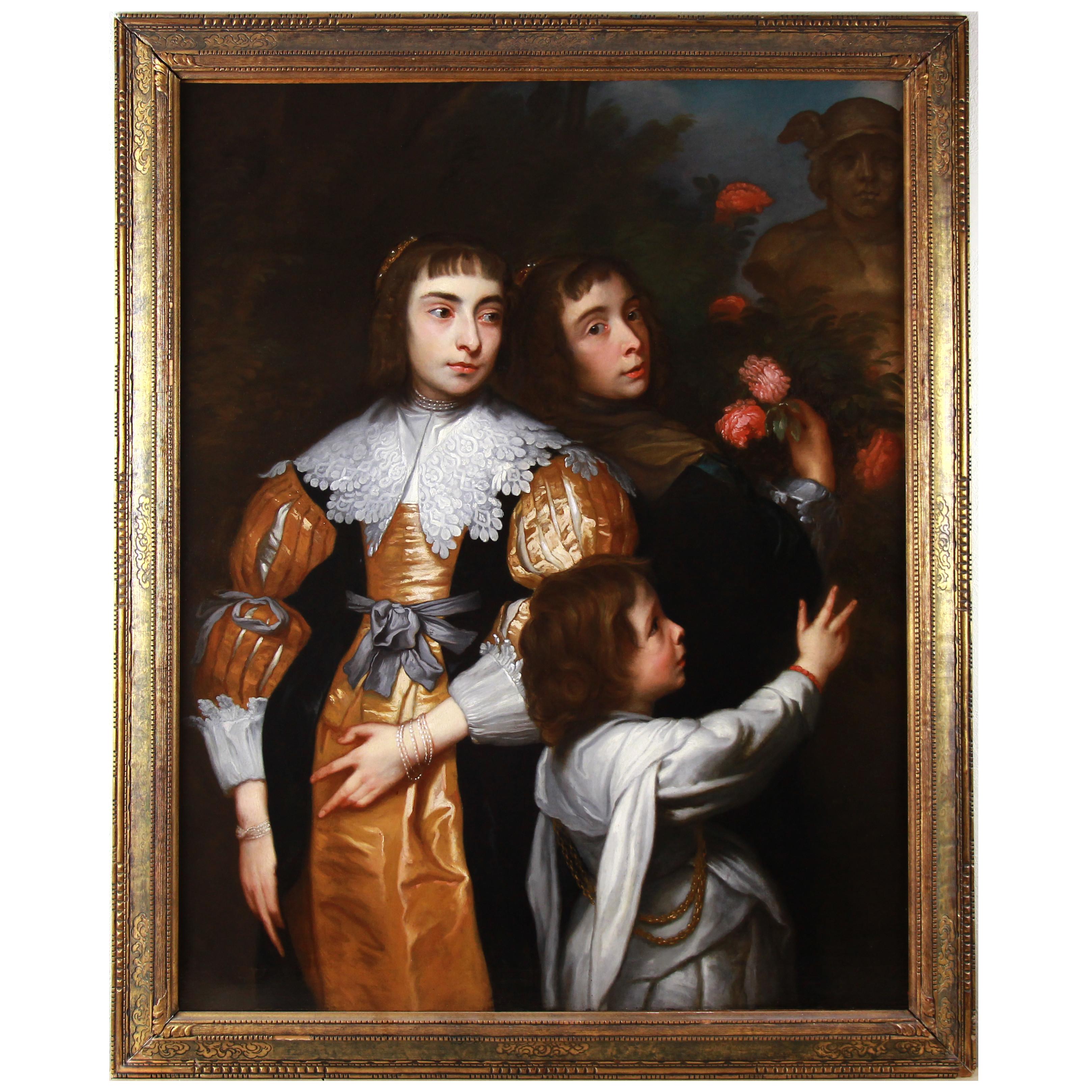
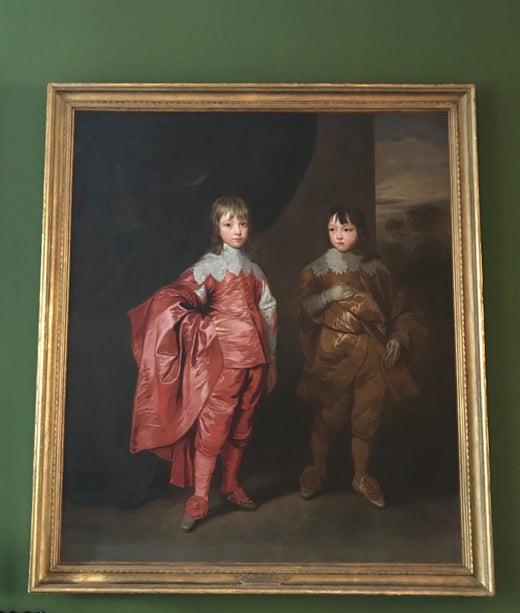
(After) Anthony Van DyckDouble Portrait Oil Painting Brothers George, 2nd Duke Buckingham
Lord Francis1680
1680
$87,348.63
$109,185.7920% Off
£64,000
£80,00020% Off
€74,577.30
€93,221.6320% Off
CA$120,501.81
CA$150,627.2620% Off
A$131,986.84
A$164,983.5520% Off
CHF 69,491.08
CHF 86,863.8520% Off
MX$1,575,219.02
MX$1,969,023.7820% Off
NOK 885,601.57
NOK 1,107,001.9720% Off
SEK 809,573.32
SEK 1,011,966.6620% Off
DKK 557,293.01
DKK 696,616.2620% Off
About the Item
Aftrer Anthony VAN DYCK - maybe Studio (1599, Antwerp – 1641, London) Flemish
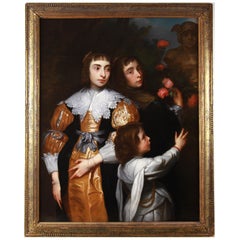
Double Portrait of George Villiers, 2nd Duke of Buckingham (1628-1687)
Lord Francis Villiers (1629-1648)
Oil on Canvas
170 x 147 cm
Anthony Van Dyck (1599-1641)
No painter has done more to define an era than Anthony van Dyck. He spent only seven and a half years of his short life (1599- 1641) in England. He grew up in Antwerp, where his precocious talent was recognised by Peter Paul Rubens, the greatest painter of his age. He worked in Rubens’s studio and imitated his style as a religious artist, painting biblical scenes redolent of the lush piety of the counter-reformation. But soon he was on the move. In 1620, he visited London for a few months, long enough to paint a history picture, The Continence of Scipio, for the royal favourite, George Villiers, Marquess of Buckingham, and a portrait of his other English patron, the great art collector, Thomas Howard, 2nd Earl of Arundel.
After a stint in Italy, making imposing portraits of the wealthy aristocracy and sketching and copying works by Titian, he returned to the Spanish Netherlands in 1627, becoming court artist to Archduchess Isabella before departing for The Hague in 1631 to paint the Dutch ruler Frederick Henry, Prince of Orange. Charles I’s invitation in 1632 led Van Dyck back to London where he was knighted, paid an annual salary of £200 and installed in a house in Blackfriars with a special jetty at which the royal barge might tie up when the King was visiting his studio. By this time Van Dyck was recognised as the leading court painter in Europe, with Velazquez at the court of Philip IV of Spain his only rival. He also excelled as a superbly observant painter of children and dogs.
Van Dyck’s notoriety in depicting children led to the introduction of groups of children without their parents as a new genre into English painting (amongst other new genres).
For the next 300 years, Van Dyck was the major influence on English portraiture. Nearly all the great 18th Century portraitists, from Pompeo Batoni and Allan Ramsay to Thomas Gainsborough and Joshua Reynolds, copied Van Dyck’s costumes, poses and compositions.
George Duke of Buckingham
his brother Francis Villiers
Painted in 1635, this double portrait was originally commissioned by Charles I, who raised the two brothers after their father, George Villiers, was assassinated in 1628. Together with their sister, Lady Mary Villiers, they enjoyed the King’s favour absolutely. Francis whose absolute ‘inimitable handsomeness’ was noted by Marvell (who was killed in a skirmish near Kingston upon Thames). The young duke who commanded a regiment of horse at the Battle of Worcester, remained closely associated with Charles II, held a number of high offices after the Restoration and was one of the most cynical and brilliant members of the King’s entourage, immortalised as ‘Zimri’ in Dryden’s Absalom and Achitopbel. As a young man he had sold his father’s great collection of pictures in the Spanish Netherlands, many of them to the Archduke Leopold Willhelm.
Painted for Charles I and placed near the portrait of their sister in the Gallery at St James’ Palace. The handling of both costumes is very rich, and the heads are very carefully and sensitively worked. That of the younger boy in particular is more solidly built up than the lower part of the figure. A preparatory drawing for the younger boy is in the British Museum.
There are copies at, e.g., Highclere Castle, at Serlby Hall (formerly) and in the Royal Collection by William Hanneman, 1783. Vertue recorded in 1742 a copy by Ranelagh Barret. The copy formerly at Warwick Castle was at Christie’s, London, 17 May 1968 (Lot 84) and at Sotheby’s, London 13 July 1988 (Lot 22). A copy was at Christie’s, New York, 3 June 1987 (Lot 57). Another was on the art market in London in 1980. There is a copy at Blenheim Palace of the figure of the older boy. Small later copies are also recorded.
The composition was much admired in the Eighteenth Century. A drawing of the head of the holder boy, at Chatsworth, is thought to be by Lady Burlington. Reynolds probably borrowed from the composition at least twice; it figures in the background of Zoffany’s group, set in the Second Drawing Room at Buckingham House, of the eldest sons of George III and obviously influenced the painter in other portraits by him of the royal children; and the pose of the older boy is close, in reverse, to that of Gainsborough’s Blue Boy.
The current portrait of the Second Duke of Buckingham and his brother is a seventeenth century copy of a Van Dyck painting in the Royal Collection. Painted for Charles I by Van Dyck, the Duke of Buckingham and his brother was hung near that of their sister, Lady Mary Villiers, in the Gallery at St James's Palace. Horace Walpole said that 'nothing can exceed the nature, lustre, and delicacy of this sweet picture', which he regarded as 'one of the finest of this master'. Typically for Van Dyck the heads are very carefully and sensitively observed and the costumes richly handled. Charles II is known to have commissioned copies of the composition by his court artist, Henry Stone, known as “Old Stone”, as presents for members of the nobility. The Daniel Hunt painting is surely one of these commissions. Old Stone also made copies of another Van Dyck portrait in the Royal Collection—that of Charles II and his siblings—which were commissioned by Charles II for similarly self-aggrandizing purposes. Both compositions were much admired in the eighteenth century and their influence can be seen on the child portraiture of Reynolds, Gainsborough and Zoffany. It appears in the background of Zoffany's picture 'George, Prince of Wales, and Frederick, later Duke of York, at Buckingham House' (RCIN 404709).
- Creator:(After) Anthony Van Dyck (1599 - 1641, Dutch)
- Creation Year:1680
- Dimensions:Height: 66.93 in (170 cm)Width: 57.88 in (147 cm)
- Medium:
- Movement Style:
- Period:
- Condition:
- Gallery Location:London, GB
- Reference Number:1stDibs: LU67335362102
(After) Anthony Van Dyck
Sir Anthony van Dyck (22 March 1599 – 9 December 1641) was a Flemish Baroque artist who became the leading court painter for Charles I of England. Sir Anthony Van Dyck was born in the Netherlands and painted from an early age becoming a successful independent painter in his late teens, and a master in the Antwerp Guild in 1618. He painted in the studio of Peter Paul Rubens who became a major influence on his work. Van Dyck worked in London for some months in 1621, then returned to Flanders and travelled to Italy, where he stayed until 1627, mostly in Genoa. He spent five years in Flanders after his return from Italy, and was court painter for the archduchess Isabella, Habsburg Governor of Flanders. In 1632 he returned to London to become the main court painter to Charles I of England.
After Holbein, van Dyck and his contemporary Diego Valezquez were the first painters of pre-eminent to work mainly as court portraitists, revolutionising the genre. Van Dyck is best known for his portraits of the royals and aristocracy, most notably Charles I, and his family and associates. Van Dyck widely influenced English portrait painting for the next 150 years. His portrait style changed considerably between the different countries he worked in, culminating in the relaxed elegance of his last English period. His influence extends into the modern period. During his lifetime, Charles I granted him a knighthood, and after his death Van Dyck was buried in St Paul’s Cathedral, an indication of his high standing at the time of his death.
About the Seller
5.0
Vetted Professional Seller
Every seller passes strict standards for authenticity and reliability
Established in 1990
1stDibs seller since 2017
45 sales on 1stDibs
Typical response time: 15 hours
- ShippingRetrieving quote...Shipping from: London, United Kingdom
- Return Policy
More From This Seller
View All17th Century Oil Painting Portrait of a Young English Boy
By Gerard Soest
Located in London, GB
Gerard SOEST (1600 - 1681)
Portrait of a Young Boy
oil on canvas
35.5 x 30.5 inches inc. frame
Gerard Soest (circa 1600 – 11 February 1681), also known as Gerald Soest, was a portra...
Category
17th Century Old Masters Portrait Paintings
Materials
Oil
18th Century Oil Painting Portrait of Phillip, 6th Viscount Wenman.
By Nathaniel Dance-Holland
Located in London, GB
Sir Nathaniel Dance-Holland (1750-1811) was an English portrait painter and one of the founding members of the Royal Academy in 1768. Justly celebrated in his lifetime he won several...
Category
Late 18th Century Old Masters Portrait Paintings
Materials
Oil
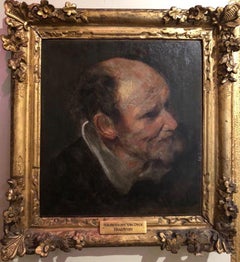
Sir Anthony Van Dyck 17th Century Oil Painting Study of a Head of a Man
By Anthony van Dyck
Located in London, GB
Sir Anthony Van Dyck (1599-1641, Flemish)
Study of a Head of Man
Circa 1627-32, Van Dyck’s second Antwerp period
Oil on paper, laid down on canvas
Dimensions 15 x 14 inches (38.1 x 3...
Category
17th Century Old Masters Portrait Paintings
Materials
Oil
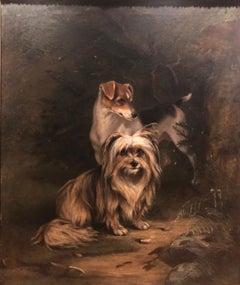
19th Century Portrait of Jerry and Dot a Pair Two Naughty Friends
By Imogen Mary Collier
Located in London, GB
Imogen Mary Collier (1873-1952)
Portrait of Jerry and Dot
Circa. 1895-1900
Oil on Canvas
49 X 42.5
Imogen Mary Collier (1873-1952) was born in 1873 at Whitchurch, Devon, England. She was the daughter of Mortimer John Collier...
Category
1890s Victorian Animal Paintings
Materials
Oil
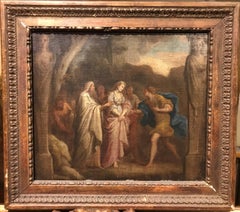
18th Century Neoclassical Oil Painting of the Trojan War: Briseis
Achilles
By James Thornhill
Located in London, GB
James Thornhill (1674-1735)
Oil on canvas
12 x 14 inches;
16 ½ x 18 ½ in. Inc. frame
The subject matter and inclusion of herms on both sides shows the influence of Louis...
Category
Early 18th Century Old Masters Figurative Paintings
Materials
Canvas, Oil
17th Century Old Master Religious Oil painting - Rest on the Flight into Egypt
By Pier Francesco Mola
Located in London, GB
Attributed to Pier Francesco MOLA, called Il TICINESE (1612-1666)
Rest on the Flight into Egypt
oil on canvas
25.5 x 27 inches including ...
Category
Mid-17th Century Baroque Figurative Paintings
Materials
Oil
You May Also Like
Oil On Canvas Family Portrait After Sir Anthony Van Dyck ca 1870
By Anthony van Dyck
Located in Gavere, BE
"Oil On Canvas Family Portrait After Sir Anthony Van Dyck"
After Sir Anthony van Dyck (Flemish painter, 1599-1641), Group of three young girls with a bust of Mercury Oil on canvas (doubled),
probably end 19th century, with French wax seal...
Category
1870s Baroque Portrait Paintings
Materials
Gold Leaf
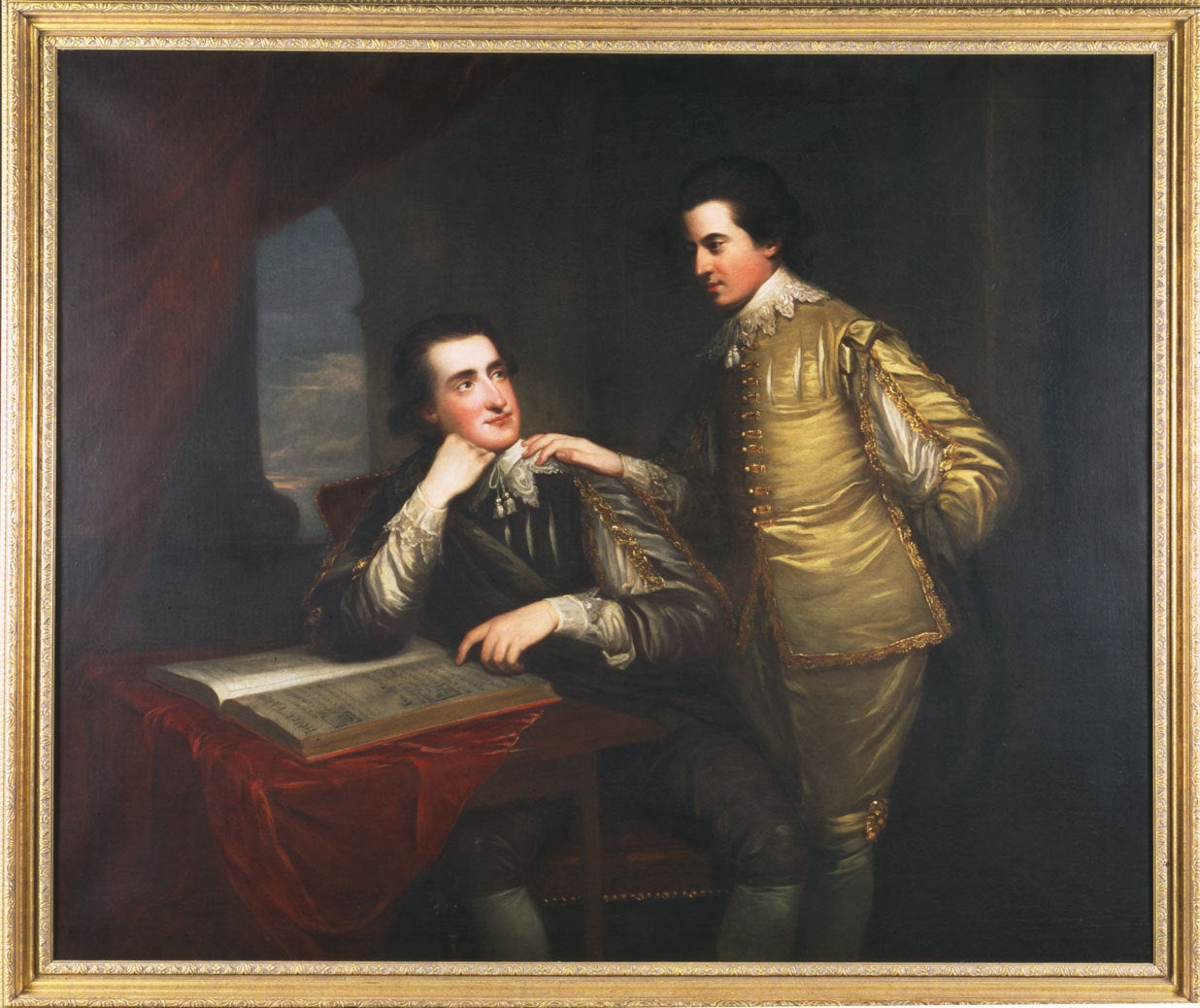
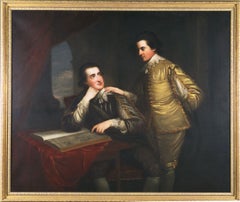
Portrait of George and Edward Finch-Hatton in Van Dyck Dress
By David Martin
Located in New York, NY
Appointed Portrait Painter to the Prince of Wales in Scotland in 1785, David Martin was the leading Scottish portrait painter of his generation. The artist is best known in the United States for his portrait of Benjamin Franklin, which is in the White House collection, Washington, D.C. The sitters depicted in this double portrait were the sons of the British diplomat Edward Finch-Hatton. George (1747-1823), later of Eastwell Park, Kent, is shown seated, reading an ancient charter or medieval manuscript...
Category
18th Century and Earlier Paintings
Materials
Canvas, Oil
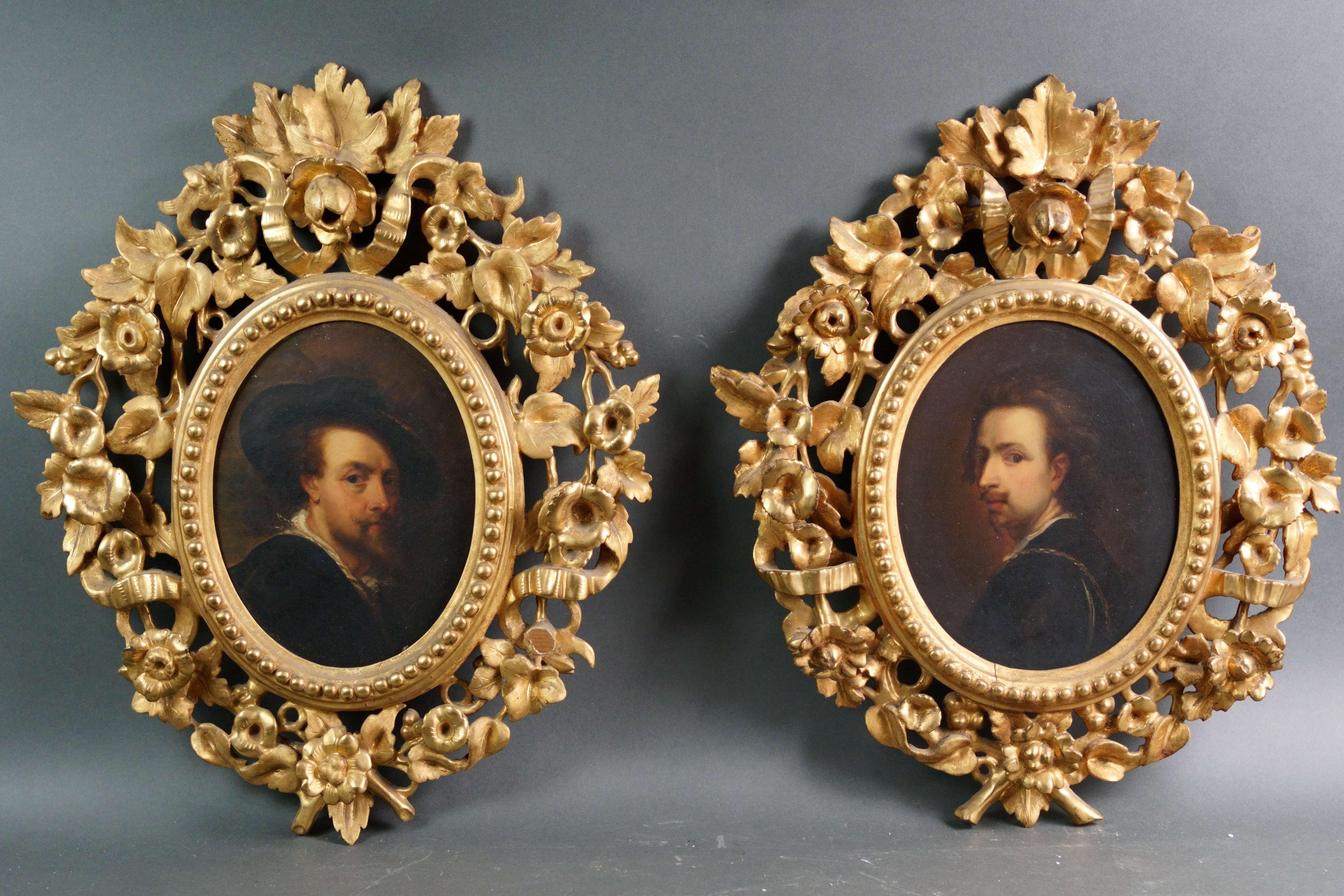
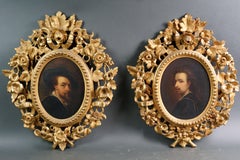
Pair of Self-Portraits by Peter P. Rubens and Anton van Dyck Gilded Frames XIX
Located in Pistoia, IT
Florentine school of the mid-19th century, pair of oil on cardboard portraits depicting painters Peter Paul Rubens and Anthon Van Dyck in their magnificent original carved and gilded...
Category
Mid-19th Century Italian School Portrait Paintings
Materials
Oil, Cardboard
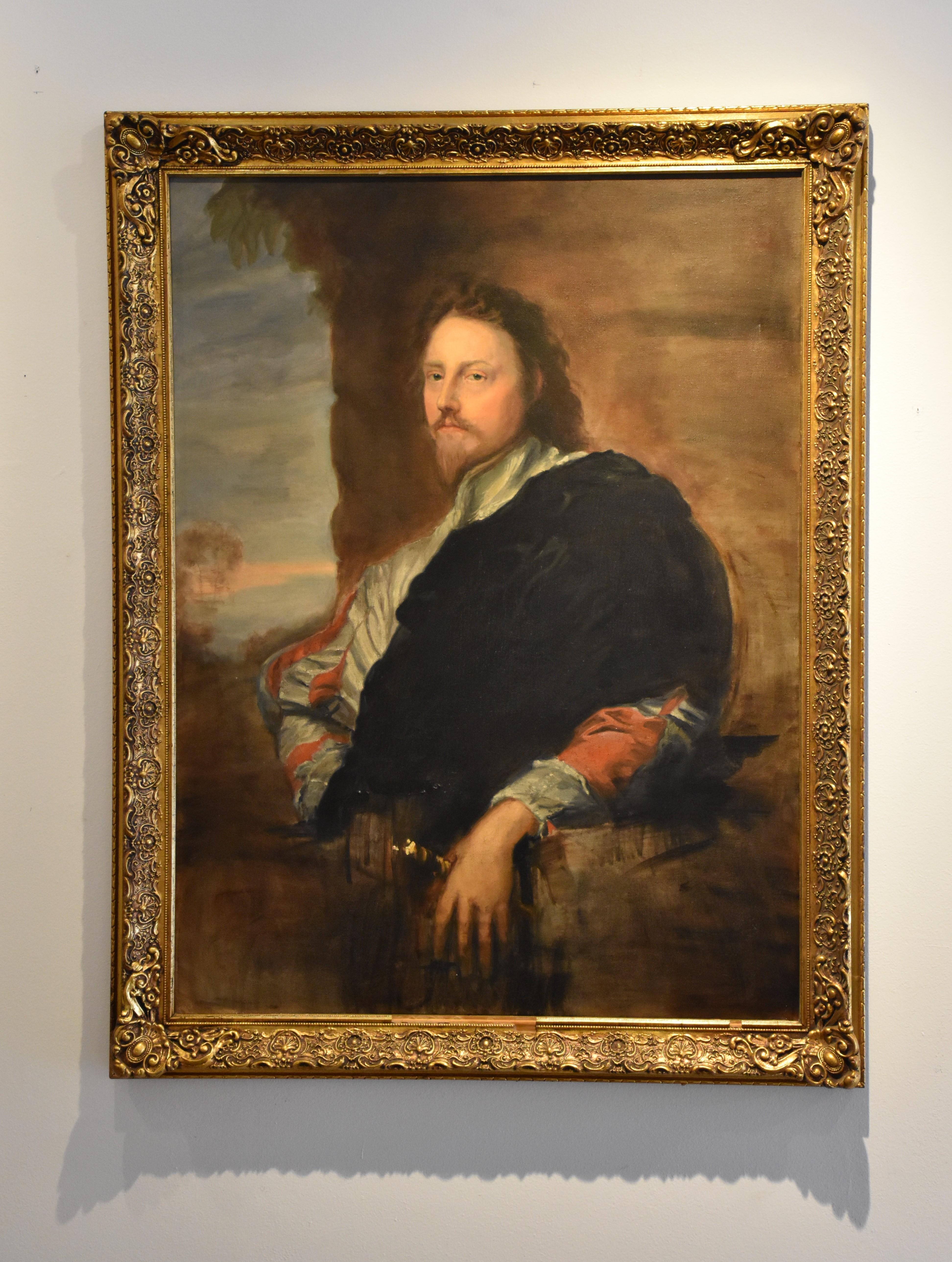
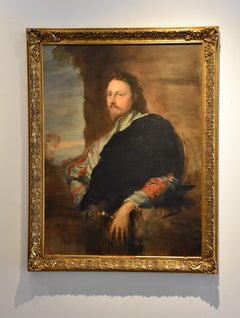
Portrait of Nicolas Lanier after Sir Anthony Van Dyck, Figurative Texas artist
Located in Houston, TX
Portrait of Nicolas Lanier after Sir Anthony Van Dyck. Lanier was Master of the King’s Music in Charles 1 court in 1628. Artist: Joan Breckwoldt. ...
Category
2010s American Impressionist Portrait Paintings
Materials
Oil
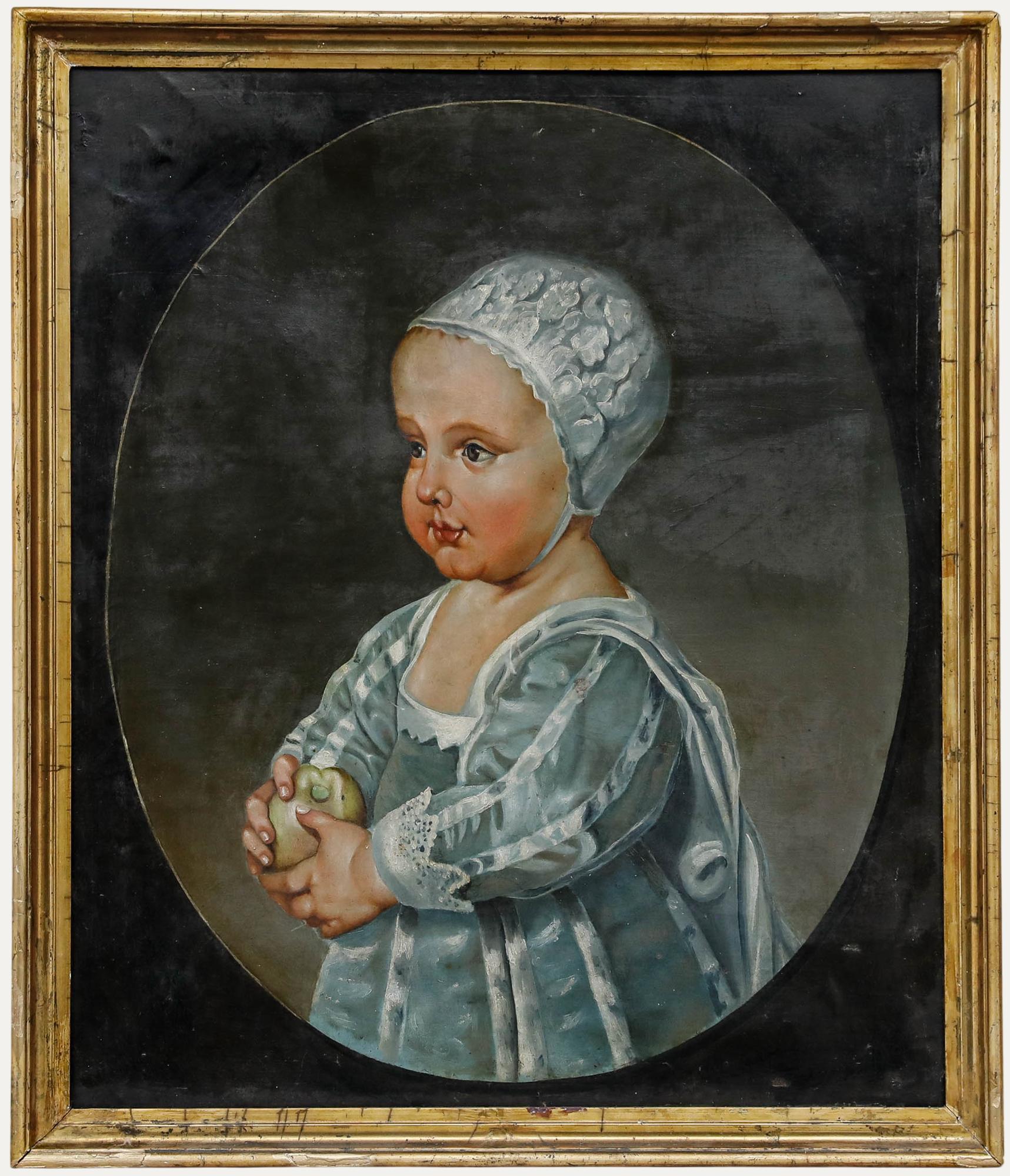
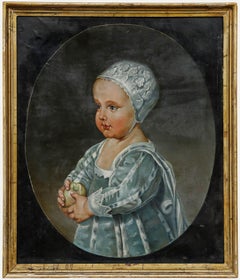
After Anthony van Dyck (1599-1641) - Oil, Portrait of Infant James II
Located in Corsham, GB
A charming portrait of the infant James II, after Anthony van Dyck (1599-1641). Rendered in a typical 19th century style, the child is depicted with wide expressive eyes, rosy cheeks...
Category
19th Century Portrait Paintings
Materials
Oil
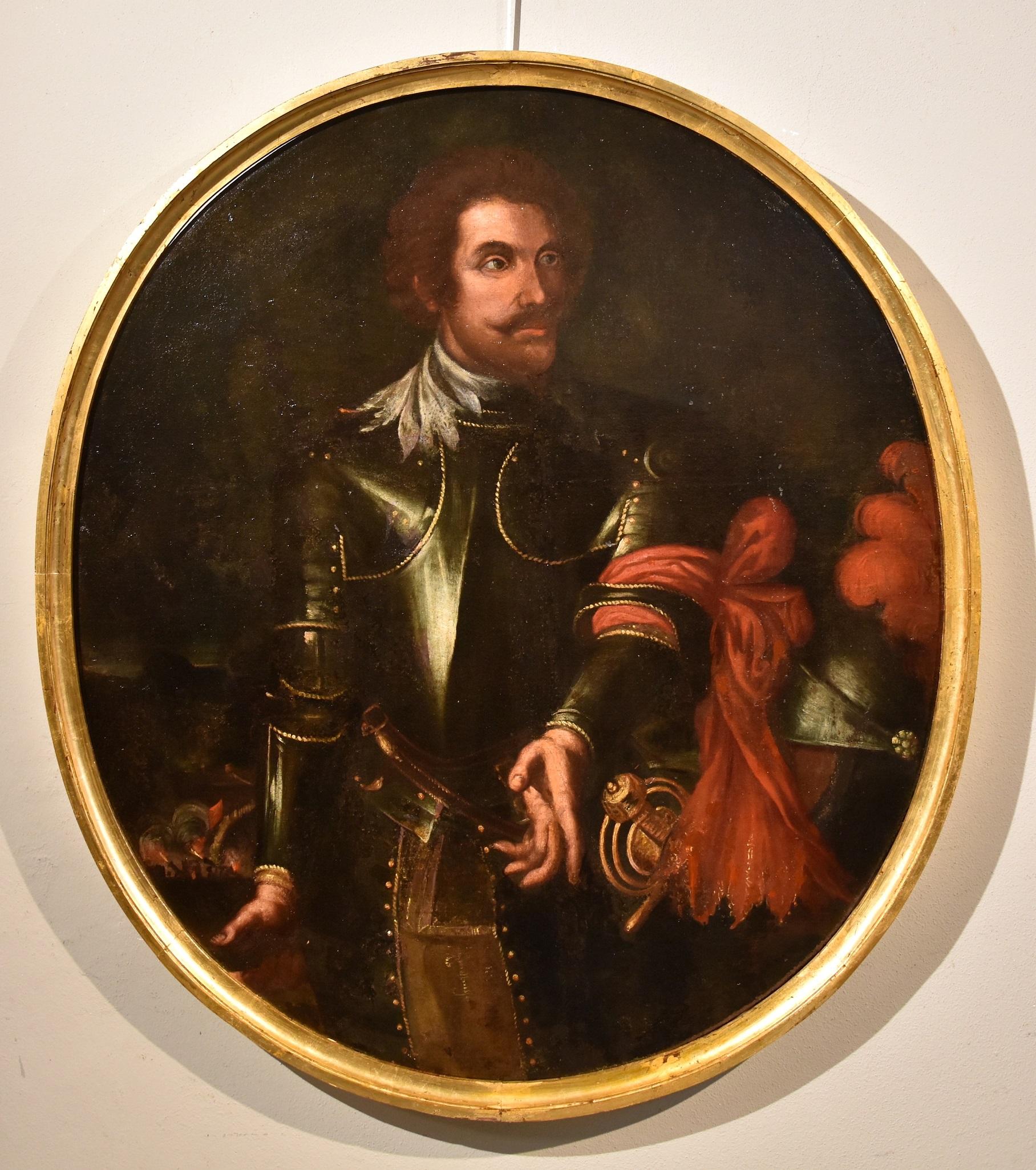
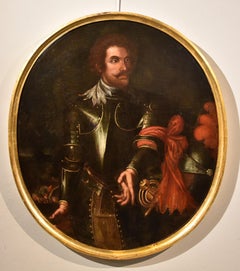
Portrait Gentleman Armor Carbone Van Dyck Paint Oil on canvas 17th Century Italy
Located in Riva del Garda, IT
Giovanni Bernardo Carbone (Genoa, 1616 - 1683), workshop
Portrait of a gentleman in armor with battle scene in the background
Oil on oval canvas (117 x 105 cm. - In gilded frame 124...
Category
17th Century Old Masters Paintings
Materials
Oil
$8,569 Sale Price
20% Off
More Ways To Browse
Paintings 18th Century Religious Paintings
Blue Boy
Flemish 18th Century Oil Painting
Portrait Of A Lady Spain
18th Century Italian Religious Paintings
Lord Portrait
18th Century George Iii Painting
Sister Mary
Thomas Earl
Frederick Prince
Warwick Castle
17th C Dutch Portraits
18th Century Military Portrait
18th Century Portrait Of Lady By A Sweden
18th Century Scottish Portrait
Alois Priechenfried
Ambrose Mcevoy
Antoine Pesne