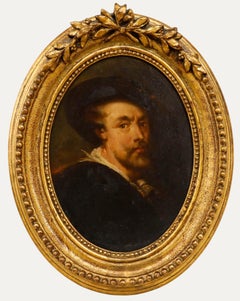
Items Similar to Self Portrait of Artist - French 18th century art Old Master oil painting
Want more images or videos?
Request additional images or videos from the seller
1 of 13
Self Portrait of Artist - French 18th century art Old Master oil paintingCirca 1720
Circa 1720
$13,186.88
$16,483.6120% Off
£9,600
£12,00020% Off
€11,245.77
€14,057.2220% Off
CA$18,116.80
CA$22,64620% Off
A$19,696.62
A$24,620.7720% Off
CHF 10,443.17
CHF 13,053.9620% Off
MX$236,112.48
MX$295,140.6020% Off
NOK 132,727.31
NOK 165,909.1420% Off
SEK 121,596.26
SEK 151,995.3220% Off
DKK 84,047.93
DKK 105,059.9120% Off
About the Item
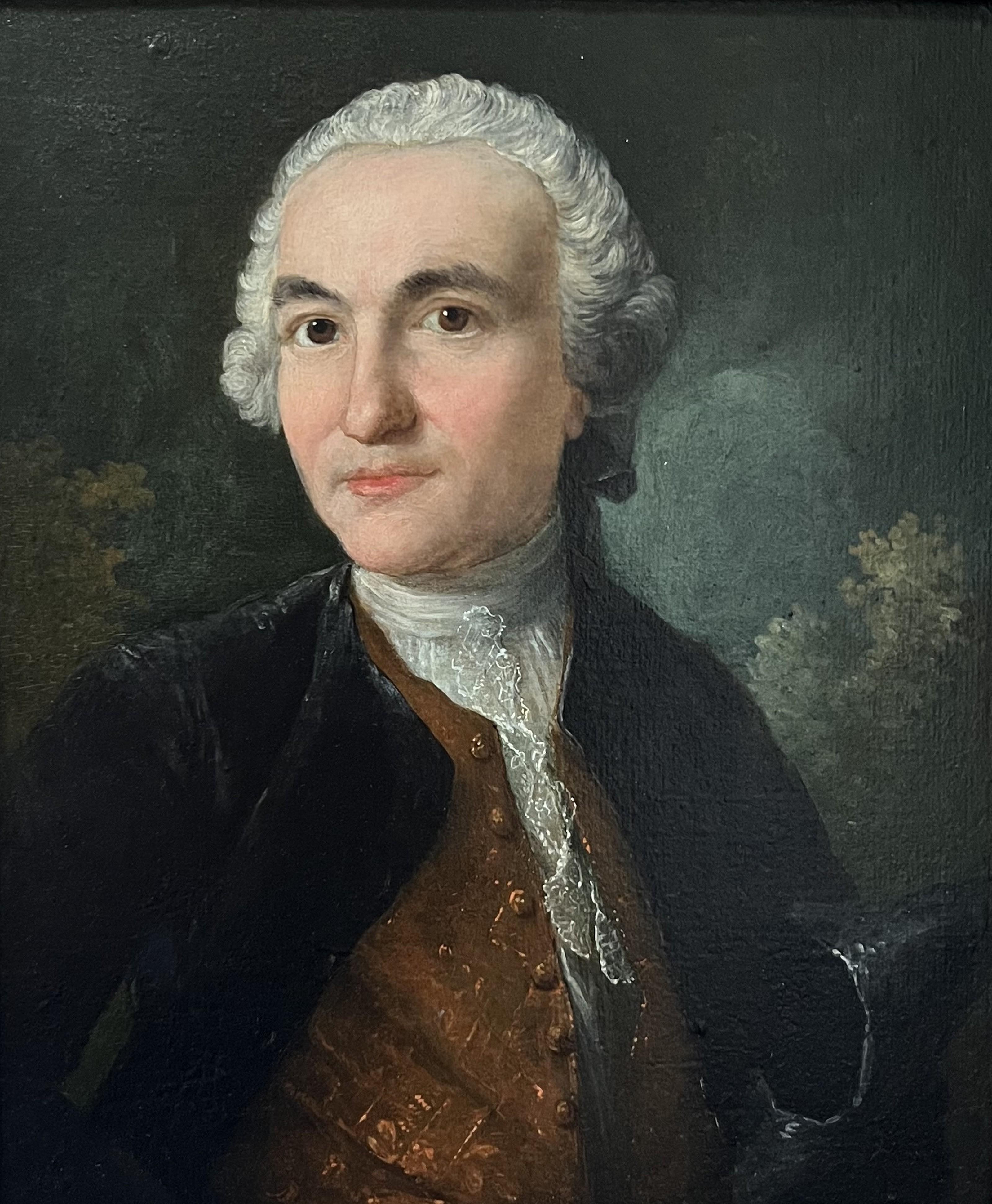
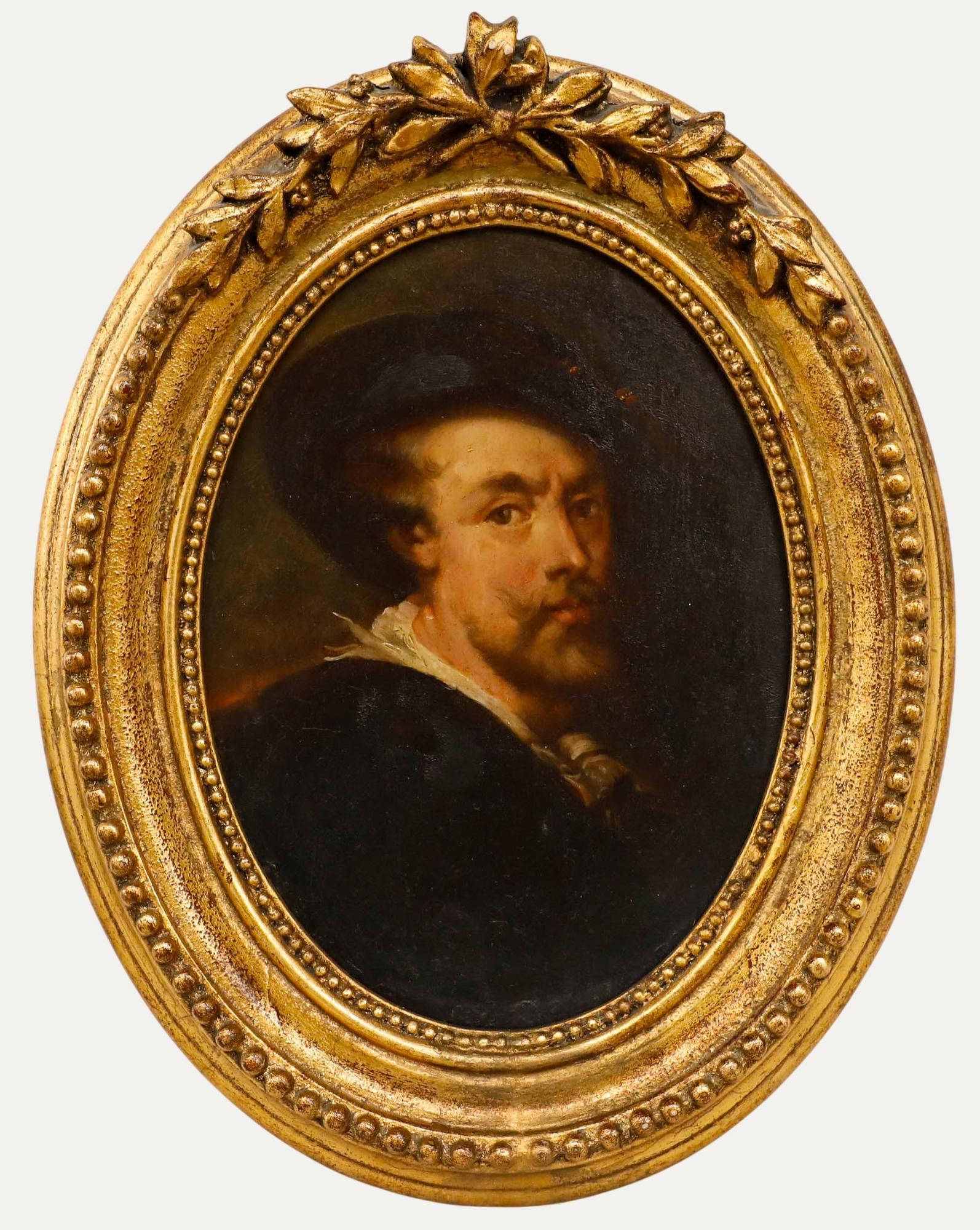
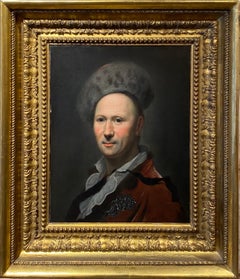
This simply superb French Old Master self portrait oil painting is attributed to portrait artist Alexis Grimou. Painted circa 1720 it is a bust length standing portrait of the artist in a flouncy black coat with white chemise and black feathered hat. He is stood against a dark background. His curly ginger hair frames one side of his face and he is gazing directly at the viewer and slightly smiling. The sensitive details in his face and delicate brushwork are remarkable. White highlights work to great effect. This appears to be a self portrait by Grimou as very similar facial features and hair colour to other self portraits he painted. A superb French Old Master oil painting which would grace any wall.
Unsigned
Provenance. Bonhams London.
Condition. Oil on canvas, 30 inches by 25 inches and in good condition.
Frame. Housed in dark frame, 37 inches by 32 inches and in good condition.
Alexis Grimou, also Grimoult or Grimoux (1678–1733), was a French portrait painter. He worked for an elite clientele and was called the French Rembrandt as he introduced the Northern European style of portrait painting in France. Many of his intimate portraits at half-lengths were influential on the development of 18th-century portrait painting in France. Portrait painters such as Jean-Honoré Fragonard and Jean-Baptiste Greuze were influenced by his work. Grimou was born in Argenteuil on 24 May 1678, the son of a carpenter. He is often confused with Jean Grimou (1674–1733), an unrelated Swiss genre painter whose father served with the Swiss Guards at Versailles. Grimou probably trained with François de Troy, from whom he learnt to use a warm palette and simple pictorial compositions. Sometime in the late 1690s, he was apprenticed to the painter and engraver Bon Boullogne. In 1704, he married Marie-Gabrielle Petit, a niece of Procopio Cutò, founder of the Café Procope, a meeting place for artists and intellectuals. Economics may have been a motive in the union, as a notary document in the Archives Nationales reveals that she owned a considerable amount of property on Mauritius. His brother-in-law, Matthias François Petit, was the intermediary who, between 1740 and 1753, was commissioned to purchase art for the collection of King Friedrich II of Prussia. That collection would come to include numerous works by Boullogne and his students. In 1705 he was approved (agréé) by the Académie Royale. In order to be admitted as full member of the Académie he was required to paint two reception pieces, being portraits of the sculptor Jean Raon, who died before it was completed, and the painter Antoine Coypel, whose portrait was still unfinished by 1709. As a result of his failure to present the reception pieces, he was removed from the list of the Académie. He then joined the Académie de Saint-Luc instead. In 1709, he may have visited the Netherlands to copy the Dutch Masters. This is inferred from a sudden darkening in his palette and some copies after Dutch masters which he made later. Known to have a dissolute lifestyle, he was always in debt and often paid his creditors with small works done on the spot. He was in his time referred to as a weird and strange person, in particular for his heavy drinking. According to contemporary anecdotes he always had five bottles of good burgundy with him while he painted. In 1805, he was the subject of a vaudeville entitled "Grimou ou Le portrait a finir", which was staged by Maxime de Redon in Paris. From 1720 until his death, for unknown reasons, he became much more responsible and productive. He died in 1733, well known and appreciated for his work. Grimou painted mainly portraits at half-length which are intimate in nature and often include a genre aspect. Because of the influence of Dutch genre and portrait painting and the use of chiaroscuro techniques similar to those used by Rembrandt in his works, he was sometimes called the "French Rembrandt". Grimou developed the moralistic traits in Dutch genre portraits into budding representations of new concept of aesthetic taste. The artist projected a refined image in his self-portraits as a drinker and as Bacchus. His fantasy portraits which are close to Dutch tronies were influential on French portrait painters in the 18th century such as Jean-Honoré Fragonard, Charles Eisen, Joseph Ducreux and Jean-Baptiste Greuze. He was so successful that he often created many variations on the same types such as that of the Young Male and Female Pilgrims which he painted as pendants.
- Attributed to:Alexis Grimou (1678 - 1733, French)
- Creation Year:Circa 1720
- Dimensions:Height: 37 in (93.98 cm)Width: 32 in (81.28 cm)Depth: 2 in (5.08 cm)
- Medium:
- Movement Style:
- Period:1720-1729
- Condition:
- Gallery Location:Hagley, GB
- Reference Number:1stDibs: LU853117108312
About the Seller
5.0
Platinum Seller
Premium sellers with a 4.7+ rating and 24-hour response times
1stDibs seller since 2018
473 sales on 1stDibs
Typical response time: <1 hour
- ShippingRetrieving quote...Shipping from: Hagley, United Kingdom
- Return Policy
More From This Seller
View AllOld Master Portrait of a Gentleman - British 18th century oil painting
By Michael Dahl
Located in Hagley, England
This stunning 18th century Old Master portrait oil painting is attributed to Swedish born, England based artist Michael Dahl. Painted circa 1690 it is a sumptuous half length portrai...
Category
17th Century Old Masters Portrait Paintings
Materials
Oil
$10,439 Sale Price
20% Off
Portrait of a Gentleman - British Old Master c1750 art oil painting
By Thomas Hudson
Located in Hagley, England
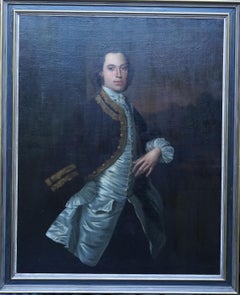
This superb British 18th century Old Master portrait oil painting is attributed to Thomas Hudson. Painted circa 1750 it is a three-quarter length standing portrait of a gentleman in ...
Category
1750s Old Masters Portrait Paintings
Materials
Oil
$6,593 Sale Price
20% Off
Portrait of Madam van Robais - French Old Master oil painting 18th century art
Located in Hagley, England
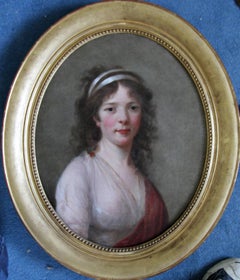
This fine French Old Master portrait oil painting on canvas dates to circa 1770 and is attributed to the circle of Elizabeth Vigee Le Brun. The sitter is Madam van Robais.
The van R...
Category
18th Century Old Masters Portrait Paintings
Materials
Oil
$20,329 Sale Price
20% Off
Portrait of Anna de Hooghe - Flemish art Old Master portrait oil painting
By Jacob Ferdinand Voet 1
Located in Hagley, England
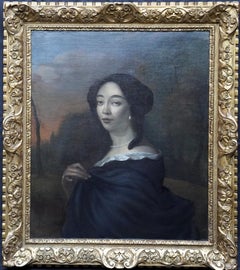
This strong Flemish Old Master portrait oil painting is attributed to Ferdinand Voet. The sitter is Anna De Hooghe, the fourth wife of artist Ludolf Bakhuizen (1631-1708), a German-born Dutch painter, draughtsman, calligrapher and printmaker. He was the leading Dutch painter of maritime subjects after Willem van de Velde the Elder and Younger left for England in 1672. He also painted portraits of his family and circle of friends. Painted circa 1660 Anna is standing profile but turned to the viewer/artist with her hand to her heart. She is set in a landscape at twilight. A really lovely painting and superb example of Dutch art. It is recorded in the RKD archives with N Maes signature LL - since removed through restoration.
Provenance. The estate of George Way.
Archive RKD
Condition. Oil on canvas, 38 inches by 34 inches unframed and in good condition.
Frame. Housed in a fine period carved frame, 46 inches by 42 inches framed and in good condition.
Jacob Ferdinand Voet or Jakob Ferdinand Voet (1639-1689) was a Flemish portrait...
Category
17th Century Old Masters Portrait Paintings
Materials
Oil
$15,384 Sale Price
20% Off
Portrait of a Young Boy - British art 1780 Old Master male portrait oil painting
By Joseph Wright of Derby
Located in Hagley, England
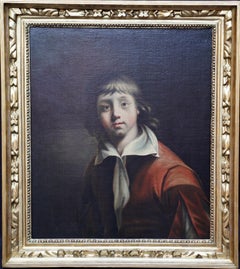
This lovely Old Master portrait oil painting is attributed to the circle of Joseph Wright of Derby. Painted circa 1780 the painting is of a boy in a tunic and wide collar. A really c...
Category
18th Century Old Masters Portrait Paintings
Materials
Oil
$8,516 Sale Price
20% Off
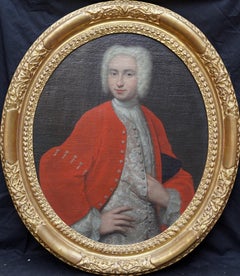
Oval Portrait of a Gentleman - French Old Master c1700 art oil painting
By Nicolas de Largillière
Located in Hagley, England
This superb French Old Master oval portrait oil painting is attributed to circle of Nicolas de Largilliere. Painted circa 1700 it is a half length portrait of a gentleman in a red co...
Category
Early 1700s Old Masters Portrait Paintings
Materials
Oil
$6,593 Sale Price
20% Off
You May Also Like
French School 18th century, Portrait of a gentleman, oil
Located in Paris, FR
French School 18th Century
Portrait of a gentleman holding his hat
Oil on paper transferred on wood panel
34 x 27 cm
Not signed which is normal for this type of artwork
In a beautifu...
Category
1760s Old Masters Portrait Paintings
Materials
Oil
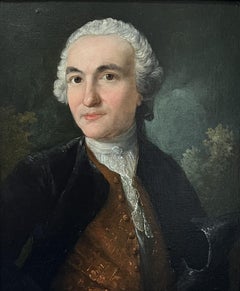
Presumed artist self-portrait
Located in BELEYMAS, FR
Louis-Gabriel BLANCHET
(Versailles, 1701 – Rome, 1772)
Presumed self-portrait of the artist
Oil on canvas
H. 73 cm; W. 60 cm
Circa 1730
Originally presented in a Restoration period frame with a "Mignard" cartouche, this beautiful painting initially appeared to us as a work from northern Italy. However, it exuded a rather French form of refinement, suggesting that its artist may have assimilated a dual influence from both sides of the Alps.
We thank our colleague and friend Philippe Mendès for spontaneously and judiciously "bringing out" the name of Louis-Gabriel Blanchet, a Romanized French portraitist, whose spirit and stylistic characteristics we clearly recognize here.
Blanchet's "French" years, before his final departure for Rome in 1728, following his winning of the second Grand Prix for painting after Subleyras in 1727, are extremely poorly documented. His father, Gabriel, was valet to Blouin, himself Louis XIV's first valet at the time. According to Thierry Lefrançois, Blanchet was one of the few students of Nicolas Bertin (1667-1736), whose studio he is said to have joined in the early 1720s. At a baptism on March 24, 1724, where he was godfather, he is mentioned as a painter in the picture store of the Duke of Antin, the director of buildings between 1708 and 1736. At this time, he was probably already married to Jeanne Quément, with whom he had a daughter also named Jeanne, who would marry Nicolas Aviet, the son of a valet in the queen's wardrobe, in Versailles in 1738.
When Blanchet arrived in Rome in October 1728, he was accompanied by Subleyras, Trémolières, and Slodtz. He enjoyed the goodwill of Vleughels, the director of the Académie de France, which had been based at the Palazzo Mancini since 1725, even though the latter was not always kind to our resident. From 1732, he was under the protection of the Duke of Saint-Aignan when he took up his post as ambassador to Rome. Along with Slodtz and Subleyras, they formed a trio of friends, joined by Joseph Vernet shortly after his arrival in Rome in 1734. Slodtz and Blanchet, on the occasion of Subleyras's marriage in 1739, were there to attest that their friend was not bound by any marital commitment, and Blanchet was a witness at Vernet's wedding in 1745.
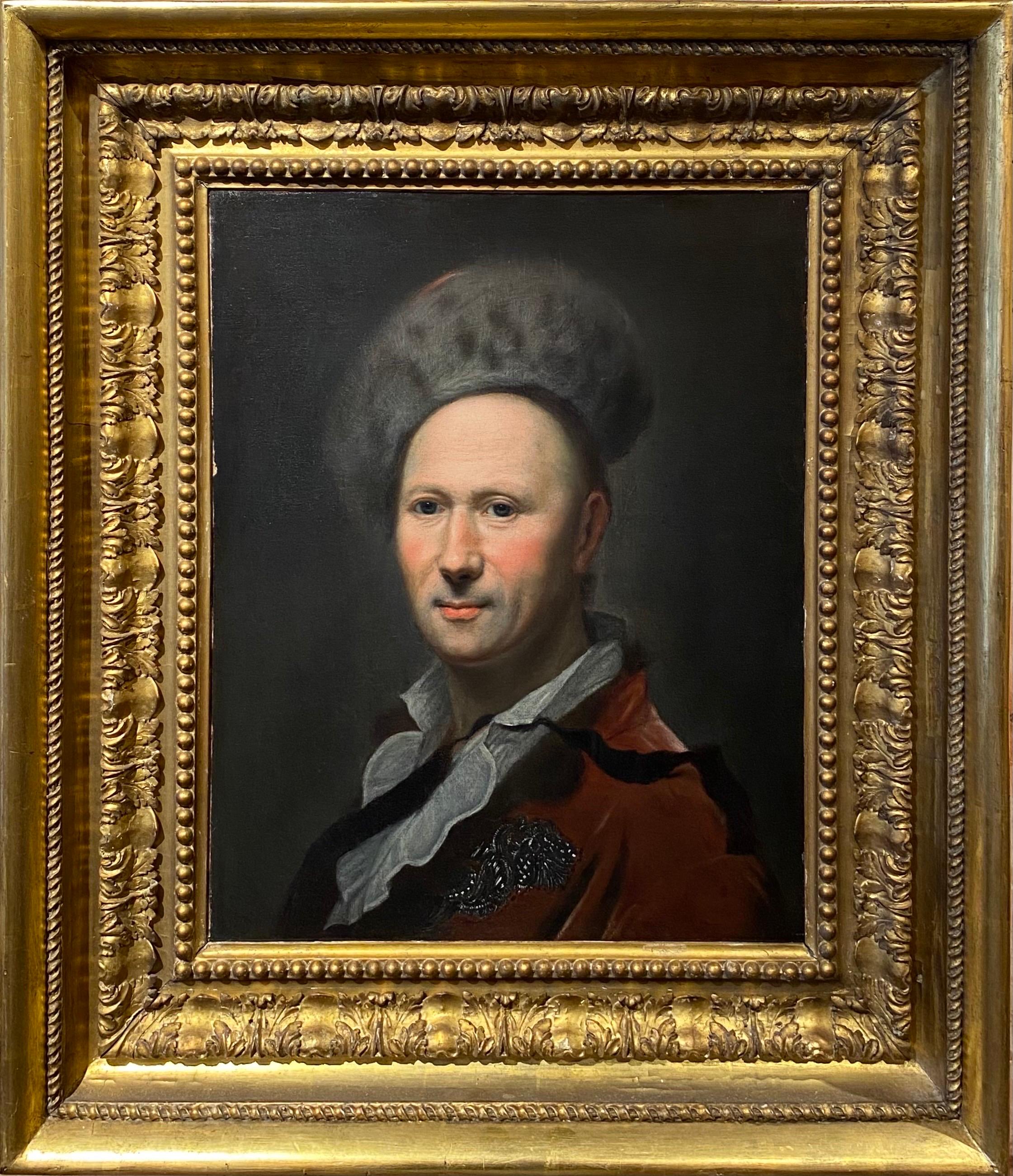
It is most likely from these early years in Rome that our portrait of the artist dates, the expression and turn of his face irresistibly reminiscent of a self-portrait. The still relatively youthful features may correspond to Blanchet's thirty-something years, and the fluffy wig was still fashionable at this time.
The painting fits well with the depiction of a young painter wanting to display both the beginnings of success and a certain simplicity or restraint. A slight smile expresses a form of assurance in this man with a gentle, sincere gaze and a face radiating a keen sense of wit. We find here the air of intimacy present in almost all of Blanchet's portraits, even those from the 1750s and 1760s, as well as an almost complicity with the viewer. The spirit of the painting is quite close to that of the presumed portrait of Bouchardon (painted around 1730) and the portrait of Pannini, painted in 1736, but it possesses a more natural quality, notably thanks to the absence of decorum. Our work exhibits the characteristics of Blanchet's paintings: elegance, luminosity (especially in the whites), vibrant and refined colors (here, the harmony of the garnet of the garment and the slate blue of the background, whose uniformity is tempered by a very sketched landscape and a grove of greenery), light complexions, rather rosy cheekbones, often full lips, and rather tight framing.
According to the Academy's rules, Blanchet's stay should have ended in the spring of 1732, but, for reasons unknown, he remained in the Eternal City until his death, as did his friend Subleyras, with whom he shared accommodation until the late 1730s. The latter regularly called upon him to collaborate on his paintings, such as The Meal at Simon's. Through Saint-Aignan's intervention, Blanchet was employed in the late 1730s by the Stuart princely family, then exiled in Italy. He notably produced copies (now lost) after Liotard of the portraits of Charles Edward and Henry Benedict, the sons of James III Stuart. The latter also commissioned three other portraits (now in the National Portrait Gallery in London), whose more formal character contrasts with the intimate spirit of Blanchet's portraits. Blanchet frequented English painters, such as the landscape painter Richard Wilson, and studied with the Scottish portraitist Katherine Read...
Category
1730s French School Portrait Paintings
Materials
Oil, Canvas
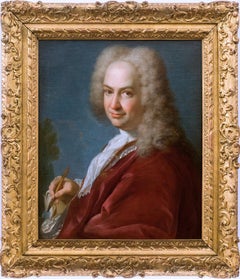
Portrait tête d’expression portrait study of a gentleman
Located in Henley-on-Thames, England
French Academic School, 18th century
Portrait tête d’expression study of a gentleman, c. 1780-90
Oil on canvas
46.1 x 35 cm.; (within frame) 57.5 x 46.6. cm.
Provenance:
Private Co...
Category
1780s French School Portrait Paintings
Materials
Oil
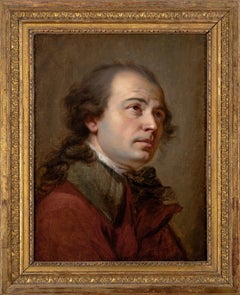
Portrait of Conrad Friedrich Hurlebusch, Early 18th Century Oil Painting
By Dominicus van der Smissen
Located in London, GB
Dominicus van der Smissen
Early 18th Century
Portrait of Conrad Friedrich Hurlebusch
Oil on canvas
Image size: 20½ x 16¼ inches
Period gilt frame
This is a portrait of Conrad Friedrich Hurlebusch, composer, Kapellmeister and organist, whom Van der Smissen most probably portrayed during his stay in Hamburg, Brunswick or Amsterdam. The identification is based on the reproduction of the portrait which was engraved by Pieter Anthony Wakkerdak (1740- 1774).
Van der Smissen has reduced the face of the sitters to an egg-shaped oval in three-quarter view, applying diminution to one half of the figure’s torso, which is farther away from the viewer. This partial side view, with the head turned to look at the viewer over the shoulder, creates spatial depth and brings the figure to life by avoiding the stiffness of a frontal depiction.
Because the artist chose to highlight the figure from above, a distinct shadow is cast under the tip of the nose, in the shape of a triangle. This is an often recurring and almost ‘signature’-like feature in Van der Smissen’s oeuvre.
Hurlebusch's garments are of a very high quality and serve to reflect the sitter’s wealth, status and elegance. During this period, gentlemen often shaved their heads in order to facilitate the wearing of a wig, which wouldbe worn with a suit. Here Hurlebusch has been depicted in a luxurious turban-like cap lined with lynx fur, a highly fashionable and expensive material at the time.
Over his shirt, he wears a velvet fur-lined gown adorned with decorative clasps fashioned from silver braid. The elegant informality of his appearance can be seen in his unbuttoned shirt and the unfastened black ribbon hanging from his button hole, which has been artfully arranged into a fluttering drape by the portraitist.
The Sitter
Hurlebusch was born in Brunswick, Germany. He received the first instructions in his field from his father Heinrich Lorenz Hurlebusch, who was also a musician. As an organ virtuoso, he toured Europe, visiting Vienna, Munich and Italy.
From 1723 to 1725 he was Kapellmeister in Stockholm; later he became Kapellmeister in Bayreuth and Brunswick, and lived in Hamburg from 1727 to 1742, where he had contact with fellow composers Johann Mattheson and Georg Philipp Telemann. He made his living composing, performing and teaching.
In 1735 and 1736, he is believed to have visited Johann Sebastian Bach in Leipzig, who promoted Hurlebusch’s compositions as the local seller...
Category
Early 18th Century Old Masters Portrait Paintings
Materials
Canvas, Oil
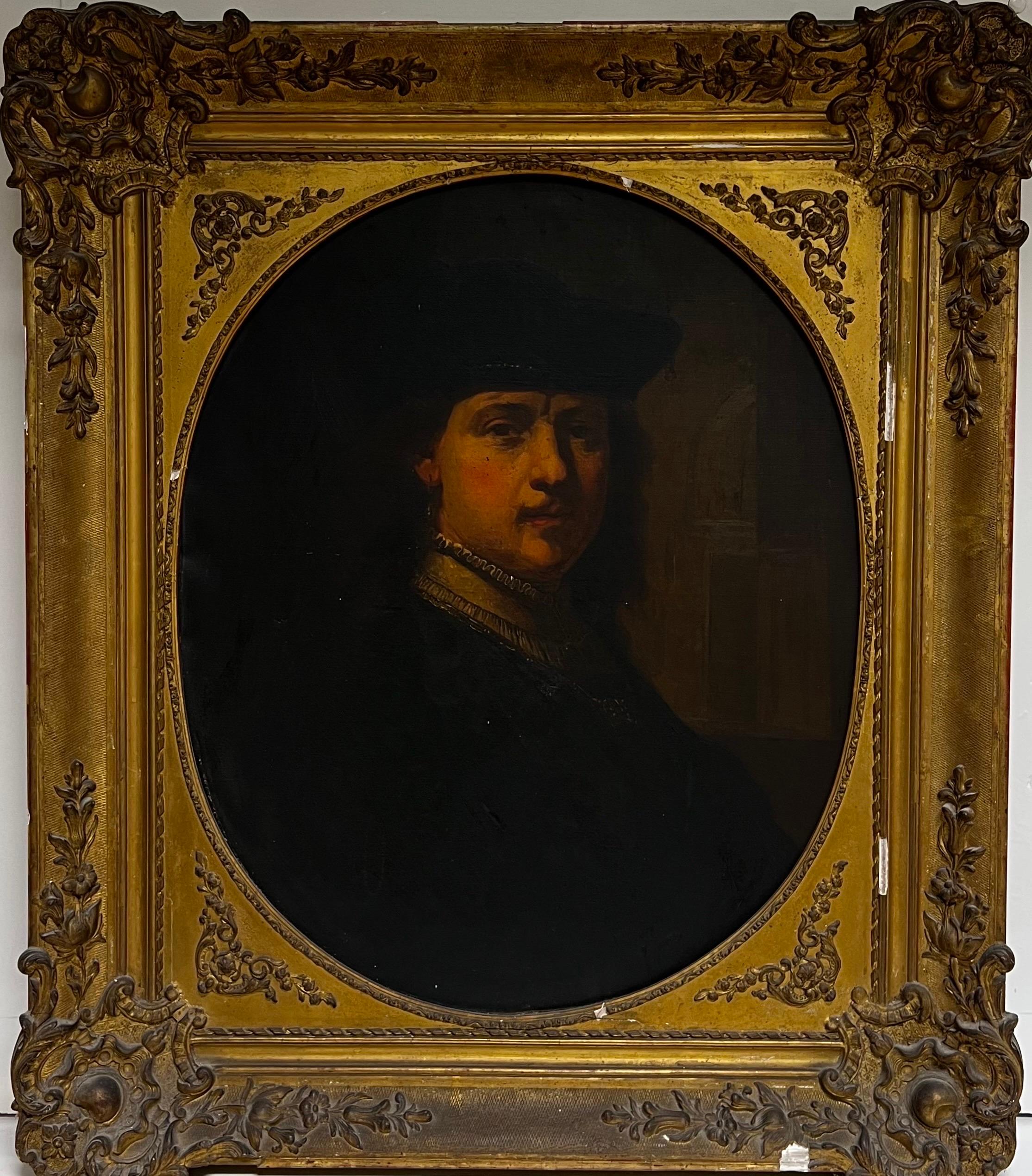
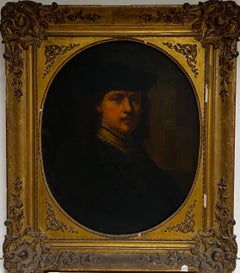
Very Large Antique French Old Master Oil Painting after Rembrandt, self portrait
By Antique French
Located in Cirencester, Gloucestershire
Artist/ School: French School, 19th century, after the earlier work by Rembrandt
Title: Self portrait of the artist
Medium: oil on canvas, framed in antique gilt swept frame.
Fra...
Category
19th Century Old Masters Portrait Paintings
Materials
Oil
$2,197 Sale Price
20% Off
After Peter Paul Rubens (1577-1640) - 19th Century Oil, Self-Portrait
Located in Corsham, GB
A finely executed copy of Peter Paul Rubens' 1623 self-portrait. Inscribed "Eigentum von Friedbert Dorfler" (Property of Friedbert Dorfler) to the reverse. Well presented in a gilt-e...
Category
19th Century Portrait Paintings
Materials
Oil