Items Similar to Portrait of Napoléon II
Want more images or videos?
Request additional images or videos from the seller
1 of 5
Attributed to Johann Peter KrafftPortrait of Napoléon II1818
1818
$128,500
£97,176.74
€111,310.41
CA$180,059.38
A$196,564.24
CHF 103,493.53
MX$2,354,611.34
NOK 1,323,644.08
SEK 1,208,509.05
DKK 831,514.63
About the Item
The son of the legendary Napoléon Bonaparte, Napoléon François Charles Joseph, takes a spirited stance in this remarkable oil painting attributed to the Austrian portraitist Johann Peter Krafft. Believed to have been exhibited at the Exposition Universelle of 1900 in Paris, this work stands as a testament to both Austrian artistry and the legacy of one of the most powerful men in history.
After Napoléon's exile to the island of Elba in 1814, his son was seen by many of his supporters as the last hope of France. The child was named the ruler of half of Europe, holding the titles of Napoléon II, King of Rome, Prince of Parma, and the Duke of Reichstadt, the last given to him by his grandfather, Austria’s Emperor Francis II.
Following his father’s capture, the then four-year-old Napoléon and his mother fled to her homeland of Austria, never to see the fallen Emperor of France again. Once under the protection of the Habsburg Court, there was a concerted effort to sever all ties to his father. His mother left him in Vienna to pursue her own personal interests. In her absence, his grandfather assumed guardianship and gave him the title of the Duke of Reichstadt, dismissed all of his French attendants, and even disallowed the child to be referred to as “Napoléon”, instead insisting on the name “Franz” or “Francis”.
This portrait, which dates roughly to 1818, features the young Napoléon II as he gazes directly at the viewer and assumes a pose of nonchalant authority. He wears the dress of a Spanish Grandee, a style of costuming that enjoyed a resurgence in popularity in the late years of the prior century with the advent of the majismo tradition. The incorporation of it here, however, has been tied to the young Napoléon II’s acquisition of a new title in 1818 - the Duke of Reichstadt. It was this new title that was purportedly celebrated with a large costume ball, and it is for this reason, as interpreted by experts, that Napoléon II wears such distinctive garb in this portrait.
A closer look at the technique and style of this painting leads one to draw connections to the work of Johann Peter Krafft, who devoted much of his career to history and portrait painting. Born in Hanau, Germany, Krafft eventually moved to Vienna near the end of the eighteenth century and subsequently enrolled at the Academy of Fine Arts, Austria’s preeminent artistic academy. First studying alongside Heinrich Friedrich Füger, a history painter, Krafft was also afforded training under the masterful eye of Neoclassical painter Jacques-Louis David in Paris the early 1800s.
Shortly after this time abroad, Krafft returned to Vienna to establish his studio and gained fast acclaim for his striking portraits. His work garnered him membership in the Academy of Fine Arts as well as a professorial appointment there in 1823; in 1828, he was appointed the director of the Österreichische Galerie Belvedere, which still today is considered one of Austria’s most impressive artistic collections. Throughout these accomplishments, Krafft continued to accept increasingly prestigious commissions, including those from Emperor Franz I and his court.
Painted in 1818
Canvas: 55 1/4" high x 36 3/8" wide
Frame: 63 1/2" high x 44 1/4" wide
Provenance:
Haro, La Maison au Genie des Arts, 30 Rue du Colombier, Paris (label stamped on the reverse of the original canvas, the firm was at this address from 1826 - 1836);
Sibylle-Gabrielle Marie-Antoinette de Riquetti de Mirabeau, Comtesse de Martel de Janville, from 1849 until 1932, (French author who wrote under the pseudonym Gyp);
Thereafter, by descent in the family;
Private Collection, Michigan, until 2018
Exhibited:
Exposition Universelle de 1900, Paris, April 15 - November 12, 1900 (according to tradition in the Comtesse de Martel de Janville's family)
- Creator:Attributed to Johann Peter Krafft (1780 - 1856)
- Creation Year:1818
- Dimensions:Height: 63.5 in (161.29 cm)Width: 44.25 in (112.4 cm)
- Medium:
- Movement Style:
- Period:
- Condition:
- Gallery Location:New Orleans, LA
- Reference Number:Seller: 30-93351stDibs: LU1865117951
About the Seller
5.0
Vetted Professional Seller
Every seller passes strict standards for authenticity and reliability
Established in 1912
1stDibs seller since 2013
20 sales on 1stDibs
Typical response time: 4 hours
- ShippingRetrieving quote...Shipping from: New Orleans, LA
- Return Policy
More From This Seller
View AllSolitude
By Guillaume Seignac
Located in New Orleans, LA
French Academic painter Guillaume Seignac was renowned for his masterful treatment of the idealized nude. His languishing female subjects based on Greco-Roman prototypes were and rem...
Category
19th Century Academic Nude Paintings
Materials
Canvas, Oil
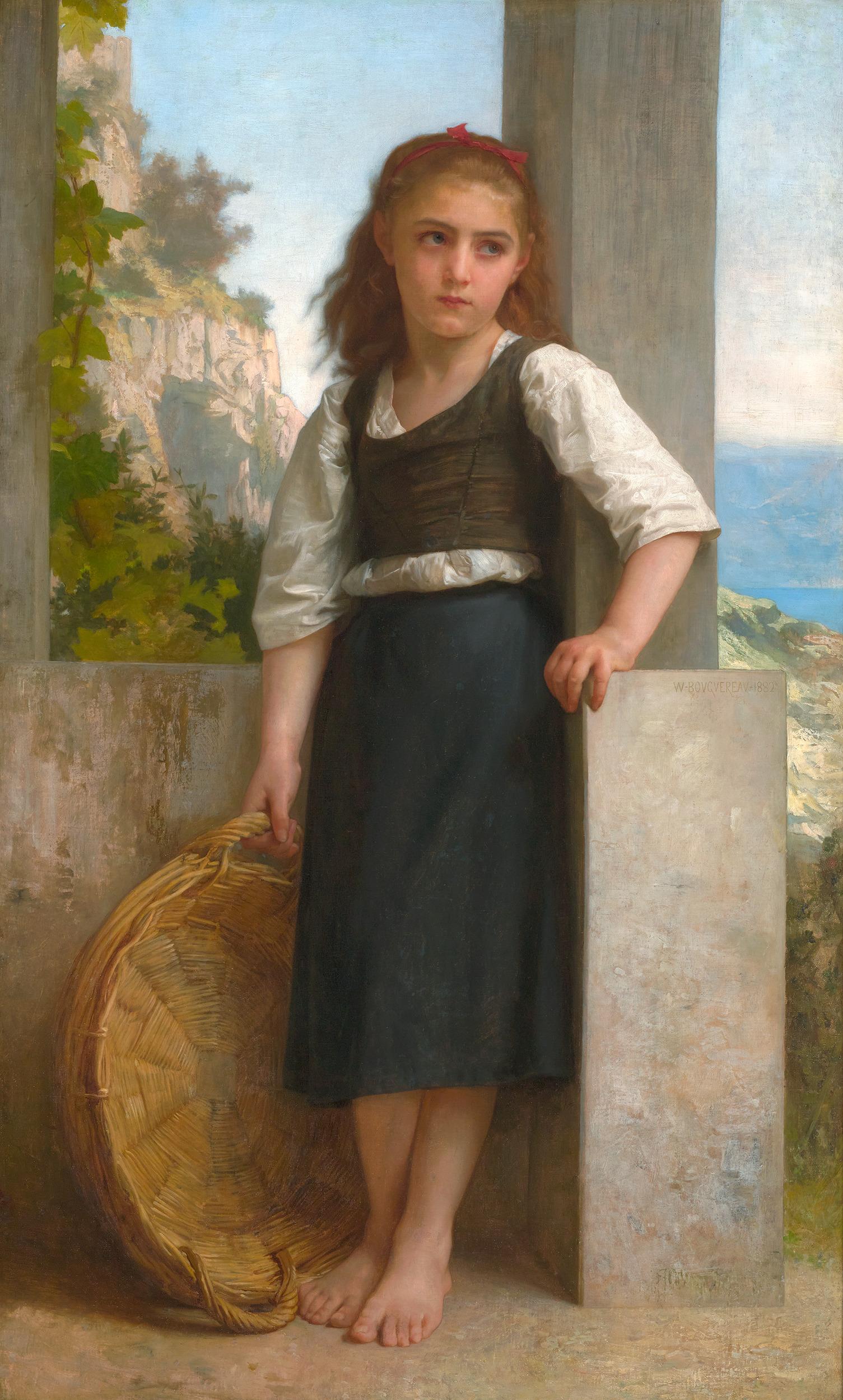
La Fille Du Pêcheur By William Bouguereau
By William-Adolphe Bouguereau
Located in New Orleans, LA
William-Adolphe Bouguereau
1825-1905 French
La fille du pêcheur
(The Fisherman’s Daughter)
Signed and dated “W-Bouguereau-1882” (middle right)
Oil on canvas
William Bouguereau's...
Category
19th Century Academic Figurative Paintings
Materials
Canvas, Oil
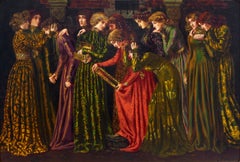
The Twelve Princesses
By Gustave-Max Stevens
Located in New Orleans, LA
The greatest triumph of the artist’s career, this extraordinary and monumental oil on canvas by Gustave-Max Stevens perfectly represents the highly detailed compositions and richly h...
Category
Late 19th Century Academic Figurative Paintings
Materials
Canvas, Oil
Price Upon Request
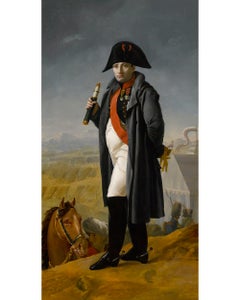
Napoléon before the Battle of Moscow
Located in New Orleans, LA
Emperor Napoléon I was and remains one of the most legendary military and political figures in history, having held, for a brief period, the fate of the Western world in his hands. Composed by the French painter Joseph Franque...
Category
Early 19th Century Academic Portrait Paintings
Materials
Canvas, Oil
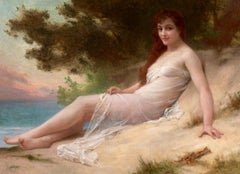
Solitude
By Guillaume Seignac
Located in New Orleans, LA
Signed “G-Seignac” (lower right)
Oil on canvas
French Academic painter Guillaume Seignac was renowned for his masterful treatment of the idealized nude. His languishing female subje...
Category
19th Century Academic Nude Paintings
Materials
Canvas, Oil
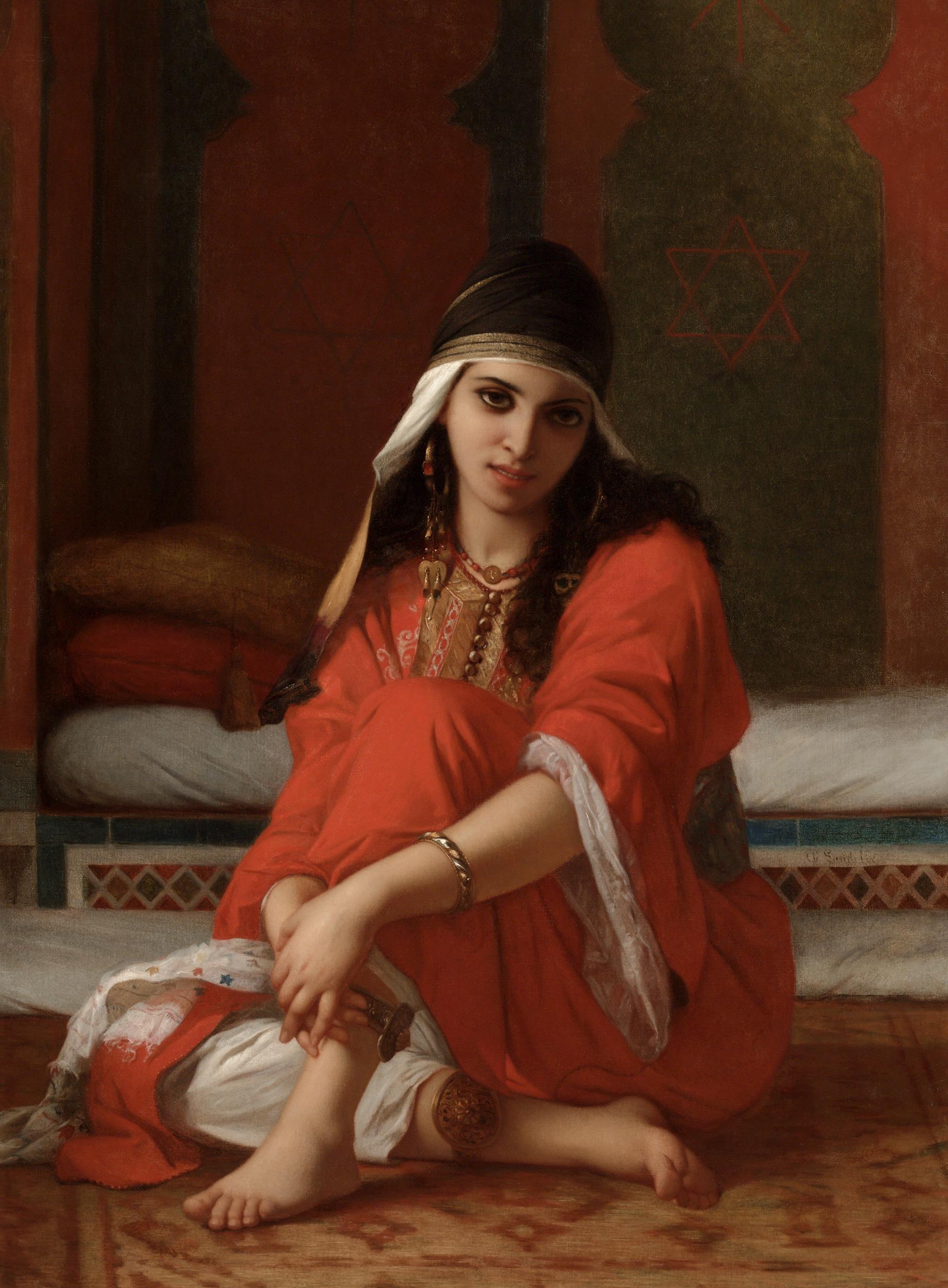
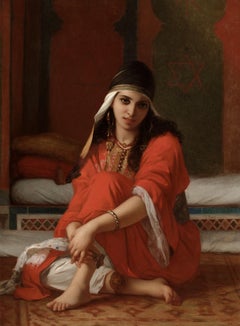
Young girl from Tetouan, Morocco
By Charles Zacharie Landelle
Located in New Orleans, LA
Young girl from Tetouan, Morocco
Signed (center right)
Oil on canvas
In this important oil on canvas, French Orientalist painter Charles Landelle captures the engaging visage of a young Moroccan woman in a moment of tranquil contemplation. Seated on the floor of what is almost certainly an opulent riad, the young woman wears an intricately embroidered Moroccan kaftan and headdress. The sumptuous patterns on the floor and in the background lend an additional warmth to the strikingly vivid red hues which dominate the composition and are a hallmark of Landelle’s work.
The symbols behind the young woman may represent either the Jewish Star of David or the Islamic Seal...
Category
Late 19th Century Academic Figurative Paintings
Materials
Canvas, Oil
You May Also Like
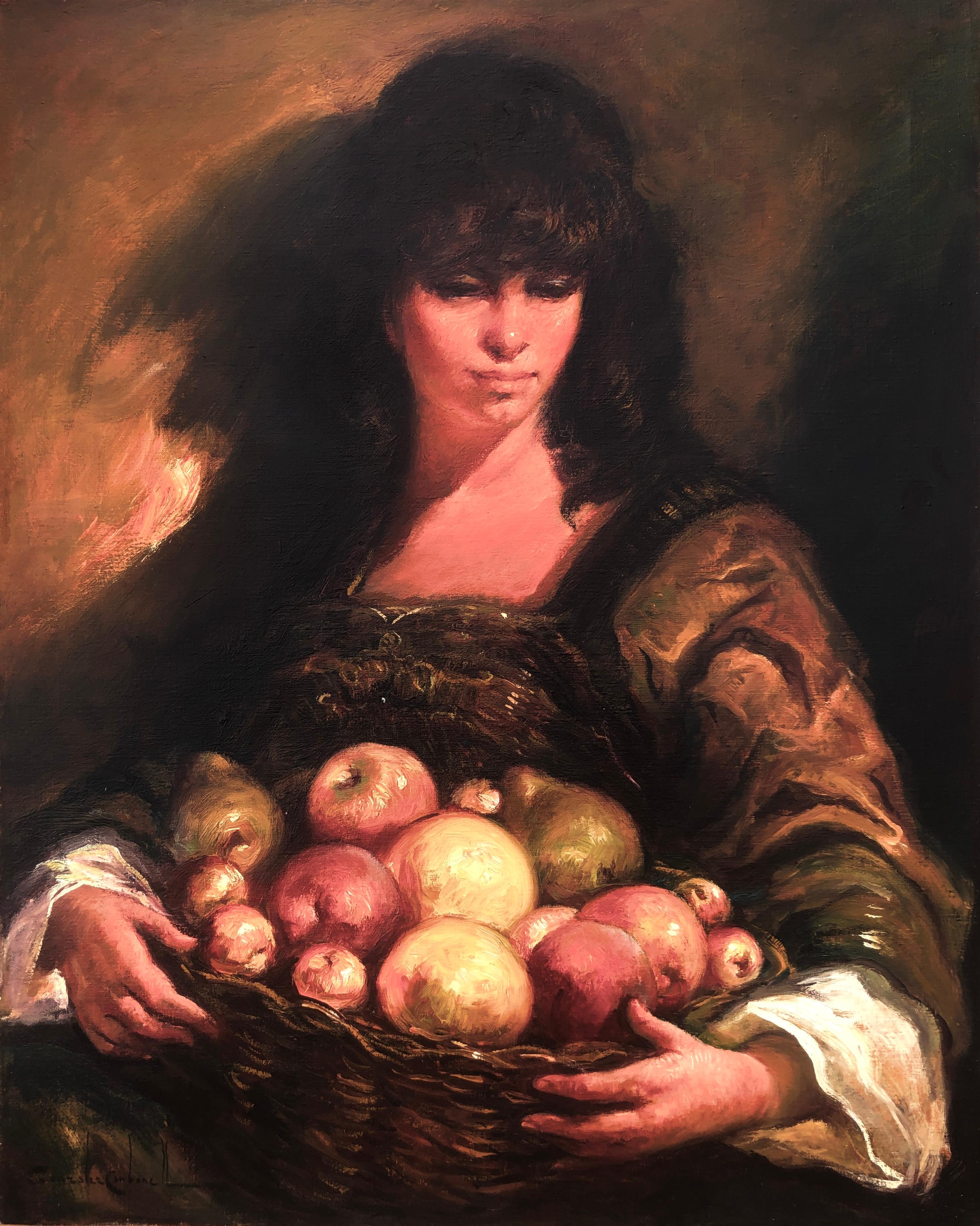
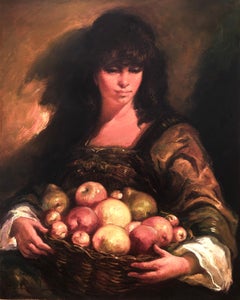
Woman Selling Fruit oil on canvas painting european art
Located in Sitges, Barcelona
Title: Woman Selling Fruit
Author: Rosendo González Carbonell
Technique and Support: Oil on canvas
Dimensions: 31.9 x 25.6 in (unframed)
Period: 1970s
Style: Costumbrist realism with impressionist influences
Condition: Part of a private collection
Description of the Artwork
The painting portrays a woman holding a basket filled with fruit, notably apples and pears, focusing on warm and dark contrasts that add depth and realism to the composition. The artist creates an intimate atmosphere, skillfully manipulating light to highlight the woman's facial features and the textures of the fruit. The figure’s attire evokes a classical style, likely inspired by costumbrist themes.
Rosendo González Carbonell, renowned for his focus on traditional scenes and female figures, employs in this piece loose yet precise brushstrokes, creating dynamism that enhances the composition. The warm hues of the fruit and the serene expression of the woman reflect the artist’s intention to capture a moment of everyday life with sensitivity and expressiveness.
Author’s Biography
Rosendo González Carbonell (Barcelona, 1910 - 1984) was a Spanish painter recognized for his focus on female figures, portraits, and landscapes. He studied at the Acadèmia de Belles Arts de Sabadell under the mentorship of Mayoral and Antoni Alsina i Amils and also attended the "Llotja" art academy in Barcelona. He was a disciple of Bonaventura Puig Perucho and maintained a close friendship with painter Alejandro Huerta Lucas.
He participated in the National Fine Arts Exhibitions held in Barcelona in 1942 and 1944. His work reflects the tradition of Catalan painters such as Joaquim Mir and Santiago Rusiñol, as well as influences from impressionist masters like Claude Monet and Camille Pissarro. González Carbonell often depicted small villages, rural churches, and tranquil landscapes, balancing meticulous detail with impressionist brushstrokes that bring his compositions to life.
Similar Artists
González Carbonell shares artistic sensitivities with other renowned painters who captured the essence of landscapes and human figures through light and color:
Joaquim Mir: Renowned for his luminous interpretations of the Catalan landscape.
Santiago Rusiñol: Famous for his delicate depictions of rural scenes and local architecture.
Josep Amat...
Category
1970s Academic Portrait Paintings
Materials
Canvas, Oil
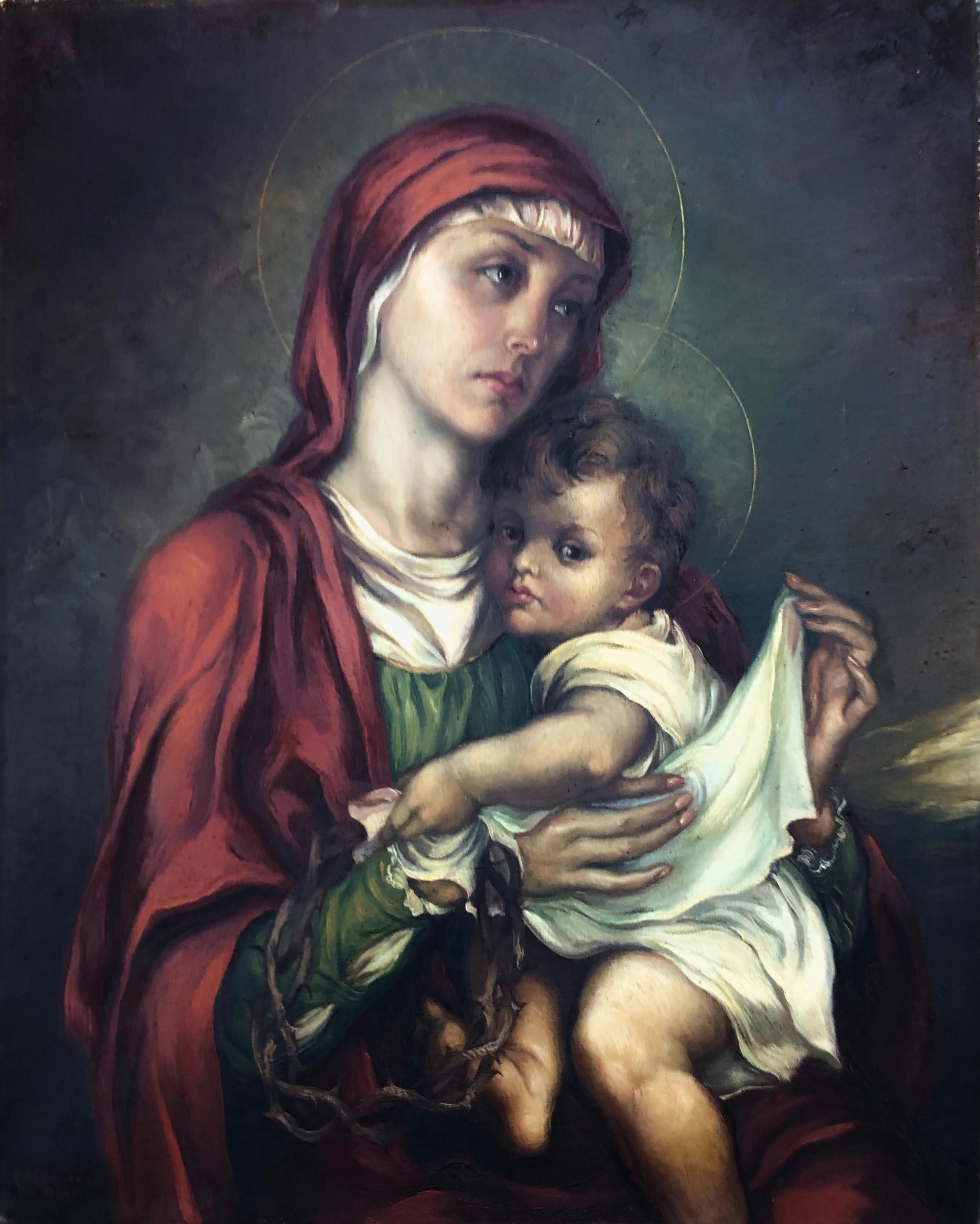
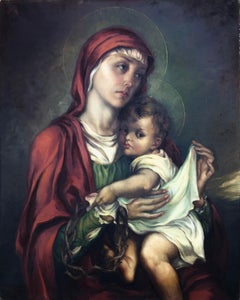
Virgin Mary and Child Jesus oil on canvas painting
Located in Sitges, Barcelona
Title: Virgin Mary and Child Jesus
Artist: Francisco Ribera Gómez (1907-1990)
Technique: Oil on canvas
Dimensions: 31.9 x 25.6 inches (unframed)
Date of creation: 1942
Style: Classical Academicism with Renaissance influences
Description of the Artwork
The painting depicts the Virgin Mary holding the Child Jesus in a tender and intimate moment. Warm colors, primarily reds, greens, and soft flesh tones, enhance the devotional nature of the scene. The use of golden halos, symbolizing sanctity, along with serene and realistic expressions, directly connects with the Renaissance pictorial tradition.
The style belongs to classical academicism, characterized by a balanced composition, meticulous drawing, and a masterful use of chiaroscuro to give volume and depth to the figures. The detailed rendering of the flesh tones and draperies amplifies the spirituality and solemnity of the piece, evoking the works of great masters such as Raphael and Murillo.
Artist's Biography
Francisco Ribera Gómez (1907-1990) was a prominent 20th-century Spanish painter known for his depictions of religious scenes, female portraits, and costumbrist works. Trained at the Royal Academy of Fine Arts of San Fernando, Ribera Gómez received numerous accolades and was regarded as one of the great exponents of Spanish academicism. His work combines a rigorous technical foundation with luminous sensitivity and an idealized sense of beauty.
Influences and Comparisons
Francisco Ribera Gómez's work can be compared to other academic and religious artists who share a similar aesthetic:
Bartolomé Esteban Murillo: In the emotional and approachable treatment of religious themes.
William-Adolphe Bouguereau: For the idealization of human figures and technical mastery.
Raphael (Raffaello Sanzio): For harmonious composition and the depiction of the Virgin Mary.
Within the Spanish tradition, his style recalls Eduardo Rosales...
Category
1940s Academic Figurative Paintings
Materials
Canvas, Oil
$2,402 Sale Price
20% Off
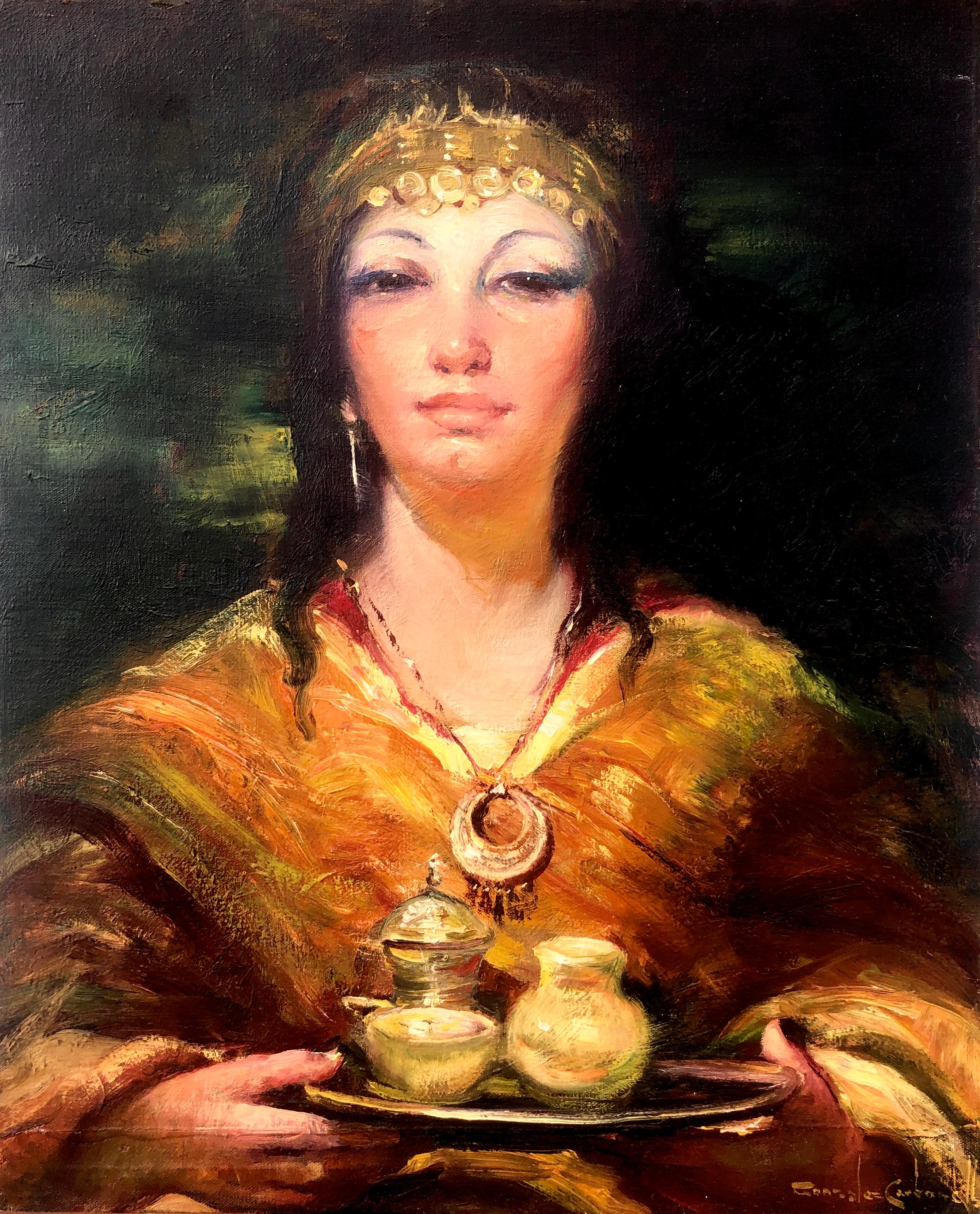
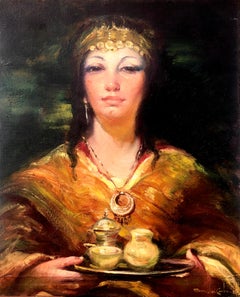
Odalisque with Tray oil on canvas painting
Located in Sitges, Barcelona
Title of the Artwork: Odalisque with Tray
Artist: Rosendo González Carbonell
Technique: Oil on canvas
Dimensions: 24 x 20 inches
Frame: Unfr...
Category
1970s Academic Portrait Paintings
Materials
Canvas, Oil
$660 Sale Price
54% Off
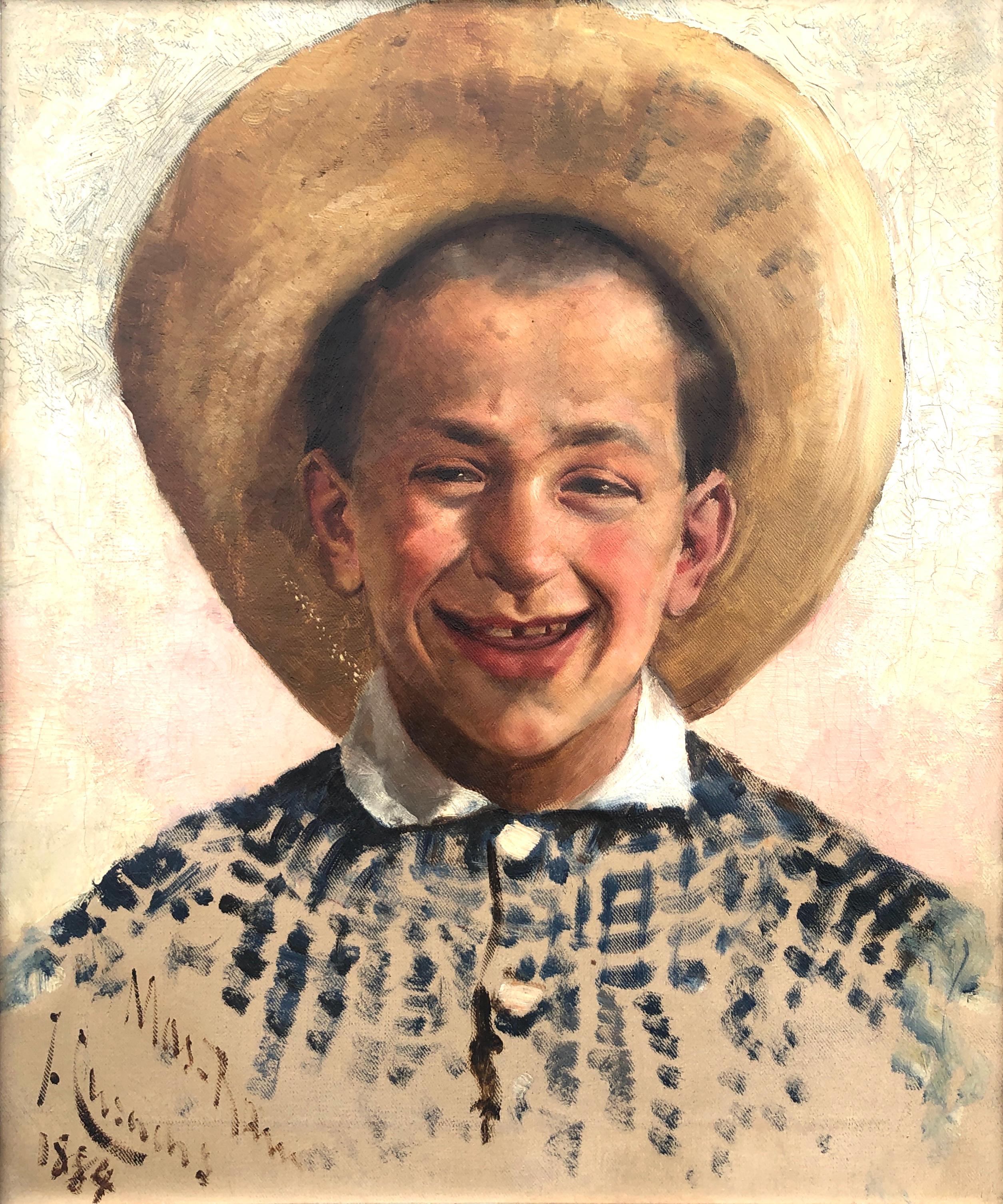
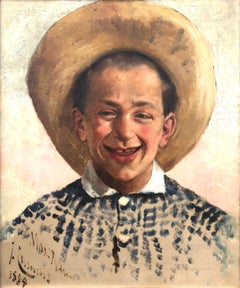
Portrait of a Young Man with a Straw Hat oil on canvas painting
Located in Sitges, Barcelona
Title: Portrait of a Young Man with a Straw Hat
Artist: Josep Cusachs i Cusachs (1851-1908)
Year: 1884
Technique: Oil on canvas
Dimensions (unframed): 18.1 x 15 inches
Dimensions (fr...
Category
1880s Academic Portrait Paintings
Materials
Canvas, Oil
$6,605 Sale Price
54% Off
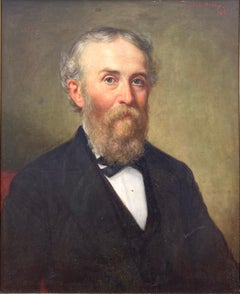
“Portrait of Jacob Dolson Cox”
Located in Southampton, NY
Very well executed portrait of Jacob Dolson Cox. See the sitter’s biography below. Signed top right and dated 1881. Relined canvas, very good condition. The portrait is housed in a contemporary replica of a period frame. Overall framed measurements are 33.25 by 28.25 inches. Provenance: A East Hampton, Long Island collector.
Biography
George Peter Alexander Healy was born in Boston on July 15, 1813, the first of five children of William Healy, an Irish immigrant and captain of a merchant vessel, and his wife Mary Hicks. Healy showed an early artistic interest: by 1830 the self-taught painter had opened a portrait studio from which he hoped to help to support his family. Although commissions were at first sparse, young Healy received important encouragement from Thomas Sully (1783-1872)) who advised him to make painting his profession. His fortunes also improved in 1831 when Mrs. Harrison Gray Otis, a leader in Boston society, granted him permission to paint her portrait and recommended his talents to other potential patrons.
In 1834 Healy went to France where he studied with Baron Antoine-Jean Gros (1771-1835). A year later he traveled through Italy, visiting museums and churches in the company of Lady and Sir Arthur Faulkner who soon provided his introduction to London society. It was in England that Healy met and, in 1839, married Louisa Phipps. The couple settled in Paris where Healy embarked upon the beginning of a long and happy marriage and thriving career. His diplomatic and affable demeanor, together with his obvious skill, brought him tremendous success throughout Europe and the United States. Prolific, as well as talented, he had by 1867 produced more than six hundred portraits. The constant stream of commissions included dignified, imposing portraits of such celebrated figures as Pope Pius IX and Queen Elizabeth of Romania, the latter of whom developed a warm friendship with Healy and his family.
Although Healy, sometimes accompanied by his wife, traveled to the United States several times during the 1840s and early 1850s, it was not until 1856 that the entire family settled in America. They took up residence in the booming city of Chicago, which Healy used as a base for his work in Boston, Philadelphia, New Orleans, and other cities. During the Civil War years he often traveled to Washington to paint military figures and members of the President's cabinet. The family returned to Europe in 1867, but George Healy...
Category
1880s Academic Portrait Paintings
Materials
Canvas, Oil
$4,800 Sale Price
20% Off
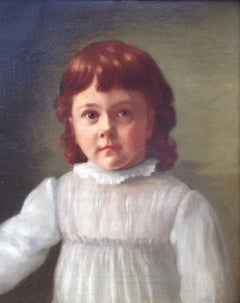
“Child in White Dress”
By Mary Katherine Sands
Located in Southampton, NY
Circa 1890
Signed verso on stretcher bar
Original period gold leaf frame
Overall size framed 21 x 18 in
Category
1890s Academic Portrait Paintings
Materials
Canvas, Oil
$1,800 Sale Price
36% Off
More Ways To Browse
Antique Advent
Napoleon Oil Painting
Portrait Of Napoleon
Spanish Costume
Oil Portrait Napoleon
Scipione Pulzone
Trump Portrait
Victor Passmore
Viktoria Canvas
William Wilberforce
Winston Churchill Portrait
Yuval Mahler On Sale
16th Century Frame German
17th C Dutch Portraits
18th Century Military Portrait
18th Century Portrait Of Lady By A Sweden
18th Century Scottish Portrait
Alois Priechenfried