Items Similar to Florentine Woman
Want more images or videos?
Request additional images or videos from the seller
1 of 8
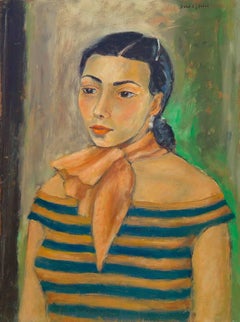
August Wilhelm DresslerFlorentine Woman1932
1932
On Hold
$16,950.80
On Hold
£12,676.33
On Hold
€14,159
On Hold
CA$23,357.35
On Hold
A$25,482.25
On Hold
CHF 13,492.70
On Hold
MX$305,349.95
On Hold
NOK 171,837
On Hold
SEK 157,132.18
On Hold
DKK 107,837.57
About the Item
August Dressler is one of the painters of the New Objectivity. He is one of the lesser-known artists of the Weimar era, but he too, like his famous contemporaries Georg Grosz, John Heartfield, and Otto Dix, was committed to social and political issues.
The Berliner-of-choice defied stubbornly the summary classification. Dressler acted truthfully to his origin, temperament and insight as an individual who presents his bond as obligation, who takes his program as template and his slogan as abomination. Only few painters of his generation restrain so inconspicuously from the revolutionary storm and new trends that found its most effective expression in Expressionism of ” the Bridge” group and in the mystical works of the ‘Blue Rider’. Dressler’s self-imposed isolation is based neither on his capriciousness nor is it intentional – it is simply one of the inner necessities of his artistic existence.
One does not do justice to his work, if one tries to interpret only the visible facts, the artistic or the technical qualities in Dressler’s works. This painter lived his destiny with a stubbornly determined consequence of his fate: the pictures are nothing else than the graphic metaphors of the ‘introverted gaze’. He experienced grief and loneliness already during his youth. Dressler learns early about the shadow side of human existence – it becomes the basis of the way he perceived the world. ” I cannot separate myself from what has established me ” – there was a very immediate connection and solidarity between the painter and his personal experiences (l’art pour l’art attitude). Thus Dressler identifies himself with those embodiments of petty-bourgeois narrowness, with those disappointed and abandoned, with those who appreciate simple joys of life and those with quiet hopes.
In his works the figurative language wins through its ability to depict and objectify feelings without words. Dressler does not paint to be modern or original. His way of perception is essential in a solid sense; he focuses on things, elements, and events that reflect a piece of life.
The closeness to the object and the attachment to the figure remain unchanged in Dressler’s oeuvre. One is tempted, looking at his works of five decades, to speak rather than about development but more of unfolding. The thematic inventory is from the beginning artist’s credo and basic motive: the form is added as the answer of the painter. It is Dressler’s personal preference not to correct reality nor to imitate it – his realism brings form and content, sensation and insight to life in a forceless manner.
Dressler feels, thinks and arguments his works on a more general level; his work is not an illustration of social misery or individual depravity. This “realist of the sharper tone” painterly transcends the limitations of genre and folklore; his “petty-bourgeois everyday life” is neither enclosed in the poor man’s pathos nor in the oh-human ecstasy. “Who controls the keyboard of nature”, proclaims Dressler, “can play in their own ways”.
Source: Delp’sche Verlagsbuchhandlung München (Ed.), August Willhelm Dressler, Munich 1970.
- Creator:August Wilhelm Dressler (1886 - 1970, German)
- Creation Year:1932
- Dimensions:Height: 23.63 in (60 cm)Width: 19.69 in (50 cm)
- Medium:
- Movement Style:
- Period:
- Condition:
- Gallery Location:Wien, AT
- Reference Number:1stDibs: LU1782210263032
August Wilhelm Dressler
Wilhelm August Dressler is one of the painters of the New Objectivity (...) and was committed to social and political issues. The Berliner-of-choice defied stubbornly the summary classification. Dressler acted truthfully to his origin, temperament and insight as an individual who presents his bond as obligation, who takes his program as template and his slogan as abomination. Only few painters of his generation restrain so inconspicuously from the revolutionary storm and new trends that found its most effective expression in Expressionism of ” the Bridge” group and in the mystical works of the ‘Blue Rider’. Dressler’s self-imposed isolation is based neither on his capriciousness nor is it intentional – it is simply one of the inner necessities of his artistic existence. One does not do justice to his work, if one tries to interpret only the visible facts, the artistic or the technical qualities in Dressler’s works. This painter lived his destiny with a stubbornly determined consequence of his fate: the pictures are nothing else than the graphic metaphors of the ‘introverted gaze’. He experienced grief and loneliness already during his youth. Dressler learns early about the shadow side of human existence – it becomes the basis of the way he perceived the world. ” I cannot separate myself from what has established me ” – there was a very immediate connection and solidarity between the painter and his personal experiences (l’art pour l’art attitude). Thus Dressler identifies himself with those embodiments of petty-bourgeois narrowness, with those disappointed and abandoned, with those who appreciate simple joys of life and those with quiet hopes. In his works the figurative language wins through its ability to depict and objectify feelings without words. Dressler does not paint to be modern or original. His way of perception is essential in a solid sense; he focuses on things, elements, and events that reflect a piece of life.
The closeness to the object and the attachment to the figure remain unchanged in Dressler’s oeuvre. One is tempted, looking at his works of five decades, to speak rather than about development but more of unfolding. The thematic inventory is from the beginning artist’s credo and basic motive: the form is added as the answer of the painter. It is Dressler’s personal preference not to correct reality nor to imitate it – his realism brings form and content, sensation and insight to life in a forceless manner.
Dressler feels, thinks and arguments his works on a more general level; his work is not an illustration of social misery or individual depravity. This “realist of the sharper tone” painterly transcends the limitations of genre and folklore; his “petty-bourgeois everyday life” is neither enclosed in the poor man’s pathos nor in the oh-human ecstasy. “Who controls the keyboard of nature”, proclaims Dressler, “can play in their own ways”. Source: Delp’sche Verlagsbuchhandlung München, August Willhelm Dressler, Munich 1970.
About the Seller
5.0
Vetted Professional Seller
Every seller passes strict standards for authenticity and reliability
Established in 1973
1stDibs seller since 2022
15 sales on 1stDibs
Typical response time: 13 hours
- ShippingRetrieving quote...Shipping from: Wien, Austria
- Return Policy
More From This Seller
View AllIch in meinen Bildern
By Karl Anton Fleck
Located in Wien, 9
Der begnadete Zeichner Karl Anton Fleck wurde vor kurzem mit einer Personalen in der Albertina geadelt. In dieser Ausstellung fehlte allerdings etwas ganz Entscheidendes: Eines der w...
Category
1960s Modern Portrait Paintings
Materials
Oil, Wood Panel
Portrait of a Woman
By Erich Waske
Located in Wien, 9
Deling with the work of Erich Waske today, one encounters first of all a number of reasons why this outstanding artist has fallen into such undeserved oblivion. In addition to the de...
Category
20th Century Expressionist Portrait Paintings
Materials
Oil, Panel
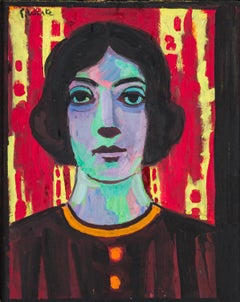
Mein Vater
By Heinz Otto Laub
Located in Wien, 9
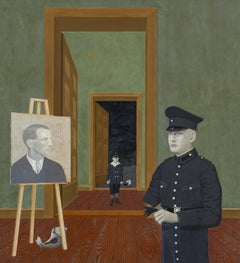
Heinz-Otto Laub was born 1944 in Cologne (Germany), studied at the KA Munich under Mac Zimmermann and is actually working in Bonn. He is known in the first place for his surrealistic...
Category
1970s Contemporary Portrait Paintings
Materials
Oil, Panel
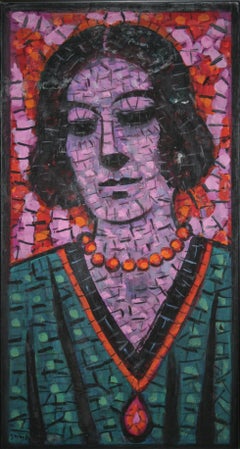
Portrait with Pearl Necklace
By Erich Waske
Located in Wien, 9
Deling with the work of Erich Waske today, one encounters first of all a number of reasons why this outstanding artist has fallen into such undeserved oblivion. In addition to the de...
Category
20th Century Expressionist Portrait Paintings
Materials
Oil, Panel
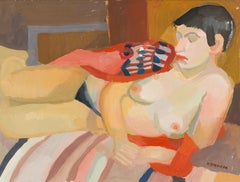
Liegender Akt
Located in Wien, 9
The painterly work of Helga Scholler includes works from a period of more than 40 years and shows a range of uncompromising expressive works of all genres, which represents a further...
Category
Late 20th Century Modern Portrait Paintings
Materials
Canvas, Oil
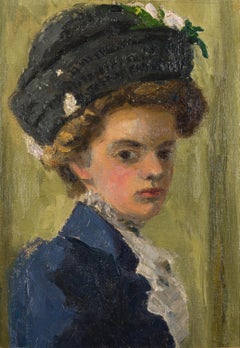
Portrait of a lady
Located in Wien, 9
In elegant clothing and a pompous hat, the lady looks out from the side of the picture. The narrow neckline and the sideways positioning create a strict and controlled impression. Th...
Category
1910s Modern Portrait Paintings
Materials
Canvas, Oil
You May Also Like
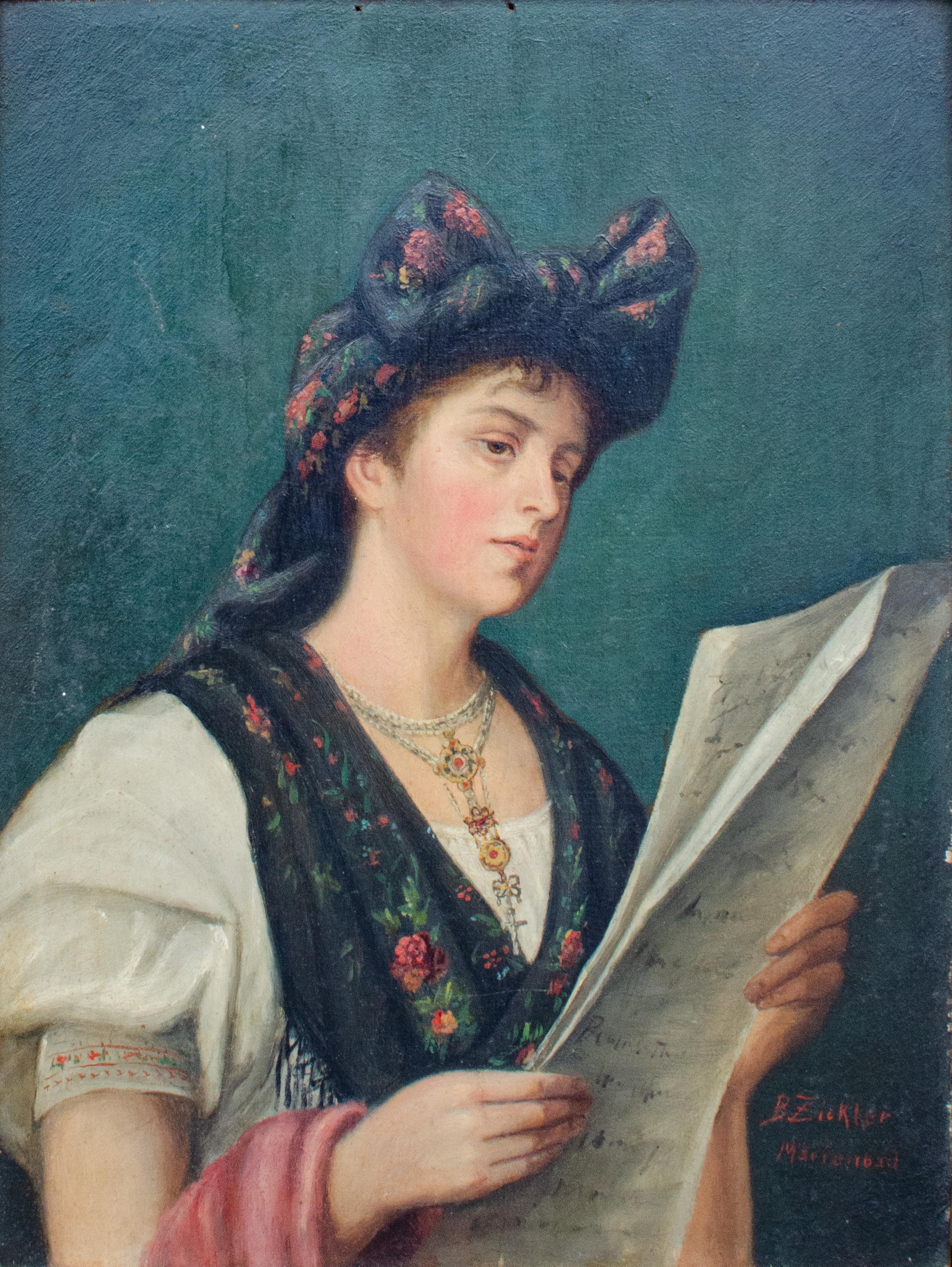
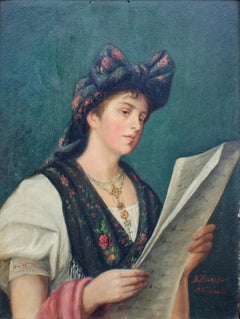
c. 1920s German Portrait Signed B. Zickler
Located in New York, NY
B. Zickler
Msrienbad (Marienbad?), c. 1920s
Oil on wood panel
13 1/4 x 10 1/4 in.
Framed: 17 x 14 x 1 in.
This painting was likely executed by a German artist, who is only known to ...
Category
1920s Modern Portrait Paintings
Materials
Oil, Wood Panel
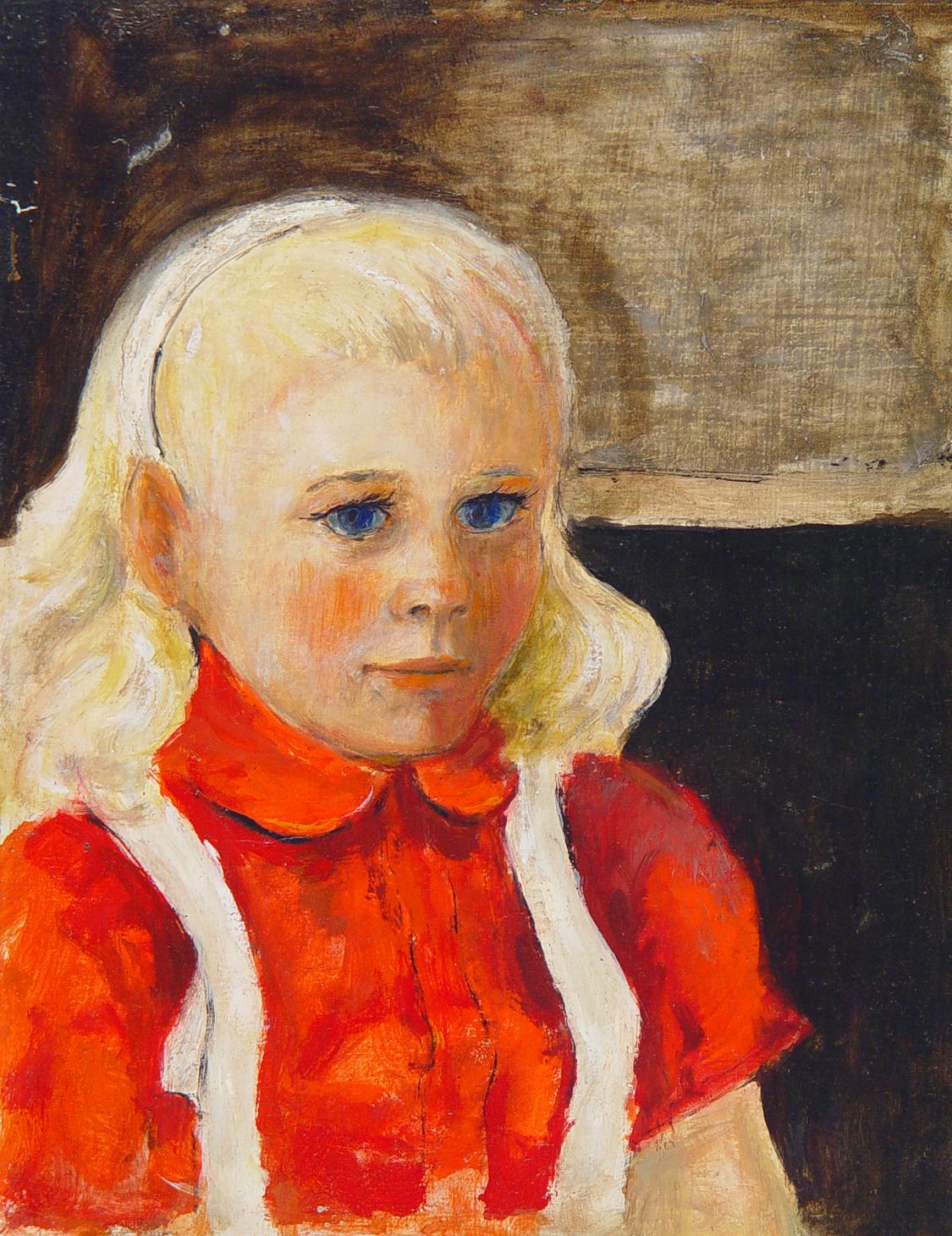
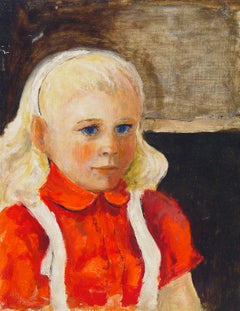
Portrait of Young Girl
By Donald S. Vogel
Located in Dallas, TX
Donald Vogel’s paintings reflect his interest in seeking beauty in life and in sharing pleasure with his viewers. Vogel entreats us to "rejoice and celebrate each new day, knowing it...
Category
Mid-20th Century American Modern Portrait Paintings
Materials
Oil, Panel
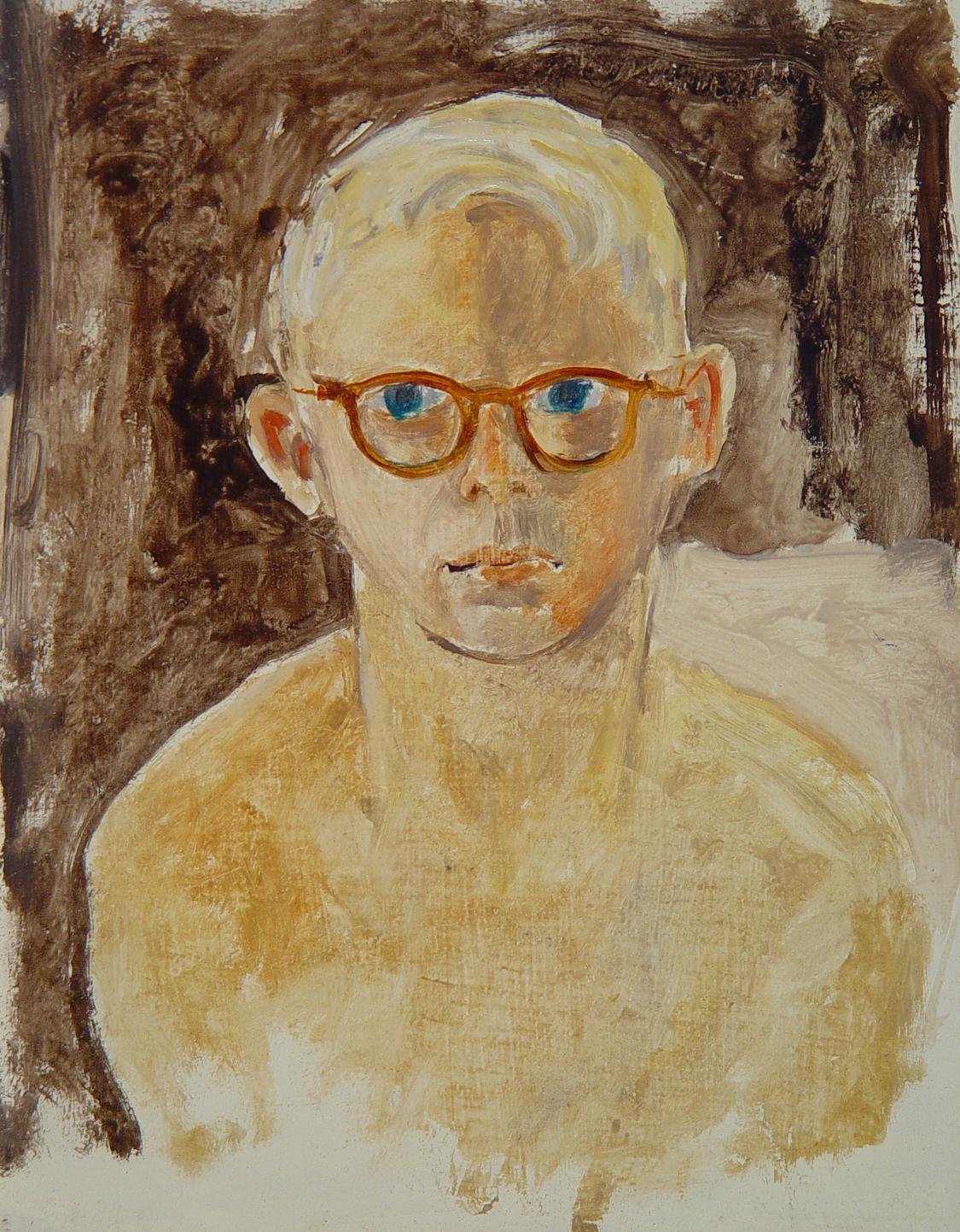
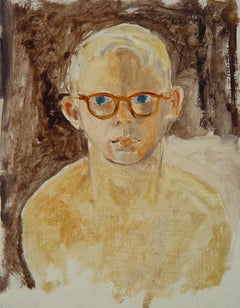
Portrait of Kevin
s playmate
By Donald S. Vogel
Located in Dallas, TX
Donald Vogel’s paintings reflect his interest in seeking beauty in life and in sharing pleasure with his viewers. Vogel entreats us to "rejoice and celebrate each new day, knowing it...
Category
Mid-20th Century American Modern Portrait Paintings
Materials
Oil, Panel
Portrait of Harriet Toby, Ballet Russe de Monte Carlo
By Donald S. Vogel
Located in Dallas, TX
Donald Vogel’s paintings reflect his interest in seeking beauty in life and in sharing pleasure with his viewers. Vogel entreats us to "rejoice and celebrate each new day, knowing it...
Category
1940s American Modern Figurative Paintings
Materials
Oil, Panel
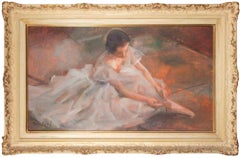
Ballerina - Oil Painting by Miloslava Vrbova - Mid-20th Century
Located in Roma, IT
Oil Painting on panel realized by Miloslava Vrbova (1909-1991) in the mid-20th century, depicting an elegant reclyned ballerina.
Hand signed.
Good condition, framed.
Category
Mid-20th Century Modern Figurative Paintings
Materials
Oil, Panel
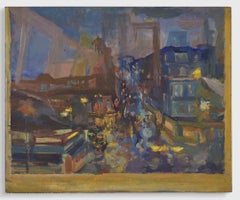
Strees of Paris - Paint by Eliane Diverly - Mid-20th Century
By Eliane Diverly
Located in Roma, IT
Portraits is a modern artwork realized by Eliane Diverly in the Mid-20th Century.
Oil on Wooden panel
Good conditions.
Category
Mid-20th Century Modern Figurative Paintings
Materials
Oil, Panel
More Ways To Browse
Portrait Framed 17th Century
Portrait Of Young Man
Dark Portrait
Male Vintage Portraits
19th Century Portrait Young Man
Portrait Of Child
Antique Royal Portraits
17th And 18th Century Portraits
Male Portrait Paintings
1920 Oil Portraits
Antique Family Portraits
Russia Portrait
Gentleman Oil Portrait
French School 18th Century
Gilt Framed Woman Portrait Oil Paintings
Impressionist Portrait Of A Young Girl
16th Century Portrait Oil Paintings
Portrait Of A Woman Reading